
 Home
Home
Dr. Zahi Hawass and his Egyptian team found the Valley of the Golden Mummies in 1996. This remarkable site stands as Egypt's largest cemetery from the Greco-Roman period. The original excavations revealed about 250 mummies that were nearly two thousand years old across multiple digging seasons. Dr. Hawass later estimated the necropolis held more than ten thousand mummies in total.
This amazing burial site sits in Egypt's Bahariya Oasis in the Western Desert, and its name comes from the spectacular golden mummies unearthed there. These mummies showcase unique preservation methods, and some feature beautiful gilded masks on their faces. The golden mummies come in four distinct styles, with the most spectacular ones showing off exquisite gold facial coverings. The Roman period burials took place when Bahariya had about 30,000 residents, while Egypt's total population was around 7 million.
The sort of thing I love about this discovery goes beyond just the artifacts. Dr. Hawass captured this sentiment perfectly: "We were not merely uncovering the objects used by people or the tombs they were buried in, we were uncovering the very people who made them".
How the Valley of the Golden Mummies Was Found
A simple accident sparked the amazing story of the Valley of the Golden Mummies. A guard named Aiad rode his donkey along a road that guides travelers to Farafra Oasis, about six kilometers south of El-Bawitty (the capital of Bahariya). His donkey stumbled and hit its leg on what they would later know was the edge of a tomb. A different version of the story names the guard as Abdul Megoud, who chased a donkey that fell through a hole in the ground, revealing glittering gold below.
Dr. Hawass told the local team to start initial digging while he wrapped up his work at Giza. The site's magnificence struck him when he arrived in May 1996. "I could not believe that such beautiful mummies could exist. Their eyes were looking at me as if they were real people," he recalled.
The team decided to keep this extraordinary discovery under wraps. The Bahariya Inspectorate of Antiquities didn't have enough funds or trained staff to preserve the mummies properly. The team also worried that "thieves could smell the taste of resin" used in the mummification process.
The complete excavation revealed 105 beautifully gilded mummies across four tombs. This was just the beginning of an incredible archeological journey.
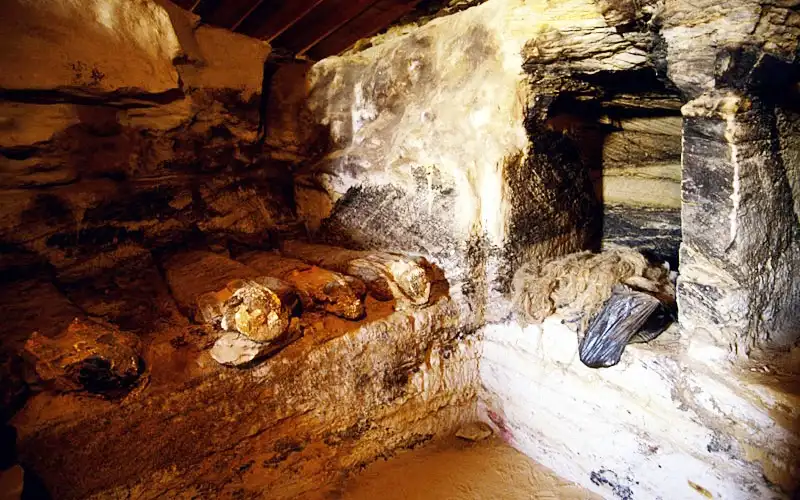
What Makes These Mummies So Unique
The Valley of the Golden Mummies stands out from other Egyptian burial sites with its four distinct styles of mummification. These styles tell us a lot about wealth and social status in Greco-Roman Egypt.
Gold-masked mummies represent the most spectacular style, with their faces covered and decorated waistcoats showing gods and goddesses. A female mummy's face and waistcoat gleamed with gold decorations across three sections, reaching about 1.55 meters in height. The gold symbolized the gods' skin and connected to Ra, the sun god who experienced rebirth each morning.
The second style features mummies wrapped in cartonnage - like in papier-mâché - that displays scenes of Anubis (god of mummification) and his four children. These masks served not to conceal the dead but to show their eternal beauty in an ideal form.
Anthropoid pottery coffins housed the third style of mummies, while simple linen wrappings marked the fourth type.
The burial chambers held many treasures. Jewelry, pottery food trays, wine jars, and Ptolemaic coins lay scattered around these mummies.
Cleopatra VII's image appeared on some coins. Archeologists also found statues depicting mourning women with upraised hands.
The mummies' protective symbols included the Eye of Horus, which people believed brought healing and wholeness. This rich variety of burial practices helps us learn about everyday people's lives during Egypt's Roman era.
Customize Your Dream Vacation!
Get in touch with our local experts for an unforgettable journey.
Plan Your TripThe Beliefs and Practices Behind the Burials
Ancient Egyptians believed life continued after death in a world like their living realm. The golden mummies discovered in Bahariya Oasis show these deep spiritual beliefs through their detailed preservation methods.
Death wasn't an end but a transition that needed careful preparation in ancient Egyptian culture. The deceased needed their physical body intact so their "ka" (spiritual essence) could return after death. Mummification became vital—a detailed 70-day process that preserved the body through dehydration with natron salt.
The embalmers made sure to keep the heart inside the body. Egyptians thought this organ—not the brain—was the center of wisdom, emotions, and memory. The heart played a vital role later when it was weighed against Ma'at's feather (goddess of truth) in the significant "Weighing of the Heart" ceremony.
Ancient Egyptians created the Book of the Dead to protect the deceased on their path to the afterlife. This collection of spells provided magical protection against underworld threats like snakes, crocodiles, and hostile deities. The deceased might face the dreaded "second death"—a complete denial of afterlife—without proper preparation.
Wealthy Egyptians had grand funeral processions. These ceremonies concluded with the "Opening of the Mouth" ritual at the tomb entrance. This final act allowed the deceased to use all their senses in the afterlife.
The "Opening of the Mouth" ritual was performed at the tomb entrance at the conclusion of wealthy Egyptians' grand funeral processions. This final act allowed the deceased to use all their senses in the afterlife.
The Valley of the Golden Mummies stands as Egypt's most remarkable archeological treasure. A donkey accidentally stumbled upon the edge of a tomb, which led to the discovery of this massive necropolis. Hundreds of beautifully preserved mummies have emerged from the site, and countless more remain hidden beneath the sands. The site's most striking feature lies in its four distinct mummification styles, particularly those with gleaming golden masks that gaze back at visitors through time.
These golden-faced mummies offer more than just beautiful artifacts. They give us a rare glimpse into ordinary people's lives during Egypt's Greco-Roman period. Most well-preserved mummies came from royal tombs until now, but these Bahariya residents show us a wider range of ancient Egyptian society.
Their preservation methods reveal the deep spiritual beliefs that shaped Egyptian culture. Death represented not an ending but a transformation that needed careful preparation. Every detail of these burials had a specific purpose - from body positioning to protective symbols and religious imagery - to help the deceased find their way to the afterlife.
A simple accident with a guard's donkey led to one of archeology's most amazing finds. Dr. Hawass described his first look at these mummies as an incredible moment: "Their eyes were looking at me as if they were real people." This human connection across thousands of years explains why these golden-faced individuals still fascinate us today.
The Valley of the Golden Mummies sits in Egypt's Bahariya Oasis in the Western Desert, about six kilometers south of El-Bawitty (the capital of Bahariya). This remarkable site is accessible along the road that guides travelers to Farafra Oasis.
Dr. Zahi Hawass and his Egyptian team discovered the Valley of the Golden Mummies in 1996. The discovery happened accidentally when a guard's donkey stumbled and hit its leg on what was later identified as the edge of a tomb.
The original excavations revealed about 250 mummies that were nearly two thousand years old across multiple digging seasons. Dr. Hawass later estimated the necropolis held more than ten thousand mummies in total, with 105 beautifully gilded mummies excavated from four tombs.
The name comes from the spectacular golden mummies unearthed there. Some mummies feature beautiful gilded masks on their faces, with the most spectacular ones showing exquisite gold facial coverings that represent the most stunning burial style.
The mummies are nearly two thousand years old, dating from the Greco-Roman period. This makes the site Egypt's largest cemetery from this specific historical era, when Bahariya had about 30,000 residents.
A guard named Aiad rode his donkey along a road when the animal stumbled and hit its leg on the edge of a tomb. A different version names the guard as Abdul Megoud, who chased a donkey that fell through a hole revealing glittering gold below.
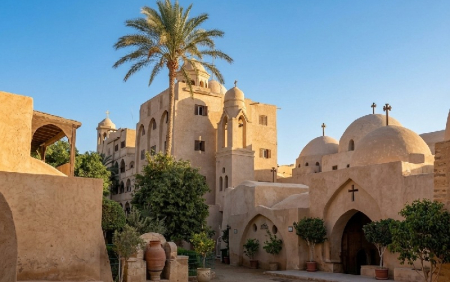
Monastery of Syrians in Wadi Natrun, founded 984 AD, houses oldest Syriac manuscript (411 AD) & Church of Virgin Mary (645 AD) with frescoes.
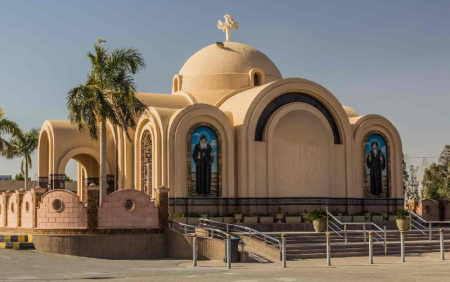
Wadi El Natrun is Egypt's sacred valley located 100km from Cairo, 23 meters below sea level. Features 4 ancient Coptic monasteries from 330 AD with Saint Pishoy's incorrupt body.
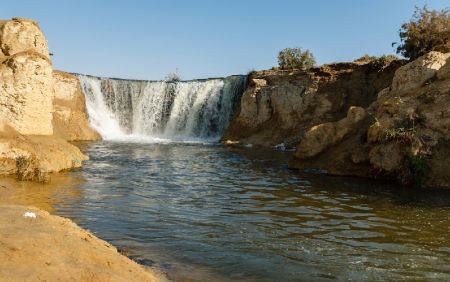
Wadi El Rayan is Egypt's premier desert sanctuary spanning 1,759 km² with two crystalline lakes, cascading waterfalls and 13 permanent bird species plus 26 migratory species.
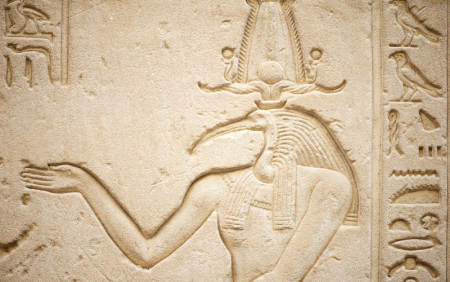
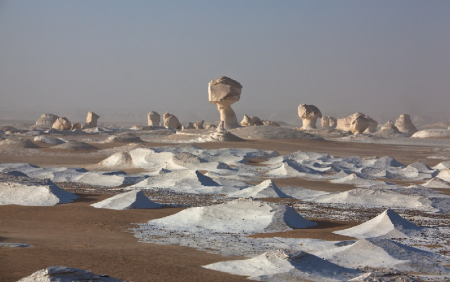
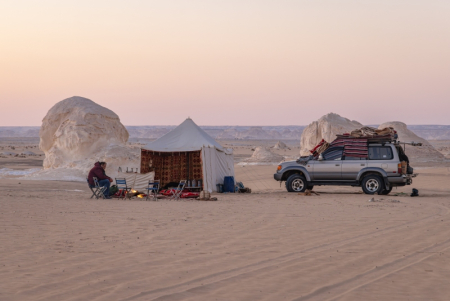
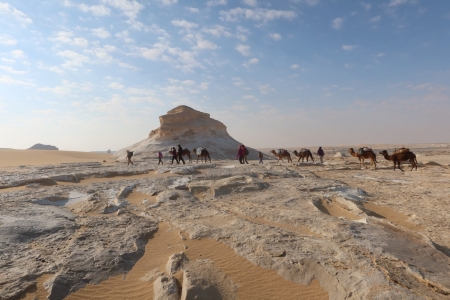
White Desert Egypt spans 300 km² of chalk formations 45km from Farafra with Crystal Mountain, Black Desert & Valley of Agabat. Rated 5.0/5.
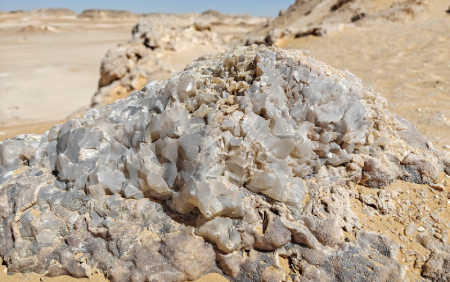
Discover Crystal Mountain Egypt—stunning barite & calcite arch between Bahariya & Farafra. Features hidden crystal caves, Bedouin secrets & sunrise views.
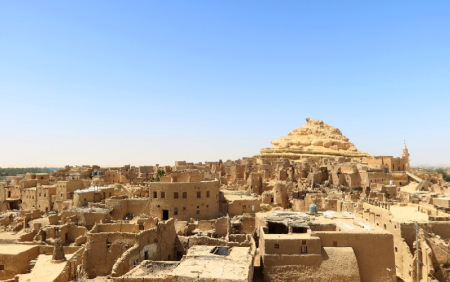
Mountain of the Dead in Siwa contains 3,000 tombs including Si-Amun, Mesu-Isis, Niperbathot & Crocodile with vivid wall paintings. 1km from town.
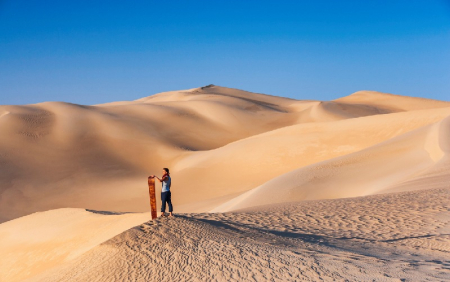
Great Sand Sea extends 650km with seif dunes up to 140m high between Egypt-Libya. Covers 10% of Egypt's Western Desert, gateway Siwa Oasis.
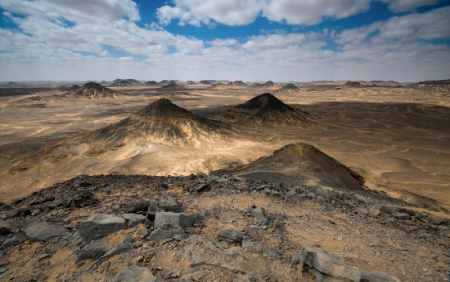
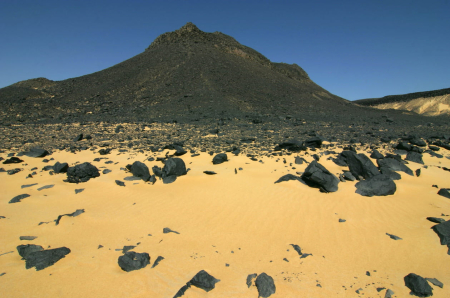
Black Desert, rated 4.5/5, features 100m basalt formations from ancient volcanic activity. Includes Agabat Valley, Crystal Mountain & desert fox.
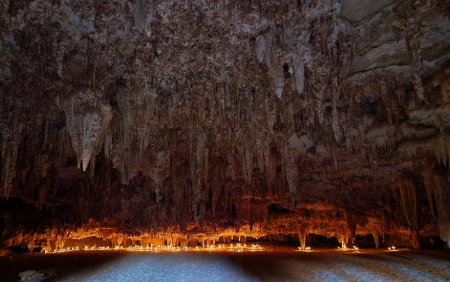
Djara Cave stretches 1,000m with 188+ murals from 10,200 BC, "frozen waterfall" stalactites, Cathedral chamber & Neolithic gazelle rock art.
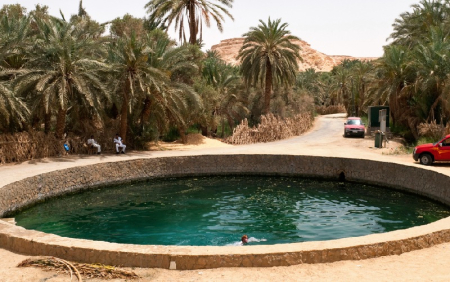
Cleopatra Bath in Siwa is a bubbling spring 752km from Cairo where Queen allegedly bathed. Mineral-rich healing waters, temperature-regulated.
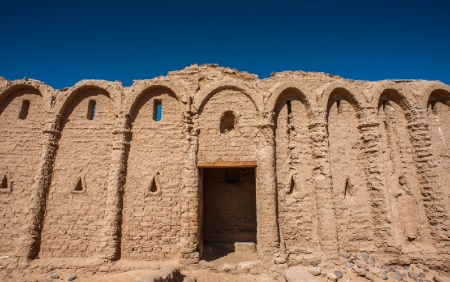
El Bagawat is the world's oldest Christian cemetery with 263 chapels from 3rd-7th century. Features Chapel of Exodus & Peace with biblical art.
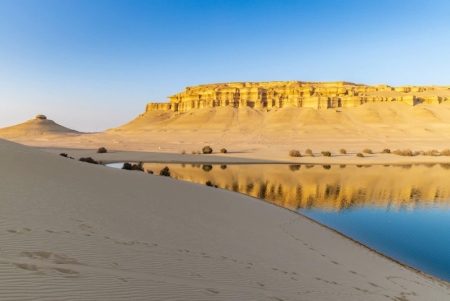
Qarun lake is considered the oldest natural lakes in the world, the third largest lake in Egypt and the rest of lake Old Maurice. Know more!
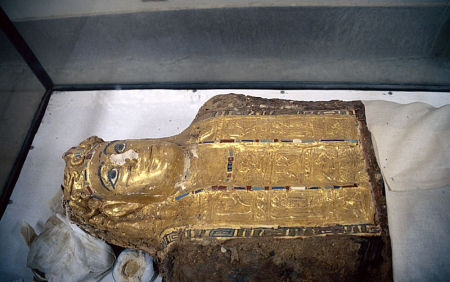
Valley of the Golden Mummies located in Bahariya Oasis, about 380 km west of the pyramids, It was built during the Greco - Roman period exhibits a variety of styles and a range of social status.
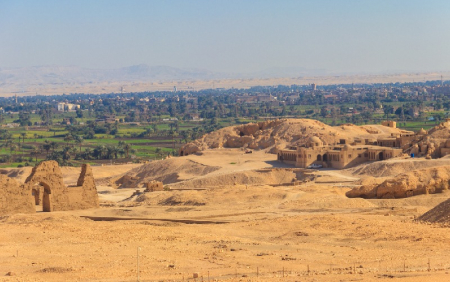
Find out what makes Deir el Bahari unique! Explore Hatshepsut's terraced temple, ancient Luxor monuments & Egyptian architectural genius. Learn more!
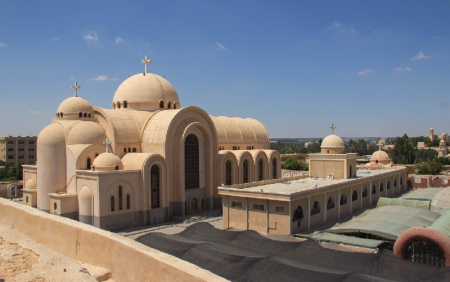
Learn the story of the Monastery of Saint Bishoy in Egypt: Saint Bishoy's incorrupt body, 5 churches & Coptic Orthodox history. Read the complete guide!
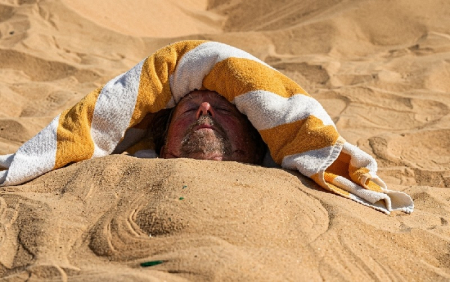
Siwa sand bathing: centuries-old Bedouin treatment using mineral-rich sand (40-50°C) for arthritis, chronic pain & stress. 7-10 daily sessions.
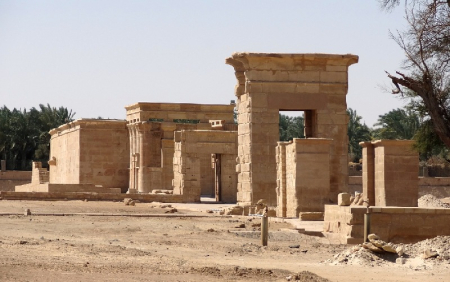
Uncover Temple of Hibis in Egypt's western desert. Explore the best-preserved Persian temple, Darius I's contributions & Amun-Ra shrine. Learn today!