
 Home
Home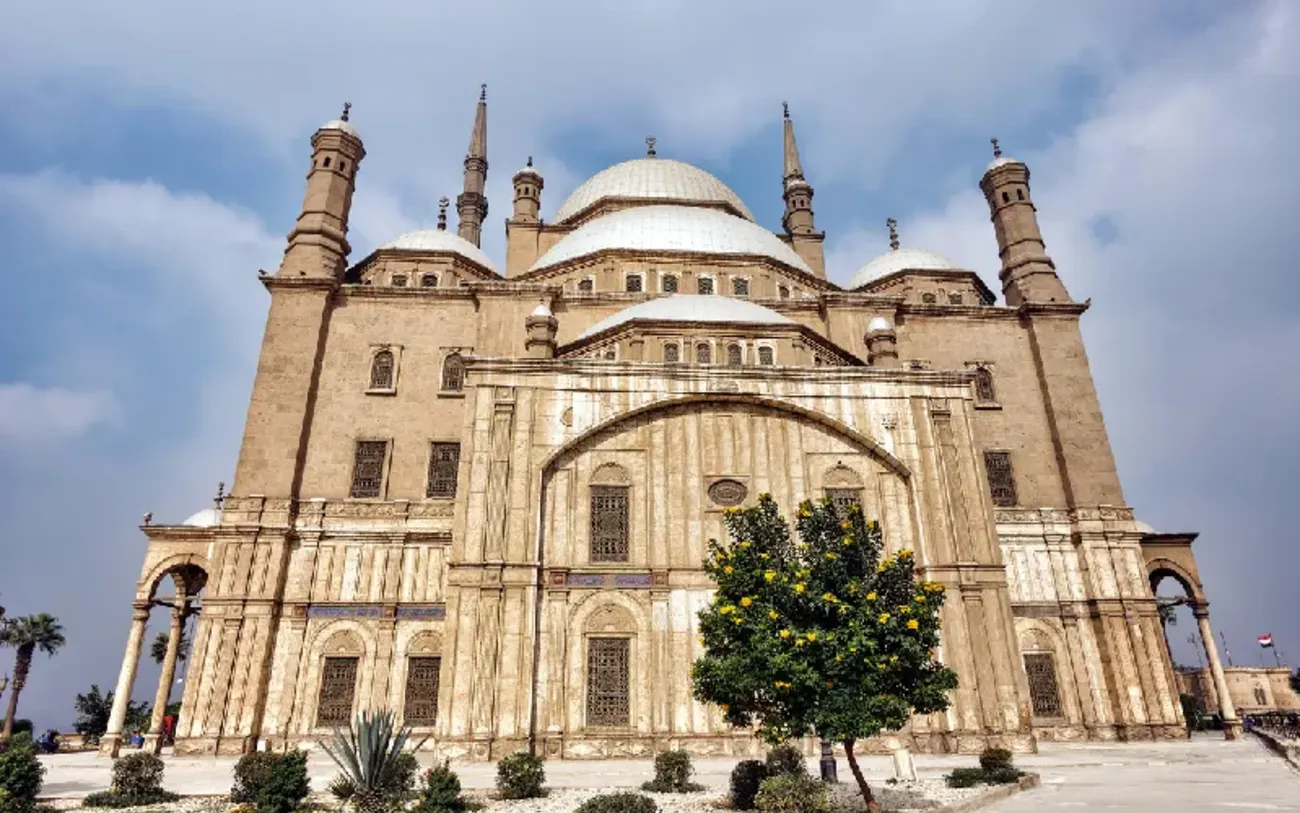
The Mohamed Ali Mosque rises as an architectural marvel with its impressive 52-meter-high central dome and towering minarets that stretch over 80 meters into Cairo's skyline. People call it the Alabaster Mosque because of its distinctive wall coverings. This magnificent structure needed 18 years to complete, from 1832 to 1857.
The Mohamed Ali Mosque Cairo serves a greater purpose than religious architecture inside Cairo's Citadel walls. Mohamed Alí, a reformist ruler whom many call the creator of modern Egypt, commissioned its construction. Mohamed Alí demanded alabaster throughout the mosque, even though this material wasn't ideal for construction. His choice created the mosque's unique appearance but made the building process longer.
The ambitious project got pricey quickly - construction costs reached £60,000 Egyptian pounds, with decorative elements adding another £40,000.
The Mohamed Ali Mosque is located inside Cairo's Citadel walls, rising prominently in Cairo's skyline. This magnificent structure serves as one of Cairo's most iconic landmarks and is easily visible from many parts of the city.
Construction of the Mohamed Ali Mosque took 18 years, from 1832 to 1857. The project started with a ceremonial foundation stone laying in 1830, and Mohamed Ali passed away in 1849 without seeing his dream completed. His son Ibrahim Pasha finished the project in 1857.
Construction costs reached £60,000 Egyptian pounds, with decorative elements adding another £40,000. The project got pricey quickly, partly because Mohamed Alí demanded alabaster throughout the mosque even though this material wasn't ideal for construction.
The Story Behind the Mosque’s Creation
Mohamed Alí built this magnificent mosque both as a sacred space and a bold political statement. He rose to power in Egypt after his birth in Albania and wanted to honor his son Tusun Pasha's memory after his death in 1816. The mosque would become his lasting legacy in Cairo.
The mosque's design drew inspiration from the Sultan Ahmed Mosque in Constantinople (modern Istanbul) with its distinctive Ottoman style.
Mohamed Alí chose this design to break away from Egypt's Mamluk past and embrace Ottoman architectural traditions. He brought architects and workers from Turkey to maintain authenticity in every detail.
The project started with a ceremonial foundation stone laying in 1830. The original plans called for traditional materials, but Mohamed Alí's love for alabaster changed everything. Workers had to quarry the stone from nearby Beni Suef, which added new challenges to this ambitious project.
The construction faced material shortages and money problems. Mohamed Alí passed away in 1849 without seeing his dream become reality - eight years before the mosque's completion. His son Ibrahim Pasha took charge and finished the project in 1857, creating Egypt's most splendid Ottoman-style mosque that his father had envisioned.
What Makes the Mosque Stand Out
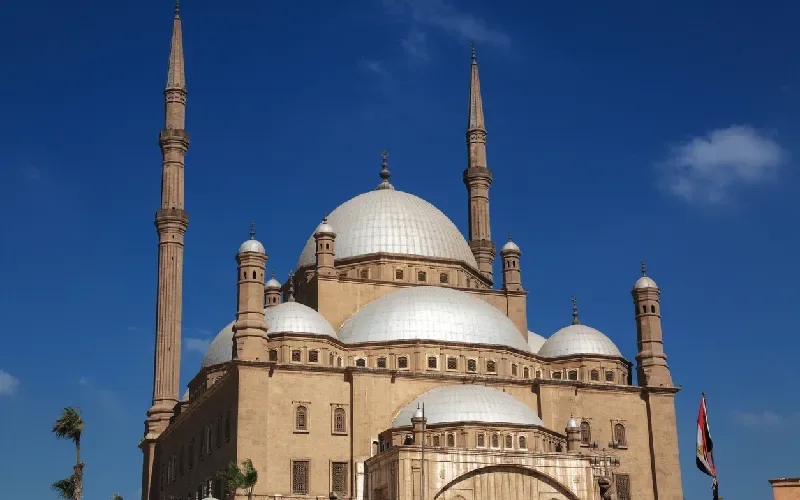
The Mohamed Ali Mosque stands as a pure Ottoman masterpiece that mirrors the classical architecture of Istanbul's imperial mosques, especially when you have the Şehzade and Sultan Ahmed Mosques in mind. The design breaks from Cairo's traditional mosques by leaving out Mamluk elements and uses European-inspired decorations instead.
A magnificent central dome dominates the structure, reaching 52 meters high with a 21-meter diameter. Massive arches rest on huge piers that support this impressive dome. On top of that, it blends beautifully with four semi-domes and smaller domes at each corner.
The mosque's builders used limestone as their main material, but alabaster covers the lower walls and courtyard, which led to its popular nickname. Sunlight bounces off this unique alabaster surface with an almost magical glow.
Two elegant minarets steal the show as they reach 82 meters skyward. These slim Ottoman-style towers with their distinctive conical caps stand guard on either side of the prayer hall façade.
The mosque's northwestern wall features a remarkable tower clock - a thoughtful gift from France's King Louis Philippe in 1846. This gift came about when Egypt sent an ancient obelisk to Paris, which still graces the Place de la Concorde.
A beautiful ablution fountain sits at the heart of the rectangular courtyard. Wooden roofing shelters the fountain, supported by ornately decorated columns. These elements come together to create one of Cairo's most iconic landmarks.
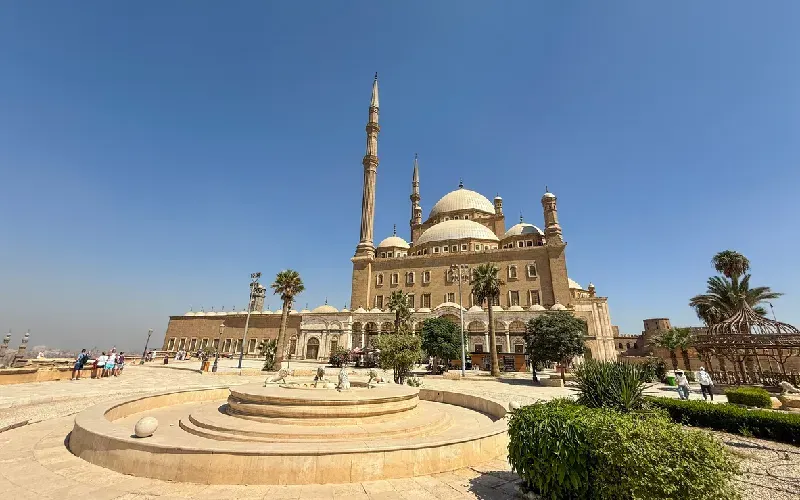
The mosque is a pure Ottoman masterpiece inspired by the Sultan Ahmed Mosque in Constantinople (modern Istanbul). Mohamed Alí chose this design to break away from Egypt's Mamluk past and embrace Ottoman architectural traditions, bringing architects and workers from Turkey.
The magnificent central dome reaches 52 meters high with a 21-meter diameter. Massive arches rest on huge piers supporting this impressive dome, which blends beautifully with four semi-domes and smaller domes at each corner.
Two elegant minarets reach 82 meters skyward. These slim Ottoman-style towers with their distinctive conical caps stand guard on either side of the prayer hall façade, making them prominent features of Cairo's skyline.
Customize Your Dream Vacation!
Get in touch with our local experts for an unforgettable journey.
Plan Your TripSecrets and Surprises Inside
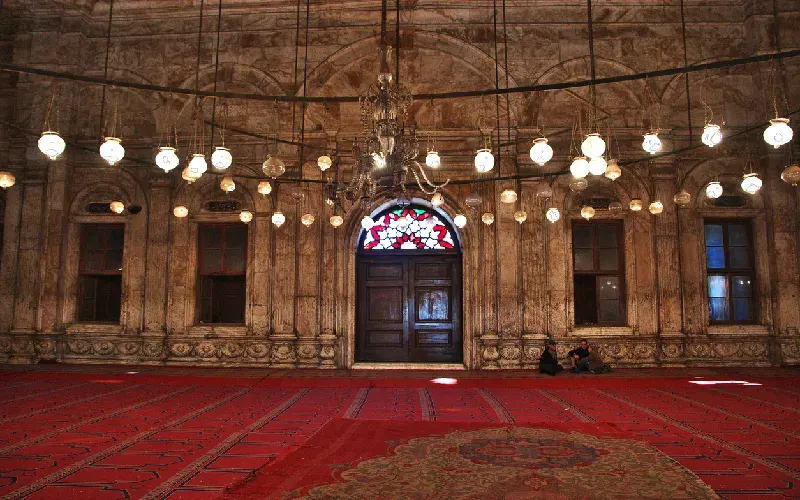
The prayer hall houses unexpected treasures that many visitors miss. The mosque's unique feature includes two minbars (pulpits) positioned side by side—something rarely seen in Islamic architecture. The original minbar features gilded wood with green decorations, while King Farouk's 1939 gift stands as a second marble minbar.
Muhammad Ali's tomb rests beneath a small dome in the southwestern corner. A white marble cenotaph adorned with floral motifs and gilded inscriptions marks his final resting place. His grandson Abbas I later moved his body behind an ornate bronze grill from its original location.
The mosque's magnificent interior almost faced complete destruction in 1931 due to serious structural problems. Expert architects summoned by King Fuad I concluded that the central dome and surrounding semi-domes needed full reconstruction. The massive restoration project demanded 590 tons of steel support and cost 100,000 Egyptian pounds.
The arches and pendentives showcase inscriptions of Allah's name and "Muhammad is the Prophet of God" among other names of the four Rightly Guided Caliphs. The alabaster material carries deep symbolic significance—light represents God in Islamic architecture, and alabaster, a stone that holds light, embodies the divine presence.
The sort of thing I love about the courtyard's copper clock tower is its historical significance. France presented it to Muhammad Ali in 1845 in exchange for an ancient Egyptian obelisk, which now stands proudly in Paris's Place de la Concorde.
Yes, Muhammad Ali's tomb rests beneath a small dome in the southwestern corner. A white marble cenotaph adorned with floral motifs and gilded inscriptions marks his final resting place. His grandson Abbas I later moved his body behind an ornate bronze grill.
The Mohamed Ali Mosque represents more than just a religious building in Cairo's skyline. It symbolizes a crucial moment in Egyptian history that showcases Mohamed Alí's vision of modernization and his departure from Mamluk traditions. This architectural masterpiece took 18 years to build and became Egypt's most distinctive Ottoman-style structure.
The completed mosque amazes visitors today, despite the challenges faced during its construction. Its perfect blend of Ottoman design and European influences creates a striking impression. Visitors find themselves engaged by the alabaster walls, soaring minarets, and the impressive 52-meter central dome. The mosque's international importance became clear when Egypt and France exchanged gifts - a clock tower for an ancient obelisk - during its construction.
The mosque stands as Mohamed Alí's lasting legacy. He never saw the finished building, but his final resting place lies within the mosque's walls, forever connecting his story with this magnificent structure. Egyptian people's commitment to preserve this architectural treasure showed clearly in the extensive 1931 restoration.
This remarkable building embodies ambitious vision, cultural exchange, and state-of-the-art architecture. The stunning alabaster exterior and towering minarets catch everyone's eye immediately. However, the deeper narratives of political change, cultural symbolism, and historical importance make this landmark extraordinary. Few buildings can tell a nation's story of modernization as powerfully as this gleaming monument atop Cairo's Citadel.
The mosque is called the Alabaster Mosque because of its distinctive alabaster wall coverings. Although limestone was the main construction material, alabaster covers the lower walls and courtyard, creating a unique surface that reflects sunlight with an almost magical glow.
Mohamed Alí, a reformist ruler whom many call the creator of modern Egypt, commissioned the mosque's construction. He built it both as a sacred space and a bold political statement to honor his son Tusun Pasha's memory after his death in 1816.
The mosque's northwestern wall features a remarkable tower clock—a thoughtful gift from France's King Louis Philippe in 1845/1846. This gift came when Egypt sent an ancient obelisk to Paris, which still graces the Place de la Concorde.
The prayer hall features two minbars (pulpits) positioned side by side—something rarely seen in Islamic architecture. The original minbar features gilded wood with green decorations, while King Farouk's 1939 gift stands as a second marble minbar.
The mosque almost faced complete destruction in 1931 due to serious structural problems. Expert architects concluded that the central dome and surrounding semi-domes needed full reconstruction. The massive restoration project demanded 590 tons of steel support and cost 100,000 Egyptian pounds.
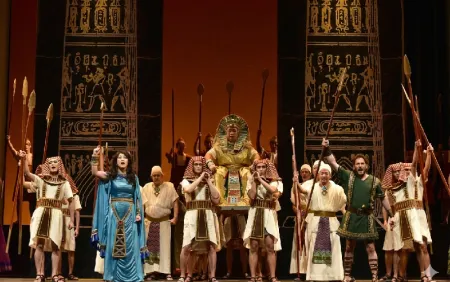
Opera Aida premiered in Cairo 1871, telling a timeless love story in ancient Egypt. Performed at Pyramids & temples, Verdi's masterpiece captivates audiences.
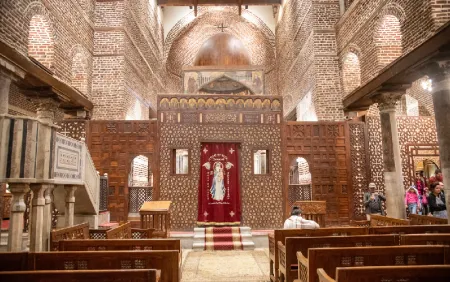
Saints Sergius and Bacchus Church were built to be dedicated to two Martyrs (Sergius and Bacchusand) traditionally believed to have been built on the spot where the Holy Family rested at the end of their journey into Egypt.
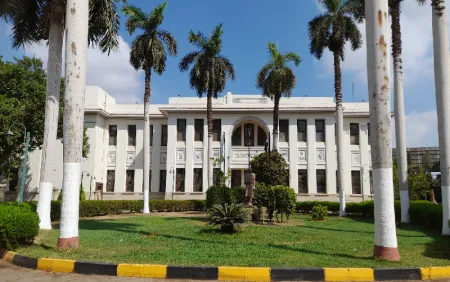
Cairo's Agricultural Museum, established 1938, features 7 halls showcasing 7,000 years of Egyptian farming history and ancient agricultural artifacts.
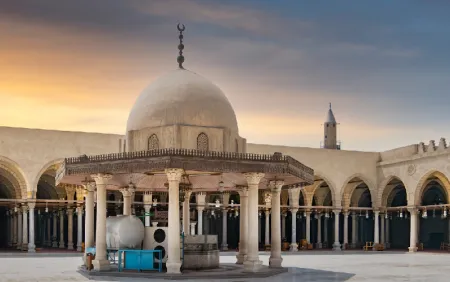
Fustat, founded 641 CE, was Egypt's first Islamic capital with 200,000 residents. This Silk Road trade hub beneath Old Cairo was deliberately destroyed in 1168.
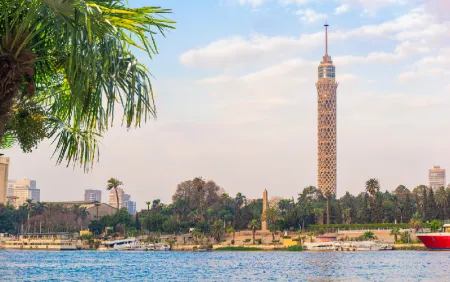
Cairo Tower's 187m lotus design offers 360° views & rotating restaurant. Discover hidden terrace & local secrets for Egypt's iconic landmark built 1956-1961.

Explore Birqash Camel Market in Cairo, where tradition and culture meet. Witness camel trading, local life, and a unique Egyptian market experience.
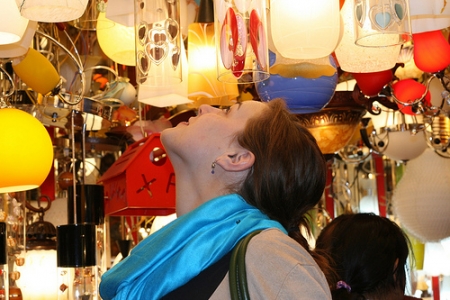
El Mosky is Cairo's authentic medieval marketplace from Ayyubid era. Serves locals with genuine prices, traditional crafts & spices. Metro accessible.
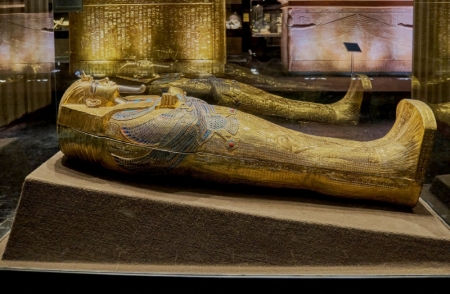
Learn about King Tutankhamun treasures and explore the secrets of his tomb, royal rituals, and preserved artifacts.
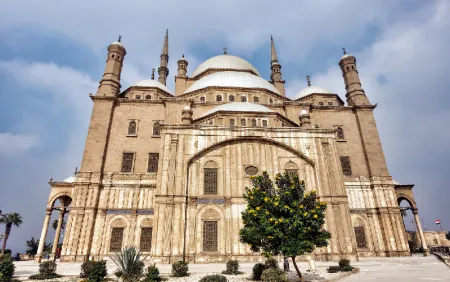
The Mohamed Ali Mosque is an Ottoman masterpiece built 1832-1857 inside Cairo Citadel. Called the Alabaster Mosque for its distinctive walls, it features a 52-meter central dome.
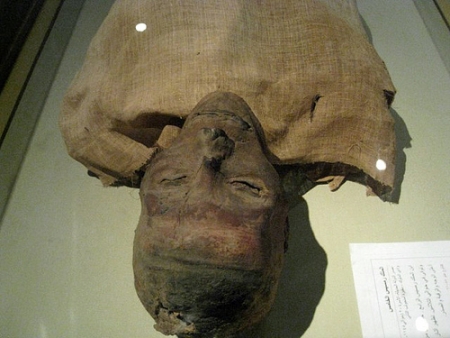
Egyptian mummies at Cairo's museums include 22 royal pharaohs moved in 2021 to NMEC. Features Tutankhamun, Hatshepsut, Seti I and 4,300-year-old preservation techniques.
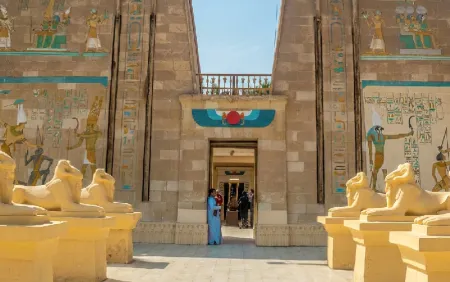
Pharaonic Village in Cairo, founded 1984, is a 30-acre living museum with 12 museums, King Tut's tomb replica & live ancient Egyptian demonstrations.
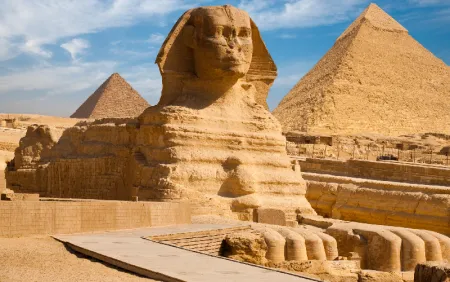
Great Sphinx of Giza, carved 2500 BCE, measures 73m long and 20m high. Contains three tunnels, hidden chambers & traces of red, blue & yellow paint.
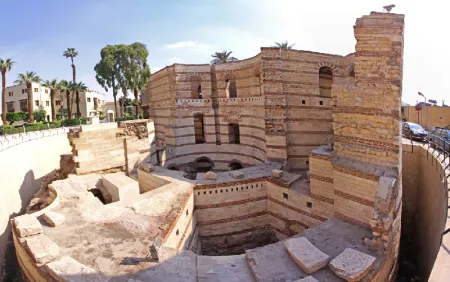
Babylon Fortress in Old Cairo, built 300 AD by Diocletian, features 10m Roman towers, Coptic churches, Ben Ezra Synagogue & museum with 16,000 artifacts.
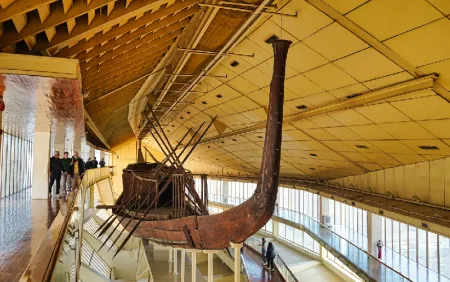
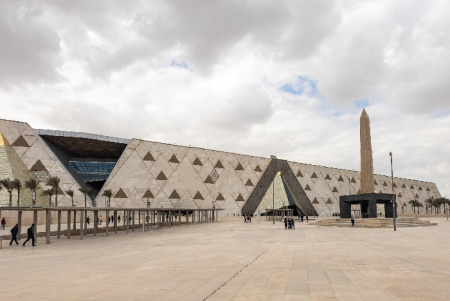
The Khufu Ship is a 4,600-year-old solar boat measuring 43.4 meters long. Built without nails using mortise-and-tenon joints, it's displayed at Grand Egyptian Museum.
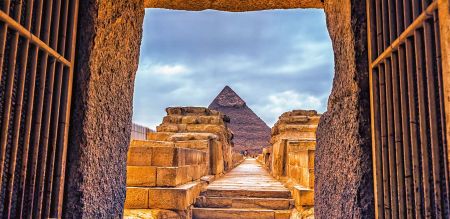
Experience the Valley Temple of Khafre like never before. Explore its purpose, design, and must-see highlights—read the full guide now!