
 Home
Home
The Djoser Pyramid, standing 204 feet (62 meters) tall with six tiers, is history’s first large-scale stone construction. Built during Egypt’s Third Dynasty in the 27th century BC, it served as Pharaoh Djoser’s tomb and marked a monumental shift in architectural history. Before this, pharaohs were buried in rectangular mastaba tombs. Djoser’s decision to build at Saqqara Pyramid complex—already home to earlier rulers—introduced a new architectural and ceremonial approach. The complex combines the central Step Pyramid with surrounding ceremonial structures, demonstrating the innovative vision of its architect, Imhotep.
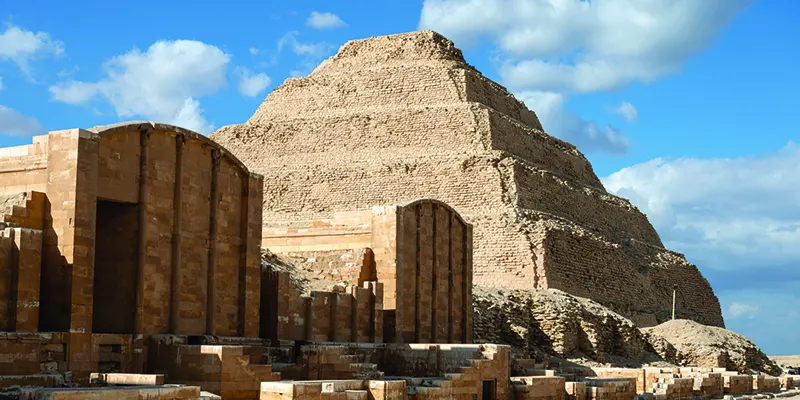
The Djoser Pyramid is Egypt’s first Step Pyramid, located in Saqqara, built as Pharaoh Djoser’s tomb during the Third Dynasty.
Why Saqqara? The Shift from Abydos to a New Royal Site
Egyptian burial practices evolved significantly in the early dynastic period, shifting the royal cemetery from Abydos to Saqqara Pyramid.
Earlier Royal Tombs at Abydos
Abydos, in southern Egypt, served as the burial ground for Egypt’s earliest pharaohs, including all First Dynasty kings, two Second Dynasty kings, and predecessors from Dynasty "0." Massive mud-brick enclosures hosted funerary cults, while towns developed nearby, establishing Abydos as a religious and ideological hub.
Strategic and Symbolic Reasons for Saqqara
Around 2700 BC, the royal cemetery moved to Saqqara Pyramid near Memphis, Egypt’s first capital. Its elevated desert plateau provided visibility, safety from Nile floods, and proximity to the administrative and religious heart of Egypt. This practical and symbolic choice set the stage for Djoser’s groundbreaking Step Pyramid. Earlier rulers from the Second Dynasty had already built tombs here, establishing a tradition that Djoser would expand.
The Desert Plateau and Visibility
The plateau overlooked Memphis and the Nile floodplain, making monuments highly visible while protected from flooding. Its desert location ensured preservation, and over time, Saqqara Pyramid became home to royal tombs spanning nearly the entire Pharaonic era.
The Saqqara Pyramid is in Saqqara, near Memphis, about 40 km southwest of Cairo, Egypt.
Saqqara served as the main royal burial ground after Abydos, housing multiple dynasties’ tombs and Egypt’s first pyramids.
Architectural Firsts: What Made the Step Pyramid Unique
The Djoser Pyramid revolutionized construction, creating standards that influenced centuries of Egyptian architecture.
First Use of Stone in Large-Scale Construction
Before Djoser, royal tombs were built of mud brick. The Step Pyramid introduced cut limestone from Tura quarries, forming a durable, long-lasting monument. Stone construction required sophisticated planning, workforce management, and resource control, showcasing the state’s organizational skills.
Combining Tomb and Ritual Buildings
Unlike separate structures in Abydos, Djoser’s complex unified tomb and ceremonial buildings, merging mortuary and ritual functions in one site. This integration became a hallmark of future pyramid complexes.
Dummy Buildings for the Ka
Imhotep included functional and "dummy" buildings. While some structures served real ritual purposes, dummy buildings housed the king’s ka (spiritual double), featuring pavilions and chapels for eternity. These symbolic elements reflected Egyptian beliefs in the afterlife.
The Role of Imhotep in Design
Imhotep, Djoser’s vizier and “Overseer of Stone Works,” was the genius behind the Saqqara Pyramid. His name, meaning "He who comes in peace," is inscribed at the pyramid’s entrance. Recognized as the world’s first named architect, he was later deified for his wisdom. Imhotep’s design set the blueprint for all future pyramids, combining structural innovation with symbolic and ceremonial significance.
Imhotep, Pharaoh Djoser’s architect and vizier, designed the Step Pyramid, introducing large-scale stone construction.
It was the first monumental stone pyramid in Egypt, marking a turning point in Step Pyramid architecture and ancient construction techniques.
Customize Your Dream Vacation!
Get in touch with our local experts for an unforgettable journey.
Plan Your TripWalking Through the Complex: A Tour of the Saqqara Pyramid
Visitors entering the Saqqara Pyramid complex encounter a massive white limestone wall with carved niches. A narrow passage opens into an entrance colonnade of 40 limestone columns, each nearly 6 meters tall and resembling bundled reeds. Ceiling blocks mimic wooden logs, and stone doors allow the king’s ka to move freely in the afterlife.
South Court and Heb-Sed Markers
Beyond the colonnade lies the South Court, hosting two horseshoe-shaped stone markers 45 meters apart, used for the Heb-sed festival, where the king symbolically renewed his strength after decades of rule.
T-Temple and North/South Houses
The T-Temple and the North and South Houses symbolize Lower and Upper Egypt, with limited interior passages for ritual use. These structures reinforced the king’s spiritual and ceremonial presence within the complex.
The Step Pyramid and Its Six Tiers
The Step Pyramid, with six tiers, rises 60–62.5 meters with a base of 109 by 121 meters. Evolving from a flat mastaba, it became the first monumental stone pyramid, marking the beginning of the pyramid age.
Visitors can explore the Step Pyramid, ceremonial buildings, colonnades, South Court, T-Temple, North/South Houses, and underground chambers.
What Lies Beneath: Exploring the Subterranean World
The Djoser Pyramid hides an extensive underground network of tunnels and chambers extending almost 6 kilometers. These subterranean spaces reflect advanced planning and ceremonial function.
The Central Shaft and Burial Vault
At the heart lies a 7-meter square central shaft, descending 28 meters to a pink granite burial chamber sourced from Aswan, 860 kilometers away. The chamber once had a ceiling adorned with carved five-pointed stars, a precursor to decorative motifs in later royal tombs. Tomb robbers damaged the burial, but archaeologists recovered fragments of Djoser’s mummy.
Blue-Tiled Palace for the Ka
Chambers covered with over 36,000 blue-green faience tiles created palace-like spaces for the king’s ka. The tiles imitated reed matting and symbolized new life and the primeval waters of creation, underscoring the spiritual dimension of the Step Pyramid.
Relief Panels and Ritual Scenes
Hidden limestone reliefs depicted Djoser performing rituals, including the Heb-sed festival, ensuring that ceremonial life continued eternally, even unseen by the living.
The South Tomb's Symbolic Role
The South Tomb mirrors the main pyramid’s underground design with a 28-meter shaft and granite vault too small for a body. Likely used for storing internal organs, royal regalia, or the king’s ka, it represents the symbolic and ritual sophistication of the complex.
The complex contains tunnels, burial vaults, blue-tiled chambers for the king’s ka, and relief panels depicting ritual ceremonies.
Legacy of the Djoser Pyramid
The Djoser Pyramid exemplifies ancient Egypt’s architectural, technological, and religious achievements. Imhotep’s vision transformed mud-brick traditions into monumental stone architecture, setting a precedent for future pyramids. The complex demonstrates exceptional planning, from moving massive stones to crafting 36,000 faience tiles, highlighting advanced craftsmanship and state organization.
The integration of functional and symbolic elements, including dummy buildings, subterranean chambers, and Heb-sed courts, reveals Egyptian beliefs in the afterlife and royal immortality. As the first Step Pyramid, it sparked the pyramid-building era, influencing monumental architecture for millennia. Modern visitors at Saqqara Pyramid can witness firsthand the ingenuity and vision behind humanity’s earliest stone monuments, a testament to the enduring legacy of Djoser and his architect, Imhotep.
The Djoser Pyramid set a precedent for large-scale stone construction and the integration of tombs with ritual structures, influencing all later pyramids.

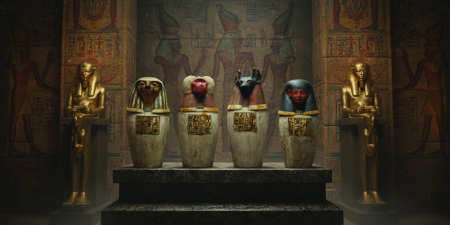
Canopic jars were vital in ancient Egypt, preserving organs and symbolizing rebirth. Explore their history, the Four Sons of Horus, and modern discoveries.
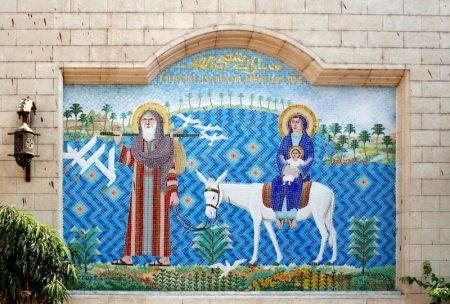
Journey along the Holy Family in Egypt's path. Learn about the historical route, significant sites, and the enduring legacy they left behind.
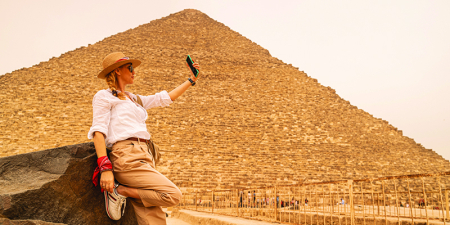
The Khufu Pyramid, located on the Giza Plateau in Egypt, is the largest and most famous pyramid ever built. Constructed around 2600 BC, it reflects ancient Egyptian engineering excellence, deep religious beliefs, and the divine power of Pharaoh Khufu.
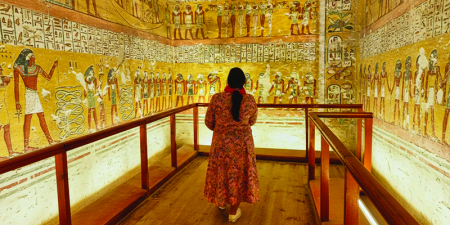
Ramesses IV, a New Kingdom pharaoh, left a lasting legacy through ambitious building projects and a uniquely preserved mummy. His tomb KV2 reveals key insights into ancient Egyptian beliefs about death and eternity.
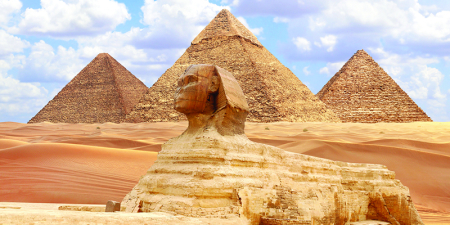
Explore the Khafre Pyramid, Egypt’s second largest Giza pyramid. Discover its unique architecture, the Great Sphinx, Mortuary & Valley Temples, and King Khafre statue in this iconic ancient Egyptian complex.
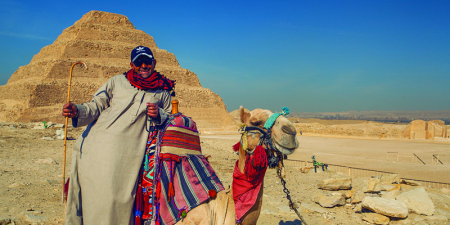
The Djoser Pyramid in Saqqara, Egypt, is the world’s first Step Pyramid, built for Pharaoh Djoser during the Third Dynasty. Designed by Imhotep, it revolutionized stone construction and ancient Egyptian burial practices, combining ceremonial, symbolic, and functional elements in a single monumental complex.
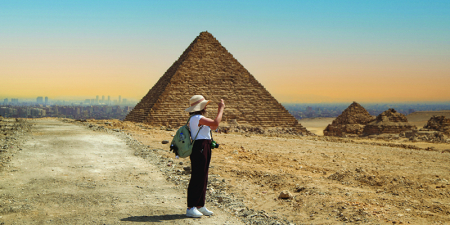
Menkaure Pyramid in Giza, Egypt, is the smallest of the three main pyramids, featuring unique dual-material casing, complex chambers, mortuary temple, and iconic King Menkaure statues
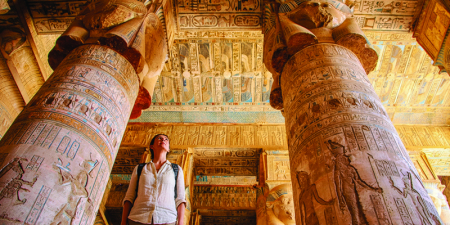
Discover how the Hathor Temple at Dendara connects ancient Egyptian religion with the stars and cosmos.