
 Home
Home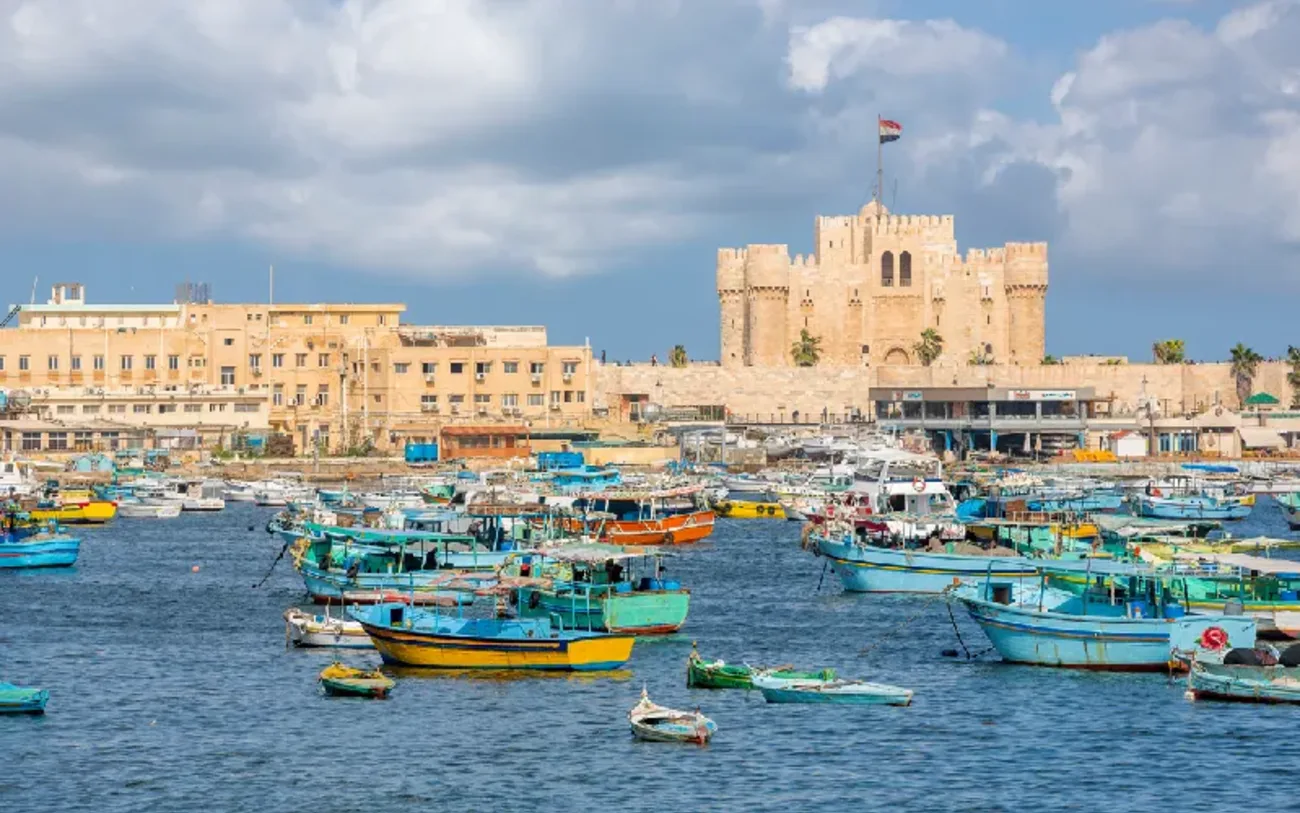
Alexander the Great founded Alexandria in 331 BC, establishing what would become one of antiquity's greatest cities. The coastal metropolis flourished as a center of science, culture, and scholarship. People affectionately called it the "Bride of the Mediterranean" and "Pearl of the Mediterranean Coast".
The city sits at the western edge of the Nile River delta, 114 miles northwest of Cairo. Alexandria served as Egypt's capital from its founding until 642 CE. The city's legacy continues strongly today. It stands as Egypt's second-largest city after Cairo, with 5,362,527 people living in the urban area and 6,100,000 in the metropolitan region. The city's role as Egypt's main seaport and industrial center makes it vital to the nation's economy.
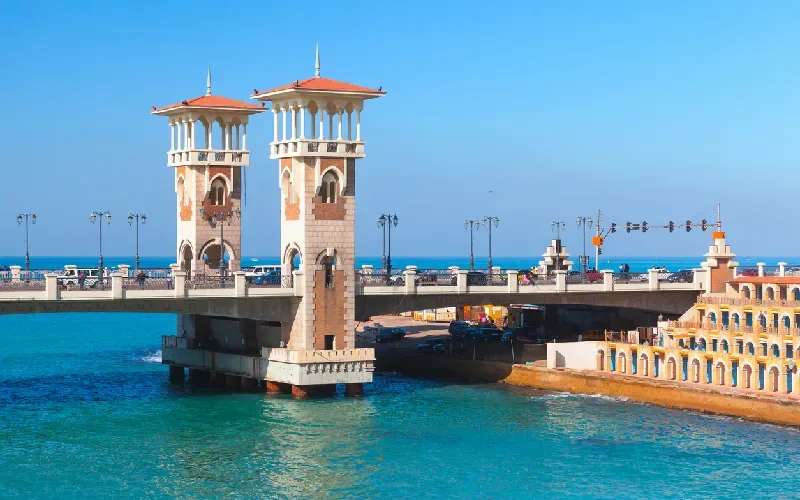
Alexandria sits at the western edge of the Nile River delta, 114 miles (approximately 184 kilometers) northwest of Cairo on Egypt's Mediterranean coast. This strategic coastal location has made it Egypt's main seaport and a vital connection between Egypt and the Mediterranean world.
The Identity of Alexandria: Then and Now
Alexandria's identity reflects a cultural ambivalence that stems from its unique location - a strip of land facing the Mediterranean while turning its back to Egypt. The city has maintained its cosmopolitan character throughout history and belongs as much to the Mediterranean world as to its Egyptian hinterland. From its earliest days, the city created a unique identity by blending Greek and Egyptian traditions in both governance and scholarship.
At its height, Alexandria became the perfect example of multiculturalism. The city welcomed Greeks, Egyptians, Jews, Romans, and many Christian sects. The city was history's first melting pot - a place where different cultures met, mixed, and created something new. The cosmopolitan atmosphere that captivated writers like Cavafy, Forster, and Durrell flourished as non-Arab or non-Egyptian residents made up about a third of Alexandria's population during the 19th and early 20th centuries.
The city went through a dramatic change after the 1952 revolution when most foreign residents left. The city's distinctive identity remains strong despite these changes. A popular trap artist captures this sentiment in the lyrics "I'm not from Egypt, me, I'm from Alexandriaaa". The city's diverse culture lives on today, where "Muslims and Christians sit together, a bearded man and a goth on adjacent tables". The current cultural homogeneity spans just 75 years compared to the city's 2,500-year history. Alexandria continues to strike a balance between its ancient cosmopolitan heritage and its modern Egyptian identity.
Alexander the Great founded Alexandria in 331 BC, establishing what would become one of antiquity's greatest cities. His personal architect, Dinocrates, designed this magnificent city incorporating the finest Hellenic planning elements, creating a masterpiece of ancient urban planning.
City Layout and Landmarks
Alexandria's physical layout stands as a testament to ancient urban planning brilliance. Alexander's personal architect, Dinocrates, designed this magnificent city that incorporated the finest Hellenic planning elements. The city's splendors matched anything found in the ancient world. A principal thoroughfare called the Canopic Way (now Ṭarīq al-Ḥurriyyah) runs east to west through the heart of the city. Large stone slabs pave this wide street that stretches several kilometers along the coastline.
Pompey's Pillar towers 26.85 meters high with its base and capital. This Roman triumphal column stands proudly in its original location as one of the few surviving ancient monuments. Emperor Diocletian commissioned its construction between 298-302 AD. The nearby Catacombs of Kom El Shoqafa from the 2nd century CE showcase a unique blend of Egyptian, Greek, and Roman cultural elements.
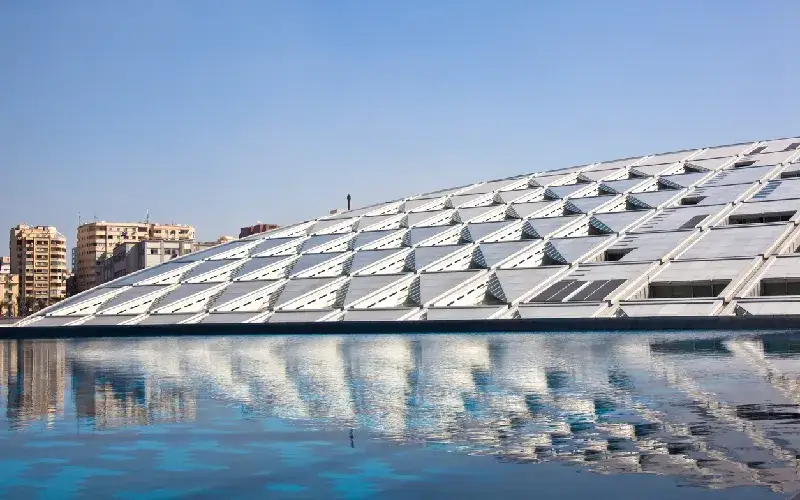
The modern Bibliotheca Alexandrina opened its doors in 2002 as a tribute to the ancient Library of Alexandria. A distinctive tilted roof emerges from the ground like a microchip wafer. Characters from 120 different scripts adorn its walls beautifully.
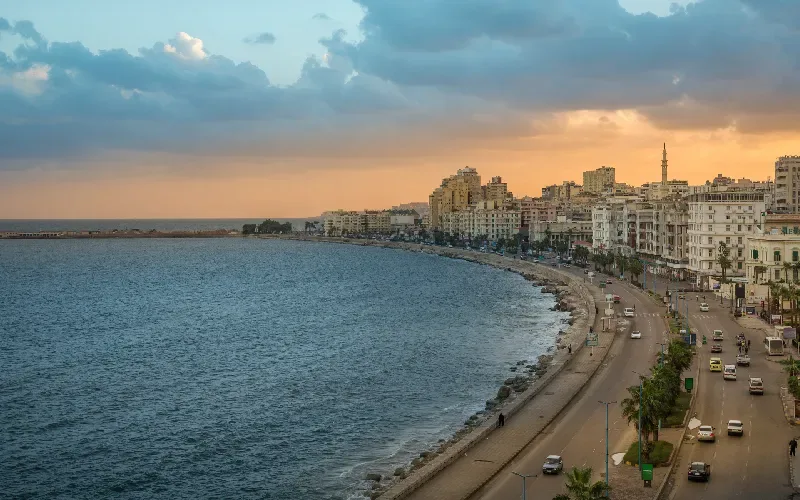
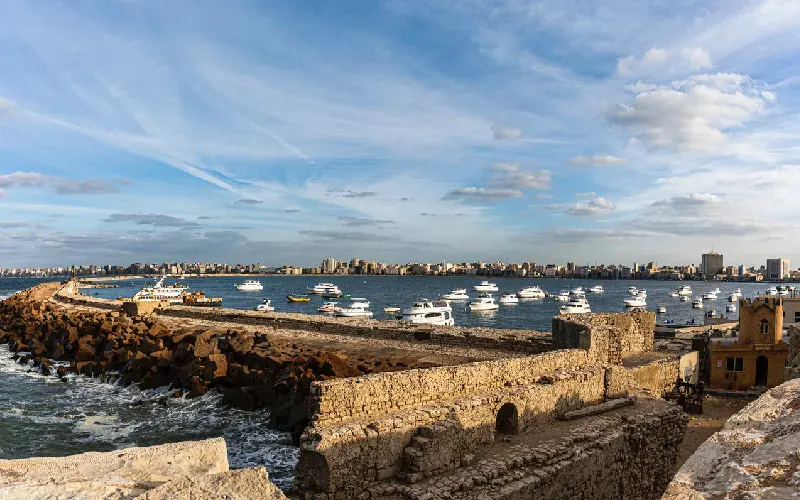
The Alexandria Corniche extends 17 kilometers along the seafront as a magnificent promenade. The majestic Citadel of Qaitbay, a 15th-century defensive fortress, marks its western end. This impressive structure occupies the historic site of the ancient Lighthouse of Alexandria.
Pompey's Pillar is a Roman triumphal column standing 26.85 meters high with its base and capital. Emperor Diocletian commissioned its construction between 298-302 AD. It stands proudly in its original location as one of the few surviving ancient monuments in Alexandria.
The modern Bibliotheca Alexandrina opened in 2002 as a tribute to the ancient Library of Alexandria. Its distinctive tilted roof emerges from the ground like a microchip wafer, and its walls are beautifully adorned with characters from 120 different scripts. It has emerged as a major cultural landmark.
The Alexandria Corniche extends 17 kilometers along the seafront as a magnificent promenade. The majestic Citadel of Qaitbay, a 15th-century defensive fortress, marks its western end, occupying the historic site of the ancient Lighthouse of Alexandria.
Customize Your Dream Vacation!
Get in touch with our local experts for an unforgettable journey.
Plan Your TripAlexandria City Egypt in the 21st Century
Alexandria continues to serve as Egypt's "second capital" in the 21st century. The city makes a major contribution to the national economy as a popular summer holiday spot. This coastal metropolis has grown rapidly, with its population almost doubling to about 5.8 million in just 25 years.
The city stands as an economic powerhouse that produces approximately 40% of Egypt's industrial output. Its key sectors include chemicals, metallurgy, textiles, cement, and oil industries. The city also serves as Egypt's premier trading hub, and its main seaport handles over 40% of the country's trade traffic.
Economic growth has brought environmental challenges to Alexandria. The city's coastline has lost roughly 3.5 meters each year in the last two decades. Building collapses have jumped from one per year to an alarming 40 annually in the last decade. Local authorities have responded by installing nine concrete sea barriers. They have also identified around 7,000 buildings—about 2% of housing—as unsafe.
Alexandria's social fabric has transformed from its cosmopolitan heritage. While Europeans and Jews have mostly left, the city still thrives with a diverse culture where "Muslims and Christians sit together, a bearded man and a goth on adjacent tables". The restored Bibliotheca Alexandrina has emerged as a cultural landmark. The city boasts 41 tourist attractions that span from archeological sites to religious monuments.
Alexandria is evidence of human history and progress, striking a balance between its ancient legacy and modern importance. This coastal gem has changed from Alexander's ambitious vision into a vital Egyptian metropolis over 2,500 years. Without doubt, very few cities worldwide can match its historical importance while staying relevant today.
The city shows how human civilization has grown. People from different cultures lived together here, and their ideas flourished in this melting pot. The 1952 revolution brought major population changes. Notwithstanding that, the spirit of diversity lives on in its streets today, different from its ancient or colonial times.
Alexandria still amazes visitors with its mix of ancient wonders and modern growth. Pompey's Pillar stands tall as it has for centuries, while the new Bibliotheca Alexandrina carries forward its ancient predecessor's intellectual legacy. The sprawling Corniche and mighty Citadel of Qaitbay showcase the city's lasting bond with the Mediterranean.
The city's economic role defines its character. Alexandria serves as Egypt's main seaport, handling 40% of national trade. It also powers manufacturing by producing 40% of industrial output. Its beaches and historical sites draw countless tourists each year, boosting the economy further.
Of course, challenges appear on the horizon. The shoreline faces threats from coastal erosion. Building collapses raise serious safety concerns. The city must carefully plan to balance development with preservation. Yet Alexandria has faced countless challenges throughout its long history.
Alexandria's story shows its strength and ability to adapt. This city writes new chapters while honoring its past, growing from ancient wonder to modern metropolis. It may no longer be the cosmopolitan capital of antiquity, but Alexandria remains true to its heart – a vibrant meeting place where Egypt and the Mediterranean world join together.
Alexandria is Egypt's second-largest city after Cairo, with 5,362,527 people living in the urban area and 6,100,000 in the metropolitan region. The city's population has almost doubled to about 5.8 million in just 25 years due to rapid growth.
Alexandria is affectionately called the "Bride of the Mediterranean" and "Pearl of the Mediterranean Coast" due to its stunning coastal location, rich history, and cultural significance. This nickname reflects the city's intimate relationship with the Mediterranean Sea and its role as a cosmopolitan jewel.
Alexandria served as Egypt's capital from its founding in 331 BC until 642 CE—nearly 1,000 years. After this period, it remained Egypt's "second capital" and continues to be a vital economic and cultural center in the 21st century.
Alexandria is an economic powerhouse producing approximately 40% of Egypt's industrial output in sectors including chemicals, metallurgy, textiles, cement, and oil. As Egypt's premier trading hub, its main seaport handles over 40% of the country's trade traffic, making it vital to the national economy.
At its height, Alexandria became history's first melting pot where Greeks, Egyptians, Jews, Romans, and many Christian sects lived together. During the 19th and early 20th centuries, non-Arab or non-Egyptian residents made up about a third of the population, creating the cosmopolitan atmosphere that captivated famous writers.
The Catacombs of Kom El Shoqafa from the 2nd century CE showcase a unique blend of Egyptian, Greek, and Roman cultural elements. This archaeological site represents Alexandria's multicultural heritage and serves as one of the city's most important ancient monuments.


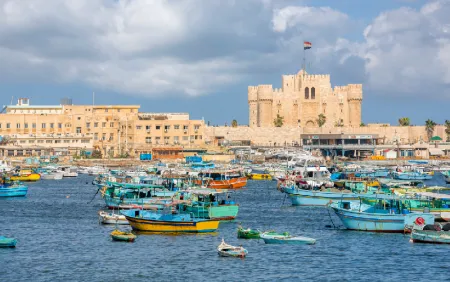
Alexandria, Egypt's "Bride of the Mediterranean" founded 331 BC, is the second-largest city with 5.4 million people and main seaport handling 40% of trade.
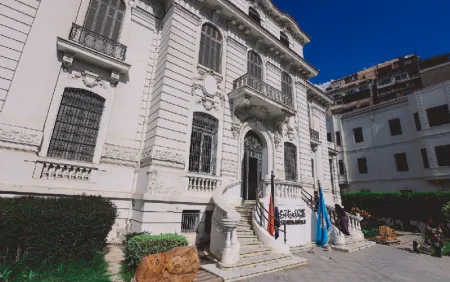
Alexandria National Museum displays 1,800 artifacts in a 1926 palace. Three floors showcase prehistoric to Islamic treasures including Abu Qir Bay finds.
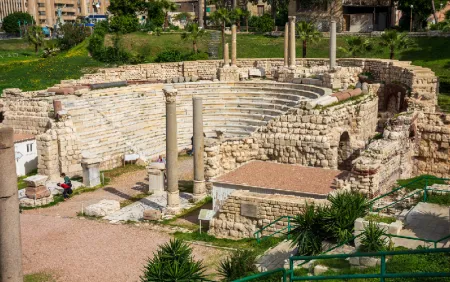
Alexandria Roman Amphitheater at Kom El-Dikka, discovered 1960, is Egypt's only Roman theater. Built 4th century AD with 13 marble rows for 600 spectators.