
 Home
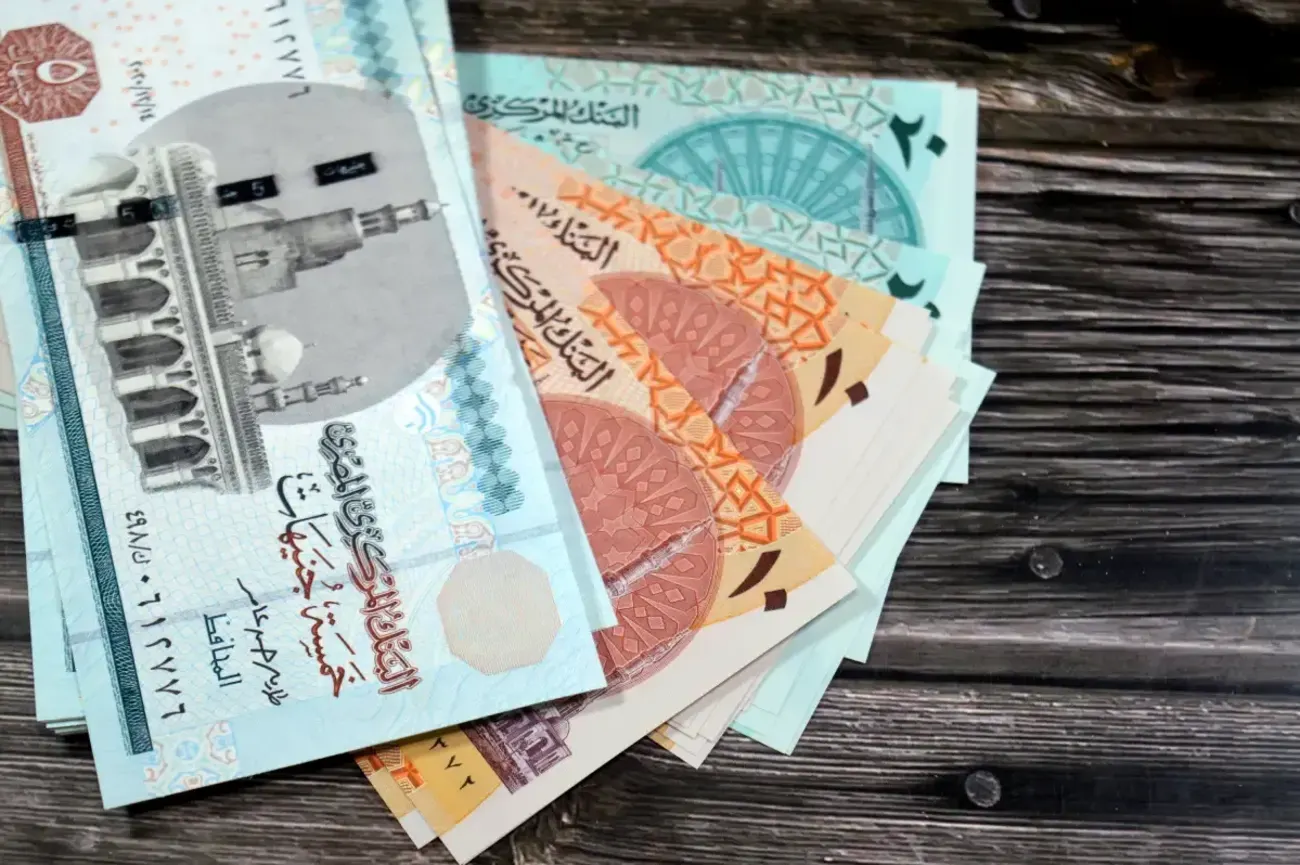
The Egyptian currency is the Egyptian pound, written E£ or LE and split into 100 piastres. It is the only legal money in Egypt and is issued by the Central Bank of Egypt. In late October 2026, one US dollar bought roughly E£56, but the rate changes every day. Cash is still needed for small payments and tips.
This guide explains what the Egyptian pound is, how banknotes and exchange rates work, what visitors can use to pay, how much to tip and how much cash travelers can bring.
Table of Contents
1.What Is the Egyptian Pound?
2.What Do Egyptian Banknotes and Coins Look Like?
3.Egyptian Pound Key Facts
4.What Is the Egyptian Currency Exchange Rate in November 2026?
5.How Do ATMs and Credit Cards Work in Egypt?
6.How Much Cash Can Visitors Bring Into Egypt?
7.How Much to Tip in Egypt?
8.How Much to Tip a Tour Guide in Egypt?
9.Plan an Egypt Trip with a Local Expert
10.Egyptian Currency FAQs: Quick Answers for Travelers
What Is the Egyptian Pound?
The Egyptian pound is the only legal money in Egypt. Locals call the pound a gineih and the piastre a qirsh. Prices in shops, cafés and markets are almost always given in pounds. Some hotels, cruise companies and tour operators quote prices in US dollars or euros, but everyday money in Egypt means pounds.
There is no single Egyptian pound symbol. In English, people write E£ or LE, which comes from the French livre égyptienne. In Arabic, the short form is ج.م, for gineih masri. Menus and price tags may use any of these forms.
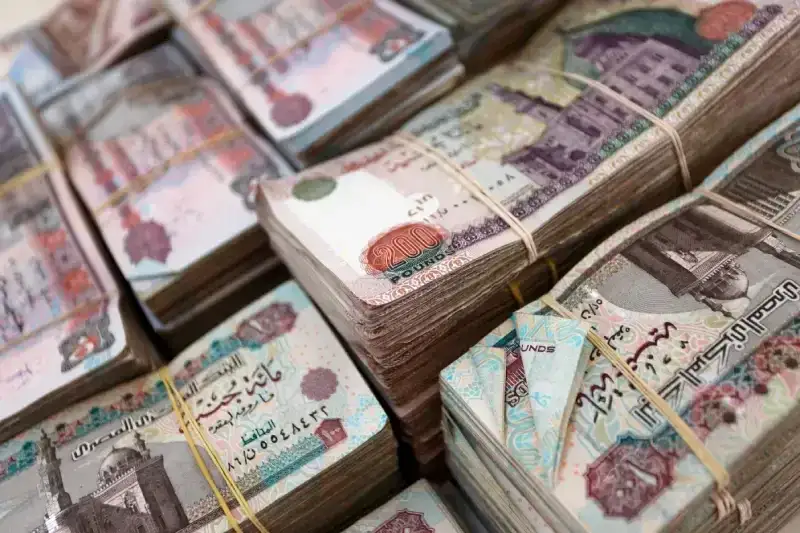
It is called the Egyptian pound, or gineih masri in Arabic. It is written E£, LE or ج.م, and one pound is divided into 100 piastres.
The Central Bank of Egypt issues the notes, and the pound is the only legal tender for everyday payments in Egypt.
What Do Egyptian Banknotes and Coins Look Like?
Egyptian banknotes come in E£5, E£10, E£20, E£50, E£100 and E£200, with Arabic on one side and English on the other. Egypt introduced a polymer E£10 note in 2022 and a polymer E£20 note showing Queen Cleopatra in 2023. In April 2025, the Central Bank of Egypt confirmed that paper and polymer versions both remain valid.
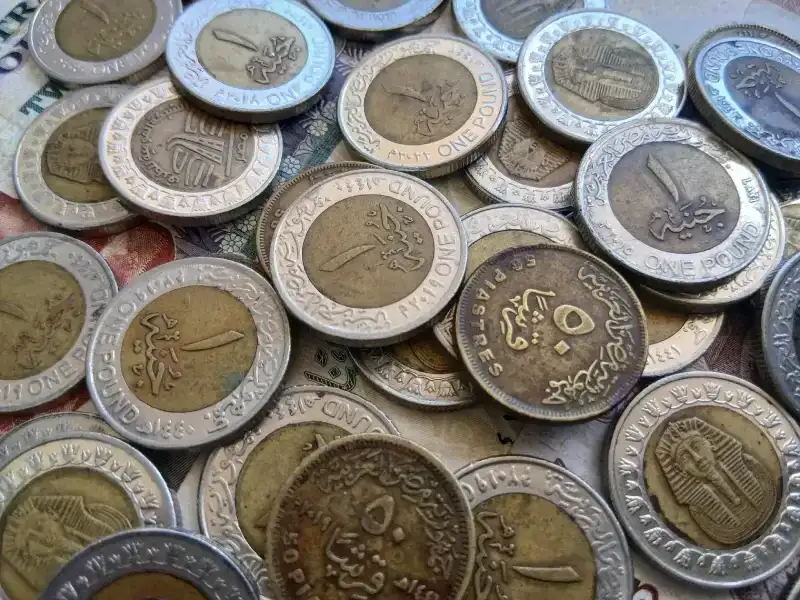
The most common coins are 25 piastres, 50 piastres and E£1. Small change is often short, so shopkeepers may round prices or give sweets instead of coins. In April 2026, Egypt's mint said it plans a new E£2 coin and an updated E£1 coin. Visitors should keep E£5, E£10 and E£20 notes for tips and snacks.
Egyptian Pound Key Facts
The list below sums up the main facts travelers need to know about the Egyptian pound:
- Official name: Egyptian pound, or gineih masri in Arabic.
- ISO code: EGP, used by banks and currency apps.
- Symbols: E£, LE, £E and ج.م on prices.
- Subunit: One pound equals 100 piastres, called qirsh.
- Issued by: The Central Bank of Egypt issues all notes.
- Banknotes: E£5, 10, 20, 50, 100 and 200 are common.
- Polymer notes: E£10 since 2022 and E£20 since 2023.
- Coins: 25 piastres, 50 piastres and E£1 are most common.
- Rate: About E£56 to US$1 in late October 2026.
- Cash rule: Foreign cash over US$10,000 must be declared.
In late October 2026, one US dollar bought roughly E£56, so E£100 was worth a little under US$2.
The pound floats, so its value changes every day.
Always check a live rate from your bank or a currency app before you travel or change money.
What Is the Egyptian Currency Exchange Rate in November 2026?
In late October 2026, one US dollar bought about E£56, so E£100 was worth a little under US$2. The pound has a floating rate, so its value moves every day. It weakened during 2026: in early March, the dollar was worth about E£49, and by 27 October it had reached about E£56.
These numbers are only a guide, so travelers should check a live rate from their bank, a currency app or the Central Bank of Egypt. Banks and exchange offices add a small margin, so the rate visitors get is a little lower than the market rate. Visitors can exchange money at:
- Banks and official exchange offices (maktab sarafa) in every city.
- 24-hour bank counters at Cairo International Airport, with fair rates.
- Hotels, which give poorer rates and suit emergencies only.
- Never on the street, which travelers should always avoid.
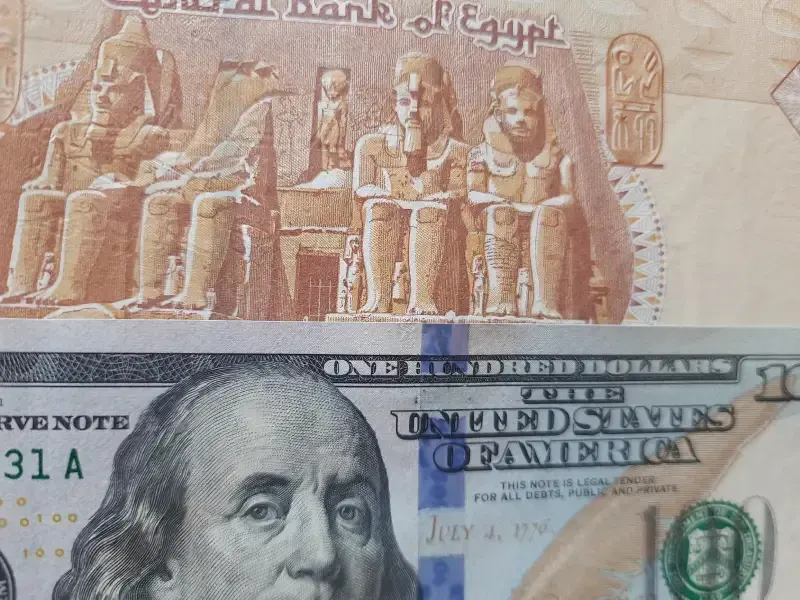
It is usually better to exchange money in Egypt. Rates at Egyptian banks, exchange offices and ATMs are normally better than at home.
Many travellers change a small amount at the airport on arrival for transport and tips, then use ATMs or exchange offices in town.
Customize Your Dream Vacation!
Get in touch with our local experts for an unforgettable journey.
Plan Your TripHow Do ATMs and Credit Cards Work in Egypt?
ATMs in Egypt
ATMs are easy to find in Cairo, Luxor, Aswan, Hurghada and Sharm El Sheikh, but they are rarer in small towns and desert areas. Most machines accept Visa and Mastercard. Travelers should use ATMs inside banks or malls during opening hours, so staff can help if a card gets stuck.
ATM Fees and Currency Conversion
Home banks may charge a fee for each withdrawal, and some Egyptian banks add their own fee, so larger, less frequent withdrawals save money. If the screen offers to charge in the home currency, visitors should decline and choose Egyptian pounds. This "dynamic currency conversion" usually gives a worse rate.
Credit Cards in Egypt
Credit cards work well in hotels, large restaurants, malls, supermarkets and many tourist shops. Acceptance depends on the card and the place:
- Visa and Mastercard: Widely accepted across hotels, malls and restaurants.
- American Express: Accepted in fewer places than other major cards.
- Cash only: Many small shops, street cafés and markets take no cards.
Contactless Payments and Apple Pay
Contactless payment is growing quickly in Egypt's cities. Apple Pay launched in Egypt in late 2024 and works at many card terminals. Visitors should still carry some cash for places that do not accept cards.
InstaPay in Egypt
InstaPay is the Central Bank of Egypt's instant transfer app, and locals use it to send money by phone. It is linked to Egyptian bank accounts and cards, so most short-term visitors cannot use it.
What Is the Best Currency to Take to Egypt?
US dollars, euros and British pounds are the easiest currencies to exchange. Travelers should bring clean, undamaged notes, because some offices refuse torn or marked bills. Some hotels and tour firms accept dollars or euros, but small shops and taxis want Egyptian pounds, and paying in pounds usually gets a fairer price.
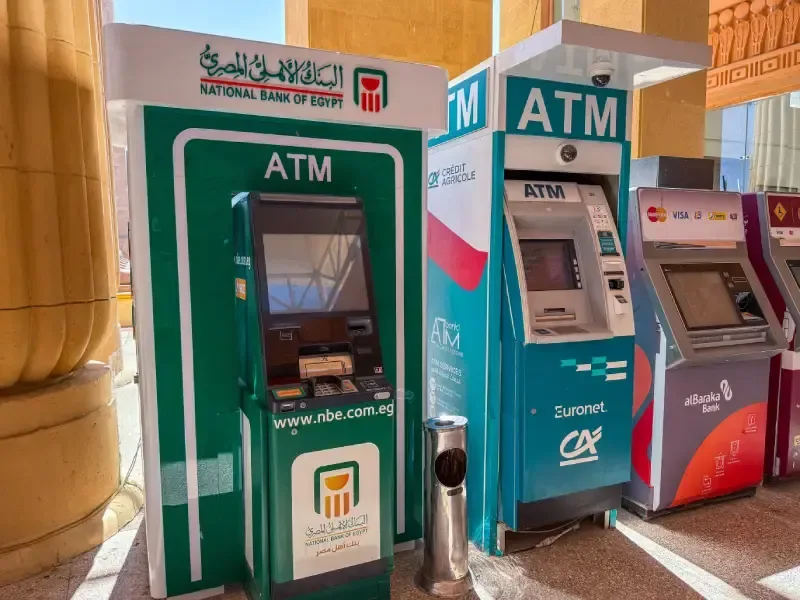
Yes, in many places. Visa and Mastercard are accepted in most hotels, large restaurants, malls, supermarkets and tourist shops. American Express is less common.
Small shops, street food stalls and local markets often take cash only, so always carry some Egyptian pounds as well as a card.
How Much Cash Can Visitors Bring Into Egypt?
There is no upper limit on foreign cash entering Egypt, but amounts over US$10,000, or the same value in other currencies, must be declared on arrival. For Egyptian pounds, the long-standing limit is E£5,000 per traveler when entering or leaving. Rules can change, so travelers should check with their airline or the Egyptian embassy before flying.
Travelers can handle money smoothly with a few simple steps:
- Tell the home bank about the trip and check foreign fees.
- Change a small amount at the airport for tips and transport.
- Carry small notes separately and keep larger notes somewhere safe.
- Spend or change leftover pounds within the E£5,000 limit before leaving.
Visitors should count their change carefully and check each note before handing it over, because some notes have similar colors. Keeping notes flat in a wallet, rather than crumpled in a pocket, makes them easier to check and to spend.
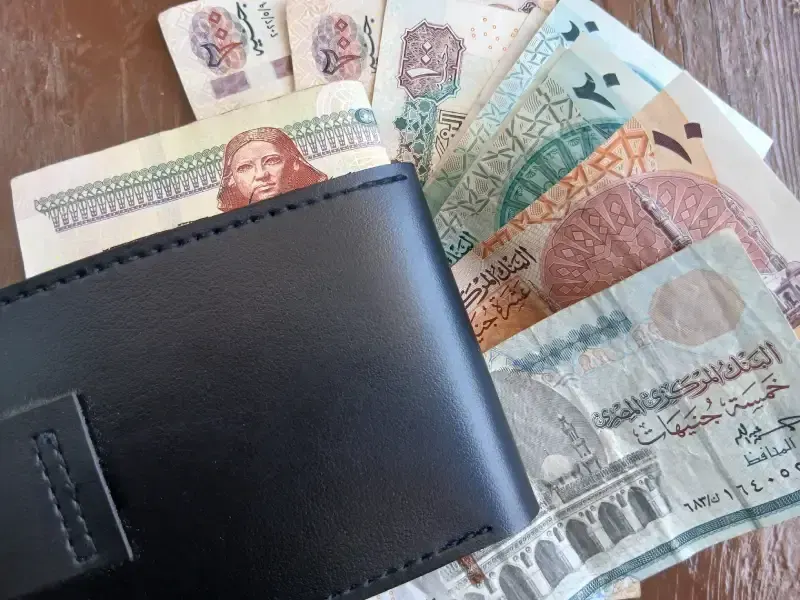
It depends on your plans. Many travellers carry enough for tips, snacks, water, toilets and short taxi rides, and use cards for hotels and larger meals.
Keep small notes of E£5 to E£50 handy, and store larger notes and cards in a safe place.
How Much to Tip in Egypt?
The amounts below are typical ranges suggested by travel guides in 2025, and prices rise quickly, so they work best as a starting point.
| Service | Typical tip |
|---|---|
| Café or street food | Round up, or E£10–50 |
| Mid-range restaurant | Extra 5–10% in cash, even with a service charge |
| Upscale restaurant | 10–15% in cash |
| Hotel housekeeping | E£50–100 per day |
| Hotel porter | From about E£50 per bag |
| Taxi or ride-hailing app | Round up; small extra for good service |
Tipping culture in Egypt is strong. The Arabic word baksheesh covers tips, small gifts and payments for small favors. Many service workers earn low wages, so tips are an important part of their income. A tip is expected for most services, from carrying bags to opening a tomb door for a photo. Tipping is still personal, so travelers give more for great service and less for poor service.
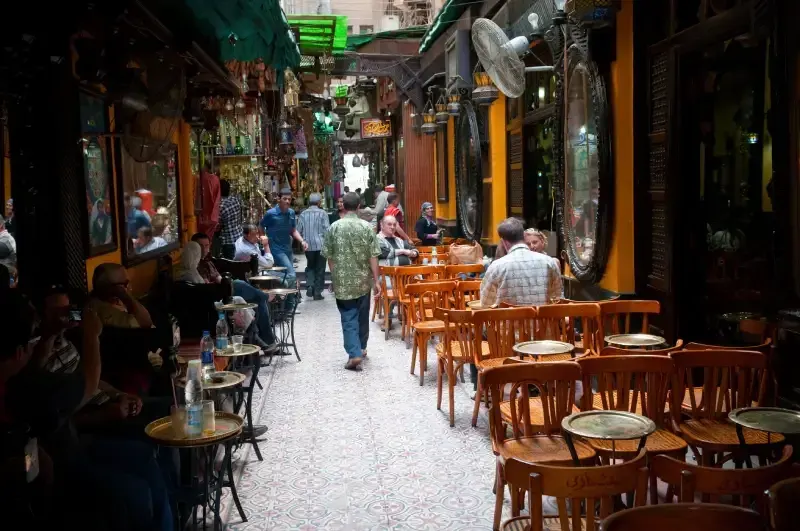
Typical tips are:
- Restaurants: 5–15% of the bill
- Housekeeping: E£50–100 per day
- Tour driver: E£200–500 per day
- Taxis: round up the fare
- Small services: small notes
These amounts are guides only, as prices in Egypt rise quickly with inflation.
How Much to Tip a Tour Guide in Egypt?
A private tour guide in Egypt is usually tipped E£500–1,000 or more per day, while tips on tours and cruises follow the ranges below.
| Tour service | Typical tip |
|---|---|
| Private tour guide | E£500–1,000 or more per day |
| Group tour guide | E£200–500 per traveler per day |
| Tour driver | E£200–500 per day |
| Nile cruise crew | Shared tip envelope at the end of the trip |
Travelers usually give the tip in cash at the end of the tour, ideally in a sealed envelope. On guided tours, tips are always at the traveler's discretion. Keeping a separate stash of larger notes for guides and drivers makes the end of the trip easier.
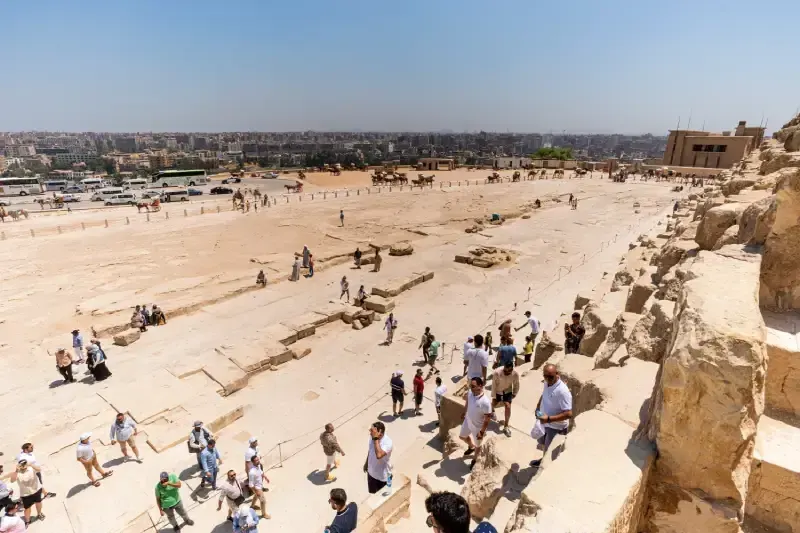
Tipping is part of the travel culture in Egypt. On a Nile cruise, it’s standard to leave about $3–5 per person, per night for the crew. For example, a couple on a 4-night cruise would tip around $32 total, usually left at reception at the end. For your Egyptologist guide or local service providers in Luxor, Edfu, or Aswan, tipping about £10 per person per day is polite. Of course, if the service is exceptional, you can always give more.
Plan an Egypt Trip with a Local Expert
A licensed Egyptologist guide helps visitors understand local prices, tipping and payments while exploring sites such as the Giza Pyramids, Luxor and a Nile cruise. Expert-led tours cover hotels, transfers and guided sightseeing in one upfront price, so travelers only need cash for tips and small extras. Travelers who want help planning can fill in the inquiry form on this page, and a local Egypt travel specialist will reply with a tailor-made plan.
Egyptian Currency FAQs: Quick Answers for Travelers
Yes, travelers can bring up to 5,000 EGP or over $10,000 USD with mandatory declaration.
Carry some. Cards work at hotels, the Grand Egyptian Museum and bigger restaurants, but small tips, felucca captains, taxis, bazaar stalls and koshari shops run on Egyptian pounds. Withdraw from bank ATMs, keep small notes, and carry a few US dollars for tips, which most guides and drivers happily accept.
Some hotels, cruise companies and tour operators accept US dollars, especially for larger bills.
However, taxis, cafés, markets and small shops expect Egyptian pounds. Paying in local money is usually simpler and often cheaper.
It is best to change dollars into pounds at a bank or exchange office.

Uncover the beauty of Christmas in Egypt. Dive into festive traditions and cultural highlights with our detailed celebration guide.

Discover the magic of the Abu Simbel Sun Festival and its ancient alignment. Learn when it happens and why it matters—read the full guide now.
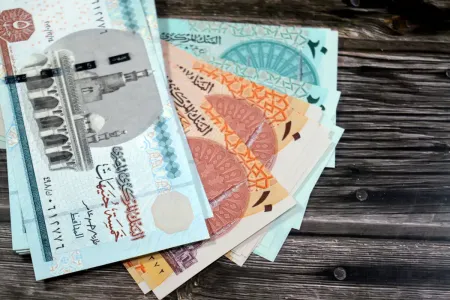
Learn how the Egyptian currency works, covering banknotes, coins, exchange rates, ATMs, cards, cash rules and tipping in Egypt.

Find out everything about Egypt, the land of pharaohs, and get to know this land from its civilization, history to its gastronomy and language.

Traditional Egyptian food every visitor has to try. Enjoy the Egyptian cuisine, taste the most delicious Egyptian food such as Ful, Taamiya, Koshari, and more.

Check all the information you need for getting to Egypt like Egypt Visa Requirements and How Much Egypt Visa and more.

Learn everything about Egypt weather & climate. Find out when to visit, what to pack, and get essential tips in our complete travel guide.

Discover everything about safety and security in Egypt. Get tips, updates, and advice for a worry-free travel experience in Egypt.

Experience the magic of festivals in Egypt! Uncover ancient rituals and lively modern celebrations across the country's diverse regions and communities.
