
 Home
Wadi El Hitan: A Simple Guide to Egypt's Valley of the Whales
Wadi El Hitan, or the "Valley of the Whales," is a desert valley in Egypt's Fayoum region, about 150 km southwest of Cairo. It holds hundreds of fossil skeletons of early whales that lived about 37 to 41 million years ago, when the area lay under a warm sea. Some of these whales still had small hind legs. UNESCO listed the valley as a World Heritage Site in 2005 because it shows how whales changed from land animals into ocean giants.

Table of Contents
-
1. Whale Valley Facts at a Glance
-
2. What Is Whale Valley Egypt?
-
3. How Did Whales End Up in the Desert?
-
4. Meet the Prehistoric Whales
-
5. Why Is Whale Valley a UNESCO World Heritage Site?
-
6. The Fossils and Climate Change Museum
-
7. Where Is Whale Valley and How Do You Get There?
-
8. What Can You See and Do?
-
9. When Is the Best Time to Visit?
-
10. Entry Fees and Practical Tips
-
11. Timeline: Key Dates in Whale Valley's Story
-
12. New Discoveries Nearby
-
13. Combining the Visit with Fayoum Oasis
-
14. Frequently Asked Questions
1. Whale Valley Facts at a Glance
|
Fact |
Details |
|---|---|
|
Arabic name meaning |
"Valley of the Whales" |
|
Location |
Western Desert, Fayoum Governorate, Egypt |
|
Protected area |
Inside the Wadi El Rayan Protected Area |
|
Distance from Cairo |
About 150 km southwest (2–3 hours by road) |
|
Age of fossils |
About 37 to 41 million years (Eocene epoch) |
|
Main whale fossils |
Basilosaurus and Dorudon (archaeoceti) |
|
UNESCO status |
World Heritage Site since 2005 |
|
On-site museum |
Fossils and Climate Change Museum, opened January 2016 |
|
Access |
Desert track; a 4x4 is strongly advised |
The valley lies in the Western Desert of Egypt, in Fayoum Governorate, about 150 km southwest of Cairo. It sits inside the Wadi El Rayan Protected Area. The final part of the trip follows a desert track, so most visitors travel by 4x4 with a local driver or guide.
2. What Is Whale Valley Egypt?
Whale Valley Egypt is a wide, sandy valley in the Western Desert. Wind has carved its soft rock into strange shapes, and it has slowly uncovered the bones of ancient sea creatures. Today, visitors walk along a marked trail and see whale skeletons lying exactly where they died, millions of years ago.
The first whale skeletons here were found in the winter of 1902–03. For about 80 years, few people came, because the valley was hard to reach. Interest grew again in the 1980s, when four-wheel-drive cars made the trip easier. Sadly, some collectors took bones away, which led to calls for strong protection (Wikipedia).
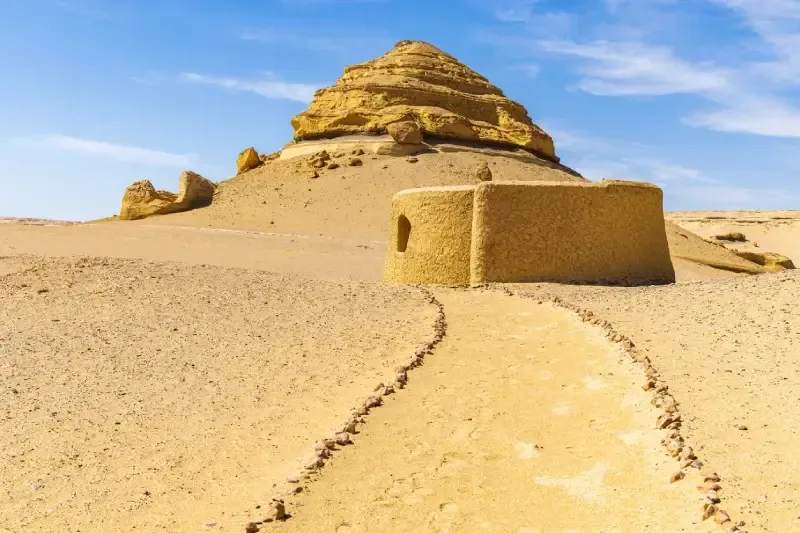
It is famous for hundreds of fossil skeletons of early whales, about 37 to 41 million years old. Some still have tiny hind legs and toes. These fossils show how whales changed from land animals into sea mammals, which is why UNESCO lists the site.
Customize Your Dream Vacation!
Get in touch with our local experts for an unforgettable journey.
Plan Your Trip3. How Did Whales End Up in the Desert?
The Ancient Tethys Sea
Around 40 million years ago, much of northern Egypt lay under the Tethys Sea, a warm ocean that once stretched between Africa and Eurasia. When whales and other sea animals died, their bodies sank into the soft seabed and were buried. Over time, the sea pulled back, the mud turned to rock, and the dry desert climate kept the bones safe.
A Window into Whale Evolution
Modern whales come from small, four-legged land mammals. Over millions of years, their bodies became longer, their front legs became flippers, and their back legs shrank. The fossils in the valley show whales in the final stage of losing their hind legs. This makes the site one of the best places on Earth to study whale evolution.
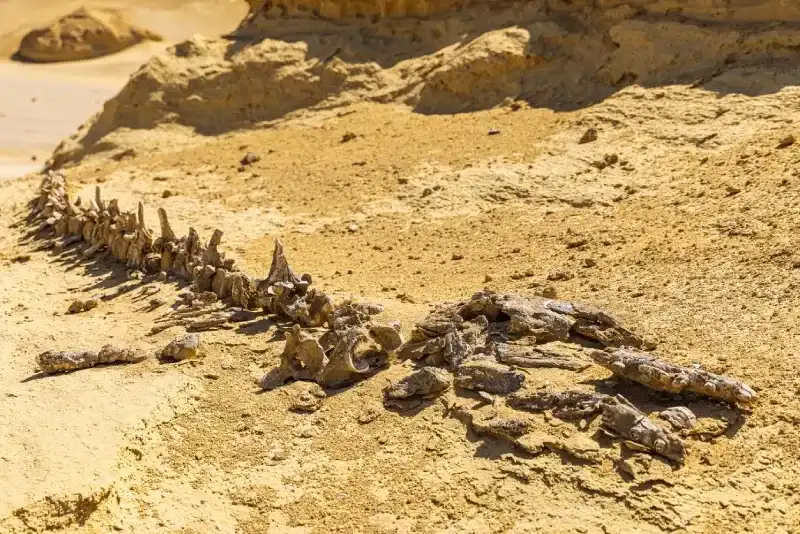
Whales evolved from four-legged land mammals. Over millions of years, their back legs shrank. The early whales in the valley, such as Basilosaurus, still had small hind legs with feet and toes. These legs were too small to walk on and were leftovers from their ancestors.
The Tethys Sea was an ancient ocean that once lay between Africa and Eurasia. About 40 million years ago, it covered much of northern Egypt, including Fayoum. Whales, sharks, sea cows and turtles lived in its warm, shallow waters, and their remains are now found in the desert.
4. Meet the Prehistoric Whales
Basilosaurus: The Giant Hunter
Basilosaurus isis was the largest whale of its time. It could grow to about 18 metres long and had a long snout with sharp teeth. A 2019 study suggests it hunted smaller whales and crushed their skulls (Live Science). Its name means "king lizard," because early scientists first thought its bones belonged to a sea reptile.
In 1989, a University of Michigan team working with Egyptian experts found Basilosaurus skeletons with tiny hind legs, feet and toes. These legs were far too small to walk on. They were leftovers from the whale's land-living ancestors.
Dorudon and Other Archaeoceti
Dorudon was a smaller whale, about 3 to 5 metres long. Both Basilosaurus and Dorudon belong to the archaeoceti, an extinct group of "ancient whales." Scientists have found at least two rarer whale species here too.
The valley is not only about whales. Fossils of sea cows, sharks, sawfish, rays, crocodiles, turtles and an early elephant relative called Moeritherium have also been found. In 2021, researchers described the oldest known pelican fossil from the site.
Basilosaurus was a giant early whale that lived about 40 million years ago. It could reach about 18 metres long, had sharp teeth and hunted fish and smaller whales. Its name means "king lizard," because scientists first thought its bones came from a sea reptile.
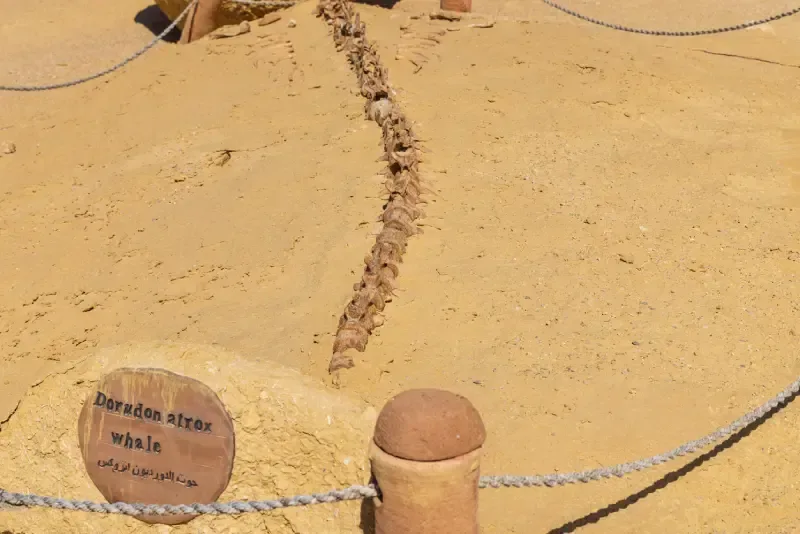
Dorudon was a smaller early whale, about 3 to 5 metres long. Like Basilosaurus, it belongs to the archaeoceti, an extinct group of ancient whales. Its fossils are common in the valley, and some young Dorudon may have been prey for Basilosaurus.
Archaeoceti means "ancient whales." It is the name of an extinct group of early whales that lived roughly 50 to 34 million years ago. The group includes Basilosaurus and Dorudon, and it links land-living ancestors with today's whales and dolphins.
5. Why Is Whale Valley a UNESCO World Heritage Site?
UNESCO added the valley to its list in 2005 under criterion (viii), which covers major stages in the history of life on Earth. It is one of the few natural sites among the UNESCO World Heritage Sites in Egypt. UNESCO notes that the number, quality and concentration of fossils here are exceptional, and that many are complete skeletons (UNESCO).
The site is owned by the state and run by Egypt's Nature Conservation Sector. Cars may not drive among the fossils, and visitors must stay on footpaths. This strict care keeps the fragile bones safe for future research.
The Intact Whale Found in 2015
In 2015, an Egyptian team led by Dr Mohamed Sameh Antar announced a complete Basilosaurus skeleton, about 18 metres long, including its tail bones. Inside its stomach area, they found remains of a sawfish and a smaller whale (IUCN).
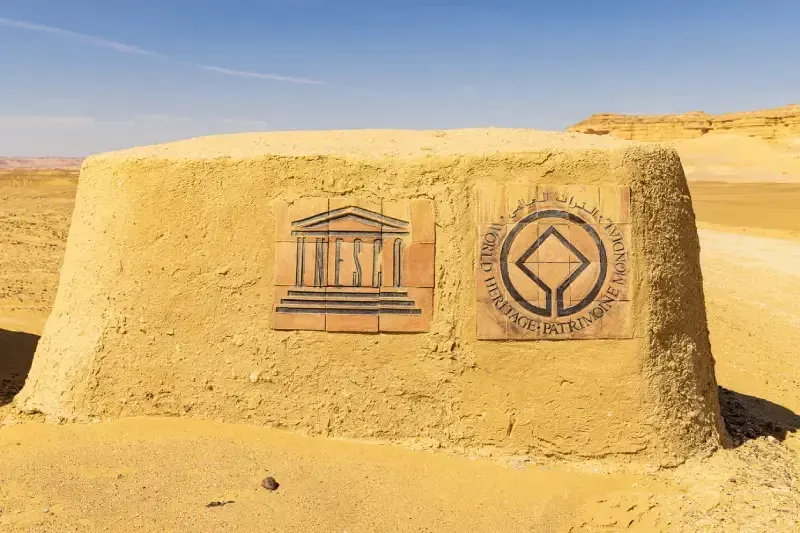
UNESCO inscribed the valley as a World Heritage Site in 2005. It was listed under criterion (viii) because its fossils record a major stage in the history of life: the change of whales from land-based animals into fully ocean-going mammals, recorded in rare detail.
6. The Fossils and Climate Change Museum
Egypt opened the Fossils and Climate Change Museum at the site in January 2016. It was built with the United Nations Development Programme and support from Italy (Egyptian Streets). The low building is partly set into the desert. Its star exhibit is a huge Basilosaurus isis skeleton, shown with skulls, leg bones and other fossils. Displays also explain how Earth's climate has changed over time.
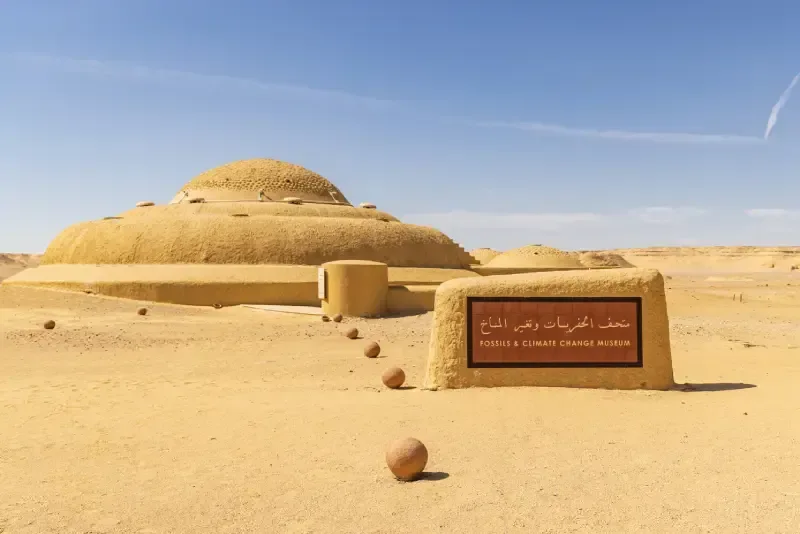
Yes. The Fossils and Climate Change Museum opened at the site in January 2016. Its highlight is a large Basilosaurus isis skeleton. It also shows skulls, leg bones and other fossils, and it explains how Earth's climate has changed over millions of years.
7. Where Is Whale Valley and How Do You Get There?
Location in the Wadi El Rayan Protected Area
The valley sits inside the Wadi El Rayan Protected Area in Fayoum, southwest of Cairo. Wadi El Rayan is also famous for its lakes, waterfalls and golden dunes, so many trips visit both places on the same day.
Travelling by 4x4
Most visitors drive from Cairo to Fayoum on paved roads. The last part of the journey follows an unpaved desert track with few signs, so a 4x4 vehicle and a driver who knows the way are strongly advised. Allow two to three hours each way. Phone signal can be weak, so bring plenty of water and avoid driving after dark. Learn more in our guide to Egypt transportation.
The valley is about 150 km southwest of Cairo. The drive usually takes two to three hours each way, including the slow final section on an unpaved desert track. Day trips from Cairo often last 10 to 12 hours in total.
Yes, a 4x4 is strongly advised. The last part of the route is an unpaved desert track with sand and few signs. Most visitors hire a 4x4 with an experienced local driver or join an organised tour, which is safer and easier.
8. What Can You See and Do?
Walk the Fossil Trail
A marked trail links the main fossils. Small shelters give shade, and signs explain each skeleton. Near the car park, there is a visitor centre with toilets and a small shop for drinks and snacks. Most people spend two to four hours at Wadi El Hitan, including the museum.
Camping and Stargazing
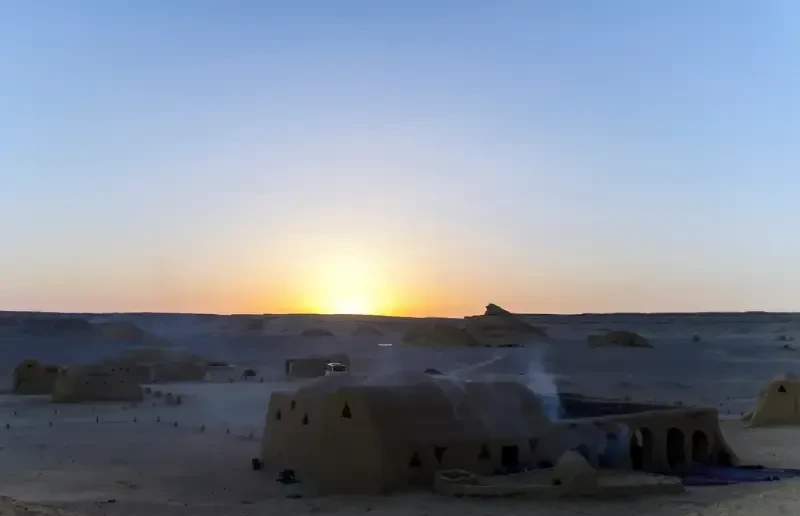
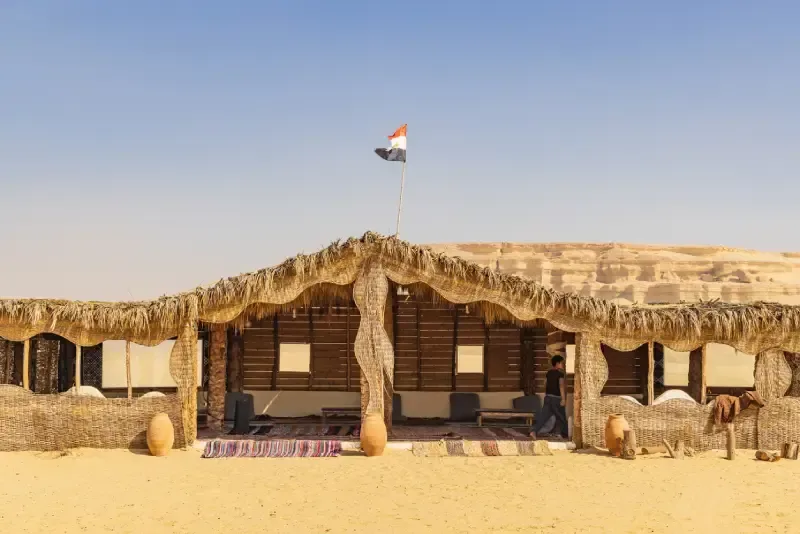
There is a small campsite near the visitor area, and desert camping is popular on winter weekends. Far from city lights, the night sky is dark and clear. On a moonless night, the Milky Way can be bright overhead.
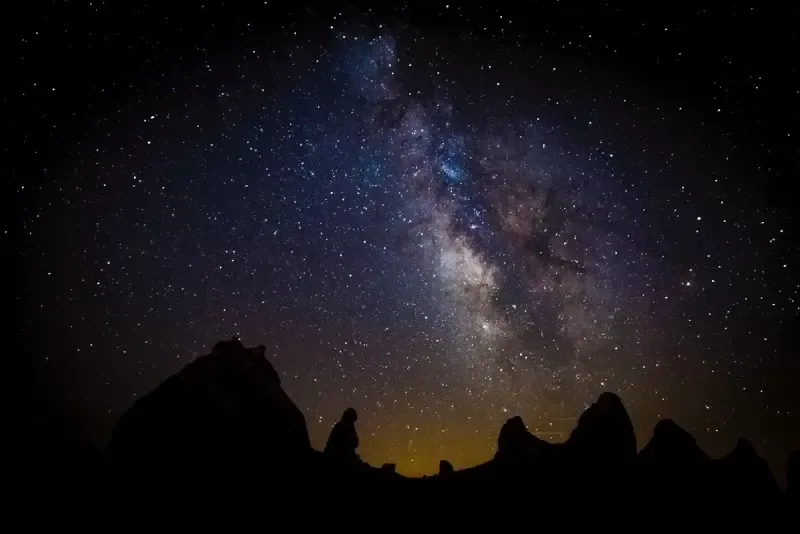
Yes. There is a small campsite near the visitor area, and desert camping is popular on winter weekends. Bring warm clothes, as nights can be cold. Camping is usually arranged through local guides or tour operators who know the protected area rules.
Yes. The valley is far from city lights, so the night sky is very dark. On clear, moonless nights, visitors can see many stars and often the Milky Way. This makes an overnight camp one of the most memorable ways to experience the site.
9. When Is the Best Time to Visit?
The cooler months, from about October to April, are the most comfortable. Summer days can be extremely hot, with little shade on the trail. In any season, arrive early in the morning or in the late afternoon. Winter nights in the desert can be cold, so campers should pack warm layers.
The best time is from about October to April, when days are cooler. Summer is extremely hot, and the trail has little shade. Whatever the season, visit early in the morning or late in the afternoon for softer light and lower heat.
10. Entry Fees and Practical Tips
There is an entry fee for foreign visitors and a lower fee for Egyptians. One travel guide updated in 2026 lists about US$15 for foreigners, but fees for Egypt's nature reserves change often, so check the current price before you go. Day tours often do not include the ticket.
- Stay on the marked paths and never touch or remove fossils.
- Wear a hat, sunscreen and closed shoes.
- Carry cash, water and snacks.
- Take all rubbish home with you.
Foreign visitors pay more than Egyptians. One travel guide updated in 2026 lists about US$15 for foreigners, but nature reserve fees in Egypt change often. Always check the latest price before your visit, and note that many day tours do not include the ticket.
Most visitors spend two to four hours at the site. This is enough time to walk the fossil trail, stop at the shelters and visit the museum. Add more time if you also want to see Wadi El Rayan's lakes and waterfalls.
No. The fossils are fragile and strictly protected by Egyptian law. Visitors must stay on the marked paths, and cars may not drive among the skeletons. Touching, moving or taking any fossil is forbidden and can cause permanent damage to the site.
11. Timeline: Key Dates in Whale Valley's Story
- About 41–37 million years ago: Whales and other sea creatures live in the Tethys Sea.
- Winter 1902–03: The first whale skeletons are found.
- 1989: Scientists find Basilosaurus fossils with hind legs and toes.
- 1997: The Wadi El Rayan Protected Area is declared.
- 2005: UNESCO inscribes the valley as a World Heritage Site.
- 2015: A complete Basilosaurus skeleton is announced.
- January 2016: The Fossils and Climate Change Museum opens.
- 2023: A tiny 41-million-year-old whale is named from the protected area.
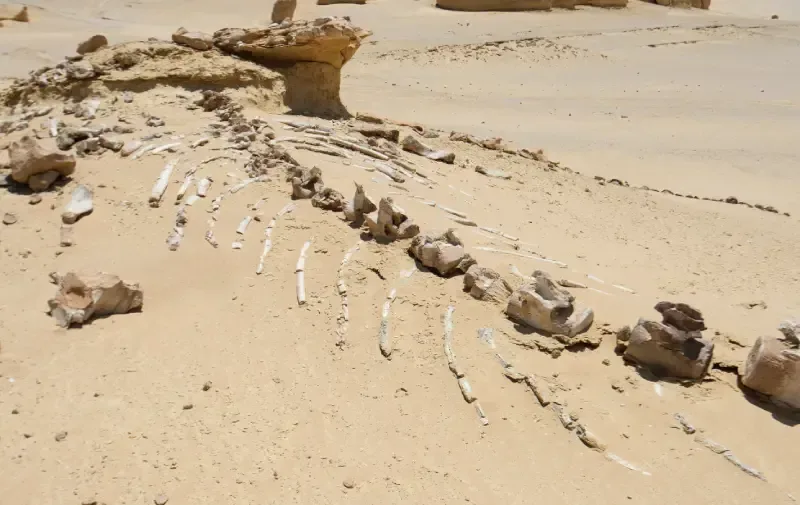
Most fossils in the valley are about 37 to 41 million years old. They come from the Eocene epoch, when northern Egypt was covered by the warm Tethys Sea. The dry desert climate has protected the bones ever since the sea disappeared.
12. New Discoveries Nearby
In August 2023, scientists led by Hesham Sallam of the American University in Cairo named Tutcetus rayanensis, a small whale found in the Wadi El Rayan Protected Area. It was about 2.5 metres long, weighed around 187 kg and lived about 41 million years ago (ScienceAlert). Research in the area continues, and new fossils are still being found.
Yes. Research continues in the Wadi El Rayan area. In 2023, scientists named Tutcetus rayanensis, a small 41-million-year-old whale. In 2015, a complete Basilosaurus skeleton was announced, and in 2021 the oldest known pelican fossil was described from the valley.
13. Combining the Visit with Fayoum Oasis
Fayoum is one of Egypt's oldest farming regions, with lakes, palm groves and pottery villages. Read our guides to El Fayoum and the Faiyum in Egypt to plan a longer stay. If you love the desert, see our pages on Egypt's Western Desert and the White Desert.
Ready to explore further? Discover more of Egypt in our guide to the Egypt pyramids, or browse our Cairo day tours and day tour to El Fayoum from Cairo. Fill in the inquiry form to plan a tailor-made desert trip to see the whales that once swam where the sand lies today.
Nearby, the Wadi El Rayan Protected Area has two lakes linked by small waterfalls, plus sand dunes and springs. Fayoum Oasis also offers Lake Qarun, palm groves and pottery villages. Many trips combine the fossils and Wadi El Rayan in one day.
14. Frequently Asked Questions
Foreign visitors pay more than Egyptians. One travel guide updated in 2026 lists about US$15 for foreigners, but nature reserve fees in Egypt change often. Always check the latest price before your visit, and note that many day tours do not include the ticket.
The best time is from about October to April, when days are cooler. Summer is extremely hot, and the trail has little shade. Whatever the season, visit early in the morning or late in the afternoon for softer light and lower heat.
Yes. There is a small campsite near the visitor area, and desert camping is popular on winter weekends. Bring warm clothes, as nights can be cold. Camping is usually arranged through local guides or tour operators who know the protected area rules.
Yes. The valley is far from city lights, so the night sky is very dark. On clear, moonless nights, visitors can see many stars and often the Milky Way. This makes an overnight camp one of the most memorable ways to experience the site.
Most visitors spend two to four hours at the site. This is enough time to walk the fossil trail, stop at the shelters and visit the museum. Add more time if you also want to see Wadi El Rayan's lakes and waterfalls.
Nearby, the Wadi El Rayan Protected Area has two lakes linked by small waterfalls, plus sand dunes and springs. Fayoum Oasis also offers Lake Qarun, palm groves and pottery villages. Many trips combine the fossils and Wadi El Rayan in one day.
No. The fossils are fragile and strictly protected by Egyptian law. Visitors must stay on the marked paths, and cars may not drive among the skeletons. Touching, moving or taking any fossil is forbidden and can cause permanent damage to the site.
Yes. Research continues in the Wadi El Rayan area. In 2023, scientists named Tutcetus rayanensis, a small 41-million-year-old whale. In 2015, a complete Basilosaurus skeleton was announced, and in 2021 the oldest known pelican fossil was described from the valley.
A simple guide to the tomb of Nefertari (QV66), covering who the queen was, the tomb paintings, the 1904 discovery, conservation and visiting today.
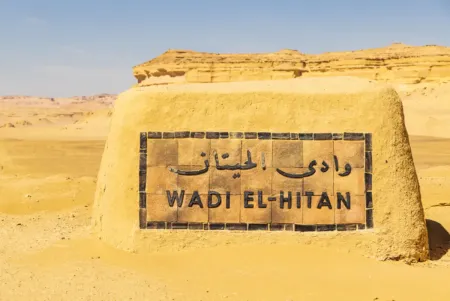
A simple guide to Wadi El Hitan, Egypt's Whale Valley, covering its whale fossils, UNESCO status, museum, travel tips and best time to visit.
A simple guide to ancient Egyptian religion, covering Ma'at, the pharaoh, creation myths, temples, mummification, the afterlife and where to see it today.
A complete guide to the Grand Egyptian Museum near Giza, covering Tutankhamun’s treasures, the Ramses II statue, tickets and opening hours.
Explore life, religion, and architecture in the old kingdom of ancient Egypt. Learn more and prepare your trip to Egypt’s ancient wonders today.
Middle Kingdom of Egypt: Archaeologists refer to the second period of stability in Ancient Egypt as the Middle Kingdom (2055–1650 BC)
Uncover the glory of the New Kingdom of Ancient Egypt—learn about its pharaohs, remarkable power, and lasting cultural legacy.

Discover the incredible story of Queen Hatshepsut, Egypt's most famous female pharaoh. Explore the legacy of pharaoh queen hatshepsut.

Ramesses II, or Ramesses the Great, is one of the most famous figures in the history of Ancient Egypt.

Learn about the Greco-Roman period in Egypt and the must-see sites shaped by Greek, Roman, and Egyptian culture. Start planning your trip today.

Discover the fascinating life, reign, and lasting legacy of Queen Cleopatra, Egypt’s iconic and influential last pharaoh.

Follow Alexander the Great’s path across Egypt—historic cities, temples, and oases await. Discover history and plan your epic trip today.

Learn about Islamic Egypt’s transformation under powerful dynasties. Discover the stories that shaped Cairo’s history!
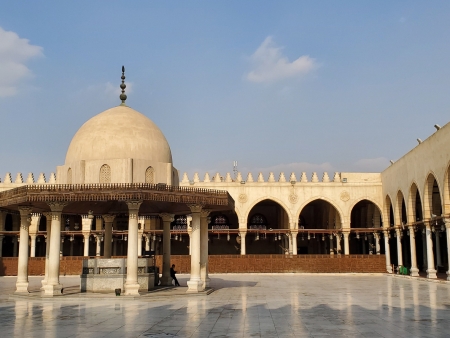
Learn about Amr Ibn Al-As: his life story, legacy, and vital role in shaping early Islamic history. Explore history's influential figures today.
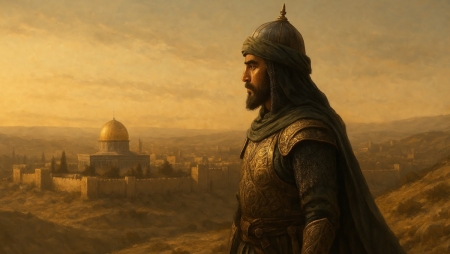
Learn about Salahuddin Ayyubi and his impact on Egypt. Visit monuments, uncover fascinating stories, and plan your historical adventure now!

Journey through Ottomans in Egypt and witness the final chapters of Mamluk history. Get expert insights—start exploring the article today.

Learn how Mohamed Ali Egypt shaped the nation’s future. Uncover his achievements, reforms, and enduring legacy in Egyptian history.
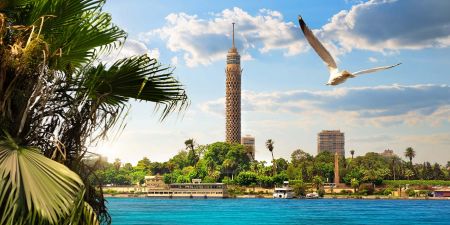
Uncover the dynamic story of Modern Egypt, tracing its journey and major transformations. Dive into the history that defines modern Egypt.
