
 Home
Home
The Aswan High Dam is one of the 20th century’s most important engineering achievements, dramatically reshaping Egypt’s economy, agriculture, and control of the Nile. Completed between 1960 and 1970, the massive dam created Lake Nasser, regulates floods, generates hydroelectric power, enables year-round irrigation, and safeguards water supplies during droughts. While its construction brought major benefits, it also involved international cooperation and the displacement of Nubian communities, making the dam both a symbol of modern Egypt’s development ambitions and a key historical and tourist landmark.
The Nile's Annual Cycle
The Flood That Built Civilization
For thousands of years, Egyptian civilization depended entirely on the Nile's annual flood cycle. Every summer, monsoon rains in the Ethiopian Highlands swelled the Blue Nile, causing the river to overflow its banks across Egypt's narrow valley, depositing nutrient-rich silt that renewed agricultural fertility.
This annual inundation cycle determined every aspect of Egyptian life. The ancient Egyptian calendar divided the year into three seasons: Akhet (Inundation, July-October) when floods covered fields, Peret (Growing season, November-February) when crops grew in the wet, fertilized soil, and Shemu (Harvest season, March-June) when farmers harvested before the next flood arrived.
The flood's height determined national prosperity. Low floods meant insufficient water for irrigation and reduced crop yields, causing famine, economic hardship, and social instability. Excessively high floods destroyed villages, drowned livestock, and caused devastation despite bringing abundant water. Ancient Egyptians developed the Nilometer system to measure flood heights and predict agricultural productivity.
Previous Dam Projects
Egypt's first major dam project, the British-built Old Aswan Dam (Aswan Low Dam), was completed in 1902 approximately 6 kilometers downstream from the current High Dam site. This initial dam stood 54 meters high and created a modest reservoir controlling floods to some degree while enabling year-round irrigation. The Old Dam was raised twice (1912 and 1933) to increase storage capacity, but it remained inadequate for Egypt's growing population and agricultural demands.
By the mid-20th century, Egypt desperately needed greater flood control, expanded irrigation, and reliable power generation that the Old Dam couldn't provide. Egyptian leaders recognized that comprehensive flood control and economic development required a much larger dam creating a massive reservoir capable of storing multiple years' worth of Nile flow.
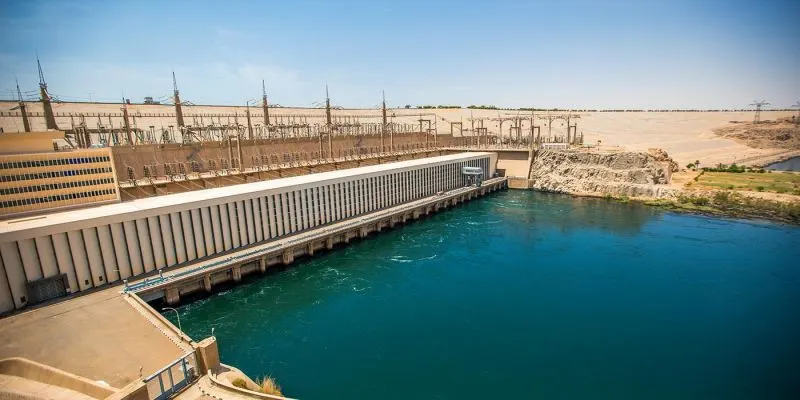
The Aswan High Dam (Sadd el-Ali) is located approximately 13 kilometers (8 miles) south of Aswan city center in southern Egypt. The dam spans the Nile River creating Lake Nasser, which extends 550 kilometers south to the Sudanese border. The site is about 950 kilometers south of Cairo and is easily accessible from Aswan hotels via organized tours, taxi, or private driver.
A Decade of Intense Work (1960-1970)
Planning and Funding
President Gamal Abdel Nasser championed the High Dam project as central to his vision for modern Egypt. Initial financing proved challenging—the United States and World Bank initially offered funding but withdrew due to political disputes. The Soviet Union stepped into this financing gap, providing approximately one-third of the construction costs (about $250-300 million) in loans and technical assistance. Egypt funded the remainder through Suez Canal revenues and other state resources.
Engineering Specifications
The High Dam exemplifies embankment dam construction—a massive barrier created by compacting layers of rock and clay. Key statistics include:
- Dimensions: Height of 111 meters (364 feet), length of 3,830 meters (12,562 feet), base width of 980 meters (3,215 feet), crest width of 40 meters (131 feet), and volume of 43 million cubic meters of material.
- Lake Nasser: Length of approximately 550 kilometers extending into Sudan, surface area of 5,250 square kilometers, volume of 132 cubic kilometers of water storage capacity, and maximum depth of 180 meters.
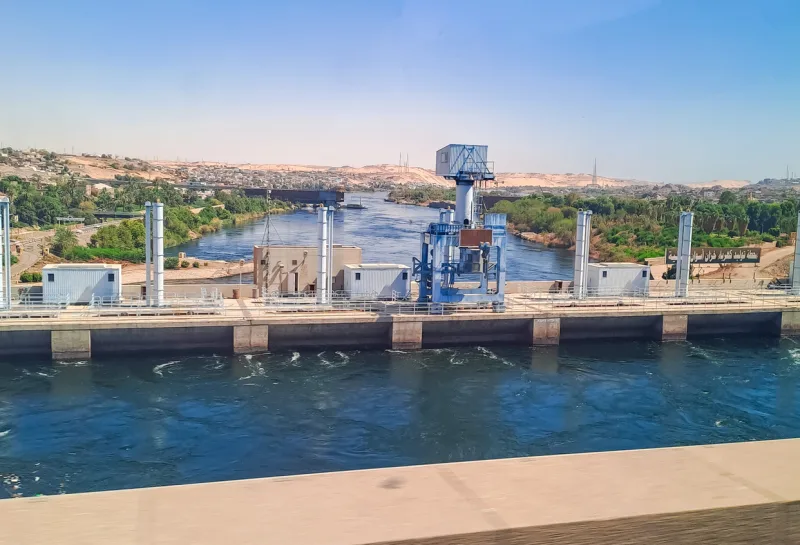
- Power Generation: 12 generators producing 2,100 megawatts total capacity, generating approximately 10 billion kilowatt-hours annually, originally providing about 50% of Egypt's electricity.
Construction Process
Building the High Dam required unprecedented mobilization of resources. At peak construction, over 30,000 workers labored on the project. Soviet engineers and technicians supervised alongside Egyptian counterparts, training Egyptian engineers in advanced construction techniques. Construction officially began on January 9, 1960, with the reservoir beginning to fill in 1964, reaching capacity by 1976. The dam was officially inaugurated on January 15, 1971.
Transforming Egypt's Economy
Flood Control
The dam's most immediate benefit was ending the Nile's destructive flood cycles. The massive Lake Nasser reservoir stores peak flood waters, releasing them gradually throughout the year for controlled irrigation. Since the dam's completion, Egypt has avoided the catastrophic floods that periodically destroyed villages, drowned people and livestock, and devastated agricultural infrastructure.
Agricultural Expansion
Before the High Dam, farmers could only cultivate crops during and immediately following the annual flood season. The dam enabled year-round irrigation, allowing multiple crop cycles annually and dramatically expanding agricultural productivity. Reliable water supply encouraged reclamation of desert lands for agriculture, expanding Egypt's cultivated area by approximately 1 million feddans. The dam also enabled introduction of new crops requiring stable water supplies.
Hydroelectric Power
The High Dam's 12 generators originally provided about half of Egypt's electricity, powering industrialization and improving living standards. Hydroelectric power enabled expansion of manufacturing, rural electrification, improved water pumping, and development of new industries. While Egypt's total electricity consumption has grown enormously since the 1970s, the dam still produces about 10 billion kilowatt-hours annually of clean, renewable energy.
Water Security
Lake Nasser's enormous storage capacity—equivalent to approximately 1.5 times the Nile's total annual flow—provides critical water security protecting Egypt from multi-year droughts. During periods when Ethiopian rainfall decreases and Nile flows drop, Egypt draws on Lake Nasser's reserves to maintain agricultural productivity and municipal water supplies. This water security proved essential during extended droughts in the 1980s and 2010s.
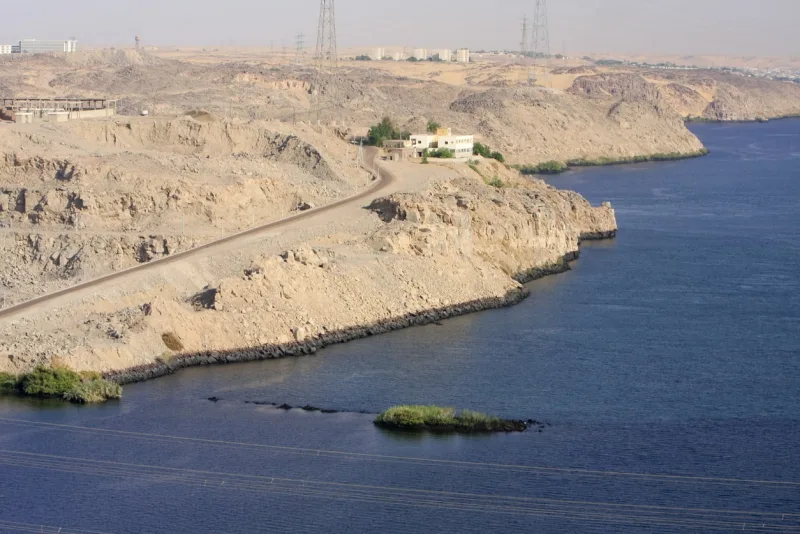
The Aswan High Dam was constructed between 1960 and 1970, taking 10 years to complete. It was built as a collaborative project between Egypt (under President Gamal Abdel Nasser) and the Soviet Union, which provided approximately one-third of financing and substantial technical assistance. The dam was officially inaugurated on January 15, 1971. Over 30,000 workers participated in construction.
Customize Your Dream Vacation!
Get in touch with our local experts for an unforgettable journey.
Plan Your Trip
Environmental and Social Impacts
Nubian Displacement
The dam's most controversial aspect was the forced displacement of approximately 90,000-120,000 Nubians whose ancestral villages were flooded by Lake Nasser. These communities had lived in the Nile Valley for thousands of years, maintaining distinct Nubian language, culture, and traditions. The Egyptian government relocated Nubians to newly constructed villages near Kom Ombo, approximately 50 kilometers north of Aswan.
While the new villages provided modern housing, electricity, and amenities, many Nubians mourned the loss of their ancestral homelands, family agricultural lands, and cultural heritage sites. The flooding destroyed hundreds of Nubian villages, ancient cultural landscapes, and archaeological sites spanning millennia. Many Nubians maintain deep connection to their submerged homelands and strong cultural identity despite generations living in resettlement areas.
Monument Rescue
The impending flooding sparked UNESCO's massive international campaign to save Nubian monuments. Between 1960-1980, archaeologists and engineers relocated Abu Simbel's two massive temples, moved Philae Temple from Philae Island to Agilkia Island, dismantled and relocated the Temples of Kalabsha, Wadi es-Sebua, Amada, and others, and documented thousands of archaeological sites before flooding. This unprecedented international cooperation established models for cultural heritage preservation.
Ecological Changes
The dam fundamentally altered the Nile ecosystem with both positive and negative consequences. Negative impacts include stopped nutrient-rich silt deposition requiring artificial fertilizers, reduced Mediterranean fish populations, increased coastal erosion of the Nile Delta, and changed aquatic ecosystems. Positive impacts include created Lake Nasser fishery, reduced waterborne diseases through controlled water flows, and protected downstream areas from flooding-related disease outbreaks.
Visiting the Aswan High Dam
Location and Access
The High Dam spans the Nile approximately 13 kilometers south of central Aswan. Most visitors access it via organized tours, private taxis, or hired drivers. The dam road is a major transportation route carrying tourist and local traffic.
What to See
Visitors can walk along the dam's crest roadway with impressive views downstream toward the Nile continuing northward and upstream toward Lake Nasser extending to the horizon. The Soviet-Egyptian Friendship Monument, a distinctive lotus-flower-shaped tower, commemorates cooperation on the dam project with reliefs depicting workers and inscriptions in Arabic and Russian. An observation deck provides panoramic views of the dam, lake, and surrounding desert.
Practical Information
The dam area is generally accessible during daylight hours with security present. Modest entrance fees apply for observation areas and the friendship monument. Allow 30-45 minutes for a typical visit including viewing the dam structure, visiting the monument, and photographing scenery. Best times are early morning or late afternoon for optimal light and comfortable temperatures.
Bring sun protection (hat, sunscreen, sunglasses), water, comfortable shoes, and camera. The dam area offers little shade and can be extremely hot. As critical infrastructure, the dam has security checkpoints—follow guards' instructions and avoid photographing military installations.
Combining with Other Attractions
The High Dam is typically combined with Philae Temple (15 minutes away), Unfinished Obelisk (20 minutes), and Nubian Museum (25 minutes) in half-day or full-day Aswan tours.
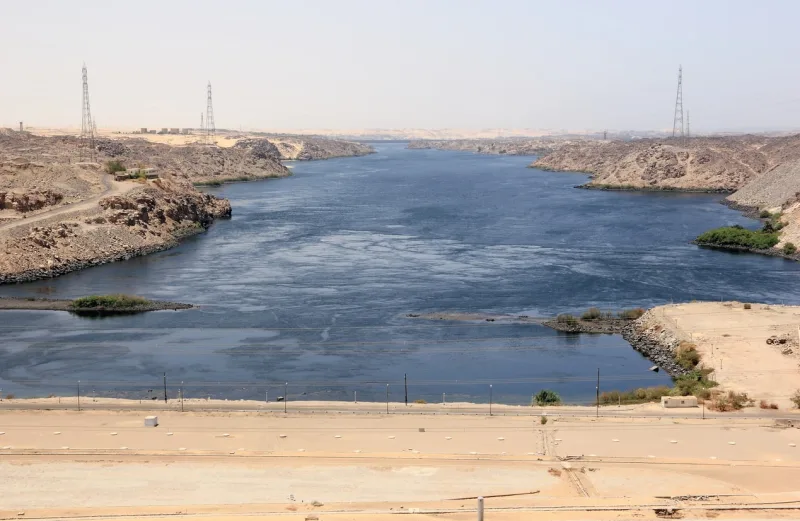
Yes, tourists can visit the Aswan High Dam and it's included in most Aswan city tours. Visitors can walk along the dam's crest roadway enjoying panoramic views, visit the Soviet-Egyptian Friendship Monument (lotus-shaped tower), take photographs, and learn about the dam's construction and importance. The site has modest entrance fees and security checkpoints. Allow 30-45 minutes for visits.
The Dam in Modern Egypt
Current Significance
Over 50 years after completion, the High Dam remains crucial to Egyptian economy and society. It enables year-round irrigation supporting Egypt's population of over 100 million people, produces about 10 billion kilowatt-hours annually of clean energy, provides water security through Lake Nasser's massive storage, and enabled industrialization and economic growth transforming Egypt from primarily agricultural society to diversified modern economy.
Regional Water Politics
The High Dam sits at the center of complex Nile water politics involving Egypt, Sudan, Ethiopia, and other upstream countries. Ethiopia's recent construction of the Grand Ethiopian Renaissance Dam on the Blue Nile has created tensions with Egypt over potential reductions in downstream flows. The Aswan High Dam's enormous reservoir provides buffer capacity helping Egypt negotiate water allocations.
Symbol of Modern Egypt
Beyond practical functions, the High Dam symbolizes modern Egypt's technological capabilities, development aspirations, and determination to control natural resources for national benefit. The dam features prominently in Egyptian national identity, appearing on currency, stamps, and government materials as an emblem of progress and achievement.
The dam serves multiple purposes: (1) controlling Nile floods that previously devastated areas, (2) generating hydroelectric power through 12 generators producing about 10 billion kilowatt-hours annually, (3) enabling year-round irrigation expanding agricultural productivity, (4) storing water reserves in Lake Nasser protecting against droughts, and (5) improving Nile navigation. The dam fundamentally transformed Egypt's economy and agriculture.
The dam is 111 meters (364 feet) tall, 3,830 meters (12,562 feet) long, 980 meters (3,215 feet) wide at the base, and 40 meters (131 feet) wide at the crest. It contains 43 million cubic meters of rock and clay material. Lake Nasser, created by the dam, extends 550 kilometers and stores 132 cubic kilometers of water—equivalent to about 1.5 times the Nile's total annual flow.
Lake Nasser is one of the world's largest artificial reservoirs, created when the Aswan High Dam blocked the Nile River. The lake extends approximately 550 kilometers, covers 5,250 square kilometers, reaches depths of 180 meters, and stores 132 cubic kilometers of water. The lake crosses the Egypt-Sudan border where it's called Lake Nubia in Sudan.
When Lake Nasser flooded the Nubian region, UNESCO coordinated an international campaign (1960-1980) to save important monuments. Abu Simbel's two temples were cut into blocks and reassembled on higher ground. Philae Temple was relocated to Agilkia Island. Other temples including Kalabsha, Amada, and Wadi es-Sebua were also moved. However, many smaller sites and Nubian villages were lost underwater forever.
A typical visit takes 30-45 minutes, including time to walk along the dam's crest, visit the Soviet-Egyptian Friendship Monument, enjoy panoramic views of Lake Nasser, and take photographs. The dam is usually combined with other Aswan attractions (Philae Temple, Unfinished Obelisk, Nubian Museum) in half-day or full-day tours. The dam site is located about 15-20 minutes drive from central Aswan hotels.
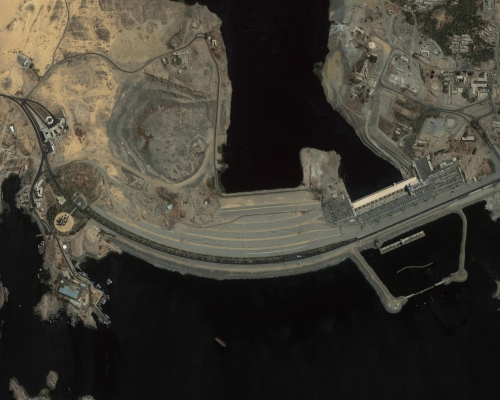
Aswan High Dam Located in the middle of the Egyptian Desert is one of the largest embankment dams of the world, Aswan High Dam. Known as Saad el Aali in Arabic Aswan High Dam is one of the greatest engineering miracles of this world.
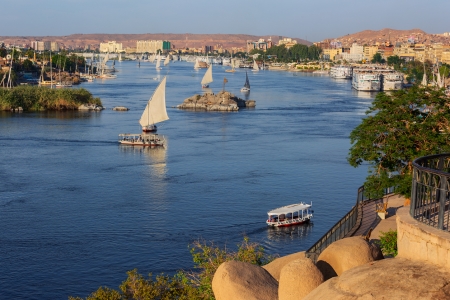
Aswan City is a tranquil Nile-side destination known for its ancient temples, Nubian heritage, and stunning river scenery.
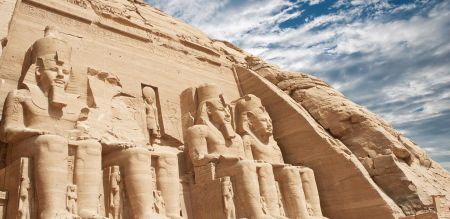
Visit Abu Simbel Temples Egypt to marvel at Ramesses II's spectacular monuments. Uncover ancient history and breathtaking architecture.
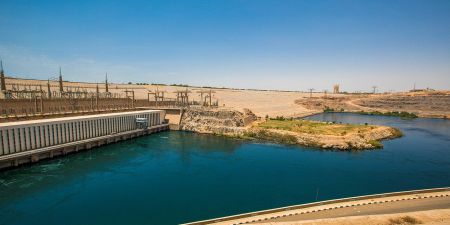
Discover the Aswan High Dam Egypt—an engineering marvel shaping the Nile and Lake Nasser. Explore its history, impact, and legacy.
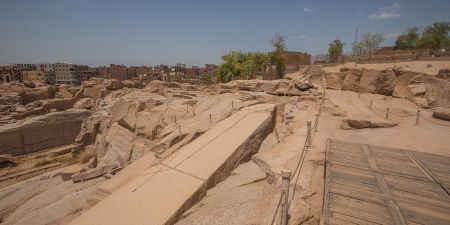
Explore Aswan High Dam Egypt, a groundbreaking structure behind Lake Nasser. Learn about its construction, benefits, and lasting significance.
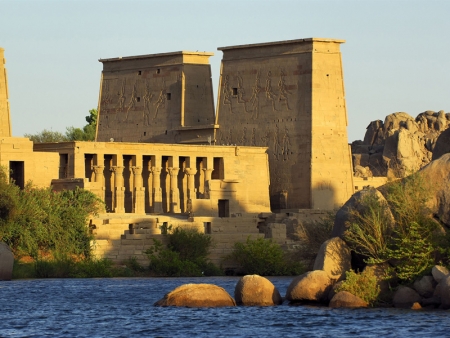
Uncover the wonders of Philae Temple Aswan—an ancient island temple dedicated to Isis. Experience the mesmerizing sound and light show.
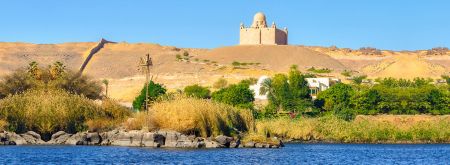
Discover Elephantine Island Aswan—wander ancient ruins and experience the charm of an authentic Nubian village on the Nile's enchanting shores.

Uncover Nubian heritage at the Nubian Museum Aswan. Explore ancient art, history, and culture in this UNESCO-recognized treasure.

Read our travel wiki about Aswan Botanical Garden and explore its plants, history, and educational importance in Aswan.
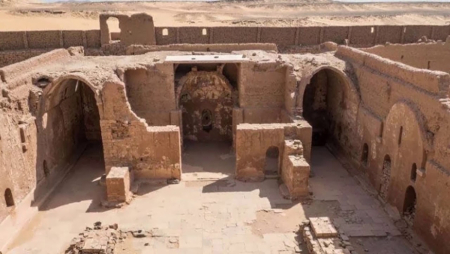
Learn about the monastery of st simeon and the tombs of the nobles in Aswan, their history, architecture, and significance. Start exploring now.