
 Home
Home
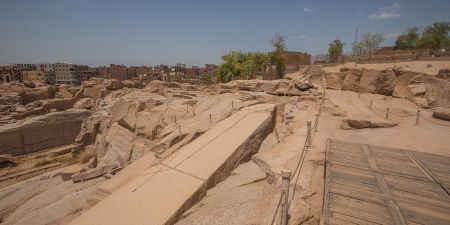
The Unfinished Obelisk in Aswan’s northern granite quarries is a unique archaeological site that reveals how ancient Egyptians worked stone and undertook massive engineering projects. Likely commissioned by Queen Hatshepsut during the 18th Dynasty, it would have been the largest obelisk ever built, but natural cracks in the rock forced its abandonment while still attached to the bedrock. Rather than a failure, the site preserves rare evidence of quarrying techniques, tool marks, and extraction methods. Today, it offers visitors a vivid insight into the skill, ambition, and challenges faced by ancient Egyptian craftsmen.
Obelisks in Ancient Egypt
Sacred Solar Symbols
Obelisks held profound religious significance in ancient Egyptian culture. These tall, four-sided, tapering monuments topped with pyramidion (small pyramid-shaped cap) symbolized the sacred benben stone from Egyptian creation mythology—the primordial mound that first emerged from the waters of chaos at creation. The pyramidion, typically gilded or covered in electrum (gold-silver alloy), reflected sunlight, connecting the obelisk to the sun god Ra.
The word "obelisk" comes from Greek obeliskos meaning "small skewer," reflecting the monuments' tall, narrow shape. Ancient Egyptians called them tekhenu. Obelisks were typically erected in pairs flanking temple entrances, particularly at sun temples dedicated to Ra. Their tall, reaching form symbolized a connection between earth and heaven, between humans and gods.
Hatshepsut's Building Program
Queen Hatshepsut, one of ancient Egypt's most successful female pharaohs, ruled for approximately 21-22 years during the early 18th Dynasty. She conducted a vigorous building program throughout Egypt, constructing or restoring temples, commissioning expeditions to Punt (likely modern Somalia/Eritrea), and erecting multiple obelisks to demonstrate her piety and legitimacy as pharaoh.
Hatshepsut erected at least four obelisks, with two particularly famous examples at Karnak Temple in Luxor. These Karnak obelisks stood approximately 30 meters tall and weighed around 320 tons each—already massive monuments requiring sophisticated engineering to quarry, transport, and erect. The Unfinished Obelisk, at 42 meters and 1,200 tons, would have dwarfed even these impressive achievements, perhaps intended to make an unprecedented statement of royal power and divine favor.
Why Aswan Granite?
Aswan served as ancient Egypt's primary source of red granite (technically granodiorite), a hard, durable, attractive stone prized for monuments requiring exceptional strength and longevity. The stone's distinctive pink-red color came from iron-rich minerals, and its crystalline structure made it extremely hard and resistant to weathering.
Granite's hardness made it ideal for obelisks, which needed to support their own weight in a tall, narrow form without breaking. The Aswan quarries provided the only significant granite source in ancient Egypt, making them crucial for royal building projects throughout pharaonic history. The quarries remained active for over 3,000 years, from the Old Kingdom through the Roman Period.
Quarrying Techniques: Ancient Engineering Revealed
The Extraction Process
The Unfinished Obelisk reveals the systematic process ancient Egyptians used to quarry massive monuments. The process began with surveying and marking the desired block dimensions on the quarry floor. Workers used string lines coated with red ochre to snap straight lines defining the obelisk's boundaries.
Trenching involved excavating narrow trenches around and beneath the marked block, isolating it from the surrounding bedrock. For the Unfinished Obelisk, workers created trenches approximately 75 centimeters (30 inches) wide—just enough room for workers to stand and swing their tools.
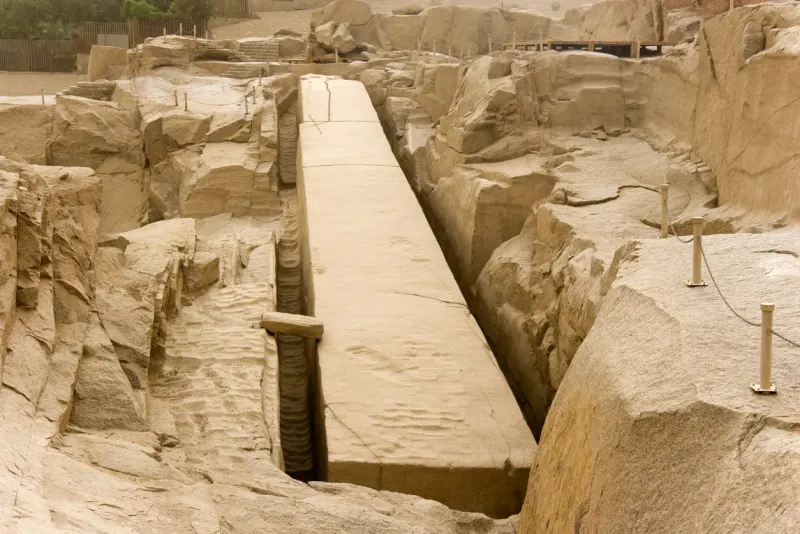
Pounding with dolerite balls was the primary excavation method. Dolerite, a volcanic stone harder than granite, was shaped into spherical pounding stones weighing 5-6 kilograms (11-13 pounds). Workers stood in the trenches rhythmically pounding the granite surface with these stones, gradually pulverizing the rock. The systematic grooves visible on the Unfinished Obelisk show where individual workers stood, creating evidence of work stations along the trenches.
Archaeological experiments suggest a single worker could remove approximately 5-10 cubic centimeters of granite per hour using this pounding technique. For the Unfinished Obelisk, extracting the required trenches would have required thousands of man-hours of exhausting labor.
Copper tools played a supplementary role. While copper is softer than granite, copper chisels and saws using quartz sand as an abrasive could cut grooves and help shape the stone. Copper tools were particularly useful for finishing surfaces and creating fine details.
Fire and water technique may have aided some quarrying. Workers could heat granite surfaces with fire, then rapidly cool them with water, causing thermal shock that fractured the stone. However, this technique's use at Aswan remains debated among archaeologists, with the Unfinished Obelisk showing primarily dolerite pounding evidence.
Wooden wedges completed the extraction process. Once trenches surrounded and undercut the block, workers drove wooden wedges into slots cut in the stone, then soaked the wedges with water. The expanding wood created enormous pressure that could split granite along predetermined lines, freeing the block from bedrock.
Why It Was Abandoned
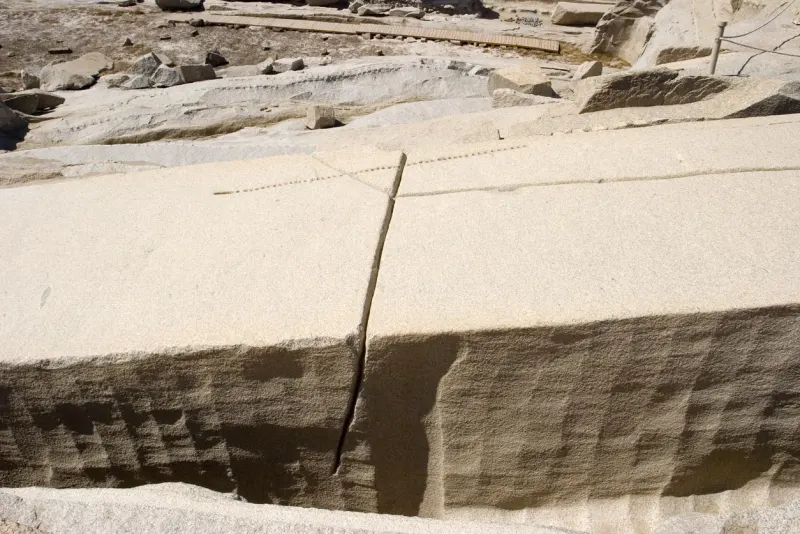
As workers excavated the trenches around the Unfinished Obelisk, natural cracks appeared in the granite. These fissures, invisible on the surface but present within the stone, ran through critical areas where the obelisk needed structural integrity. Continuing work would have resulted in the obelisk breaking during transport, erection, or from its own weight once standing.
Faced with this fundamental flaw, project supervisors made the pragmatic decision to abandon the obelisk rather than waste additional resources completing a monument that would ultimately fail. The massive stone remained where it lay, eventually becoming buried under sand and quarry debris until modern archaeological investigation revealed it again.
Archaeological Investigation and Excavation
Rediscovery and Study
While the quarries were never truly "lost" to local knowledge, systematic archaeological investigation began during the 19th and early 20th centuries as Egyptologists documented ancient quarrying sites throughout Egypt. The Unfinished Obelisk attracted particular attention because of its unprecedented size and excellent preservation of quarrying marks.
The site was cleared and documented in detail during the 1920s and 1930s, with archaeologists mapping tool marks, calculating the obelisk's dimensions, and studying the quarrying techniques. This research revolutionized understanding of ancient Egyptian stone-working, replacing speculation with concrete evidence preserved in the archaeological record.
What We've Learned
The Unfinished Obelisk has provided invaluable insights into ancient Egyptian engineering:
Workforce organization: The systematic patterns of tool marks reveal how workers were organized in teams along the trenches, each team responsible for excavating specific sections. The consistency of technique suggests skilled craftsmen working under experienced supervisors.
Tool technology: The thousands of dolerite pounders found at the site demonstrate the primary quarrying method, while copper tool marks show supplementary techniques for finishing and detailing work.
Project scale: Calculating the labor required to extract such a massive monument helps archaeologists understand the workforce mobilization, logistics, and economic resources necessary for royal building projects.
Quality control: The decision to abandon the flawed obelisk demonstrates that ancient Egyptians maintained high quality standards, preferring to abandon expensive projects rather than complete structurally unsound monuments.
Engineering knowledge: The precise measurements and systematic approach reveal sophisticated engineering knowledge including geometry, surveying, material properties, and structural mechanics—all applied without modern mathematics or measuring instruments.
The Quarry Site Today
Site Layout and Features
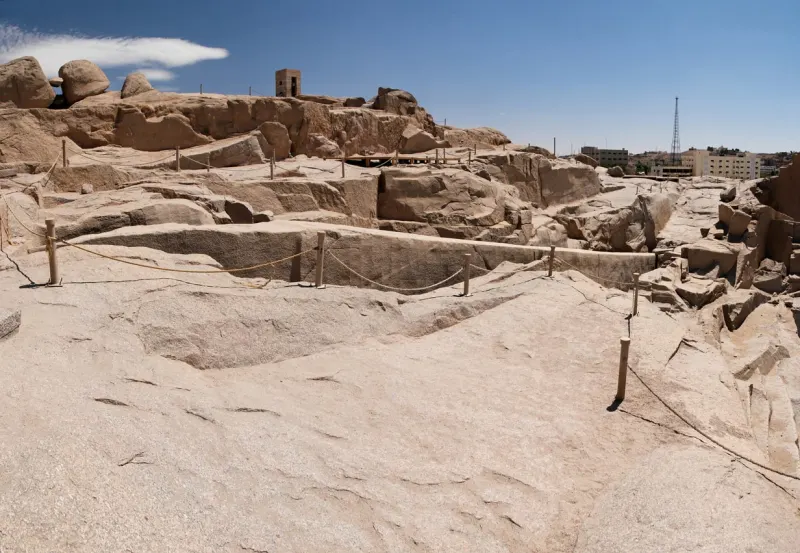
The Unfinished Obelisk lies in an open-air quarry covering several acres. The massive obelisk dominates the site, stretching 42 meters in length with its top (which would have been the bottom when erected) still attached to bedrock. The stone tapers from approximately 4.2 meters (14 feet) square at its base to 2 meters (6.5 feet) at the top.
Trenches approximately 75 centimeters wide surround three sides of the obelisk, excavated to a depth of 1-2 meters in most places. The underside remains partially connected to bedrock, frozen in the moment workers discovered the fatal cracks and halted work.
Throughout the quarry, visitors see evidence of centuries of quarrying activity including:
Extraction marks: Thousands of circular depressions from dolerite pounding visible on trench walls and quarry floors.
Smaller obelisks and monuments: Partially extracted stones of various sizes showing different stages of the quarrying process.
Tool remnants: Scattered dolerite pounders and copper tool fragments (though most artifacts have been collected for museums).
Hieroglyphic inscriptions: Names of quarry supervisors, dates, and administrative records carved into rock faces.
Worker pathways: Worn routes where workers walked between extraction sites and tool staging areas.
Visitor Experience
The site features elevated walkways and viewing platforms allowing visitors to see the Unfinished Obelisk from various angles without walking directly on the ancient stone (which would cause erosion and damage). Information panels in multiple languages explain quarrying techniques, the obelisk's dimensions, and the reasons for abandonment.
The quarry's open-air setting provides dramatic views of the massive stone lying in its bed, making the scale and ambition of the project visceral and immediate. Unlike museum displays where scale is abstract, seeing the actual abandoned monument in its original context creates powerful understanding of ancient Egyptian engineering capabilities and limitations.
Customize Your Dream Vacation!
Get in touch with our local experts for an unforgettable journey.
Plan Your Trip
Visiting the Unfinished Obelisk
Practical Information
Location: The Unfinished Obelisk is located in the northern granite quarries approximately 2 kilometers southeast of central Aswan. The site is easily accessible from the city center.
Access: Most visitors access the site via organized tours, private drivers, or taxi. Some combine the visit with Philae Temple and Aswan High Dam in half-day tours. The site is also reachable by bicycle for more adventurous visitors.
Opening hours: Generally 7:00 AM to 5:00 PM daily (winter) or 7:00 AM to 6:00 PM (summer). Hours may vary during Ramadan or special occasions.
Entry fees: Modest entrance fee for international tourists (approximately 100 EGP, subject to change). Egyptian citizens and students pay reduced rates.
Duration: Plan 45-60 minutes to explore the site, view the obelisk from various angles, read information panels, and photograph the quarry. Visitors with particular interest in engineering or archaeology might spend 1-2 hours.
Best Time to Visit
Early morning (7:00-9:00 AM): Coolest temperatures, best light for photography, fewest crowds. Morning sun illuminates the obelisk from the east, creating dramatic shadows that emphasize tool marks and surface texture.
Late afternoon (4:00-6:00 PM): Beautiful golden light, comfortable temperatures, opportunity to photograph in softer illumination. Shadows lengthen, making quarrying marks more visible.
Avoid midday (11:00 AM-3:00 PM): Extreme heat (often exceeding 40°C/104°F in summer), harsh overhead sun creating flat lighting and minimal shadows, peak tourist crowds.
What to Bring
Essential items include:
Sun protection: Hat, sunscreen, sunglasses (critical—the quarry offers minimal shade)
Water: At least 1 liter per person
Comfortable walking shoes: The quarry floor is uneven in places
Camera: Wide-angle lens helpful for capturing the obelisk's full length
Light clothing: Breathable fabrics; avoid dark colors that absorb heat
Combining with Other Attractions
The Unfinished Obelisk combines easily with other Aswan attractions:
Philae Temple (20 minutes): Beautiful island temple dedicated to goddess Isis, relocated to save it from Lake Nasser flooding.
Aswan High Dam (15 minutes): Modern engineering marvel controlling the Nile and creating Lake Nasser.
Nubian Museum (10 minutes): Excellent museum showcasing Nubian culture, history, and the UNESCO monument rescue campaign.
Elephantine Island (15 minutes): Largest Aswan island with ancient ruins, Nubian villages, and the Aswan Museum.
Most organized Aswan tours offer half-day itineraries visiting all three main sites (Unfinished Obelisk, Philae Temple, High Dam) or full-day tours including additional attractions.
Educational Value and Archaeological Significance
Understanding Ancient Egyptian Engineering
The Unfinished Obelisk serves as an outdoor classroom teaching ancient Egyptian engineering through direct physical evidence. Visitors can:
- See actual tool marks made by workers 3,400 years ago
- Understand the scale of royal building projects requiring thousands of workers
- Appreciate the technology of dolerite pounding as primary quarrying method
- Recognize quality control in the decision to abandon flawed projects
- Visualize the process of extracting massive monuments from bedrock
- Connect to craftsmen who worked this quarry millennia ago
Comparative Context
The Unfinished Obelisk helps visitors understand completed obelisks throughout Egypt and around the world. Seeing the extraction process clarifies:
- How massive monuments were created without modern machinery
- Why granite from Aswan was prized throughout Egyptian history
- The labor, time, and resources required for royal building projects
Why so few ancient obelisks remain in Egypt (many removed to Rome, Paris, London, New York, and other cities)
The engineering challenges of transporting and erecting such massive stones
Research Continues
Archaeological and engineering research continues at the Unfinished Obelisk site. Recent studies include:
Experimental archaeology: Modern researchers recreating ancient quarrying techniques to test hypotheses about methods, tools, and labor requirements.
Tool mark analysis: Detailed documentation of individual tool marks providing insights into worker techniques, tool types, and project organization.
Geological studies: Investigation of granite properties, crack formation, and quality assessment methods ancient Egyptians might have used.
Labor calculations: Refined estimates of workforce size, working conditions, and project timelines based on modern quarrying experiments and ancient evidence.

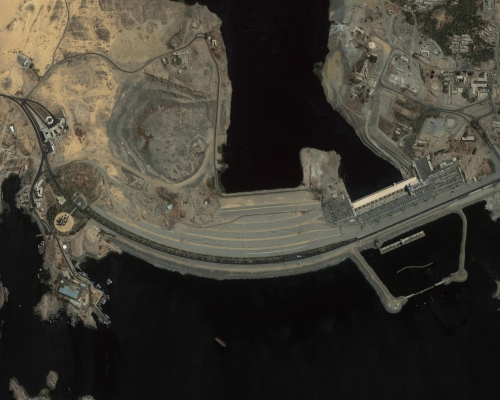
Aswan High Dam Located in the middle of the Egyptian Desert is one of the largest embankment dams of the world, Aswan High Dam. Known as Saad el Aali in Arabic Aswan High Dam is one of the greatest engineering miracles of this world.

Aswan City is a tranquil Nile-side destination known for its ancient temples, Nubian heritage, and stunning river scenery.
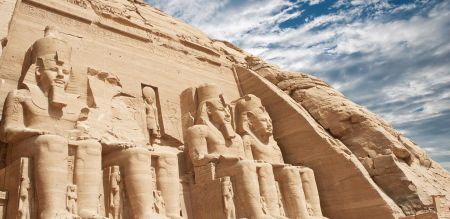
Visit Abu Simbel Temples Egypt to marvel at Ramesses II's spectacular monuments. Uncover ancient history and breathtaking architecture.
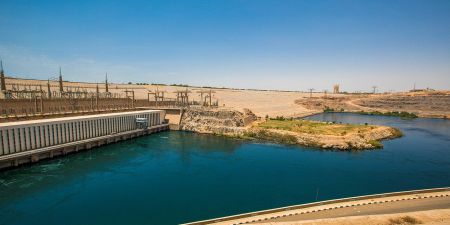
Discover the Aswan High Dam Egypt—an engineering marvel shaping the Nile and Lake Nasser. Explore its history, impact, and legacy.
Explore Aswan High Dam Egypt, a groundbreaking structure behind Lake Nasser. Learn about its construction, benefits, and lasting significance.
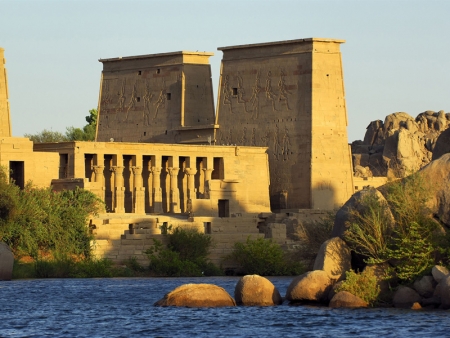
Uncover the wonders of Philae Temple Aswan—an ancient island temple dedicated to Isis. Experience the mesmerizing sound and light show.
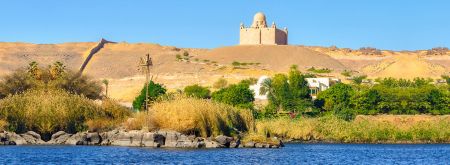
Discover Elephantine Island Aswan—wander ancient ruins and experience the charm of an authentic Nubian village on the Nile's enchanting shores.

Uncover Nubian heritage at the Nubian Museum Aswan. Explore ancient art, history, and culture in this UNESCO-recognized treasure.

Read our travel wiki about Aswan Botanical Garden and explore its plants, history, and educational importance in Aswan.
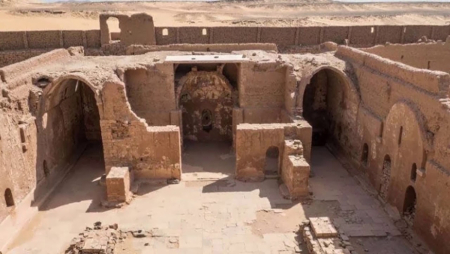
Learn about the monastery of st simeon and the tombs of the nobles in Aswan, their history, architecture, and significance. Start exploring now.