
 Home
Ancient Egyptian Religion: Beliefs, Temples and the Afterlife
Ancient Egyptian religion was a polytheistic belief system that lasted around 3,500 years, until the last temples closed in the 6th century AD. Egyptians worshipped many gods and believed that the pharaoh, priests and ordinary people all had to protect Ma'at, the divine order of the universe. Temples, daily offerings, mummification and the hope of eternal life were at its centre.

Table of Contents
-
1. Key Facts About Ancient Egyptian Religion
-
2. What Did the Ancient Egyptians Believe?
-
3. How Did the Ancient Egyptians Explain Creation?
-
4. Worship in Ancient Egypt: Temples and Priests
-
5. The Amarna Period: Akhenaten and the Aten
-
6. Ancient Egyptian Beliefs About the Afterlife
-
7. Where Can You See Ancient Egyptian Rituals Today?
-
8. Frequently Asked Questions
1. Key Facts About Ancient Egyptian Religion
| Fact | Details |
|---|---|
| Type of belief | Polytheism (many gods), with about 1,500 known deities |
| How long it lasted | About 3,500 years, from prehistory to the 6th century AD |
| Core idea | Ma'at: truth, justice and cosmic order |
| Chief state god (New Kingdom) | Amun-Ra, worshipped at Karnak in Thebes (modern Luxor) |
| Key go-between | The pharaoh, who linked the gods and the people |
| Famous festival | The Opet Festival in Thebes |
| Major religious break | The Amarna period under Akhenaten (about 1353–1336 BC) |
| Afterlife text | The Book of the Dead |
| Traditional end date | AD 537, when the Philae temples were officially closed |
Plan your trip: See the temples where these beliefs came to life on one of our Egypt tour packages, combining Cairo, Luxor and Aswan with an expert Egyptologist guide. Book your Egypt tour today and travel with a private guide at your own pace.
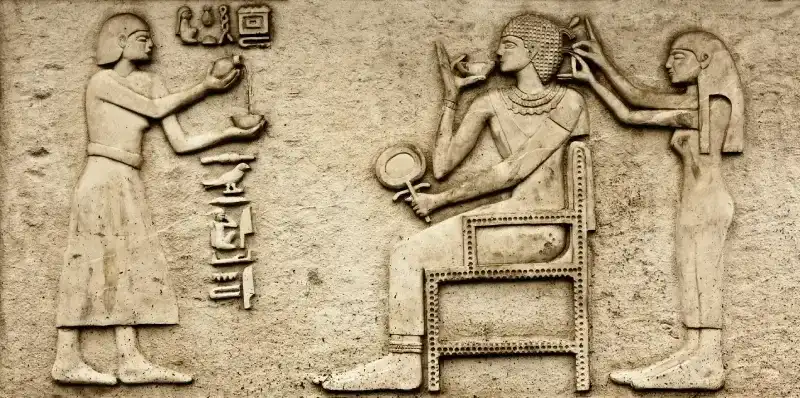
It was a polytheistic faith followed in Egypt for about 3,500 years. Egyptians worshipped many gods, believed the pharaoh linked gods and people, and worked to protect Ma'at, the order of the universe. Temples, daily offerings, magic, mummification and the hope of eternal life were all central to it.
2. What Did the Ancient Egyptians Believe?
At its heart, ancient Egyptian religion was a way of keeping the world in balance. Egyptians believed that gods controlled the sun, the Nile flood, the harvest, health and death. People gave the gods offerings and prayers, and in return the gods kept life running. Faith shaped art, law, medicine and kingship (Wikipedia).
Many Gods, Many Forms
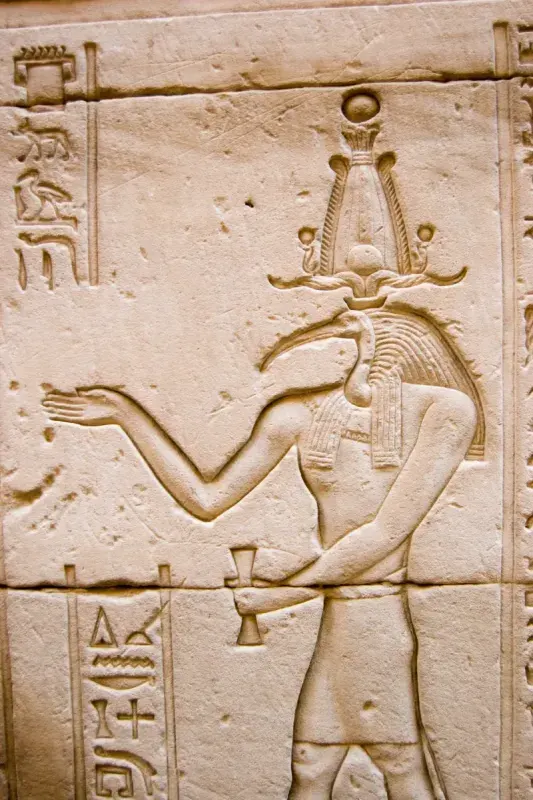
Egyptians honoured hundreds of gods, many with human bodies and animal heads. Gods were often merged, as with Amun Ra, a blend of the hidden god Amun and the sun god Ra who became king of the gods. To meet Osiris, Isis, Horus and the rest one by one, read our guide to the Egyptian gods.
How many gods did the ancient Egyptians have?
Scholars know of about 1,500 Egyptian deities. Some were worshipped across the country, while others were local gods of a single town. Many gods were also combined, such as Amun and Ra, which makes an exact number hard to give.
Ma'at: Order Against Chaos
The key idea in Egyptian belief was Ma'at, meaning truth, justice and the right order of things. Its opposite was isfet, or chaos. Because chaos always threatened to return, everyone had to uphold Ma'at through rituals, honest behaviour and offerings. Ma'at was also a goddess wearing an ostrich feather.
The Role of the Pharaoh
The pharaoh was the bridge between the gods and the people. In theory, he was the high priest of every temple, so temple walls show him making offerings, even though priests did the daily work. Egyptians saw their ruler as the son of the gods and believed he became fully divine after death. Later, the high priests of Amun at Karnak grew so powerful that they ruled Upper Egypt.
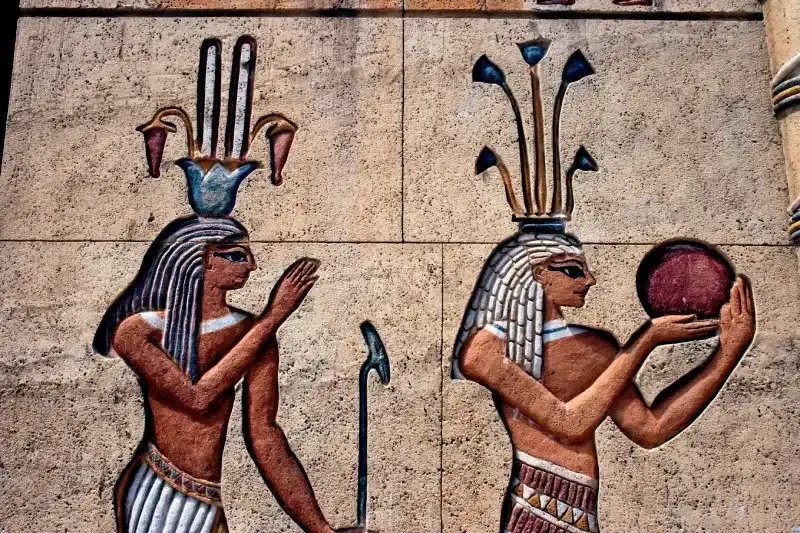
Ma'at was the idea of truth, justice, balance and cosmic order. It was also a goddess, shown with an ostrich feather on her head. Kings, priests and ordinary people had to uphold Ma'at through rituals and good behaviour, or chaos, called isfet, would return.
Customize Your Dream Vacation!
Get in touch with our local experts for an unforgettable journey.
Plan Your Trip3. How Did the Ancient Egyptians Explain Creation?
Every Egyptian creation myth starts the same way. Before the world, there was only Nun, a dark, endless ocean. Then the first mound of land rose from the water, like the fertile mounds left when the Nile flood went down. Each city told its own story of what came next (Wikipedia).
Heliopolis: Atum and the Nine Gods
In Heliopolis, priests taught that Atum created himself on the first mound. He produced Shu (air) and Tefnut (moisture), parents of Geb (earth) and Nut (sky), who had four children: Osiris, Isis, Set and Nephthys. These nine gods form the Ennead.
Memphis: Ptah the Creator
At Memphis, the craftsman god Ptah was the creator. He imagined the world in his heart, then brought it to life by speaking the names of things.
Hermopolis: The Eight Gods
At Hermopolis, the story began with the Ogdoad, eight frog and snake gods who stood for water, endless space, darkness and hiddenness. When they came together, the mound appeared and the sun rose for the first time. Priests at Thebes later said that Amun, one of the eight, was the hidden force behind all creation.
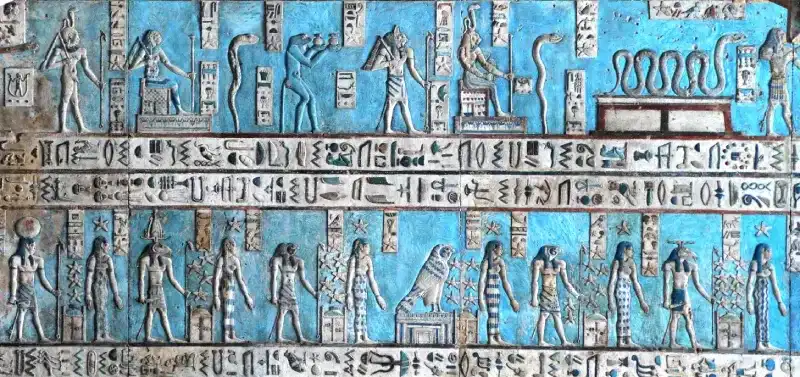
There were several. All begin with Nun, an endless dark ocean, from which the first mound of land rose. In Heliopolis, Atum created the nine gods of the Ennead. In Memphis, Ptah created the world by thought and speech. In Hermopolis, eight primeval gods produced the first sunrise.
4. Worship in Ancient Egypt: Temples and Priests
Egyptian temples were not places where crowds met to pray. Each was the house of a god, whose statue lived in a dark inner shrine. Only the king and top priests entered the sanctuary, while ordinary people stayed in the outer courts.
Could ordinary people worship in ancient Egypt?
Yes, but mostly outside the big temples. People prayed at home shrines, wore amulets, made offerings at local chapels, consulted oracles and asked household gods such as Bes and Taweret for protection. Festivals also gave them a chance to see the gods' statues in procession.
Ancient Egyptian Rituals of the Daily Temple Service
The most common ritual took place every morning. Priests purified themselves, opened the shrine and woke the god with hymns. They washed the statue, anointed it with oil, dressed it in fresh linen and offered food, drink and incense. Most lower priests worked part-time, in shifts. The temple of Horus at Edfu records these rites in great detail.
Festivals and the Opet Celebration
Festivals brought ordinary people close to the gods. During the Opet Festival in Thebes, priests carried the statues of Amun, his wife Mut and their son Khonsu from Karnak to Luxor Temple, along the Avenue of Sphinxes or by river. The festival renewed the king's divine power and the fertility of the land. It lasted 11 days under Thutmose III and 27 days by the end of Ramesses III's reign (Wikipedia).
See the Opet temples yourself: Our half-day tour of Karnak and Luxor temples visits Karnak and Luxor Temple, where the Opet procession began and ended, with a private Egyptologist guide and hotel pickup. Book your Luxor temple tour now and see where the gods once paraded.
Personal Worship at Home
Ordinary Egyptians kept small shrines at home, wore protective amulets and prayed to household gods such as Bes and Taweret. They asked oracles for advice, studied their dreams and used magic, called heka, against illness and bad luck.
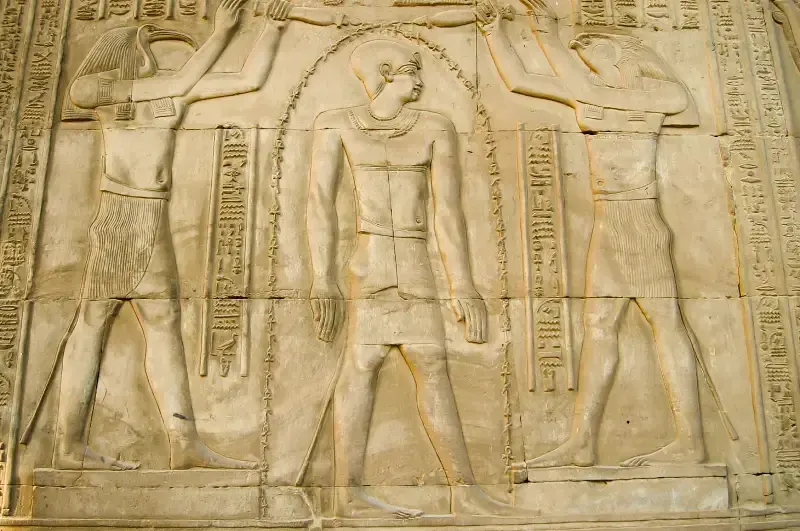
The Opet Festival was a great yearly celebration in Thebes during the Nile flood. The statues of Amun, Mut and Khonsu travelled from Karnak to Luxor Temple, on foot along the Avenue of Sphinxes or by river. It renewed the king's power and lasted up to 27 days.
5. The Amarna Period: Akhenaten and the Aten
Around 1353 BC, Amenhotep IV began a religious revolution. He renamed himself Akhenaten and raised the Aten, the sun disc, above all other gods. He closed the temples of Amun and moved the court from Thebes to a new capital, Akhetaten (modern Amarna). After his death, Tutankhamun restored the old gods, and Horemheb tore down the city and erased the Amarna kings from official records (Wikipedia).
When did ancient Egyptian religion end?
It faded slowly as Christianity spread in Roman Egypt. The date usually given for its end is AD 537, when the temples at Philae, the last great centre of Isis worship, were officially closed under the Byzantine emperor Justinian I.
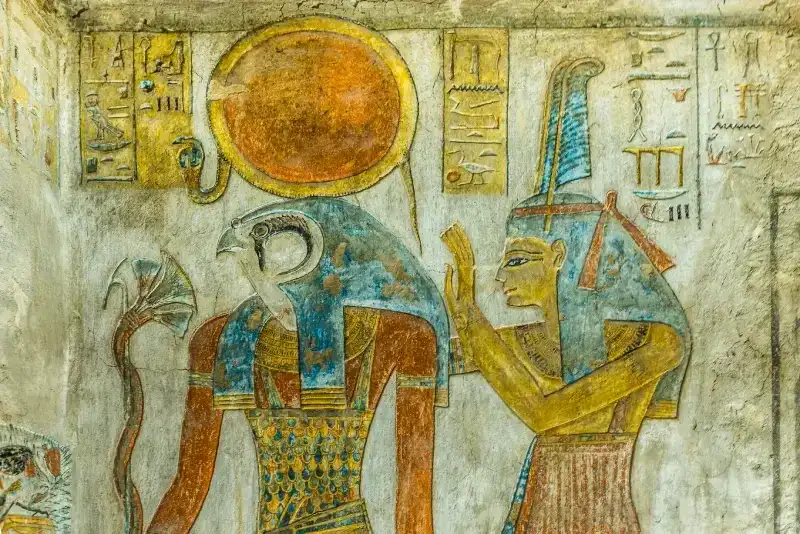
It changed over time. Ra, the sun god, was very important in early periods. In the New Kingdom, Amun Ra of Thebes became king of the gods, with a huge temple at Karnak. Osiris, god of the dead, was the most important figure for the afterlife.
6. Ancient Egyptian Beliefs About the Afterlife
In the ancient Egyptian afterlife, death was a doorway to new life. Each person had several spiritual parts. The ka was the life force, which needed food offerings. The ba was the personality, shown as a human-headed bird that could leave the tomb by day. If the dead passed judgment, ka and ba united as the akh, a blessed spirit living forever in the Field of Reeds.
How Did Mummification Work?
The ka and ba needed a body to return to, so it had to last forever. The full process took about 70 days (Australian Museum). The main steps were these.
- Remove the organs: Embalmers removed the brain and organs but left the heart, the seat of the mind.
- Preserve the organs: The lungs, stomach, liver and intestines went into canopic jars.
- Dry the body: The body was covered in natron salt for about 40 days.
- Fill and coat: Linen or sawdust filled the body, and resin coated the skin.
- Wrap the mummy: Layers of linen and amulets were added, then a mask.
- Bury the dead: The mummy was placed in a coffin and taken to the tomb.
Why was the heart left inside the mummy?
Egyptians believed the heart, not the brain, was the centre of thought, memory and feeling. The dead needed it for the Weighing of the Heart in the afterlife. For this reason, embalmers left it in the body while removing most of the other organs.
What Is the Weighing of the Heart?
To help them in the next world, the dead took the Book of the Dead into their tombs. It was a collection of spells on papyrus, often with colourful scenes. From the New Kingdom, anyone who could afford a copy could buy one.
Its most famous scene, Spell 125, shows the Weighing of the Heart. Anubis places the dead person's heart on a scale against the feather of Ma'at, and Thoth records the result. A balanced heart lets the soul join Osiris in paradise. A heart heavy with wrongdoing is eaten by Ammit, part crocodile, lion and hippo. A fine example drawn around 950–930 BC is kept at the British Museum.
See the afterlife on tomb walls: Join one of our Luxor day tours to the Valley of the Kings, or sail between Luxor and Aswan on a Nile cruise that stops at the temples of Edfu and Kom Ombo. Reserve your Nile cruise early for the best cabins in peak season.
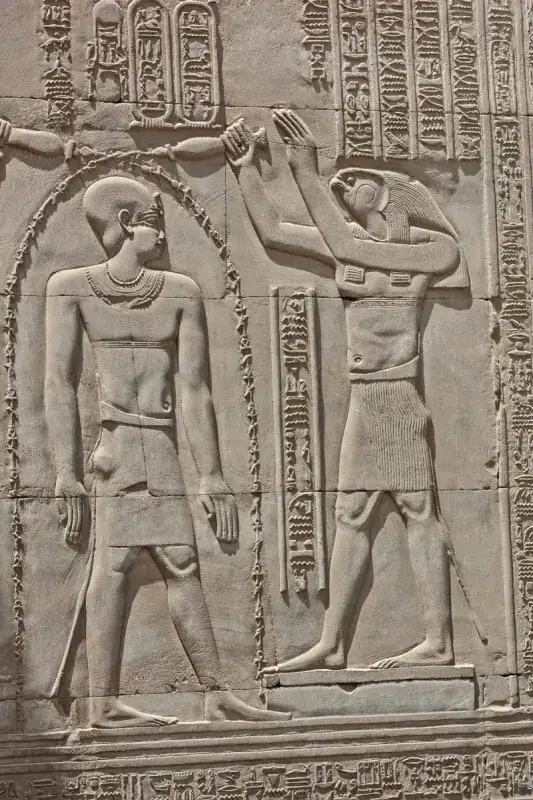
They believed death was the start of a new life. If the soul passed the Weighing of the Heart, it lived forever in the Field of Reeds, a perfect version of Egypt. To get there, the body had to be preserved, and the dead needed spells, food offerings and grave goods.
7. Where Can You See Ancient Egyptian Rituals Today?
Karnak and Luxor Temple
Luxor is the best place to understand Egyptian worship. Karnak Temple was the great home of Amun Ra, and Luxor Temple was the end point of the Opet procession. The Avenue of Sphinxes between them reopened on 25 November 2021 (Egypt's Ministry of Tourism and Antiquities). Across the river, tombs in the Valley of the Kings show the journey to the afterlife.
Dendera and Edfu
The temple of Hathor at Dendera, about 70 km from Luxor, keeps bright painted ceilings and a roof visitors can climb. Work on the temple of Horus at Edfu began in 237 BC, and it is often called Egypt's best-preserved temple. Learn more in our guide to the divine triad of Dendera.
Kom Ombo, Philae and Abu Simbel
Kom Ombo Temple, about 45 km north of Aswan, is a rare double temple. One half honoured the crocodile god Sobek and the other Horus the Elder, and its reliefs show the king being purified and crowned by the gods. Philae Temple, the island home of Isis near Aswan, was one of the last places where the old religion was practised before it closed around AD 537. Further south, the Abu Simbel temples of Ramesses II honour Amun Ra, Ra-Horakhty, Ptah and the deified king. Twice a year, around 22 February and 22 October, the rising sun lights up the statues in the inner sanctuary.
Museums
Mummies, amulets, coffins and papyri fill the Egyptian Museum in Cairo and the Grand Egyptian Museum near Giza. Abroad, the British Museum and the Louvre hold major collections.
Ready to explore further? See where the Opet procession began and ended on a half-day tour of Karnak and Luxor temples, browse our Luxor day tours, or plan your visit with our Luxor travel guide. Fill in the inquiry form and our travel experts will build a tailor-made Egypt tour package around the great temples and tombs, with private guides, Nile cruises and hotels included.
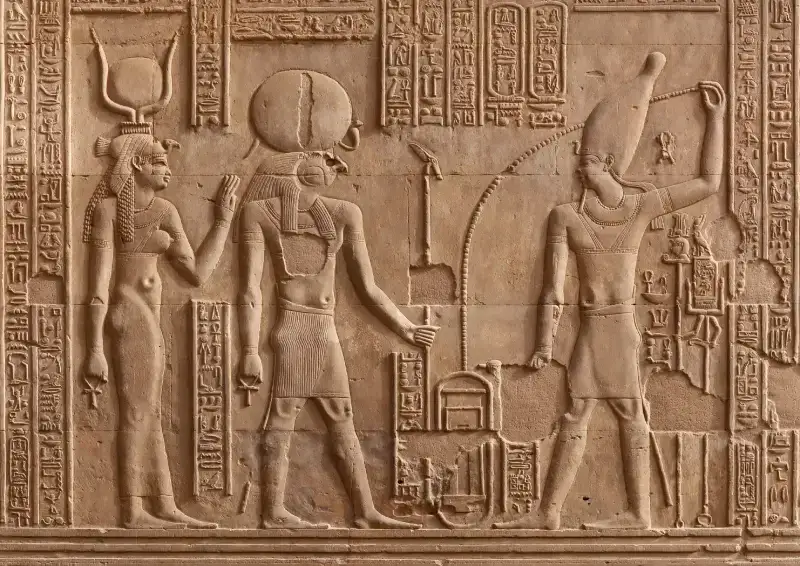
The best temples are in Upper Egypt. Karnak and Luxor Temple are in Luxor, Dendera is north of Luxor, and Edfu lies between Luxor and Aswan. Philae Temple near Aswan and Abu Simbel further south are also popular. Karnak, Luxor and Dendera are easy to see on our Luxor day tours, while a Nile cruise between Luxor and Aswan stops at Edfu and Kom Ombo.
8. Frequently Asked Questions
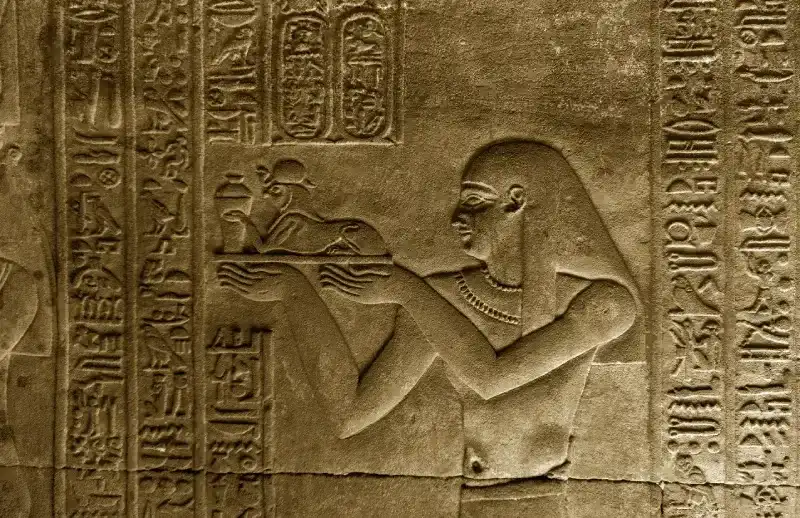
It was the final judgment of the dead, shown in Spell 125 of the Book of the Dead. Anubis weighed the dead person's heart against the feather of Ma'at while Thoth recorded the result. A pure heart joined Osiris in paradise. A heavy heart was eaten by the monster Ammit.
They believed the soul, especially the ka and ba, needed a body to return to after death. If the body decayed, the person could lose their eternal life. Mummification preserved the body so the dead person could live on in the afterlife.
They were parts of the soul. The ka was the life force that needed food offerings. The ba was the personality, shown as a bird with a human head. After a successful judgment, the ka and ba united to form the akh, an eternal blessed spirit.
A simple guide to the tomb of Nefertari (QV66), covering who the queen was, the tomb paintings, the 1904 discovery, conservation and visiting today.
A simple guide to Wadi El Hitan, Egypt's Whale Valley, covering its whale fossils, UNESCO status, museum, travel tips and best time to visit.
A simple guide to ancient Egyptian religion, covering Ma'at, the pharaoh, creation myths, temples, mummification, the afterlife and where to see it today.
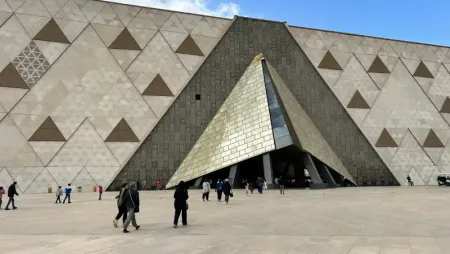
A complete guide to the Grand Egyptian Museum near Giza, covering Tutankhamun’s treasures, the Ramses II statue, tickets and opening hours.
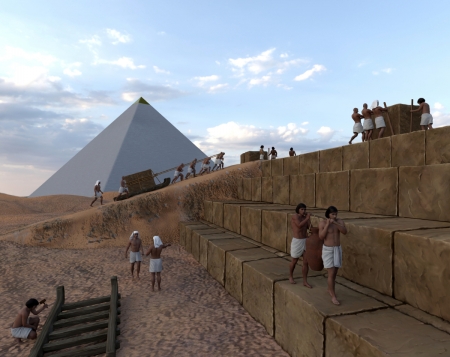
Explore life, religion, and architecture in the old kingdom of ancient Egypt. Learn more and prepare your trip to Egypt’s ancient wonders today.
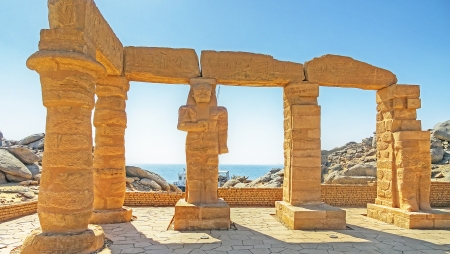
Middle Kingdom of Egypt: Archaeologists refer to the second period of stability in Ancient Egypt as the Middle Kingdom (2055–1650 BC)
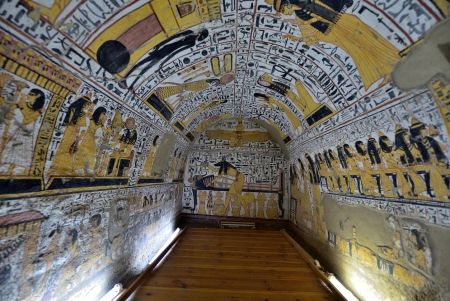
Uncover the glory of the New Kingdom of Ancient Egypt—learn about its pharaohs, remarkable power, and lasting cultural legacy.

Discover the incredible story of Queen Hatshepsut, Egypt's most famous female pharaoh. Explore the legacy of pharaoh queen hatshepsut.

Ramesses II, or Ramesses the Great, is one of the most famous figures in the history of Ancient Egypt.

Learn about the Greco-Roman period in Egypt and the must-see sites shaped by Greek, Roman, and Egyptian culture. Start planning your trip today.

Discover the fascinating life, reign, and lasting legacy of Queen Cleopatra, Egypt’s iconic and influential last pharaoh.
Follow Alexander the Great’s path across Egypt—historic cities, temples, and oases await. Discover history and plan your epic trip today.

Learn about Islamic Egypt’s transformation under powerful dynasties. Discover the stories that shaped Cairo’s history!
Learn about Amr Ibn Al-As: his life story, legacy, and vital role in shaping early Islamic history. Explore history's influential figures today.
Learn about Salahuddin Ayyubi and his impact on Egypt. Visit monuments, uncover fascinating stories, and plan your historical adventure now!
Journey through Ottomans in Egypt and witness the final chapters of Mamluk history. Get expert insights—start exploring the article today.

Learn how Mohamed Ali Egypt shaped the nation’s future. Uncover his achievements, reforms, and enduring legacy in Egyptian history.
Uncover the dynamic story of Modern Egypt, tracing its journey and major transformations. Dive into the history that defines modern Egypt.
