
 Home

King Tutankhamun was a pharaoh of Egypt's 18th Dynasty who ruled from about 1332 to 1323 BC. He became king at around nine years old and died at about 19. He is world-famous because Howard Carter found his almost untouched tomb in the Valley of the Kings on 4 November 1922. It was packed with more than 5,000 treasures, including the famous golden mask.
Table of Contents
- Who Was King Tut?
- Tutankhamun Parents and Family
- How Did King Tut Die?
- Howard Carter and the Discovery of the Tomb
- The Tutankhamun Golden Mask
- What Is the Curse of Tutankhamun?
- Where Can You See King Tut Treasures Today?
- Frequently Asked Questions
King Tut is famous because his tomb was found almost intact, with more than 5,000 objects, including the golden mask.
Most royal tombs were robbed in ancient times, so his gives a rare, complete look at a pharaoh's burial.
1. Who Was King Tut?
Pharaoh Tutankhamun was born around 1341 BC during a time of great change. His father, most likely the "heretic" king Akhenaten, had banned the worship of Egypt's traditional gods and moved the capital to Amarna to honour one sun god, the Aten.
When Tutankhaten took the throne as a child, older advisers such as Ay and the general Horemheb helped him rule. Together they reversed Akhenaten's reforms. The young king brought back the old gods, restored the temples of Amun and changed his name to Tutankhamun. The royal court also returned to Memphis and Thebes.
Because he was so young, he is known around the world as the boy king. He was not one of the most powerful ancient Egyptian pharaohs, but today he is the most famous, thanks to his treasure-filled tomb.
Life in 18th Dynasty Egypt
The 18th Dynasty (about 1550–1292 BC) was one of the richest periods of ancient Egypt. 18th Dynasty Egypt produced great rulers such as Hatshepsut, Thutmose III and Amenhotep III, Tutankhamun's grandfather. Tutankhamun was one of the last kings of this royal line. After his early death, the throne passed to Ay and then to Horemheb, who tried to erase the Amarna kings from official records.
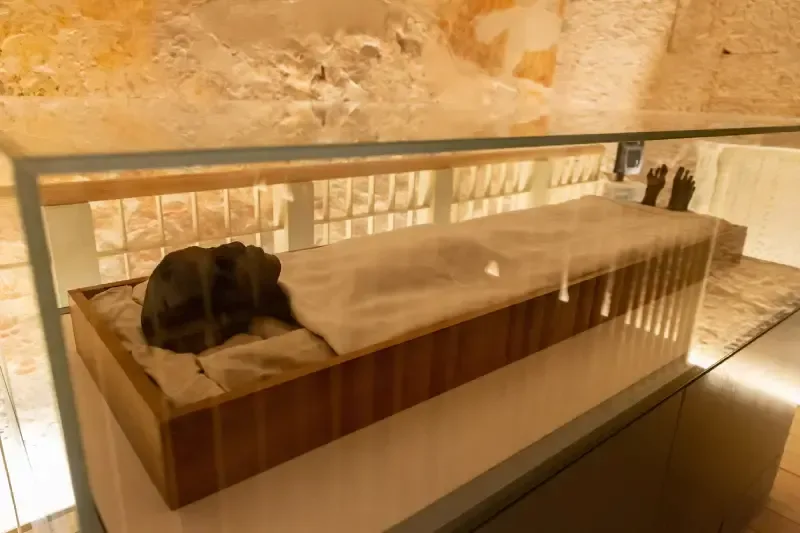
Tutankhamun was an Egyptian pharaoh of the 18th Dynasty who ruled from about 1332 to 1323 BC.
He became king as a child, restored Egypt's traditional gods and died at about 19.
He is famous for his nearly untouched tomb, discovered in 1922.
2. Tutankhamun Parents and Family
For a long time, nobody knew who Tutankhamun's parents were. A DNA study published in 2010 compared his mummy with other royal mummies. It found that his father was the mummy from tomb KV55, most likely Akhenaten, and that his mother was an unnamed mummy known as the "Younger Lady," who was Akhenaten's full sister (National Geographic). His grandparents were Amenhotep III and Queen Tiye. Some scholars still debate these identifications.
Who Was King Tut's Wife?
King Tut's wife was Ankhesenamun, the third daughter of Akhenaten and Queen Nefertiti. This made her Tutankhamun's half-sister, a common type of marriage in the royal family at the time. She was first called Ankhesenpaaten, and the couple changed their names together when they restored the worship of Amun.
Scenes on the king's golden throne show the pair sharing tender moments. Two small mummified babies, both girls, were found in Tutankhamun's tomb. DNA shows he was their father, and they were most likely Ankhesenamun's children. After her husband's death, Ankhesenamun disappears from history.
DNA tests show that his father was the KV55 mummy, most likely Akhenaten, and his mother was the "Younger Lady," an unnamed mummy from tomb KV35 who was Akhenaten's full sister.
Some scholars still debate these identifications.
Customize Your Dream Vacation!
Get in touch with our local experts for an unforgettable journey.
Plan Your Trip3. How Did King Tut Die?
The cause of death is still debated, but modern science has ruled out many old theories. A 2005 CT scan showed he was not killed by a blow to the head, as many people once believed. The 2010 DNA and CT study found that he had a broken left leg that had not healed, a painful bone disease in his foot called Köhler disease, and the most dangerous form of malaria. The researchers concluded that the leg fracture combined with malaria most likely caused his death (Egypt Independent).
The king probably walked with a cane. About 130 walking sticks were found in his tomb, and some show signs of use. Other theories, such as a chariot accident or murder, remain possible but are not supported by strong evidence.
The King Tut Mummy
Unlike his treasures, the King Tut mummy never left Luxor. It still rests inside tomb KV62, now in a climate-controlled glass case that protects it from heat and humidity. Visitors can see the king's face and feet, wrapped in linen. Tutankhamun is one of very few pharaohs still lying in his original tomb.
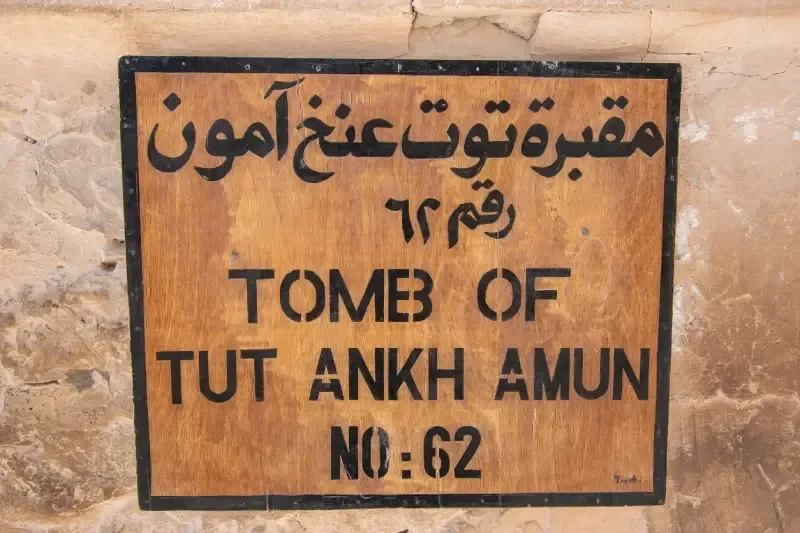
No one knows for certain.
A 2010 DNA and CT study found that he had a broken leg, a bone disease in his foot and severe malaria.
Researchers believe the leg fracture combined with malaria most likely caused his death.
Murder is not supported by strong evidence.
4. Howard Carter and the Discovery of the Tomb
British archaeologist Howard Carter searched the Valley of the Kings for years, with funding from Lord Carnarvon. On 4 November 1922, his team found a step cut into the rock. Weeks later, Carter peered into the tomb by candlelight. When Carnarvon asked whether he could see anything, Carter famously answered that he could see "wonderful things." The sealed burial chamber was officially opened in February 1923.
It took Carter about ten years to record and remove every object. The small tomb held gilded shrines, chariots, beds, jewellery, weapons, food and a nest of three coffins. The innermost coffin is made of solid gold and weighs about 110 kg. You can learn more about the site in our Valley of the Kings guide.
Tutankhamun's tomb is the most complete royal burial ever found in Egypt. It shows how a pharaoh was prepared for eternity, and it gives experts rare details about art, craft, medicine and daily life 3,300 years ago. A century after its discovery, scientists are still studying his mummy and treasures.
British archaeologist Howard Carter discovered the tomb on 4 November 1922.
His work was funded by Lord Carnarvon.
The sealed burial chamber was opened in February 1923.
5. The Tutankhamun Golden Mask
The Tutankhamun golden mask is one of the most famous objects in the world. It covered the head and shoulders of the king's mummy. The King Tut mask is made of about 10 kg of solid gold and is inlaid with lapis lazuli, quartz, obsidian, carnelian and coloured glass. It shows the king wearing the striped nemes headdress, with a cobra and a vulture on his brow to protect him.
The mask's braided beard broke off in 2014 and was reattached by a team of German and Egyptian conservators in 2015. Today, the mask is the centrepiece of the Grand Egyptian Museum.
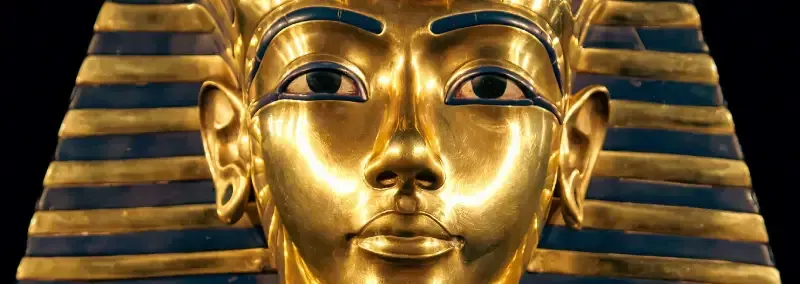
The Tutankhamun golden mask is displayed at the Grand Egyptian Museum near the Giza Pyramids.
It moved there from the Egyptian Museum in Tahrir Square and has been the centrepiece of the Tutankhamun Galleries since November 2025.
6. What Is the Curse of Tutankhamun?
The "curse of Tutankhamun" is a famous legend. When Lord Carnarvon died in Cairo in April 1923, newspapers claimed that an ancient curse had punished those who disturbed the king's rest. In reality, Carnarvon died from an infected mosquito bite. Howard Carter, who spent the most time inside the tomb, lived until 1939. Historians agree the curse was a newspaper story, not a real event.
No. The curse was a story spread by newspapers after Lord Carnarvon died in 1923 from an infected mosquito bite.
Howard Carter, who opened the tomb, lived for another 16 years.
Historians and scientists see no evidence of a real curse.
7. Where Can You See King Tut Treasures Today?
1. The Grand Egyptian Museum (Tutankhamun Museum)
Since the Grand Egyptian Museum opened near the Giza Pyramids in November 2025, the King Tut treasures have been displayed together in dedicated Tutankhamun Galleries for the first time. More than 5,000 objects are on show, including the golden mask, the golden coffins, thrones, chariots and jewellery (NBC News). For decades, many of these pieces were kept in storage at the old Egyptian Museum in Cairo. Read more in our guide to the golden collection of Tutankhamun.
2. Tutankhamun's Tomb in Luxor
To see the tomb and the mummy itself, travel to Luxor's West Bank. The tomb (KV62) needs a separate ticket from the general Valley of the Kings entry. Its walls show the king's funeral and his journey to the afterlife. Our Luxor travel guide explains how to combine it with sights such as Luxor Temple.
3. Tutankhamun Exhibitions Abroad
Replica and immersive Tutankhamun exhibitions often tour cities around the world. They are a good introduction, but the genuine objects are now kept in Egypt, at the Grand Egyptian Museum.
Ready to see the treasures of King Tutankhamun for yourself? Discover more ancient wonders in our guide to the Egypt pyramids, or browse our Luxor day tours and day trip to Luxor from Cairo. Fill in the inquiry form to plan a tailor-made trip that follows in the footsteps of the boy king.
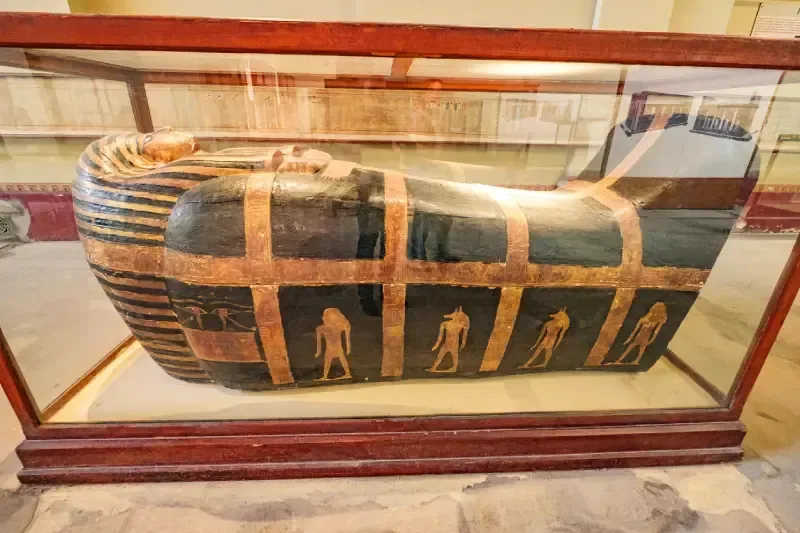
Both, in a way.
His tomb and mummy remain in the Valley of the Kings in Luxor, while his treasures, including the golden mask, are displayed at the Grand Egyptian Museum near Cairo.
8. Frequently Asked Questions
Yes, but they did not survive.
Two mummified baby girls were found in his tomb.
DNA shows Tutankhamun was their father, and Ankhesenamun was most likely their mother.
One was born early, and both died at or soon after birth.
The King Tut mummy is still in his tomb, KV62, in the Valley of the Kings near Luxor.
It lies in a climate-controlled glass case in the tomb's antechamber, where visitors can see it with a special ticket.
The King Tut mask contains about 10 kg of solid gold.
It is also inlaid with lapis lazuli, quartz, obsidian, carnelian and coloured glass, which gives it its famous blue-and-gold stripes.
The tomb held more than 5,000 objects, including the golden mask, three nested coffins (the innermost of solid gold), gilded shrines, thrones, six chariots, jewellery, weapons, clothes, food and about 130 walking sticks.
Yes. The tomb, KV62, is in the Valley of the Kings on Luxor's West Bank.
It needs a separate ticket in addition to the general Valley of the Kings entry.
Ticket prices change, so check them before your visit.
Tutankhamun belonged to the 18th Dynasty of the New Kingdom, which ruled Egypt from about 1550 to 1292 BC.
Other famous rulers of this dynasty include Hatshepsut, Thutmose III, Amenhotep III and Akhenaten.
Replica and immersive Tutankhamun exhibitions regularly tour cities around the world.
The genuine objects are kept in Egypt, mainly at the Grand Egyptian Museum, so a visit to Egypt is the only way to see the real treasures.

Everything you need to know about King Tutankhamun, Egypt's boy king, from his life, family and death to his golden mask, tomb discovery and where to see his treasures today.
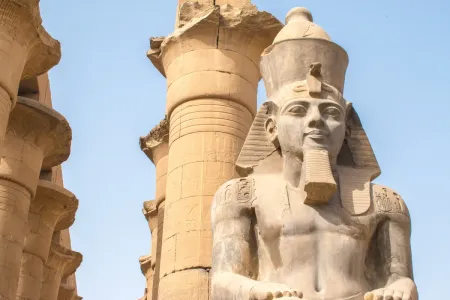
Explore every famous Ramses II statue, from the Grand Egyptian Museum colossus and Memphis to Abu Simbel and the newest finds in Egypt.
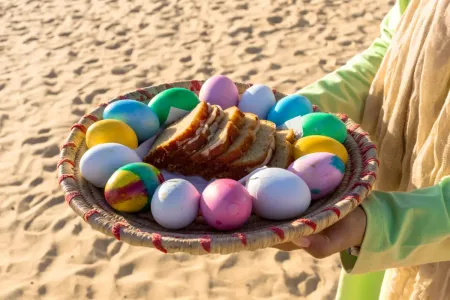
Learn about Sham el Nessim, Egypt's national spring festival, covering its meaning, ancient roots, dates, foods, traditions and travel tips.
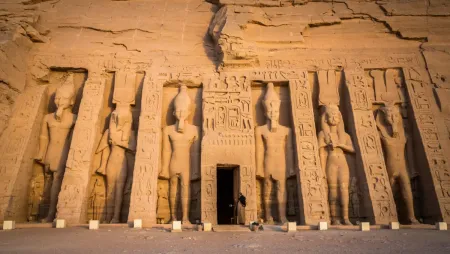
Step inside QV66, Queen Nefertari's vividly painted tomb in Luxor's Valley of the Queens.
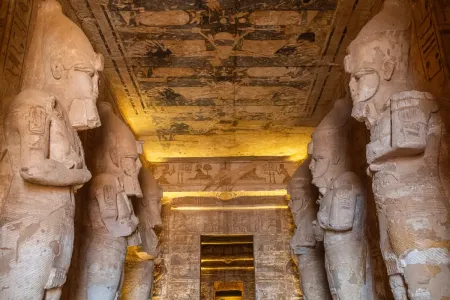
Discover the ancient Egyptian religion, covering Ma'at, the pharaoh, creation myths, temples and where to see it today.

Step inside the Grand Egyptian Museum, covering Tutankhamun’s treasures and Ramses II statue.
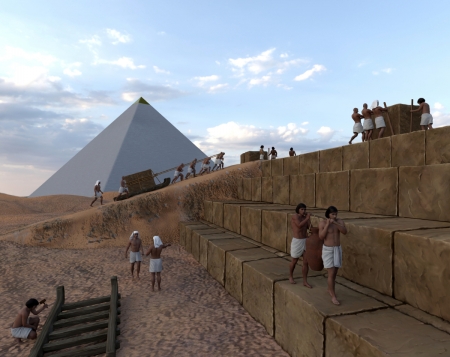
Explore life, religion, and architecture in the old kingdom of ancient Egypt. Learn more and prepare your trip to Egypt’s ancient wonders today.
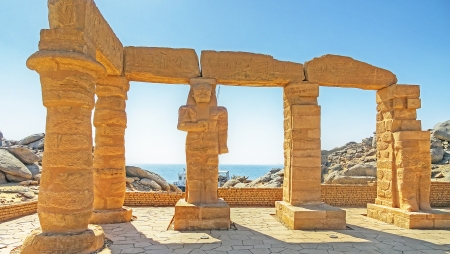
Middle Kingdom of Egypt: Archaeologists refer to the second period of stability in Ancient Egypt as the Middle Kingdom (2055–1650 BC)
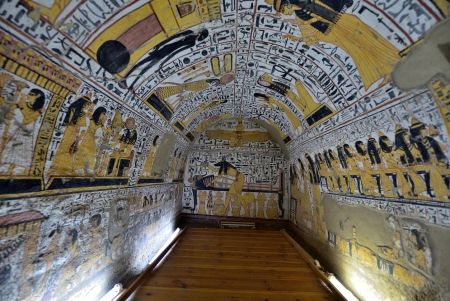
Uncover the glory of the New Kingdom of Ancient Egypt—learn about its pharaohs, remarkable power, and lasting cultural legacy.

Discover the incredible story of Queen Hatshepsut, Egypt's most famous female pharaoh. Explore the legacy of pharaoh queen hatshepsut.

Ramesses II, or Ramesses the Great, is one of the most famous figures in the history of Ancient Egypt.

Learn about the Greco-Roman period in Egypt and the must-see sites shaped by Greek, Roman, and Egyptian culture. Start planning your trip today.

Discover the fascinating life, reign, and lasting legacy of Queen Cleopatra, Egypt’s iconic and influential last pharaoh.
Follow Alexander the Great’s path across Egypt—historic cities, temples, and oases await. Discover history and plan your epic trip today.

Learn about Islamic Egypt’s transformation under powerful dynasties. Discover the stories that shaped Cairo’s history!
Learn about Amr Ibn Al-As: his life story, legacy, and vital role in shaping early Islamic history. Explore history's influential figures today.
Learn about Salahuddin Ayyubi and his impact on Egypt. Visit monuments, uncover fascinating stories, and plan your historical adventure now!
Journey through Ottomans in Egypt and witness the final chapters of Mamluk history. Get expert insights—start exploring the article today.

Learn how Mohamed Ali Egypt shaped the nation’s future. Uncover his achievements, reforms, and enduring legacy in Egyptian history.
Uncover the dynamic story of Modern Egypt, tracing its journey and major transformations. Dive into the history that defines modern Egypt.
