
 Home
Tomb of Nefertari: The Complete Guide to Egypt's Most Beautiful Tomb
Table of Contents
- Who Was Queen Nefertari?
- Where Is the Nefertari Tomb?
- How Was the Tomb Discovered?
- Inside the Tomb: Rooms and Layout
- What Do the Nefertari Tomb Paintings Mean?
- Saving the Paintings: The Getty Conservation Project
- Can You Visit the Queen Nefertari Tomb Today?
- The Temple of Nefertari at Abu Simbel
- Timeline: Key Dates in the Story of Nefertari
- Frequently Asked Questions

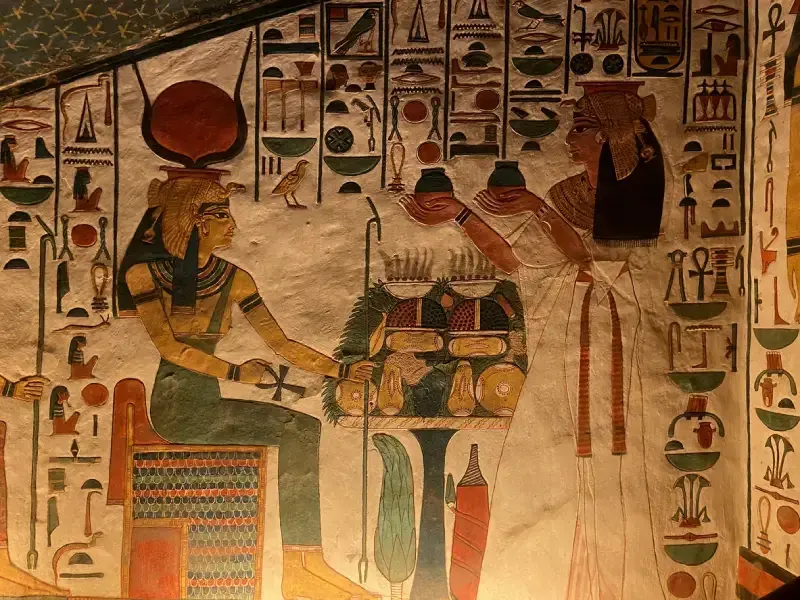
The tomb of Nefertari, known as QV66, is the burial place of Queen Nefertari, the first and favourite Great Royal Wife of Ramses II. It lies in the Valley of the Queens on Luxor's West Bank. Italian archaeologist Ernesto Schiaparelli found it in 1904. Its bright wall paintings show the queen's journey to the afterlife, and many experts call it the most beautiful tomb in Egypt.
1. Key Facts About the Tomb of Nefertari (QV66)
| Fact | Details |
|---|---|
| Tomb number | QV66 |
| Location | Valley of the Queens, West Bank, Luxor |
| Owner | Queen Nefertari (Nefertari Meritmut) |
| Husband | Pharaoh Ramses II |
| Dynasty | 19th Dynasty, New Kingdom |
| Died | About 1255 BC, before year 24 of Ramses II's reign |
| Discovered by | Ernesto Schiaparelli, 1904 |
| Size | About 520 square metres |
| Painted walls | About 5,200 square feet (roughly 480 square metres) |
| Conservation | Getty Conservation Institute and Egyptian authorities, 1986–1992 |
| Status in 2026 | Access restricted; check before you travel |
What does QV66 mean?
QV stands for "Queens' Valley," the short name for the Valley of the Queens. The number 66 is the number given to Nefertari's tomb in the official list of tombs in the valley.
2. Who Was Queen Nefertari?
Nefertari was one of the most famous Egyptian queens. She lived in the 19th Dynasty and married Ramses II before he became pharaoh. Her name is often translated as "the most beautiful of them." She became his first Great Royal Wife, the highest title a queen could hold.
What does the name Nefertari mean?
Nefertari is often translated as "the most beautiful of them" or "beautiful companion." Her full name, Nefertari Meritmut, adds "beloved of Mut," a mother goddess of Thebes. Ramses II also called her "the one for whom the sun shines," a sign of his deep respect for her.
Nefertari had at least four sons and two daughters. Her eldest son, Amun-her-khepeshef, was crown prince and head of the army. She also took part in royal diplomacy. Clay tablets found in the old Hittite capital in Turkey record letters and gifts she sent to Queen Puduhepa, wife of the Hittite king. One gift was a gold necklace with 12 strands.
Ramses and Nefertari: A Royal Partnership
Ramses II had many wives, but Nefertari held a special place. Temple scenes at Luxor and Karnak show her beside the king, shaking sacred rattles called sistra. Ramses called her "the one for whom the sun shines." She died around 1255 BC, more than four decades before her husband, and he gave her one of the finest tombs ever made for a queen.
Was Ramses II buried with Nefertari?
No. Ramses II was buried in his own tomb, KV7, in the Valley of the Kings. Kings and queens had separate burial grounds. Ramses does not even appear in Nefertari's tomb paintings, as the walls focus only on the queen and the gods.
How did Queen Nefertari die?
No one knows for sure. Nefertari disappears from records around year 24 of Ramses II's reign, soon after the temples at Abu Simbel were opened. Some historians think she was ill at that time, and her daughter Meritamen later took over many of her royal duties.
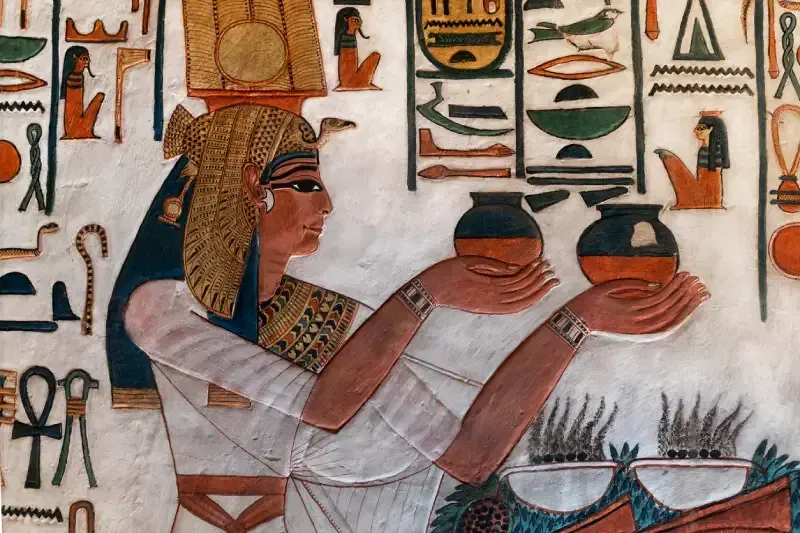
Nefertari was the first Great Royal Wife of Ramses II, one of Egypt's most powerful pharaohs. She lived in the 19th Dynasty and died around 1255 BC. She was the mother of at least six children, took part in royal diplomacy and is honoured with a temple at Abu Simbel.
Customize Your Dream Vacation!
Get in touch with our local experts for an unforgettable journey.
Plan Your Trip3. Where Is the Nefertari Tomb?
The tomb is in the Valley of the Queens, a dry desert valley on the West Bank of Luxor. In ancient times it was called Ta-Set-Neferu, often translated as "the place of beauty." More than 90 tombs were cut here for royal wives, princes and princesses. The valley is close to the Valley of the Kings and the Temple of Hatshepsut.
How do you get to the Valley of the Queens from Luxor?
Most hotels are on Luxor's East Bank. You can cross the Nile by road over the Luxor Bridge or by local ferry, then drive to the valley. The trip usually takes about 30 to 45 minutes by car, and most visitors go with a guide or on an organised West Bank tour.
Plan your visit with expert guides: Our Egypt tour packages cover Luxor’s West Bank, including the Valley of the Queens, the Valley of the Kings and the Temple of Hatshepsut, with a private Egyptologist guide, hotels and transfers included. Browse our best-selling Egypt tour packages and book your trip today.
It is in the Valley of the Queens, on the West Bank of the Nile at Luxor, in southern Egypt. The tomb is numbered QV66. It is a short drive from the Valley of the Kings, the Temple of Hatshepsut and Medinet Habu, so many visitors see these sites on the same day.
4. How Was the Tomb Discovered?
In 1904, an Italian mission led by Ernesto Schiaparelli, director of the Egyptian Museum in Turin, found the tomb of Nefertari during its second season of work in the valley. The team quickly learned that robbers had arrived first, probably in ancient times. The queen's gold, jewellery and most of her mummy were gone (Ministry of Tourism and Antiquities).
The robbers left a few pieces behind. These included pieces of the sarcophagus lid, about 30 small servant figures called ushabti, pottery and a pair of palm-fibre sandals. Parts of a pair of legs, probably the queen's, were also found. Most of these objects are now in the Egyptian Museum in Turin, Italy.
Was Nefertari's mummy found?
Not complete. Robbers took most of the mummy in ancient times. Schiaparelli found only parts of a pair of legs, which are kept in the Egyptian Museum in Turin. Experts believe these remains most likely belonged to the queen, as no one else is known to have been buried in the tomb.
Who was Ernesto Schiaparelli?
Ernesto Schiaparelli (1856–1928) was an Italian Egyptologist and director of the Egyptian Museum in Turin. Besides finding Nefertari's tomb in 1904, his team also found the tomb of Kha and Merit at Deir el-Medina in 1906, one of the most complete private tombs ever found in Egypt.
Italian archaeologist Ernesto Schiaparelli discovered the tomb in 1904. He was director of the Egyptian Museum in Turin and led several seasons of work in the Valley of the Queens. Robbers had already emptied the tomb, but the paintings and a few objects survived.
5. Inside the Tomb: Rooms and Layout
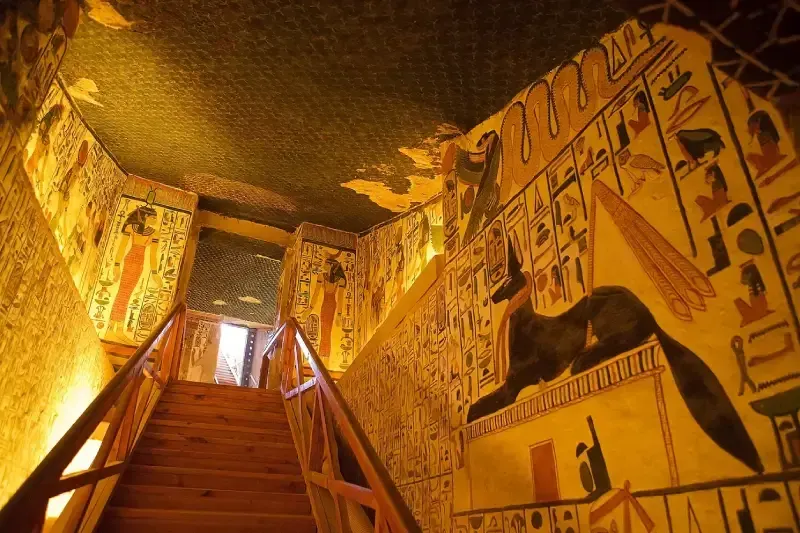
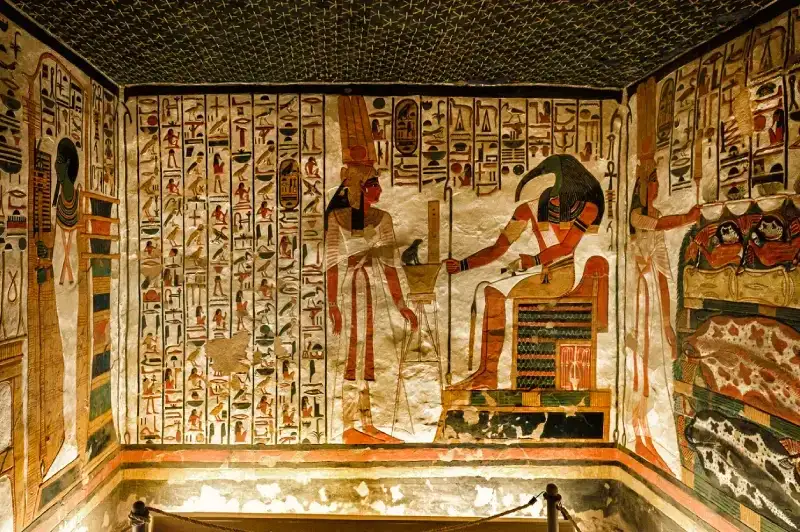
A long staircase leads down into the rock. The upper level has an antechamber with a ceiling painted as a starry night sky, a side chamber and a small vestibule. A second stairway goes down to the burial chamber, which covers about 90 square metres. Four square pillars hold up its ceiling (Wikipedia). Ramses II does not appear anywhere in the paintings.
How big is Nefertari's tomb?
The tomb covers about 520 square metres, making it one of the largest in the Valley of the Queens. Its painted walls cover about 5,200 square feet. The burial chamber alone is about 90 square metres, with four pillars supporting the ceiling.
Why is the tomb ceiling painted with stars?
The dark blue ceiling with yellow stars shows the night sky. Ancient Egyptians believed the dead travelled through the sky to reach the afterlife, so the starry ceiling surrounded the queen with the heavens she would pass through.
6. What Do the Nefertari Tomb Paintings Mean?
The walls are covered with scenes and texts taken mainly from the Book of the Dead, a collection of spells that helped the dead reach the afterlife. In the antechamber, scenes from Spell 17 show the queen changing into a ba, her soul in the shape of a bird with a human head. The colours are bright: blue, green, red, yellow and gold on a white background.
Ancient Egyptian Afterlife Beliefs in the Tomb
Ancient Egyptians believed the dead had to pass through gates guarded by dangerous spirits before joining the god Osiris. The burial chamber shows Spells 144 and 146, which name these gates and give the words needed to pass. Gods such as Isis, Osiris, Anubis, Hathor and Ra welcome the queen, and Nefertari offers them gifts. The message is simple: she will live forever.
One famous scene shows Nefertari playing senet, a board game linked with passing into the next world. Another shows her before Thoth, god of writing, holding a scribe's palette. Some experts think this suggests she could read and write, which was rare at the time.
How were the Nefertari tomb paintings made?
The local limestone was too poor to carve well, so workers covered the walls with a layer of plaster. Artists then cut the scenes into the plaster in low relief and painted them with natural colours made from minerals, such as ochre for red and yellow, and copper-based pigments for blue and green.
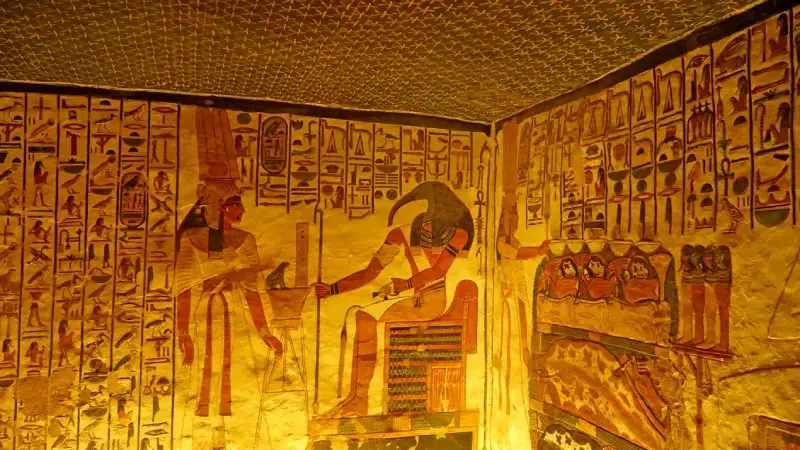
They show the queen's journey to the afterlife. Scenes come mainly from the Book of the Dead. Nefertari meets gods such as Osiris, Isis, Anubis, Hathor and Ra, makes offerings, plays the game senet and passes the gates of the underworld to live forever.
7. Saving the Paintings: The Getty Conservation Project
When Schiaparelli opened the tomb, the paintings were already damaged. Salt in the limestone pushed the plaster away from the walls. By the 1980s, at least one-fifth of the paintings had been lost. In 1986, the Getty Conservation Institute and the Egyptian Antiquities Organization began a six-year rescue project. It was the institute's first field project.
An international team studied, cleaned and secured the paintings until the work ended in 1992. They removed dust and soot but did not repaint lost areas. The project also trained Egyptian conservators. Today, about two-thirds of the original paintings survive.
Are the Nefertari tomb paintings original or repainted?
The paintings you see are original. Conservators cleaned them, fixed loose plaster and secured the walls, but they did not repaint any missing parts. This is why some areas are blank where the old plaster was lost.
8. Can You Visit the Queen Nefertari Tomb Today?
Access to the tomb has always been tightly controlled. The breath and sweat of visitors raise humidity, which can damage the fragile plaster. In the past, visits were limited to about 10 minutes. The tomb closed for urgent restoration in March 2024. In October 2024, antiquities officials inspected it and began studying a reopening under strict rules (Egypt Independent). Reports since then disagree about whether it is open, so always check the latest status before you go.
Why is there a time limit inside the tomb?
Visitors' breath and sweat add moisture to the air. Moisture dissolves salt inside the limestone and plaster, which can make painted plaster fall off the walls. A time limit of about 10 minutes was used in the past to protect the paintings from this damage.
Before the 2024 closure, the tomb needed a special ticket of about EGP 2,000, on top of the general Valley of the Queens ticket. Recent travel guides list the general ticket at about EGP 220, but prices in Egypt change often. If the tomb is closed, a free virtual reality tour by CuriosityStream and Experius VR lets you explore it online (Smithsonian Magazine).
Can you take photos inside the tomb?
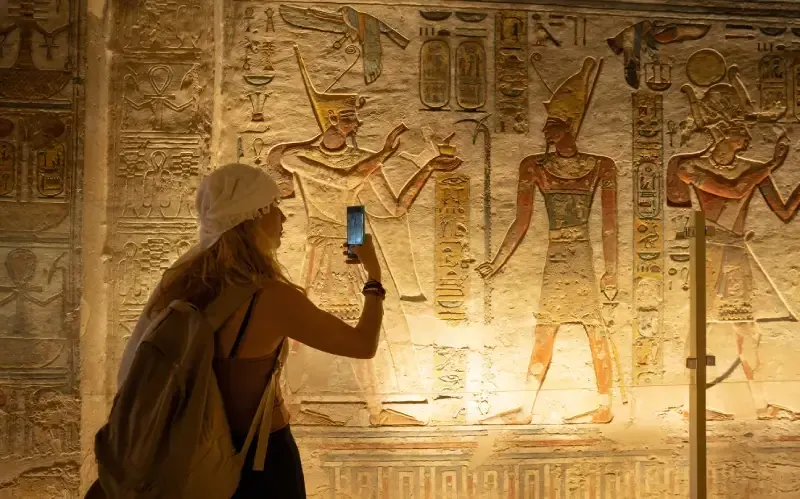
Rules on photography in Egyptian tombs change often. Phones without flash have usually been allowed in many Luxor tombs, while flash is always banned because it can harm the paintings. Check the current rules at the ticket office before you enter.
What is the best time to visit the Valley of the Queens?
Go early in the morning, when it is cooler and less crowded. The most comfortable months are October to April. Summer days in Luxor are very hot, so bring water, a hat and sun protection if you travel then.
See Nefertari’s Egypt without the stress: Tomb access rules change often, and our local team tracks them for you. Choose one of our Luxor and Egypt tour packages, and we’ll build your itinerary around the tombs that are open on your travel dates. Book your Egypt holiday package now to secure the best rates.
Access is restricted. The tomb closed for urgent restoration in March 2024, and officials later studied reopening it under strict rules. Sources disagree about its current status, so check with the West Bank ticket office or a trusted tour operator before you travel to Luxor.
9. The Temple of Nefertari at Abu Simbel
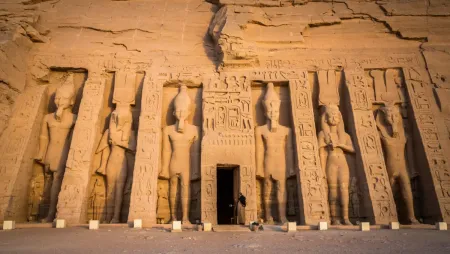
Nefertari is also honoured far to the south. At Abu Simbel, Ramses II built a Small Temple for the queen and the goddess Hathor. Its front has six standing statues: four of the king and two of Nefertari. Her statues are the same size as his, which was very rare for a queen (Ministry of Tourism and Antiquities). Both temples were moved to higher ground in the 1960s to save them from the waters of Lake Nasser.
Why did Ramses II build a temple for Nefertari?
Ramses II built the Small Temple at Abu Simbel to honour Nefertari as his chief queen and to link her with the goddess Hathor. An inscription on the temple says it was made for the Great Royal Wife Nefertari, "for whom the sun shines."
Visit her tomb and her temple in one trip: Many of our Egypt tour packages pair Luxor with Aswan and Abu Simbel, often with a relaxing Nile cruise in between. Compare our Egypt tour packages with Abu Simbel and reserve your place today.
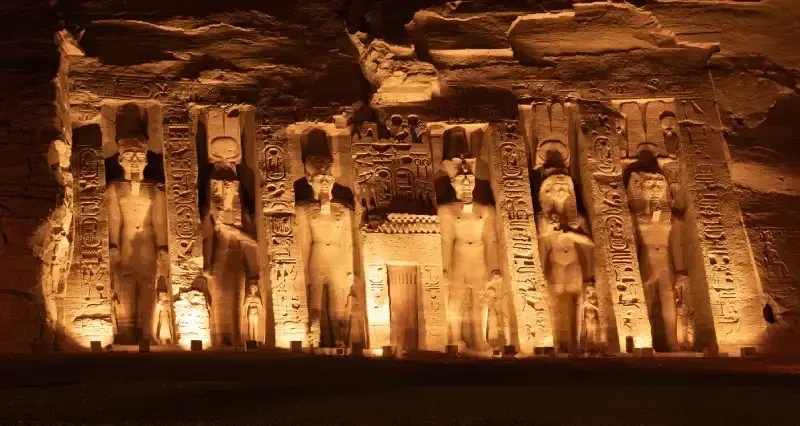
It is the Small Temple at Abu Simbel, built by Ramses II for Nefertari and the goddess Hathor. Its front has six large standing statues, two of them showing the queen. Her statues are the same size as the king's, a rare honour.
10. Other Tombs in the Valley of the Queens
The general valley ticket usually includes a few other tombs, which change from time to time. Popular ones include:
- QV55, Amun-her-khepeshef: a young son of Ramses III, shown with a child's side-lock of hair. Its colours are very well preserved.
- QV44, Khaemwaset: another son of Ramses III, presented to the gods by his father.
- QV52, Tyti: a queen of the 20th Dynasty, probably a wife of Ramses III, with scenes of gods and goddesses.
Why was the Valley of the Queens chosen for royal burials?
The valley was quiet, hidden and close to the royal tombs in the Valley of the Kings. At its far end is a natural grotto where rainwater sometimes fell like a waterfall. Ancient Egyptians may have linked this place with Hathor and with rebirth, which made it a fitting place for queens and royal children.
11. Timeline: Key Dates in the Story of Nefertari
- About 1279 BC: Ramses II becomes king, with Nefertari already his wife.
- Before year 20 of his reign: The Small Temple at Abu Simbel is completed.
- About 1255 BC: Nefertari dies and is buried in QV66.
- 1904: Ernesto Schiaparelli discovers the tomb.
- 1950: The tomb is closed because of damage to the paintings.
- 1986–1992: The Getty project conserves the paintings.
- March 2024: The tomb closes again for urgent restoration.
How long did Ramses II rule Egypt?
Ramses II ruled for about 66 years, from about 1279 BC to 1213 BC. This makes him one of the longest-ruling pharaohs in Egyptian history. He outlived Nefertari by more than 40 years.
12. Why the Tomb of Nefertari Still Matters Today
Nefertari's tomb gives a rare, colourful look at how ancient Egyptians imagined eternity. Like Queen Hatshepsut and Cleopatra, she remains a symbol of royal women's power and beauty. Her paintings also show how science and care can protect fragile art for the future. Each new study of the tomb, from salt in the walls to the queen's letters, adds another piece to the story of this remarkable woman.
Ready to explore further? Plan your West Bank visit with our Luxor travel guide, or browse our Luxor day tours and the Valley of the Kings, Queens and Hatshepsut Temple day trip. You can also time a trip south for the Abu Simbel Sun Festival. Fill in the inquiry form to plan a tailor-made trip that follows in the footsteps of Ramses and Nefertari. Our Egypt tour packages, private Luxor tours and Nile cruise holidays are all fully customisable, so book your Egypt vacation package today and travel with peace of mind.
Why is Nefertari's tomb called the Sistine Chapel of Egypt?
The tomb is often compared to the Sistine Chapel in Rome because its walls and ceilings are covered with bright, detailed paintings of very high quality. Like Michelangelo's chapel, it is seen as one of the greatest works of art of its time.
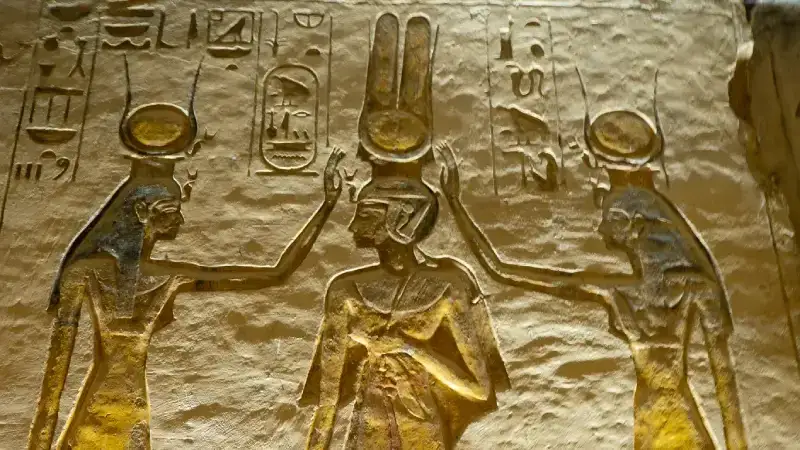
It is famous for its wall paintings, which are among the finest and best-preserved in Egypt. Bright colours, fine details and scenes of the queen meeting the gods make many people call it the "Sistine Chapel of ancient Egypt." Its careful conservation also made it a model for other sites.
13. Frequently Asked Questions
Before the 2024 closure, the tomb needed a special ticket of about EGP 2,000, in addition to the general Valley of the Queens ticket. Egyptian ticket prices change often, so check the latest official prices before your visit, especially if the tomb reopens with new rules.
No. Nefertiti was the wife of Akhenaten in the 18th Dynasty. Nefertari lived several decades later and was the wife of Ramses II in the 19th Dynasty. Their names sound alike, and both are famous for their beauty, but they were different queens.
Yes, in part. A free virtual reality experience called "Nefertari: Journey to Eternity" lets users explore a 3D scan of the tomb. Museums sometimes show replicas and objects from the tomb, but only a visit to Luxor shows the real painted walls.
A simple guide to the tomb of Nefertari (QV66), covering who the queen was, the tomb paintings, the 1904 discovery, conservation and visiting today.
A simple guide to Wadi El Hitan, Egypt's Whale Valley, covering its whale fossils, UNESCO status, museum, travel tips and best time to visit.
A simple guide to ancient Egyptian religion, covering Ma'at, the pharaoh, creation myths, temples, mummification, the afterlife and where to see it today.
A complete guide to the Grand Egyptian Museum near Giza, covering Tutankhamun’s treasures, the Ramses II statue, tickets and opening hours.
Explore life, religion, and architecture in the old kingdom of ancient Egypt. Learn more and prepare your trip to Egypt’s ancient wonders today.
Middle Kingdom of Egypt: Archaeologists refer to the second period of stability in Ancient Egypt as the Middle Kingdom (2055–1650 BC)
Uncover the glory of the New Kingdom of Ancient Egypt—learn about its pharaohs, remarkable power, and lasting cultural legacy.

Discover the incredible story of Queen Hatshepsut, Egypt's most famous female pharaoh. Explore the legacy of pharaoh queen hatshepsut.

Ramesses II, or Ramesses the Great, is one of the most famous figures in the history of Ancient Egypt.

Learn about the Greco-Roman period in Egypt and the must-see sites shaped by Greek, Roman, and Egyptian culture. Start planning your trip today.

Discover the fascinating life, reign, and lasting legacy of Queen Cleopatra, Egypt’s iconic and influential last pharaoh.
Follow Alexander the Great’s path across Egypt—historic cities, temples, and oases await. Discover history and plan your epic trip today.

Learn about Islamic Egypt’s transformation under powerful dynasties. Discover the stories that shaped Cairo’s history!
Learn about Amr Ibn Al-As: his life story, legacy, and vital role in shaping early Islamic history. Explore history's influential figures today.
Learn about Salahuddin Ayyubi and his impact on Egypt. Visit monuments, uncover fascinating stories, and plan your historical adventure now!
Journey through Ottomans in Egypt and witness the final chapters of Mamluk history. Get expert insights—start exploring the article today.

Learn how Mohamed Ali Egypt shaped the nation’s future. Uncover his achievements, reforms, and enduring legacy in Egyptian history.
Uncover the dynamic story of Modern Egypt, tracing its journey and major transformations. Dive into the history that defines modern Egypt.
