
Things to know about Pharaohs' Golden Parade
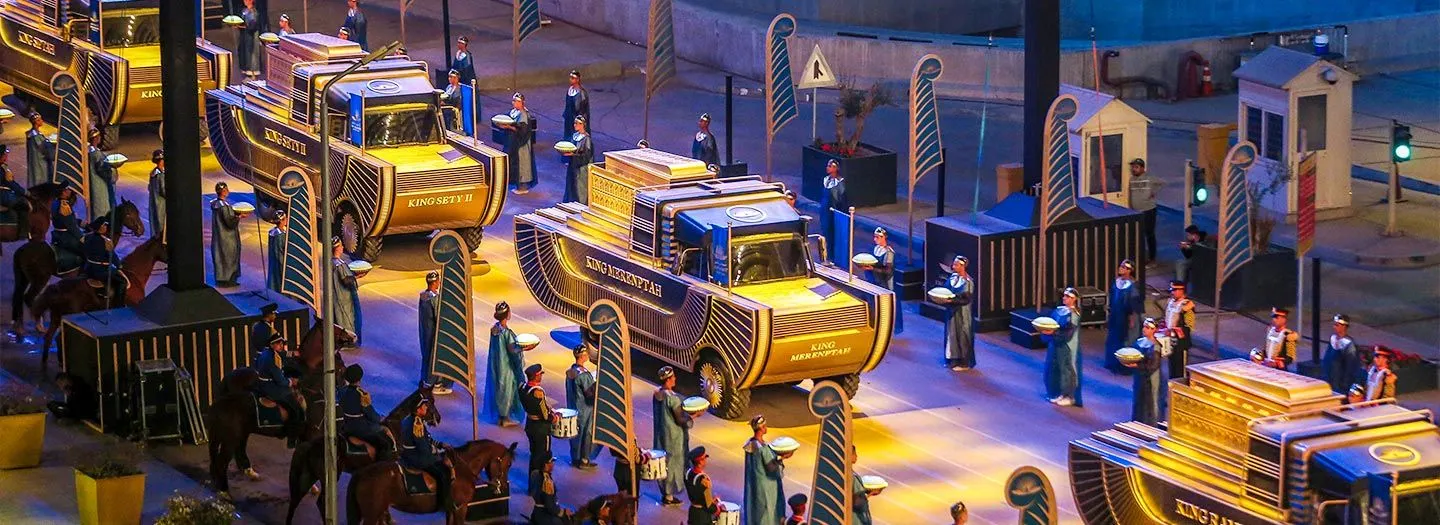
Officially the Phaouoh's Golden Parade happened on April 3rd, 2021 at 6 PM, Cairo time, the whole world watched this historic event and all of us wondered from the amazing Parade walking from the Egyptian Museum in Tahrir to the National Museum of the Egyptian Civilization in Al Fustat.
The Pharaohs Golden Parade is a grand process to transfer a huge number of mummies and coffins, there are 22 mommies and they are nearly 18 mummies for ancient Egyptian kings and 4 for ancient Egyptian queens, in Royal coffins back to the 17th, 18th, 19th, 20th Egyptian Pharaohs Royal families.
Know more about Pharaohs’ Golden Parade
An extravagant ceremony took place in Egypt by moving twenty-two ancient royal mummies from the Egyptian museum to the new National Museum of Egyptian Civilization last night in a historic event dubbed the Golden Parade. All the roads in Egypt were enclosed in the middle of town specially Tahrir Square to permit the procession of pharaonic, golden vehicles to start their way south to Al Fustat, which they guarded by 12 weaponed Egyptian guards wearing the formal suit of the pharaohs.
The majestic pharaohs were transported in well-designed and special nitrogen-filled capsules to save them according to the Egyptian antiquities minister's instructions, they prepared for 15 days in the laboratories to be ready for the movement and the Parade.
Why was the Pharaoh's Golden Parade directed to the National Museum of the Egyptian Civilization in Al-Fustat? The city of Fustat is overlooking Ain Al Sira near the Babylon Fortress, near the heart of the town! According to the name of this Museum, it must have the best of the Egyptian civilization so the Golden Parade moved to settle there and let the locals and the foreigners see the history of the Royal dynasties of Egypt.
Customize Your Dream Vacation!
Get in touch with our local experts for an unforgettable journey.
Plan Your TripWho are the mummies?
As we mentioned, they are 22 mummies of the Egyptian Royal dynasties, mainly back to the 17th, 18th, 19th, and 20th dynasties. 18 Egyptian kings and 4 queens, including Queen Nefertari, Queen Merit amun, Queen Hatshepsut, Pharaoh Ramses II, Pharaoh Ramses IX, Pharaoh Tuhotmos, and Pharaoh Seti I.
Here is everything you will need to know about the Pharaoh Golden Parade in Cairo
- The Parade started on Saturday, at the sunset of April 3rd and it took 45 minutes to reach Al Fustat.
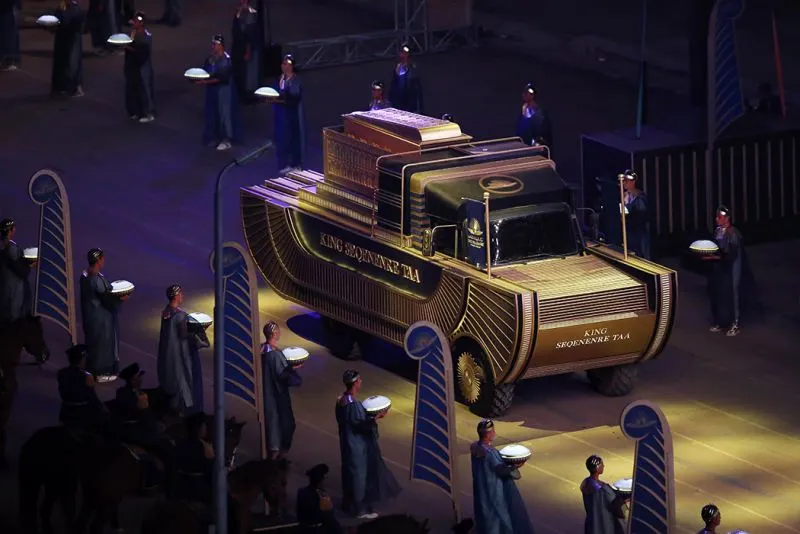
- All the 22 mummies are procession on Golden, decorated vehicles covered with their names in Arabic.
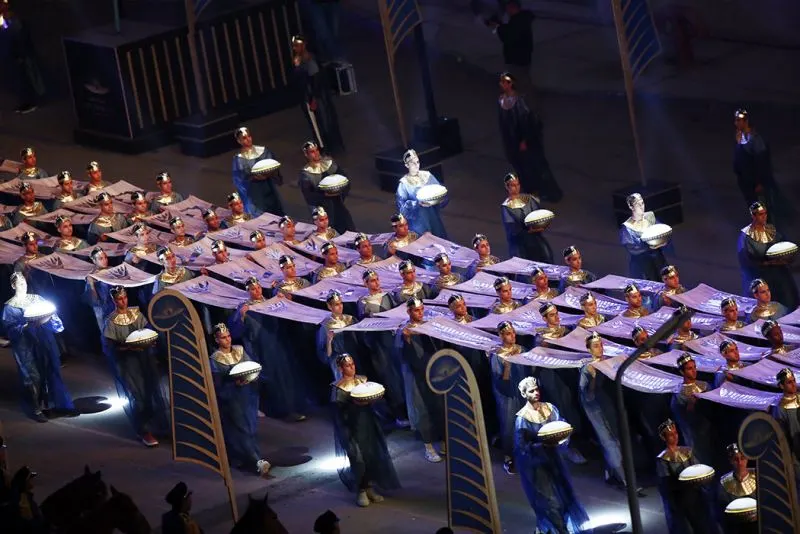
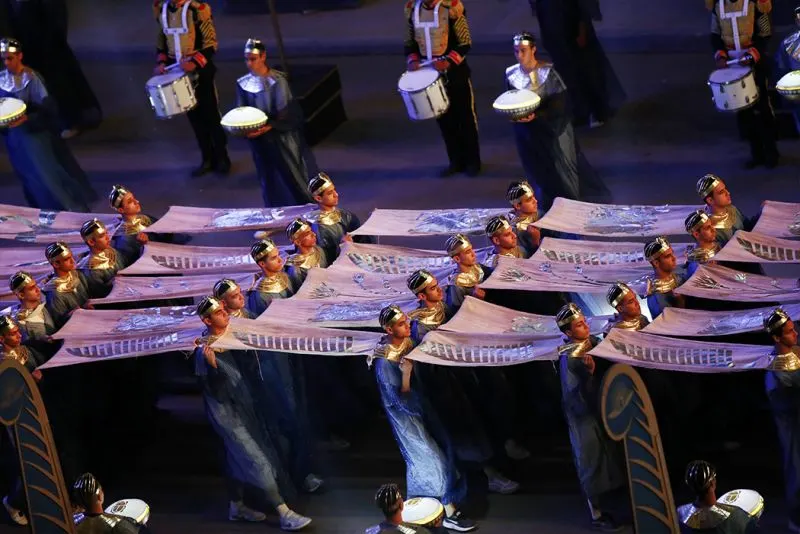
- There were a lot of Egyptian famous actors, singers, and artists shared in this majestic event performing fantastic shows during the procession of the Golden Parade.
- There were more than 400 television shows presenting this historical event, live worldwide, also on the Youtube channel of the Ministry of Tourism and Antiquities.
Now, you will be able to watch the full event on the Youtube channel and enjoy what you miss from this majestic and Royal event!
The Pharaohs' Golden Parade reminded the world just how spectacular Egypt's royal heritage truly is. If that grandeur has you dreaming of standing before the same kings and queens, our Egypt Tours bring you face to face with these treasures in Cairo's great museums, guided by experts who know their stories inside out.
The Pharaohs’ Golden Parade was a historic royal procession that took place in Cairo, Egypt, on April 3, 2021. It celebrated the transfer of 22 royal mummies from the Egyptian Museum in Tahrir Square to the National Museum of Egyptian Civilization (NMEC) in Fustat. The event honored Egypt’s ancient kings and queens with a grand cultural spectacle watched by millions worldwide.
They were moved to provide better preservation and a more modern display at the NMEC. The new museum offers advanced climate control and security systems, ensuring that the royal remains are protected for future generations while being showcased in a scientifically accurate, respectful environment.
The parade included 18 kings and 4 queens from Egypt’s 17th to 20th Dynasties. Some of the most famous names were Ramses II, Hatshepsut, Seti I, Ahmose Nefertari, and Seqenenre Tao. Each mummy was transported in a specially designed vehicle that bore the name of the ruler and was inspired by ancient Egyptian motifs.
It was significant because it showcased Egypt’s deep respect for its heritage and marked the official opening of the National Museum of Egyptian Civilization. The parade symbolized national pride and demonstrated Egypt’s ability to preserve and celebrate its ancient legacy in a modern, dignified way.
The parade began at the Egyptian Museum in Tahrir Square, downtown Cairo, and ended at the National Museum of Egyptian Civilization (NMEC) in Fustat. The entire route was decorated and secured, transforming central Cairo into a stage for one of the most majestic cultural events in modern Egyptian history.
Egypt spent months preparing for the event. The mummies were carefully restored and rewrapped, their vehicles custom-built with shock-absorption systems, and streets along the route were repaved. The production also involved hundreds of performers, musicians, and technicians to create a world-class spectacle.
No, the parade route itself was not open to the public due to security and preservation concerns. However, it was broadcast live on television and streamed online globally, allowing millions to witness the event in real-time.
It featured golden chariots, synchronized lighting, ancient Egyptian costumes, and an orchestral performance led by Hisham Nazih. The music, choreography, and precision of the event were breathtaking — turning Cairo into a living movie set celebrating ancient royalty.
Related Articles
Keep the inspiration going with these handpicked travel reads.