Turkey is incredibly rich in culture, history, and nature. Depending on your interests and vacation style there is definitely no shortage of places to visit in Turkey. The country has a long history of varied religious traditions and diversity in architecture, which has significantly enriched what it has to offer to its visitors. This includes historic sites from Roman ruins to ancient Christian churches and magnificent mosques. It also means a varied cuisine and cultural heritage. Plus, Turkey boasts beautiful natural phenomena as well, from beaches to hiking. With so many options to enjoy an outstanding Turkey Travel Packages, how do you choose? Here is a solid plan for first-time visitors to Turkey.
Istanbul — Where Two Continents Meet
No trip to Turkey is complete without time in Istanbul — one of the most extraordinary cities on earth and the only metropolis in the world that straddles two continents. Whether you have two days or two weeks, Istanbul will captivate you from the moment you arrive. This is a city where ancient Byzantine churches stand beside soaring Ottoman mosques, where the call to prayer echoes across a skyline of minarets, and where a single street can take you from a centuries-old spice bazaar to a cutting-edge rooftop bar overlooking the Bosphorus.
Start with the classics. The Hagia Sophia is an absolute must — a towering masterpiece of Byzantine architecture that has served as a cathedral, a mosque, and a museum over its 1,500-year history. Just steps away, the Blue Mosque stuns visitors with its six minarets and breathtaking interior of hand-painted Iznik tiles. Nearby, the underground marvel of the Basilica Cistern offers a completely different experience — a vast, dimly lit subterranean reservoir supported by 336 ancient columns that feels like stepping into another world entirely.
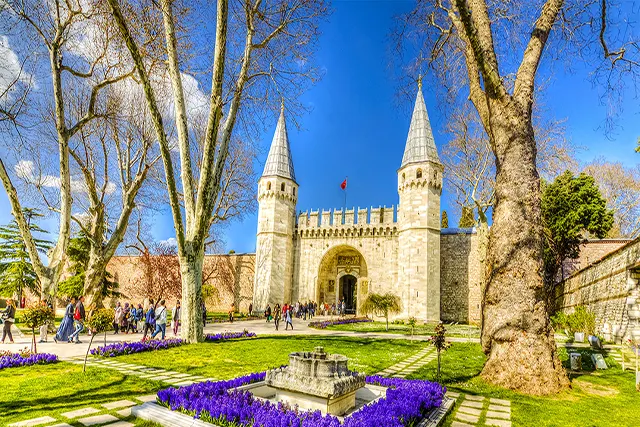
Go deeper into history. The Topkapi Palace was the nerve center of the Ottoman Empire for nearly 400 years, and its treasury, harem, and sweeping gardens overlooking the Bosphorus make it one of Turkey's most rewarding full-day experiences. The equally impressive Dolmabahce Palace on the European shore of the Bosphorus dazzles with its baroque grandeur and opulent interiors. For history lovers, the Archaeological Museum and the Museum of Islamic Art are world-class institutions that provide essential context for understanding Turkey's extraordinary layered past.
Get on the water. A cruise along the Bosphorus Strait is one of the great travel experiences not just in Turkey, but in the world. As your boat glides between Europe and Asia, you will pass imperial palaces, Ottoman fortresses, fishing villages, and elegant waterfront mansions that make it impossible not to fall in love with Istanbul all over again.
Explore beyond the highlights. If time allows, take a ferry to the Asian side and discover a quieter, more local Istanbul. Wander the colorful streets of Balat, Istanbul's oldest neighborhood, where faded Byzantine and Ottoman architecture creates one of the most photogenic streetscapes in the city. Enjoy a leisurely Turkish breakfast near the Rumeli Hisari fortress, or explore the world-class calligraphy collection at the Sakip Sabanci Museum on the shores of the Bosphorus.
Istanbul is not just a stopover — it is a destination in its own right. Give it the time it deserves, and it will reward you with memories that last a lifetime.
How to get there:
Istanbul has two international airports — Istanbul Airport and Sabiha Gokcen — with direct flights from cities worldwide.
Recommended stay: Minimum 3 days — ideally 5 to 7 days to do it justice.
topkapi-palace-gate-salutation-purple-flowers-tourists-istanbul-turkey-spring
Ankara — The Heart of Modern Turkey
Often overlooked by tourists rushing to Istanbul, Ankara is Turkey's capital city and a destination that rewards those who take the time to explore it. The city is home to the magnificent Anitkabir, the grand mausoleum of Mustafa Kemal Atatürk, Turkey's founding father, which stands as one of the most visited sites in the entire country. The Museum of Anatolian Civilizations is another unmissable highlight — widely considered one of the finest archaeological museums in the world, housing artifacts spanning thousands of years of human history from the Paleolithic era to the Ottoman period. Ankara's old quarter, Ulus, is full of Roman ruins, Ottoman-era mosques, and a hilltop citadel offering sweeping views over the city. A visit to Ankara gives travelers a deeper understanding of modern Turkey beyond its tourist trail.
How to get there: Direct flights from Istanbul take approximately 1 hour. High-speed trains connect Istanbul and Ankara in around 4 hours.
Recommended stay: 1–2 days
izmir-clock-tower-konak-square-palm-trees-turkish-flag-pigeons
Customize Your Dream Vacation!
Get in touch with our local experts for an unforgettable journey.
Plan Your Trip
Selcuk
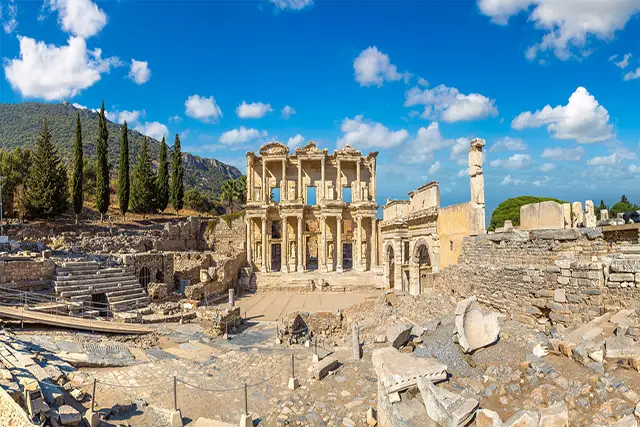
One of the most popular destinations in this part of Turkey is Selcuk, or rather, the Ephesus ruins located in Selcuk. This can be done as a day trip from the nearby destinations, including Izmir. However, you can also stay in Selcuk overnight – it’s a pretty place and can be a relaxing getaway. The Ephesus ruins are impressive and deserve a few hours of exploration. The most iconic here is the Library of Celsus and the Ancient Terrace Houses. For real history buffs, you can visit the remains of the Temple of Artemis, one of the ancient wonders of the world. However, note that only a single column is left of it. If you fancy a delicious lunch with stunning views, then don’t miss the nearby Sirince village. You can also stock up on delicious souvenirs here!
celsus-library-ancient-ruins-ephesus-izmir-turkey-blue-sky
Pamukkale — Turkey's Cotton Castle in the Sky
There are natural wonders, and then there is Pamukkale. Translating literally as "Cotton Castle" in Turkish, this extraordinary site in southwestern Turkey is one of those rare places that looks almost too beautiful to be real — and yet, there it is, a cascading mountainside of dazzling white travertine terraces filled with warm, mineral-rich turquoise pools, glittering in the Turkish sun like a frozen waterfall of snow.
What makes it so special? Over thousands of years, calcium-laden thermal waters flowing down the hillside have created a series of naturally formed terraced pools — known as travertines — that stack one upon another in a breathtaking display of geological artistry. The water is a constant 35°C, rich in calcium bicarbonate, and has been celebrated for its therapeutic properties since ancient times. Walking barefoot across the white terraces (shoes are not permitted to protect the site) and dipping into the warm pools is an experience unlike anything else on earth.
Ancient history meets natural wonder. Pamukkale is not just about the travertines — perched directly above them lie the remarkable ruins of Hierapolis, an ancient Greco-Roman spa city founded around 190 BC. The Romans, who were well aware of the therapeutic value of the thermal waters, built an entire city here for rest and recuperation. Today, the ruins include a magnificent amphitheater in near-perfect condition with sweeping views over the valley, an extensive necropolis, ancient baths, and colonnaded streets that bring the grandeur of the Roman world vividly back to life.
Swim where the Romans swam. One of the most unforgettable experiences Pamukkale offers is a dip in the Antique Pool — also known as Cleopatra's Pool — where you can swim among submerged ancient Roman columns in naturally heated thermal waters. It is one of the most unique swimming experiences in the world and an absolute must during your visit.
A note on responsible travel. Pamukkale's beauty has not come without a cost. Decades of poorly managed mass tourism caused significant damage to the travertines, stripping them of their brilliant white color in many areas. UNESCO and the Turkish government have been working hard to restore the site, and progress is being made — but it requires the cooperation of every visitor. Please follow all site rules, stay on designated paths, remove your shoes before walking on the terraces, and avoid using sunscreen or oils before entering the pools. Pamukkale's magic belongs to future generations too — help protect it.
How to get there: Take a train or bus from Izmir or Selcuk to Denizli, then a short bus or minibus to the town of Pamukkale. The site is easily walkable from the town center.
Recommended stay: 1–2 days — stay overnight to enjoy the terraces at sunrise or sunset when the light is most magical, and the crowds are thinnest.
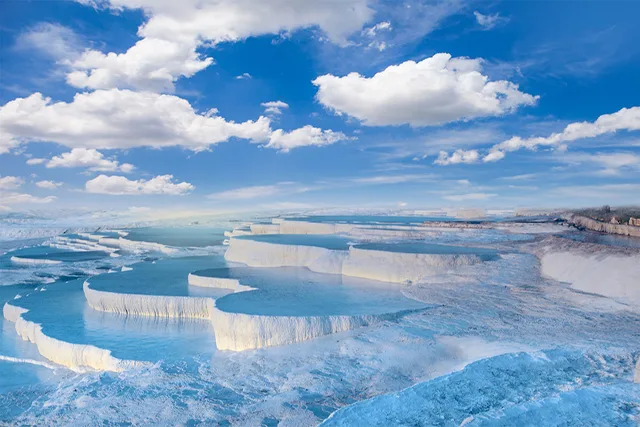
white-travertine-terraces-thermal-pools-pamukkale-cotton-castle-turkey-blue-sky
Cappadocia — Turkey's Most Magical Landscape
If there is one place in Turkey that will leave you completely speechless, it is Cappadocia. This ancient, otherworldly region in the heart of Anatolia is unlike anywhere else on the planet — a surreal dreamscape of soaring fairy chimneys, honeycomb cave dwellings, hidden underground cities, and valleys so beautiful they seem painted rather than formed by nature. It is the kind of place that makes you question whether you have stepped into another world entirely, and it is without question one of the greatest travel destinations not just in Turkey, but on earth.
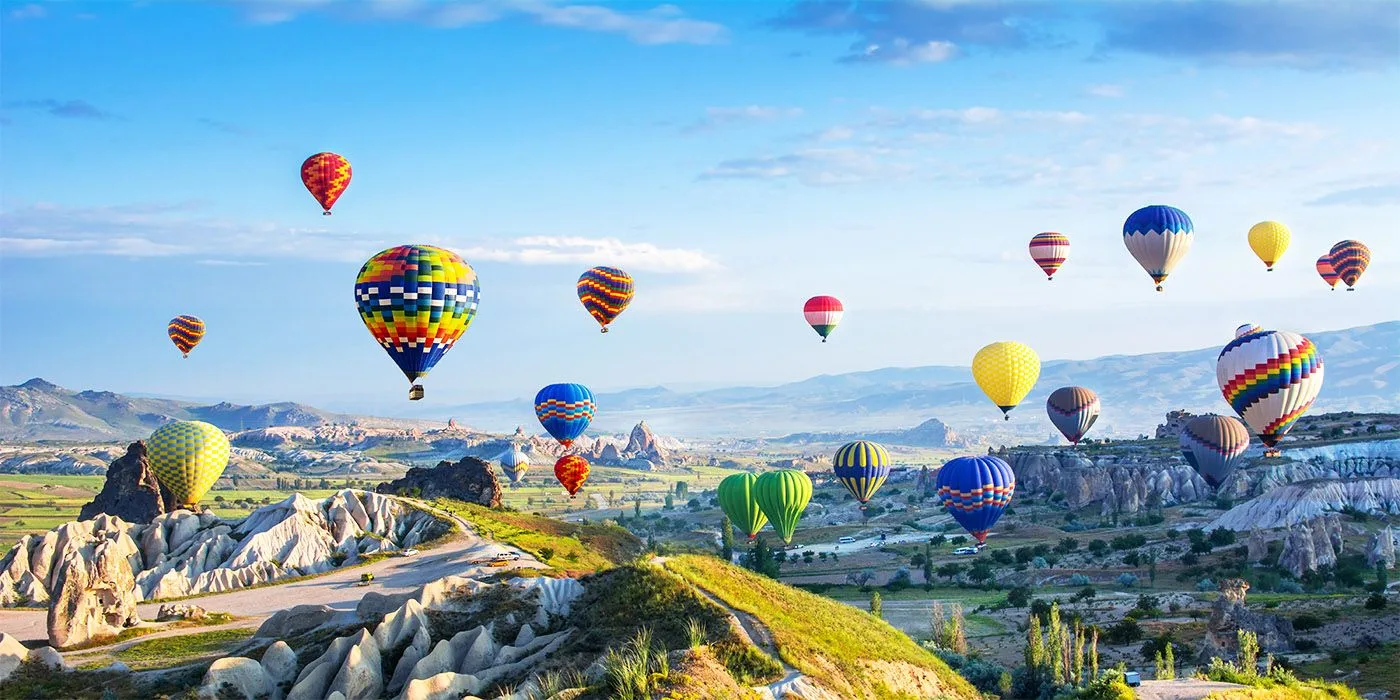
Rise above it all. The single most iconic experience in Cappadocia — and arguably in all of Turkey — is a hot air balloon flight at sunrise. As the first light of day spills across the valleys and thousands of fairy chimneys emerge from the morning mist below you, floating silently above this magical landscape is a moment that will stay with you for the rest of your life. Balloon flights operate year-round, but spring and autumn offer the most reliable weather and the most spectacular light. Book well in advance — this is one experience that regularly sells out.
Stay in a cave hotel. Most visitors base themselves in Göreme, the region's most charming town, and for good reason. Göreme is home to some of Turkey's most unique and memorable accommodation — cave hotels carved directly into the volcanic rock, many offering private terraces with panoramic valley views, outdoor pools, and rooftop terraces perfectly positioned for watching the morning balloon flights drift overhead. Staying in a cave hotel is not just a gimmick — the thick rock walls keep rooms cool in summer and warm in winter, making them genuinely comfortable as well as unforgettable.
Explore ancient history underground and above. The Goreme Open Air Museum is a UNESCO World Heritage Site and one of Turkey's finest historical treasures — a remarkable complex of Byzantine rock-cut churches, monasteries, and chapels decorated with vivid frescoes dating back to the 10th and 11th centuries. Equally fascinating are Cappadocia's extraordinary underground cities — vast subterranean networks carved deep into the volcanic rock by early Christian communities seeking shelter and safety. Derinkuyu and Kaymakli are the most accessible and impressive, descending multiple stories underground through narrow tunnels, stables, churches, and living quarters that once housed thousands of people. Meanwhile, the carved hilltop fortress of Uchisar Castle offers the most panoramic views in the entire region — a must for photographers and sunrise chasers.
Hike the valleys — this is what most tourists miss. While the balloon flights and cave hotels get all the attention, Cappadocia's greatest hidden treasure may be its hiking trails. The valleys surrounding Göreme offer some of the most scenic and accessible walks in Turkey, winding through extraordinary rock formations, abandoned cave churches, ancient pigeon houses, and vineyards that have been cultivated here for thousands of years. Love Valley and Rose Valley glow a stunning shade of pink and red in the late afternoon light. White Valley offers a lunar landscape of pale rock formations that seem to belong on another planet. Ihlara Valley takes you along a river canyon lined with rock-carved Byzantine churches. None of the walks are particularly strenuous — but all of them are absolutely breathtaking.
Cappadocia rewards those who slow down. Four days is the ideal minimum — enough time to take a balloon flight, explore the underground cities and open-air museum, hike at least two or three valleys, and still have an evening or two to sit on a rooftop terrace, sip Turkish wine from the local vineyards, and watch the last of the day's balloons drift across the famous Cappadocian sky.
How to get there: The quickest option is a direct flight from Istanbul to Kayseri or Nevsehir airports, both within easy reach of Göreme. Overnight buses from Istanbul are also a popular and comfortable option.
Recommended stay: 4 days minimum — 5 to 6 days for a truly complete experience.
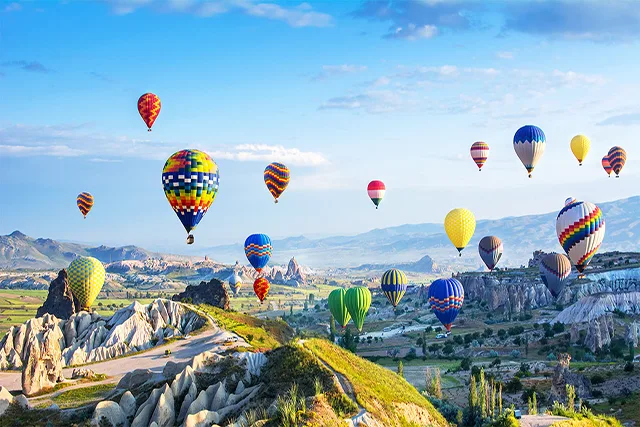
dozens-colorful-balloons-floating-cappadocia-valley-fairy-chimneys-sunrise-turkey
What are the must-visit places in Turkey?
Turkey's top must-visit destinations include Istanbul, Cappadocia, Pamukkale, Ephesus, Antalya, Bodrum, and Marmaris. Each offers a completely different experience — from Istanbul's iconic mosques and palaces to Cappadocia's fairy chimneys and hot air balloons, and Pamukkale's dazzling white travertine terraces. The good news is that Turkey is a relatively compact country with excellent transport links, making it possible to visit several of these destinations in a single trip.
How many days do I need to see the best places in Turkey?
A minimum of 10 to 14 days is recommended to cover Turkey's highlights comfortably. A well-planned two-week itinerary can include Istanbul, Cappadocia, Ephesus, Pamukkale, and a coastal destination such as Bodrum, Marmaris, or Antalya. If you only have one week, focus on Istanbul and Cappadocia — the two destinations that best represent the country's extraordinary diversity of history, culture, and natural beauty.
Is it easy to travel between Turkey's top destinations?
Yes — Turkey has excellent transport infrastructure making it straightforward to travel between major destinations. Domestic flights connect Istanbul with Cappadocia, Antalya, Bodrum, Izmir, and Trabzon in under two hours. Intercity buses are comfortable, affordable, and cover virtually every destination in the country. High-speed trains connect Istanbul with Ankara and Konya. For coastal destinations, ferries and local boats add a scenic and enjoyable dimension to getting around.
What is the best way to get around Turkey as a tourist?
Turkey offers a wide range of transport options to suit every budget and travel style. Domestic flights are the fastest way to cover long distances — a flight from Istanbul to Cappadocia, for example, takes just over an hour compared to a 10-hour bus journey. That said, Turkey's intercity buses are genuinely comfortable, affordable, and a great way to see the countryside. For coastal areas, renting a car gives you the freedom to explore hidden beaches and villages at your own pace. In cities, taxis, metro systems, and trams are all widely available and easy to use. Guided tours are also an excellent option for first-time visitors, as they take care of all logistics while ensuring you get the most out of every destination.