
Best Coastal Cities in Morocco: From Essaouira to Agadir
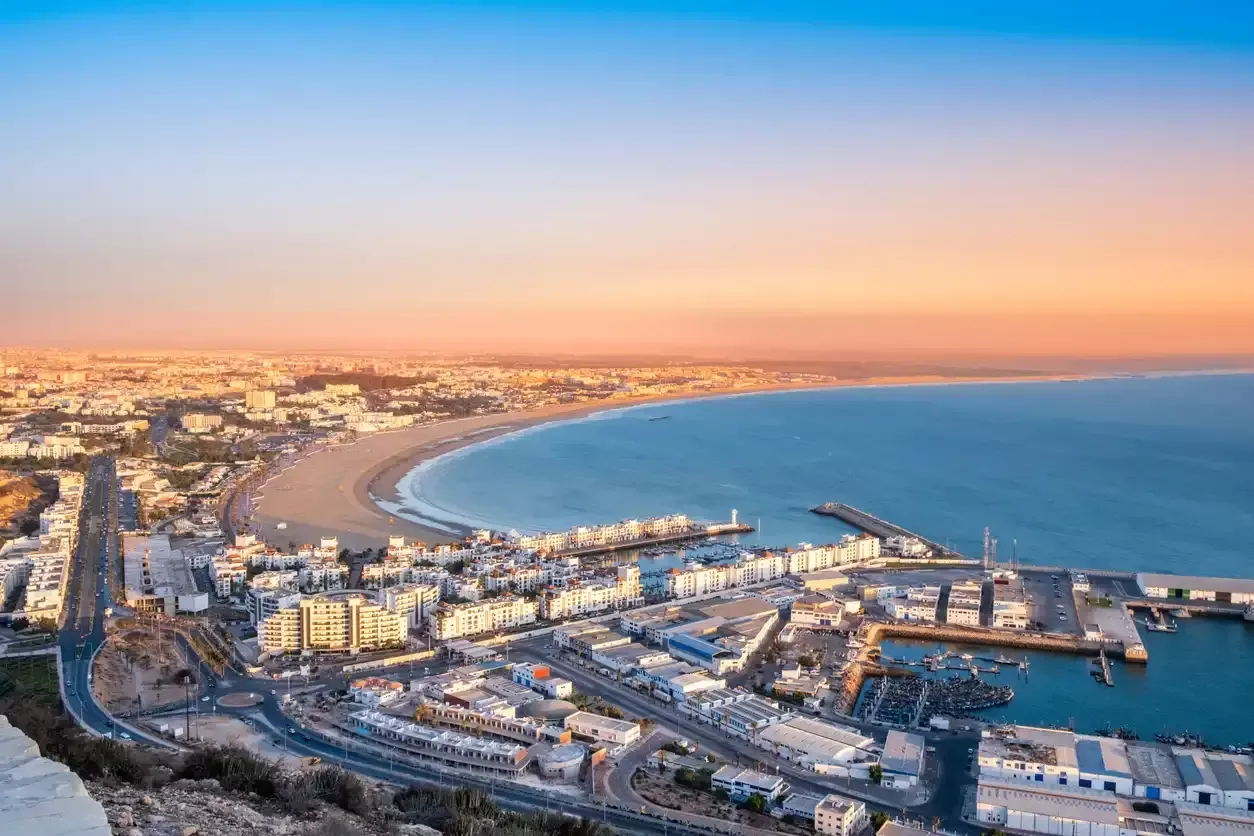
Morocco's coastal cities reveal treasures that escape the attention of countless travelers who venture only into the kingdom's celebrated interior landscapes. The nation's Atlantic facade extends an extraordinary 1,200 miles from the Mediterranean's edge down to the Western Sahara's borders, creating a maritime corridor blessed with exceptional natural beauty and remarkably temperate conditions year-round.
The stretch between Essaouira and Agadir particularly exemplifies this coastal magnificence, where centuries of maritime heritage merge seamlessly with contemporary adventure tourism. Since the 1960s, international surf communities have recognized these shores as home to some of the planet's most consistent and powerful wave breaks. Essaouira itself has earned recognition as a UNESCO World Heritage site and attracts significant domestic tourism, while lesser-known coastal villages like Sidi Kaouki, positioned just 17 kilometers southward, provide intimate encounters with Morocco's authentic seaside culture.
This exploration will guide you through Morocco's most captivating coastal destinations, from the renowned surf breaks that define Imsouane's character to Taghazout's distinctive bohemian coastal lifestyle. We'll examine the cultural depth of cities like Tangier, where the pace remains notably more measured than Morocco's bustling imperial cities. These Atlantic shores accommodate every traveler's vision, whether you seek the thrill of world-class surfing, profound cultural engagement, or the simple pleasure of seaside tranquility. Morocco's western coastline delivers experiences that linger long after departure.
Morocco's Premier Surfing Destinations
Morocco's Atlantic shoreline has established itself as one of the world's most sought-after surfing regions, where powerful ocean swells meet a coastline sculpted by millennia of Atlantic forces. The combination of consistent wave patterns, striking geological formations, and the fascinating intersection of traditional Berber culture with international surf communities creates an unparalleled surfing environment that spans from the kingdom's northern reaches to its southern Atlantic territories.
Taghazout: The Kingdom's Surfing Epicenter
Taghazout's evolution from a humble fishing settlement to Morocco's premier surf destination represents one of the most remarkable coastal transformations of the past two decades. Positioned strategically 20 kilometers north of Agadir, this coastal community first captured international attention during the late 1960s when pioneering Australian and American surfers recognized the exceptional quality of its wave formations. The subsequent development of Taghazout Bay into a billion-dollar luxury resort complex has brought modern amenities while local stakeholders continue efforts to preserve the area's cultural integrity and environmental balance.
The reputation of Taghazout rests fundamentally on its collection of world-renowned surf breaks. Anchor Point stands as the crown jewel, delivering extended right-hand point breaks characterized by rapid-peeling barrel sections that challenge intermediate to advanced surfers with their technical demands. The coastal stretch also encompasses other celebrated breaks, including Killer Point, Hash Point, and Panoramas, each offering distinct wave characteristics that cater to varying skill levels and surfing styles. Novice surfers find their ideal learning environment at the beaches surrounding Tamraght, where gentler wave conditions provide safe progression opportunities. The prime surfing window extends from October through April, when North Atlantic swell systems generate the consistent, powerful waves that have made this coastline legendary among the global surfing community.
Imsouane: Africa's Longest Right-Hand Wave
Positioned strategically between the coastal hubs of Agadir and Essaouira, the village of Imsouane has achieved international recognition for hosting one of the African continent's most extraordinary wave formations. The Bay, as locals refer to this natural phenomenon, delivers rides extending up to 800 meters in optimal conditions, allowing experienced surfers to maintain continuous rides lasting up to three minutes. This exceptional wavelength particularly appeals to longboard enthusiasts and intermediate surfers who prize extended rides on forgiving, predictable wave faces.
The wave's mechanics benefit significantly from its sand-bottom break, creating a more forgiving environment that serves both skill development and safety considerations. Advanced surfers seeking greater challenge can venture to the opposite side of the headland, where The Cathedral provides faster, more demanding wave conditions. Despite facing some coastal development disruptions in early 2024 that resulted in property demolitions, the local community has demonstrated remarkable resilience, with residents actively rebuilding their businesses and maintaining the village's welcoming surf culture.
Sidi Kaouki: Authentic Coastal Serenity
Sidi Kaouki presents a compelling alternative for surfers prioritizing authenticity over accessibility, positioned 25 kilometers south of Essaouira along a relatively undeveloped stretch of coastline. This coastal village maintains its traditional character while providing consistently excellent surf conditions throughout the year, notably without the crowding pressures experienced at more commercialized destinations.
The village's primary beach break produces gentle, rolling waves over sandy bottoms, creating ideal conditions for beginners and intermediate surfers to develop their skills in a supportive environment. Advanced practitioners can explore Marabout Point for its characteristic long, peeling right-hand waves, or test their abilities at La Grotte, where powerful breaks challenge surfers over rocky bottom formations. The surrounding landscape of weathered hills and expansive dune systems, occasionally crossed by traditional camel caravans, preserves the sense of authentic Moroccan adventure that has become increasingly rare along the country's rapidly developing Atlantic coastline.
Essaouira is the nicest coastal town in Morocco. It’s charming, artistic, and full of seaside tranquility, perfect for travelers seeking a peaceful escape.
It depends on your style. Essaouira is better for culture, charm, and windsurfing, while Agadir is best for luxury resorts, long beaches, and modern comforts.
Top Spots for Culture and Relaxation
Morocco's coastal heritage extends far beyond the Atlantic's surf breaks, revealing centuries of cultural layering that has shaped these maritime settlements into repositories of artistic expression, architectural wonder, and historical significance. Each destination tells a distinct story of civilizational encounters, creative flowering, and cultural adaptation.
Essaouira: Art, history, and laid-back vibes
Sultan Mohammed Ben Abdellah's 18th-century vision, executed through European architectural expertise, gave birth to what many consider Morocco's most harmoniously balanced coastal city. The medina's whitewashed walls, punctuated by distinctive blue shutters and doorways, create an almost ethereal atmosphere that has captivated photographers and artists for generations. This artistic magnetism reached a pivotal moment when Danish art enthusiast Frederic Damgaard established the town's inaugural gallery in 1988, providing a platform for local fishermen and farmers to showcase their creative talents.
Two distinctive artistic movements now define Essaouira's cultural landscape: the Naïve Style, distinguished by its bold brushwork and vibrant palette that celebrates Gnaoua Sufi mysticism, and the intricate Calligraphy tradition drawing from Arabic and Berber script heritage. Cultural explorers can wander through establishments like Espace Othello, Le Real Mogador, and the historically significant Kasbah Gallery, which occupies an authentic 18th-century riad. The bustling fishing harbor guarantees the freshest seafood selections, best savored at the traditional food stalls that line the harbor's ancient stone walls.
El Jadida: Portuguese heritage and sea walls
The coastal settlement originally known as Mazagan represents one of Portugal's earliest African establishments, strategically positioned along the maritime route to India. This remarkable fortress city, designated a UNESCO World Heritage Site in 2004, exemplifies the extraordinary cultural synthesis that occurred between European and Moroccan societies across three centuries.
The star-shaped fortification, constructed during two distinct periods (1510-1514 and 1541-1548), showcases military engineering with imposing ramparts reaching 8 meters in height and 10 meters in thickness[92]. The architectural crown jewel remains the semi-subterranean cistern, featuring elaborate Manueline-style vaulting, alongside the Church of the Assumption with its late Gothic design elements[92]. Following Portuguese withdrawal in 1769, the rehabilitated settlement earned its current name, El Jadida ("The New"), and flourished as a commercial hub where Muslim, Jewish, and Christian communities coexisted harmoniously.
Tangier: Where Europe meets Morocco
Tangier's geographical position at Morocco's northernmost point creates a natural bridge between continents, situated merely 14 kilometers from Spanish shores where Mediterranean and Atlantic waters converge. This strategic location has attracted successive waves of civilizations, Carthaginians, Romans, Phoenicians, and various European powers, each leaving distinct cultural imprints.
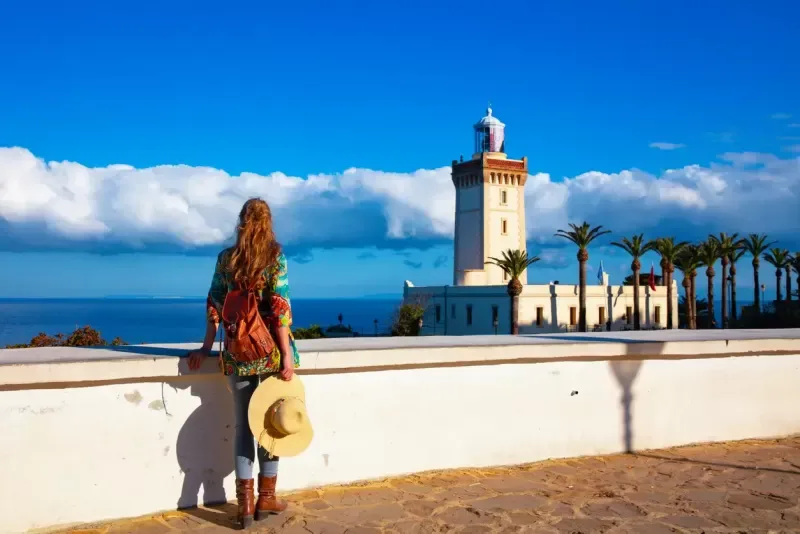
The city's magnetic pull on creative minds brought luminaries like Matisse, Kerouac, Jagger, and Hendrix, all drawn to its extraordinary light and vibrant café society. Contemporary Tangier successfully marries its historical legacy with modern cultural expression, exemplified by venues such as the Cinémathèque de Tanger, housed within the striking Art Deco Cinéma Rif building. Cultural enthusiasts can lose themselves exploring the 700-year-old medina's labyrinthine passages, observe daily life unfolding at Place Petit Socco, or discover the Kasbah Museum's exceptional collections of ceramics, silks, and illuminated manuscripts. Cap Spartel offers perhaps the most dramatic finale to any Tangier visit, where visitors witness the spectacular convergence of two great bodies of water at sunset.
Ready to explore Morocco’s stunning coast from Essaouira to Agadir? Discover our Morocco travel packages and experience the perfect blend of surf, culture, and seaside charm.
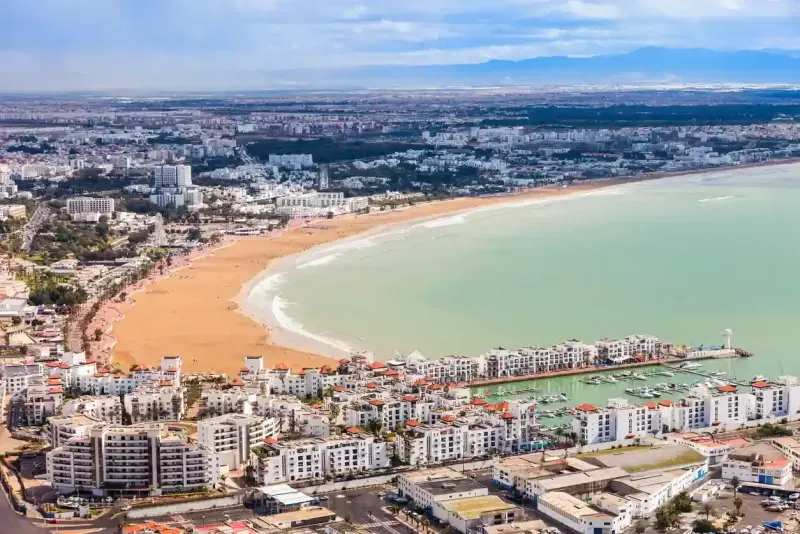
I’d say Agadir has the best beaches in Morocco, with its golden sands, long coastline, and modern resort vibe ideal for swimming and sunbathing.
Customize Your Dream Vacation!
Get in touch with our local experts for an unforgettable journey.
Plan Your TripHidden Gems Along the Essaouira to Agadir Route
Morocco's Atlantic coastline conceals remarkable destinations that remain largely undiscovered despite their proximity to well-traveled routes. The corridor between Essaouira and Agadir harbors authentic coastal communities where traditional life continues largely unchanged, offering discerning travelers genuine encounters with Morocco's maritime heritage.
Tamri: Banana groves and birdwatching
Located precisely 50 kilometers north of Agadir, Tamri presents an unexpected oasis of verdant agricultural abundance. The village's unique positioning approximately one meter below sea level creates a naturally sheltered microclimate that protects it from the Atlantic's persistent winds. This geographical advantage has fostered the cultivation of extensive banana plantations that create striking emerald patches against the arid coastal landscape.
The wetlands surrounding the Oued Tamri estuary have evolved into a sanctuary for avian biodiversity, attracting ornithologists and nature photographers from across Europe. These protected marshlands serve as critical habitat for Audouin's Gulls and Sardinian Warblers, while the exceptionally rare Northern Bald Ibis, Morocco's national bird, occasionally graces these waters. Visitors often encounter the region's famous tree-climbing goats, whose remarkable ability to scale argan trees to feed on the oil-rich fruit has become an iconic symbol of southern Morocco's resourceful wildlife.
Mirleft: Wild beaches and dramatic cliffs
Mirleft stands as Morocco's most jealously guarded coastal secret, where dramatic red sandstone cliffs plunge into pristine Atlantic waters without the intrusion of mass tourism. This authentic fishing village, positioned approximately 2.5 hours south of Agadir, first gained international attention during the 1960s counterculture movement when artists and musicians, including legendary guitarist Jimi Hendrix, discovered its bohemian charm.
The coastline here fractures into several magnificent coves, each separated by towering rock formations that have been sculpted by millennia of Atlantic storms. Imin Turga, known locally as Grande Plage, stretches across golden sands that accommodate families seeking space and tranquility. Aftas Beach offers a more intimate atmosphere where small restaurants and traditional guesthouses create an authentic surf community ambiance that recalls Morocco's early days as a surfing destination.
Legzira: The iconic red rock arch
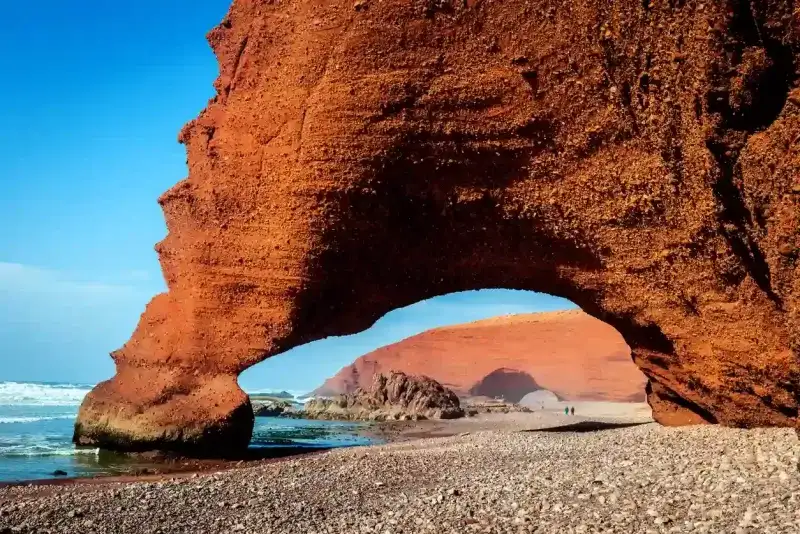
Legzira Beach commands recognition as one of Morocco's most photographically stunning coastal formations, where towering red sandstone arches create natural sculptures of extraordinary beauty. The site's dramatic history took a poignant turn when one of its two magnificent arches succumbed to natural erosion in September 2016, leaving behind only scattered stone fragments as a testament to the Atlantic's relentless power.
The surviving arch, spanning approximately 90 feet across, continues to serve as a pilgrimage site for photographers and geology enthusiasts who arrive at dawn to capture the interplay between golden sand and deep crimson cliffs. The beach presents both beauty and danger. Atlantic tides here rise with surprising speed, and swimming remains advisable only within designated areas due to powerful undertows that can challenge even experienced swimmers. This dramatic coastline exemplifies the raw, untamed character that defines Morocco's southern Atlantic shores.
Agadir is Morocco’s top beach city, known for its year-round sunshine, surf-friendly waves, and relaxing coastal atmosphere.
Planning Your Coastal Morocco Trip
Successful exploration of Morocco's Atlantic coastline demands careful consideration of seasonal dynamics, transportation networks, and lodging strategies. Expert preparation transforms a coastal journey into an extraordinary adventure marked by seamless logistics and optimal timing.
Best time to visit the Atlantic coast
Morocco's Atlantic shores present distinct seasonal characteristics that directly influence your travel experience. Spring months (March-May) and autumn (September-November) deliver optimal weather conditions with comfortable temperatures and crystalline skies. September stands out as the coastal calendar's crown jewel, offering summer's lingering warmth without the peak season's overwhelming visitor numbers.
Surf enthusiasts should note that the Atlantic's most powerful swells arrive between September and March, while consistent trade winds from April through September establish perfect conditions for kitesurfing and windsurfing disciplines. The region's remarkable 300 annual sunshine days ensure year-round coastal accessibility, though timing remains crucial for specific activities.
How to get around: buses, taxis, and rentals
Morocco's coastal transportation infrastructure offers multiple pathways between destinations. CTM and Supratours operate dependable, climate-controlled coach services linking major coastal centers. Petit taxis, distinguished by their city-specific color schemes, handle urban transportation, while grand taxis facilitate longer intercity connections.
Vehicle rental unlocks access to isolated coves and traditional fishing villages that remain beyond public transport networks. The N1 coastal highway maintains reasonable surface conditions throughout its length, though municipal parking in smaller communities generally requires modest fees.
Tips for choosing where to stay
Coastal lodging spans the complete spectrum from economical to opulent experiences. Budget-conscious travelers can secure beachfront accommodations for USD 50-120 nightly, while luxury seekers should expect USD 200-600 for premium coastal properties. Authentic riads and family-operated guesthouses often provide more genuine Moroccan hospitality than international hotel chains.
Direct booking through local establishment websites frequently yields superior rates, and extended stays beyond three nights often warrant negotiated discounts. Remote workers should verify reliable internet connectivity before committing to coastal accommodations.
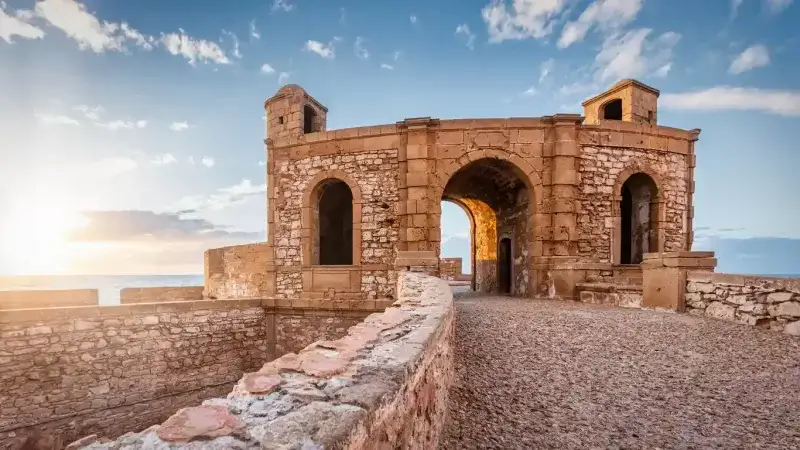
The closest coastal city to Marrakech is Essaouira, about a 2.5-hour drive away, a perfect day trip for sea views and fresh ocean air.
Know Before You Go!
The surfing destinations we've encountered, from Taghazout's internationally acclaimed breaks to Imsouane's legendary long rides and Sidi Kaouki's authentic village atmosphere, represent just the beginning of this coast's sporting heritage. These wave-rich shores have shaped communities for generations, creating unique cultural pockets where European surf migrants have integrated into traditional Moroccan coastal life.
Equally compelling are the cultural destinations that punctuate this shoreline. Essaouira's artistic renaissance, El Jadida's preserved Portuguese military architecture, and Tangier's cosmopolitan literary history demonstrate how Morocco's Atlantic edge has served as a crossroads of civilizations for centuries. Each city tells distinct stories of cultural fusion, artistic expression, and historical significance.
The lesser-known coastal treasures, Tamri's ecological diversity, Mirleft's untamed beauty, and Legzira's geological drama remind us that Morocco's most profound experiences often exist away from established tourist circuits. These destinations preserve the kind of authentic encounters that become transformative travel memories.
Morocco's 1,200-mile Atlantic coastline stands as testimony to the kingdom's geographic and cultural diversity. Here, where the Sahara meets the sea and where African traditions blend with European influences, travelers encounter a Morocco that challenges preconceptions and rewards curiosity. The stories embedded in these coastal cities of ancient maritime trade, colonial exchange, artistic inspiration, and sporting adventure create lasting impressions that extend far beyond typical vacation experiences.
I find Essaouira to be one of the safest beach towns in Morocco, offering a welcoming atmosphere, friendly locals, and a relaxed pace.
Related Articles
Keep the inspiration going with these handpicked travel reads.