
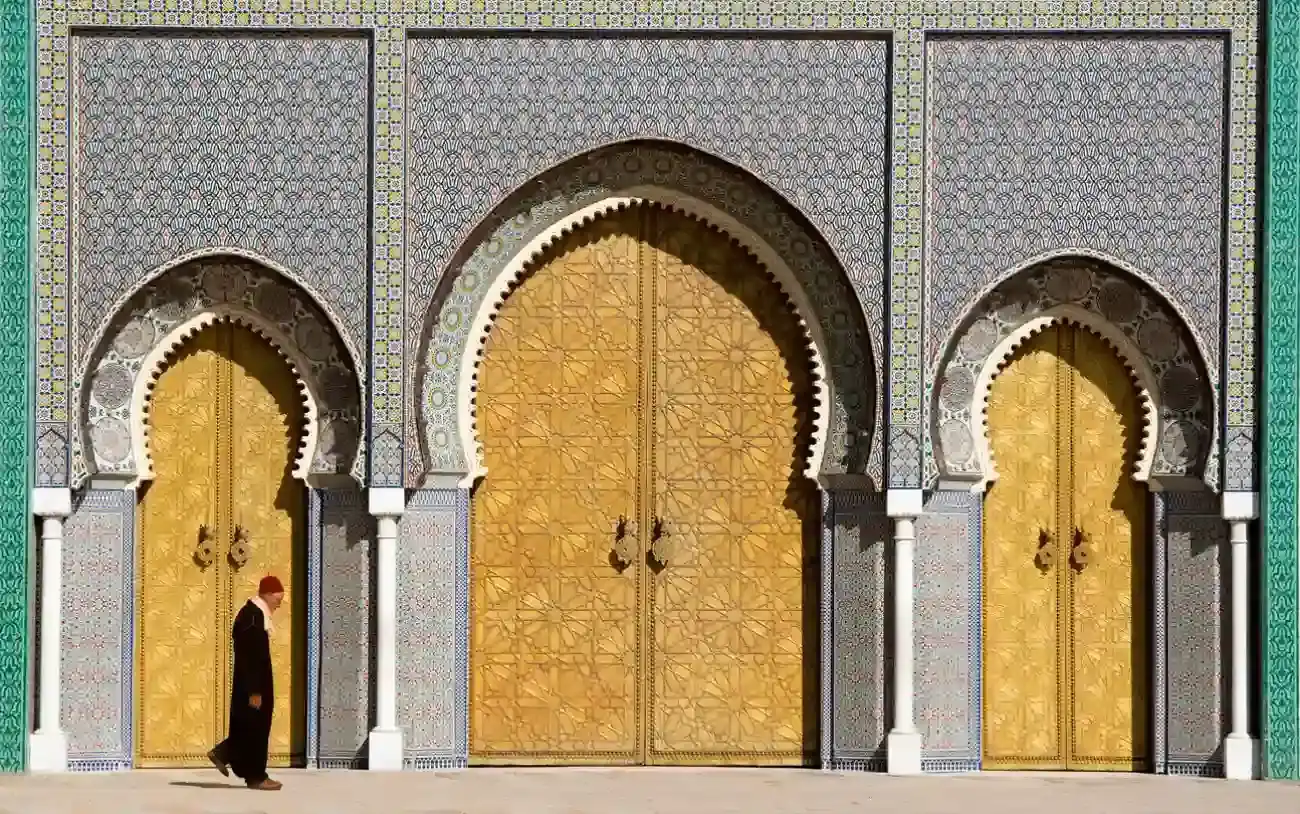
Morocco's architectural heritage represents one of the world's most sophisticated building traditions, where centuries of cultural convergence have produced structures of remarkable beauty and ingenuity. The Islamic period, beginning in the 7th century, fundamentally shaped Morocco's traditional architecture, creating an extraordinary synthesis of Berber indigenous wisdom, Islamic geometric principles, and Spanish-Moorish decorative artistry. This architectural evolution reveals how different civilizations left their mark on Morocco's landscape, each contributing essential elements that would define the nation's visual character for generations.
The architectural vocabulary of Morocco speaks through several iconic structural forms that embody both practical function and cultural meaning. Riads, with their contemplative interior courtyards, represent the refined urban dwelling tradition that prioritized family privacy and natural climate control. Kasbahs, built with formidable mud-brick walls, served as fortified strongholds protecting communities across Morocco's diverse terrain. Madrasas emerged as sophisticated centers of Islamic learning, where architectural beauty supported educational excellence. These structures collectively narrate stories of resilience, aesthetic achievement, and profound cultural depth that continue to resonate today.
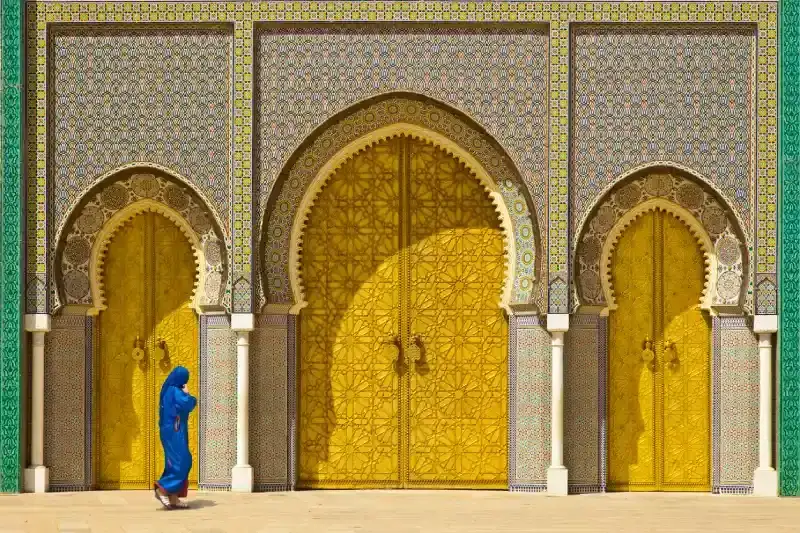
The decorative arts of Morocco achieve their most spectacular expression through geometric Zellij tiles that transform both interior and exterior surfaces across the kingdom. Equally significant are the fountains that grace Moroccan courtyards and public spaces, serving not merely as functional elements but as powerful symbols of paradise within Islamic architectural philosophy. The architectural legacy extends from monumental works like the Hassan II Mosque in Casablanca to the ancient earthen structures of Ait Benhaddou nestled in the High Atlas mountains. These diverse expressions demonstrate how Moroccan architects and craftsmen have consistently shaped the nation's visual identity across different historical periods and geographical regions.
Early Foundations of Moroccan Architecture
Morocco's architectural foundations rest firmly upon the building traditions of the indigenous Berber (Amazigh) people, whose construction methods have evolved over millennia. These ancient communities demonstrated remarkable adaptability across Morocco's varied landscapes, establishing settlements that thrived from coastal plains to mountainous regions. Berber architects developed expertise with locally-sourced materials, mastering sophisticated applications of adobe bricks and rammed earth (pisé) that offered superior natural insulation against Morocco's temperature extremes. These structures frequently incorporated defensive features, a pragmatic necessity for communities situated along important trading routes and coastal ports.
Berber settlements and pre-Islamic structures
The organizational logic of Berber villages in the High Atlas Mountains reveals centuries of refined planning principles: rivers occupied valley floors, agricultural terraces rose above them, villages with their irrigation networks occupied the middle elevations, while unpaved roads claimed the highest positions. Though individual settlements shared fundamental architectural characteristics, each community's specific topographical conditions produced distinct visual identities. The significance of these early construction methods, especially rammed earth techniques, extends far beyond their original context, establishing building principles that would guide Moroccan architecture through subsequent centuries.
Roman cities and classical influences
Phoenician merchants first established coastal settlements at Lixus, Tingis (modern Tangier), and Sala (today's Chellah) during the 7th century BCE. These territories later came under Carthaginian control, leaving behind archaeological remains including Punic temples and commemorative stelae. Rome's destruction of Carthage in 146 BCE marked the beginning of substantial Roman architectural influence in the region, culminating when Emperor Claudius organized the territory into formal provinces during the 1st century CE.
Volubilis emerges as Morocco's most remarkable Roman archaeological site. This well-planned city demonstrated sophisticated urban organization through several key features:
- A systematic urban grid anchored by a Decumanus Maximus (principal east-west thoroughfare)
- Monumental public structures, including a forum, basilica, and triumphal arch
- Refined residential architecture featuring intricate mosaic floor decorations
During its peak in the 2nd century CE, Volubilis supported roughly 20,000 inhabitants and served as a major commercial hub for regional agricultural exports.
Transition to Islamic rule and new building types
Islam's arrival in the 7th century marked a profound transformation in Morocco's architectural development. The region's gradual integration into the broader Muslim world produced innovative architectural solutions that harmonized Islamic design principles with established Berber building traditions. The Idrisid dynasty's establishment in the late 8th century included founding Fes as their capital, creating the conditions for Morocco's earliest distinctly Islamic architectural achievements.
These pioneering Islamic structures adopted the hypostyle design featuring systematic rows of supporting columns. The characteristic horseshoe or "Moorish" arch, which would become fundamental to later Moroccan architectural identity, first appeared during this transitional period. These early mosques successfully united spiritual purpose with artistic sophistication, introducing geometric patterning and calligraphic decoration that would define Islamic architecture in Morocco.
Ready to experience the beauty of Moroccan Architecture in person? Explore our Morocco travel packages and discover kasbahs, riads, and historic treasures with ease.
Customize Your Dream Vacation!
Get in touch with our local experts for an unforgettable journey.
Plan Your TripThe Rise of Islamic Dynasties and Their Architectural Legacy
The architectural magnificence of Morocco emerged through the patronage of successive Islamic dynasties, each dynasty contributing distinctive elements that would define the kingdom's built environment. These ruling houses established architectural principles and decorative vocabularies that continue to characterize Moroccan buildings today.
Almoravid and Almohad innovations
Two Berber empires, the Almoravids (11th-12th centuries) and Almohads (12th-13th centuries), laid the architectural groundwork for what would become Morocco's most recognizable building traditions. Both dynasties established Marrakesh as their capital, from where they disseminated architectural innovations across their territories.
The Almoravids drew extensively from Andalusian architectural knowledge, introducing complex interlacing arches and sophisticated eastern decorative elements such as muqarnas, the intricate "stalactite" or "honeycomb" carvings that would become hallmarks of Moroccan interiors. The Almohads pursued a different aesthetic philosophy, emphasizing architectural restraint through careful attention to proportional relationships and structural forms rather than ornate decoration. Their architectural legacy includes the development of the "T-plan" mosque design, exemplified in the Kutubiyya and Tinmal mosques, where wider central aisles create dramatic processional routes toward the mihrab. The period also witnessed the construction of monumental minarets, the Kutubiyya in Marrakesh, the Giralda in Seville, and the Hassan Tower in Rabat, whose decorative programs established architectural standards that would influence Moroccan builders for centuries.
Marinid contributions: madrasas and zellige
Marinid rule (13th-15th centuries) marked a period of extraordinary architectural refinement and innovation. The dynasty introduced madrasas to Morocco, adapting these educational institutions from their origins in northeastern Iran to suit local building traditions and climatic conditions. The construction boom of madrasas occurred primarily during the early 14th century, reaching its zenith under Sultan Abu al-Hasan's patronage.
The Marinid period witnessed the mastery of zellige mosaic tilework, with craftsmen achieving unprecedented levels of geometric complexity and color sophistication between the 14th and 15th centuries. This era produced the architectural masterpiece of the Bou Inania Madrasa (1350-55), commissioned by Abu Inan Faris, which holds the unique distinction of being the only Moroccan madrasa that also served congregational mosque functions.
Saadian and Alawi refinement of traditional Moroccan architecture
The Saadian dynasty's rise in the 16th century represented a significant political transition from Berber-led empires to Arab sharifian rule. However, their architectural approach focused on perfecting established styles rather than introducing radical innovations. The reign of Ahmad al-Mansur (1578-1603) saw architectural patronage flourish, characterized by sumptuous decorative programs and meticulous attention to interior spatial design.
The Saadian Tombs in Marrakesh stand as the period's most spectacular architectural achievement, featuring elaborate ornamentation that includes imported Carrara marble tombstones and represent the pinnacle of Moroccan decorative arts during this era. Architectural historians regard these structures as deeply rooted in Andalusi and Moroccan traditions, constituting what many consider a renaissance of these styles before their gradual decline in subsequent centuries.
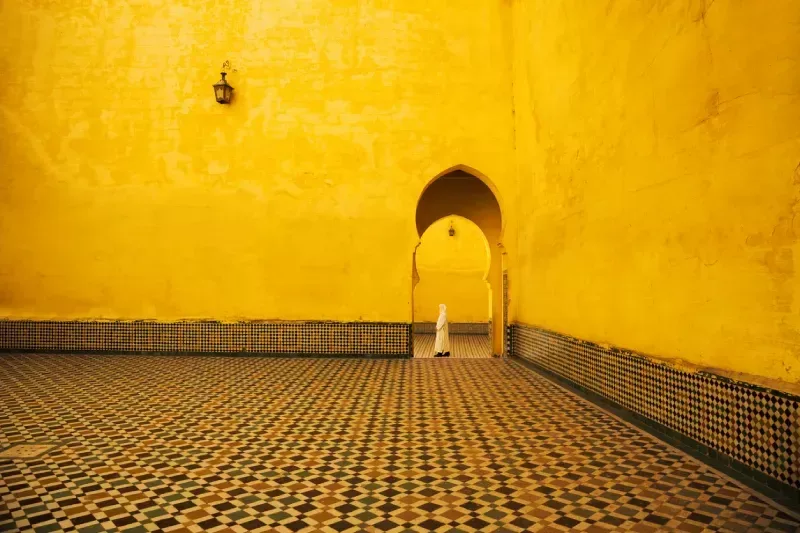
Key Architectural Forms in Traditional Moroccan Architecture
Traditional Moroccan architecture expresses itself through five distinct structural forms, each embodying specific societal functions and cultural philosophies. These architectural elements transcend mere construction techniques, serving as physical manifestations of cultural values, religious devotion, and ingenious adaptations to Morocco's diverse environmental conditions.
Kasbahs: fortified desert structures
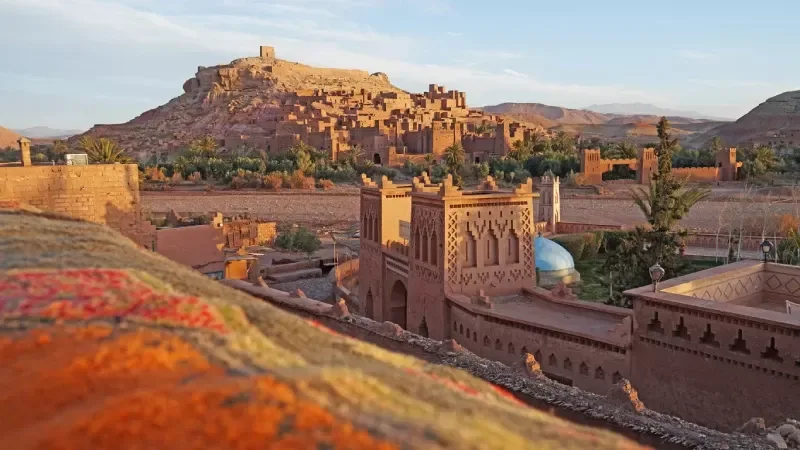
Kasbahs represent Morocco's most formidable architectural achievements, standing as monumental fortified structures erected by tribal leaders and local chieftains to establish defensive strongholds. These commanding fortresses, distinguished by their towering walls, strategic corner towers, and deliberately narrow windows, provided essential protection against invasions and territorial disputes. Master builders constructed these imposing structures using mudbrick or rammed earth (pisé), positioning them strategically on elevated terrain or near precious water sources. The Kasbah of Aït Benhaddou serves as an exceptional example of this architectural tradition, showcasing structures built entirely from rammed earth and adobe that have endured the harsh desert climate since at least the 17th century. Across southern Morocco's arid landscapes, these fortifications functioned far beyond mere defensive purposes; they evolved into vibrant centers of governance, cultural exchange, and commercial activity, their architectural grandeur reflecting the political influence and economic prosperity of their builders.
Riads: inward-facing urban homes
Riads embody the quintessential Moroccan urban dwelling, representing a sophisticated architectural philosophy centered around interior courtyard gardens. The Arabic term "riyāḍ" (gardens) captures the essence of these remarkable homes. Each riad features a carefully proportioned rectangular garden traditionally organized into four distinct quadrants surrounding a central fountain. This inward-focused design philosophy contrasts dramatically with Western architectural traditions, deliberately minimizing exterior windows to ensure family privacy while achieving natural temperature regulation through courtyard ventilation. Throughout Morocco's imperial cities, riads historically served as the prestigious residences of affluent merchants and royal courtiers. The interior spaces display Morocco's most refined craftsmanship traditions: intricate zellige tilework creating geometric masterpieces, smooth tadelakt plaster providing lustrous wall surfaces, elaborate stucco decoration featuring floral and geometric motifs, and meticulously carved cedar wood elements.
Mosques and Minarets
Mosques constitute the spiritual foundation of Moroccan communities, functioning simultaneously as sacred spaces for worship, centers of Islamic education, and gathering places for social interaction. The architectural vocabulary of Moroccan mosques includes several distinctive elements:
- Minarets: Elegant towers rising skyward to broadcast the call to prayer, frequently adorned with intricate tilework and sophisticated carved decoration
- Mihrabs: Ornately decorated niches precisely oriented toward Mecca, serving as focal points for prayer
- Courtyards (sahns): Expansive open areas encircled by graceful colonnades where the faithful congregate
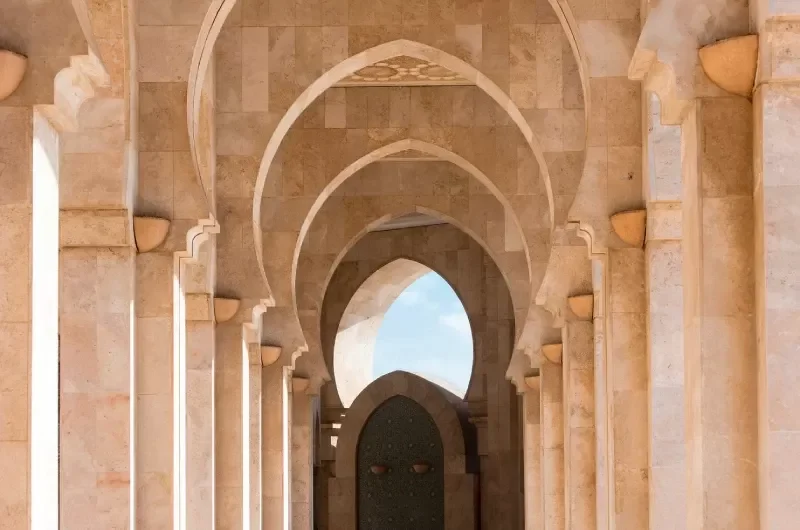
- Horseshoe arches: Distinctive curved architectural elements reflecting the profound influence of Al-Andalus design traditions
Moroccan mosques achieve architectural harmony through the masterful integration of geometric patterns, Arabic calligraphy, and zellige tilework, creating sacred environments that inspire both spiritual contemplation and aesthetic appreciation.
Madrasas and religious schools
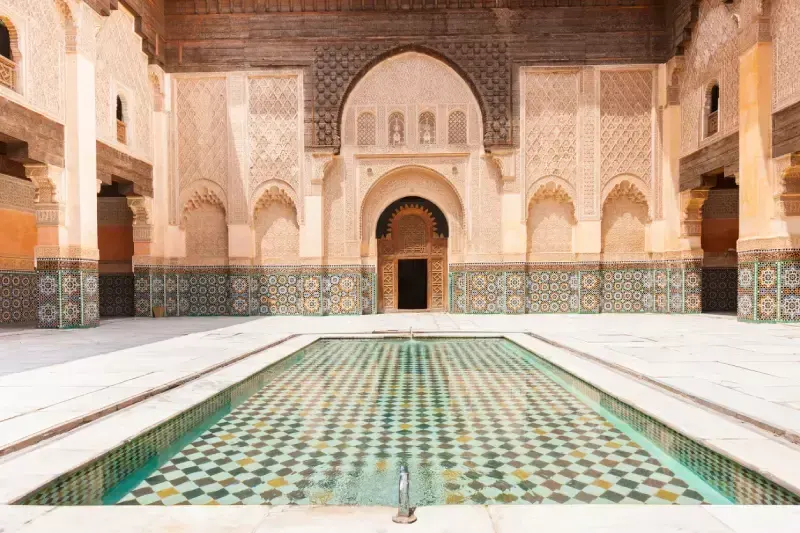
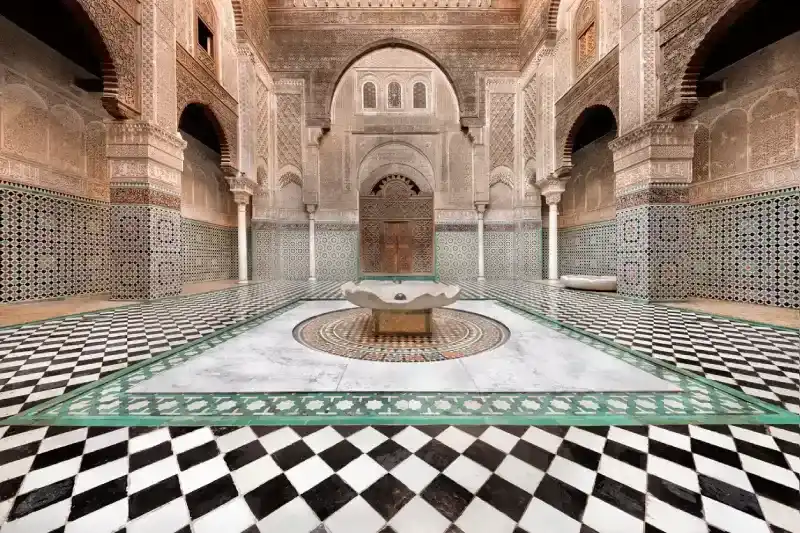
Madrasas established themselves as Morocco's premier institutions of Islamic scholarship, frequently maintaining architectural and functional connections to adjacent mosques. The Bou Inania Madrasa (1350-55) represents perhaps the most accomplished example of this building type, uniquely serving dual purposes as both educational institution and congregational mosque. These scholarly complexes typically incorporate:
- Central rectangular courtyards featuring fountains designed for ritual ablutions
- Student chambers are systematically arranged around the upper gallery levels
- Elaborate decorative programs incorporating zellige mosaic tilework, carved stucco reliefs, and cedar woodwork of exceptional quality
The Ben Youssef Madrasa in Marrakech provides another outstanding example of this architectural tradition, renowned for its breathtaking courtyard and extraordinarily detailed decorative elements.
Public fountains and hammams
Public fountains fulfilled both practical and spiritual roles within Moroccan urban environments. The Mouassine Fountain in Marrakesh, forming part of an extensive 16th-century religious complex, demonstrates the monumental character these structures could achieve. These fountains provided essential drinking water to urban populations while simultaneously representing acts of charitable giving sanctioned by Islamic religious principles. Monumental fountains typically showcased decorative programs featuring carved wood elements, zellige mosaic work, and calligraphic inscriptions celebrating their benefactors.
Hammams (public bathhouses) served complementary religious and civic functions, providing facilities for ritual purification and general hygiene during the centuries before private plumbing systems became widespread. These bathhouse complexes evolved from Roman architectural models, featuring carefully planned sequences of chambers: changing areas, cold rooms, warm rooms, and steam-filled hot rooms.
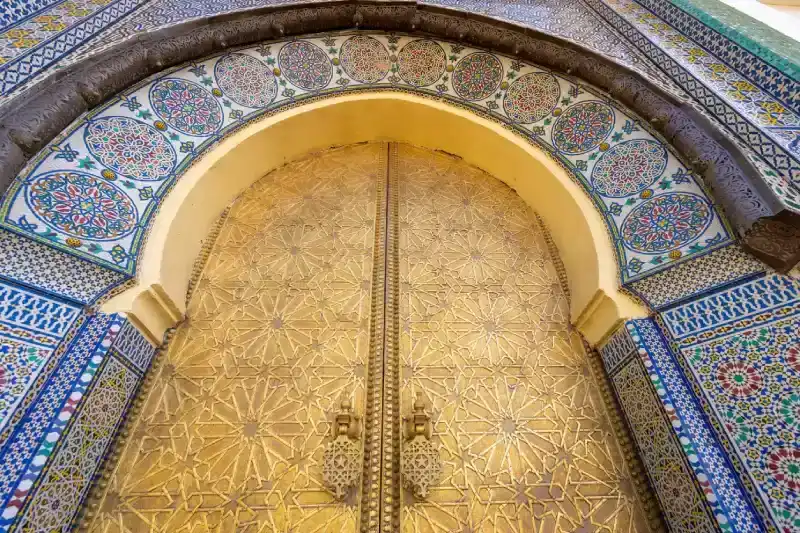
Materials and Techniques That Shaped Moroccan Buildings
The exceptional character of Moroccan architecture stems from time-honored materials sourced from the land itself and artisanal techniques refined across centuries. These construction methods embody far more than mere building practices; they preserve living cultural traditions that connect contemporary Morocco to its architectural ancestors.
Rammed earth and adobe
Morocco's traditional builders mastered earthen construction techniques that demonstrate remarkable environmental adaptation. Rammed earth (pisé) construction employs walls measuring 40-60cm thick, delivering exceptional thermal performance that maintains comfortable interior temperatures regardless of Morocco's climatic extremes. The earth mixture, typically harvested from construction sites or adjacent gardens, requires specific clay content to achieve optimal structural integrity. Adobe brick production follows an ancient methodology: craftsmen shape wet earth within wooden forms, then allow solar drying over several days to create building units with 30cm wall thickness that maximizes interior space utilization.
Carved wood and cedar ceilings
Atlas cedar emerges as the supreme material for Moroccan ceiling construction, prized for its natural insect resistance and exceptional longevity spanning multiple centuries. Master woodworkers employ meticulous preparation processes, seasoning cedar planks over extended periods to eliminate warping potential before executing intricate carvings featuring arabesque patterns, botanical motifs, and precise geometric designs. Palace and madrasa ceilings throughout Morocco demonstrate sophisticated joinery mastery, achieving structural stability through traditional techniques that eliminate dependence on metal fasteners.
Zellige tilework and stucco carving
Zellige represents Morocco's most celebrated decorative art form, with origins tracing to the 10th century. The creation process demands exceptional skill and patience:
- Natural clay preparation into a workable consistency
- Hand-forming individual tiles followed by solar drying
- Application of natural mineral glazes
- Precise cutting into geometric configurations
- Meticulous hand assembly into complex patterns
Stucco carving (geps) provides another essential decorative element found throughout Moroccan architecture. Skilled artisans build up successive plaster layers, transfer intricate designs through stencil techniques, and then execute detailed carving work that reveals multiple decorative depths.
Use of courtyards and water features
Central courtyards function as the organizational heart of traditional Moroccan structures. These interior-focused spaces achieve dual purposes: ensuring family privacy while facilitating natural ventilation throughout the building. Traditional courtyard design incorporates geometric garden layouts planted with fragrant herbs, citrus trees, or date palms, anchored by centrally positioned fountains that provide both cooling and visual focus. These water features, constructed through careful assembly of geometric mosaic patterns, serve essential practical functions while creating artistic centerpieces that reflect Islamic paradise symbolism.
Conclusion
Morocco's architectural tradition stands among the most sophisticated building legacies of the Islamic world, where millennia of cultural synthesis have produced structures that continue to inspire architects and captivate travelers today. This remarkable journey from ancient Berber settlements to the refined palaces and mosques of imperial dynasties illustrates how architectural innovation emerges when practical necessity meets artistic vision and spiritual purpose.
The architectural evolution we have traced reveals Morocco's unique position as a crossroads of civilizations. Berber builders first established construction techniques that respected the harsh climate and diverse terrain of North Africa. Islamic dynasties then elevated these foundations, introducing geometric sophistication and decorative refinement that transformed functional structures into works of profound beauty. Each successive period—from Almoravid innovation to Marinid mastery to Saadian elegance contributed essential elements while maintaining respect for established principles.
The enduring appeal of Moroccan architecture lies in its remarkable synthesis of diverse influences. Berber environmental wisdom, Islamic mathematical precision, and Andalusian artistic sophistication converged to create buildings that serve both practical and spiritual functions. The consistent emphasis on interior courtyards, elaborate water features, and intricate decorative arts reflects cultural values that prioritize family privacy, community gathering, and the contemplation of divine beauty through geometric perfection.
These architectural principles remain vital forces in contemporary Morocco. Modern builders and restoration specialists continue to employ traditional materials such as rammed earth, Atlas cedar, and handcrafted zellige tilework, ensuring that ancient techniques survive in an age of industrial construction. Visitors to Morocco today can experience this living heritage directly—walking through the carved cedar galleries of a 14th-century madrasa, relaxing in the fountain-cooled courtyard of a restored riad, or marveling at the geometric complexity of a mosque's mihrab.
The architectural heritage of Morocco thus represents more than historical achievement; it embodies a continuing dialogue between past and present, tradition and innovation, human needs and divine aspiration. Whether exploring the fortified walls of an Atlas Mountain kasbah or admiring the intricate stucco work of a Fes palace, visitors encounter an architectural language that has successfully balanced beauty, functionality, and spiritual meaning across more than a thousand years of continuous development.
FAQs
Q1. What are the key features of traditional Moroccan architecture?
Traditional Moroccan architecture is characterized by riads (courtyard houses), kasbahs (fortified structures), intricate zellige tilework, carved wood ceilings, and the use of rammed earth and adobe. These elements combine Islamic, Berber, and Andalusian influences to create a unique architectural style.
Q2. How did Islamic dynasties influence Moroccan architecture?
Islamic dynasties greatly shaped Moroccan architecture. The Almoravids and Almohads introduced complex arches and decorative techniques. The Marinids pioneered madrasas and refined zellige tilework. Later, the Saadians and Alawites further refined these styles, adding lavish ornamentation and interior designs.
Q3. What is the significance of riads in Moroccan architecture?
Riads are traditional Moroccan urban homes built around an interior courtyard garden. They represent privacy, natural temperature regulation, and showcase fine craftsmanship. Originating from the Andalusian period, riads typically feature a central fountain, minimal exterior windows, and intricate decorations like zellige tilework and carved wood.
Q4. How do kasbahs differ from other Moroccan structures?
Kasbahs are fortified desert structures, primarily built as defensive strongholds. They feature high walls, corner towers, and narrow windows, typically constructed of mudbrick or rammed earth. Unlike riads, which focus on interior beauty, kasbahs were designed for protection and often served as centers of governance and trade.
Q5. What materials and techniques are commonly used in Moroccan buildings?
Moroccan buildings often utilize rammed earth and adobe for construction, providing excellent thermal regulation. Atlas cedar wood is preferred for ceilings due to its durability. Zellige tilework and carved stucco are used for decoration. Central courtyards with water features are common, enhancing privacy and creating natural airflow.
Related Articles
Keep the inspiration going with these handpicked travel reads.