
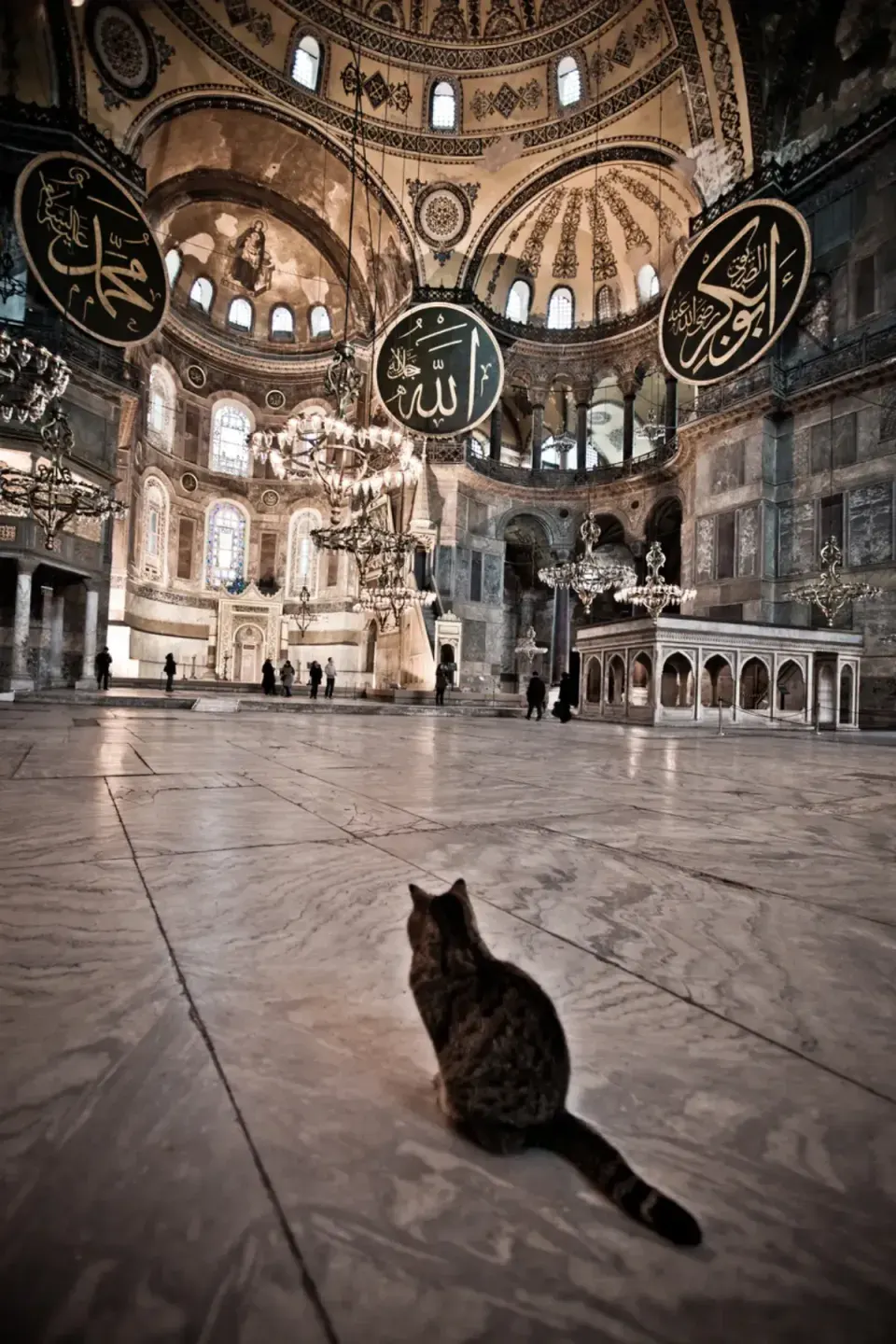
The streets of this ancient Turkish metropolis belong to its cats in a way no other city can match. Wandering through winding streets, mosques, metro stations, and cafés, you'll see how human and cat residents share their daily lives.
The number of street cats in Istanbul varies depending on who you ask. Some sources claim there are a quarter of a million cats, while others suggest up to two million. Many estimates land somewhere between these numbers. These cats aren't just accepted - they've become cherished symbols of Istanbul's culture and identity.
Istanbul's deep bond with its cats spans generations. The Ottomans showed remarkable care for these animals, making sure cats were fed among other needy beings. Sultan Abdul Hamid II kept nearly 1,500 cats of different breeds at Yıldız Palace during his reign from 1876 to 1909. The city's special connection with its feline friends raises questions about its origins.
European boats brought these furry citizens centuries ago to catch rats. Now they've become peaceful residents in this bustling metropolis. Modern structures like Şakirin mosque feature built-in feeding stations with food and water dishes carved into the building itself. This goes beyond simple animal care - it reflects Istanbul's cultural heritage and its beating heart.
Check the best Turkey Travel Packages now and meet the Cats of Istanbul!
A City Where Cats Roam Free
Walk through the bustling streets of Istanbul, and you'll quickly understand why locals call their city "Catstanbul." A plump gray tabby named Sulo poses for tourist photos near the Blue Mosque. He seems to know his celebrity status among visitors who come just to meet Istanbul's famous street cats.
Why Istanbul is called 'Catstanbul'
The nickname "Catstanbul" goes beyond clever wordplay - it captures the city's remarkable feline presence. The numbers tell the story: between 125,000 and 250,000 stray cats roam the city, making Istanbul a true "city of cats." The total climbs to about 200,000 when house cats join the count. You can't walk for ten minutes without seeing a cat in this city, where felines have made their home for centuries.
How cats blend into daily life
Istanbul's cats don't just live next to humans - they're part of everyday life. These street-smart city dwellers sprawl across sidewalks while pedestrians step around them with respect. Cats make themselves at home in cafés and restaurants, sometimes claiming chairs as their own. They stroll into mosques during prayers, visit university classrooms, and hop on public transport without anyone batting an eye.
The unique bond between locals and cats
The connection between Istanbul's residents and their feline neighbors stands out. Food bowls, water containers, and cat houses dot the cityscape, ranging from simple cardboard boxes to well-built wooden structures. Many neighborhoods have their own cat feeding stations. The Municipality has installed vending machines where people can drop coins to get cat food.
This bond surpasses simple tolerance - it shows the community's steadfast dedication. A local caught giving out cat food said simply, "Oh, well, everyone does this!" Yes, it is common for restaurants to save portions for street cats. These cats belong to "no one and everyone, a giant community network of cat caring.
Istanbul's cats live neither as typical pets nor regular strays. They exist in a special space - independent but cared for, wild yet deeply woven into human society.
Customize Your Dream Vacation!
Get in touch with our local experts for an unforgettable journey.
Plan Your Trip
Faith, Philosophy, and Felines
The theological foundations underlying Istanbul's feline devotion reveal dimensions far more profound than simple animal affection. When cats pad silently across mosque carpets during congregational prayers, receiving gentle acknowledgment rather than expulsion, this acceptance reflects centuries of documented religious doctrine rather than mere tolerance.
Islamic teachings on kindness to animals
Islamic jurisprudence elevates compassion toward animals to the highest theological echelons. "Verily, there is heavenly reward for every act of kindness done to a living animal," taught Prophet Muhammad. The Prophet's particular affection for cats established an enduring precedent within Islamic culture. Traditional accounts describe how the Prophet severed his own garment sleeve rather than disturb his sleeping cat, Muezza. While contemporary Islamic scholars debate the hadith's authenticity, the Prophet's documented condemnation of feline cruelty carries unquestioned theological weight.
Feline ritual purity distinguishes cats from most other animals within Islamic law, granting them unprecedented access to homes and sacred spaces. This doctrinal exception explains the commonplace sight of cats resting near mihrab niches or threading between worshippers' shoes at mosque entrances across Istanbul.
Cats as symbols of independence and grace
Istanbul's cats embody a philosophical paradox that has captivated observers for generations—simultaneously domesticated yet feral, affectionate yet autonomous. They represent independence, enigma, and adaptability. Their fluid navigation between human and natural worlds mirrors the complexity of existence itself. Sufi mystics have long observed parallels between feline movements and the meditative rotations of whirling dervishes—both achieve spiritual centeredness through graceful presence.
What cats reveal about human values
The treatment of cats serves as a cultural barometer, revealing fundamental Turkish values. An ancient proverb warns: "If you kill a cat, you must build a mosque"—a stark declaration regarding these creatures' sacred status.
Ottoman administrative records document the institutionalization of this reverence through vakıfs (charitable endowments) specifically established to provide sustenance and shelter for stray animals. This systematic approach to communal welfare demonstrates how theological principles shaped imperial policy, creating infrastructure for mercy that endures today across Istanbul's neighborhoods.
From Palaces to Parks: Where to Meet the Cats of Istanbul
The cartography of Istanbul's feline territories spans from Byzantine monuments to Ottoman gardens, each location offering distinct encounters with the city's most distinguished inhabitants. These strategic convergence points represent centuries of architectural evolution, where sacred geometry meets feline preference in arrangements that would fascinate any urban anthropologist.
Mosques and historic sites
The magnificent Hagia Sophia stands as perhaps the world's most remarkable example of interspecies architectural appreciation. Within these hallowed walls once resided Gli, a distinctive cross-eyed tabby whose digital following reached 100,000 Instagram devotees and whose diplomatic credentials included a memorable encounter with President Obama. The Blue Mosque maintains its own celebrity resident—Sulo, whose substantial gray and white form has become synonymous with Sultanahmet Square's photographic appeal. Mosque courtyards function as essential nursery territories, their protected inner sanctuaries providing optimal conditions for feline maternity, where generations of mothers have successfully raised their offspring within these spiritually significant perimeters.
Parks like Maçka and Fenerbahçe
Fenerbahçe Park presents one of Istanbul's most extraordinary feline demographics during the summer months—a veritable nursery hosting hundreds of kittens across this island sanctuary accessible via Kadıköy's connecting bridge. This geographical isolation has created an ideal breeding environment supporting cats representing the full spectrum of colors, sizes, and ages. The European side's Maçka Park has earned the colloquial designation "kedili park" (cat park), where systematic daily feeding operations sustain dozens of street cats within this urban green space.
Markets, cafés, and bookshops
The aromatic corridors of Istanbul's historic Spice Market reveal a fascinating secondary economy—nearly every merchant establishment maintains dedicated feeding stations, from simple bowls to elaborate food arrangements. Literary establishments throughout the city have evolved into unofficial feline sanctuaries, where cats position themselves strategically among book stacks, their forms silhouetted against dust-moted sunbeams streaming through ancient windows. Many café proprietors have discovered the commercial advantages of resident kittens, whose irresistible appeal functions as what industry observers term "cuteness traps"—living advertisements that draw international visitors seeking authentic Istanbul experiences.
Challenges and the Future of Street Cats
Beneath Istanbul's celebrated feline paradise lurks a sobering tapestry of urban realities that demand scholarly examination. Recent discoveries near Cihangir—six deceased cats found within refuse containers—illuminate the stark challenges confronting these cherished inhabitants, revealing complexities that extend far beyond the romanticized narratives surrounding the city's cat culture.
Legal changes and animal rights laws
Turkish legislative evolution since 2004 has mandated municipal rehabilitation protocols for street animals, explicitly prohibiting euthanasia as a population control measure. Enforcement mechanisms, however, demonstrate significant inconsistencies across administrative districts. The landmark 2021 constitutional amendment represented a paradigmatic shift, reclassifying animals from "property" to "living beings" within legal frameworks, establishing criminal penalties reaching four years' imprisonment for abuse violations. Legal scholars note persistent gaps between statutory requirements and practical implementation, highlighting systemic enforcement deficiencies that continue to undermine protective legislation.
Health concerns and overpopulation
Epidemiological data reveal sobering mortality statistics: Istanbul's street cats maintain an average lifespan of merely three years, primarily attributed to endemic infectious disease transmission. Viral pathogens, including Feline Immunodeficiency Virus (FIV), Feline Infectious Peritonitis (FIP), and panleukopenia, proliferate rapidly within unvaccinated populations, creating devastating health crises across feline communities. National veterinary records document significant intervention efforts between 2004 and 2018: approximately 1.2 million street animals underwent sterilization procedures while 1.5 million received vaccination protocols—figures that nonetheless represent merely fractional progress against overwhelming demographic pressures. Turkey's current economic turbulence has exacerbated these challenges dramatically; female cat spaying procedures now command 6,000-7,000 lira (€300-€350), rendering comprehensive population management financially prohibitive for many municipalities.
Community activism and protests
Public mobilization against legislative threats has demonstrated remarkable organizational sophistication. The 2023 citizen petition opposing controversial stray animal legislation attracted 448,954 documented signatures, representing one of Turkey's most significant animal rights demonstrations in recent memory. Historical precedent exists for such grassroots effectiveness: earlier exposés of systematic poisoning campaigns in Ankara galvanized public demonstrations that directly influenced subsequent legal reforms. Contemporary proposals targeting stray dog populations have generated widespread concern regarding potential extensions to feline protection policies, prompting mass demonstrations throughout Istanbul where thousands demanded withdrawal of legislation activists characterize as "the bloody law". These movements reveal the profound emotional investment Turkish society maintains in its street animal welfare systems, demonstrating how cultural values can mobilize against perceived governmental overreach.
Famous Felines and Their Stories
Istanbul's streets are home to countless cats, but a special few have become true celebrities that people love worldwide.
Gli of Hagia Sophia
A cross-eyed tabby named Gli made history when she met a US president. She lived in the magnificent Hagia Sophia for 16 years after her birth in 2004. Her path to stardom began when Barack Obama stopped to pet her during his 2009 visit.
Gli became a social media sensation with her Instagram following growing to over 118,000 followers. She passed away in November 2020 after fighting an illness. Her memory lives on through countless tourist photos, and she rests peacefully in a special spot in the Hagia Sophia's garden.
Tombili and his iconic statue
You might recognize that famous photo of a chubby cat relaxing against some steps. That's Tombili, who became an internet hit because of his laid-back, human-like pose.
Local residents loved Tombili so much that after his death in August 2016, they gathered 17,000 signatures to build him a memorial. Sculptor Seval Şahin created a beautiful bronze statue that captures Tombili's famous pose. The statue was shown on World Wildlife Day in October 2016. Someone briefly stole the statue in November 2016, but it found its way back home just days later.
The Library Cats of Beyazıt
Beyazıt State Library earned its nickname "Library of Cats" because it housed more than a hundred cats on each floor. The library's former director, Ismail Saib Sencer, loved cats so much that he owned about 40 of them and spent a third of his salary taking care of them.
Cats in Literature, Film, and Modern Culture
Turkish feline culture has transcended physical boundaries to establish profound artistic and literary significance, permeating multiple creative media with remarkable cultural resonance.
Cats in Turkish poetry and novels
Contemporary Turkish literature demonstrates sophisticated feline characterization that mirrors the complex relationship between Istanbul's human and cat populations. Buket Uzuner's children's narrative "Ah Bir Kedi Olsam" (If I Were a Cat) presents the feline character Fındık as a psychological companion to the protagonist Can, particularly during periods when "unhappy silence within the walls is suffocating". This literary technique establishes cats as emotional anchors within domestic narratives.
Elif Shafak's acclaimed work "The Bastard of Istanbul" features Pasha the Third, whose distinctive behavioral patterns—consuming feta cheese, destroying electrical cords, and expressing disdain for religious transformation—exemplify the autonomous personalities attributed to feline characters throughout Turkish literary tradition. These characterizations reflect the authentic behavioral observations of Istanbul's street cat population, demonstrating how lived urban experience influences artistic expression.
The impact of the documentary 'Kedi'
The 2016 documentary "Kedi" achieved extraordinary critical recognition, fundamentally altering international perceptions of urban feline culture. This cinematic achievement earned a remarkable 98% approval rating on Rotten Tomatoes while following seven distinct feline subjects through Istanbul's diverse neighborhoods. The film's commercial success proved equally impressive—expanding from a single New York theater to generate over $5 million in global revenue, ultimately securing recognition among Time magazine's top ten films of 2017.
Cat-themed museums, art, and souvenirs
Istanbul's dedication to feline cultural preservation materialized through the establishment of a specialized cat museum in January 2022, housing extensive collections of feline-themed artwork and photography, with institutional profits partially funding street cat welfare programs. The city's commercial districts feature elaborate cat-themed merchandise, while public art installations and municipal signage frequently incorporate feline motifs, demonstrating the integration of cat culture into official urban aesthetics.
Istanbul's feline inhabitants illuminate a cultural phenomenon that transcends simple urban animal management, revealing instead a sophisticated social contract forged across centuries of imperial rule and religious devotion. These creatures, whether establishing territorial claims within sacred mosque precincts or graciously accepting offerings from merchant proprietors, embody a living archaeological record—one that has endured through the rise and fall of empires, the devastation of conflicts, and the relentless march of metropolitan expansion.
The extraordinary nature of this relationship becomes most apparent when contrasted against Western paradigms of private pet ownership and municipal animal control. Istanbul has achieved something fundamentally different: a collective stewardship model that seamlessly integrates theological principles with pragmatic urban coexistence. While contemporary challenges—ranging from developmental pressures to economic instability and regulatory inconsistencies—threaten this delicate equilibrium, the recent mobilization of tens of thousands of citizens in defense of street animals demonstrates the profound cultural roots of these values.
Consider the anthropological significance of a civilization's treatment of its most defenseless inhabitants as a mirror reflecting societal character. Observing Istanbulites navigate carefully around slumbering felines, establish systematic feeding protocols, and construct seasonal shelters reveals far more than mere animal welfare—these behaviors illuminate a cultural framework prioritizing mercy, communal responsibility, and harmonious coexistence across species boundaries.
The wisdom contained within a local resident's observation near Galata Tower perhaps captures this phenomenon most eloquently: "The cats don't belong to us—we belong to them." This remarkable perspective encapsulates Istanbul's feline paradise—a rare metropolitan environment where human inhabitants acknowledge shared stewardship rather than dominion over their urban ecosystem. Within our contemporary world, increasingly characterized by ownership and territorial control, Istanbul's cats offer a profound alternative paradigm for existence—measured not in acquisition, but in whiskers, purrs, and the gentle acknowledgment of interdependence.
You can find cats all over Istanbul, but some popular spots include the Hagia Sophia, Blue Mosque, Fenerbahçe Park, and Maçka Park. Many cafés, bookshops, and markets also have resident cats. Mosque courtyards often house large cat communities, especially during kitten season.
While many Istanbul cats are friendly, it's best to approach them cautiously. Crouch down to their level and let them sniff your hand first. If they respond positively, you can try petting them gently. Remember that some cats prefer to be left alone, so always respect their space.
The abundance of cats in Istanbul is rooted in history and culture. Cats have been revered since Ottoman times for their cleanliness and hunting abilities. Islamic teachings also encourage kindness to animals, particularly cats. Today, the city's residents continue this tradition of care, creating a unique environment where cats are an integral part of urban life.
Istanbul's residents have developed a community-based approach to cat care. Many people leave out food and water, build shelters, and even take cats to the vet when needed. The city has installed cat feeding stations and food-dispensing machines. This collective care system ensures that while the cats don't belong to any one person, they're looked after by the community as a whole.
Despite the care they receive, Istanbul's street cats face several challenges. These include health issues like infectious diseases, the risk of abuse, and threats from urban development. While there are animal protection laws in place, enforcement can be inconsistent. Overpopulation is also a concern, with ongoing efforts to implement spay and neuter programs.
Related Articles
Keep the inspiration going with these handpicked travel reads.