
 Home
Home
Location:
Pepi I, the first king of the 6th Dynasty, had built his pyramid complex South Saqqara. His two immediate predecessors, Unas and Teti, had chosen the vicinity of the Step Pyramid complex of Zoser in Saqqara-North as their last resting place.
Who built it?
This complex was built by Pepi I , the first king of the 6th Dynasty.
Why was it built?
The pyramid complex of Pepi I was built as the ancient Egyptians believes in resurrection. Pepi I and his family were buried in this pyramid complex according to the ancient Egyptian concept of life after death.
Explanation:
Pepi chose the high desert to the northwest of the pyramid of Djedkare, of the 5th Dynasty. His pyramid is the northernmost royal monument of Saqqara -South.
The name of this complex, mn-nfr, " the beautiful monument" would later be used for the city that lay to the east, and would be rendered in Greek as Memphis.
Structure :
The Pyramid Complex of Pepi I comprises all the elements that by the 6th Dynasty had already become standard: a pyramid with a mortuary temple and a satellite pyramid to the east of it and further to the east a causeway that leads towards a valley temple.
In the late 1980's, an enormous mound of debris and rubble located to the south of the main pyramid was examined by a French team of archaeologists. They found four or possibly five smaller pyramids with adjourning mortuary temples that once belonged to Pepi I's queens. The queen for whom the easternmost of these pyramids were built was called Nebwenet. She bore the title 'beloved wife of the king'. The queen of the second pyramid bore the name Inenek/Inti and the third queen, whose name is not yet known, bore the title 'eldest daughter of the king'. A stela inscribed with the name of Meritites, 'daughter of the king and wife of the king' has led to the discovery of a fourth pyramid and even a fifth queen's pyramid has been found.


ABU- Rawash, located in the continuation of Gebel el-Ghigiga. The western fringe of the Nile Valley (30°2'N,3l°4'E).

ABU-SIR, an archaeological locality on the western bank of the Nile River, approximately 25kilometers ( 15 miles) southwest of Cairo.

A site on the western bank of the Nile River; 65 kilometers south of Cairo. A step Mastaba and a royal cemetery were constructed there from the transitional years of the third to fourth dynasty.

Archaeologists have made many valuable discoveries in this area. We have the Saqqara complex, located 1.6 km inward from the escarpment where wooden bas-reliefs were found in the offering room of the mastaba of the high functionary Hesire.

Pepi I , the first king of the 6th Dynasty, had built his pyramid complex South Saqqara . His two immediate predecessors, Unas and Teti, Know More!
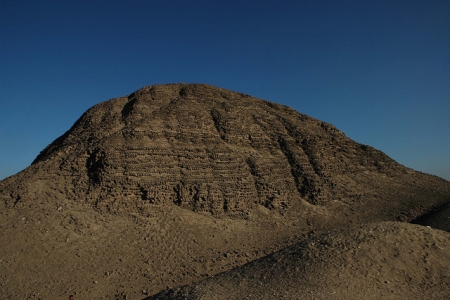
This pyramids owes its name to the fact that its core was made of white limestone. It has suffered a lot from stone robbers. Know more!

Lahun is the name of a modern village located near the opening of the Hawara Channel from the Nile Valley into the Fayum basin. Explore more about Lahun Pyramid with Memphis Tours!

It is located at medium, 80 km to the South of Memphis, on the Westbank of the Nile, to the East of Lake Moris and the Fayum oasis.

The pyramid is located about 100m south of Userkaf's pyramid, which is located at Sakkara. It was built for Neferhetepes who was a queen of Userkaf.
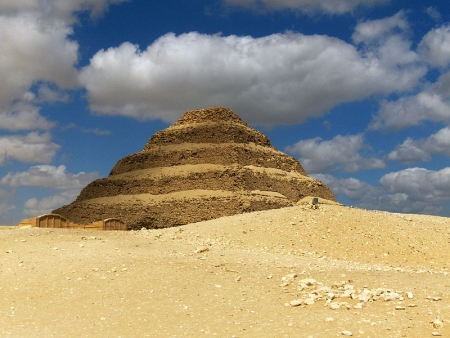
Standing 60 meters high, Netjerikhet's Step Pyramid, the oldest pyramid-like monument built in Egypt, was the centerpiece not only of the Netjerikhet complex but of the entire Saqqara area.
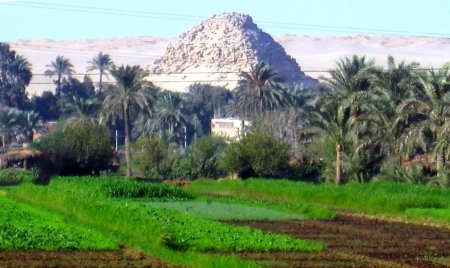
Recognize the story of Neferefre Pyramid through Memphis Tours! This pyramid is located at Abusir. It was built by King Raneferef, also known as Neferefre, who ruled for 3 or 4 years only during the 5th Dynasty.
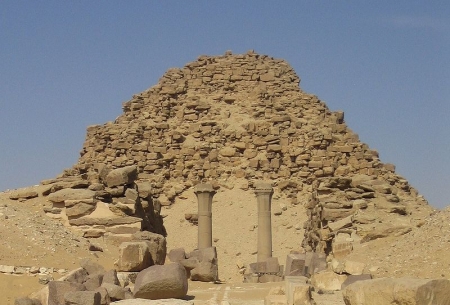
Sahure constructed the first pyramid at Abusir. A great many extremely beautiful high reliefs were found here by Borchardt when he excavated in 1902-1908.

Pyramid of Sekhemkhet is located just southwest of the pyramid of Unas, at Sakkara. It was built by Sekhemkhet, who was a pharaoh of the 3rd Dynasty and ruled for about 9 years. Explore Sekhemkhet now with Memphis Tours!

Located at Dahshur, Pyramid of Sesostris III is at some distance to the Northeast of Snofru's Red Pyramid. Know more!

Located in Central Saqqara just south of the 1st dynasty mastabas and northeast of Userkaf's pyramid, Pyramid of Teti was built by Teti, the first king of the 6th dynasty who ruled Egypt for some 32 years.

The local description for the the pyramid is el-haram el-makherbish "ruined pyramid". The pyramid is not on the tourist track and requires a 30 minute track through the soft sand from the step pyramid to reach.