
 Home
Home
Location:
This Temple is located about 100 kilometers south of the Aswan High Dam , in what we refer to today as Nubia. It was moved to the site of el-Sebua , about 40 kilometers upstream, between 1962 and 1968, because of the impendent flooding of the region as a result of the High Dam.
Who built it ?
There are many different opinions about this point. Some scholar says that this temple was built in the 18th dynasty , especially Queen Hatshepsute and King Tutmosis III reign, as they found number of blocks referring to God Horus to whom they dedicate this temple .
Other scholar say that it was actually built by the Nubian king, Akamani, who the Greeks called Ergamenes, in about 220 BC, other scholars claim that it dates as earlier as Ptolemy II Philadelphus 282-246
Explanation
El-Dakka was known to the Egyptians as Pselqet and to the Greeks as Pselchis. This Temple nowadays, sits on a small bluff.
It Consists of a facade, pylon, a courtyard and two sanctuaries. It is considered the only Nubian temple with a facade that faces to the north and oriented north-south to parallel the course of the Nile.
The pylon of the temple is now separated from the remainder of the temple due to the missing enclosure walls of the open court. Above the entrance of the pylon, a solar disk with a uraeus extends its wings. On the southern side of the temple, a small entrance leads into the interior of the pylon and to a stairway that communicates with several internal rooms.
After the open courtyard, the facade of the pronaosis adorned with reliefs of a Ptolemaic King sacrificing to various deities. Beyond the pronaos, the temple has two sanctuaries, one built by Arkamani and then a second one added by Augustus.
It contains many reliefs which depicted the Nubian king making offerings to local gods of Aswan . Some of the best of these reliefs portray Anqet, the goddess of Aswan with her elaborate feathered headdress, and the lion-headed goddess Sekhmet. Other scenes depict the king making offerings to not only Thoth, but also Isis and Tefnut.
The temple is decorated with many religion scenes and important relief.Like most of the other Nubian monuments it was converted into a church during the Christian era.
It should also be noted that at the modern site of El-Dakka temple, not only do we find the temple of El-Sebua , but also the small Maharraka temple, dating from Roman times and dedicated to Serapis and Isis. Interestingly, this small temple contains the only spiral staircase in any Nubian temple

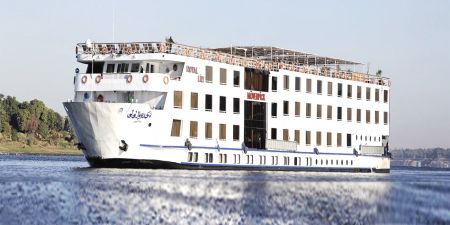
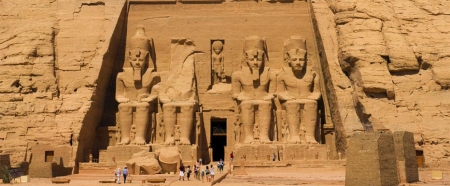
Nubian Monuments stretched between Aswan and Abusimbel at Nasser lake. This place contains many monuments built by different kings through different periods.
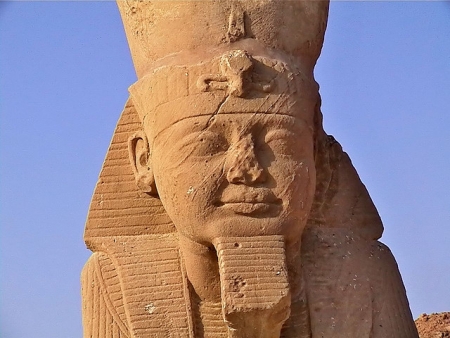
Wadi El Seboua Temple, in Arabic means “Valley of the Lions”, referring to the avenue of sphinxes that leads up to this temple, which was built during the reign of Ramesses II.
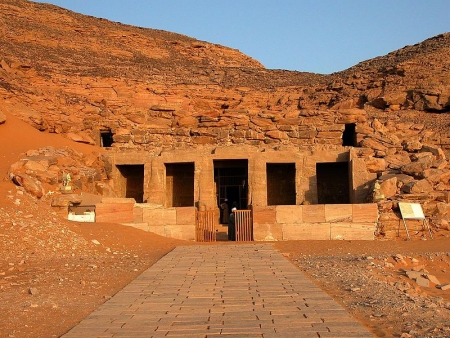
Temple of Derr was built during the time of king Ramsis II, exactly during the 30th year of his reign. It was dedicated to god Ptah and god Amon.
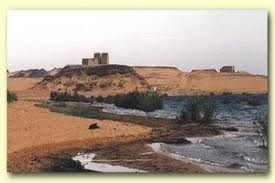
Located fifty miles to the north of Dekka Temple, Mohrakka Temple was built during the Greek Roman period. It was dedicated to Isis and Serapis. It is a small and simple temple.
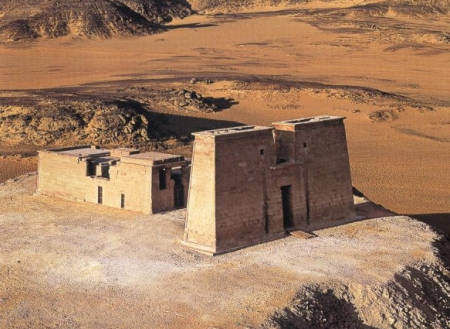
El-Dakka was known to the Egyptians as Pselqet and to the Greeks as Pselchis. This Temple nowadays, sits on a small bluff. Learn more.
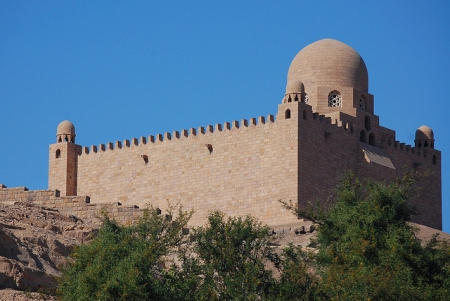
Agha Khan Mausoleum, situated 4 km from Aswan train station, Agha Khan Mausoleum was the founder of the mausoleum. Agha Khan was the leader of the Shiites.
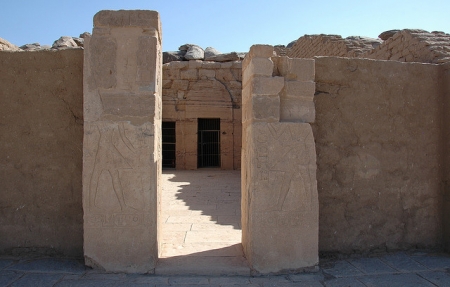
Beit el-Wali was rescued from Lake Nasser by a Polish archaeological team financed by a joint Oriental Institute of Chicago/Swiss Institute of Cairo Project.
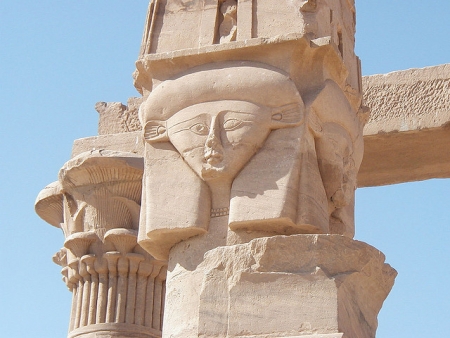
Situated south of Kalabsha temple , due to the rising waters of Lake Nasser after the construction of the High Aswan Dam, Kiosk of Kertassi was moved to another place the same as all the Nubian monument .
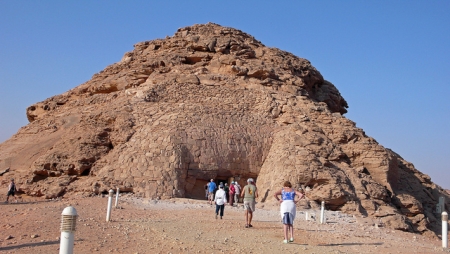
The tomb is a kind of rock cut tombs. It is consisted of antechamber, then a niche where there are the remains of three destroyed statues.