 Home
HomeAswan Attractions
Information about Aswan history and all of the most significant sites around the city of Aswan south of Egypt
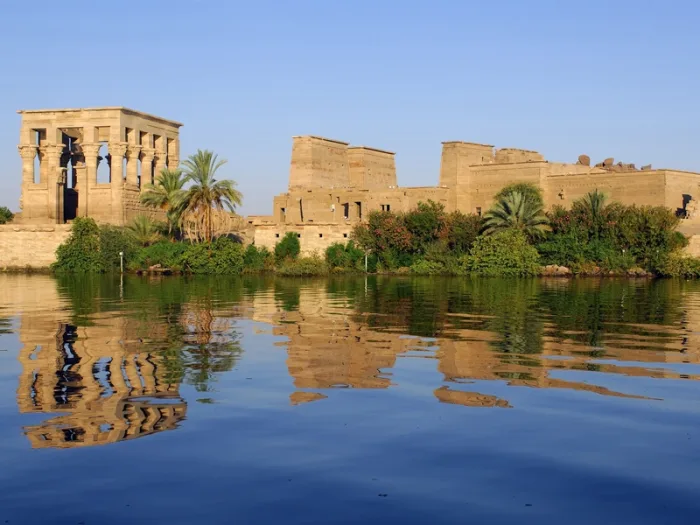
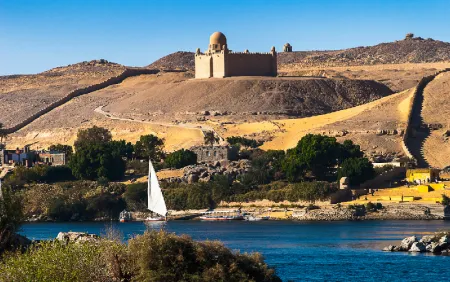
Agha Khan Mausoleum in Aswan, built 1956-1960, features pink granite architecture, white marble tomb, 120-step climb & daily red rose tradition.
Frequently Asked Questions
Got questions? We’ve got answers. Find everything you need to know to plan your perfect trip.
Yes, modern muon tomography scans suggest the presence of unknown voids or hidden spaces inside the pyramid.
Egypt tour packages offer many travel styles, from budget short breaks to luxury vacations. Most itineraries include famous attractions such as the Giza Pyramids, the Great Sphinx of Giza, Karnak Temple, the Valley of the Kings, Aswan, and Abu Simbel Temples. Many tours also feature a classic Nile cruise between Luxor and Aswan for a complete cultural experience.
Most Egypt tour packages last between 7 and 15 days, depending on the itinerary and travel style. Prices vary based on what is included, such as international or domestic flights, hotel category, cruise accommodation, transportation, and guided tours. Travelers can choose different themes, including historical sightseeing, Red Sea relaxation, or desert adventures. The most popular travel season is October to April, when temperatures are cooler and sightseeing conditions are more comfortable.
Common inclusions in Egypt tour packages:
- Sightseeing: Visits to major landmarks like the Giza Pyramids, Karnak Temple, Luxor Temple, Valley of the Kings, and Abu Simbel Temples.
- Transportation: Domestic flights, sleeper trains, private transfers, and Nile cruise ships.
- Accommodation: Hotels in major cities, Nile cruise cabins, and sometimes Red Sea resorts in places like Hurghada.
- Guides: Professional Egyptologists providing historical insights throughout the journey.
Popular types of Egypt tour packages:
- Classic Egypt Tours: Cover Cairo, Luxor, and Aswan with a Nile cruise (usually 9–12 days).
- Egypt Explorer Tours: Combine cultural sites with Red Sea relaxation or desert adventures.
- Budget Tours: Shorter itineraries focusing on major highlights.
- Luxury Tours: Premium hotels, private guides, and exclusive experiences.
Booking tips for Egypt tour packages:
- Best time to travel: October to April for comfortable weather.
- Compare itineraries: Review inclusions, accommodation levels, and group sizes.
- Choose trusted operators: Reputable companies like Memphis Tours provide organized itineraries, experienced guides, and well-planned travel services.
Well-designed Egypt tour packages make it easy to explore the country’s ancient monuments, vibrant cities, and natural wonders while enjoying comfortable accommodations and expert guidance.
The best Egypt tour companies vary depending on travel style, whether you are looking for luxury vacations, budget trips, private tours, or small group adventures. Leading operators are known for experienced guides, well-organized itineraries, and flexible travel options ranging from custom journeys to themed cultural experiences across destinations such as Cairo, Luxor, and Aswan. Many highly rated companies receive strong traveler reviews on major travel platforms and provide guided visits to famous landmarks like the Giza Pyramids and the Valley of the Kings.
Top-rated companies among the best Egypt tour companies include:
- Overall & Premium Tours
- Odynovo: Known for luxury travel, customized itineraries, and strong traveler satisfaction.
- Intrepid Travel: Popular for small group tours focused on cultural experiences.
- Abercrombie & Kent: A well-known luxury operator offering high-end services and expert guides.
Budget & Adventure Tours
- Contiki: Ideal for younger travelers seeking social group tours and affordable experiences.
- Exodus Travels: Offers active and cultural tours such as hiking, cycling, and history-focused trips.
Private & Custom Tours
- Djed Egypt Travel: Recognized for flexible itineraries and knowledgeable guides.
- Egypt Travels: Specializes in tailor-made travel experiences across Egypt.
- Memphis Tours: A reputable company providing private tours, customized itineraries, and professional Egyptologist guides.
Reliable Tour Operators
- Osiris Tours: Offers a wide range of private guided trips from value packages to luxury travel.
- Egypt Tours Club: Known for flexible tour options and services for international travelers.
How to choose among the best Egypt tour companies:
- Check traveler reviews: Look at feedback on trusted travel platforms to understand service quality.
- Define your travel style: Decide whether you prefer luxury, budget, private, or small group tours.
- Choose experienced guides: Knowledgeable Egyptologists are essential for understanding historic sites like the Karnak Temple and the Abu Simbel Temples.
- Selecting one of the best Egypt tour companies ensures a well-planned itinerary, professional guidance, and a comfortable way to explore Egypt’s ancient monuments and cultural treasures.
Egypt small group tours provide intimate, enriching travel experiences to Egypt’s most iconic sites, including the Giza Pyramids, the Great Sphinx of Giza, Karnak Temple, the Valley of the Kings, Aswan, and the Abu Simbel Temples, often including a classic Nile River cruise. These tours range from 5-day highlights to 10+ day cultural immersions, offering options for both luxury travelers and budget-conscious explorers. Small groups allow more personalized attention, deeper historical insights, and local cultural encounters.
Key Features of Egypt small group tours:
- Intimacy: Typically 8–16 travelers, ensuring personalized guidance and a closer experience.
- Comprehensive itineraries: Cover Cairo (Pyramids, Grand Egyptian Museum), Nile cruises (Luxor–Aswan), Abu Simbel, and sometimes Red Sea or desert excursions.
- Variety of styles: Luxury 5-star, adventure-focused, history-intensive, or budget-friendly trips.
- Inclusions: Transportation, selected meals, entrance fees, expert guides, and accommodations are usually provided.
Popular destinations & activities on small group tours:
- Cairo: Pyramids of Giza, Sphinx, Grand Egyptian Museum.
- Nile Cruises: Luxor to Aswan visiting temples like Kom Ombo Temple, Temple of Edfu, and Philae Temple.
- Luxor: Valley of the Kings, Karnak Temple.
- Aswan: Philae Temple, Nubian cultural experiences.
- Beyond: Optional Red Sea resorts, Siwa Oasis, Alexandria, or regional add-ons like Jordan.
Top operators for Egypt small group tours:
- Memphis Tours: Offers private and small group tours with experienced Egyptologist guides.
- G Adventures: Adventure-focused itineraries for cultural immersion.
- Intrepid Travel: Small group tours with expert guidance and cultural depth.
- TourRadar: Aggregates multiple small group tour options for flexible booking.
Tips for booking Egypt small group tours:
- Best time to visit: October to April for mild temperatures and comfortable sightseeing.
- Ideal duration: 10–12 days allows a relaxed pace to cover key historical and cultural sites.
- Safety: Always check government travel advisories and follow local guidelines.
- Planning: Search for tours using keywords like “Egypt small group tours 2026” to find the latest itineraries.
Choosing a small group tour in Egypt ensures a personal, immersive experience while exploring the country’s ancient monuments, vibrant cities, and scenic Nile River landscapes with expert guidance and convenience."
Private Egypt tours provide a personalized travel experience, allowing travelers to explore Egypt’s most famous landmarks at their own pace. These tours typically include iconic sites such as the Giza Pyramids, the Great Sphinx of Giza, Karnak Temple, the Valley of the Kings, Aswan, and the Abu Simbel Temples. Many private tours also include a Nile River cruise, providing an immersive and flexible way to experience Egypt’s history, culture, and natural beauty.
Key Advantages of Private Egypt Tours:
- Personalized Itineraries: Customize your route, duration, and pace according to your interests.
- Expert Guides: Professional Egyptologists guide you through every historic site with detailed insights.
- Flexible Scheduling: Choose when to visit each attraction, avoid crowds, and enjoy a stress-free journey.
- Luxury & Comfort: Options range from high-end hotels and Nile cruise cabins to mid-range accommodations, depending on your preference.
- Inclusions: Transportation, entrance fees, selected meals, accommodations, and guided tours are usually included.
Popular destinations covered by private Egypt tours:
- Cairo: Pyramids of Giza, Sphinx, and the Grand Egyptian Museum.
- Luxor & Nile Cruise: Valley of the Kings, Karnak Temple, Luxor Temple, and temples along the Nile such as Kom Ombo Temple and Temple of Edfu.
- Aswan: Philae Temple and Nubian cultural experiences.
- Optional extensions: Red Sea resorts (Hurghada), Siwa Oasis, Alexandria, or regional add-ons such as Jordan.
Top operators for private Egypt tours:
- Memphis Tours: Offers fully customized private tours with expert Egyptologist guides.
- Intrepid Travel & G Adventures: Also provide private tour options focused on cultural immersion.
- TourRadar: Aggregates multiple private tour packages for easy comparison and booking.
Tips for booking private Egypt tours:
- Best travel season: October to April for comfortable sightseeing conditions.
- Duration: 7–15 days is ideal to cover major sites at a relaxed pace.
- Safety: Check government travel advisories and follow local recommendations.
- Planning: Use keywords like “private Egypt tours 2026” to find updated itineraries and offers.
Choosing private Egypt tours ensures a flexible, immersive, and stress-free way to explore Egypt’s ancient monuments, vibrant cities, and scenic Nile River landscapes with professional guidance."
The best Egypt tour packages combine Egypt’s iconic landmarks with immersive experiences, offering a perfect blend of history, culture, and adventure. Most itineraries include Cairo’s ancient wonders—Giza Pyramids, Great Sphinx of Giza, and the Grand Egyptian Museum—alongside a classic Nile River cruise between Luxor and Aswan. Many tours also include a visit to the spectacular Abu Simbel Temples. Typical durations range from 7–10 days for a classic experience, with options from budget-friendly to luxury packages featuring 5-star hotels, private guides, and optional Red Sea extensions in Hurghada.
Popular Egypt Tour Package Types:
- Classic Egypt Tours: Cover Cairo, the Nile Cruise (Luxor, Karnak, Valley of the Kings), Aswan (Philae, High Dam), and Abu Simbel.
- Luxury Tours: Include 5-star accommodations, private guides, gourmet dining, and exclusive experiences.
- Budget Tours: More affordable options, often with shared transportation and fewer amenities.
- Extended/Adventure Tours: Add Red Sea resorts (Hurghada), desert safaris, or regional add-ons like Jordan.
Recommended Duration:
7–10 Days: Ideal to explore Cairo, Luxor, Aswan, and enjoy a Nile cruise without rushing.
What to Look For in the Best Egypt Tour Packages:
- Internal Flights: Saves time between Cairo, Luxor, and Aswan.
- Inclusions: Meals, entrance fees, guided tours, and cruise amenities.
- Flexibility: Options for customized private tours or small group departures.
Top Providers of Egypt Tour Packages:
- Memphis Tours: Offers fully customized packages with expert Egyptologist guides and private tours.
- Intrepid Travel & Insight Vacations: Well-known for guided tours emphasizing history, culture, and adventure.
- TourRadar: Aggregates a wide selection of Egypt tour packages for comparison and booking.
Best Time to Visit:
October to April: Cooler, pleasant weather ideal for sightseeing.
Key Sites Included in Egypt Tour Packages:
- Cairo: Giza Pyramids, Sphinx, Grand Egyptian Museum.
- Nile Cruise: Karnak Temple, Luxor Temple, Valley of the Kings, Edfu, Kom Ombo.
- Aswan: High Dam, Philae Temple, Unfinished Obelisk.
- Abu Simbel: The magnificent temples of Ramesses II, a highlight for many tours.
Booking the best Egypt tour packages ensures a well-planned, immersive, and comfortable journey through Egypt’s ancient monuments, Nile River landscapes, and vibrant cities, guided by expert Egyptologists for a memorable and stress-free experience."
Egypt escorted tours offer guided, fully planned trips to Egypt’s most iconic destinations, combining history, culture, and comfort. These tours typically cover the Giza Pyramids, the Great Sphinx of Giza, the Valley of the Kings, the Karnak Temple, and the Abu Simbel Temples, often including relaxing Nile River cruises between Luxor and Aswan, with stops at Kom Ombo Temple and Temple of Edfu. Escorted tours range from short budget trips to luxury private experiences, often including domestic flights and guidance from expert Egyptologists.
Key Features of Egypt Escorted Tours:
- Classic Routes: Most tours cover Cairo (Pyramids, Egyptian Museum), Luxor (Karnak, Valley of the Kings), and Aswan (Philae Temple, Abu Simbel).
- Nile Cruises: A central highlight on many tours, sailing between Luxor and Aswan with scenic stops.
- Expert Guides: Professional Egyptologists provide in-depth historical and cultural insights.
- Variety of Options: Choose from small group tours, private tours, luxury experiences, or budget-friendly packages.
- Inclusions: Often include domestic flights, accommodations, some meals, entry fees, and guided sightseeing.
Popular Tour Types & Durations:
- Short Trips (3–5 Days): Focus on Cairo and Giza, sometimes adding Alexandria.
- Classic Egypt Tours (8–10 Days): Combine Cairo with a 3–4 day Nile cruise.
- Comprehensive Tours (12–15 Days): Include Red Sea resorts (Hurghada) or extend visits to Abu Simbel and other landmarks.
What to Expect on Tour:
- Ancient Sites: Pyramids & Sphinx, Luxor Temple, Karnak Temple, Abu Simbel, Valley of the Kings.
- Cultural Experiences: Shopping at Khan El Khalili Bazaar, exploring Islamic Cairo, visiting Nubian villages.
- Relaxation: Sunbathing, swimming, and enjoying meals on a Nile cruise ship.
Top Providers for Egypt Escorted Tours:
- Memphis Tours: Offers fully guided private and small group escorted tours with expert Egyptologist guides.
- Intrepid Travel & Insight Vacations: Provide immersive escorted itineraries focusing on history and culture.
- TourRadar: Aggregates a wide range of escorted tour packages for comparison and booking.
Best Time to Travel:
October to April: Mild temperatures and pleasant weather ideal for sightseeing.
Booking Egypt escorted tours ensures a seamless, immersive, and stress-free journey through Egypt’s monuments, Nile River landscapes, and cultural highlights."
Trips to Egypt cater to a wide range of interests, durations, and budgets, offering experiences from ancient history and cultural tours to Nile River cruises and Red Sea relaxation. These trips allow travelers to explore Egypt’s iconic landmarks while enjoying personalized itineraries and expert guidance.
Popular Itinerary Types for Trips to Egypt:
- Classic Tours: Cover major historical sites and cities. Key destinations include Cairo (Giza Pyramids, Great Sphinx of Giza, Grand Egyptian Museum, Islamic Cairo), Luxor (Valley of the Kings, Karnak Temple, Luxor Temple), and Aswan (Philae Temple, Abu Simbel Temples).
- Nile Cruises: A scenic way to see Upper Egypt’s ancient sites, most cruises sail between Luxor and Aswan, with stops at Edfu Temple and Kom Ombo Temple.
- Red Sea & Beach Holidays: Destinations like Hurghada and Sharm El Sheikh provide opportunities for relaxation, diving, and snorkeling among vibrant coral reefs.
- Adventure & Oasis Tours: For adventurous travelers, trips can include desert safaris to the White Desert and excursions to Bahariya or Siwa Oases.
Trip Duration and Cost Estimates:
Trips to Egypt can range from short 4-day city breaks to extensive 15+ day itineraries, with pricing depending on style, inclusions, and season:
| Duration | Typical Price Range (Land Only) | Highlights |
| 4–6 Days | $360–$1155+ | Cairo, Giza Pyramids, Alexandria, Luxor, Aswan, Abu Simbel |
| 7–10 Days | $890–$1480+ | Cairo, Nile Cruise, Luxor, Aswan, Hurghada/Sharm El Sheikh |
| 11–15+ Days | $1390–$2100+ | Comprehensive tours including multiple cities, Nile cruise, Red Sea relaxation or Jordan extension |
Note: Prices vary based on tour type (budget vs. luxury), inclusions (flights, guides, entrance fees), and travel season.
Booking Resources for Trips to Egypt:
- Memphis Tours: Offers curated trips, from luxury private tours to budget-friendly itineraries with expert Egyptologist guides.
- Intrepid Travel: Specializes in adventure and small group tours.
- TourRadar: Aggregates various trips for easy comparison and booking.
Whether you prefer history-focused tours, relaxing Nile cruises, or Red Sea adventures, trips to Egypt provide unforgettable experiences across the country’s ancient monuments, cultural hotspots, and natural landscapes.
An Egypt trip package offers a wide range of options for travelers, typically highlighting iconic sites like the Giza Pyramids, scenic Nile River cruises, Karnak Temple, Valley of the Kings, and Abu Simbel Temples. Packages range from short 4-day city breaks to comprehensive 10+ day cultural immersions. Pricing varies from budget-friendly ($400–$1000+) to luxury packages (often $1000+), depending on inclusions such as 5-star hotels, private guides, and flight-inclusive options. Popular choices often combine classic ancient sites with Red Sea relaxation at destinations like Hurghada.
Popular Egypt Trip Package Types:
- Classic Tours: Combine Cairo (Pyramids, Grand Egyptian Museum) with a 3–4 day Nile Cruise between Luxor and Aswan.
- Short Breaks: Focus on Cairo & Giza (4–5 days) or Cairo & Luxor.
- Cultural Immersion: Extend itineraries to include Alexandria, Abu Simbel, or desert safaris.
- Luxury Tours: Feature 5-star accommodations, private guides, exclusive access, and personalized experiences.
Typical Inclusions:
- Accommodation in hotels and Nile cruise boats.
- Sightseeing with licensed Egyptologists and professional guides.
- Internal flights or trains when required.
- Meals, often breakfast, with some full board included on cruises.
Suggested Durations and Price Estimates:
- 4–5 Days: Starting from $400–$600+ for basic packages.
- 7 Days: Around $1,100–$1,900+, usually covering Cairo and a Nile Cruise.
- 8–10 Days: $1,200–$2,000+, including more comprehensive sightseeing.
- Luxury Packages: Starting from $1,900+ with premium hotels and private guides.
How to Choose the Right Egypt Trip Package:
- First-Time Travelers: A 7–10 day Cairo & Nile Cruise package covers all major ancient sites.
- History Enthusiasts: Consider longer packages including Abu Simbel, Alexandria, or desert treks.
- Relaxation Seekers: Opt for packages combining ancient sites with Red Sea resorts like Hurghada.
Booking Tips:
- Book through Memphis Tours, which offers curated Egypt trip packages with expert guides, private or small group options, and flexible itineraries.
- Check travel advisories and security updates before booking, especially from your government if traveling internationally.
An Egypt trip package ensures a well-organized, immersive experience, combining the wonders of ancient Egypt, scenic Nile cruises, cultural immersion, and opportunities for relaxation along the Red Sea."
Egypt tours packages offer a wide variety of options from budget-friendly to luxury, allowing travelers to experience the country’s rich history, culture, and scenic beauty. Most packages highlight iconic sites such as the Giza Pyramids, Great Sphinx of Giza, Karnak Temple, Valley of the Kings, and Abu Simbel Temples. Many packages include scenic Nile River cruises between Luxor and Aswan and combine cultural visits with relaxation at Red Sea resorts like Hurghada or Sharm El Sheikh. Trip durations typically range from 7 to 15 days, with prices varying by inclusions, accommodation standards, and style, while the optimal travel season is October to April for comfortable weather.
Popular Egypt Tours Package Types:
- Classic Egypt Tours: Combine Cairo (Pyramids, Grand Egyptian Museum) with a 3–5 night Nile Cruise from Luxor to Aswan.
- Cultural Immersion: Extend itineraries to include Alexandria or desert safaris for a deeper experience of Egypt’s heritage and landscapes.
- Red Sea Getaways: Mix sightseeing of historical sites with relaxation at beaches and resorts in Hurghada or Sharm El Sheikh.
- Luxury & Budget Options: Packages range from affordable short trips to high-end luxury experiences with 5-star accommodations, private guides, and exclusive access.
Key Destinations Included:
- Cairo: Giza Pyramids & Sphinx, Egyptian Museum, Islamic Cairo highlights.
- Luxor: Karnak Temple, Luxor Temple, Valley of the Kings.
- Aswan: High Dam, Philae Temple, Abu Simbel (via cruise or flight).
- Nile Cruises: Standard 3–5 night cruises connecting Luxor and Aswan, with stops at Edfu and Kom Ombo.
Sample Package Examples:
- 7-Day: Cairo & Nile Cruise highlights.
- 11-Day: Cairo, Nile Cruise, & Red Sea resort (Hurghada).
- 14-Day: Cairo, Alexandria, Nile Cruise, & Red Sea relaxation.
How to Choose the Right Egypt Tours Package:
- Duration: 7–10 days for main highlights; 10–15+ days for a relaxed, comprehensive experience.
- Style: Private guided tours, small group excursions, or larger bus tours.
- Timing: Travel between October and April for cooler, pleasant weather.
- Providers: Book with reliable operators like Memphis Tours, offering curated packages with expert Egyptologist guides, private and small group options, and flexible itineraries.
Egypt tours packages provide a complete travel experience, combining the majesty of ancient monuments, the serenity of Nile cruises, and the beauty of Red Sea resorts, ensuring an unforgettable cultural, historical, and leisure journey."
Egypt guided tour packages offer flexible options for travelers, from short 4–5 day trips focused on Cairo and the Pyramids to extended 10–14 day journeys including Nile River cruises, Luxor, Aswan, Abu Simbel, and Red Sea resorts like Hurghada. Packages typically include accommodation in hotels or Nile cruise boats, transportation via private cars, trains, or domestic flights, expert Egyptologist guides, and meals (usually breakfast, sometimes lunch/dinner). Prices vary by duration, luxury level, inclusions, and type of experience, making these packages suitable for budget travelers, families, solo adventurers, or luxury seekers. The optimal travel period is October to April for pleasant temperatures and sightseeing comfort.
Popular Egypt Guided Tour Package Types & Highlights:
- Classic Egypt: Covers Cairo (Giza Pyramids, Grand Egyptian Museum), Luxor (Karnak Temple, Valley of the Kings), and Aswan (Philae Temple, High Dam).
- Nile Cruises: Multi-day cruises between Luxor and Aswan, stopping at temples like Edfu and Kom Ombo.
- Abu Simbel Excursions: Often added to Luxor/Aswan itineraries to visit the magnificent temples of Ramses II.
- Short Breaks: 4–7 day packages highlighting Cairo & Giza or Cairo & Luxor.
- Luxury & Themed Tours: Tailored for families, solo women travelers, desert safaris, or cultural/spiritual themes.
Sample Itineraries by Duration:
- 4–5 Days: Cairo highlights (Pyramids, Museum) with optional quick Luxor visit.
- 7–9 Days: Cairo, Nile Cruise (Luxor–Aswan), and Abu Simbel.
- 10–14 Days: Comprehensive tours including Cairo, Alexandria, Nile Cruise, and Red Sea resort stay in Hurghada.
Key Inclusions in Egypt Guided Tour Packages:
- Guided sightseeing with expert Egyptologists.
- Accommodation in hotels and Nile cruise boats.
- Transportation including domestic flights, private vehicles, and Nile cruise boats.
- Meals, typically breakfast with some packages offering additional meals.
- Entry to major sites such as Pyramids, Sphinx, Karnak, Valley of the Kings, and Abu Simbel.
How to Choose the Right Egypt Guided Tour Package:
- Duration: Short 4–5 day tours for highlights; 10–14+ days for a full cultural and historical experience.
- Style: Private tours, small group tours, or larger escorted tours.
- Inclusions: Look for packages including flights, internal transport, Nile cruises, and expert guides.
- Booking Provider: Choose Memphis Tours, which offers curated Egypt guided tour packages with flexible itineraries, expert guides, and options for private or small group experiences.
- Timing: Travel from October to April for the most comfortable weather conditions.
Egypt guided tour packages provide a structured, immersive travel experience, combining Egypt’s ancient wonders, cultural insights, scenic Nile cruises, and opportunities for leisure along the Red Sea, ensuring a memorable and stress-free journey."
Egypt luxury tours packages provide exclusive travel experiences designed for comfort, privacy, and deep cultural discovery. These journeys typically include private Nile River cruises, stays in world-class hotels such as Four Seasons Hotel Cairo at Nile Plaza and Marriott Mena House, and the guidance of expert private Egyptologists. Travelers enjoy priority entry to iconic landmarks including the Great Pyramid of Giza, ancient tombs in Valley of the Kings, and other remarkable archaeological sites.
Most luxury itineraries span 10–12 days, combining major destinations such as Cairo, Luxor, Aswan, and the magnificent Abu Simbel Temples. Packages generally include premium accommodations, private transportation, domestic flights, gourmet dining, entrance fees, and curated cultural experiences that ensure a seamless journey through Egypt’s ancient wonders.
Key Features of Egypt Luxury Tours Packages
- Accommodation: 5-star hotels such as Four Seasons Hotel Cairo at Nile Plaza and Marriott Mena House, plus boutique Nile cruise ships.
- Transportation: Private airport transfers, luxury vehicles, and sometimes private charter flights for ultra-exclusive itineraries.
- Experiences: Personal Egyptologist guides, VIP site access, and curated cultural encounters.
- Inclusions: Most packages cover meals, domestic flights, guided tours, and entrance fees.
Typical 10–12 Day Luxury Itinerary
- Cairo: Explore the Giza Pyramids Complex, the Great Sphinx of Giza, the Grand Egyptian Museum, historic Islamic Cairo, and Saqqara Necropolis.
- Nile Cruise: Discover Karnak Temple, Luxor Temple, the Temple of Hatshepsut, Temple of Edfu, Kom Ombo Temple, and scenic Nile landscapes.
- Aswan & Abu Simbel: Visit Philae Temple, experience a traditional Nubian village, and marvel at the monumental Abu Simbel Temples.
- Optional Extensions
Many travelers extend their trip with a relaxing stay in Sharm El Sheikh on the Red Sea or combine Egypt with neighboring destinations such as Jordan.
What to Expect
- Seamless Travel: Smooth transitions between cities, flights, and cruises.
- Historical Immersion: In-depth exploration of ancient Egyptian civilization with expert guides.
- Comfort & Style: Fine dining, elegant accommodations, and carefully curated experiences.
Cost
Luxury Egypt tours typically start from around $1,200+ per person for deluxe options and can rise significantly for fully private or ultra-luxury journeys, including exclusive charters.
Best Time to Visit
The most comfortable travel season is October to April, when temperatures are mild and ideal for sightseeing across Egypt."
Egypt travel allows visitors to experience remarkable ancient history, from the iconic Giza Pyramids Complex to the temples of Luxor and relaxing cruises along the Nile River. The country also offers stunning Red Sea destinations and vibrant cultural cities. The best time to visit is generally between October and April, when temperatures are mild and ideal for sightseeing.
While Egypt welcomes millions of travelers each year, visitors should remain aware of general safety guidance. Some areas require extra caution, and travelers are advised to stay informed about travel advisories, avoid sensitive regions, and remain attentive in crowded places. Respecting local customs—such as dressing modestly in traditional or Islamic districts of Cairo—also helps ensure a comfortable travel experience. Travelers should also secure the required visas and travel documents before arrival or obtain them on arrival if eligible.
Key Considerations for Egypt Travel
1- Best Time to Visit
October to April offers pleasant weather and comfortable conditions for sightseeing.
2- Major Attractions
- Giza Pyramids Complex, Egyptian Museum, and Khan el-Khalili in Cairo
- Karnak Temple, Luxor Temple, and the Valley of the Kings in Luxor
- Cruises along the Nile River between Luxor and Aswan
- Red Sea resorts such as Hurghada and Sharm El Sheikh
3- Safety & Security
- High-caution areas: Parts of the Sinai Peninsula and the Western Desert may require special precautions or licensed tours.
- General awareness: Stay alert in crowded areas and be cautious of persistent street vendors or traffic conditions.
- Security measures: Bag checks and security screenings are common at tourist sites and public places.
4- Visas & Documents
Most visitors need a visa to enter Egypt, which can often be obtained before travel or on arrival depending on nationality.
5- Health
Travelers should consult their doctor about recommended vaccinations and carry necessary medications.
6- Culture & Etiquette
Dress modestly in religious or conservative areas and avoid photographing government or military facilities.
Helpful Tips for Travelers
- Transportation: Organized transport and guided tours provide convenience and added peace of mind.
- Nile Travel: A cruise on the Nile River is a popular way to visit historic temples between Luxor and Aswan.
- Red Sea Resorts: Destinations such as Hurghada and Sharm El Sheikh are known for their beaches and diving opportunities.
Before traveling, visitors should always review the latest travel advisories from their government for updated safety guidance and entry requirements.
Many Egypt trips combine ancient history, scenic cruising, and relaxing coastal escapes. Travelers often begin their journey in Cairo, explore the legendary Giza Pyramids Complex, and then continue with a cruise along the Nile River between Luxor and Aswan. Egypt also offers beautiful Red Sea resorts for relaxation and marine activities. The most comfortable season for travel is typically November through March, when temperatures are pleasant for sightseeing across the country.
Popular Egypt Trip Itinerary Options & Costs
Most organized journeys start in Cairo and include a Nile cruise between Luxor and Aswan. A 7–10 day trip usually ranges from $900 to $2,500 per person (land only) depending on the level of comfort, accommodations, and experiences included.
1- Classic Itinerary (9–10 days)
- Cairo, Luxor, Aswan, and the Abu Simbel Temples
- Ideal for first-time visitors wanting to explore Egypt’s most famous historical landmarks
- Often includes domestic flights and a Nile cruise
2- History & Relaxation (10–12 days)
- Classic route plus beach time in Hurghada or Sharm El Sheikh
- Combines ancient temples with snorkeling and beach experiences along the Red Sea
3- Budget / Explorer Trips (7 days)
- Focus on major highlights such as the Great Pyramid of Giza and the Valley of the Kings
- Often include a 5-star Nile cruise with prices starting from around $800
Key Destinations in Egypt Trips
- Cairo / Giza
Home to the Great Pyramid of Giza, the Great Sphinx of Giza, and the Grand Egyptian Museum.
- Luxor
Often called the world’s largest open-air museum, featuring the Karnak Temple, Luxor Temple, and the Valley of the Kings.
- Aswan
A scenic Nile-side city known for Philae Temple, the Aswan High Dam, and traditional Nubian culture.
- Abu Simbel Temples
Magnificent rock temples built by Ramesses II and dedicated to him and Nefertari, usually visited from Aswan.
- Red Sea Resorts
- Hurghada
- Sharm El Sheikh
Both are popular for diving, snorkeling, and beach relaxation.
Important Travel Tips
1- Visa
Travelers to Egypt generally require a tourist visa. Many visitors can obtain a 30-day visa on arrival at the airport for approximately $25 USD, provided their passport is valid for at least six months beyond the arrival date.
2- Safety
Security is visible at major tourist sites, often including police and military presence. Organized tours commonly provide representatives to assist with airport transfers and travel logistics.
3- Culture & Dress
Egypt is a conservative country. Modest clothing is recommended, and public displays of affection are generally discouraged.
4- Health
Drink bottled water rather than tap water and consider travel insurance that includes medical coverage and evacuation if needed.
5- Money
The local currency is the Egyptian Pound (EGP), though US dollars are widely accepted in many tourist areas. Tipping is a common part of the culture, so carrying small bills is helpful.
Egypt vacations offer an unforgettable blend of ancient wonders, cultural discovery, and seaside relaxation. Travelers can explore legendary landmarks such as the Giza Pyramids Complex, cruise along the timeless Nile River, and enjoy world-class diving in Red Sea destinations like Hurghada and Sharm El Sheikh. The most comfortable time to visit is typically October to April, when the weather is mild and ideal for sightseeing, although it is also the busiest travel season.
Many travelers choose itineraries that combine the cultural highlights of Cairo, the temples of Luxor, the scenic beauty of Aswan, and relaxing experiences along the Red Sea. These journeys appeal to history lovers, adventure seekers, and beach enthusiasts alike.
Top Destinations & Activities
1- Cairo & Giza
- Explore the Giza Pyramids Complex and the Great Sphinx of Giza
- Visit the renowned Egyptian Museum
2- Luxor
- Discover the Valley of the Kings
- Explore the magnificent Karnak Temple and Luxor Temple
- Enjoy memorable hot air balloon rides above the Nile Valley
3- Aswan
- Visit the beautiful Philae Temple
- See the Aswan High Dam
- Sail on a traditional felucca boat and take a day trip to the impressive Abu Simbel Temples
4- Red Sea Resorts
Hurghada and Sharm El Sheikh are famous for diving, snorkeling, beaches, and vibrant marine life in the Red Sea
Best Time to Visit
- Peak Season (October – April)
Mild, comfortable temperatures perfect for sightseeing
Expect larger crowds and slightly higher travel prices
- Shoulder Season (March, April, September)
Good weather with fewer tourists
- Summer (May – September)
Temperatures can be very hot, making extensive sightseeing more challenging
Types of Egypt Vacations
- Classic Cultural Tours
- Combine Cairo, a Nile River cruise, Luxor, and Aswan
- Adventure & Beach Holidays
- Focus on diving, snorkeling, and desert excursions around the Red Sea
Family-Friendly Trips
Mix historical exploration with relaxing beach time
Helpful Travel Tips
- Booking: Reserve trips early if traveling between October and April, as it is the most popular season.
- Security: Stay informed about travel advisories, particularly for border regions.
- Culture & Dress: Egypt is culturally conservative, so modest clothing—especially at religious sites—is recommended, covering shoulders and knees."
An ideal Egypt itinerary for first-time travelers typically ranges from 7 to 10 days, giving you enough time to explore the country’s most iconic destinations, including Cairo, Luxor, and Aswan, often connected through a memorable journey along the Nile River. For a more immersive experience, a 14-day Egypt itinerary can also include relaxing by the Red Sea or discovering the beauty of desert oases.
Classic 10-Day Egypt Itinerary
This Egypt itinerary combines Egypt’s most famous ancient landmarks with cultural experiences and usually includes a domestic flight from Cairo to southern Egypt to make the most of your time.
Day 1–2: Cairo & Giza
Arrival & Pyramids: Arrive in Cairo (staying in Giza provides convenient access to the pyramids). Spend a full day exploring the Giza Pyramids Complex (including the pyramids of Khufu, Khafre, and Menkaure) and the Great Sphinx of Giza.
Museum & Old Cairo: Visit the Egyptian Museum in Tahrir Square, home to Tutankhamun’s treasures. Continue to Islamic and Coptic Cairo, including the Citadel and the Hanging Church.
Day 3: Travel to Aswan & Aswan Highlights
Travel: Take an early morning flight from Cairo to Aswan.
Aswan High Dam & Philae Temple: Visit the High Dam and enjoy a short boat ride to the beautiful Philae Temple on Agilkia Island.
Day 4–6: Nile Cruise (Aswan to Luxor)
Abu Simbel: Take an early morning excursion to the impressive Abu Simbel Temples near the Sudanese border.
Cruising: Board your Nile cruise, which acts as both your hotel and transport. Stops include Kom Ombo (dedicated to Sobek and Horus) and the Temple of Horus at Edfu.
Relaxation: Take in the scenery and enjoy onboard facilities, including pools on many cruises.
Day 7–8: Luxor
West Bank: Discover the West Bank, including the Valley of the Kings, the Temple of Hatshepsut, and the Colossi of Memnon.
East Bank: Visit the vast Karnak Temple complex and Luxor Temple, especially stunning when illuminated at night.
Day 9: Flight back to Cairo & Departure Prep
Travel & Market: Fly from Luxor back to Cairo. If time allows, explore the lively Khan el-Khalili bazaar for souvenirs and local culture.
Final Evening: Enjoy a final Egyptian dinner or a relaxing felucca ride on the Nile.
Day 10: Departure
Transfer to the airport for your international departure.
Essential Travel Tips
- Best Time to Visit: October to April offers pleasant temperatures ideal for sightseeing, while summer can be extremely hot, particularly in Upper Egypt.
- Currency & Money: The Egyptian Pound (EGP) is the local currency. ATMs are widely available, and credit cards are accepted in many places. Keep small notes for tips and minor expenses.
- Visa: Most travelers can obtain a 30-day visa on arrival or apply online in advance.
- Transportation: Domestic flights are the fastest way to travel between Cairo, Luxor, and Aswan. In cities, Uber or Careem are reliable options.
- Dress Code: Dress modestly, especially at religious sites—shoulders and knees should be covered, and carrying a scarf is recommended for mosque visits."
Luxury trips to Egypt offer a perfect mix of rich history and high-end comfort, combining expertly designed itineraries, premium hotels, and exclusive experiences. These journeys usually cover top destinations like Cairo, Luxor, and Aswan, often connected by elegant cruises along the Nile River, with the option to extend your stay to Red Sea resorts.
Recommended Luxury Tour Operators
Specialized travel companies such as Abercrombie & Kent, Osiris Tours, iEgypt Travels, and Ker & Downey, along with memphis tours, provide tailored itineraries, private Egyptologist guides, and seamless travel arrangements to elevate your experience.
Signature Luxury Experiences
- Luxury travel in Egypt goes beyond traditional sightseeing:
- Private Guided Tours: Enjoy personalized tours at iconic landmarks like the Giza Pyramids Complex, Valley of the Kings, and the Grand Egyptian Museum, often with early or exclusive access.
- Luxury Nile Cruises: Sail between Luxor and Aswan on deluxe cruise ships or intimate dahabiya boats, offering comfort and a peaceful atmosphere. Options include the Oberoi Zahra, SS Sudan, and Sanctuary Nile Adventurer.
- High-End Accommodations: Stay in iconic properties such as the Sofitel Legend Old Cataract Aswan or the Marriott Mena House, known for their history and stunning views.
- Red Sea Relaxation: Combine cultural exploration with leisure in Sharm El Sheikh, offering world-class diving, snorkeling, and spa experiences.
- Desert Adventures: Explore the Sahara on private 4x4 safaris or enjoy luxury camping in the White Desert National Park.
Top Luxury Hotels & Resorts
- Cairo: Marriott Mena House, The St. Regis Cairo, Four Seasons Hotel Cairo at Nile Plaza
- Luxor: Hilton Luxor Resort & Spa, Sofitel Winter Palace Luxor
- Aswan: Sofitel Legend Old Cataract Aswan, Mövenpick Resort Aswan
- Red Sea: Four Seasons Resort Sharm El Sheikh, The Oberoi Beach Resort Sahl Hasheesh, Steigenberger Aldau Beach Hotel
With memphis tours, travelers can enjoy a seamless luxury experience with personalized services, exclusive access, and carefully curated journeys that make every moment in Egypt truly exceptional.
An Egypt honeymoon offers a unique blend of ancient wonders and relaxing luxury, combining the vibrant atmosphere of Cairo—with visits to the Giza Pyramids Complex and museums—with a მშვიდ and scenic Nile cruise through Luxor and Aswan, before ending with beach time at Red Sea destinations like Sharm El Sheikh or Hurghada for relaxation, diving, and unforgettable moments. Romantic stays range from adults-only resorts like Meraki to luxury properties such as Oberoi Sahl Hasheesh, along with hotels offering private pools—perfect for couples seeking culture, adventure, and romance.
Popular Destinations & Activities
- Cairo: Explore the Pyramids of Giza, the Sphinx, Khan El Khalili Bazaar, and Islamic & Coptic Cairo.
- Nile Cruise (Luxor/Aswan): Discover the grandeur of Karnak Temple, the Valley of the Kings, Abu Simbel, and Philae Temple.
- Red Sea Resorts (Sharm El Sheikh, Hurghada, El Gouna): Enjoy beaches, snorkeling, diving, and luxury relaxation.
- Aswan: Experience a peaceful atmosphere, botanical gardens, and felucca rides on the Nile River.
- Dahab: Discover a laid-back and adventurous vibe in the Sinai Peninsula.
Romantic Stays & Hotels
- Luxury: Oberoi Sahl Hasheesh, Four Seasons Sharm El Sheikh, Sofitel Cairo Nile El Gezirah.
- Adults-Only: Meraki Resort, Jaz Neo Dar El Madina.
- Red Sea Resorts: Domina Coral Bay, Steigenberger Alcazar, Sunrise Arabian Beach Resort.
- Unique Stays: Sofitel Legend Old Cataract Aswan.
Planning Tips
- Combine Experiences: Most Egypt honeymoon trips mix historical exploration with beach relaxation for a complete experience.
- Luxury Nile Cruises: Choose higher-end cruises for better comfort, dining, and service.
- Private Tours: Book private tours in Cairo and at major temples for a more intimate and personalized journey.
With memphis tours, couples can enjoy a seamless and romantic honeymoon experience, with carefully designed itineraries, private services, and unforgettable moments across Egypt.
The best of Egypt tours combine the country’s most iconic sights with well-planned experiences, including visits to the Giza Pyramids Complex in Cairo, scenic cruises along the Nile River, and the remarkable temples of Luxor and Aswan. Many itineraries also offer optional extensions for relaxation by the Red Sea in Hurghada or deeper cultural exploration in Alexandria and Egypt’s desert oases. Tour options vary from budget-friendly packages to private luxury journeys, often including domestic flights, expert guides, and seamless travel arrangements. Leading providers include local specialists such as Holiday In Egypt and Beyond The Nile, international operators such as Intrepid and Exodus, luxury brands like Tauck and Abercrombie & Kent, and Memphis Tours for curated and personalised experiences.
Popular Tour Types & Destinations:
- Classic Egypt (Cairo & Nile Cruise): Focuses on highlights such as the Giza Pyramids, the Egyptian Museum, Karnak Temple, Luxor Temple, and the Valley of the Kings, combined with a Nile cruise (typically 3–5 nights) stopping at Edfu and Kom Ombo, and ending in Aswan.
- Deep Dive Cultural Tours: Extend your journey to include the impressive Abu Simbel temples near Aswan, historic Islamic Cairo, Alexandria, or even the remote Siwa Oasis for a richer and more immersive cultural experience.
Egypt and Petra tours combine some of the world’s most remarkable ancient and cultural sites. In Egypt, travelers explore the Giza Pyramids Complex, sail on scenic Nile River cruises, and visit the majestic temples of Luxor and Aswan. The journey continues into Jordan with the stunning rose-red city of Petra, and adventurous excursions in the Wadi Rum Desert with overnight camps under the stars.
Tours range from quick 7-day packages to longer 10–15 day adventures, perfectly blending history, culture, and breathtaking landscapes. The best time to travel is during spring or autumn for comfortable weather and enjoyable sightseeing. Leading operators include memphis tours, Luxor and Aswan Travel, On The Go Tours, and Wilderness Travel, all providing expert guides, seamless logistics, and thoughtfully curated itineraries.
Key Highlights:
- Iconic Egyptian landmarks: Pyramids of Giza, Luxor & Karnak Temples, Valley of the Kings
- Nile River cruises: Luxor to Aswan, stopping at Edfu & Kom Ombo
- Jordan’s Petra: Explore the Treasury, Monastery, and Siq
- Wadi Rum: Desert adventure with traditional camps and stargazing
Flexible itineraries: Options for 7, 10, or 15-day immersive experiences
These Egypt and Petra tours offer a perfect combination of ancient wonders, cultural immersion, and adventure for travelers seeking a once-in-a-lifetime journey.
Egypt and Jordan are neighbouring countries in the Middle East, sharing rich Arab culture, iconic ancient sites, and strategic Red Sea locations, making them perfect for combined travel adventures. These tours highlight Egypt’s Pyramids of Giza, Luxor and Aswan Nile cruises, the Grand Egyptian Museum, and historic temples, alongside Jordan’s rose-red city of Petra, Wadi Rum desert camps, the Dead Sea, and Red Sea diving.
Combined itineraries typically range from 7 to 15 days, blending history, culture, and natural beauty. Memphis Tours and other leading operators provide expertly planned routes, seamless logistics, and knowledgeable guides, ensuring travelers enjoy both countries efficiently and comfortably.
Key Highlights of Egypt and Jordan Tours:
- Cultural Connections: Shared Arab heritage influences art, music, and local traditions across both nations.
- Tourism Hubs: Egypt’s Nile, pyramids, and temples pair with Jordan’s Petra, Wadi Rum, and Dead Sea for diverse experiences.
- Educational & Historical Depth: Explore Pharaonic Egypt and Nabatean Jordan, with optional cultural programs or academic insights.
- Geographic Convenience: Proximity via flights or land routes, with access to the Gulf of Aqaba and Red Sea adventures.
These Egypt and Jordan tours offer an immersive journey through ancient wonders, desert landscapes, and cultural treasures, ideal for travelers seeking history, adventure, and unforgettable experiences.
Egypt and Jordan luxury tours offer a perfect blend of world-famous ancient sites and opulent comfort. Travelers explore Egypt’s Pyramids of Giza, the Sphinx, Luxor and Aswan Nile cruises, and Jordan’s rose-red city of Petra, Wadi Rum desert camps, and the Dead Sea, all while enjoying high-end accommodations at properties like the Four Seasons, Kempinski, and Marriott Mena House.
These tailored tours typically span 10–15 days, providing VIP treatment, private guides, and seamless logistics, allowing travelers to fully immerse themselves in history, culture, and natural beauty without the stress of planning. Unique experiences, such as floating in the Dead Sea, private Felucca rides on the Nile, and exclusive access to iconic monuments, make every moment memorable.
Key Luxury Experiences:
- Private guided tours of Egypt and Jordan’s historic landmarks
- Luxurious Nile River cruises and boutique accommodations
- Exclusive desert safaris and romantic sunset experiences in Wadi Rum
- Personalized itineraries ensuring comfort, privacy, and convenience
- Peak travel in Spring (Mar-Apr) and Autumn (Sep-Nov) for ideal weather and sightseeing conditions
These Egypt and Jordan luxury tours combine history, culture, adventure, and indulgence, creating a truly unforgettable journey curated by memphis tours.
Luxury Egypt and Jordan tours combine the region’s most iconic ancient wonders with five-star comfort and exclusive experiences. Travelers explore Egypt’s Pyramids of Giza, Luxor’s temples, Abu Simbel, and Nile cruises, alongside Jordan’s Petra, Wadi Rum, and the Dead Sea, all while staying in premium accommodations like the Four Seasons Cairo, Marriott Mena House, and Kempinski Ishtar Dead Sea.
These tours feature private guides, gourmet dining, and seamless transfers between Egypt and Jordan via flights or ferry, ensuring a stress-free, immersive experience. Guests enjoy exclusive access to landmarks, intimate desert camps, and luxurious Nile cruises such as Sonesta and Mövenpick, creating a deep connection with the history, culture, and stunning landscapes of both countries.
What to Expect on a Luxury Tour:
- Accommodation: Stay in top-tier hotels and luxury Nile cruise ships for ultimate comfort.
- Experiences: Private guided tours, early or exclusive access to monuments, gourmet meals, and premium desert camps.
- Destinations:
1- Egypt: Giza Pyramids, Egyptian Museum, Nile Cruise (Luxor, Aswan, Edfu, Kom Ombo), Abu Simbel.
2- Jordan: Petra’s Treasury, Wadi Rum desert camps, Dead Sea relaxation.
Ideal for travel during October to April, these luxury Egypt and Jordan tours offer an unforgettable blend of history, culture, adventure, and indulgence curated by memphis tours.
Egypt and Jordan tour packages are available in a variety of durations, typically ranging from 7 to 14 days, combining iconic historical landmarks with rich cultural experiences. Travelers can explore the Giza Pyramids Complex and the Great Sphinx of Giza in Egypt, alongside the breathtaking rose-red city of Petra in Jordan, while enjoying unique experiences such as scenic cruises along the Nile River. These packages often include transportation between countries, comfortable accommodations, and guided tours covering major attractions like Karnak Temple and the deserts of Wadi Rum. Prices vary depending on the trip length, inclusions, and whether you choose a budget-friendly or luxury experience.
Common Tour Package Components
Destinations: Most itineraries cover major highlights in both countries, including Cairo and the Giza Pyramids in Egypt, as well as Petra in Jordan. Longer journeys often include a Nile cruise in Egypt and immersive desert experiences in Wadi Rum Desert, creating a well-rounded travel experience.
With memphis tours, these packages are carefully designed to offer seamless travel, expert guidance, and unforgettable moments across two of the world’s most fascinating destinations.
Egypt and Jordan trip combine ancient wonders like the Giza Pyramids Complex and Petra with unforgettable experiences such as scenic cruises along the Nile River, desert adventures in Wadi Rum Desert, and relaxing escapes by the Red Sea. An Egypt and Jordan trip typically lasts 10 to 14+ days and is best enjoyed during the shoulder seasons of spring and autumn to avoid extreme heat. Travel between the two countries is easy and well-organized through tour packages or via flights and ferries connecting Cairo and Amman.
Key highlights include the Giza Pyramids, the Valley of the Kings in Luxor, Karnak Temple, the iconic Petra, the dramatic landscapes of Wadi Rum, the therapeutic waters of the Dead Sea, and Cairo’s world-class museums—offering a perfect mix of guided history and exploration.
Key Destinations & Experiences:
- Egypt: Giza Pyramids, Cairo museums, Luxor temples, Nile cruises
- Jordan: Petra, Wadi Rum desert adventures, Dead Sea relaxation
- Experiences: Cultural tours, desert safaris, river cruises, and Red Sea leisure
With memphis tours, this journey is carefully designed to deliver seamless travel, expert guidance, and unforgettable experiences across Egypt and Jordan.
Choosing from the many available Egypt Nile cruise packages is the best way to ensure a seamless journey through the ""world’s largest open-air museum."" Most packages offer a refined balance of onboard relaxation and guided excursions to ancient monuments, with durations typically ranging from 3, 4, or 7 nights between the historic cities of Luxor and Aswan.
Popular Types of Cruise Packages
Depending on your travel style, Egypt Nile cruise packages generally fall into three categories:
Classic River Cruises: The most popular option, featuring large, 5-star vessels like the Mövenpick MS Hamees or Sonesta Moon Goddess. These provide full-board service, swimming pools, and evening entertainment.
Luxury & Boutique Sails: For a more intimate experience, ultra-luxury ships like the Oberoi Zahra or traditional Dahabiya sailing boats offer a tranquil, slow-paced journey with personalized service.
Lake Nasser Cruises: A unique route south of Aswan that focuses on the magnificent Abu Simbel and Kalabsha temples, often combined with a standard Nile itinerary for a comprehensive experience.
What is Usually Included?
Most comprehensive Egypt Nile cruise packages are designed to be ""worry-free"" and include:
Full-Board Accommodation: All meals (breakfast, lunch, and dinner) are served onboard.
Expert-Led Sightseeing: Guided tours to the Valley of the Kings, Karnak Temple, Luxor Temple, Edfu (Temple of Horus), and Philae Temple.
Professional Egyptologists: Knowledgeable guides who bring the history of the Pharaohs to life.
Seamless Transfers: Pick-up and drop-off between the airport, your hotel, and the cruise ship.
Planning Your Trip
The Best Time to Go: Aim for October through April. The weather is mild and perfect for exploring sun-drenched temples without the intense summer heat.
Estimated Costs: Standard 5-star Egypt Nile cruise packages typically start around $450, while high-end luxury experiences begin at approximately $790 per person.
Combined Itineraries: Many travelers opt for a ""Cairo & Nile"" package, which pairs a 3 or 4-night cruise with a stay in Cairo to visit the Giza Pyramids and the Grand Egyptian Museum."
A Nile River cruise remains the ultimate way to experience Egypt’s ancient history, offering a seamless journey between the monumental sites of Luxor and Aswan. Modern travelers can choose from three distinct styles: Modern River Cruisers (resort-style amenities like the MS Salacia), Boutique Ultra-Luxury (exclusive, high-design ships like the Historia), or Traditional Dahabiyas (intimate, engine-free sailing on vessels like the Nebyt).
Optimal Timing: Peak Season (October–April) offers ideal weather (18°C–25°C) for families, while the Low Season (May–September) provides significant value and fewer crowds for budget-conscious travelers.
Itinerary Highlights: Standard 5-star tours cover the Valley of the Kings and Karnak in Luxor, the Temples of Edfu and Kom Ombo, and the island-bound Philae Temple in Aswan.
The All-Inclusive Standard: Premium "risk-free" products typically bundle Full Board dining, private tours led by licensed Egyptologists, and all VIP ground logistics in deluxe vehicles.
Seamless Integration: Most high-end journeys are booked as "Pyramids & Nile by Air" packages, which connect a luxury Cairo stay with the river voyage via domestic flights.
While the terms are often used interchangeably, a Nile River tour is a broader travel category that can include land-based exploration, whereas a Nile River cruise specifically refers to your accommodation and transport being on a floating hotel. For most travelers, a ""tour"" is the complete package—combining a 3- or 4-night cruise with domestic flights, Cairo hotel stays, and guided visits to the Pyramids.
What to Expect on a Nile River Tour
A comprehensive Nile River tour typically follows the ""Golden Triangle"" of Egyptian tourism: Cairo, Luxor, and Aswan.
The Route: Tours usually begin in Cairo for the Pyramids before flying to Upper Egypt to board a vessel. The sailing portion takes you between Luxor and Aswan, stopping at the doorstep of ancient temples.
Key Landmarks: You will explore the Valley of the Kings, Karnak Temple, Philae Temple, and the Temple of Horus at Edfu. Many tours also include a high-value excursion to the massive Abu Simbel temples near the Sudanese border.
Cultural Immersion: Beyond the ruins, a tour often includes Nubian village visits, traditional Felucca rides at sunset, and authentic dining experiences both on and off the boat. Top Highlights Included in Most Packages
Expert Guides: Tours are almost always led by a certified Egyptologist who handles all entry tickets and historical storytelling.
Onboard Comfort: Modern ships feature sun decks with pools, nightly ""Galabeya"" costume parties, and full-board meals (breakfast, lunch, and dinner).
Convenience: The biggest advantage of a Nile River tour is the ""unpack once"" philosophy. Your hotel moves with you, eliminating the need for daily packing and long bus rides between cities.
The Nile cruise from Aswan to Luxor is a premier 4-day/3-night "downstream" journey that efficiently connects Egypt’s most iconic archaeological sites. Often paired with a Cairo stay in a "Pyramids & Nile by Air" package, this route offers a seamless blend of historical exploration and riverfront luxury.
Core Points
Signature Itinerary: The journey starts in Aswan (Philae Temple, High Dam), sails through Kom Ombo and Edfu (Temple of Horus), and concludes in Luxor with comprehensive tours of the East Bank (Karnak) and West Bank (Valley of the Kings).
Tiered Luxury Options:
Standard 5-Star: Reliable ships like the Jaz Jubilee or Mövenpick Royal Lotus ($450–$750).
High Luxury: All-suite experiences on the MS Salacia or the boutique Historia Nile Cruise ($850–$1,350).
Boutique Dahabiyas: Exclusive, motor-free sailing on traditional vessels like the Nebyt or Nuun ($1,400+).
The Service Standard: Premium packages are "risk-free," providing full-board dining, private Egyptologist-led tours, and VIP ground logistics in deluxe vehicles.
Popular Add-ons: Travelers often enhance the experience with a private excursion to Abu Simbel or a sunrise Hot Air Balloon ride over Luxor.
An Egypt cruise in 2026 is more than just a boat ride; it is a meticulously planned cultural expedition. While the heart of the experience remains the 3- to 7-night sail between Luxor and Aswan, modern itineraries now center around the newly fully opened Grand Egyptian Museum (GEM) in Cairo. These packages seamlessly blend the awe of the Giza Pyramids with the tranquil luxury of sailing the Nile.
Core Destinations & Highlights
Cairo (The Gateway): Most cruises begin or end here. 2026 is the first full year of operation for the Grand Egyptian Museum, where you can see the complete Tutankhamun collection for the first time.
The Upper Nile (The Sailing Heart):
Luxor: Home to the Valley of the Kings, the Temple of Hatshepsut, and the massive Karnak complex.
Aswan: Known for the beautiful Philae Temple, Nubian village visits, and traditional felucca (sailboat) rides at sunset.
Edfu & Kom Ombo: Iconic riverside stops to see the temples of Horus (the falcon god) and Sobek (the crocodile god). What to Expect in 2026 Pricing
Standard 5-Star: $450 – $750 for a 4-day cruise (land-only).
Luxury River Packages: $1,100 – $2,900+ often including domestic flights, 5-star hotels in Cairo, and all-inclusive meals.
Expert Guidance: Every reputable Egypt cruise now includes a dedicated Egyptologist who stays with your group throughout the journey, transforming ruins into living stories.
Pro Planning Tip
For the most comprehensive experience, look for ""Cairo & Nile"" bundles. Since the Pyramids are near Cairo and the cruises are 700 km south in Luxor/Aswan, these packages include the necessary domestic flights to save you 10+ hours of driving.
The best Nile River cruises for 2026 are defined by a shift toward ultra-luxury ""Super Ships"" and intimate, boutique sailing. Whether you are looking for a floating palace with 5-star amenities or a traditional, motor-free Dahabiya, the top-rated cruises now prioritize expert-led Egyptology tours and farm-to-table dining experiences.
Top-Rated Luxury & Ultra-Deluxe Cruises
The Oberoi Zahra & Philae: Consistently ranked as the gold standard for luxury. The Zahra is famous for its full-service spa and 7-night slow-sailing itineraries, while the Philae offers a more intimate, sophisticated boutique feel.
Uniworld S.S. Sphinx: A ""Super Ship"" featuring locally sourced Egyptian fabrics, hand-carved wood, and marble. It is highly rated for its all-inclusive service (including premium spirits and staff gratuities).
Sanctuary Sun Boat IV: Renowned for its exclusivity and ""Privileged Access"" to certain archaeological sites, making it a favorite for travelers seeking a quiet, elegant atmosphere.
Historia Boutique Cruise: One of the most stylish new additions for 2026. It blends contemporary design with ""old-world"" charm, offering a personalized boutique experience at a competitive price point.
The Route: While the 3- or 4-night Aswan to Luxor path is the most popular, 7-night ""full loop"" cruises are rated higher for relaxation.
Expert Guidance: The best cruises provide one certified Egyptologist for every 15–20 guests to ensure deep historical immersion.
Seasonal Timing: To enjoy the best weather, book between October and April. For the best price ""deals,"" look for sailings in the shoulder months of May or September.
Dahabiya Advantage: For a private feel, small boats like the Princess Farida or Kazazian allow you to dock at smaller islands and villages that large ships simply cannot reach.
The current landscape of Nile river cruising is defined by a shift toward ultra-private experiences and "Super Ships" that function as floating boutique hotels. While the classic Luxor-to-Aswan route remains the most popular, elite operators are increasingly focusing on "Slow Sail" 7-night itineraries or rare 14-day "Long Nile" journeys that connect Cairo directly to Upper Egypt.
Top-Rated Luxury & Boutique Cruises
The MS Salacia: Widely considered a flagship for intimacy, this recently refitted all-suite ship caters to only 59 guests. It is renowned for its one-to-one crew-to-passenger ratio and the serene "Temple Spa," offering a private-club atmosphere that sets it apart from larger vessels.
Historia Boutique Hotel Nile Cruise: A new icon of modern luxury, the Historia is praised for its bespoke service and contemporary art-deco design. Its Noria Restaurant offers daily changing à la carte menus featuring premium, locally sourced ingredients.
The Ashranda Collection (Nebyt, Nuun, & Nuut): For the ultimate private journey, these traditional twin-masted Dahabiyas are the premier choice. Because they are motor-free, they can dock at smaller islands and "hidden" temples like Gebel el-Silsila that are inaccessible to large cruise ships.
Mövenpick MS Darakum: A top choice for those seeking the rare "Long Nile" itinerary. The Darakum is specifically designed with a low draft to sail the entire distance from Cairo to Aswan, stopping at Middle Egypt gems like Tel El Amarna.
Popular 5-Star & Mid-Range Options
Jaz Cruise Series: The Jaz Jubilee and Jaz Crown Jubilee offer reliable, high-end hospitality with 5-star amenities, including rooftop swimming pools and nightly Egyptian folkloric shows. They are ideal for travelers who want a vibrant, resort-style experience.
Sonesta Moon Goddess: Known for its classic elegance and consistent service, this ship is a favorite for those who appreciate traditional luxury, featuring private balconies in every cabin—a rare find on the river.
What to Look For When Booking
Seasonality: The best window for cruising is October to April. During these cooler months, you can explore the Valley of the Kings and Karnak Temple in peak comfort.
Duration Trends: While 3- and 4-night cruises are the standard, there is a surge in 7-night bookings, which allow for deeper immersion in local riverside villages and a more relaxed pace.
Bundle Value: To maximize your investment, look for a "Pyramids & Nile by Air" package. These deals typically bundle Full Board meals, private Egyptologist guides, and even the domestic flight excursion to Abu Simbel, which saves significant travel time and expense.
Choosing the best luxury Nile cruise depends on whether you value high-tech modern amenities or an intimate, boutique atmosphere. The "Gold Standard" of Egyptian river cruising continues to be dominated by world-renowned fleets like Oberoi and Sanctuary, while specialized Dahabiyas remain the top choice for travelers seeking total privacy and "slow travel." To ensure a truly elite experience, many travelers combine these sailings with a private tour of the Grand Egyptian Museum (GEM) in Cairo.
Top-Tier Ultra-Luxury Ships (The Gold Standard)
The Oberoi Zahra: Widely considered the most exclusive ship on the Nile, the Zahra is the only vessel offering a full-service luxury spa with four therapy rooms overlooking the river. It is the premier choice for its 7-night "Slow Sail," which provides a more thorough exploration of ancient sites without the "temple fatigue" of shorter itineraries.
The Oberoi Philae: A sister ship to the Zahra but with a more contemporary, chic interior. It features some of the largest entry-level cabins on the river (36 square meters) and massive luxury suites (85–115 square meters) that include private heated whirlpools on their terraces.
Sanctuary Sun Boat IV: Often voted among the world’s best river ships, this vessel offers a "Golden Age of Travel" aesthetic. With only 40 cabins, it provides a quiet, refined environment favored by those who prefer a private club atmosphere over a large resort.
Boutique & Design-Forward Cruises
Uniworld S.S. Sphinx: A favorite for its "Super Ship" status, this vessel is an all-inclusive masterpiece. It features handcrafted Egyptian furniture, marble bathrooms, and a pool deck designed to feel like a private beach club.
Historia Boutique Hotel Nile Cruise: This newer vessel has quickly risen to the top of luxury rankings by offering a "modern museum" vibe. It features floor-to-ceiling windows in every suite and a highly personalized service-to-guest ratio.
Viking (Osiris & Aton): These custom-built, state-of-the-art sister ships are the best choice for those who appreciate clean, Scandinavian design. They are unique for their "Cultural Curriculum," which includes exclusive onboard lectures led by expert Egyptologists.
The Private Yacht Experience: Dahabiyas
If your definition of the best luxury cruise is avoiding crowds entirely, a Dahabiya is the ultimate upgrade. These twin-masted sailing vessels (no engines) carry only 8 to 12 guests and provide a silent, serene passage through Egypt’s heart.
Swan Luxury Dahabiya: Highly rated for its ability to dock at smaller islands and villages that large ships simply cannot reach, offering a "slow travel" pace.
Princess Farida: A top-tier luxury Dahabiya that blends traditional woodwork with modern 5-star comforts, including private jacuzzis on the deck and a staff-to-guest ratio that ensures every detail is handled with care.
Luxury Planning Guide
The "GEM" Factor: Ensure your luxury package includes a private tour of the Grand Egyptian Museum (GEM) in Cairo. As a core part of modern high-end itineraries, this ensures you see the full treasures of King Tutankhamun before or after your cruise.
All-Inclusive vs. Full Board: While ships like the S.S. Sphinx often offer all-inclusive rates (drinks, tips, and excursions), the Oberoi and Sanctuary fleets typically follow a Full Board model (gourmet meals included, beverages extra).
Booking Window: For the peak season (October–April), the most popular luxury suites on the Oberoi and Sanctuary ships typically sell out 8–10 months in advance due to their limited capacity.
A luxury Dahabiya Nile cruise is the ultimate ""slow travel"" experience, reimagining the 19th-century sailing tradition for the modern elite. Unlike massive commercial cruise ships that carry hundreds of passengers, a Dahabiya is a sleek, twin-masted sailing yacht designed for just 12 to 20 guests. This small scale transforms the journey from a standard tour into a private, curated voyage where the rhythm of the river dictates the day.
What Makes Luxury Dahabiyas Special?
Intimacy & Exclusivity: With only a handful of cabins (typically 6–10), the atmosphere is calm and residential. You won't find buffet lines or noisy evening discos; instead, you’ll enjoy candlelit dinners on the sun deck and quiet conversation under the stars.
Access to ""Hidden Egypt"": Because Dahabiyas have a shallow draft, they can moor at secluded riverbanks, remote islands, and ancient quarries like Gebel el-Silsila that are physically inaccessible to large ships.
Silent Sailing: Most of the journey is powered by the wind. Without the constant hum of a heavy engine, you can actually hear the water against the hull and the birds along the riverbanks, creating a profound sense of tranquility.
Onboard Amenities & Service
A luxury Dahabiya Nile cruise rivals five-star boutique hotels in its attention to detail:
Gourmet Dining: Every vessel features an onboard chef who prepares tailor-made meals using ingredients sourced daily from local farmers. You’ll experience authentic Egyptian flavors and international fine dining served alfresco.
Opulent Suites: Expect air-conditioned cabins with marble en-suite bathrooms, high-thread-count Egyptian cottons, and large panoramic windows. Top-tier boats like the Storia, Merit, and Sonesta Amirat even offer ""Royal Suites"" with private aft balconies.
Personalized Guiding: You aren't just one of sixty people following a flag. Your dedicated Egyptologist provides private or very small-group tours, allowing for deep, unhurried discussions at sites like the Valley of the Kings or the Temple of Horus.
The Itinerary: Luxor to Aswan
Most luxury sailings last 4 to 7 nights. The 5-night Luxor-to-Aswan route is the gold standard, providing enough time to stop at traditional Nubian villages and walk through riverside date groves between visits to the major archaeological wonders.
Booking Tip
For the most exclusive experience, consider a private charter. Families or small groups can book the entire boat, allowing you to fully customize the sailing schedule, meal times, and even the specific sites you visit along the river.
Best Nile cruises for authenticity include Dahabiya boats (8-12 guests) like Nebyt Dahabiya, offering traditional sailing, visits to lesser-known sites, home-cooked Egyptian meals, and intimate cultural interactions. Steigenberger Minerva provides authentic German-Egyptian hospitality with cultural programming.
Most Egypt cruise packages include accommodation on a Nile cruise ship, guided tours with certified Egyptologists, meals (typically full board), internal transportation, and entrance fees to major sites like Karnak Temple, Edfu, and Kom Ombo Temple.
A Nile River cruise is a journey along Egypt's iconic river where your ship serves as both hotel and transport. Sailing between Luxor and Aswan, the cruise stops at ancient temples including Edfu, Kom Ombo, and Philae, offering a seamless cultural and historical experience.
A Dahabiya is a traditional twin-masted Egyptian sailing vessel redesigned for luxury travel. Carrying just 8 to 20 guests, it offers an intimate, private alternative to large cruise ships. Dahabiya Nile cruises provide a 'slow travel' experience along the Nile between Luxor and Aswan.
A luxury Nile River cruise is defined by 5-star onboard amenities, private Egyptologist guides, premium full-board dining, and exclusive access to archaeological sites. Top ships like the Oberoi Zahra and Sanctuary Sun Boat IV offer spacious suites, spa facilities, and curated itineraries between Luxor and Aswan.
A Cairo short break is a focused 2–5 day visit to Egypt's capital and the Giza Plateau, designed for travellers with limited time — whether for a long weekend, a stopover, or a standalone city trip. Memphis Tours offers short breaks from 2 nights to 5 nights, packed with the very best Cairo has to offer.
An Egypt small group tour travels with a group of typically 8–12 like-minded travellers led by a single licensed Egyptologist guide. Unlike private tours (where it is just you and your guide), small group tours offer a social experience, shared costs (lower prices per person), and the opportunity to meet other travellers from around the world — while still maintaining an intimate, high-quality experience.
An Egypt desert safari is an adventure-focused tour into Egypt's extraordinary Western Desert, covering the Bahariya Oasis, the Black Desert (volcanic terrain with dark-topped hills), and the White Desert National Park (with its surreal chalk formations sculpted by wind into mushroom and ghost-like shapes). Many itineraries also start with the Giza Pyramids in Cairo before heading south and west into the desert.
Yes, Egypt is one of the world's best destinations for a Christmas and New Year holiday. December is peak season for a reason — temperatures across Cairo, Luxor, and Aswan average a comfortable 18–25°C, making outdoor sightseeing at the Pyramids of Giza, Karnak Temple, and the Valley of the Kings genuinely enjoyable. Hotels and Nile cruise ships decorate festively, gala Christmas Eve dinners are hosted at luxury properties, and New Year's Eve celebrations along the Nile and at Red Sea resorts like Hurghada are spectacular. Unlike crowded European Christmas markets, Egypt offers ancient wonders, warm winter sunshine, and a festive atmosphere without the cold. Memphis Tours has offered Christmas and New Year packages in Egypt since 1955, combining iconic sightseeing with holiday celebrations tailored for international travelers.
The best time for an Egypt cruise is October through April, when temperatures are mild and ideal for sightseeing along the Nile. Booking 8–10 months in advance is recommended for peak season to secure the best cabins and itineraries.
The classic Nile River cruise route connects Luxor and Aswan, two of Egypt's most historically rich cities. Sailing this 200 km stretch, ships stop at the Temple of Horus at Edfu and Kom Ombo Temple, with guided shore excursions at each destination along the Nile.
A luxury Dahabiya Nile cruise offers an exclusive, "slow travel" experience for 12–20 guests. Powered by wind, these twin-masted yachts access secluded ruins large ships miss. Enjoy five-star amenities, gourmet local dining, panoramic suites, and personalized Egyptologist-led tours, making it the ultimate tranquil voyage between Luxor and Aswan.
Egypt enjoys excellent weather during Christmas, with daytime temperatures averaging around 20°C (68°F) in Luxor and Aswan. Clear skies and cool, comfortable conditions make it an ideal time for exploring ancient temples, taking hot air balloon rides, and enjoying the scenic Nile River landscape.
The Oberoi Zahra is widely considered the gold standard of luxury Nile River cruises. It is the only Nile vessel offering a full-service spa with four river-view therapy rooms, and is renowned for its 7-night 'slow sail' itinerary, personalized service, and exceptional cuisine onboard.
Egypt offers an extraordinary combination of romance, history, and luxury that few destinations can match. Imagine a private sunrise at the Pyramids, sailing the Nile on a private Dahabiya sailboat, a candlelit dinner overlooking the temples of Luxor, and relaxing on the Red Sea's crystal waters — all in one trip. Egypt's timeless beauty creates memories that last a lifetime.
Yes. With a well-organised private guide, you can comfortably visit the Giza Pyramids, Great Sphinx, Valley Temple, and the Grand Egyptian Museum (GEM) in one full day. A second day allows you to explore Islamic Cairo (Khan El Khalili, Saladin Citadel, Mohamed Ali Mosque) and Coptic Cairo — giving you an excellent overview of 5,000 years of history in just 48 hours.
Memphis Tours Egypt small group tours have an average group size of around 10 travellers. This is deliberately kept small to ensure a genuinely personal experience — you can always hear the guide clearly, ask questions freely, and visit sites without feeling part of a large, impersonal crowd.
The White Desert (Sahara El Beyda) is one of the world's most otherworldly landscapes — a vast expanse of blinding white chalk formations that wind erosion has sculpted into extraordinary shapes resembling mushrooms, chickens, and ghostly figures. At sunset, the chalk turns gold and orange; under a full moon, the desert glows silver. It is one of Africa's most visually stunning landscapes.
Memphis Tours' Christmas and New Year Egypt packages are fully inclusive and typically cover airport transfers, 4 and 5-star hotel accommodation, a Nile cruise aboard vessels such as the Mövenpick Royal Lotus or the luxury Salacia cruise ship, professional licensed English-speaking Egyptologist guides, entrance fees to all listed monuments, a Christmas Eve Gala Dinner and party in Cairo, New Year's Eve celebrations (often at the Red Sea in Hurghada), all internal transportation including domestic flights where applicable, free bottled water throughout, and applicable hotel and cruise taxes. Optional add-ons include hot air balloon rides over Luxor, Abu Simbel excursions, and Red Sea snorkeling trips. Packages range from 7 to 14 nights and are priced per person in US dollars, with options for solo travelers, couples, families, and private groups.
There are several popular tours in Egypt that offer unique experiences. Here are some of the best Egypt tours to consider:
1. Trip to Egypt: Pyramids & Nile by Air
2. 5 Days Trip to Egypt: Cairo and Luxor
3. Pyramids, Nile Cruise & Abu Simbel
You can swim with sea turtles, dolphins, and even spot sharks and rays while diving at world-class reefs like Elphinstone.
The most popular Egypt cruise route sails between Luxor and Aswan, covering iconic temples including Edfu (Temple of Horus), Kom Ombo, and Philae Temple. Many packages begin or end in Cairo with Giza Pyramids and the Grand Egyptian Museum included.
A standard Nile River cruise lasts 3 to 4 nights. However, 7-night itineraries are increasingly popular for travelers who prefer a slower, more immersive pace with additional stops at riverside villages, lesser-known temples, and more time to explore the Valley of the Kings and Aswan.
Unlike large Nile cruise ships carrying hundreds of passengers, a Dahabiya holds only 8 to 20 guests in a quiet, residential atmosphere. It is mostly wind-powered, eliminating engine noise, and its shallow draft allows access to secluded riverbanks and hidden temples unavailable to larger vessels.
Yes. Memphis Tours offers dedicated Christmas Nile cruise packages combining a Cairo stay at the Giza Pyramids and Grand Egyptian Museum with a festive Nile River cruise between Luxor and Aswan. These special packages include holiday dinners, onboard celebrations, and expert Egyptologist guides throughout.
The Oberoi Philae is a sister ship to the Zahra, featuring a sophisticated contemporary interior and some of the largest standard cabins on the Nile (36 sq m), with luxury suites up to 115 sq m including private heated whirlpools on private terraces overlooking the Nile River.
Luxury Egypt tours from Memphis Tours feature 5-star hotel accommodation throughout (such as the St. Regis Cairo, Four Seasons at Nile Plaza, and Sofitel Legend Old Cataract in Aswan), deluxe Nile cruise ships, private Egyptologist guides, VIP airport meet-and-assist services, gourmet dining, and exclusive after-hours or private access to certain sites.
Honeymoon packages include private airport transfers, 5-star accommodation or luxury Nile cruise, a private Egyptologist guide throughout, all entrance fees, daily breakfast (full board on cruise), romantic room decoration on arrival, welcome champagne, and carefully curated experiences designed for couples — such as private felucca rides and sunset dinners.
Cairo short break packages include private airport transfers, hotel accommodation (2–5 nights), a private licensed Egyptologist guide for all tours, all entrance fees to listed sites, daily breakfast, and a welcome drink on arrival. Optional evening activities (Sound & Light Show, Nile dinner cruise) can be added.
Our small group tours cover all of Egypt's major landmarks: the Pyramids of Giza and the Grand Egyptian Museum in Cairo; the Valley of the Kings, Karnak Temple, Colossi of Memnon, and Luxor Temple in Luxor; and the Philae Temple, High Dam, and Edfu and Kom Ombo Temples visited during the Nile cruise between Luxor and Aswan.
A standard Egypt desert safari from Cairo to the White Desert takes 2 days and 1 night (departing Cairo in the morning, spending the afternoon in the Black Desert and Bahariya Oasis, camping in the White Desert overnight, and returning to Cairo the next day). Extended 3–5 day itineraries include Siwa Oasis, Farafra, and the Crystal Mountain.
The best time to visit Egypt for Christmas is from December 20 to January 7, covering both the international Christmas celebration on December 25 and Coptic Orthodox Christmas on January 7. December is Egypt's most climatically perfect month — Cairo sees daytime temperatures of 20–23°C, Upper Egypt (Luxor and Aswan) reaches 25–28°C, and even evenings are mild at 12–15°C. The Red Sea coast (Hurghada and Sharm el-Sheikh) remains warm enough for swimming and snorkeling at 22–24°C. There is virtually no rain across the country in December. Book at least 3–6 months in advance as Christmas and New Year is Egypt's busiest travel period — Nile cruises, top hotels, and tour slots fill up fast. Departing before December 20 can also reduce international flight costs by 20–30%.
You can fly directly to Marsa Alam International Airport or travel via Hurghada or Luxor by car or bus.
A standard Egypt Nile cruise lasts 3 to 5 nights, covering the Luxor–Aswan route. Extended 7-night 'slow sail' itineraries are growing in popularity, offering deeper immersion into riverside villages, hidden temples, and ancient archaeological sites at a relaxed pace.
A Nile River cruise visits the Valley of the Kings, Karnak Temple, Luxor Temple, Temple of Horus at Edfu, Kom Ombo Temple, and Philae Temple. Many itineraries also include a day-trip excursion to the Abu Simbel Temples near Egypt's southern border with Sudan.
Slow travel on a Dahabiya Nile cruise means sailing at the river's natural rhythm, spending more time at each stop rather than rushing between temples. The relaxed pace allows for Nubian village visits, date grove walks, and unhurried private tours at sites like the Valley of the Kings.
Yes. Christmas Nile cruise packages are extremely popular and sell out quickly. Industry experts recommend booking 8 to 10 months in advance, especially for premium cabins on top-rated ships. Early booking also secures the best itineraries and pricing before peak-season surcharges apply to popular sailings.
The Oberoi Philae is an ultra-luxury, 5-star Nile River cruise ship modeled to feel like a sleek private yacht. Reconfigured to feature just 22 incredibly spacious cabins and suites (ranging from 36 to 55 square meters), it offers unprecedented privacy, space, and a quiet, uncrowded atmosphere. Renowned for its world-class Oberoi service, it boasts a luxury spa with river views, a temperature-controlled pool, an in-house movie theater, and a cigar lounge. Guests enjoy multi-cuisine fine dining and expert-led, small-group excursions between Luxor and Aswan.
We recommend 10–14 days for a full Egypt honeymoon. This allows time for Cairo (3 nights), a luxury Nile cruise from Luxor to Aswan (4–5 nights), Aswan (1–2 nights), and a Red Sea extension in Hurghada or Sharm El Sheikh (3–4 nights) for beach relaxation. Shorter 7–8 day itineraries covering Cairo and the Nile cruise are also very popular.
Day 1: Pyramids of Giza, Great Sphinx, Valley Temple, Grand Egyptian Museum. Day 2: Islamic Cairo (Khan El Khalili, Saladin Citadel, Mohamed Ali Mosque), Coptic Cairo (Hanging Church, Ben Ezra Synagogue). Day 3: Egyptian Museum in Tahrir Square, felucca ride on the Nile, evening Nile dinner cruise. Three days gives you an excellent Cairo experience.
Accommodation on small group tours is in 4-star and 5-star hotels in Cairo and Aswan, and a 4–5 star Nile cruise ship for the river segment. All hotels are centrally located and vetted for comfort, cleanliness, and service.
Yes. Camping in the White Desert on a Memphis Tours safari is fully organised and safe. Private tents or traditional Bedouin-style open-air sleeping arrangements are set up by your guide and driver. There are no dangerous animals, and the remote location means an extraordinary stargazing experience. All food and water are provided by the tour team.
Yes, most nationalities require a visa to enter Egypt. Citizens of the United States, United Kingdom, European Union countries, Canada, and Australia can apply for an Egypt e-Visa online through the official government portal at visa2egypt.gov.eg, costing $25 USD for a single-entry 30-day visa. Processing typically takes 3–7 business days, so apply at least 2 weeks before your Christmas departure. Alternatively, visa-on-arrival is available for $25 USD cash at Cairo International Airport, Hurghada Airport, Sharm el-Sheikh Airport, and Luxor Airport. Citizens of Arab League member states, including Saudi Arabia, Kuwait, Bahrain, and Jordan, generally enter visa-free. Your passport must be valid for at least 6 months beyond your planned entry date. Memphis Tours' booking team can advise on the latest visa requirements for your nationality.
Marsa Alam offers everything from luxury beach resorts to eco-lodges, combining comfort with sustainability.
Egypt cruise options range from classic 5-star river ships with pools and entertainment, to boutique intimate vessels and traditional Dahabiya sailboats. Memphis Tours offers curated options across all styles, from budget-friendly ships to ultra-luxury floating hotels on the Nile.
The Nile River cruise eliminates the need for daily packing and long bus transfers between cities. Your cabin serves as a permanent base, and the ship moves overnight or between excursions. This makes it the most convenient and comfortable way to explore Upper Egypt's ancient temples.
A traditional luxury Dahabiya accommodates between 8 and 20 guests across 6 to 10 private cabins. This small scale creates an exclusive, boutique atmosphere closer to a private yacht than a cruise ship, making Dahabiya Nile cruises ideal for families, small groups, and private charters.
Thanks to its shallow draft, a Dahabiya Nile cruise can dock at secluded riverbanks, remote Nubian islands, and lesser-known archaeological sites like Gebel el-Silsila — an ancient sandstone quarry inaccessible to large cruise ships. This exclusivity is one of the greatest advantages of Dahabiya travel.
Christmas Nile cruises feature a range of festive onboard activities including special holiday dinners, themed parties, live Egyptian music, folkloric dance shows, and celebratory events on Christmas Eve and Christmas Day. These are combined with guided shore excursions to ancient temples throughout the Nile cruise.
A Christmas Nile cruise visits the same iconic temples as year-round sailings: the Temple of Horus at Edfu, Kom Ombo Temple, Philae Temple in Aswan, Karnak Temple, and Luxor Temple. Many packages also include a day-trip excursion to the magnificent Abu Simbel Temples near Aswan.
Unlike standard ships that rush between Luxor and Aswan in 3 or 4 nights, the Oberoi Zahra operates a much more leisurely 7-night itinerary. This extended sailing allows travelers to experience Egypt at a "slow travel" pace, with less time spent rushing through crowds. In addition to the classic monuments, the 7-night voyage journeys further north of Luxor to explore the remarkably preserved, less-visited ancient temples of Dendera and Abydos.
Our luxury tours use the finest properties in each city: in Cairo, the Four Seasons Hotel at Nile Plaza, The St. Regis Cairo, or Marriott Mena House (with Pyramid views); in Luxor, the Hilton Luxor Resort & Spa or Sofitel Winter Palace; in Aswan, the legendary Sofitel Legend Old Cataract or Mövenpick Resort Aswan; on the Red Sea, the Four Seasons Sharm El Sheikh or Oberoi Beach Resort Sahl Hasheesh.
A romantic favourite: 2 nights in Cairo (Pyramids, GEM, candlelit dinner with Pyramid views), fly to Luxor (Valley of the Kings, Karnak), board a private Dahabiya Nile cruise for 5 nights (sunset champagne on deck, private temples, riverside villages), 2 nights in Aswan (Old Cataract hotel, felucca sunset), then fly to Hurghada for 3 nights of beach and snorkelling. This is a perfect balance of adventure and intimacy.
Yes, though family suitability depends on the age of the children and the tour departure. We recommend small group tours for families with children aged 10 and above. Younger children may find the pace and scheduling of a group tour less flexible than a private tour. Contact us to discuss the best option for your family.
The Black Desert is a vast plateau north of Bahariya where volcanic activity millions of years ago scattered dark dolerite pebbles across the landscape, giving it a striking black appearance. Cone-shaped hills rise from the plain, capped with dark volcanic rock. The contrast between the jet-black hills and the golden sand is visually dramatic and very different from the White Desert.
Egypt's official currency is the Egyptian Pound (EGP). As of 2025, the approximate exchange rate is 48–50 EGP per 1 USD. Credit cards (Visa and Mastercard) are widely accepted at 4 and 5-star hotels, Nile cruise ships, major restaurants, and airport shops — all of which feature prominently in Memphis Tours packages. However, cash in Egyptian Pounds is essential for souks and bazaars, tipping guides and hotel staff (baksheesh), local transport, and smaller shops outside main tourist areas. We recommend exchanging some money on arrival at a bank branch rather than airport kiosks, which offer rates 5–10% lower. Carry at least 500–1,000 EGP in cash at all times during your Christmas tour. Memphis Tours does not apply any surcharge on debit or credit card transactions for tour bookings.
Yes. Every reputable Egypt cruise package includes a certified Egyptologist guide who leads shore excursions at all temple stops. These expert guides bring sites like the Valley of the Kings, Karnak Temple, and Abu Simbel to life with in-depth historical commentary.
Full-board on a Nile River cruise includes breakfast, lunch, and dinner served onboard daily. Menus feature a mix of authentic Egyptian dishes and international cuisine. Premium ships offer gourmet dining experiences, and some all-inclusive packages add beverages, shore excursion meals, and gratuities.
Gebel el-Silsila is an ancient sandstone quarry and rock-cut sanctuary on the Nile, used to build Egypt's greatest temples. It is only accessible to shallow-draft vessels like a Dahabiya and is rarely visited, making it one of the most exclusive and authentic stops on any Nile cruise.
Yes. Abu Simbel is open and fully accessible during the Christmas season. Day-trip excursions from Aswan by flight or coach are available and can be added to most Christmas Nile cruise packages. The site's dramatic rock temples of Ramesses II are particularly striking in December's clear winter light.
The Historia Boutique Nile Cruise is one of 2026's most stylish luxury vessels, featuring contemporary art-deco design, floor-to-ceiling suite windows, and a personalized service-to-guest ratio. Its Noria Restaurant offers daily changing à la carte menus using locally sourced ingredients, elevating the onboard dining experience.
We feature some of the finest vessels on the Nile, including the Mövenpick Royal Lotus and Royal Lily, the Oberoi Philae and Zahra (both 5-star), boutique Dahabiyas (traditional wooden sailboats such as the Nebyt and Nuun), and other deluxe 5-star cruise ships. Each vessel offers elegantly decorated cabins, gourmet dining, and attentive service.
We can arrange: rose petal room decoration, champagne and fruit on arrival, private candlelit dinners at exclusive venues, a surprise Pharaonic Wedding Celebration ceremony, sunset felucca with Nubian musicians, hot-air balloon over the Valley of the Kings, private boat to Philae Temple at dusk, personalised handwritten welcome notes, and honeymoon cakes or desserts at dinner.
Inclusions typically cover accommodation in 4–5 star hotels and a Nile cruise ship, all transportation (private coach, domestic flights or trains), a private Egyptologist guide for the whole group, entrance fees to all listed sites, daily breakfast, and full board during the Nile cruise segment.
Desert safaris use private 4x4 vehicles — typically Toyota Land Cruisers or similar — driven by experienced desert guides who know the terrain intimately. These are essential for navigating the soft sands and rough tracks of the Western Desert. On some itineraries, a convoy of two or more vehicles ensures safety in the remote desert.
Christmas and New Year tours to Egypt with Memphis Tours are priced per person in US dollars and vary by duration, package type, and accommodation grade. Budget Nile cruise Christmas packages start from approximately $800–1,200 per person for 7 nights. Mid-range packages combining Cairo, a Nile cruise, and the Red Sea run $1,500–2,500 per person for 10 nights. Luxury packages aboard 5-star cruise ships like the Salacia or private dahabiyas start from $3,000–5,000 per person. All packages require a deposit — typically 50% for Christmas and New Year bookings due to peak season demand. Single travelers pay a single supplement. Children sharing parents' rooms receive preferential rates, though additional charges may apply if the package includes airfare. Group discounts are available for private parties of 8 or more.
Absolutely. Most Egypt cruise packages include a pre- or post-cruise stay in Cairo, covering the Giza Pyramids Complex, the Sphinx, and the Grand Egyptian Museum. A domestic flight connects Cairo to Luxor or Aswan, saving over ten hours of overland travel.
Yes. Every reputable Nile River cruise includes a certified Egyptologist guide for all shore excursions. These expert historians provide in-depth context at sites like the Valley of the Kings, Karnak Temple, and Philae Temple, transforming ancient ruins into vivid, living stories of Egyptian civilization.
Yes. Most of the Dahabiya's journey is powered by sail, harnessing the Nile's natural winds rather than relying on a loud engine. This silent sailing creates a profound sense of tranquility — you can hear the water against the hull and birds along the riverbanks throughout the journey.
Most top-rated Nile cruise ships operate special Christmas sailings, including 5-star vessels like the Jaz Jubilee, MS Salacia, and Historia Boutique Cruise, as well as traditional Dahabiya sailboats for travelers seeking a more intimate Christmas Nile cruise experience with private onboard celebrations.
Luxury Egypt cruising pairs ultra-exclusive vessels with cultural milestones like Cairo's Grand Egyptian Museum. The "Gold Standard" features larger, premier ships like the spa-equipped Oberoi Zahra or boutique Sanctuary Sun Boat IV, while sleek twin-masted Dahabiyas (Swan or Princess Farida) cater to crowds-avoiding "slow travel" enthusiasts. Peak suites sell out 8–10 months in advance.
A Dahabiya is a traditional, privately chartered, two-masted sailing vessel that carries between 6 and 16 guests — far fewer than a standard cruise ship. Sailing at a slower pace, it gives you an intimate, peaceful experience of the Nile, with flexibility to stop at off-the-beaten-track sites and villages that larger ships cannot reach. It is Egypt's most exclusive river experience.
Absolutely. A Nile cruise — especially a boutique Dahabiya — is one of the most romantic travel experiences in the world. Sailing gently down the ancient river at sunset, dining under the stars on deck, and waking up to golden temple reflections on the water is simply magical for a honeymoon couple.
The GEM is absolutely a priority on any Cairo short break. Located 2 km from the Pyramids, it is now fully open and is the world's largest archaeological museum. It houses the complete Tutankhamun collection, the Royal Mummies Gallery, and over 100,000 artefacts from all periods of Egyptian history. Allow at least 2–3 hours.
The Nile cruise on a small group tour takes place on a 4–5 star cruise ship shared with other travellers (not necessarily only your group). The ship includes a restaurant with full board, a sun deck, a swimming pool, and a bar. Evening entertainment (folkloric shows, belly dancing, Tanoura performances) is typically included.
The Western Desert is surprisingly rich in wildlife for such an arid environment. Desert foxes are commonly spotted at dusk and dawn in the White Desert. You may also encounter desert hares, various lizard species, horned vipers (rarely seen), and a variety of desert birds. The Crystal Mountain area is popular with local wild goats.
Egypt is a safe and welcoming destination for international tourists, including during the busy Christmas and New Year period. Major tourist sites — Giza, Luxor, Aswan, Hurghada, and Sharm el-Sheikh — are well-patrolled by tourist police and security personnel, with increased presence during the peak holiday season. The UK Foreign Commonwealth and Development Office (FCDO), the US State Department, and the Australian Department of Foreign Affairs all rate Egypt's primary tourist areas as "exercise normal travel precautions." Memphis Tours provides 24/7 in-country support throughout your holiday, with English-speaking guides and dedicated emergency contacts. Standard precautions apply: avoid political gatherings, do not photograph military installations, use registered taxis or ride-sharing apps like Uber, and store valuables in hotel safes.
Abu Simbel is typically offered as a day-trip excursion from Aswan, accessible by flight or coach. These magnificent rock temples of Ramesses II are a highlight for many travelers and can be added to most Egypt cruise packages as an optional upgrade.
The Grand Egyptian Museum (GEM) in Cairo is the world's largest archaeological museum, home to the complete Tutankhamun collection. It is increasingly included as a pre- or post-cruise highlight in Nile River cruise packages, making 2026 an exceptional year to visit Egypt's greatest treasure.
Most Dahabiya Nile cruises sail the classic Luxor-to-Aswan route over 4 to 7 nights. The 5-night itinerary is considered the gold standard, providing enough time to visit major temples like the Valley of the Kings, Edfu, and Philae, while also exploring Nubian villages and riverside landscapes.
Full-board luxury Nile River cruises (like Oberoi and Sanctuary) include all gourmet meals but charge separately for beverages. All-inclusive ships (like Uniworld S.S. Sphinx) cover premium spirits, gratuities, and excursions in the base price. Understanding this distinction is essential when comparing luxury Nile cruise pricing and value.
Yes. All Memphis Tours luxury packages are entirely private — your own guide, your own vehicle, and your own schedule. No strangers join your tour at any point. This is the defining characteristic of true luxury travel.
The Pharaonic Wedding Celebration is a unique theatrical experience we offer exclusively to couples, in which you dress in authentic ancient Egyptian costumes and participate in a ceremonial wedding re-enactment with traditional music, rituals, and professional photography. It is one of Egypt's most extraordinary and unforgettable couple experiences.
Cairo is a vast, busy, and sometimes chaotic city. For first-time visitors, a private guide and private transfers are strongly recommended — they save enormous amounts of time, remove all language and navigation stress, and ensure you visit only the best and most authentic sites, not tourist traps.
Our 8-day Egypt small group tour covering Cairo, Luxor, and Aswan with an Egyptologist guide is the gold standard for history lovers. For deeper exploration, a 10–12 day itinerary adding Abu Simbel, Islamic Cairo, Coptic Cairo, and Edfu Temple gives an even more comprehensive historical immersion.
Yes. Egypt desert safaris are accessible to most travellers with a reasonable level of fitness. There is no mountaineering, extreme endurance, or technical skill required. The main physical demands are riding in a 4x4 on rough tracks for several hours and walking on sandy ground. The most important qualities are an adventurous spirit and a sense of wonder.
Egypt in December and early January enjoys some of its most pleasant weather of the year, making it ideal for sightseeing and outdoor activities. In Cairo, daytime temperatures average 20–23°C with cool evenings around 12°C — perfect for exploring the Pyramids and Egyptian Museum. Luxor and Aswan in Upper Egypt are warmer, with daytime highs of 25–28°C and minimal wind. The Red Sea resorts of Hurghada and Sharm el-Sheikh stay at 22–25°C during the day, with sea temperatures of 22–24°C — warm enough for swimming, snorkeling, and diving. Rainfall across Egypt in December is extremely rare. Nights in desert areas and along the Nile can be cool, so pack a light jacket or layer. Overall, December is considered Egypt's most comfortable month for tourists.
The opera is traditionally performed in Italian, with projected English subtitles available for the audience to follow the storyline easily.
Most Egypt cruise ships offer full-board dining, including breakfast, lunch, and dinner served onboard. Premium and luxury ships feature gourmet menus with Egyptian and international cuisine. Some all-inclusive packages also cover beverages, tips, and selected shore excursion meals.
Most Egypt cruise ships offer full-board dining, including breakfast, lunch, and dinner served onboard. Premium and luxury ships feature gourmet menus with Egyptian and international cuisine. Some all-inclusive packages also cover beverages, tips, and selected shore excursion meals.
An upstream (southbound) Nile River cruise sails from Luxor to Aswan, while a downstream (northbound) cruise goes from Aswan to Luxor. Both directions visit the same temples — Edfu, Kom Ombo, and Philae — but the sequence and atmosphere differ slightly depending on sailing direction.
Dahabiya Nile cruises feature an onboard chef who prepares fresh, tailor-made meals using ingredients sourced daily from local markets and farms. Expect authentic Egyptian flavors and international fine dining served alfresco on the sun deck, creating a gourmet experience that larger cruise ships cannot replicate.
Yes. Memphis Tours offers New Year's Eve Nile cruise packages in addition to Christmas sailings. Many ships host special New Year's countdown celebrations onboard, making a combined Christmas and New Year's Nile cruise a spectacular way to celebrate the festive season amid Egypt's ancient wonders.
Luxury Nile River cruise cabins range from 36 sq m standard suites on the Oberoi Philae to private balcony suites exceeding 115 sq m. Premium vessels like the Sanctuary Sun Boat IV and MS Salacia offer panoramic river-view windows, private terraces, marble bathrooms, and Egyptian cotton linens throughout.
Absolutely. Adding 4–5 nights at a luxury Red Sea resort (such as Four Seasons Sharm El Sheikh or Oberoi Sahl Hasheesh) is a popular extension. You can balance pharaonic exploration with world-class snorkelling, diving, and beach relaxation.
Each city has its own romance: Cairo is vibrant, historic, and dramatic (especially at the Pyramids at sunset); Luxor is rich in pharaonic grandeur with the Valley of the Kings and Karnak; Aswan is the most quietly beautiful, with granite islands, Nubian culture, and the gentle Nile. Aswan is widely considered Egypt's most romantic city. A perfect honeymoon combines all three.
Cairo is excellent for families. Children are captivated by the Pyramids, the mummies, the Sphinx, and the Khan El Khalili market. Private guides are skilled at engaging children with age-appropriate storytelling. The GEM's interactive exhibits are particularly popular with younger visitors.
Memphis Tours provides all food and water throughout the desert safari. A typical day includes a picnic lunch in the desert, fresh-brewed Bedouin tea, dinner cooked over an open fire at the campsite (often including grilled meat, rice, vegetables, and flatbread), and a simple breakfast before departure. All dietary requirements can be accommodated with advance notice.
Memphis Tours offers several bestselling Christmas and New Year Egypt itineraries. The most popular are: (1) the Classic 8-day Cairo and Nile Cruise — visiting the Pyramids of Giza, the Sphinx, Egyptian Museum in Cairo, then flying to Luxor for a Nile cruise through Edfu, Kom Ombo, and Aswan; (2) the 10-day Cairo, Nile Cruise, and Red Sea package — adding 2–3 days in Hurghada for New Year's Eve celebrations by the sea; and (3) the 14-day Grand Egypt Christmas tour — covering Cairo, Luxor, Aswan, Abu Simbel, and the White Desert. A Christmas Eve Gala Dinner in Cairo and a New Year's Eve party at the Red Sea feature in most itineraries. All routes are available as private or small-group departures.
Yes. Egypt cruise packages are excellent for families, offering a comfortable, 'unpack once' experience while visiting famous ancient sites. Many ships include family cabins and child-friendly activities. The Nile cruise format lets families explore the Pyramids, temples, and Nubian villages together.
Luxury Dahabiya cabins feature air-conditioning, marble en-suite bathrooms, high-thread-count Egyptian cotton linens, and large panoramic windows overlooking the Nile. Top-tier vessels like the Princess Farida offer private deck jacuzzis, while the Nebyt and Nuun feature open-plan suites with bespoke handcrafted wooden interiors.
Yes. Christmas Nile cruises are an excellent family holiday, combining festive celebrations with Egypt's ancient wonders. The 'unpack once' format keeps travel stress low, and the holiday atmosphere onboard creates lasting memories. Many ships offer family cabins and child-friendly excursions to the Pyramids and Nile temples.
Yes. Every luxury Nile River cruise includes dedicated private or small-group Egyptologist guides for all shore excursions. The best ships maintain a ratio of one expert Egyptologist for every 15 to 20 guests, allowing in-depth, unhurried exploration at the Valley of the Kings, Karnak, and Abu Simbel.
A sample 10-day luxury itinerary: Days 1–3 in Cairo (5-star hotel, private Pyramids, GEM, Islamic Cairo, Coptic Cairo); Day 4 fly to Luxor (Sofitel Winter Palace, Valley of the Kings, Karnak); Days 5–8 luxury Nile cruise Luxor to Aswan (Edfu, Kom Ombo, Philae, Abu Simbel extension); Days 9–10 return to Cairo or fly to Red Sea for beach extension.
Yes. Adding 3–5 nights at a luxury Red Sea resort is one of our most popular honeymoon extensions. We recommend the Four Seasons Sharm El Sheikh, Oberoi Beach Resort Sahl Hasheesh (Hurghada), or a boutique eco-resort in Marsa Alam — offering world-class coral reefs, private beaches, and spa facilities.
October through April offers the most pleasant weather (20–28°C in Upper Egypt, 15–22°C in Cairo). February–March is especially beautiful, with green Nile banks and comfortable warmth. December is peak romantic season. If you prefer fewer crowds and lower prices, May and September are also pleasant.
October through April is ideal, with Cairo temperatures of 15–25°C and minimal rain. December–February is peak season with the coolest and most comfortable weather. May–September is hotter (35°C+), but mornings are manageable and prices are lower. Cairo short breaks are possible year-round.
Yes. Every day includes structured guided visits in the morning and free time in the afternoons or evenings. This allows you to explore markets, relax on the cruise sun deck, revisit a favourite site, or try a local restaurant at your own pace.
Yes. The Crystal Mountain (Gebel El Izzaz) is a remarkable natural formation near Farafra — a hill studded with clear quartz and calcite crystals that glitter in the sunlight. It is included in extended desert safari itineraries that venture deeper into the Western Desert beyond the White Desert National Park.
Yes, and it is one of the most magical ways to spend the festive season. Memphis Tours' Nile cruise Christmas packages include onboard Christmas Eve Gala Dinners with themed decorations, live entertainment, and festive menus on board vessels such as the Mövenpick Royal Lotus and the 5-star Salacia cruise. New Year's Eve celebrations typically take place at the Red Sea (Hurghada) or onboard the cruise, with countdown parties, fireworks views, and themed dinners. Nile cruises during the Christmas season sell out months in advance — booking by September is strongly recommended for December sailings. Cabins range from standard twin-share to luxury suites, and all Memphis Tours cruise packages include full-board dining, guided shore excursions, and all monument entrance fees.
Egypt cruise packages start from around $450 per person for a 4-day standard 5-star Nile cruise (land only), rising to $2,900+ for comprehensive luxury packages that include Cairo hotels, domestic flights, private Egyptologist guides, and all-inclusive meals along the Nile.
Nile River cruise ships offer nightly entertainment including traditional Galabeya costume parties, Egyptian folkloric dance performances, and Nubian music shows. Expert Egyptologist lectures are also common onboard, providing deeper cultural context for the ancient sites visited during daily shore excursions along the Nile.
The Temple of Horus at Edfu is Egypt's best-preserved ancient temple, dedicated to the falcon god Horus. Located on the Nile's west bank, it is a standard stop on every Nile River cruise itinerary and is renowned for its dramatic pylons, carvings, and inner sanctuary.
The Nebyt is one of the Ashranda Collection's premium Dahabiya vessels, known for its traditional twin-masted design, intimate atmosphere, and exceptional access to off-the-beaten-path Nile sites. It accommodates a small number of guests and is often fully chartered for private family or group sailings.
December is one of the best months for sightseeing in Egypt. Temperatures are mild and pleasant, with cool mornings and comfortable afternoons, making it ideal for walking through open-air temple complexes like Karnak, Valley of the Kings, and Abu Simbel without the intense heat of summer months.
Privileged Access refers to exclusive or early-entry arrangements at major archaeological sites, offered by select luxury Nile River cruise operators like Sanctuary. This may include pre-sunrise entry to the Valley of the Kings, private viewing hours at Karnak Temple, or exclusive access to restricted areas unavailable to standard tour groups.
Top-rated Egypt tour operators combine licensed Egyptologist guides, private transport, and curated itineraries. Look for companies accredited by Egypt's Ministry of Tourism, with proven TripAdvisor ratings above 4.7. Operators like Intrepid Travel, G Adventures, and Abercrombie & Kent consistently rank highest for small-group and private tours covering the Nile, Cairo, Luxor, and the Sinai.
Completely. Every honeymoon package is tailored to your preferences. Tell us your ideal combination of history, adventure, romance, and relaxation, and we will create a bespoke itinerary that is uniquely yours. We can adjust every element — from hotel choice and cruise type to pace and special experiences.
Yes. Sandboarding — sliding down sand dunes on a board similar to a snowboard — is available in certain areas of the Western Desert, particularly near Bahariya Oasis where large sand dunes are accessible. It is a thrilling and energetic activity that can be included in adventure safari itineraries.
Absolutely. Egypt is one of the world's most family-friendly holiday destinations, and the Christmas season makes it even more special. Memphis Tours' Christmas family packages are designed with children in mind — itineraries move at a comfortable pace, guides tailor commentary to younger audiences, and accommodation in family rooms at 4 and 5-star hotels ensures comfort. Children sharing a room with parents receive discounted rates (maximum 1 child per room sharing policy). The Pyramids of Giza, the mummies at the Grand Egyptian Museum, and camel rides are perennial hits with children. The Red Sea resorts (Hurghada and Sharm) offer kid-friendly beaches, water parks, and snorkeling. Note that if the package includes airfare, additional child airfare charges may apply — confirm details at booking.
While taking a Nile River cruise, some of the top attractions you should visit include the Temple of Karnak, Temple of Luxor, Valley of the Kings, Valley of the Queens, Temple of Queen Hatshepsut (also known shortly as Hatshepsut Temple), and Colossi of Memnon in Luxor, Kom Ombo Temple in Kom Ombo, Edfu Temple in Edfu, and the High Dam, the Temple of Philae, and the Unfinished Obelisk in Aswan. These sites showcase the grandeur and architectural wonders of ancient Egypt, allowing you to immerse yourself in its rich history and culture.
Yes. Most 5-star Egypt cruise ships feature a rooftop or sun-deck swimming pool, along with lounges, restaurants, and entertainment areas. Premium and luxury vessels offer additional amenities like spas, fitness centers, and panoramic viewing decks overlooking the Nile River.
Kom Ombo Temple is unique for being a dual temple dedicated to both Sobek (the crocodile god) and Horus the Elder. Set dramatically on the Nile's east bank, it is a standard stop on all Nile River cruise itineraries and is especially beautiful at sunset.
Yes. Private full-charter Dahabiya Nile cruises are available and highly recommended for families and small groups seeking total privacy. Chartering the entire vessel lets you customize the sailing schedule, meal times, daily activities, and even which specific temples and villages you stop at along the Nile.
Yes. A popular Christmas holiday option combines a festive Nile River cruise with a Red Sea beach extension in Hurghada or Sharm El Sheikh. After exploring ancient temples, travelers can enjoy warm Red Sea waters, world-class diving, snorkeling, and luxury beach resorts during the Christmas holiday season.
Luxury Nile River cruise packages start from approximately $1,200 per person for premium deluxe options and rise significantly for ultra-luxury journeys. Fully private Dahabiya charters and exclusive itineraries on top-tier ships like the Oberoi Zahra can exceed $5,000 per person, depending on duration and inclusions.
A well-balanced Egypt itinerary allocates 3–4 days to Cairo (Pyramids, Egyptian Museum, Khan el-Khalili), 3 days for Luxor's temples and tombs, 2 days in Aswan, and 2–3 days at the Red Sea or Sinai for adventure. Layer in cultural meals, a felucca ride on the Nile, and a local souk visit to experience contemporary Egyptian life alongside the ancient wonders.
A Dahabiya (private traditional sailing vessel, 6–16 guests maximum) is the most romantic option for a honeymoon. For a more social luxury experience, the Oberoi Philae or Oberoi Zahra — with their junior suites, private balconies, and butler service — are outstanding. We can help you choose based on your budget and preferences.
Must-try dishes include: kushari (Egypt's beloved street food of rice, lentils, pasta, and spiced tomato sauce), ful medames (slow-cooked fava beans with olive oil and lemon), taameya (Egyptian falafel made with fava beans), molokhia (green herb soup), and grilled kofta. For sweets, try Om Ali (Egyptian bread pudding) and baklava. Your guide can recommend the best authentic spots.
The drive from Cairo to Bahariya Oasis is approximately 370 km (4.5–5 hours by road through the Western Desert highway). The journey itself is scenic, crossing the transition from agricultural Nile Delta to open desert. Departing Cairo early morning allows arrival by lunchtime with an afternoon of oasis exploration.
A Christmas Nile cruise combines accommodation, transport, meals, and sightseeing aboard a moving vessel — giving you a unique floating hotel experience as you sail between Luxor and Aswan, stopping at temples like Karnak, Edfu, Kom Ombo, and Philae. It is slower-paced, atmospheric, and all-inclusive. A land-based Christmas Egypt tour uses hotels in Cairo, Luxor, and Aswan with private transport and a guide, giving more flexibility to customize daily schedules, include desert excursions, or spend extra time at specific sites. Most Memphis Tours Christmas packages combine both — a Nile cruise segment from Luxor to Aswan plus hotel stays in Cairo and the Red Sea — giving travelers the best of both formats over 8–14 days.
Onboard cultural activities typically include traditional Galabeya costume nights, Egyptian folkloric dance shows, and onboard lectures by expert Egyptologists. Some ships offer cooking demonstrations featuring authentic Egyptian cuisine, giving travelers an immersive cultural experience beyond the archaeological sites.
Yes. Cruise-only Nile River packages are available, typically beginning in Luxor or Aswan. However, most travelers choose to combine the cruise with a Cairo stay to visit the Giza Pyramids and Grand Egyptian Museum, as a domestic flight connects the two destinations in about one hour.
Christmas Nile cruise packages typically last between 8 and 14 days, combining a Cairo city break with a 4 to 7 night Nile River cruise. Extended packages may also include a Red Sea resort stay, offering a comprehensive holiday experience of history, culture, and relaxation across Egypt.
Yes. The Grand Egyptian Museum (GEM) in Cairo is now a core highlight of modern luxury Nile River cruise packages. Travelers receive a private guided tour of the complete Tutankhamun collection, making 2026 an exceptional year for luxury Egypt travel with the museum now fully open to visitors.
First-time Egypt travelers should know: most nationalities can get a visa on arrival or e-Visa online; tap water is not safe to drink; haggling is expected in markets; Uber works well in Cairo; local sim cards (Vodafone/Orange) are cheap and easy to buy at the airport. Photography is restricted inside some tombs — always check before shooting.
The Egyptian Pound (EGP) is the local currency. However, US Dollars are widely accepted at tourist sites, hotels, and restaurants in major cities. We recommend bringing a mix of USD cash and an international bank card for ATM withdrawals. Most honeymooners find $200–$300 in spending money per person is sufficient for tips, souvenirs, and incidentals.
Egypt stands apart as the only destination where travelers can see 5,000 years of continuous civilization — from Pharaonic temples to Greco-Roman cities, Coptic churches to Ottoman mosques — all within a single country. Unlike Jordan or Morocco, Egypt also combines coastal luxury (Red Sea), Saharan wilderness, and Nile river culture in one geography, offering unmatched traveler versatility.
Yes. Large sand dunes — some reaching 100+ metres in height — exist in the area around Bahariya Oasis and further south near Dakhla and Kharga. Climbing a large dune to watch the sunset over the desert is a physically rewarding and visually spectacular activity on any desert safari.
Book your Christmas or New Year Egypt tour at least 4–6 months in advance — ideally by July or August for December departures. The Christmas and New Year period is Egypt's single busiest travel window: Nile cruise ships are fully booked, top hotels in Cairo and Hurghada sell out, and the best Egyptologist guides are reserved months ahead. Memphis Tours requires a 50% deposit at the time of booking for Christmas and New Year packages (compared to the standard 25% deposit for regular tours). Flight prices from the UK, USA, and Europe also rise steeply after September for December travel — booking early can save $200–500 per person on international airfares. Last-minute Christmas Egypt tours do occasionally become available through cancellations — contact Memphis Tours directly to check availability.
Yes. Memphis Tours offers popular extensions combining Egypt cruise packages with Red Sea relaxation in Hurghada or Sharm El Sheikh. After exploring ancient temples along the Nile, travelers can enjoy world-class diving, snorkeling, and beach resorts on the Red Sea coast.
A 7-night Nile River cruise allows for a slower, more relaxed pace with additional time at each temple, visits to Nubian villages, and optional side trips to Abu Simbel. Travelers report less 'temple fatigue' and a richer cultural experience compared to the standard 4-night itinerary.
Christmas Nile cruise packages typically include Cairo hotel accommodation, Pyramids and Grand Egyptian Museum visits, a domestic flight to Luxor or Aswan, a full-board Nile River cruise with festive holiday dining, certified Egyptologist guide, entrance fees to all temples, and airport transfers throughout Egypt.
For travelers who value total privacy, a luxury Dahabiya Nile cruise is the ultimate choice. Carrying just 8 to 20 guests, motor-free sailing, and access to hidden sites like Gebel el-Silsila make it more exclusive than even the finest large-ship luxury cruises on the Nile River.
Top-rated Egypt tour packages in 2026 typically include: airport transfers, accommodation (3–5 star), English-speaking licensed guide, site entry fees, domestic flights (Cairo–Luxor), and some meals. Best sellers are the 8-day "Classic Egypt" (Pyramids + Nile cruise), the 10-day "Egypt Explorer" (Cairo + Upper Egypt + Red Sea), and the 14-day "Grand Egypt" covering all major regions.
Travelers from English-speaking markets consistently rate Intrepid Travel (UK/AUS departures), G Adventures (North America focus), and Exodus Travels (UK-based) highest. All three hold Trustpilot scores above 4.5, offer travel insurance partnerships, and provide country-specific briefing packs tailored to Western tourists unfamiliar with Egyptian customs.
Egypt tourist visas are typically issued for a 30-day stay, with a 90-day validity window from issue date. Extensions can be obtained from the Mogamma building in Cairo's Tahrir Square or from Passport and Immigration offices in other cities. Extensions cost around 200–300 EGP and extend the stay by another 30 days. Multiple-entry visas (valid 6 months) are available online for frequent visitors.
For a Christmas holiday in Egypt, pack light, breathable layers for warm daytime temperatures (20–28°C depending on location) and a medium-weight jacket or cardigan for cooler evenings, particularly on the Nile and in Cairo (12–15°C at night). Essential items include: high-factor sunscreen (SPF 50+), sunglasses, and a hat for daytime sightseeing; modest clothing for temple and mosque visits (shoulders and knees covered — scarves are versatile); comfortable walking shoes for uneven ancient sites; a small daypack for excursions; and any personal medications as some are harder to source in Egypt. Smart-casual attire is appropriate for Christmas Eve gala dinners. Egyptian pharmacies are well-stocked in major cities, but bring any prescription medication in sufficient supply for the full trip.
Most Egypt cruise packages include a domestic flight from Cairo to Luxor or Aswan, which takes approximately one hour. This avoids a 10+ hour overland journey and is often bundled into 'Pyramids & Nile by Air' packages with seamless transfers arranged by Memphis Tours.
Yes. Nile River cruises operate year-round, but October through April is the most comfortable season with mild temperatures ideal for sightseeing. Summer months (May–September) are very hot, especially in Upper Egypt near Luxor and Aswan, making extended shore excursions more challenging in the heat.
Nuun and Nuut are twin luxury Dahabiya sailing boats operated by Ashranda. Combining traditional 19th-century charm with five-star modern amenities, each features 6 panoramic cabins and 2 master suites with private terraces, offering intimate, boutique "slow travel" cruises between Luxor and Aswan.
Yes. Egypt's major tourist destinations — Cairo, Luxor, and Aswan — are safe and well-visited during Christmas. Security is visible at all major sites and cruise ports. Memphis Tours provides expert guides and organized transfers, ensuring a secure, seamless, and enjoyable Christmas Nile cruise experience.
The Princess Farida and Swan Luxury Dahabiya are among the top-rated luxury Dahabiya Nile cruise vessels. The Princess Farida features private deck jacuzzis and an exceptional staff-to-guest ratio, while the Swan is praised for its ability to dock at smaller Nile islands and remote village locations.
October to April is the best period to visit Egypt — temperatures are comfortable (15–28°C), crowds are manageable outside peak Christmas/New Year weeks, and prices are 20–30% lower than peak season. March–April is the sweet spot: warm but not hot, post-winter crowds, and lush Nile vegetation. Avoid June–August when temperatures in Luxor and Aswan exceed 40°C — heat makes sightseeing grueling.
A minimum of 10–14 days is recommended to experience Egypt meaningfully: 4 days Cairo and Giza, 4 days Upper Egypt (Luxor/Aswan), 2 days Nile cruise, and 2–4 days at the coast or desert. Shorter trips (7 days) work if focused on Cairo and Luxor only. Budget travelers often spend 3–4 weeks to include the Western Desert oases and Red Sea.
The Sahara is the world's largest hot desert and covers most of North Africa. The White Desert is a specific and extraordinary region within Egypt's sector of the Sahara, characterised by its unique chalk-white formations — it is a National Park and one of the most visually distinctive landscapes within the broader Sahara. All of Egypt's Western Desert is technically part of the Sahara, but the White Desert is in a category of its own in terms of visual impact.
The White Desert at sunset is extraordinary — as the light fades, the chalk formations transition from blazing white through gold, orange, and finally deep violet. A high sand dune near Bahariya Oasis also offers a classic desert sunset panorama. Your guide will time the day's driving to arrive at the best locations for golden-hour photography.
Yes, Memphis Tours specializes in fully private Christmas and New Year Egypt tours for couples, honeymooners, and small groups. Private Christmas tours include dedicated English-speaking Egyptologist guide, private air-conditioned vehicle throughout, flexible daily start times, and personalized itinerary adjustments — ideal for couples who prefer not to travel in a group. Romantic add-ons popular with honeymooners include private felucca sunset cruises on the Nile in Aswan, candlelit dinner arrangements in Cairo overlooking the Pyramids, and private dahabiya (traditional sailboat) Nile cruises for an intimate alternative to large cruise ships. Honeymoon and anniversary packages can include room upgrades, welcome amenities, and special New Year's Eve dinner reservations. Enquire directly with Memphis Tours' team to build a bespoke itinerary.
The Valley of the Kings is an ancient royal burial site on Luxor's West Bank, home to the tombs of pharaohs including Tutankhamun. It is a standard highlight on all Egypt cruise itineraries and is typically visited with a certified Egyptologist guide.
The Valley of the Kings is an ancient royal burial site on Luxor's West Bank, home to the tombs of pharaohs including Tutankhamun. It is a standard highlight on all Egypt cruise itineraries and is typically visited with a certified Egyptologist guide.
A Felucca is a traditional Egyptian wooden sailboat used on the Nile for centuries. Sunset Felucca rides in Aswan are a popular add-on for Nile River cruise packages, offering a serene and authentic way to experience the Nile with views of Elephantine Island and the desert.
Yes. Dahabiya Nile cruises include a dedicated private Egyptologist who accompanies your small group exclusively throughout the journey. With only 8 to 20 guests onboard, the guiding experience is deeply personal, allowing for extended discussions, unhurried site exploration, and tailored historical insight at every stop.
Christmas Nile cruise packages range from approximately $1,100 per person for a standard 8-day package to $2,500+ for premium itineraries featuring luxury ships, private Egyptologist guides, and festive holiday extras. Prices are higher than off-peak months due to peak December demand across Egypt.
For peak season (October–April), the most popular luxury Nile River cruise suites on ships like the Oberoi Zahra and Sanctuary Sun Boat IV typically sell out 8 to 10 months in advance. Early booking is strongly recommended, particularly for private cabins, honeymoon suites, and full Dahabiya charters.
Answer: Egypt is generally safe for tourists. Major sites like Giza, Luxor, Aswan, and the Red Sea resorts have heavy tourist police presence. Standard precautions apply: avoid political gatherings, don't photograph military installations, use registered taxis or Uber, and store valuables in hotel safes. The UK, US, and Australian governments rate Egypt as "exercise normal precautions" for tourist areas.
Quad bike (ATV) riding on the desert dunes around Bahariya Oasis can be arranged as an optional activity on desert safari itineraries. It is a popular and thrilling way to explore the dune landscape. Helmets and basic safety briefings are provided. Please confirm availability when booking.
A Christmas Eve Gala Dinner is a festive celebration hosted at premium Cairo hotels or aboard Nile cruise ships on the evening of December 24. Memphis Tours' Christmas packages include a dedicated Gala Dinner featuring a multi-course set menu of international and Egyptian cuisine, live entertainment (music, traditional Tanoura whirling dervish shows, or belly dancing performances), festive decorations, and a lively atmosphere shared with fellow travelers from around the world. Some packages also include a separate Christmas Day brunch. New Year's Eve celebrations are equally festive — typically held at Red Sea resorts in Hurghada with a countdown party, dinner, and fireworks display. These events are signature highlights of Memphis Tours' Christmas packages and are fully included in the published tour price.
A Nile cruise uses the ship as both hotel and transport, offering the 'unpack once' advantage as you sail between temples. A Nile tour is broader, potentially combining land transport, hotels, and cruise segments. Most Egypt cruise packages blend both elements for convenience.
The MS Salacia is a boutique all-suite Nile River cruise ship catering to just 59 guests, offering a one-to-one crew-to-passenger ratio. It is renowned for its intimate atmosphere, Temple Spa, and exceptional personalized service, making it one of the top-rated ships on the Nile.
Yes. Dahabiya Nile cruises are ideal for families seeking a private, relaxed, and intimate travel experience. The small group size, flexible schedule, and exclusive atmosphere make it easy for families to set their own pace. A full private charter gives complete control over the daily itinerary.
Yes. Many Christmas Nile cruise itineraries include visits to traditional Nubian villages near Aswan, offering authentic cultural encounters during the festive season. Nubian communities are known for their colorful homes, warm hospitality, and handcrafted souvenirs, providing a meaningful cultural highlight alongside temple sightseeing.
Yes. Premium luxury Nile River cruise packages include domestic flights between Cairo and Luxor or Aswan, saving 10+ hours of overland travel. These are bundled into comprehensive itineraries covering Cairo hotels, Pyramids sightseeing, Grand Egyptian Museum visits, the Nile cruise, and a private Abu Simbel excursion.
Most nationalities require a visa for Egypt. Citizens of 46 countries (including USA, UK, EU, Canada, and Australia) can apply for an Egypt e-Visa online at visa2egypt.gov.eg for $25 USD. Processing takes 3–7 business days. Alternatively, visa-on-arrival is available at major airports for $25. A handful of Arab and African nations have visa-free access. Single-entry e-Visas are valid for 90 days from issue and allow a 30-day stay.
Yes, and the Christmas period is one of the best times to visit Abu Simbel. The magnificent twin temples of Ramesses II and Nefertari, relocated to the shores of Lake Nasser in the 1960s, are accessible by a short domestic flight from Aswan (approximately 45 minutes). Memphis Tours' longer Christmas packages of 10 days or more typically include an Abu Simbel day trip or overnight stay as a highlight excursion. For guests on shorter itineraries, Abu Simbel can be added as a private excursion from Aswan. Of particular note: the Sun Festival phenomenon occurs on February 22 and October 22 when sunlight illuminates the inner sanctuary — this does not occur at Christmas, but the site is no less breathtaking in December, with mild temperatures and smaller crowds than February.
Yes. The Luxor–Aswan Nile cruise route is one of Egypt's safest and most visited tourist corridors. Security is visible at all major temples and cruise ports. Memphis Tours provides organized transfers and expert guides, ensuring a seamless and secure experience for all travelers.
The Historia Boutique Nile Cruise is a highly rated modern vessel praised for its contemporary art-deco design, floor-to-ceiling suite windows, and personalized service. Its Noria Restaurant offers daily à la carte menus using fresh, locally sourced ingredients, making it one of 2026's top-reviewed Nile ships.
Dahabiya dining is significantly more personalized than standard cruise ships. The onboard chef creates daily menus tailored to guests' preferences using fresh local produce. Meals are typically served alfresco on the upper deck, creating an intimate, candle-lit atmosphere that large buffet-style cruise ships simply cannot match.
Dahabiya Nile cruise prices start from approximately $1,400 per person for shared sailings, rising significantly for full private charters. The cost reflects the exclusive small-group experience, personalized Egyptologist guiding, gourmet dining, and access to rare off-route sites unavailable to standard Nile River cruise ships.
Yes. Sunrise hot air balloon rides over Luxor are one of the most memorable add-ons for Christmas Nile cruise travelers. Floating above the Nile Valley and the Valley of the Kings at dawn during the cool December morning is a spectacular and unforgettable holiday experience.
Luxury Nile River cruise packages include a private Abu Simbel excursion from Aswan, typically by chartered flight for maximum efficiency. Guests receive a private guided tour of Ramesses II's monumental rock temples with an expert Egyptologist, followed by a scenic return flight over Egypt's vast Nubian Desert landscape.
November through February offers the most comfortable conditions for visiting open-air sites like Giza, Karnak, and Abu Simbel, with daytime temperatures of 18–25°C in Cairo and 22–28°C in Upper Egypt. December and January are the busiest months — book tours and hotels 3–6 months in advance. For the Nile cruise route (Luxor to Aswan), October and March offer ideal water levels and near-perfect temperatures.
Egypt is an exceptional destination for New Year's Eve, especially along the Red Sea. Hurghada and Sharm el-Sheikh host some of the region's most spectacular countdown parties — beachfront celebrations, DJ events, fireworks over the sea, and gala dinners at 5-star resorts that continue well into the early hours of January 1. In Cairo, rooftop bars and hotel restaurants offer Nile-view countdown dinners and celebrations in a festive urban atmosphere. Aboard Nile cruise ships, onboard New Year's Eve parties with live entertainment and festive menus provide a uniquely Egyptian experience. Memphis Tours' Christmas and New Year packages are specifically designed to position travelers in the best location — whether Cairo, Hurghada, or the Nile — for an unforgettable New Year's Eve celebration. Book early as New Year's Eve events in Egypt sell out by October.
Karnak Temple is one of the world's largest ancient religious complexes, located on Luxor's East Bank. Its vast hypostyle hall, obelisks, and sacred lake make it a must-see landmark. Every Egypt cruise itinerary includes a guided visit to this extraordinary Nile-side monument.
A 'Pyramids & Nile by Air' package bundles a Cairo hotel stay with Pyramids sightseeing, a domestic flight to Luxor or Aswan, and a full-board Nile River cruise. These curated packages include a private Egyptologist guide, airport transfers, and entrance fees, offering maximum convenience and value.
Yes. Nubian village visits are a distinctive highlight of Dahabiya Nile cruises. The vessel's flexibility allows it to moor at remote riverside communities rarely visited by large ships, offering authentic cultural encounters, local crafts, and home-cooked Nubian meals that enrich the overall Nile cruise experience.
Yes. Sunrise hot air balloon rides over Luxor are one of the most memorable add-ons for Christmas Nile cruise travelers. Floating above the Nile Valley and the Valley of the Kings at dawn during the cool December morning is a spectacular and unforgettable holiday experience.
A sunrise hot air balloon ride over Luxor is one of the most sought-after add-ons for luxury Nile River cruise travelers. Floating above the Valley of the Kings, Karnak Temple, and the Nile at dawn is a breathtaking experience often incorporated into premium luxury Egypt itineraries by Memphis Tours.
All Memphis Tours Christmas and New Year packages include private, air-conditioned road transport throughout for transfers between airports, hotels, Nile cruise embarkation points, and all listed sightseeing sites. Where itineraries cover long distances — for example, Cairo to Luxor, or Aswan to Abu Simbel — domestic flights are included or offered as an upgrade, avoiding lengthy overland journeys. Within cities, private vehicles and experienced drivers are provided for all excursions. Memphis Tours does not use shared shuttles or group buses for private tour bookings. For travelers wishing to explore independently between guided excursions, Uber operates reliably in Cairo, and registered taxis are available at all major hotel locations. Local SIM cards (Vodafone or Orange Egypt) are available cheaply at the airport and provide affordable data for navigation.
A 'Pyramids & Nile by Air' package typically combines a Cairo stay with Giza Pyramids and Grand Egyptian Museum visits, a domestic flight to Luxor or Aswan, a full-board Nile cruise with Egyptologist guide, and transfers throughout. It is the most complete Egypt cruise experience.
Philae Temple is a beautifully situated ancient Egyptian temple dedicated to the goddess Isis, located on Agilkia Island near Aswan. Accessible by a short boat ride, it is one of the most romantic and photogenic stops on every Nile River cruise itinerary in Upper Egypt.
Dahabiya Nile cruises maintain an exceptionally high crew-to-guest ratio, often approaching one staff member per guest on premium vessels. This ensures attentive, personalized service throughout the journey — from private guided tours and gourmet meals to cabin housekeeping and custom sailing schedules tailored to your group.
Both Cairo and Aswan enjoy pleasant December weather, but Aswan is typically warmer and sunnier, with daytime temperatures around 22°C. Cairo can be cooler and occasionally overcast. Both cities are comfortable for sightseeing, making the full Cairo-to-Nile Christmas cruise itinerary enjoyable throughout the holiday trip.
Memphis Tours provides fully customized luxury Nile River cruise packages with private Egyptologist guides, premium 5-star accommodation, seamless transfers, and curated cultural experiences. Their expertise in tailoring itineraries to individual preferences — from Dahabiya charters to ultra-luxury ship bookings — ensures an exceptional and personalized Egypt journey.
Booking a Christmas or New Year Egypt holiday with Memphis Tours is straightforward. Visit memphistours.com/egypt/packages/christmas-and-new-year-in-egypt to browse the full range of Christmas 2025 and New Year 2026 packages, filtered by duration, budget, and departure date. Select your preferred itinerary and submit an enquiry — Memphis Tours' specialists will confirm availability, tailor the package to your group's needs, and issue a formal booking confirmation. A 50% deposit is required to secure Christmas and New Year departures. The balance is due 60 days before travel. Payments are accepted by Visa, Mastercard, and bank transfer with no card surcharges applied. Memphis Tours has been operating in Egypt since 1955 and holds full accreditation from Egypt's Ministry of Tourism, giving travelers the assurance of booking with one of the country's most established and trusted tour operators.
Pack light, comfortable clothes, sunglasses, a hat, and sunscreen. Modest attire is recommended for temple visits. Bring comfortable shoes for walking tours and a light jacket for cooler evenings on the river.
A Dahabiya revives the 19th-century tradition of sailing the Nile in style, combining historical authenticity with modern luxury. Silent wind-powered sailing, access to hidden temples, intimate Nubian village encounters, private Egyptologist guiding, and farm-to-table dining create the most immersive and genuine Egypt cruise experience available.
Memphis Tours is a leading provider of Christmas Nile cruise packages, offering fully curated itineraries with expert Egyptologist guides, festive onboard celebrations, 5-star accommodation, and flexible private or small-group options. Their Christmas packages are designed to deliver a seamless, memorable Egyptian holiday experience for all travelers.
Egypt luxury tour packages offer seamless, 10–12 day journeys featuring five-star hotels (like Four Seasons), private Nile cruises, and personal Egyptologists. Covering Cairo, Luxor, Aswan, and Abu Simbel, these all-inclusive itineraries ensure VIP landmark access, fine dining, and ultimate comfort. The optimal time to visit is October to April.
Absolutely. Many travelers combine their cruise with Cairo city tours, Giza Pyramids, or Red Sea beach stays. It’s one of the best ways to enjoy both Egypt’s history and natural beauty in one itinerary.
Our Egypt classic tour packages typically include airport transfers in private air-conditioned vehicles, accommodation in hand-picked hotels, a private licensed Egyptologist guide, all entrance fees to listed sites, domestic flights or train journeys between cities, and daily breakfast. Many packages also include a Nile cruise segment between Luxor and Aswan with full board on the cruise boat.
A standard classic Egypt tour covers the Great Pyramids of Giza, the Great Sphinx, the Grand Egyptian Museum (GEM), the Valley of the Kings, Karnak Temple, Luxor Temple, Queen Hatshepsut's Temple, the Temple of Philae, Kom Ombo Temple, Edfu Temple, and the Aswan High Dam. Optional add-ons include Abu Simbel and Alexandria.
Classic Egypt tours range from 5 days (Cairo & Luxor only) to 14 days (full Egypt including Abu Simbel, the White Desert, and Red Sea). The most popular itinerary is 8 days, combining Cairo with a 4-night Nile cruise from Luxor to Aswan.
The best time is October through April, when daytime temperatures are pleasant for sightseeing (15–28°C). December and January are peak season. May through September is hotter but prices are lower and crowds are thinner, making early-morning tours very manageable.
Egypt has served as one of the best and safest tourist destinations for decades. Surrounded by warm Egyptian hospitality, courteous and kind-hearted locals you're gonna feel at home and as safe as you'll ever be. With some Sensible precautions and preparations, you will be able to explore Egypt tours and trips and enjoy Egypt's generally very safe cities with your mind at ease. Boasting a usually low crime rate visitors will be more than safe especially in areas frequently visited by tourists.
Absolutely. Classic tours are specifically designed for first-time visitors, combining Egypt's most iconic landmarks with expert guides, seamless logistics, and comfortable hotels so you can focus entirely on the experience without stress.
Yes. All Memphis Tours classic packages are fully customisable. You can add or remove destinations, adjust the pace, upgrade accommodation, choose between flying or taking the overnight sleeper train between Cairo and Aswan, and add extensions to the Red Sea or the Western Desert.
Yes. The GEM, located 2 km from the Pyramids of Giza and now fully open, is included in all our Cairo day programmes. It houses more than 100,000 ancient artefacts, including the complete treasures of Tutankhamun.
Most of our classic 8–10 day tours include a 3–5 night Nile cruise sailing between Luxor and Aswan (or vice versa), visiting Edfu and Kom Ombo temples along the way. Shorter 5–6 day tours focus on Cairo and Luxor without a cruise.
Classic tours use 4-star and 5-star hotels in Cairo, Luxor, and Aswan, plus 5-star Nile cruise ships for the river segment. All properties are vetted for comfort, cleanliness, and location.
Yes. Every Memphis Tours classic package includes a private, licensed Egyptologist guide who accompanies you throughout all site visits. Guides are fluent in English and often other languages upon request.
Most classic tours use domestic flights between Cairo and Luxor (approximately 1 hour), which are far more comfortable than long road journeys. A more budget-friendly alternative is the Cairo–Aswan overnight sleeper train, which is an experience in itself.
Yes. Abu Simbel can be added to any classic tour as an early-morning flight from Aswan (approximately 45 minutes each way). It is one of Egypt's most spectacular sites and we strongly recommend including it if you are travelling to Aswan.
We recommend booking 2–6 months in advance, especially for travel between October and April. Christmas and New Year departures often sell out 6–9 months ahead. That said, last-minute availability can sometimes be found outside peak season.
Access varies significantly by site. The GEM is fully accessible with lifts and ramps. The open-air temples of Karnak and Luxor are mostly flat and walkable. Sites like the Valley of the Kings and the Pyramids involve uneven terrain, steps, and steep passages. Memphis Tours can arrange wheelchair-friendly itineraries with adapted transport.
Our guides are primarily fluent in English. French, Spanish, Italian, German, Russian, and Arabic-speaking guides can be arranged in advance. Please specify your language preference when booking.
The Cairo Museum (Egyptian Antiquities Museum in Tahrir Square) is the original, historic museum housing over 120,000 artefacts. The GEM (Grand Egyptian Museum near the Pyramids) is the new, modern facility that now houses the complete Tutankhamun collection and major artefacts in world-class display conditions. Both are fascinating and many of our tours include both.
Most nationalities, including US, UK, EU, Australian, and Canadian citizens, can obtain an Egyptian e-Visa online before arrival or a visa on arrival at Cairo airport. We recommend applying for the e-Visa in advance at evisa.gov.eg. Your Memphis Tours representative will confirm requirements for your nationality.
The Egyptian Pound (EGP) is the local currency. US Dollars and Euros are widely accepted at hotels and major sites. ATMs are available in Cairo, Luxor, and Aswan. Credit cards are accepted at most hotels and larger shops, but smaller market vendors prefer cash.
- The currency of Egypt is the Egyptian pound, The value of the Pound is effectively fixed at the rate of 0.056 LE to 1 USD, Credit cards are widely used in Egypt.
- Service charges that have been included on your bill go to the restaurant, not the waiter. Be sure to tip the servers 10% in addition by handing it to them directly.
- The metro is one of the best ways to go from one place to another within Cairo.
- Arabic is the official language, English is widely used as second language.
- Try “Fool”, Egyptian beans, and “Koshary”, a traditional Egyptian pasta dish.
- Try Kebab and Kofta, the Egyptian traditional meat dish.
- Visit the Pyramids of Giza, the Sphinx and valley temple which belongs to king Chephren.
- See Luxor temple, Hatshepsut temple, Valley of the Kings and Karnak temple in Luxor.
- Admire the wonders of ancient history at the Egyptian Museum.
- Discover the magic of Egyptian oases like Siwa or Bahariya
- Dive or snorkel in Sinai or cities situated on the Red Sea.
- Going on a Nile Cruise from Luxor to Aswan or vise versa.
- Shop at Khan El Khalili touristic market in Cairo.
- Visit Philae and Abu Simbel temples in Aswan.
- Visit the Saint Catherine Monastery in Sinai.
- Exploring Islamic Cairo on foot.
Discover More About Egypt
Explore unique stories, insider tips, and must-see spots to make the most of your visit.