Why the Great Migration in Kenya Belongs on Every Safari Bucket List
Experience Kenya’s Great Migration up close. Find the best parks, timing, and safari tips for this incredible wildlife spectacle.
Embark on a 5-day Kenya Tour to discover Maasai Mara’s wildlife and the beauty of Lake Nakuru National Park. Book now!
Our Kenya Masai Mara safari takes you on a 6-day private tour through Maasai Mara, Nakuru and Aberdare.
Looking for one of the best Kenya Safari Tours? Then this 8-day tour will take you deep into the heart of Kenya.
Discover perfectly combined tours designed for smooth and memorable journeys.
Experience a journey through multiple destinations with expertly curated itineraries that connect you to the best each country has to offer.
Explore TourGot questions? We’ve got answers. Find everything you need to know to plan your perfect trip.
A 4–5 day Kenya safari can cover highlights such as the Maasai Mara with Lake Nakuru or Amboseli. For a broader itinerary including Naivasha, Nairobi, or a coastal extension, consider 7–10 days.
Our Kenya safari tours include accommodation, transportation, and English-speaking guides, with inclusions varying by itinerary. Check your selected package for park fees, meals, airport transfers, and other services included in the price.
You can choose a private safari for a more flexible itinerary and personalized experience. Private tours allow you to adjust the pace, parks, accommodation, and activities around your travel preferences.
Our private Kenya safari tours start from US$1,687 for 5 days, while an 8-day safari starts from around US$3,375. The final price depends on your travel dates, accommodation, itinerary, and customization.
The ideal timing depends on what you want to see. July–October is popular for the Maasai Mara and the Great Wildebeest Migration, while other months can offer strong resident wildlife viewing, different landscapes, and potentially lower accommodation costs.
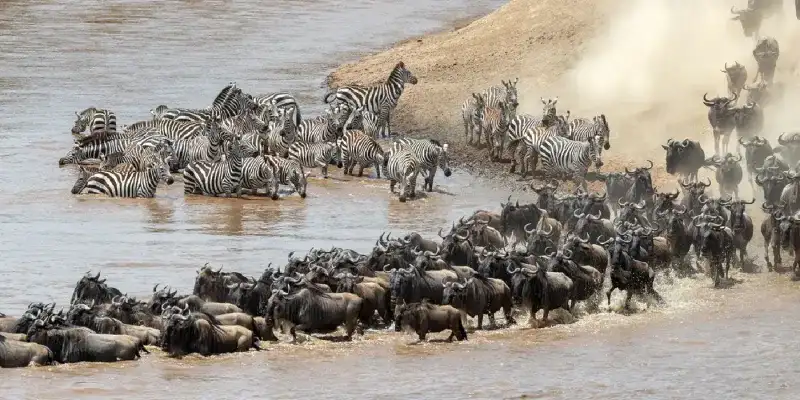
The migration reaches the Maasai Mara at different times each year, with crossings generally occurring during the July–October period. River-crossing dates cannot be guaranteed, so travelers interested in crossings should allow several days in the Mara rather than planning around a single date.
Yes. Kenya offers safari opportunities throughout the year, although wildlife behavior, rainfall, vegetation, visitor numbers, and migration patterns vary by season.
June–October generally brings drier conditions, with cool mornings and warmer afternoons in many safari areas. Kenya also has rainy periods, particularly the long rains around March–May and shorter rains later in the year, although conditions vary by region.
Pack lightweight, neutral-colored clothing, warm layers for early-morning game drives, comfortable shoes, a hat, sunscreen, insect repellent, sunglasses, binoculars, and a light rain jacket. A small day bag and reusable water bottle are also useful.
Plan your safari around the parks and wildlife you want to see, allow extra time for early-morning game drives, prepare for cool mornings and warm afternoons, and follow your guide's instructions around wildlife. Travel-health preparation, travel insurance, and appropriate packing are also important before departure.
Routine vaccinations should be up to date before traveling. Depending on your itinerary and personal circumstances, a travel-health professional may recommend vaccines such as hepatitis A, hepatitis B, typhoid, polio, or yellow fever. CDC recommends discussing travel vaccines and medicines with a healthcare provider at least a month before your trip
Tipping is customary on safari. As a general guideline, you can budget around US$10–20 per day for your safari guide, while the appropriate amount for camp staff can vary depending on the lodge, level of service, and length of your stay.
No. A phone or basic camera can capture plenty of wildlife moments, while a telephoto or zoom lens can be useful for photographing animals at a distance. Binoculars are also helpful even if you're not a photographer.
The Maasai Mara is known for predators and the annual wildebeest migration, while Amboseli is known for elephants and views toward Mount Kilimanjaro. Lake Nakuru offers opportunities to see rhino and other wildlife. Your ideal combination depends on your travel dates and interests.
The Maasai Mara is particularly associated with big cats, diverse wildlife, and the Great Wildebeest Migration. Amboseli is particularly known for elephants and its views toward Mount Kilimanjaro. Many itineraries combine both for a broader safari experience.
Yes. Nairobi National Park can work well as an introductory or final safari experience, particularly for travelers with limited time in Nairobi. It can also be combined with a longer itinerary to the Maasai Mara, Amboseli, or other parks.
Yes. A safari can be combined with a coastal stay in destinations such as Diani Beach or the Kenyan coast, giving you time for both wildlife and relaxation.
Most safari itineraries use a private safari vehicle for road transfers between parks. Depending on the route, domestic flights can also be used to reduce long driving times.
Safari travelers should follow their guide's instructions, remain inside the vehicle unless told otherwise, and avoid approaching or feeding wildlife. Your tour operator can also advise you about local travel conditions and precautions for your specific itinerary.
Yes, Kenya is suitable for family safaris, with itineraries adapted to children's ages, interests, and comfort. Private safaris also allow more flexibility with game-drive times and daily schedules.
See how we’ve made every journey exceptional — straight from those who’ve traveled with us.
See the world through the eyes of our travelers and Get inspired by real experiences!
Explore unique stories, insider tips, and must-see spots to make the most of your visit.
Explore our curated travel blogs to Stay updated with the latest travel tips, destination guides, and insider stories!
From travel tips to destination highlights - Explore our travel guide!