
 Home
HomeWadis in Oman
Oman Wadis form a unique environmental system characterised by variety, diversity, and a wealth of natural attractions, where people have lived for thousands of years. Oman is a country with a number of wadis worth visit like Wadi Al Arbaeen, Wadi Al shab, Wadi Bani Awf, Wadi An Nakhr and more. Know More about Wadi in Oman!

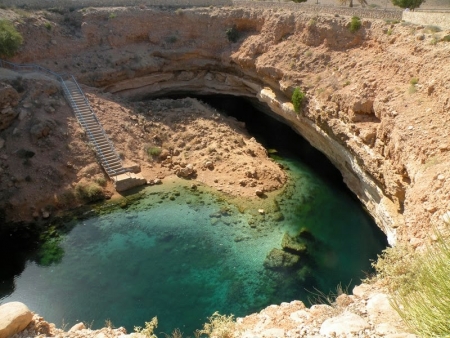
Discover Bimmah Sinkhole in Oman, a stunning natural pool with turquoise waters perfect for swimming and sightseeing.
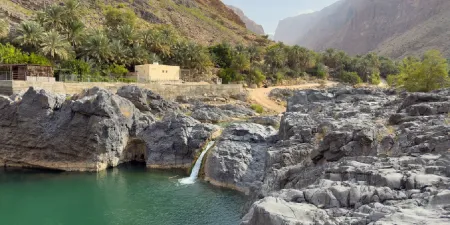
Explore Wadi Al Arbeieen, a stunning wadi known for its turquoise waters, rocky canyons, and unforgettable outdoor experiences.
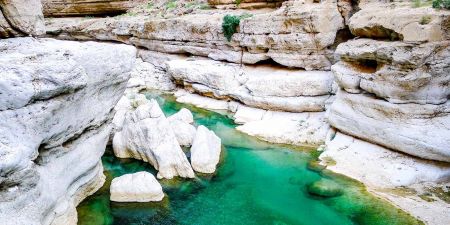
Wadi Al Hawqayn is a chance to experience a pure natural and unforgettable relaxing escape in one of Oman’s best wadis. Know more!
Being one of the best wadis in Oman, at Wadi Al Qahfi, the water flows most of the year and is distinguished by its fresh quality. Read more!
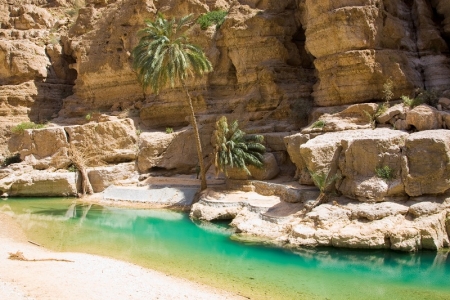
Wadi Al Khoud is one of the largest wadi basins in the Sultanate. Pools are formed in the wadi following heavy rain. Know more!

Wadi Bani Awf also spelled Wadi Bani Awf, is a large wadi that covers a large area with several villages and lots of cool attractions worth visiting. Read more!
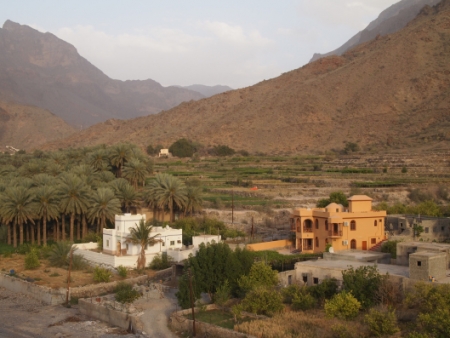
Wadi Bani Kharus is one of the best known Oman wadis.The wadi attracts visitors with its fabulous landscapes, fascinating flora and fauna, and gentle breeze. Know more!
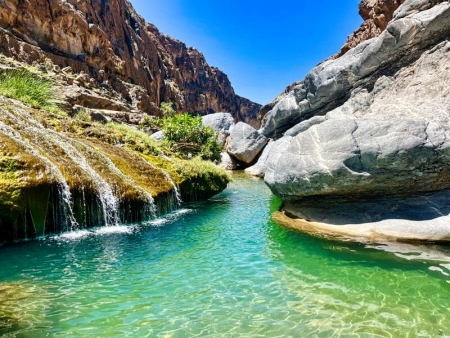
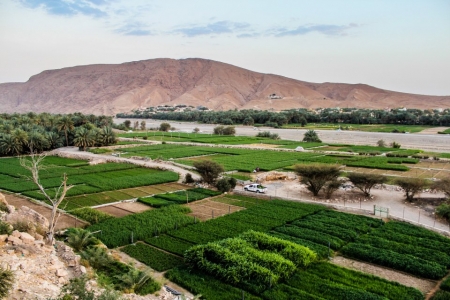
Oman is very well known for its amazing sightseeing places, caves, wadis, villages and more. Wadi Danak is one of the most spectacular wadis to visit in Oman. Read more!
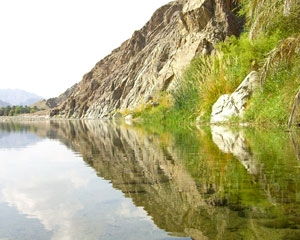
Wadi Ad Dayqah is one of the famous tourist attractions in Oman and one of the largest wadis on the Arabian Peninsula. Read more!
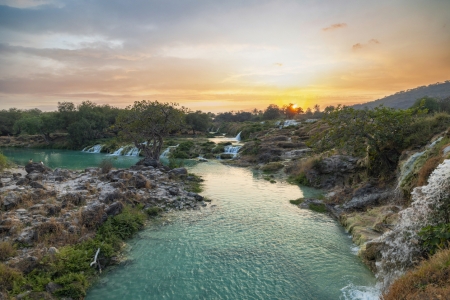
Wadi Darbat is the most beautiful and spectacular place in Salalah city and the perfect spot for mountain, nature, and spring lovers. Know more!
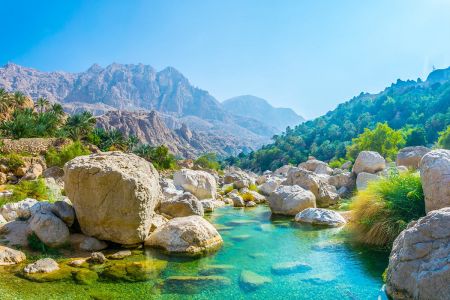
Wadi Ash Shab is one of the top highlights of Oman. The narrow canyon is home to crystal clear blue water pools and also a secret waterfall inside a cave. Read more!
Frequently Asked Questions
Got questions? We’ve got answers. Find everything you need to know to plan your perfect trip.
Since 1955, Memphis Tours has been crafting authentic, expertly guided journeys, and Oman is one of our specialties. Our local Oman-based travel experts design tailor-made itineraries that combine the country's forts, souks, wadis and deserts with the comfort and safety of a fully planned trip. We offer secure online payment with 24/7 human support, and our team handles every detail, from visa guidance to private transport, so you can focus on the experience.
Oman isn't a budget destination, but it's well worth the cost. Its blend of forts, deserts, mountains and coastline makes it a rewarding trip whether you're traveling on a modest budget or looking for a more luxurious experience.
Oman is a diverse destination combining rich history, vibrant culture and stunning natural landscapes. Cities such as Muscat and Nizwa feature ancient forts, museums and traditional souks. In Muscat, the Muscat Gate Museum offers an insight into the country’s history, while the city is also known for its seafood, lively markets and delicious Omani halwa.
Beyond the cities, Oman offers beautiful beaches, spectacular deserts and nature reserves. Visitors can enjoy desert camping, sandboarding, camel trekking, hiking, dolphin watching, turtle encounters, diving, off-roading and wadi-bashing.
For nature lovers, highlights include the deep pools of Wadi Al Arbiyeen, the year-round waters of Wadi Ad Dayqah, the blind fish of Al-Hoota Cave and the peaceful landscapes of Wadi Al Ta’iyeen.
November through mid-March is Oman's peak season, with pleasant temperatures and reliable sunshine. If you'd prefer smaller crowds and don't mind the heat, summer is an option, just plan around the midday sun for outdoor activities.
Contact one of our travel representatives, who will share the available options and help build an itinerary around your interests. We'll then send you a detailed plan covering the full itinerary. To confirm your reservation, a deposit is required; your booking is only secured once Memphis Tours receives this payment. The remaining balance is due on arrival.
The standard deposit is 25% of your total tour cost. During peak periods such as Christmas and New Year, the deposit rises to 50%.
If you pay the full cost of your trip at least six months before your arrival date, you will receive a 5% discount on the quoted tour price. Early Bird rates require full payment in advance and are non-refundable. Tours booked at the discounted rate cannot be changed to different dates or refunded.
Oman visa requirements depend on your nationality. Citizens of more than 100 countries, including the UK and many EU countries, may enter visa-free for up to 14 days, subject to conditions such as a valid passport, return ticket, accommodation, health insurance and sufficient funds.
Other travelers may need to apply for an eVisa through Oman’s official Royal Oman Police system. Some travelers holding valid visas or residence permits from countries such as the US, UK, Canada, Australia, Japan or Schengen countries may also qualify for simplified entry. Requirements and fees vary by nationality and visa type, so check your eligibility before traveling.
Oman eVisa applications are usually processed within a few working days. Travelers are advised to apply at least four days before their trip to allow time for processing or any unexpected delays.
The Omani rial is the local currency, divided into 1,000 baisa. Its value has historically been kept stable against the US dollar, tied in part to oil pricing. US dollars can be exchanged at banks and money changers (money changers often offer slightly better rates), ATMs are widely available, and major credit and debit cards are accepted throughout the country, including on Muscat airport taxis and through the Careem ride-hailing app, Oman's main on-demand taxi service. Memphis Tours doesn't add any surcharge for card payments.
Modest dress is expected, especially at religious sites, where shoulders and legs should be covered — pack a scarf for mosque visits. Cotton shirts or t-shirts paired with long pants or an ankle-length skirt work well; avoid short or body-revealing clothing, particularly for women.
You'll also see Omani men in the traditional dishdasha (a long robe) with a kumah cap, and women in colorful dresses with a matching scarf and black abaya, visitors are welcome, but not required, to wear traditional dress.
- Hiking pants
- comfortable walking or hiking shoes
- Hat and sunglasses for sun protection
- Breathable cotton or natural-fiber tops that cover the shoulders
- Scarf for mosque visits are all worth packing
Yes, Oman is regarded as one of the safest countries in the region, with low crime rates and an efficient, honest police force. The main safety consideration for visitors isn't crime but the roads: Oman has one of the highest traffic accident rates in the world, and pedestrians are rarely given the right of way, even at crossings, so extra caution is needed around traffic.
Oman is considered one of the safest countries in the Middle East for solo female travelers, with strict laws contributing to a very low crime rate.
Omanis are generally hospitable, but it's polite to ask permission before photographing someone, particularly in more traditional or rural areas.
Alcohol is available at licensed hotels and restaurants. Residents can obtain a home drinking license from the Royal Oman Police, but drinking or appearing drunk in public is an offense — so alcohol should be enjoyed in licensed venues only.
Oman is home to around 22 snake species, most of which are harmless; the cobra, vipers and sea snakes are the ones to watch for. Bites are uncommon, but it's sensible to wear proper footwear on desert and wadi hikes.
Only if you plan to self-drive; if you're joining a guided tour, private transport is arranged for you.
A week is a good starting point to see key highlights and relax a little, though the right length depends on what you want to experience, we're happy to recommend a longer itinerary if you'd like to explore more of the desert, coast and mountains.
Ramadan's dates shift each year based on the lunar calendar and last around 29–30 days; our travel advisors can confirm the exact dates for your travel window. During Ramadan, eating, drinking or smoking in public during daylight hours is discouraged out of respect for those fasting, and some restaurants adjust their daytime hours, yet no worries, our team can help you plan around this.
Arabic is the official language, but English is widely understood, especially in Muscat and other tourist areas. Due to Oman's diverse population, you'll also hear Swahili, Urdu and Hindi in some communities. Tourism professionals are well used to assisting visitors who don't speak Arabic.
Oman is home to Ibadhism, its predominant branch of Islam, alongside Sunni and Shi’a communities. Islamic traditions, including Ramadan, are an important part of daily life, so visitors should be mindful of local customs and practices.
Oman is known for its clean sea air, dramatic desert and mountain landscapes, and Muscat's atmospheric souks and seafood, don't leave without trying Omani halwa, a beloved local sweet.
Oman offers a delicious mix of traditional flavors and fresh local ingredients. During your tour, try shuwa, slow-cooked meat prepared for special occasions; majboos, a fragrant rice dish with meat or seafood; and Omani halwa, a popular sweet often served with coffee. Fresh seafood, dates and traditional Omani bread are also worth trying.
Oman's climate is consistently sunny, hot and dry, with summer temperatures reaching up to 49°C and much milder winters. Rainfall is minimal, locals joke it only rains twice a year, so pack for heat and sun rather than rain.
Oman sits on the southeastern coast of the Arabian Peninsula, bordered by the UAE, Saudi Arabia and Yemen. It covers around 309,500 sq. km, making it the 70th-largest country in the world, plenty of ground for varied landscapes, from coastline to mountains to desert.
Muscat is Oman's capital and largest city, and the seat of the Governorate of Muscat.
Oman is the oldest independent state in the Arab world. Its empire once stretched down Africa's east coast by the 18th century, and in 1970, Sultan Qaboos bin Said renamed the country from the Sultanate of Muscat and Oman to simply Oman, marking a new era of development.
Oman is the oldest independent state in the Arab world, and its official name is the Sultanate of Oman. It's home to five UNESCO World Heritage Sites, including the Bahla Fort and the ancient irrigation system known as the Aflaj. Unlike many of its Gulf neighbors, Oman has largely avoided mass high-rise development, keeping much of its historic architecture, including thousands of traditional forts and watchtowers, intact.
Nizwa Fort is one of the most visited, known for its cylindrical tower and hilltop views. Bahla Fort, a UNESCO World Heritage Site, is one of the oldest and most significant in the country. In Muscat itself, Al Jalali and Al Mirani Forts guard the harbor entrance, while Nakhal Fort is known for its dramatic mountain backdrop.
Yes, Oman has five, including the Bahla Fort, the archaeological sites of Bat, Al-Khutm and Al-Ayn, the Land of Frankincense in Dhofar, the Aflaj irrigation systems, and the ancient city of Qalhat.
Yes, Oman's mix of beaches, wildlife encounters (such as turtle watching in Ras Al Jinz) and manageable adventure activities like sandboarding and easy wadi swims make it well suited to travelers with children, alongside its low crime rate.
Oman's coastline offers excellent diving, particularly around the Daymaniyat Islands near Muscat, known for coral reefs, turtles and reef sharks. Musandam in the north, sometimes called the "Norway of Arabia," is also popular for diving and dolphin watching.
Frankincense and its burners are among Oman's most iconic souvenirs, along with Omani halwa, silver khanjar daggers, handwoven textiles, and pottery from towns like Bahla. Muscat's Mutrah Souk is one of the best places to shop for these.
Oman uses the British-style three-pin plug (Type G) and runs on 240V. If you're traveling from a country with a different plug type or voltage, bring a suitable adapter.
Oman doesn't require proof of travel insurance for entry, but we strongly recommend it, particularly given the amount of driving and outdoor activity (wadi trips, desert excursions, hiking) involved in most Oman itineraries. Insurance covering medical evacuation is worth prioritizing given the more remote areas some tours visit.
US dollars aren't used directly for purchases, but they're easy to exchange at banks, hotels and money-changer counters throughout the country, including at the airport on arrival. Money changers typically offer a slightly better rate than banks, so it's worth changing a portion of your cash there rather than relying solely on your hotel.
Muscat rewards a couple of days of exploring on its own. Highlights include the Sultan Qaboos Grand Mosque, the waterfront Al Alam Palace, Mutrah Souk for spices and handicrafts, and the Royal Opera House Muscat. The Muscat Gate Museum is a good stop for context on the city's history before heading further into the country.
Tipping isn't obligatory, but it's appreciated and increasingly common in tourist-facing businesses. A rough guide is 10% at restaurants if a service charge isn't already included, and a small tip for drivers and tour guides is a nice gesture for good service.
Within Muscat, taxis and the Careem app cover most needs, and rideshare/taxi payment by card is now available at the airport and increasingly across the city. For exploring beyond Muscat — deserts, wadis and mountain roads, a private driver or guided tour is the easiest and safest option, since many of the best sites are unmarked or require 4x4 access.
- Arabic is the official language in Oman, English is also widely spoken.
- The currency of Oman is the Omani Rial. Major credit and debit cards are widely accepted throughout the country, besides there are plenty of ATMs in Oman.
- Water is considered safe but bottled water is better just in case.
- Don’t leave Oman without some frankincense, shisha pipe, a coffee Dallah.
- Oman is a liberal place. However, it is advisable to dress modestly, when entering places of worship (shoulders to knees should be covered).
- It is offensive to take pictures of people without asking them for permission.
- Sultan Qaboos Grand Mosque is indeed grand! Explore at the second largest chandelier in the world and the huge prayer rug that took 27 months to weave.
- Take a 4WD jeep tour to discover the multicolored sand of the desert of the Wahiba Sands.
- Cruise your way past the breathtaking mountains and relax on cushions and carpets aboard a traditional Omani dhow.
- Explore the oasis of Al Hamra surrounded by the majestic Hajar Mountains.
- Indulge in the natural emerald pools of Wadi Bani Khaled.
- Enjoy Wadi Al Arbiyeen’s Al-Sharqiyah and Al-Hajar Mountains and its deep pools.
- Have a glimpse of Wadi Ad Dayqah, which is popular for its water flows year-round.
- Go on adventurous hikes or enjoy some boating Wadi Al Shab.
- Enjoy Wadi Al Ta’iyeen, an idyllic valley dotted with acacia trees and small hills.
- Enjoy watching the blind Garra Baremiae fish swim the lake within Al-Hoota cave.
- Enjoy the paintings and poetry that line the walls of Jabrin Castle.
Discover More About Oman
Explore unique stories, insider tips, and must-see spots to make the most of your visit.