
 Home
Home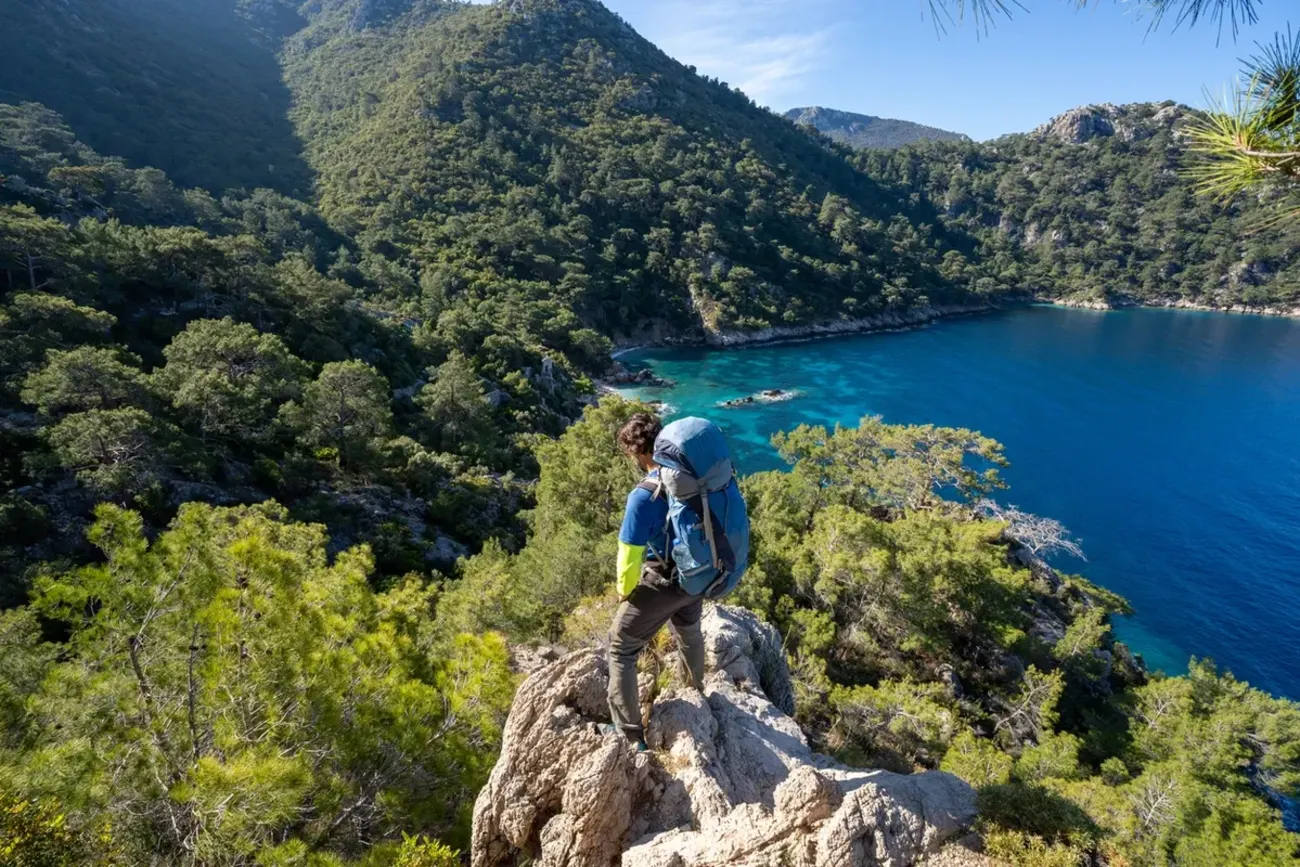
Turkey is one of the most varied trekking countries in the world, and most visitors only discover this after they arrive. A single trip can take you along a 540-kilometre coastal path above the Mediterranean, through volcanic valleys carved into soft rock, and up into glacier-fed alpine ranges near the Black Sea and the eastern borders. The trails range from gentle half-day valley walks suitable for families to demanding multi-week routes that test experienced hikers.
This guide covers Turkey's famous long-distance trails first, then the best times to walk them by region, and finishes with the surprising network of forest and city trails around Istanbul for travellers who want a nature escape without leaving the metropolis.
Check out the best Turkey Tours!
Turkey's Famous Long-Distance Trails
The Lycian Way
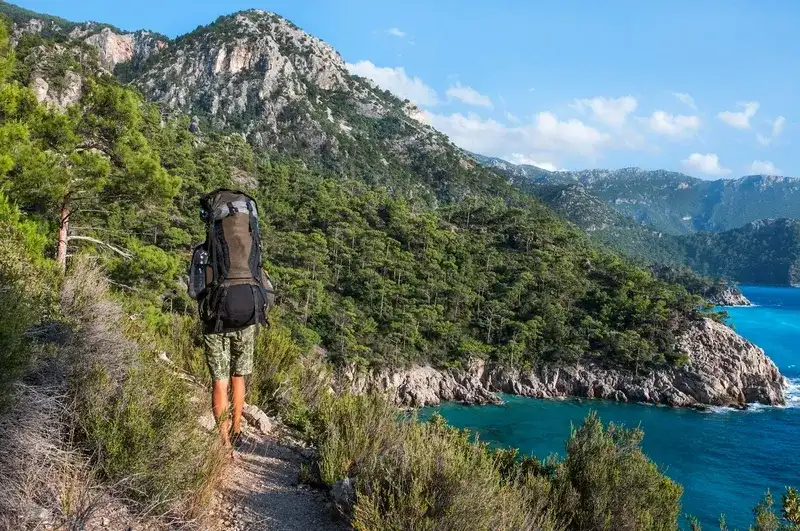
The Lycian Way is Turkey's signature trek and one of the best-known long-distance trails in the Mediterranean. It runs roughly 540 kilometres along the Teke Peninsula, from Ölüdeniz near Fethiye in the west to Geyikbayırı near Antalya in the east, tracing the coastline of the ancient region of Lycia.
You don't need to walk the whole thing. Most travellers tackle individual sections over three to ten days. Daily stages typically involve four to seven hours of walking with 200 to 600 metres of elevation change, on a mix of old mule paths, forest tracks, and rocky coastal trail. The waymarking is consistent: red-and-white painted stripes mark the route throughout.
The western sections around Fethiye, Kaş, and Patara are the most rewarding for first-timers, combining sea views, pine forest, and ruins you can walk straight through, including the Lycian rock tombs at Xanthos. Spring and autumn are the only sensible seasons here; summer heat on the exposed coastal stretches is punishing.
The St Paul Trail
For walkers who want something quieter and more demanding, the St Paul Trail runs about 500 kilometres inland, from Perge near Antalya north to Yalvaç near Lake Eğirdir. It follows part of the route the apostle Paul is believed to have travelled, climbing from the coast into the Taurus Mountains and reaching altitudes well above the Lycian Way.
This is a remote trail. Resupply points are further apart, the climbs are steeper, and some sections cross genuine wilderness, so it suits experienced trekkers who are comfortable with navigation and carrying a few days of supplies. The reward is solitude and mountain scenery that very few international visitors ever see. Like the Lycian Way, it is waymarked with red-and-white stripes.
Cappadocia Valley Walks
Cappadocia offers the gentlest trekking on this list and some of the most photogenic. Instead of a single long route, the region is a web of connected valleys you can walk in three to four hours each, with only 300 to 400 metres of elevation change.
The Rose Valley (Güllüdere) and Red Valley (Kızılçukur) are best walked in late afternoon, when the rock formations glow pink and orange at sunset. Pigeon Valley (Güvercinlik) links the towns of Uçhisar and Göreme and is dotted with the carved dovecotes that give it its name. Love Valley is famous for its tall fairy chimneys, and the Ihlara Valley to the south is a green river gorge lined with rock-cut Byzantine churches. Trails are easy to follow, but signage can be patchy, so a downloaded map is worth having.
The Kaçkar Mountains
In the northeast, between the Black Sea coast and the highlands, the Kaçkar Mountains deliver Turkey's best alpine trekking. The highest peak, Kaçkar Dağı, reaches 3,937 metres, and the range is laced with glacial lakes, summer pastures, and traditional stone villages.
This is strictly a summer destination. Snow lingers on the high passes well into June, and the season effectively runs July through early September. Conditions can change fast at altitude, so most visitors walk with a local guide or join an organised group. For anyone who has only seen Turkey's coast and cities, the green, misty Kaçkars feel like a different country entirely. The region connects naturally with mountain climbing routes for those wanting to add a summit.
Mount Ararat and the Eastern Ranges
At 5,137 metres, Mount Ararat is Turkey's highest peak and a serious mountaineering objective rather than a trek, requiring permits, acclimatisation, and a qualified guide. It belongs on the radar of experienced high-altitude walkers, alongside the wider eastern ranges, and is covered in more detail in our mountain climbing guide.
stanbul offers several beautiful hiking trails, including the Belgrad Forest Loop, Polonezköy Trail, and the Istanbul Historic Walk. These trails cater to different experience levels and provide a mix of natural beauty and cultural experiences.
The best time for trekking in Turkey depends on the region. Generally, spring (April-May) and autumn (September-October) are ideal for most trails, offering comfortable temperatures and beautiful scenery. Summer is best for Black Sea trails, while winter can be suitable for some lower-altitude routes.
Trekking typically involves longer, multi-day journeys over diverse and challenging terrain, often requiring specialized gear. Hiking, on the other hand, usually refers to shorter trips on well-maintained trails, requiring less equipment and preparation.
Best Time to Trek by Region
Timing matters more in Turkey than in many destinations, because the country spans Mediterranean, continental, and Alpine climates.
Spring, from April to May, is the prime window for the Lycian Way and Cappadocia, with comfortable temperatures of 20–25°C and wildflowers across the hills. Autumn, from September to October, is equally good for both and brings thinner crowds. Summer, from July to August, is the only time the high Black Sea and Kaçkar trails are clear of snow, but it is too hot for the exposed coastal routes. Winter suits lower-altitude walks and city trails, though high passes are closed and short daylight limits the length of longer days out.
As a rule, if you want to walk Turkey's marquee trails in comfort, aim for the shoulder seasons of late spring or early autumn.
Trekking and Hiking Near Istanbul
You don't have to leave Istanbul to find a proper trail. The city and its surroundings hold a genuine network of forest and lakeside walks, ideal if your trip is city-based or you want a green day out.
Belgrad Forest, in the northern Sarıyer district, is the most popular. This historic woodland, once a hunting ground for Byzantine emperors, covers roughly 5,400 hectares of shaded trails. The Belgrad Ormanı–Büyük Barajı loop is an easy 3.8-mile route of about 90 minutes, and most paths stay shaded even in warm weather, with picnic tables along the way.
On the Asian side, Polonezköy, the "Polish Village," offers a 9.8-kilometre forest trail of moderate difficulty, taking around 2.5 hours through woodland that turns gold in autumn. For something more challenging, Aydos Forest has loops of around 8 kilometres with 191 metres of climbing, while Emirgan Grove on the Bosphorus is best in April, when its tulip festival fills the park with colour.
A short drive beyond the city limits opens up more. Uçmakdere in Tekirdağ combines moderate trekking with sweeping sea views and is one of Turkey's best paragliding spots. Sülüklü Lake in Bolu, about three hours away, is a 16-kilometre forest walk through oak and fir. Erikli Plateau in Yalova, around 90 minutes out, rewards medium-difficulty walkers with waterfalls, a river trail, and alpine meadows; it is best from May to November.
Cultural and Historical Walks in Istanbul
Some of Istanbul's best walking is through history rather than nature. The Historical Peninsula, the heart of ancient Constantinople and a UNESCO World Heritage site, makes a compact 3.7-kilometre loop linking Topkapı Palace, Sultanahmet Square, the Blue Mosque, Hagia Sophia, and the Grand Bazaar. The walking time is under an hour, but most people spend the better part of a day with the sites.
The short walk across the Galata Bridge over the Golden Horn connects the modern city to the old peninsula and ends at Hagia Sophia, which served as a cathedral, mosque, and museum across its long history. North of there, the route from Taksim Square down İstiklal Avenue to the Galata Tower passes late-Ottoman architecture, the Flower Passage, and Saint Antoine Church, threading through the city's liveliest modern quarter.
Yes, Istanbul offers several cultural and historical walks. The Istanbul Historic Peninsula Walk takes you through UNESCO World Heritage sites, while the Galata Bridge to Hagia Sophia Loop offers a blend of historical landmarks and scenic views. The Taksim to Istiklal Street walk showcases the city's modern heart.
When selecting a trail, consider your fitness level, available time, and the season. Check the trail difficulty, elevation changes, and required gear. Also, research facilities along the way, such as restaurants or camping areas. For summer hikes, ensure you carry enough water and protect yourself from the sun.
Customize Your Dream Vacation!
Get in touch with our local experts for an unforgettable journey.
Plan Your Trip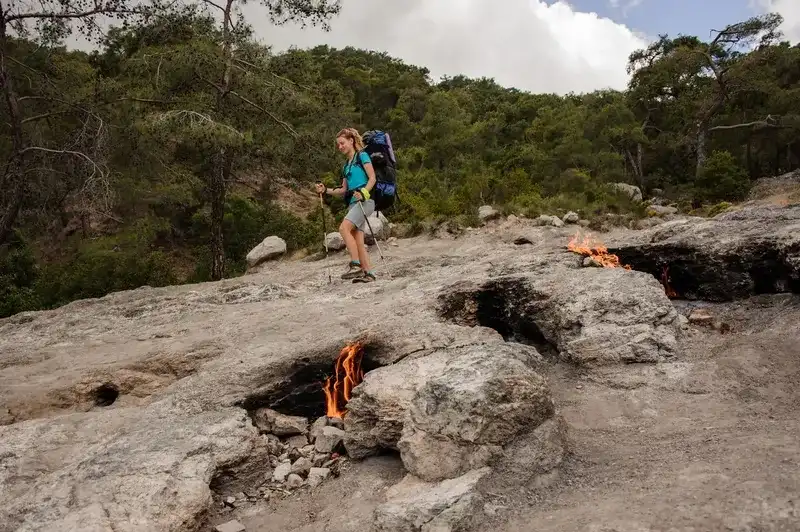
Practical Tips for Trekking in Turkey
Choose the right trail for your level. Match the route to your fitness and time. Cappadocia's valleys and Belgrad Forest suit beginners and families; the Lycian Way works in bite-sized sections; the St Paul Trail and the Kaçkars are for experienced trekkers with navigation skills.
Gear up properly. Lightweight or mid-weight boots with Vibram soles handle most Turkish trails well. Hiking poles help on the steeper, rockier stretches of the Lycian and St Paul routes. Carry at least one litre of water per person in summer, and more on exposed coastal sections.
Plan food and rest stops. Popular routes like the Lycian Way pass through villages with restaurants and pensions at regular intervals, so you can often walk without camping. Remoter trails need more self-sufficiency; check resupply points before you set out.
Decide between guided and self-guided. Waymarked trails like the Lycian Way can be walked independently, but a guide adds local knowledge, handles logistics, and is strongly recommended for the Kaçkars and Ararat. If you'd rather have the route, transfers, and accommodation arranged for you, our team can build a trekking itinerary around your dates and fitness level.
Photograph in the right light. Early morning and late afternoon give the best light and the fewest crowds, especially in Cappadocia's valleys, where the rock changes colour at sunset.


Explore Turkey's stunning landscapes with trekking adventures! From Cappadocia's valleys to the Lycian Way, discover scenic trails for all skill levels!
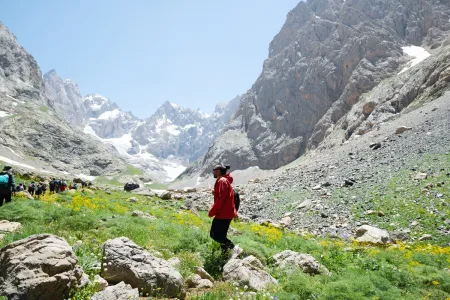
Turkey offers incredible mountain climbing experiences, from the legendary Mount Ararat to the rugged Kaçkar Mountains, catering to adventurers of all skill levels!
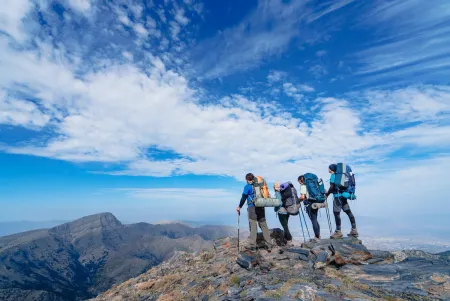
Discover Turkey's best rock climbing, from Geyikbayırı's tufas to Olympos and Aladağlar — routes for every level!
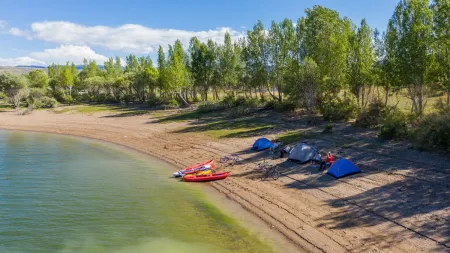
Sleep beside the sea, under the stars, or among ancient ruins — Turkey is one of the world's most varied camping destinations.
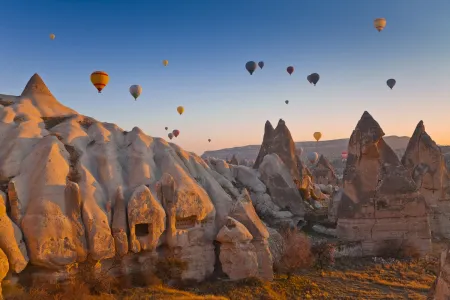
Turkey's spectacular caves—from the ancient depths of Dim Cave to the underground wonders of Cappadocia—offer thrilling speleology adventures for both beginners and expert cavers!
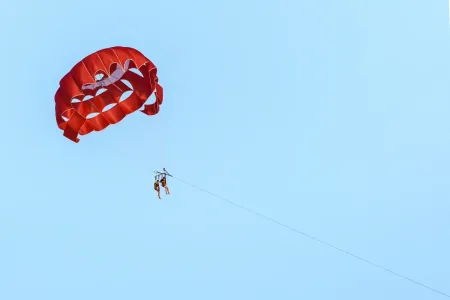
Experience the thrill of parachuting in Turkey! Soar over stunning landscapes in Ölüdeniz, Pamukkale & more. Tandem jumps for beginners & pros. Read now!