
 Home
HomeTrabzon in Turkey: Pearl of the Black Sea
Trabzon Province covers approximately 4,685 km² and borders Rize to the east, Gümüşhane and Bayburt to the south, and Giresun to the west. The city sits at roughly 41°N, 39°E on the eastern Black Sea coast.
Trabzon (historically known as Trebizond or Trapezus) is a historic port city situated on Turkey's northeastern Black Sea coast, nestled between the rugged Pontic Mountains to the south and the vast expanse of the Black Sea to the north. The capital of Trabzon Province, it is home to approximately 800,000 people and stands as the largest city in the Eastern Black Sea region. Despite its rich historical pedigree and remarkable natural beauty, Trabzon remains one of Turkey's best-kept secrets — a destination that rewards those who venture beyond the well-worn tourist trails of Istanbul and the Aegean coast.
Geography and Climate
Trabzon occupies a narrow coastal strip compressed between mountains and sea, giving the city a dramatic, layered topography unlike most Turkish cities. The heart of the old town sits on a triangular plateau flanked by two deep ravines — a natural defensive formation that attracted settlers for millennia. The Roman-built harbour lies at the base of this plateau, and much of the medieval city's layout persists in its modern street plan.
The surrounding landscape is extraordinarily lush. Thanks to heavy Black Sea rainfall and a humid subtropical climate, the Pontic Mountains are blanketed in dense mixed forests, tea gardens, and hazelnut orchards. This is not the sun-baked Anatolian plateau most people associate with Turkey — Trabzon is green, misty, and cool, more reminiscent of Georgia or the Caucasus than the Mediterranean. Summers are warm and humid rather than scorching, while winters are mild along the coast but snowbound in the highlands. The region's high-altitude plateaus, known locally as yaylas, burst into wildflower colour each summer and have been gathering places for local communities for centuries.
The city is connected to the rest of Turkey by the coastal highway running east–west along the Black Sea, by Trabzon Airport (TZX) receiving frequent flights from Istanbul, Ankara, and other major cities, and by a network of mountain roads threading up into the highlands.
A City Built on Three Thousand Years of History
Few cities in Turkey — or indeed in the world — can claim a continuous inhabited history as long and as layered as Trabzon's. Its story begins not with the Ottomans or the Byzantines, but with ancient Greek colonists who arrived on these shores in the 8th century BC.
The Greek and Roman Era
The city was founded as Trapezus, a name derived from the Greek word for "table," describing the flat-topped ridge on which it stood. It was established as a colony of Miletus and quickly grew into a prosperous trading port. Trapezus sat at a pivotal point on the ancient Silk Road, where goods flowing from Persia, Central Asia, and the Caucasus met the sea routes of the Black Sea and, beyond them, the Mediterranean world. The Greek historian Xenophon famously celebrated when his Ten Thousand mercenaries sighted the sea from the mountains above Trapezus in 401 BC, ending their long march from Persia — an episode recounted in his Anabasis.
Under Roman rule, Trapezus became an important military and commercial port. The remains of the Roman-era harbour are still visible today at the base of the old city plateau.
The Empire of Trebizond (1204–1461)
Trabzon's most celebrated historical chapter began in 1204, when the sack of Constantinople by the Fourth Crusade shattered the Byzantine Empire into several successor states. Two Byzantine princes, Alexios and David Komnenos, fled east and, with the backing of their grandmother, the Georgian queen Tamar, established the Empire of Trebizond — an independent Greek Orthodox Christian empire centred on the city. At its height, the empire controlled a stretch of the Black Sea coast and cultivated a sophisticated court culture, producing remarkable Byzantine art and architecture.
The Empire of Trebizond endured for over 250 years — longer than many empires — and was the last surviving Byzantine state. It finally fell in 1461, eight years after the fall of Constantinople itself, when Ottoman Sultan Mehmed II marched east and took the city without significant resistance. The last emperor, David Komnenos, surrendered peacefully and was later executed in Istanbul along with his sons.
Ottoman and Modern Era
Under Ottoman rule, Trabzon flourished once again as a trading hub. The city served as the endpoint of caravan routes from Persia and as the main port for goods flowing in and out of Anatolia's interior. It was during this period that many of the bazaars, mosques, and hans (caravanserais) that still define the old city were built.
In the 19th century, Trabzon was one of the most cosmopolitan cities on the Black Sea, home to significant Greek, Armenian, and Jewish communities alongside the Turkish Muslim majority. The population transfers and tragedies of the early 20th century — including the First World War, the Greco-Turkish population exchange of 1923, and the establishment of the Turkish Republic — fundamentally reshaped the city's demographic character. Today, the population is predominantly Turkish, with Laz and Hemşin communities contributing significantly to its cultural identity.
Spring (April to June) and early autumn (September to October) are the most comfortable seasons. The weather is mild, the mountain landscapes are at their most vivid, and tourist crowds are manageable. Summers are warm and humid but rarely oppressive, and the highland yaylas offer cool refuge. Winter brings snow to the mountains, making the area attractive for skiing enthusiasts, while the city coast remains mild. Trabzon is genuinely worth visiting in any season — the rain that many tourists fear is exactly what keeps the landscape so breathtakingly green.
The quickest option is by air. Trabzon Airport (TZX) receives multiple daily direct flights from Istanbul's Sabiha Gökçen and Istanbul Airport, with flight times of approximately 1 hour and 45 minutes. Budget carriers, including Pegasus Airlines and Turkish Airlines, operate the route competitively, making fares generally affordable. Long-distance buses from Istanbul's main bus terminals take approximately 18 to 20 hours along the coastal highway — a scenic but demanding journey. Renting a car and driving along the Black Sea coastal road from Samsun westward is an excellent option if you want to take in the full sweep of the region.
Customize Your Dream Vacation!
Get in touch with our local experts for an unforgettable journey.
Plan Your Trip
Landmarks and Attractions
Sumela Monastery
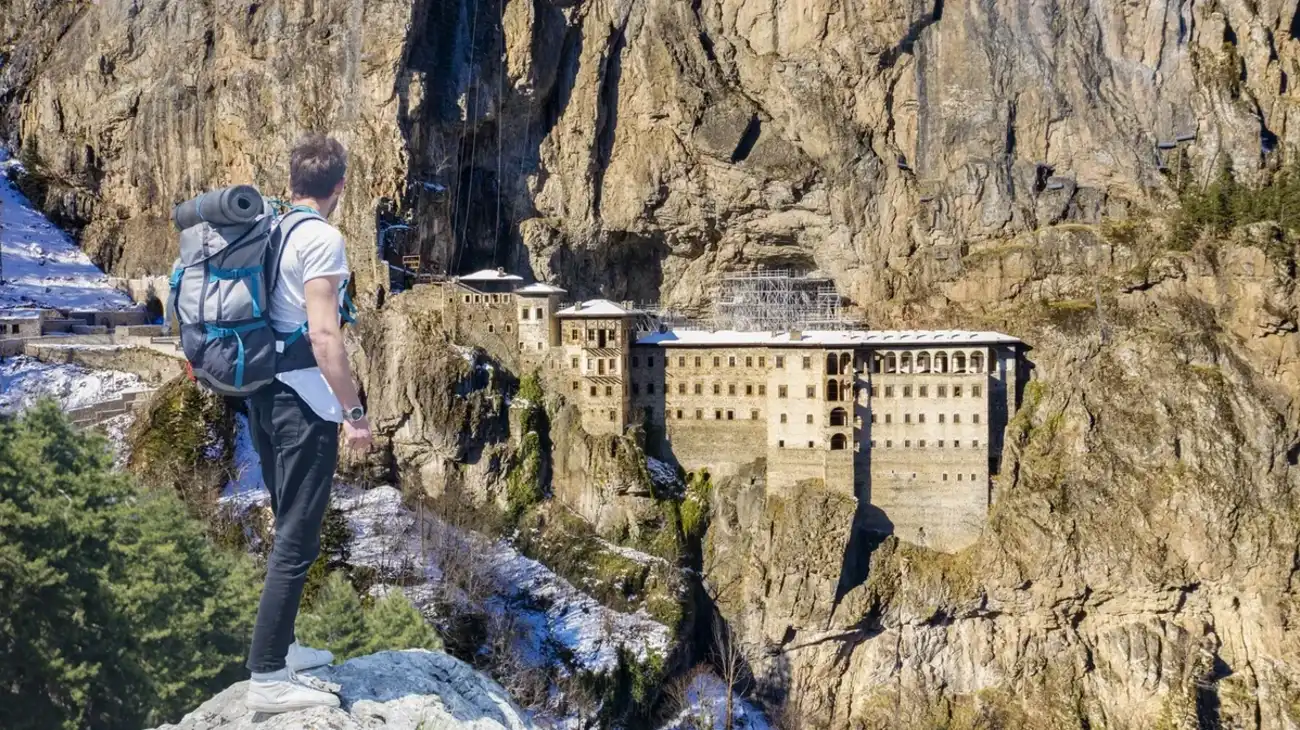
No visit to Trabzon is complete without making the journey to the Sumela Monastery, one of the most extraordinary religious sites in the entire Middle East region. Located approximately 47 kilometres south of the city in the Altındere Valley, the monastery clings to a near-vertical cliff face at an altitude of 1,200 metres above sea level, surrounded by dense forest.
Founded in the 4th century AD by two Athenian monks, Barnabas and Sophronios, who claimed to have received a vision of the Virgin Mary, Sumela was dedicated to her and became one of the most important pilgrimage sites of the Orthodox Christian world. Over the centuries, it was expanded and rebuilt many times, accumulating layer upon layer of frescoes, chapels, and monastic cells carved directly into the rock. The frescoes — vivid scenes from the Bible and the lives of saints — are particularly remarkable, painted across the walls of the main church and rock-face chapels in brilliant reds, blues, and golds.
The monastery was abandoned in 1923 during the Greek-Turkish population exchange, and its sacred icon of the Virgin — believed to have been painted by Saint Luke himself — was smuggled out and taken to Greece, where it now resides in a monastery near Veria. Sumela underwent extensive restoration in the early 2000s and reopened to visitors in 2020. It draws pilgrims, hikers, and history lovers in equal measure.
Hagia Sophia of Trabzon
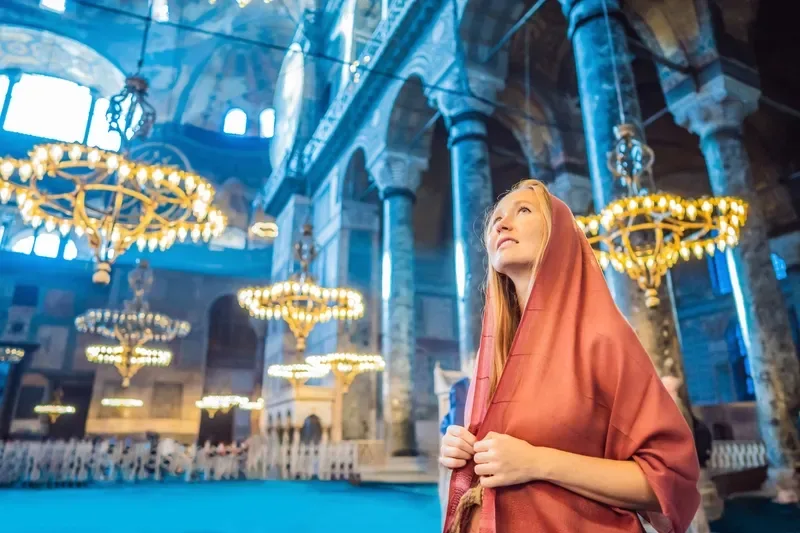
Not to be confused with its more famous namesake in Istanbul, the Hagia Sophia of Trabzon is a magnificent 13th-century Byzantine church built during the reign of the Trebizond emperors. Situated on a promontory overlooking the Black Sea, it is considered one of the finest surviving examples of late Byzantine architecture in the world.
The church's interior is adorned with exceptional frescoes — remarkably well-preserved scenes of the Last Supper, the Annunciation, and the life of Christ — that offer a direct window into the artistic achievement of the Trebizond court. The building was converted to a mosque after the Ottoman conquest, then served as a museum for much of the 20th century, and was reconverted to an active mosque in 2013. Visitors are welcome outside of prayer times.
Atatürk Pavilion
Built in 1890 as a summer residence for a wealthy Greek merchant named Konstantinos Kabayannopoulos, the Atatürk Pavilion (Atatürk Köşkü) is a graceful three-storey mansion set in wooded grounds above the city. It later passed into the hands of a local banking family, who donated it to Mustafa Kemal Atatürk — founder of the Turkish Republic — during his visits to Trabzon in 1924 and 1937. Atatürk slept in the house on both occasions, and the guest bedroom, personal effects, correspondence, and period furnishings are preserved exactly as they were. The pavilion today operates as a museum and is surrounded by pleasant gardens offering views over the city.
Uzungöl
Roughly 99 kilometres southeast of Trabzon, Uzungöl ("Long Lake") is a glacially formed lake nestled in a valley beneath forested peaks. The lake's still surface mirrors the surrounding mountains and wooden village houses, creating the kind of scenery more often associated with Switzerland or Norway than the Middle East. It has become one of Turkey's most photographed natural landscapes, particularly popular with Arab tourists who arrive in large numbers during summer. Despite its growing fame, the surrounding highland villages retain much of their traditional character, and the area is excellent for walking, hiking, and simply sitting with a glass of tea at one of the lakeside cafés.
The Old City, Bazaars, and Walls of Trabzon
The historic core of Trabzon rewards unhurried exploration on foot. The Walls of Trabzon — ancient Roman fortifications expanded during the Byzantine and Ottoman periods — still largely encircle the old city, and walking along their battlements gives a sense of the city's original defensive geography. Within the walls, the Ortahisar Bazaar is a living, breathing market where vendors sell spices, dried fruits, local tea, handicrafts, and the famous Trabzon butter alongside modern goods. The neighbourhood of Ortahisar also contains the Fatih Mosque, a Byzantine church converted to a mosque after 1461, and the ruins of several medieval palaces and churches from the Trebizond era.
Cuisine: The Black Sea Table
Trabzon's food culture is fascinatingly distinct from the Turkish cuisine most visitors know. The Black Sea kitchen relies heavily on corn, anchovies, butter, wild greens, and cheese — a palette shaped by the wet mountain climate rather than the sun-drenched olives and lamb of the Aegean and southeastern Turkey.
The undisputed king of the local table is hamsi, the small Black Sea anchovy. Trabzonlus are devoted to their hamsi with an almost religious intensity, and the fish is cooked in dozens of ways: deep-fried whole, baked in the oven with onions and herbs, stuffed into corn bread, mixed into rice pilaf, and even incorporated into a sweet dessert called hamsi tatlısı. The anchovy season runs from November to February, and the arrival of the first hamsi catch is a genuine cause for celebration.
Mısır ekmeği (corn bread) is the staple bread of the region, dense and slightly sweet, eaten at nearly every meal. Kuymak is a rich, molten dish of cornmeal cooked with butter and local cheese until it reaches a thick, stretchy fondue-like consistency — intensely satisfying on a cold mountain morning. Trabzon pidesi is the local version of the ubiquitous Turkish flatbread, shaped into a distinctive boat or pointed oval and filled with minced meat and egg. Laz böreği is a celebrated pastry filled with a thick, lightly sweetened cream custard — named for the Laz people of the eastern Black Sea. Akçaabat köftesi, from the nearby district of Akçaabat, are dense, garlic-heavy meatballs grilled over charcoal and regarded as among the finest köfte in Turkey.
The region produces approximately 70% of Turkey's hazelnuts and ranks among the largest hazelnut exporters in the world. Local sweets, chocolates, and pastry shops make extensive use of the nut, and bags of fresh hazelnuts are sold everywhere as snacks. The tea served throughout the region comes from gardens along the border with Rize province — strong, dark, and poured into the characteristic tulip-shaped glass without milk.
Turkish is the dominant language throughout the city. In rural and older communities, Lazuri and various local Black Sea dialects remain in use. English is spoken in hotels, larger restaurants, and tourist sites such as Sumela Monastery, but Trabzon is considerably less English-friendly than Istanbul or the resort towns of the Aegean and Mediterranean coasts. Learning even a handful of Turkish words and phrases — merhaba (hello), teşekkürler (thank you), kaç para (how much) — is genuinely appreciated by locals and will significantly enrich the experience of navigating markets and neighbourhood restaurants.
Start with hamsi in any form — fried anchovy with a squeeze of lemon is the essential introduction. Sit down to a proper breakfast of kuymak, the rich cornmeal and cheese dish, ideally at a local kahvaltı (breakfast) spot rather than a hotel buffet. Order the Trabzon pidesi at least once — the boat-shaped flatbread with egg and minced meat is a satisfying lunch. Try Laz böreği from a pastry shop for a uniquely regional sweet. Pick up a bag of fresh local hazelnuts from the bazaar, and always accept tea: the strong, dark Black Sea çay served in a tulip glass is not just a drink but a social ritual. Those willing to be adventurous should look for mısır ekmeği (corn bread) and the karalahana (black kale) dishes that appear in local home-cooking restaurants.
Culture, Sport, and Society
The Laz and Hemşin Communities
Trabzon's cultural identity is inseparable from the Laz people, a South Caucasian ethnic group indigenous to the eastern Black Sea coast whose language, Lazuri, belongs to the Kartvelian family alongside Georgian. While most Laz people today speak Turkish as their primary language, Lazuri is still spoken in villages and is undergoing modest cultural revival efforts. The Hemşin people, another community of Armenian origin from the highlands near Artvin and Rize, also have a significant presence in the region. Both groups contribute distinctive music, food traditions, and cultural practices that set the eastern Black Sea region apart from the rest of Turkey.
Horon: The Dance of the Black Sea
The horon is the folk dance of the eastern Black Sea, and it is unlike any other folk dance in Turkey. Performed in a tight line or circle with arms interlocked at shoulder height, dancers vibrate and tremble at extraordinary speed to the squealing, rapid-fire rhythms of the kemençe — a small, three-stringed bowed instrument held vertically on the knee. The effect is intense and almost hypnotic. Both men and women dance the horon, though in different styles, and performances at weddings, festivals, and public celebrations can last for hours.
Trabzonspor: More Than a Football Club
In Trabzon, football is a form of civic identity. Trabzonspor, founded in 1967 from a merger of local clubs, became the first non-Istanbul club to win the Turkish Süper Lig, claiming six league championships between 1976 and 1984 and breaking the dominance of Galatasaray, Fenerbahçe, and Beşiktaş. The club's success in that golden era made it a symbol of Anatolian pride and working-class defiance against the Istanbul elite — a sentiment that still defines the club's passionate fanbase today. The claret-and-blue colours of Trabzonspor are visible throughout the city on jerseys, scarves, flags, and café walls.
Arts and Community Life
Trabzon hosts the annual Trabzon International Black Sea Theatre Festival, drawing theatre companies from across the region. Family and community ties are deeply valued; the city retains a conservative social character, particularly in rural areas, while the urban centre is lively with cafés, restaurants, and a young university population from Karadeniz Technical University, one of Turkey's major research institutions. The seaside promenade is a favourite gathering place, particularly in the evenings, when families stroll, vendors sell corn and chestnuts, and the lights of fishing boats flicker on the water.
Trabzon has a well-earned reputation as one of Turkey's safer and more orderly cities. Violent crime affecting tourists is rare, and the city maintains visible civic regulations, including strict rules on littering and public behaviour. Solo travellers, couples, and families generally find the locals exceptionally welcoming — the eastern Black Sea has a long tradition of hospitality towards guests. Standard travel awareness applies as in any city: keep an eye on belongings in busy market areas and use licensed taxis. The political situation in Turkey is worth monitoring through your government's travel advisory before any trip, as the broader regional context can change.


Perched between the Pontic Mountains and the Black Sea, Trabzon is Turkey's best-kept secret — a city of 3,000 years of history, cliff-hanging monasteries, emerald highland lakes, and flavours you won't find anywhere else in the country.

Turkey's unmissable value lies in the essence of the diversity of its culture and people. Every region and city has its own structured and defined character in life. Read more!
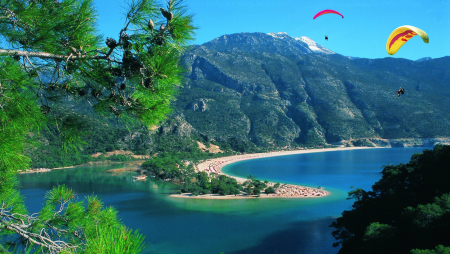
Fethiye, is a district of Muğla Province with a typical Mediterranean climate. The weather is hot and dry in the summer and mild and rainy in the winter.

Cappadocia, the "land of beautiful horses," is a mesmerizing Turkish wonderland where nature's whimsical artistry meets human ingenuity, its fairy chimneys and hidden cave dwellings whispering tales of ancient civilizations and early Christian refugees who found sanctuary in its embrace.

Perched atop the majestic eastern Taurus mountains, Mount Nemrut stands as a breathtaking testament to the grandeur of the ancient Kingdom of Commagene, its colossal statues and intricate reliefs whispering tales of bygone glory, earning it the well-deserved title of the 8th Wonder of the World.
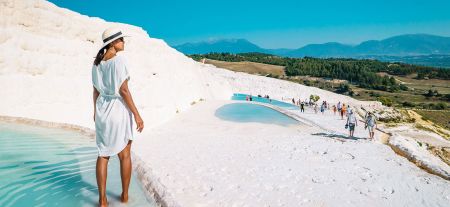
Pamukkale is a breathtaking masterpiece sculpted by Mother Nature's patient hand. It is a timeless wonder, its cascading white terraces and mineral-rich waters whispering tales of ancient civilizations and inviting modern-day dreamers to lose themselves in its ethereal beauty.
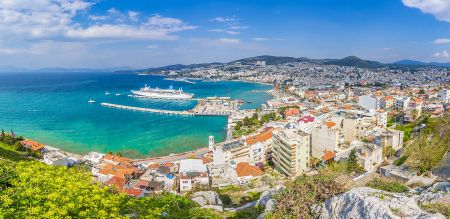
Kusadası, a sun-kissed jewel on Turkey's Aegean coast, whispers tales of ancient Ionian settlers who christened it Neopolis, weaving a rich tapestry of culture and art that has captivated hearts and minds for centuries.
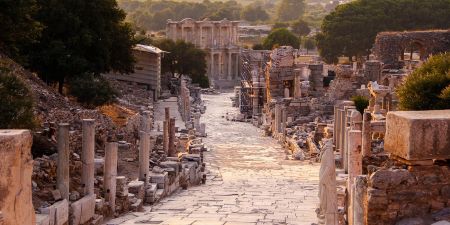
Step into the pages of history as you wander through Ephesus, an awe-inspiring ancient city where marble-paved streets whisper tales of Roman grandeur, early Christian devotion, and the enduring spirit of human ingenuity.
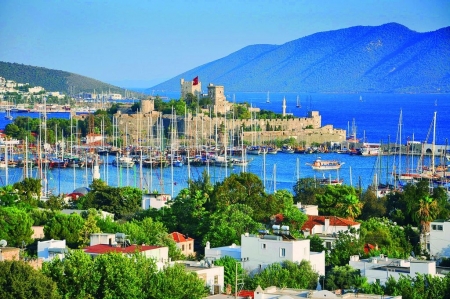
Bodrum, a sun-kissed paradise on Turkey's Aegean coast, captivates visitors with its intoxicating blend of crystal-clear waters, ancient ruins whispering tales of bygone empires, and a vibrant nightlife that pulses with Mediterranean energy, all set against a backdrop of whitewashed houses and swaying palm trees.
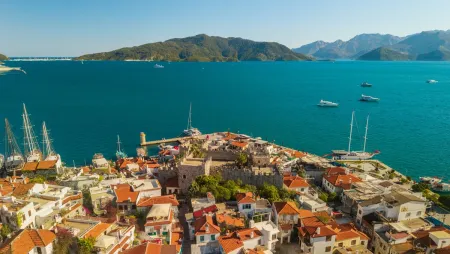
Marmaris, a jewel nestled between ancient history and nature's embrace, dazzles visitors with its pine-fringed shores, azure waters, and a marina that sparkles like a crown jewel in this timeless Turkish paradise!
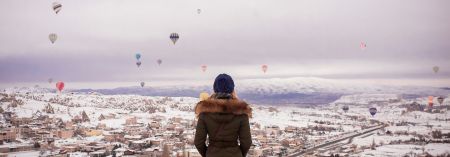
Located on the Mediterranean coast, Antalya is a wonderful city with a wealth of things for you to see and do. Whether you come for the lovely beaches or the magical waterfalls. Be ready to get all the information you need.

Troy is an ancient city in the heart of nature in the province of Çanakkale, northwestern Turkey. Troy is one of the richest cities of ancient times. It was made famous in Homer’s epic poem.
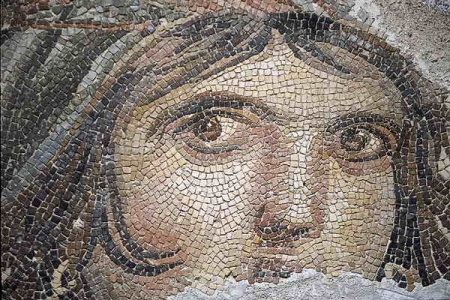
Zeugma in Turkey: A mesmerizing mosaic of history unfolds along the Euphrates, where the enigmatic "Gypsy Girl" gazes through millennia, inviting you to lose yourself in the whispered tales of a once-mighty Roman city, its vibrant legacy etched in stone and color!
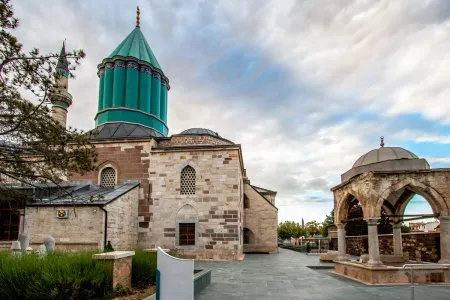
What are the best things to try and do in Konya? Discover these best attractions, sightseeing places, fun activities, and other hand-picked places to go to in Konya on your next weekend.
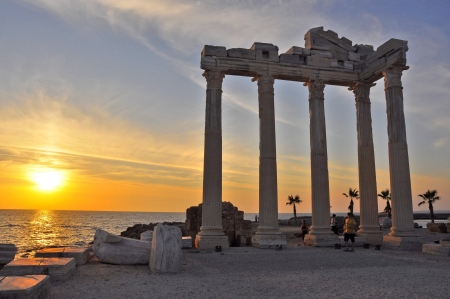
Side, Antalya's hidden gem, whispers tales of ancient glory while embracing sun-seekers with its irresistible Mediterranean charm, a timeless paradise where history and holiday dreams intertwine!
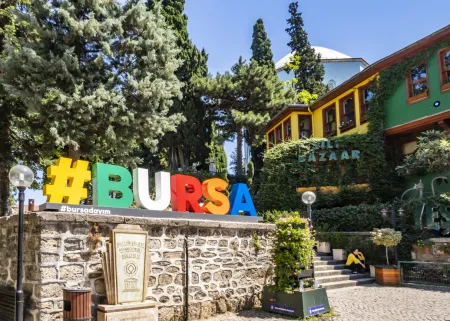
Curious holidaymakers are always pleased with the range of places to visit in Bursa. Standing in a place of its own, Bursa has risen in the ranks to become Turkey’s must-see destination. Western holiday package companies are yet to venture into the area.
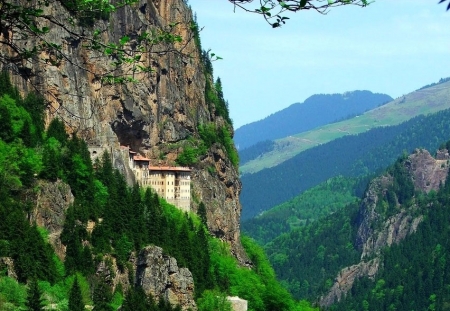
Explore the historic Sumela Monastery Turkey, perched on a cliff in Trabzon, offering stunning views and a deep dive into Turkey's rich heritage. Read More!

Originally named Cyssus, the area became Çeşme for its cold, refreshing water sources—discover its fascinating history!

Discover Dalaman, Turkey’s gateway to the Turquoise Coast, known for its stunning beaches, lush landscapes, and proximity to iconic destinations like Marmaris and Fethiye. Read More!
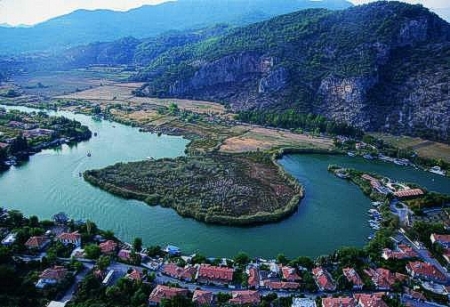
Dalyan is a unique seaside resort. Home to Caretta Caretta turtles. Features ancient Kaunos. Famous for delicious fish. Perfect for nature and history lovers. Read More!