 Home
Home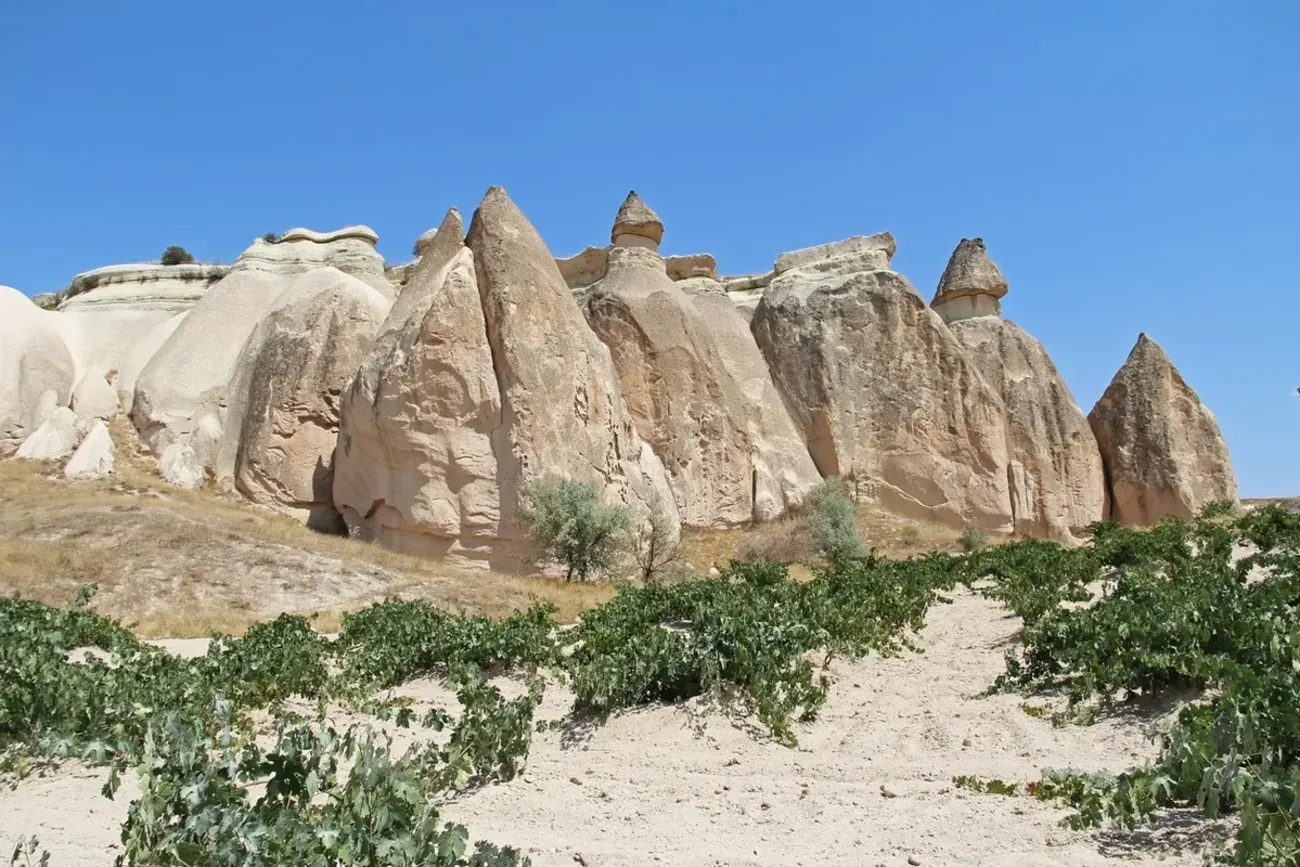
Paşabağı — pronounced roughly PAH-shah-bah and written variously as Pasabagi, Paşabağı, or Paşabağları — is one of the most extraordinary natural and historical sites in Cappadocia, the UNESCO World Heritage region of central Turkey. Known internationally as Monks Valley and occasionally as Hermits' Valley, the site is located in Nevşehir Province, approximately 6 kilometres from the town of Göreme and about 2 kilometres from the village of Çavuşin, on the road heading toward Zelve and Avanos. It sits within the Göreme National Park and the Rock Sites of Cappadocia, a UNESCO World Heritage Site inscribed in 1985.
The valley is famous above all for its exceptional fairy chimneys — the tall, cone-shaped volcanic rock formations capped by harder basalt that give Cappadocia its unmistakable, almost alien appearance. What sets Paşabağı apart from every other fairy chimney valley in the region is the remarkable prevalence of double- and triple-headed chimneys: pillars of pale tuff topped not by a single dark cap but by two or three separate basalt crowns clustered or balanced on the same slender column. These multi-headed formations are unique even by Cappadocian standards, and they make the valley's skyline genuinely unlike anything else on earth.
Beyond its geology, Paşabağı carries deep layers of human history. For centuries during the Byzantine period, Christian hermits and monks carved their cells, chapels, and dwellings directly into the soft volcanic rock of the fairy chimneys, living in remarkable isolation high above the valley floor. The most significant of these carved spaces is a chapel and hermitage dedicated to Saint Simeon, still visible inside one of the valley's towering triple-headed pillars. It is this monastic heritage that gives the valley its better-known English name, and which adds a dimension of spiritual and historical weight to what might otherwise be viewed as purely geological spectacle.
Paşabağı is a Turkish compound word meaning "the Pasha's vineyard." Paşa was a high-ranking Ottoman military and administrative title, equivalent roughly to a general, and bağ means vineyard — a reference to the agricultural land surrounding the rock formations, which has been planted with vines since antiquity and is still partly vineyard today. The name was applied after the departure of the Byzantine Greek Christian population in the early 20th century. The alternative name Monks Valley is the English-language name coined by early Western tourists who discovered the cave dwellings and chapels carved into the fairy chimneys and learned from locals that they had served as monastic retreats during the Byzantine period — since monasteries have monks, the valley became Monks Valley. Locals have always used Paşabağı; guidebooks generally use both names interchangeably.
Saint Simeon was an early Christian ascetic monk whose precise identity is somewhat layered by time. The hermits of Paşabağı drew their spiritual inspiration in part from Simeon Stylites, the 5th-century Syrian ascetic who became famous for living atop increasingly tall columns near Aleppo as a form of extreme devotional separation from the world. His example inspired many followers across the Byzantine world to seek similarly radical isolation. A monk named Saint Simeon is associated with the Cappadocian valley. He is said to have lived inside one of the tallest fairy chimneys at Paşabağı for fifteen years, descending only to collect the food and water left by followers. Inside one of the valley's prominent triple-headed chimneys, visitors can see the chapel dedicated to his memory — a carved worship space with an altar niche, antithetical crosses at the entrance, traces of early frescoes, upper living quarters, cleverly carved ventilation holes, and small windows looking out over the valley. The chapel is currently secured with a locked gate for conservation and safety reasons, but can be viewed closely from outside.
The Name: Pasha's Vineyard
The Turkish name Paşabağı literally means "the Pasha's vineyard." Paşa (pasha) was a high-ranking title in the Ottoman military and administrative hierarchy, roughly equivalent to a general or governor, and bağ means vineyard. The name the site received after the Byzantine Greek population left the region — which is located in the middle of a vineyard — referred to an important local Ottoman officer who once held the surrounding agricultural land. As you wander through Paşabağı, vineyards are still visible in the surrounding landscape, a living echo of the name.
The alternative name, Monks Valley — used predominantly in English-language guidebooks and travel literature — was coined by early Western tourists exploring Cappadocia who discovered the cave dwellings carved into the fairy chimneys and learned from locals that they had served as monastic refuges. Since monasteries have monks, the area became Monks Valley to foreign visitors, though locals have always called it Paşabağı.
Geology: How the Fairy Chimneys Formed
To understand Paşabağı is first to understand how Cappadocia's extraordinary landscape came to be, and that story begins tens of millions of years ago with fire.
Roughly 60 million years ago, three great volcanoes dominated the central Anatolian plateau: Mount Erciyes (Erciyesdağ), Mount Hasan (Hasandağ), and Mount Güllü Dağ. Over millions of years, these volcanoes erupted repeatedly, blanketing the surrounding region with immense quantities of lava, ash, pumice, and ignimbrite — the superheated flows of ash and gas that pour from volcanic vents. This volcanic material accumulated in deep layers across the plateau, eventually solidifying into tuff (also spelled tufa), a soft, porous, and relatively easily eroded rock that would become the raw material for Cappadocia's entire human and geological story.
On top of the tuff, later volcanic activity deposited a harder, denser cap of basalt — a dark igneous rock far more resistant to erosion than the tuff beneath it. This layering of a soft material beneath a hard one set the stage for everything that followed.
Over millions of years, the forces of erosion — wind, rain, the freeze-thaw cycles of Anatolian winters, and the cutting action of rivers — slowly wore away the tuff. Wherever a fragment of harder basalt sat on the surface, it acted as an umbrella or shield, protecting the soft tuff directly beneath it from erosion while the surrounding material was worn away. The result was the gradual emergence of tall, narrow pillars of tuff, each one protected at its top by the dark basalt cap that had saved it. These are the fairy chimneys — known in Turkish as peri bacaları, meaning "chimneys of the fairies." The geological term for such formations is hoodoo.
What makes Paşabağı's chimneys uniquely dramatic is the multi-headed formations. The valley's mushroom-capped rock pillars rise 10 to 15 metres above a sandy floor, some crowned with two or even three separate basalt caps balanced on a single column. Geologists attribute this to variations in the thickness and hardness of overlying basalt layers: where basalt fragments of different sizes sat close together on the same pillar of tuff, each protected its own section of the column beneath, resulting in a chimney that develops multiple shoulders and crowns as erosion proceeds. This process requires an exceptionally precise and unusual combination of volcanic layering, and it explains why these double and triple formations are found in such concentration at Paşabağı and almost nowhere else in the world.
The erosion process that created the fairy chimneys is continuous. Wind whipping through the valley and seasonal floodwaters still slowly wear away the tuff, gradually changing the shape of every formation. In geological time, all of Cappadocia's fairy chimneys are temporary.
Human History: From Hittites to Hermits
The human story of the Cappadocia region stretches back to the Hittites, the Indo-European civilization that dominated Anatolia from around 1800 BC. They were among the first to discover what remains one of the volcanic tuff's most useful properties: it is soft enough to be carved with basic tools, yet strong enough to hold its shape indefinitely as rooms, tunnels, and even entire underground cities. The Hittites were followed by the Phrygians, who established a kingdom in the region in the 8th century BC and left behind impressive rock-cut tombs and temples. After them came the Persians, then Alexander the Great's successors, and then Rome.
By the time Cappadocia fell within the Roman Empire's reach, the region had already become something of a refuge for those seeking distance from the political centres of the ancient world. The soft volcanic landscape offered an extraordinary combination of natural shelter and agricultural fertility — the same volcanic soil that produces the area's famous wine grapes also supports wheat, fruit orchards, and the vineyards that gave Paşabağı its name.
Early Christianity and the Monastic Impulse
It was during the Roman and early Byzantine periods that Paşabağı's most historically significant chapter began. As Christianity spread through the Roman Empire during the 1st and 2nd centuries AD, Cappadocia became an important centre of the new faith. Saint Paul passed through the region on his missionary journeys, and by the 4th century, the area had produced some of the most influential theologians of early Christianity — most notably the Cappadocian Fathers: Basil of Caesarea, Gregory of Nyssa, and Gregory the Theologian, whose arguments shaped the theology of the Trinity that remains central to Christian doctrine.
By the 4th century, much of the area was occupied by monks who carved their homes directly into the fairy chimneys' soft volcanic walls. The impulse driving these men and women into the remote valleys of Cappadocia was the monastic ideal of withdrawal from the world — the pursuit of spiritual purity through solitude, physical hardship, and ceaseless prayer. The fairy chimneys offered something no monastery built on flat ground could easily replicate: natural isolation. A dwelling carved ten or fifteen metres above the valley floor, accessible only by a rope ladder or carved handholds in the rock face, placed its occupant effectively beyond the reach of the everyday world. The narrow entrances were easy to seal or defend, the elevation provided safety, and the soft tuff was warm in winter and cool in summer.
Hermits hollowed the chimneys from the bottom to the top, creating rooms that could be up to 15 metres high. They carved ovens for cooking, niches for sleeping, ventilation holes to circulate air, and small windows that admitted light and views of the valley below. Most came down only to collect the offerings of food and water that followers brought to them. The number of hermits who eventually settled in and around Paşabağı during the Byzantine period is what gave the valley the name by which most of the world now knows it.
Saint Simeon and the Hermitage Chapel
The most famous figure associated with Paşabağı is Saint Simeon — though there is some nuance to exactly which Saint Simeon, as the name was common among early Christian ascetics and the Cappadocian hermits took their spiritual inspiration partly from Simeon Stylites, the most celebrated Christian ascetic of the 5th century.
Simeon Stylites began his life of radical self-denial near Aleppo in Syria, where his growing reputation for holiness attracted such large numbers of pilgrims and supplicants that he found it impossible to maintain the solitude he craved. His solution was extraordinary: he had a column constructed, climbed it, and spent the rest of his life living on its top — first on a column two metres high, eventually progressing to one approximately fifteen metres tall. He spent around 37 years atop various columns, preaching, praying, and receiving visitors who brought offerings. His example inspired an entire school of Christian asceticism known as stylitism and countless followers across the Byzantine world.
The hermits of Cappadocia adapted the stylite model to their geological circumstances. Rather than building artificial columns to live on top of, they carved their cells into the existing fairy chimneys — achieving the same elevation and isolation by going inside the rock rather than perching on top of it. Saint Simeon himself, inspired by the Syrian stylite, is said to have lived in the Cappadocian region for a period, seeking the isolation that his fame near Aleppo had made impossible. According to tradition, he built his home 15 metres above the valley floor in one of Paşabağı's fairy chimneys, descending only to collect the offerings of food and drink left by his followers.
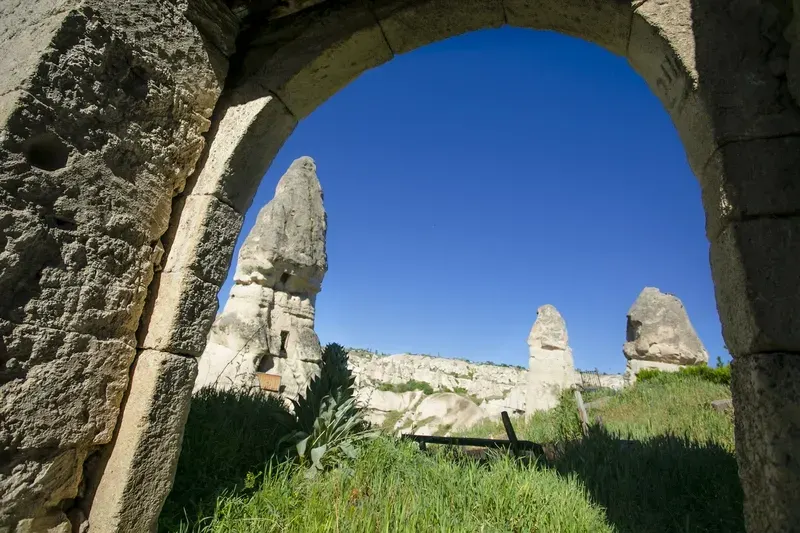
Inside one of Paşabağı's prominent triple-headed fairy chimneys, visitors can still see the Chapel of Saint Simeon: a small carved worship space with a niche for an altar, antithetical crosses decorating the entrance, and traces of early frescoes on its walls. Accessed via a narrow chimney entrance and carved steps — some now badly eroded — the hermitage includes upper living quarters, ventilation holes cleverly carved to circulate air through the enclosed space, and small windows looking out over the valley below. The chapel is closed off by a locked gate for safety reasons, but can be viewed through it, and gives a direct, tangible sense of the austere life its inhabitants chose.
Byzantine Period and Later History
The monastic community at Paşabağı and across Cappadocia generally flourished through the Byzantine period, from approximately the 4th century through the 12th. The region served particularly as a refuge during the Arab raids of the 7th and 8th centuries, when Christian communities retreated deeper into the valleys and underground cities of Cappadocia to escape the advancing Muslim armies. The soft volcanic rock that had always provided homes and churches now proved equally valuable as a defensive shelter, and the fairy chimneys of Paşabağı — difficult to find, easy to seal, and providing excellent lookout positions from their heights — made the valley an ideal hiding place.
In the 13th century, Cappadocia came under the control of the Seljuk Turks, and many of the area's Christian communities eventually dispersed or converted over the following centuries. The great population exchange of 1923 between Greece and Turkey finally removed the last of the Greek Orthodox Christian communities that had inhabited Cappadocia since antiquity, and it was after their departure that the site acquired its Turkish name Paşabağı — the vineyard of the pasha — referring to the Ottoman military officer who had held the surrounding agricultural land during the centuries of Islamic rule.
Spring — April through June — and early autumn — September through October — are generally the best seasons to visit, offering comfortable temperatures, clear air, and the seasonal colour of surrounding vineyards and wildflowers. Summer visits are perfectly possible, but temperatures regularly exceed 35°C and shade within the valley is minimal, so early morning visits starting at 8 AM when the site opens are strongly advisable. The site is compact: the main loop trail through the fairy chimneys and past the Saint Simeon chapel takes around 20 to 30 minutes at a comfortable pace. Most visitors spend 45 minutes to an hour. Those who explore the monk cells, climb into accessible cave dwellings, or photograph extensively may find that two hours pass quickly. Early morning visits also offer the significant practical benefit of arriving before the large organised tour groups that typically arrive mid-morning, giving a much more contemplative experience of the landscape.
Paşabağı is located on the Göreme–Avanos road, approximately 6 kilometres from Göreme and 2 kilometres from the village of Çavuşin. By car from Göreme, the drive takes about 10 minutes; there is a free car park at the site. The site is also a standard stop on virtually every organised Cappadocia day tour departing from Göreme, Ürgüp, or Nevşehir, and can be reached by minibus on the route between Göreme and Avanos. The entrance fee as of 2025–2026 is approximately 12–15 EUR for foreign visitors, and the same ticket covers the nearby Zelve Open Air Museum — making a combined visit to both excellent value and a logical pairing since the two sites are only a few kilometres apart on the same road. Other natural attractions that combine well on the same itinerary include Çavuşin village's cliff-face church of Saint John the Baptist, Devrent (Imagination) Valley for different fairy chimney formations, and Avanos — the pottery town on the Kızılırmak River — for a cultural contrast. Wear sturdy walking shoes for the uneven tuff paths, and bring water, sunscreen, and a hat regardless of the season.
Customize Your Dream Vacation!
Get in touch with our local experts for an unforgettable journey.
Plan Your Trip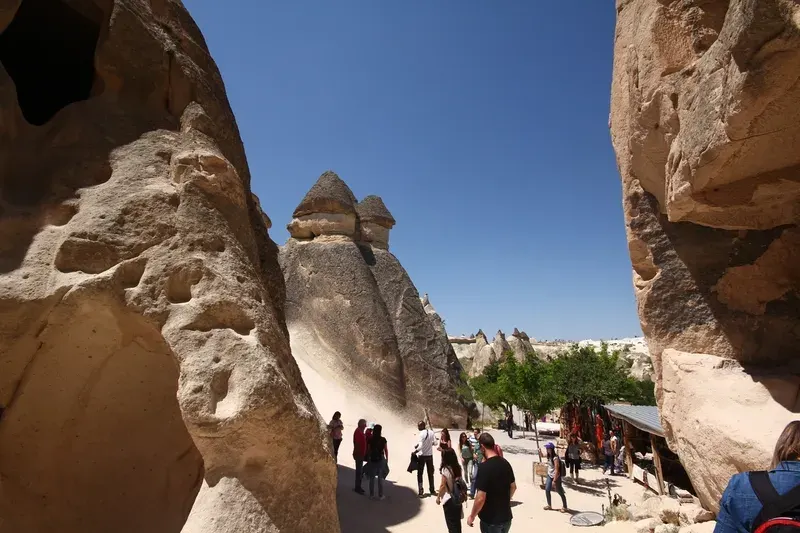
What to See at Paşabağı
The Multi-Headed Fairy Chimneys
The valley's defining visual feature is its collection of double- and triple-headed chimneys. Walking among them at close range gives a sense of their true scale that no photograph quite captures. The pale tuff stems, often patterned with horizontal striations marking the original layers of volcanic ash, rise from a sandy, ochre-coloured floor and terminate in dark, flat-topped basalt caps that overhang the column below like a cap pulled down over a head. Where two or three caps cluster on a single stem, the formation takes on an almost anthropomorphic quality — a sense that these are beings rather than rocks, standing in the valley with a peculiar patience. It is not difficult to understand why local folklore populated them with fairies.
The Chapel and Hermitage of Saint Simeon
The most historically significant structure at Paşabağı is the carved Chapel of Saint Simeon set inside one of the tallest triple-headed chimneys. A short loop trail leads from the main path to the chimney's base, providing excellent views of the valley along the way. The chapel entrance is decorated with carved crosses, and the interior preserves traces of early frescoes. Though modest in scale compared to the elaborately painted churches of the Göreme Open Air Museum, this chapel carries a different kind of weight: it is a space that was genuinely inhabited, genuinely used for worship, and genuinely isolated in a way that few places of prayer in the world have ever been. The hermitage above the chapel includes carved sleeping niches, cooking areas, and the ventilation shafts that made long-term habitation possible.
Monk Cells and Cave Dwellings
Scattered throughout the valley are numerous other carved cave dwellings, some with small doorways at ground level and others perched higher up the chimney shafts, accessible by carved footholds or rope. Some of these are open to visitors to climb into carefully, offering the unusual experience of standing inside a fairy chimney and looking out through a carved window at the surrounding landscape from a monk's perspective. The interiors are simple — carved niches, rough walls, occasionally a carved shelf or step — but the austerity itself is eloquent.
The Surrounding Vineyard Landscape
The valley does not exist in isolation. Surrounding Paşabağı, as its name implies, are vineyards — the same vines that have been grown in the volcanic Cappadocian soil since the Hittite period, producing grapes for a wine tradition that is thousands of years old and that continues today across the Nevşehir and Ürgüp regions. The juxtaposition of the otherworldly rock formations rising from terrain that also supports ordinary agriculture is one of the more quietly striking aspects of a visit to Paşabağı.
Practical Information for Visitors
Paşabağı is located on the right-hand side of the main road running between Göreme and Avanos, approximately 6 kilometres from Göreme and 2 kilometres from the village of Çavuşin, in the direction of Zelve. The site is open daily from 8 AM to 5 PM. The entrance fee for foreign visitors in 2025 and 2026 is approximately 12–15 EUR per person, and the same ticket is valid for the nearby Zelve Open Air Museum, which makes visiting both sites on the same half-day an efficient and worthwhile combination.
The site is compact and easily walkable, and most visitors complete the main loop trail in approximately 20 to 30 minutes. Those wishing to explore the monk cells, photograph extensively, or simply sit quietly in the landscape will find an hour or two well spent. The terrain is mostly sandy and uneven tuff paths — sturdy shoes are strongly recommended, as the sandstone surface can be slippery and loose underfoot. Shade within the valley is minimal, so sunscreen, water, and a hat are essential, particularly in the summer months when temperatures across Cappadocia can exceed 35°C.
The best time to visit for photography is early morning — arriving by 8 AM when the site opens allows visitors to photograph the chimneys in warm light with far fewer people present. Late afternoon also offers attractive golden light, though the valley receives less direct sun from the west as the afternoon progresses. The best times to visit are spring (April to June) and early autumn (September to October), when temperatures are comfortable, and the surrounding vineyards add seasonal colour to the landscape.
The nearest major accommodation hub is Göreme, approximately 10 minutes by car. Ürgüp and Uçhisar are also popular bases for exploring Cappadocia. The site is easily reached by car or on organised guided day tours departing from Göreme, Ürgüp, or Nevşehir, all of which typically include Paşabağı as part of a broader Cappadocia highlights itinerary.
Paşabağı in Context: Cappadocia and UNESCO
Paşabağı falls within the Göreme National Park and the Rock Sites of Cappadocia, which were inscribed as a UNESCO World Heritage Site in 1985 in recognition of both its geological uniqueness and its extraordinary cultural heritage. The UNESCO designation covers the full sweep of Cappadocia's remarkable landscape — the fairy chimneys, the underground cities, the cave churches with their Byzantine frescoes, and the rock-cut dwellings that have sheltered human communities from the Hittites to the modern era.
Conservation measures within the national park regulate visitor access to the more fragile carved spaces, limit vehicle access within the valleys, and monitor the ongoing erosion of the tuff formations. The balance between enabling tourist access — which is fundamental to the local economy — and protecting irreplaceable geological and archaeological heritage is an ongoing challenge that the Turkish authorities, UNESCO, and local communities continue to navigate.
Within the broader Cappadocian landscape, Paşabağı sits in natural proximity to several other major sites. The Zelve Open Air Museum — reachable on the same ticket — preserves an entire abandoned troglodyte village of cave dwellings, churches, and communal spaces inhabited until the 1950s. The Göreme Open Air Museum, the most heavily visited site in the region, contains rock-cut churches with some of the finest surviving Byzantine fresco painting in existence. Çavuşin village, just down the road from Paşabağı, has its own cliff-face church of Saint John the Baptist. Together, these sites form a landscape of exceptional density of historical and natural significance, and Paşabağı — often more accessible and less crowded than the Göreme Open Air Museum — holds its own as one of the genuinely unmissable points in the region.


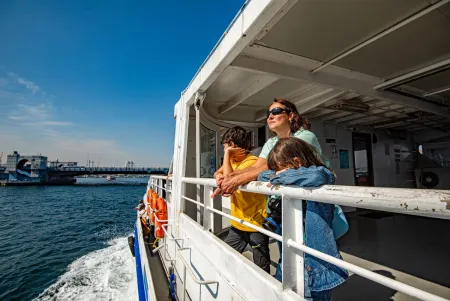
Few waterways on earth carry the weight of the Bosphorus Strait — the narrow channel that splits Istanbul between two continents and has determined the fate of empires since ancient Greece.
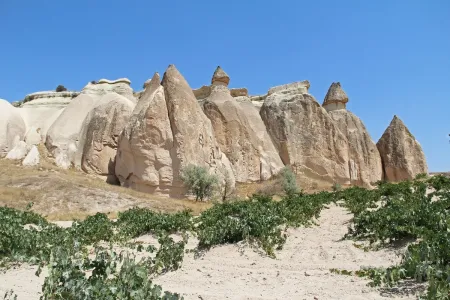
Where ancient volcanic rock meets Byzantine history, Pasabagı's iconic multi-headed fairy chimneys and carved monk dwellings make it Cappadocia's most otherworldly and unforgettable stop.
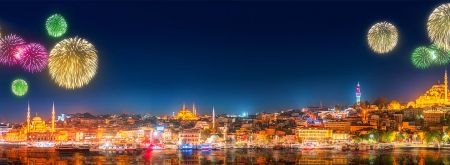
In Turkey Christmas celebrations Turkey are more sort of a ‘Do it yourself Christmas’. you may not find a crowd catering particularly to the Christmas celebrations
Dive into Istanbul Aquarium's underwater world featuring 17 thematic zones, a rainforest area & thousands of fascinating sea creatures. Read More!
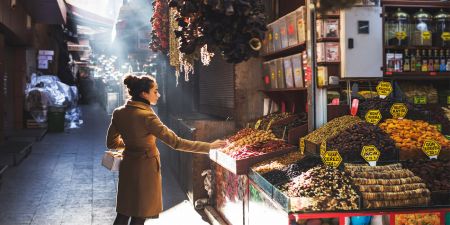
The Great bazaar attracts many people – far too many if you come at rush hour. It’s a good idea to arrive early in the morning and enjoy a cup of tea in one of the cafés whilst the bazaar comes to life. There are thousands of stalls, selling virtually everything, carpets, gold, cloth, spices. The bazaar is a world of its own and it’s easy, but fun, to get lost in the teeming alleyways.
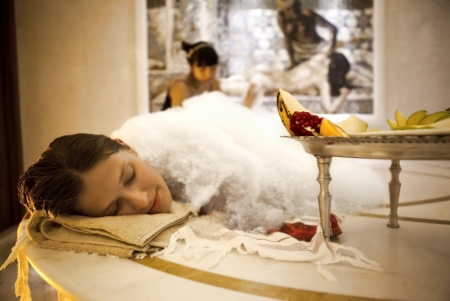
Follow Ottoman sultans' footsteps in Istanbul's historic hammams - experience authentic Turkish baths dating back centuries!
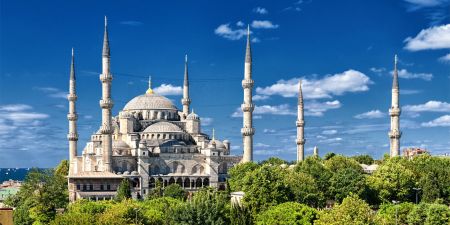
Marvel at Istanbul's iconic Blue Mosque, a masterpiece of Ottoman architecture adorned with 20,000 hand-painted İznik tiles—book your visit today to experience its celestial beauty and 400 years of Islamic heritage!

Discover Bodrum’s dual charm—ancient Halicarnassus meets turquoise shores. Plan your visit to where history and the Aegean Sea collide!
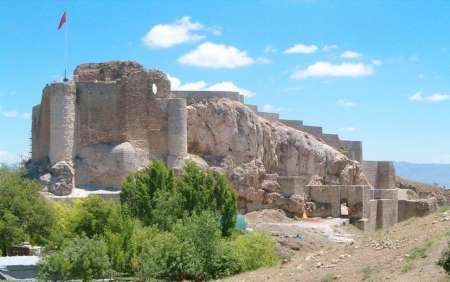
Step back in time at Harput, one of Turkey's oldest settlements, where medieval castles, ancient churches, and Ottoman mosques tell 3,000 years of history—book your cultural exploration today!
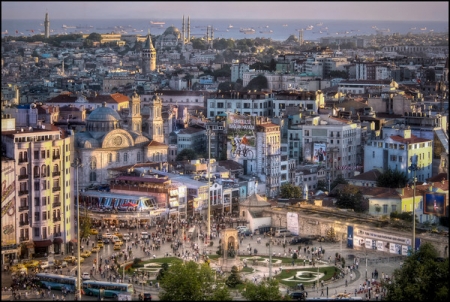
Beyoğlu, Istanbul's vibrant heart, pulses with an intoxicating blend of history and modernity, where street musicians serenade your journey through kaleidoscopic alleyways, and every step unveils a new facet of Turkey's captivating cultural mosaic!
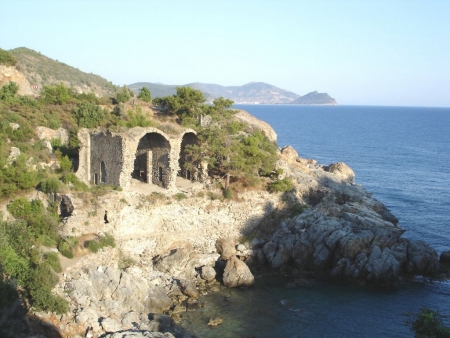
Uncover the hidden ruins of Iotape, a secluded ancient harbor city on Turkey's Mediterranean coast—book your adventure today to explore Roman temples, Byzantine churches, and breathtaking seaside vistas!

Instagram-worthy Cumalıkızık! Capture pastel Ottoman houses, flower-lined alleys & timeless charm in this living museum village!
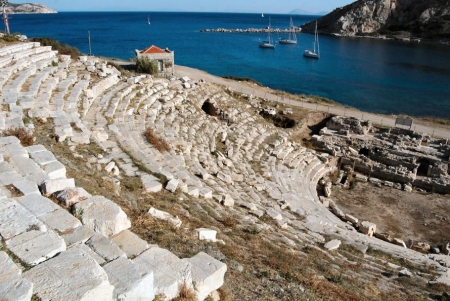
Unlock the secrets of Knidos, the ancient city where art and astronomy flourished—stand where the famed Aphrodite statue once gazed across twin harbors and explore the ruins of a civilization that shaped history. Book your archaeological adventure today!

Damlataş Cave, a stunning natural wonder in Alanya, Turkey, is famous for its ancient stalactites, stalagmites, and therapeutic microclimate, making it a must-visit for nature and history lovers. Read More!
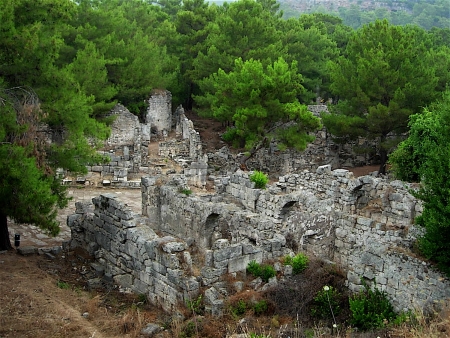
Discover the enchanting ruins of Phaselis, where ancient Lycian, Roman, and Byzantine history meets turquoise Mediterranean waters—book your visit today to explore its harbor streets, amphitheater, and shaded pine forests!
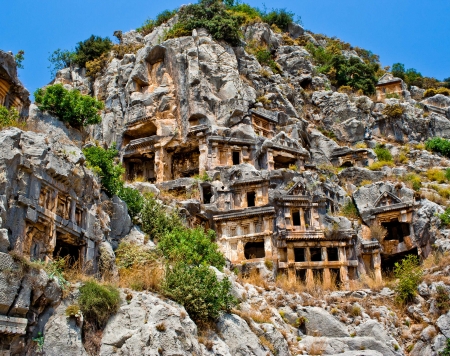
One of the most beautiful provinces of Southern Turkey, one that has survived from ancient times, the homeland of Santa Clause.
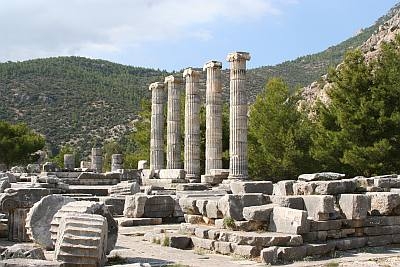
Decipher Priene's 2,300-year-old blueprints—from its democratic bouleuterion to Athena's panoramic sanctuary. Secure your expert-led tour now!
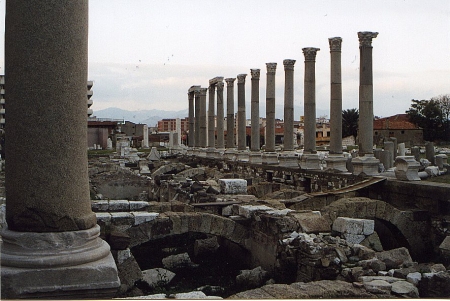
Step into 5,000 years of history at Smyrna (modern Izmir), where ancient agora ruins, Ottoman bazaars, and a vibrant waterfront tell tales of civilizations— experience Turkey's eternal gateway between East and West!
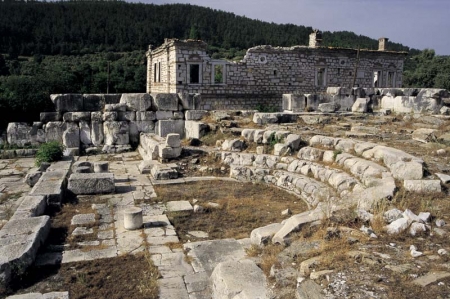
The ancient city of Stratonikeia, situated near the town of Yatağan in Aydin province, was a member state of the Khrysaor Union and was founded in the 3rd century BC. The monuments and ruins of the ancient city are still extant today and are open to visitation.
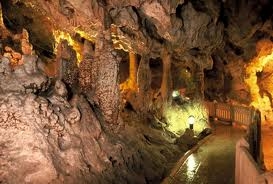
One of the most enigmatic places of the Mediterranean Region, Karain Cave has survived from prehistoric times.
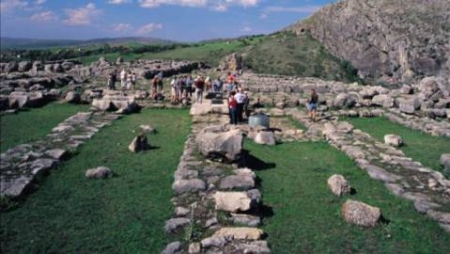
Situated in Alaca town in the city of Corum, Alacahoyuk predominantly shows the Hittite influence during the Bronze Age, although ruins belonging to four different cultural phases can also be seen.

Situated in the Cilicia region in Adana province, the founding date of this ancient city is not known. It emerged during the Roman era but was somewhat overshadowed by Tarsus, the capital of the Cilicia region. In later times, Anazarbus continuously passed hands between the Arabs and Byzantines. Many historic remains along with a majestic Anavarza castle can be seen.

Situated in the Serik town in Antalya province, Aspendos impresses its visitors with its elegant amphitheater and other ancient remains. Because of its location close to the trade routes and the Koprucay River, Aspendos has always been a rich town many rulers desired to dominate.
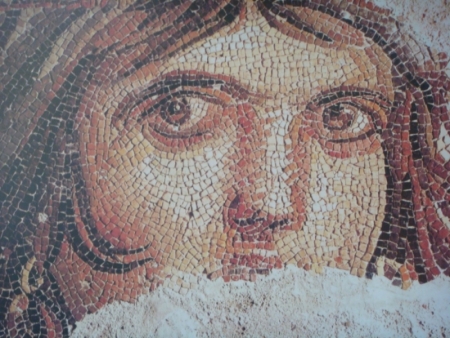
Discover the ancient wonders of Zeugma, home to stunning Roman mosaics and rich history—plan your visit now to witness this archaeological treasure!
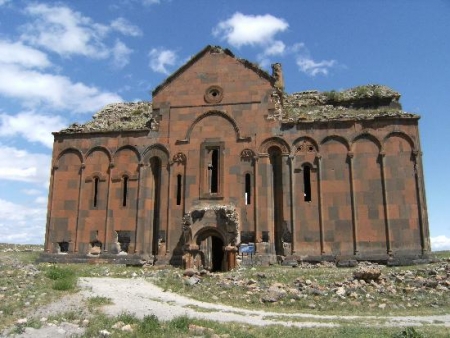
Explore the breathtaking ruins of Ani, a medieval Armenian city near Kars, and uncover its rich history—book your tour today to step back in time!
Explore the stunning ruins of Perge, an ancient Pamphylian city famed for its grand colonnaded streets, Hellenistic gates, and one of Turkey's best-preserved Roman theaters—book your historical journey today to walk in the footsteps of Alexander the Great and Saint Paul!

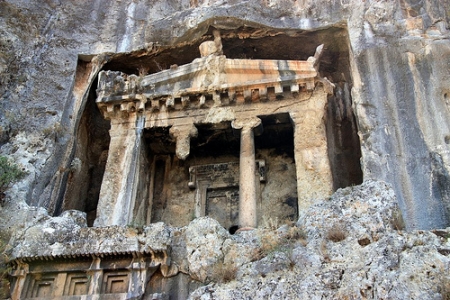
Step into the past at Telmissos in Bodrum, where Lycian tombs and ancient ruins await—book your adventure now to explore this hidden gem!

Princes' Islands: A car-free paradise where Ottoman charm meets Marmara's azure embrace. Read More!

Journey to the majestic ruins of Sagalassos, an ancient Pisidian city with stunning Roman architecture—secure your tour today and experience history come alive!
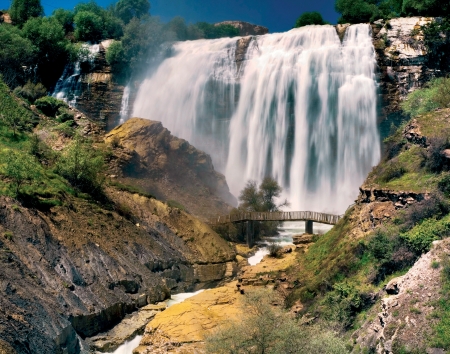
Located in one of the Eastern Anatolian cities with a rich cultural heritage, Tortum Waterfall is one of the most beautiful natural treasures.
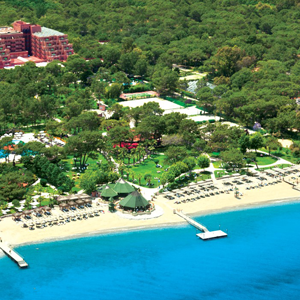
Splendid forest scenery with pine and pistachio trees as well as a magnificent coastline and impressive golf courses and facilities await you for an unforgettable holiday in Belek.

Walk in the footsteps of the Hittites at Hattusha Open-Air Museum, a UNESCO-listed wonder—book your tour today to unlock 4,000 years of history!
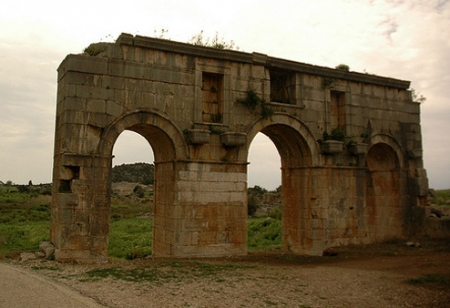
Kalkan, a charming Turkish coastal village, captivates with its blend of cobblestone streets, azure waters, and Lycian history, offering a perfect Mediterranean escape for those seeking relaxation and cultural richness!
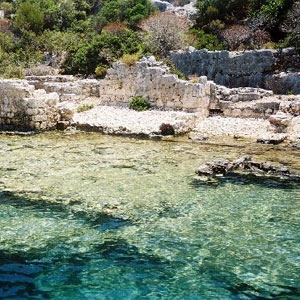
One of the major cities of Lycia and located in the western part of Antalya, Kaş is a natural wonder which impresses visitors with a spectacular geography.
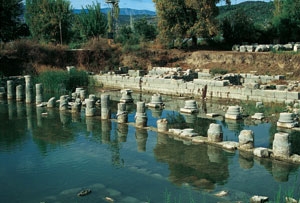
Discover the sacred ruins of Letoon, a UNESCO-listed ancient sanctuary dedicated to Leto, Apollo, and Artemis—walk among legendary history!

As charming as the meaning of the name indicates, Şirince is a lovely little village comprised of narrow streets with old adjacent houses.
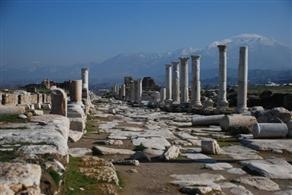
Explore Laodikea’s magnificent Greco-Roman ruins, including its grand theater and temples—reserve your spot now for an unforgettable journey to the past!
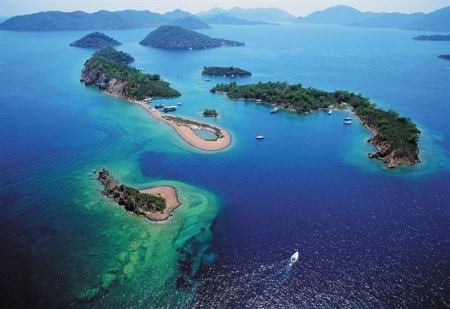
One of the most beautiful cities of the Aegean Region, Göcek, comprised of many islands and bays has been treasured and protected until nowadays.
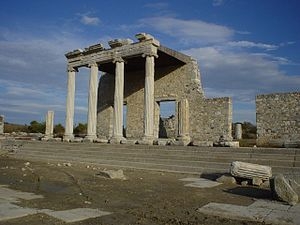
Step into Miletus of Turkey, where ancient Greek wisdom meets Turkish charm, and lose yourself in a time-warp of grand theaters, intricate mosaics, and whispered tales of long-lost glory!

Myra was the first city of the Lycian Union and surpassed Xanthos in the early Byzantine ages to become the capital city of Lycia. Explore it!
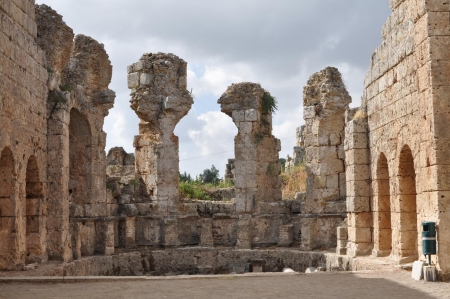
Step into Perge Turkey, where ancient Roman grandeur meets Turkish sunshine, inviting you to wander through a maze of towering columns, intricate mosaics, and whispered tales of gladiators and gods!
Explore Phokaia's archaeological wonders, from its iconic rock-cut tombs to remnants of city walls, telling the story of this influential Ionian settlement!
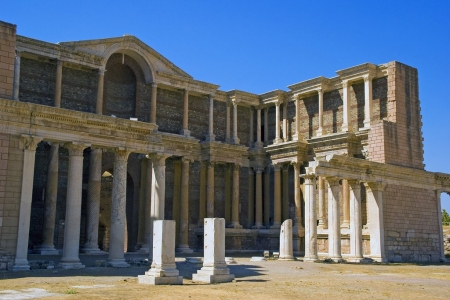
Sardis, once the wealthy capital of King Croesus, offers awe-inspiring ruins like the Gymnasium and the gold-refining district, showcasing its importance in antiquity!
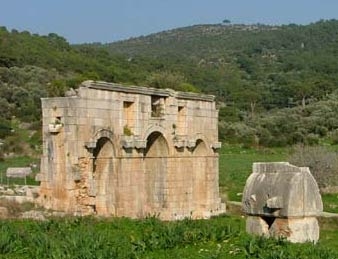
Patara, Apollo's legendary birthplace, invites you to uncover ancient Lycian treasures hidden beneath golden sands, where magnificent ruins whisper tales of bygone glory and sun-drenched beaches beckon with their crystal-clear waters!

Telmessos reveals its Lycian and Hellenistic heritage through striking archaeological remains, including its iconic cliffside necropolis overlooking the Mediterranean! Explore more!
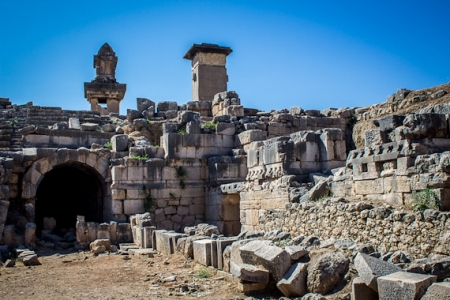
Located in Fethiye, the ancient city of Xanthos once functioned as a capital of the Lycian League.
The city witnessed several wars and was destroyed to be built again eventually. Also the center of episcopacy during Byzantine era, Xanthos is enlisted in the UNESCO World Heritage.
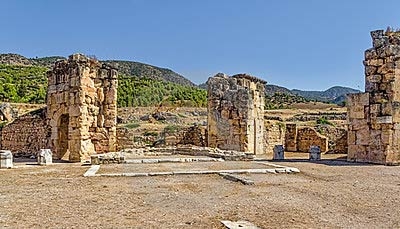
Hierapolis Turkey, a UNESCO treasure nestled beside Pamukkale's ethereal terraces, invites you to wander through Roman ruins, soak in sacred springs, and walk in the footsteps of saints, where ancient wonders and healing waters intertwine in a timeless dance. Read More!
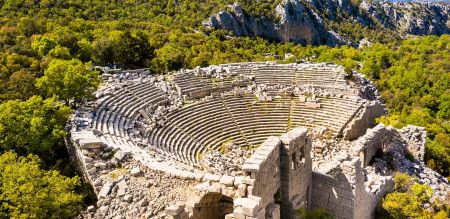
The scent of wild thyme follows visitors through Termessos' labyrinth of ruins, where every crumbling step reveals another vista of Antalya's mountains through gaps in walls that even Alexander couldn't breach!
From the legendary reign of Limyra's 4th-century BC ruler to its Byzantine-era bishopric, these ruins near Antalya preserve layers of Lycian, Persian, and Roman influence along the Mediterranean coast!

Nestled in the rugged embrace of Turkey's Taurus Mountains, Sagalassos invites intrepid explorers to step back in time, where perfectly preserved Roman ruins and ancient fountains whisper tales of a forgotten empire, offering a breathtaking journey through history far from the beaten path!
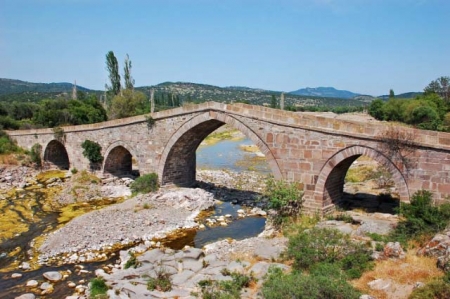
Perched atop a volcanic crag overlooking the Aegean, ancient Assos enchants visitors with its remarkably preserved Temple of Athena, Hellenistic walls, and panoramic views that inspired Aristotle during his residence here!
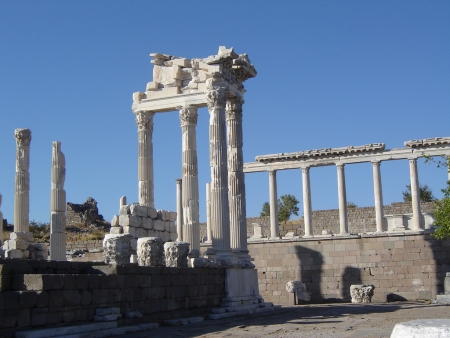
Pergamon's acropolis rises dramatically above Izmir, showcasing its legendary Library, steepest ancient theater, and Altar of Zeus – a monumental testament to Hellenistic power and culture!
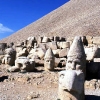
Witness the awe-inspiring grandeur of Mount Nemrut in Adıyaman, where colossal stone heads and ancient tombs crown the summit, a testament to the megalomaniacal vision of King Antiochus I of Commagene!
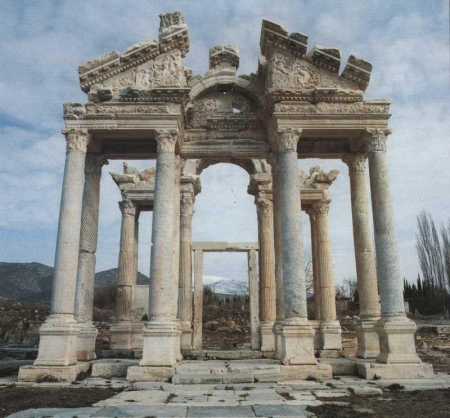
Discover Aphrodisias, a remarkably preserved ancient city in Aydın, where majestic temples, a grand stadium, and exquisite marble sculptures celebrate its legacy as a center of art and the cult of Aphrodite!

Cappadocia's protected landscape preserves extraordinary evidence of human adaptation—from early Christian cave monasteries to vast, ventilated underground cities!
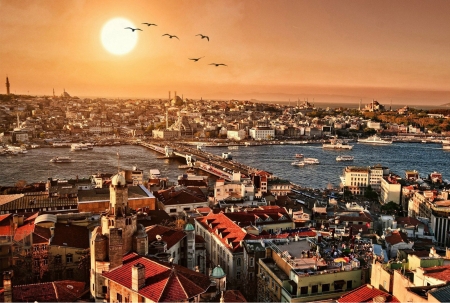
Uncover Istanbul's ancient heart—where Hagia Sophia, Topkapi Palace, and the Blue Mosque bring centuries of history to life. Read More!