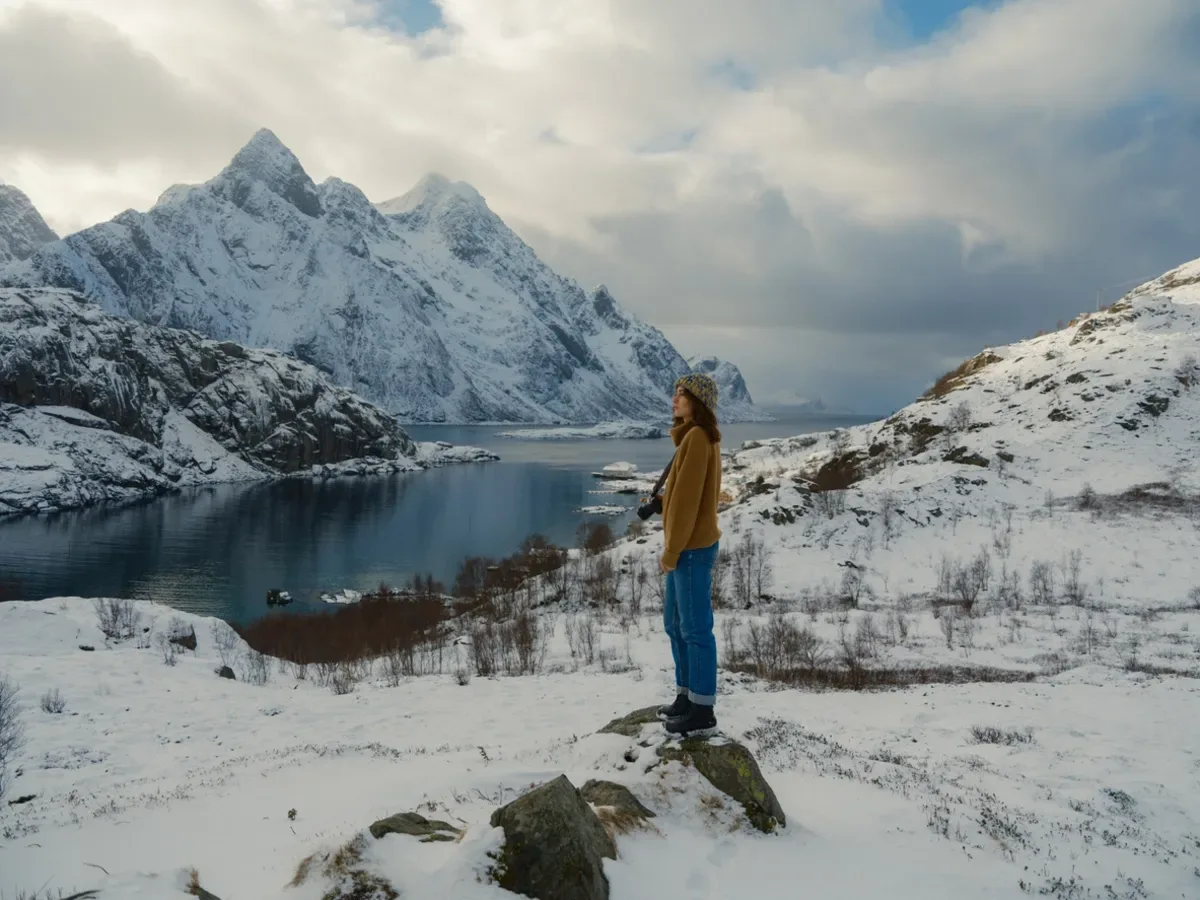
Planning a Scandinavian trip comes down to four decisions: which country fits your interests, when to go, how to get between places, and how much to budget. Norway is best for fjords and Arctic adventure, Sweden mixes design-led cities with lakes and forests, and Denmark offers easy cycling, castles, and coastal towns. In this guide, we’ll walk you through each decision step by step. You’ll see how the three countries compare, find out what each season has to offer, and get ready-made 7-, 10-, and 14-day routes with realistic travel times. We’ll also break down what your trip will cost and finish with the practical essentials to sort out before you go.
Table of Contents:
1- Which Scandinavian country best fits your interests?
2- Which season suits the experiences you want?
3- How do you build a route that avoids long travel days?
4- How much will your Scandinavia trip cost?
5- What practical details will make your trip easier?
6- Are you ready to book your Scandinavian adventure?
The best country depends on what you want from your trip. Norway suits dramatic landscapes and outdoor adventure. Sweden offers a balance of city life and nature, while Denmark is best for easy travel, castles, and coastal towns. Each country has its own pace, so the right choice comes down to your priorities.
Country comparison table: Landscapes, city life, food, costs, and ease of travel
| Factor |
Norway |
Sweden |
Denmark |
| Landscapes |
Fjords, mountains, and Arctic tundra; 48 national parks (41 on the mainland, 7 on Svalbard) |
Forests, about 97,000 lakes, and large archipelagos |
Flat coasts, farmland, and 443 named islands |
| City Life |
Oslo and Bergen, with nature close by |
Stockholm and Gothenburg, known for design |
Copenhagen, walkable and cycling-friendly |
| Food |
Gravlax, fårikål, and brown cheese |
Meatballs, fika, and surströmming |
Smørrebrød and pastries |
| Price Level (EU average = 100) |
About 129 |
About 121 |
About 140 |
| Ease of Travel |
Mountain roads and ferries |
Flexible rail network |
Flat terrain and easy driving |
Price levels are Eurostat’s 2025 indices for household consumption. They compare broad national consumer prices, not your personal travel budget.
Norway: Things to do in Bergen, the fjords, and the Arctic
Bergen is often called the gateway to the fjords, and the description makes sense once you arrive. The city is within easy reach of Sognefjord, Norway’s longest and deepest fjord, with Hardangerfjord also close by. Walk through Bryggen, the old wharf district, then take the Fløibanen funicular up Mount Fløyen for views over the harbor.
Geirangerfjord and Nærøyfjord lie farther north and inland. Both have UNESCO protection and rank among the world’s most striking fjords, with waterfalls that fall straight into the water. Preikestolen, or Pulpit Rock, near Stavanger, offers a rewarding hike. The roughly 8-kilometer round trip takes about four to five hours and ends at a cliff 604 meters above Lysefjord.
The Lofoten Islands lie within the Arctic Circle and pair fishing villages with dramatic coastal scenery. Norway’s far north, including Svalbard, has treeless tundra that feels unlike anywhere else in Scandinavia. The northern lights are most likely to appear here between October and March.
Sweden: Things to do in Stockholm and beyond
Stockholm stretches across a chain of islands, with water and parks woven into the city. Gamla Stan, the old town, dates back to the 13th century. Its cobbled lanes lead to the Royal Palace and the Nobel Prize Museum. Skansen is an open-air museum with about 150 historic houses and farmsteads, gathered from across Sweden.
The Stockholm Archipelago has around 30,000 islands and islets beyond the capital. It is a great place to island-hop in summer. Gothenburg, Sweden’s second-largest city, has street art and craft beer, with a calmer pace than Stockholm. In Swedish Lapland, the Icehotel in Jukkasjärvi lets you sleep on a bed made of ice and spend the day dog sledding or snowmobiling. Its seasonal ice hotel runs from about December to April, and its permanent Icehotel 365 building keeps ice suites open all year.
Denmark: Copenhagen, castles, and coastal towns
Copenhagen combines royal history with a relaxed, cycling-first lifestyle. Amalienborg Palace, the Danish royal residence, is a short bike ride from Tivoli Gardens, which opened in 1843 and is one of the world’s oldest operating amusement parks. Denmark has 443 named islands, and only about 70 to 80 of them are inhabited. That island character comes through even in the capital.
Aarhus, Denmark’s second-largest city, has about 300,000 residents in its urban area. It is home to Aarhus University, one of Denmark’s two largest universities, and has a young feel, with plenty of cafés. Kronborg, the castle linked to Shakespeare’s Hamlet, is worth the trip. Egeskov and Rosenborg, home to the crown jewels, are also notable. Skagen in the far north and Klitmøller, known as Cold Hawaii for its surf, reveal Denmark’s wilder side.
Each country suits a different kind of traveler. Choose based on what you want to do after you arrive, not only on the postcard image you have seen.
Start planning your trip with our Scandinavia tours and see the fjords, cities and Northern Lights for yourself.
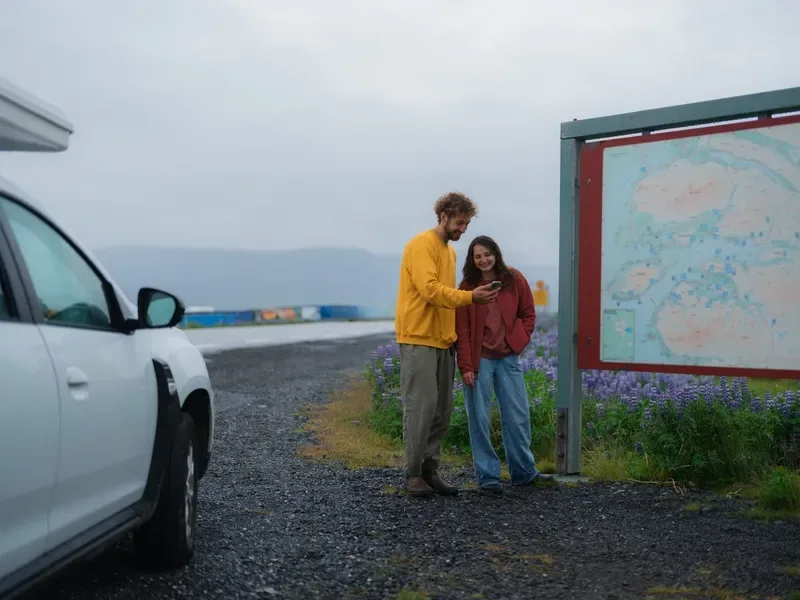
A couple looks at a phone beside a large roadside map, with purple lupine flowers and a parked car nearby.
Your ideal time depends on what you want from the trip. Summer brings long, bright days, autumn offers color and quiet, winter is best for snow and northern lights, and spring suits relaxed city sightseeing.
June to August: Outdoor sightseeing and long daylight hours
Summer is Scandinavia’s high season, and with good reason. Everything is open, the weather is at its most dependable, and daylight seems endless. Scandinavian schools break up for summer in June, and visitor numbers rise through July and August without becoming overwhelming. On June 21, Oslo’s sun rises just before 4:00 and sets around 22:45, giving nearly 19 hours of daylight.
Areas north of the Arctic Circle have true midnight sun, and even Copenhagen, in the far south, gets about 17.5 hours of daylight. Norway receives its highest visitor numbers during these months, and attractions keep full schedules in the cities and the Arctic north. June also includes Midsummer celebrations, one of the region’s biggest seasonal traditions. Crowds ease once local children go back to school in August.
September to October: Autumn scenery and shorter opening hours
Autumn replaces crowds with color. Forests cover about 70% of Sweden, and the leaves turn yellow, orange, and red. The cool, fresh air suits kayaking, biking, or wild swimming. Clear nights may bring your first northern lights this early in the season. Sweden’s west coast lobster season also opens at 7:00 on the first Monday after September 20. Norway’s autumn is ideal for hiking and enjoying the changing landscape.
Prices often drop in October because summer visitors have left and winter has not started, although some outdoor attractions begin to close. Many sights, restaurants, and services in fjord and mountain towns use reduced hours outside the summer school break. Check opening times before planning a tight itinerary.
November to March: Winter sports and northern lights trips
Winter makes Norway feel like a different country. Ski resorts, tobogganing, dog sledding, and fatbiking become popular, along with whale safaris and Christmas markets in November and December. Much of Northern Norway gets little or no direct sunlight from late November to mid-January.
In Tromsø, the sun stays below the horizon from late November to mid-January, and Lofoten’s dark period lasts just under four weeks. Bodø technically has no true polar night, but mountains to the south hide the sun for part of December. These long, dark nights are ideal for viewing the northern lights.
October through March is the best viewing period, while Abisko’s aurora season runs from about September to late March. Coastal temperatures usually stay around freezing. Inland temperatures often fall to minus 10 to minus 20 degrees Celsius, and the coldest areas can reach minus 40.
Denmark’s winter is much milder and suits treehouse stays, forest walks, or a coastal ice bath if you feel brave. Many sights and accommodations have limited hours outside the winter sports season, and short days can slow down general sightseeing.
April to May: City breaks and the limits of early-season hiking
Spring is a great time for city breaks. Norwegian cities are compact and easy to explore on foot, and locals head outdoors as soon as temperatures climb above zero. Fruit trees bloom across Hardanger and Sognefjord by mid-May. Waterfalls also return in force as snow melts through May and June. Easter is an important holiday, and many staffed mountain lodges close soon afterward, reopening only when the summer hiking season begins.
Long-distance hikes at high elevations usually do not open until late June. Low-elevation coastal day hikes work from April, while routes such as the Fjordruta near Kristiansund become possible by May. In the far north, the northern lights fade quickly in spring as the nights get brighter. Nordic capitals are green and lively again by May. Denmark’s flat landscape makes May an excellent time for a biking holiday. Sweden celebrates Walpurgis Night with bonfires on April 30, and Uppsala is especially memorable.
Packing for your season and chosen activities
Whatever month you travel, pack layers instead of relying on one heavy coat:
- Lightweight base layers, a fleece or jumper, waterproof jacket and trousers, plus a scarf, hat, gloves, and sturdy walking shoes throughout the year
- Shorts, t-shirts, sunscreen, and a light jumper for summer evenings, as mountains and cruise decks can stay chilly even in July
- Wool base layers, thick socks, a Gore-Tex or down jacket, and boots with removable ice grips for winter
- Swimwear for saunas, SPF 50 sunscreen, and polarized sunglasses because UV reflects strongly off snow and increases at higher elevations
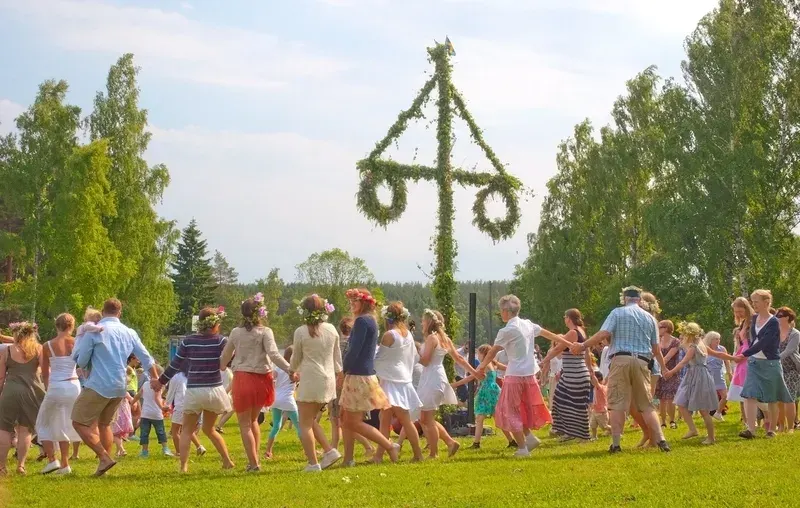
People wearing flower crowns hold hands and dance around a leaf-covered maypole at a Midsummer celebration in Sweden.
Customize Your Dream Vacation!
Get in touch with our local experts for an unforgettable journey.
Plan Your Trip
A Scandinavia route that doesn’t eat up your vacation in transit depends on smart choices of arrival and departure airports, careful transport comparisons, and extra time for slow rural legs. Get those details right, and even a three-city trip can feel relaxed rather than rushed.
Choose your arrival and departure cities before booking
Choose your start and end points before visiting a booking site, since that decision shapes every transfer that follows. SAS operates three main Nordic hubs: Copenhagen, Stockholm, and Oslo, so routing through one of them often helps keep fares lower. Flying into Copenhagen and leaving from Bergen works well when fjord country is your final stop because it avoids a return trip to your arrival city.
Compare trains, ferries, flights, and rental cars
No single transport option covers the entire region, so combine trains and ferries with flights or a rental car as needed. The fastest direct trains between Copenhagen and Stockholm take just over 5 hours. Direct trains from Stockholm to Oslo take about 5 to 6 hours.
The Bergensbanen line from Oslo to Bergen takes around 7 hours across the Hardangervidda plateau and is one of Europe’s most scenic train rides. A rental car becomes worthwhile outside the cities because western Norway’s fjords and small villages often lie beyond the rail network. Train travel is usually cheaper and less stressful for city-to-city legs.
Allow enough time for rural connections and overnight stops
Norway’s mountainous landscape leaves big gaps in the rail network, so fjord travel often requires a ferry or bus instead of a train. Overnight ferries also require careful planning. The Copenhagen-to-Oslo route takes about 17 to 19 hours, while Stockholm to Helsinki takes about 16 to 17 hours. Rural transit runs reduced Sunday schedules, often with only a few departures a day. The most popular overnight trains sell out weeks in advance, so book early instead of relying on walk-up tickets.
7-day route: Copenhagen and Stockholm
A week is enough time for two capitals rather than three. Spend the first half in Copenhagen, then take the roughly 5-hour train to Stockholm for the rest of the trip.
10-day route: Oslo, Bergen, and the western fjords
Ten days allows time for Oslo, a scenic crossing to Bergen, and fjord country between them. Highlights can include Geirangerfjord and the Loen Skylift ride to Mount Hoven.
14-day route: Three capitals with a Bergen and fjord extension
Two weeks gives you time for Copenhagen, Stockholm, and Oslo, with room to add Bergen and a fjord extension through Flåm and the Sognefjord.
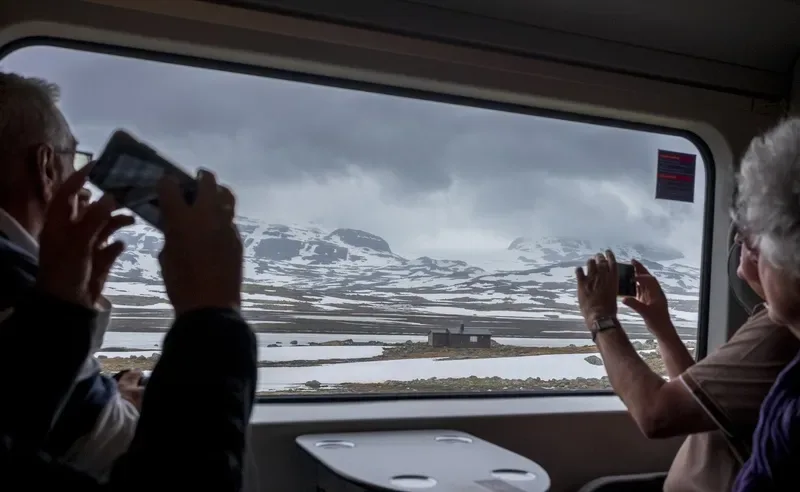
Train passengers take photos through the window of a snowy mountain plateau with a small cabin in Norway.
Your Scandinavia trip can cost around $55 to $65 a day on a tight budget or $300+ a day for a luxury stay, depending on your accommodation, dining choices, and the season. Traveler-reported data from BudgetYourTrip puts the average visitor to Norway at about $135 a day. Denmark has the highest overall price level of the three countries, Norway comes next, and Sweden is the least expensive.
Daily cost comparison: Budget, midrange, and luxury travel
Budget travelers save with hostels and groceries. Midrange travel combines hotels with occasional meals out, while luxury travel includes boutique stays and fine dining.
| Level |
Bergen Example |
| Budget |
CityBox Bergen |
| Midrange |
Zander K |
| Luxury |
Bergen Børs Hotel |
According to Visit Norway, a hotel room in Norway cost NOK 1,725 (about $165) per night on average in 2025. Rates vary a lot by season and location, so check live prices for your dates.
Where to stay: City hotels, hostels, cabins, and fjord lodges
Hostels and campsite cabins are the fastest way to cut accommodation costs. At the other end of the scale, remote fjord and Arctic lodges often sell multi-day, full-board packages that cost far more than a city hotel.
How to save on transport, meals, and attractions
Supermarkets cost far less than restaurants. Look for Rema 1000, Kiwi, and Coop in Norway; ICA, Coop, Willys, and Lidl in Sweden; and Netto, Rema 1000, and Lidl in Denmark.
Aldi left Denmark in 2023, and Lidl does not operate in Norway. Alcohol is especially expensive in bars, so a supermarket picnic is a smart way to stretch your budget. Free walking tours and museum days can lower costs, as can free viewpoints such as Copenhagen’s Christiansborg Tower.
Popular stays and seasonal activities: booking times
Book flights and accommodation 3 to 6 months ahead. The Icehotel’s seasonal ice rooms are open from about December to April, and its Icehotel 365 suites are open all year.
How to pay in Danish and Norwegian kroner and Swedish kronor
Cards dominate payments throughout the region. In Sweden, only about one in ten in-store purchases is made with cash, and some shops and cafés no longer accept cash at all. Norway and Denmark are similarly card-heavy. Carry a little cash as a backup for remote areas or card-terminal outages, and notify your bank before traveling.
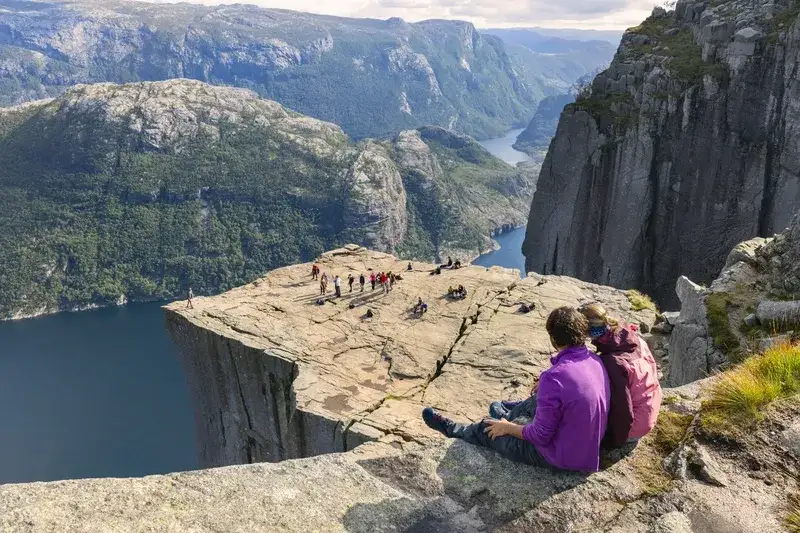
A couple sits on a rocky ledge looking out at Preikestolen (Pulpit Rock), where visitors gather on the flat clifftop high above the Lysefjord in Norway.
A smooth Scandinavia trip starts with sorting out entry rules, local customs, and connectivity before you land.
Check passport validity, visa rules, and insurance cover
US citizens can stay visa-free for up to 90 days in any 180-day period across the Schengen Area, which includes Norway, Sweden, and Denmark. Your passport should be valid for at least three months beyond your planned departure date.
The EU’s Entry/Exit System (EES) now records non-EU travelers’ fingerprints and a facial photo at the border instead of stamping passports. The separate ETIAS travel authorization has not launched yet, and the EU says it will announce a start date several months in advance, so check the official europa.eu/etias site before you travel. Travel insurance is not mandatory for Americans, but Schengen visa applicants need at least €30,000 in medical coverage.
Try local dishes, Swedish fika, and Danish café culture
Fika is Sweden’s coffee-and-cake break, often with cinnamon buns. Sweden ranks among the world’s top coffee-consuming countries, at about 8.2 kg per person a year. Denmark’s café culture encourages the same relaxed pace. For a cheaper sit-down meal, look for lunch specials, which are usually better value than dinner.
Respect personal space, cycling lanes, and local customs
Queue patiently, arrive on time, and take your shoes off when you enter someone’s home. When walking, keep out of bike lanes, especially in Copenhagen, where cyclists move fast and expect the lane to be clear.
Check step-free routes and access at older sights
Sweden’s accessibility database (Tillgänglighetsdatabasen) covers more than 9,100 locations. Norway’s cities have ramps and elevators, but winter snow can limit access farther north.
Follow local hiking advice and country-specific outdoor access rules
Norway’s allemannsretten lets you roam and camp freely on uncultivated land, as long as you pitch your tent at least 150 meters from the nearest house or cabin. Sea fishing with a rod is free, but freshwater fishing in rivers and lakes needs a permit from the local rights holder, and salmon fishing also requires a national fishing fee.
Sweden has a similar right of public access, called allemansrätten.
Set up mobile data, offline maps, and transport apps
Set up an eSIM and download offline maps before arrival, then install local transit apps so you get live updates.
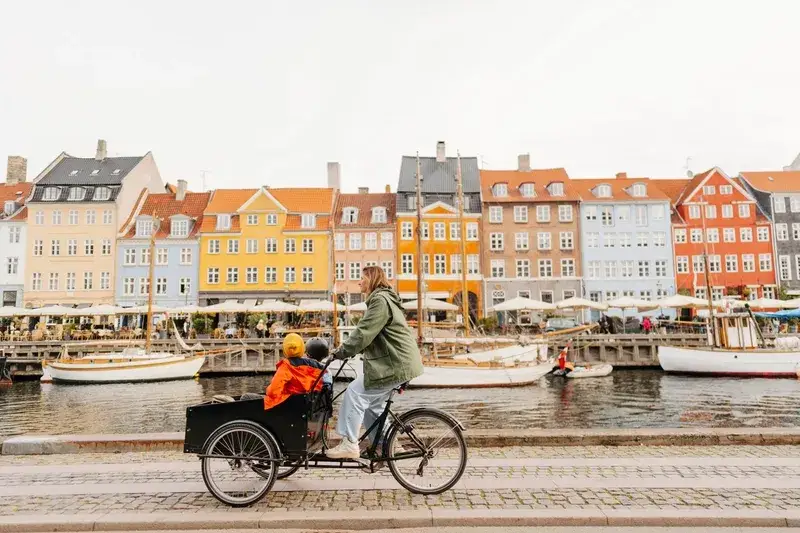
A woman rides a cargo bike with a child along the canal at Nyhavn in Copenhagen, past colorful harborfront houses and sailboats.
Norway, Sweden, and Denmark each offer something different, so the right choice depends on what you want: fjords and hiking, a mix of cities and lakes, or castles and coastal towns. The season should suit your plans just as much as the country should match your interests. Summer brings long daylight, autumn adds color, winter offers auroras, and spring has quieter cities. Costs and travel times vary a lot across the region, but planning your route, budget, and packing list ahead of time helps limit surprises. The best trip reflects your priorities rather than a generic itinerary. Your Nordic adventure begins with that decision.
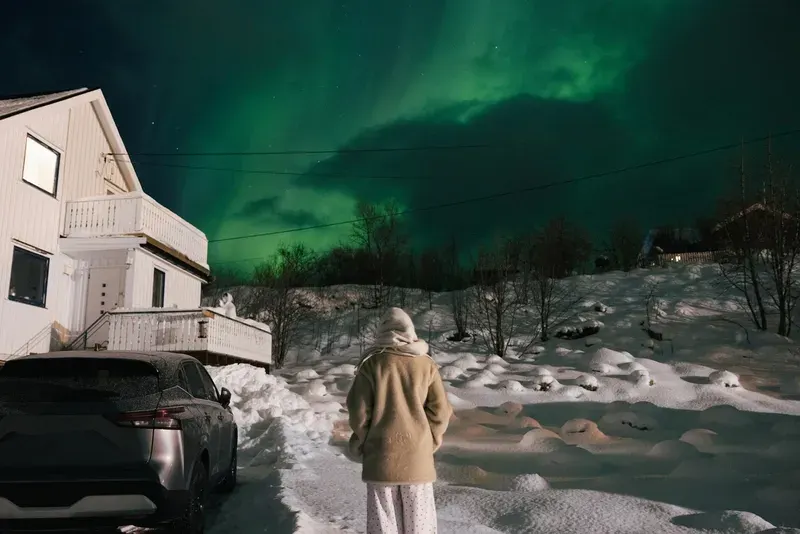
A person in a warm coat stands in deep snow beside a white house, watching the green Northern Lights in the night sky.
Do I need to tip in Scandinavia?
No. Service charges are built into restaurant and bar prices, and staff are paid a full wage, so tipping isn’t expected. Rounding up the bill or leaving a little extra for great service is a kind gesture, but it is entirely optional.
Is tap water safe to drink in Norway, Sweden, and Denmark?
Yes. Tap water across all three countries is clean, safe, and good to drink. Bring a refillable bottle instead of buying bottled water, which saves money and plastic.
Do people speak English in Scandinavia?
Yes, widely. Most Scandinavians, especially younger people and anyone working in tourism, speak excellent English. Learning a few local words such as “hei” or “hej” (hello) and “takk” or “tack” (thank you) is still appreciated.
Can I use euros in Scandinavia?
Not as a rule. Norway, Sweden, and Denmark all use their own currencies, even though Sweden and Denmark are EU members. A few tourist-focused businesses may accept euros, but don’t count on it. Paying by card in the local currency is the easiest option.
What power plugs and voltage are used?
All three countries use 230-volt power with the two-pin European plugs (types C and F), and Denmark also uses its own type K socket, which accepts type C plugs. Visitors from the US or UK need a plug adapter. Most phone and laptop chargers handle 230 volts, but check the label on hair dryers and other appliances.
Can I use one rail pass for Norway, Sweden, and Denmark?
Yes. The Eurail Global Pass (or Interrail Global Pass for European residents) covers trains in all three countries. Some trains, including SJ’s high-speed services in Sweden, require a separate paid seat reservation, so book those in advance.