
 Home
Norway Guide: Why This Stunning Country Will Surprise You
There is something quietly humbling about standing at the edge of a Norwegian fjord, watching mountains that soar well over 1,000 meters above the water simply vanish into the clouds above Geirangerfjord. Fjord Norway stretches along almost the entire western coast, and yet, the landscapes are only part of what makes this country so remarkably hard to forget. Norway ranked #2 in the World Happiness Report in 2018 and still sits in the top six in 2026 — and once you spend a few days here, that really does not come as a surprise. This is a nation that has figured out something deeply good about how to live.
What catches most travelers off guard, though, is just how much Norway holds beyond its famous scenery. This guide is your companion through all of it — from Bergen’s centuries-old wooden streets to the vast Arctic skies that stretch above Tromsø. Whether this is your first time crossing into Scandinavia or you are coming back for another taste of those breathtaking Norwegian landscapes, you will find everything here: where to go, which season to choose, and how to shape all of that wonder into a trip that actually feels like yours.
Ready to see it for yourself? Book your Norway tour today, and let the fjords, the northern lights and the midnight sun do the rest.
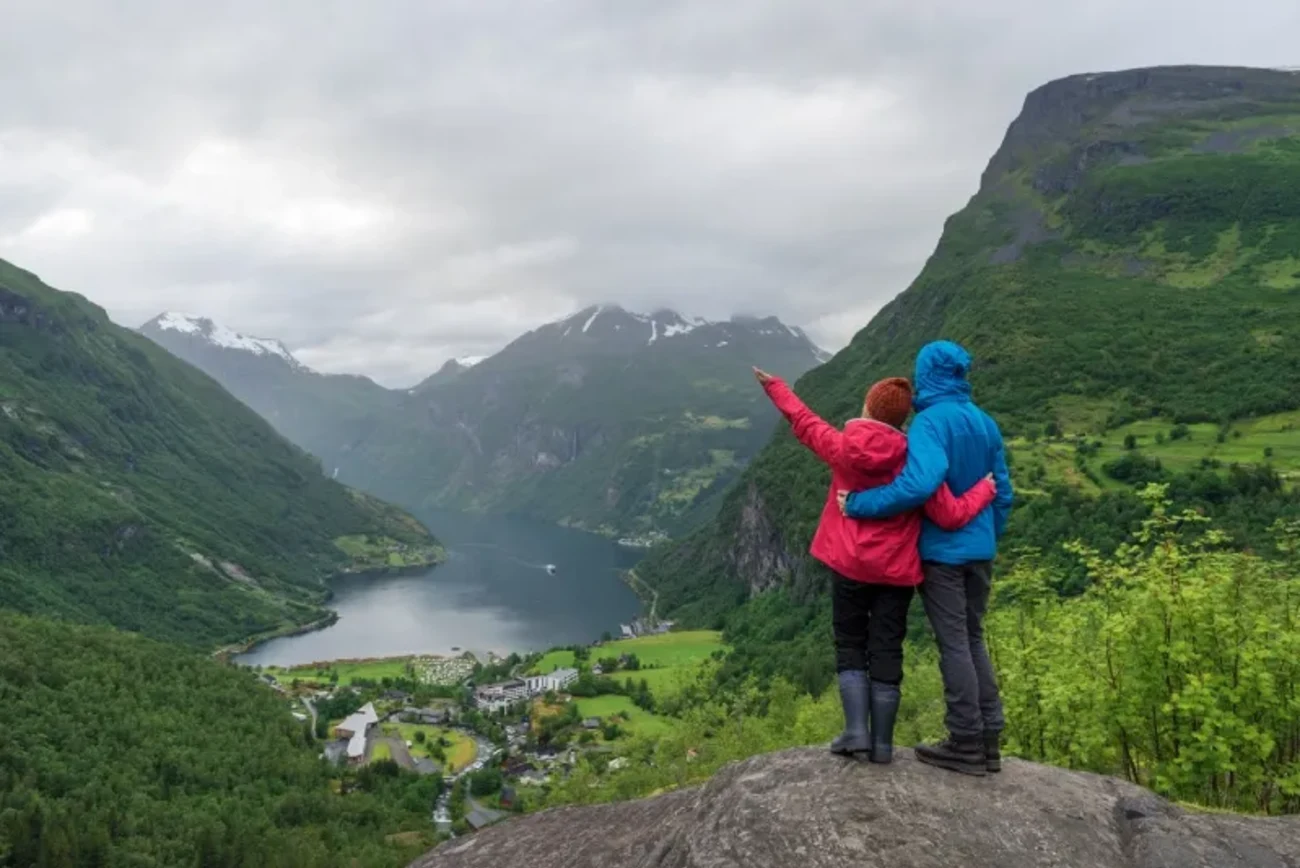
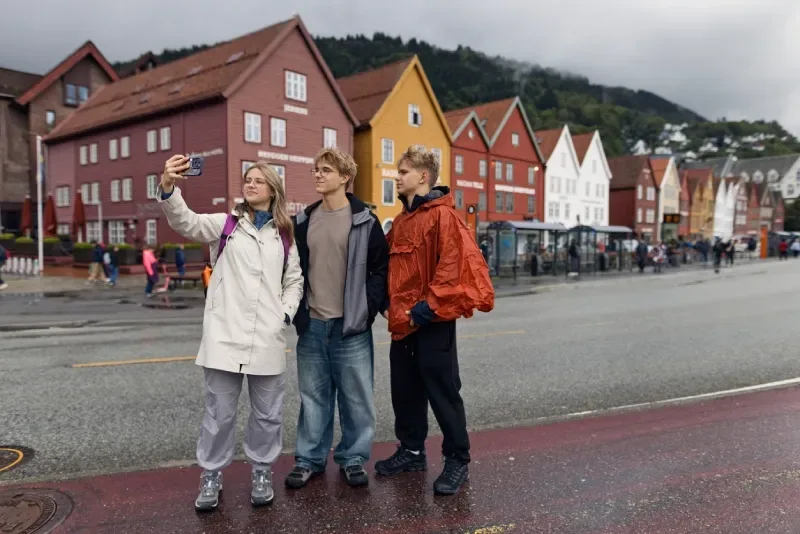
Table of Contents:
1-Where should you go in Norway, and what makes each place special?
2-When should you visit Norway for the experiences you want?
3-How can you turn your Norway wish list into a practical trip?
4-Are you ready to choose your Norway route and travel dates?
1-Where should you go in Norway, and what makes each place special?
Norway does not offer one kind of trip. It offers five, maybe six, depending on how you count. The right answer to where to go in Norway comes down to what you are genuinely hungry for — city culture, waterfall-drenched fjords, Arctic fishing villages, or something rarer still, like sitting across from a reindeer herder and listening to stories that go back centuries.
Oslo: waterfront walks, art, and Viking history
Oslo is a generous starting point, the kind of city that does not overwhelm you but quietly wins you over. Walk the harbor, spend time with Viking history, wander through art museums that punch well above their weight — and you have got yourself a full, satisfying day without breaking a sweat. There is even a local quirk worth knowing: geologists do not consider the Oslofjord a true fjord. It is a gentle, almost affectionate way the city eases you into Norway before the real drama begins further west.
Bergen and Flåm: wooden streets, scenic trains, and fjord trips
Bergen has an easy charm to it. The old wooden buildings along Bryggen, the fish market, the funicular up Fløyen — it all fits together in a way that feels lived-in rather than curated. But the real magic begins when you board the Flåm Railway, often ranked among the world’s most beautiful train journeys, threading through 20 tunnels at a gradient of 1 in 18 across nearly 80 percent of its length. The train descends through the Flåmsdalen valley — a 20.2-kilometer line running from Myrdal at 866 meters all the way down to Flåm on the Aurlandsfjord, with waterfalls tumbling into view at nearly every bend. From Flåm, boats head into the Nærøyfjord, a 17-kilometer UNESCO-listed arm of the Sognefjord and one of the best-known fjords in Norway.
Geiranger and Loen: waterfalls, glacier lakes, and mountain views
Geirangerfjord is the kind of place that makes you stop mid-sentence. Three named waterfalls — the Seven Sisters, the Suitor, and the Bridal Veil — plunge directly into the fjord in a mist that clings to both the hiking trails above and the boats cutting through the water below. It is theatrical in the best possible way. Near Loen, Lovatnet lake stretches 11 kilometers across roughly 10.5 square kilometers, its turquoise colour fed mainly by meltwater from the Jostedalsbreen glacier. Above it, Ramnefjellsfossen drops a staggering 818 meters in total — a number that takes a moment to fully register.
Lofoten and Senja: fishing villages, beaches, and coastal hikes
There is a particular kind of beauty to Lofoten that photographs struggle to capture honestly. Jagged peaks rise straight from the sea, and scattered beneath them, red fishermen’s cabins cling to the rocks across a chain of islands stretching from Værøy and Røst in the south up to Austvågøy in the north. Senja, Norway’s second largest island after Hinnøya, covers more than 1,500 square kilometers and carries much of the same drama with considerably fewer visitors. And if you are staying in Tromsø, Sommarøy — a small, beach-lined island roughly an hour’s drive from the city — is worth every minute of the detour.
Tromsø: Arctic city life and Sámi-led cultural experiences
Tromsø surprises people. You expect a cold, remote outpost; what you find instead is a city with real warmth, genuine culture, and an extraordinary connection to the Sámi people. Reindeer herding traditions are still very much alive, practiced by around 3,000 people across Norway, and the experiences on offer are rooted in that living heritage rather than performed for tourists. Every February, Sámi Week fills the city’s main street with reindeer racing in celebration of Sámi National Day (6 February) — a spectacle that feels as joyful as it does deeply meaningful.
| Region | Known For | Best Activity |
| Oslo | Waterfront, Viking history | City and museum walks |
| Bergen/Flåm | Wooden streets, railway | Flåm Railway, fjord cruise |
| Geiranger/Loen | Waterfalls, glacier lake | Fjord cruise, hiking |
| Lofoten/Senja | Fishing villages, beaches | Coastal hikes |
| Tromsø | Arctic city, Sámi culture | Reindeer tours, whale watching |
2-When should you visit Norway for the experiences you want?
Norway does not stay the same from one month to the next. The country shifts its personality with every season — swapping midnight-lit hiking trails for snow-dusted fjord villages, then trading those for autumn forests that burn orange and gold. The season you pick is really the experience you pick, whether that means endless summer daylight, your best shot at the northern lights, or trails that belong almost entirely to you.
Summer: long days, hiking, and midnight sun in the north
June through August brings Norway to life in a way that feels almost unreal. Southern Norway enjoys mild, warm days with highs often around 20–25°C, while Tromsø, further north, stays closer to a fresh 11–12°C. The sun simply refuses to set over Tromsø from about 20 May to 22 July, and over Svolvær in Lofoten from about 28 May to 14 July — you can be out on a hiking trail or sitting quietly by the water at midnight, still under full, golden daylight. Roads are clear, spirits are high, and the drives toward Lofoten or Geirangerfjord are as good as drives get anywhere on earth.
Winter: snow trips and northern lights without guarantees
Winter wraps Norway in a quieter, more mysterious mood. Skiing, dog sledding, and fjord cruises all run beautifully during these months, and you will share them with far fewer people. Oslo and the north average around -3 to -4°C in mid-winter, while western coastal areas stay closer to 2°C. From late November to mid-January, the sun stays below the horizon in Tromsø; Lofoten’s polar night lasts just under four weeks, and Bodø has no true polar night at all. Even then it is never pitch-black — midday brings hours of soft blue twilight.
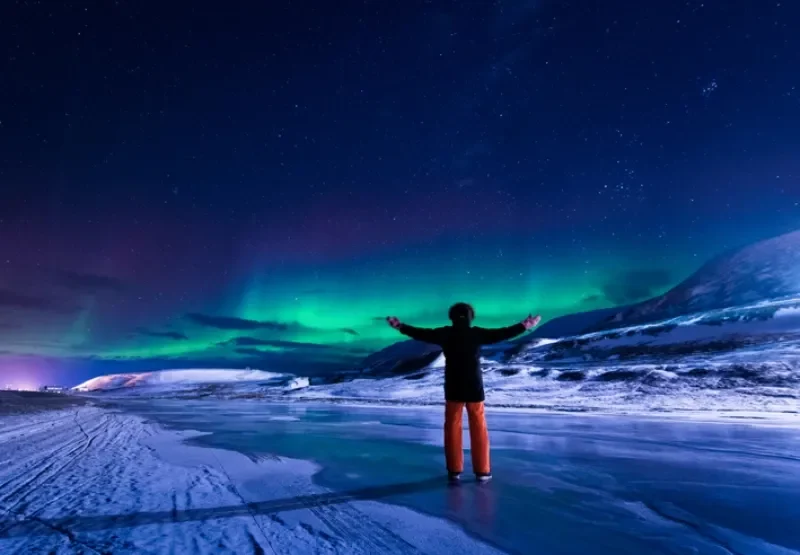
The northern lights are the great winter prize, and your best odds sit between late September and March, particularly within the “Northern Lights Belt”, roughly 65 to 72 degrees north — a band that covers both Tromsø and Lofoten. That said, the aurora asks for darkness, clear skies, and cooperative solar activity all at once, so no sighting is ever promised. That sense of anticipation, of watching and waiting, is honestly part of what makes it so memorable.
Spring and autumn: fewer crowds and changing weather
Spring arrives between March and May, quietly melting the snow and sending waterfalls roaring back to life. Oslo temperatures climb gradually from around 0°C toward a comfortable 11°C, and the whole country feels like it is shaking off winter with a kind of quiet joy.
Autumn — September through November — has its own rich character. Forests across Norway turn brilliant shades of gold and red, Oslo averages around 6°C in October, and the trails grow noticeably quieter as the season deepens. The northern lights start reappearing above Tromsø in September, and by October and November, hiking paths that were once busy feel almost entirely yours.
| Season | Daylight | Weather | Crowds |
| Summer | Midnight sun in the north | Mild to warm | Busiest |
| Winter | Polar night in parts of the north | Cold, snowy | Quietest |
| Spring | Lengthening days | Cool, changeable | Moderate |
| Autumn | Shortening days | Crisp, colorful | Thinning |
3-How can you turn your Norway wish list into a practical trip?
The good news is that Norway, for all its grandeur, is a wonderfully well-organized country to travel through. Getting from wish list to actual itinerary is mostly a matter of breaking things down into the right pieces — route, transport, budget, lodging, food, and a little common-sense preparation.
Choose a realistic route for 5, 7, or 10 days
Chasing every fjord and city at once is a tempting idea, but it rarely serves anyone well. A short trip — five to seven days — works best when you anchor yourself in one or two regions and build outward from there. Pick Bergen or Oslo as your base, then let day trips do the heavy lifting. Ten days opens up more room to venture north or thread together a longer coastal journey without feeling rushed.
Compare trains, ferries, rental cars, and domestic flights
Norway has a satisfying variety of ways to move through it. Vy trains run the classic Oslo–Bergen route through some of the most dramatic highland scenery you will see from a railway carriage anywhere. NOR-WAY Bussekspress and Vy express buses fill in the gaps between cities, mountains, and fjords where the tracks do not reach. For the full coastal experience, Hurtigruten and Havila Voyages both sail the classic coastal route from Bergen all the way to Kirkenes, stopping at ports that feel genuinely unhurried. Domestic flights link Oslo and Bergen with northern hubs such as Tromsø and Bodø for those who want to cover ground quickly, while Auto Europe and Rent-A-Wreck both offer rental car options for anyone who wants to pull over whenever a waterfall demands it — and in Norway, that happens often.
Set a daily budget in NOK and find ways to save
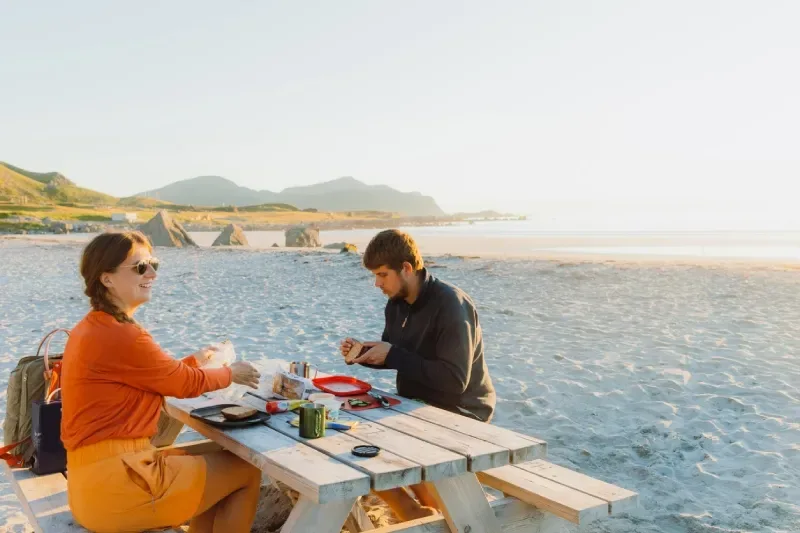
The krone was weak from 2022 to 2025, but it strengthened sharply in 2026, so Norway now costs foreign visitors noticeably more than it did a year or two ago — check the current rate when you budget. Self-catering makes a real difference here — the grocery stores are well-stocked, and picking up fresh bread, local cheese, and smoked fish for a picnic beside a fjord is not exactly a hardship. Off-peak travel quiets both the crowds and the prices considerably.
Choose hotels, cabins, or campsites and book busy dates early
The range of places to stay in Norway is part of its charm. Citybox, Scandic, Thon, and Strawberry run reliable hotels across the major cities, while Norgesbooking and Classic Norway Hotels cover everything from traditional timber cabins to more distinctive rural stays. Campcation and Campio list camping and motorhome pitches nationwide for those who want to wake up with a mountain entirely to themselves. Whatever you choose, popular dates fill quickly — book early and avoid the scramble.
Try local seafood, brown cheese, waffles, and regional dishes
Norwegian food culture deserves more attention than it typically gets. King crab, wild salmon, and Atlantic cod are as fresh as you would hope from a country with this much coastline. Brunost — the golden-brown, slightly sweet whey cheese — on a warm waffle is one of those simple pleasures that stays with you long after the trip ends. Fårikål, Norway’s national dish of slow-cooked lamb and cabbage, is the kind of honest, warming food that makes perfect sense after a day spent on a mountain trail.
Check entry rules, pack layers, and plan for outdoor safety
Norway is in the Schengen Area. Since April 2026, non-EU visitors have their fingerprints and a facial image taken at the border under the EU’s Entry/Exit System (EES), which replaced passport stamps. Visa-exempt travelers, including those from the US, UK and Canada, will also need an online ETIAS travel authorization once it launches; it is expected from late 2026, but no firm date has been confirmed, so check the official EU ETIAS site before you fly.
Norwegian weather has a personality of its own and shifts without much warning, so layering is less a suggestion and more a survival strategy. Check trail and fjord conditions before heading out — the outdoors here are spectacular but deserve genuine respect.
Customize Your Dream Vacation!
Get in touch with our local experts for an unforgettable journey.
Plan Your Trip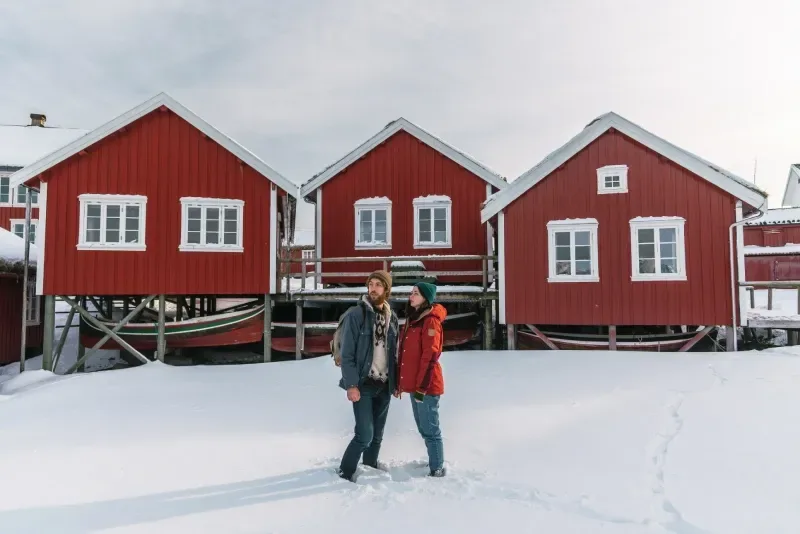
4-Are you ready to choose your Norway route and travel dates?
Norway has a way of staying with you long after you have left — the smell of salt and pine along a fjord, the strange golden light of a midnight sun, the quiet of a fishing village where the only sounds are ropes and water. The fjords, the Arctic cities, the Sámi traditions, the railways threading through valleys — none of it feels like it belongs to the same country, and yet it all does, beautifully and completely.
The best thing you can do now is simply start choosing. Pick the regions that speak to you, match them to the season that fits what you are after, sort out the practical details while they are still easy to sort, and book the busy nights before someone else does. Everything else has a way of falling into place once you are actually there. Your Norway trip is closer than it feels — it just needs a date on the calendar.
Largely, yes. Under the right to roam (allemannsretten), you can pitch a tent on uncultivated land for up to two nights in one spot without asking, as long as you stay at least 150 meters from the nearest house or cabin. Leave no trace, and follow local fire bans in summer.
Rarely. Cards and contactless payments are accepted almost everywhere, from city cafés to remote ferries and campsites. A small amount of cash is still handy for the odd farm stand or honesty box.
No. Service is included in prices and staff earn a full wage. Rounding up or leaving about 10 percent for excellent restaurant service is appreciated but never required.
Yes, widely and fluently, especially among younger people and anyone working in tourism. Signs, menus and transport information are usually available in English too.
Most Norwegian tolls, and many car ferries, are charged automatically through the AutoPASS system, which reads a tag or the number plate. Rental companies pass these charges on to you after the trip, so ask about their fee before you sign.
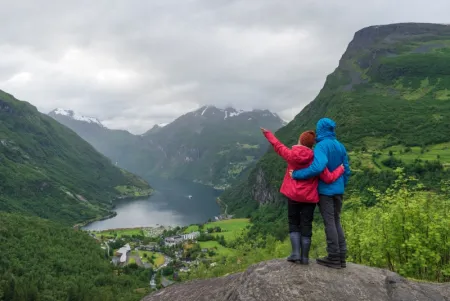
Discover why Norway is so hard to forget, from Geirangerfjord’s cloud-capped cliffs to Bergen’s wooden streets and Tromsø’s Arctic skies, and learn where to go, when to visit, and how to plan a trip that feels like your own.
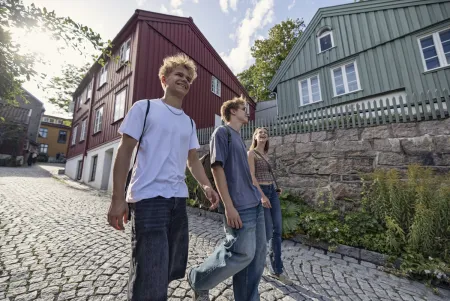
The best hidden things to do in Oslo include strolling the wooden streets of Damstredet, visiting Old Aker Church and following the Akerselva river. You can also try brown-cheese waffles in Grünerløkka and hike quiet forests just a metro ride away. This guide shows you the side of Oslo that most visitors miss.
