Table of Content:
1. Where and What Is Fiji?
2. A Brief History of Fiji
3. 8 Things Fiji Is Famous For
4. Where to Go in Fiji
5. Best Time to Visit Fiji
6. Practical Travel Information
Table of Content:
1. Where and What Is Fiji?
2. A Brief History of Fiji
3. 8 Things Fiji Is Famous For
4. Where to Go in Fiji
5. Best Time to Visit Fiji
6. Practical Travel Information
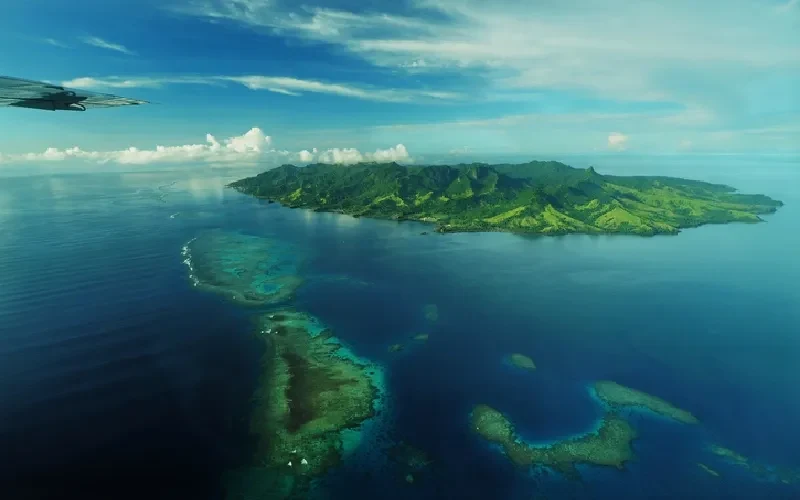
Fiji is an archipelago of roughly 333 islands of which around 110 are inhabited scattered across the South Pacific about 3,000 km north-east of New Zealand. Around 900,000 people live here, most of them on the two main islands, Viti Levu and Vanua Levu. The capital is Suva; the international gateway is Nadi.
Ask why Fiji is famous and most people reach for the same image: turquoise lagoons, white sand, palms leaning over the water. That image is accurate but it is only part of the answer. Fiji's reputation rests equally on its reefs, its culture, its extraordinary hospitality, a bottled water brand and one of the most dominant rugby teams on Earth.
Check out our Fiji Vacation Packages and find your perfect Fiji getaway!
For its 333 islands and beaches, world-class soft coral diving, the warm "Bula" hospitality, kava culture, luxury honeymoon resorts, FIJI Water and its Olympic gold-winning rugby sevens team.
The Lapita people reached Fiji around 1500 BCE, arriving by ocean-going canoe and leaving behind distinctive stamped pottery. Over the following three millennia a complex chiefly society developed, organised into confederacies and clans, with a formidable maritime and canoe-building tradition.
Abel Tasman sighted the islands in 1643, Captain Cook followed in 1774, and William Bligh navigated the archipelago in 1789 after the Bounty mutiny — the channel between the main islands is still called Bligh Water. Nineteenth-century sandalwood and bêche-de-mer traders brought firearms, disease and instability, and the islands acquired the grim European nickname of the Cannibal Isles, a reputation built on real but heavily sensationalised practices that ended with the arrival of Christianity.
Facing debt and instability, Chief Cakobau ceded Fiji to Britain in 1874. To work colonial sugarcane plantations, the British brought over 60,000 indentured labourers from India between 1879 and 1916 the girmitiya. Their descendants form the Indo-Fijian community, today around a third of the population, and the reason Hindu temples, mosques and outstanding curry sit alongside Fijian villages.
Fiji became independent on 10 October 1970. The decades since have included several coups and periods of political turbulence, with democratic government restored in 2014. Tourism, sugar, fisheries and remittances now anchor the economy.
About 333, of which roughly 110 are permanently inhabited. Most visitors stay on Viti Levu or in the Mamanuca and Yasawa groups.
Get in touch with our local experts for an unforgettable journey.
Plan Your Trip
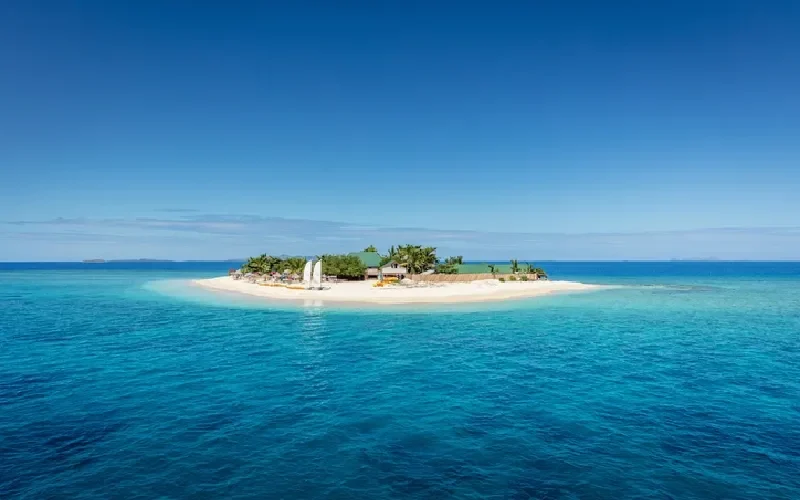
Fiji's core fame is geographic. With 333 islands, the country offers everything from developed resort coasts to uninhabited sandbars you can walk around in ten minutes. The Mamanuca and Yasawa groups deliver the archetypal image, and Hollywood agrees: Cast Away was filmed on Monuriki in the Mamanucas, and both Blue Lagoon films used the Yasawas.
Fiji's most credible claim to global superlative status is underwater. Strong nutrient-rich currents feed spectacular soft coral growth in colours magenta, orange, violet rarely seen elsewhere. Taveuni's Rainbow Reef and its Great White Wall are world-famous dive sites, as is the Great Astrolabe Reef off Kadavu. Fijian waters hold over 1,500 fish species, plus turtles, manta rays and sharks.
Bula literally means "life," and functions as hello, welcome and a general expression of goodwill. Fiji's hospitality is not marketing gloss it is consistently the thing returning visitors mention first. Village welcomes, spontaneous singing and genuine warmth toward strangers are cultural norms, and Fijians' choral singing is famous in its own right.
Kava (yaqona) is Fiji's national drink, made from the pounded root of a pepper plant and served from a communal tanoa bowl. It is mildly sedative, numbs the lips and tastes distinctly of earth. Far more than a beverage, kava underpins the *sevusevu* ceremony the formal presentation visitors make when entering a village, in exchange for permission and welcome.
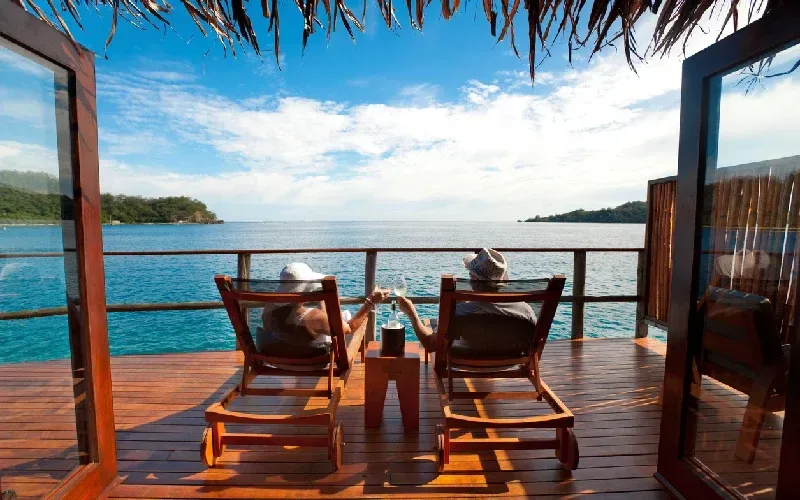
Fiji is one of the world's premier honeymoon destinations. The archipelago pioneered a particular style of high-end island holiday: *overwater and beachfront bures*** (traditional-style villas), private-island resorts, and small properties where the staff learn your name on day one. It also does the opposite extremely well — backpacker lodges and family resorts sit on the same coastlines.
Few small nations have a consumer brand this recognisable. FIJI Water is drawn from an artesian aquifer on Viti Levu and exported worldwide, its square bottle a fixture in hotels, films and celebrity photographs. For a huge number of people, the bottle is their first and only encounter with the country's name.
Rugby is the national passion, and Fiji is genuinely world-class at the short form. The men's rugby sevens side won Fiji's first-ever Olympic medal — gold — at Rio 2016, then repeated it in Tokyo. The style of play, all offloads and improvisation, is admired globally. Visitors can catch the Coral Coast 7s in Sigatoka each January or Fijian Drua Super Rugby matches from February to May.
The firewalking ceremony (vilavilairevo) originated with the Sawau people of Beqa Island, whose practitioners walk barefoot across white-hot stones. Alongside the *meke — narrative song and dance — and the lovo* earth-oven feast, it reflects a culture that remains practised rather than performed for museums.
Fiji is also known among naturalists for species found nowhere else — most famously the Fijian crested iguana, an endangered lizard surviving on just a handful of dry-forest islands. Inland Viti Levu holds rainforest, waterfalls and river valleys that most beach-bound visitors never see, and the Sigatoka Sand Dunes on the south coast are Fiji's first national park, protecting archaeological burial sites thousands of years old.
Exceptionally. It is known as the soft coral capital of the world, with over 1,500 fish species. Taveuni's Rainbow Reef and the Great Astrolabe Reef are standouts.
Viti Levu: The main island: Nadi, Suva, the Coral Coast, Sigatoka sand dunes, river safaris and the Sabeto hot springs.
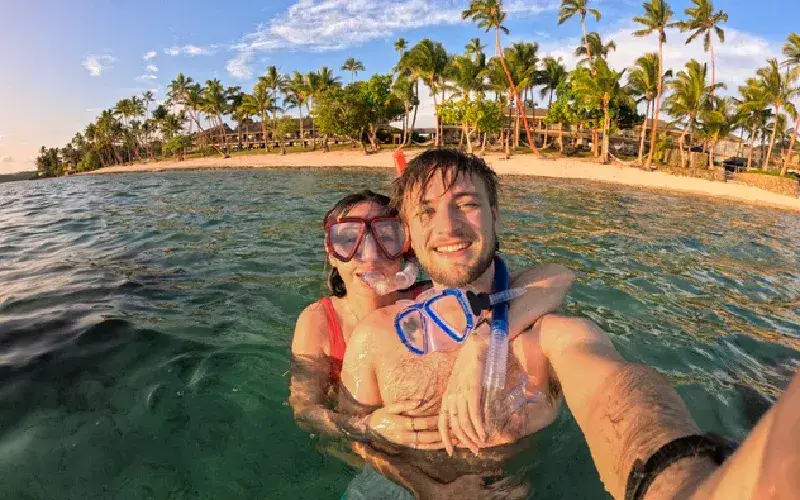
Mamanuca Islands: Closest to Nadi, easiest to reach, best for short stays, day trips and snorkelling.
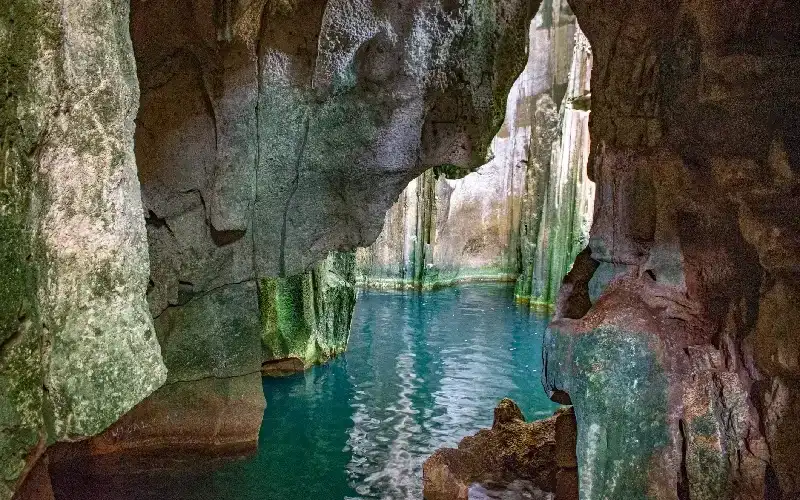
Yasawa Islands: Wilder and more dramatic, with the Sawa-i-Lau limestone caves and their turquoise swimming chamber.
Taveuni: The "Garden Island": waterfalls, rainforest, Bouma National Heritage Park and elite diving.
Vanua Levu: Fiji's quieter second island, centred on Savusavu.
Kadavu: Remote, undeveloped, and home to the Great Astrolabe Reef.
Beqa Lagoon: Firewalking heartland and one of the world's best shark dives.
Seven to ten days minimum, given the long flights. Ten to fourteen allows both a mainland stay and time on the outer islands.
| Season | Months | Conditions | Best For |
|---|---|---|---|
| Dry / Winter | May – Oct | 24–29°C, low humidity | Peak. Diving, sailing, sightseeing |
| Peak dry | Jul – Sep | 24–29°C, low humidity | Best weather; highest prices |
| Shoulder | Apr & Nov | Warm, sunny, breezy | Best value compromise |
| Wet / Summer | Dec – Apr | Warm, occasional showers | Lush scenery, lowest prices |
The verdict: May to October is the best time to visit Fiji. Humidity drops, rainfall is low, cyclone risk is minimal and underwater visibility is at its best. July to September is the peak within the peak — ideal conditions, but the highest rates.
April and November are the smart compromise: warm, mostly dry, noticeably cheaper and much quieter.
The wet season (December–April) brings heat, humidity, afternoon downpours and genuine tropical cyclone risk. Landscapes are at their greenest, the sea stays warm, and prices fall sharply — a reasonable trade if you're flexible and insured.
May to October, the dry season, with July to September the peak. April and November offer similar weather at lower prices.
Nadi International Airport (NAN) is the main gateway, with connections from Australia, New Zealand, the US west coast, Singapore and Hong Kong. Nausori (SUV) serves Suva.
Island transfers: catamaran ferries from Port Denarau serve the Mamanucas and Yasawas; domestic flights and seaplanes reach the outer islands.
On Viti Levu: rental cars, local buses and taxis all work. Roads outside the main circuit can be rough.
Currency: Fijian Dollar (FJD). Cards are accepted at resorts; carry cash for villages, markets and small islands.
Visas: Many nationalities receive a visitor permit on arrival — verify your status before booking.
Health: No malaria. Dengue is present, so use repellent. Drink bottled or filtered water outside resorts.
Language: English is official and widely spoken, alongside iTaukei Fijian and Fiji Hindi.
Bring kava root as a sevusevu gift when visiting a village — guides can arrange it.
Remove hats and sunglasses in villages; touching someone's head is disrespectful.
Cover shoulders and knees away from resort beaches; a sulu wrap is ideal.
Swimwear belongs on the beach, not in villages or shops.
Seven to ten days is the realistic minimum given long flight times. A common structure is two nights near Nadi or the Coral Coast, then five or more on an island. Add days for Taveuni or Kadavu, which need internal flights.
It can be, particularly at private-island resorts and during peak season. Backpacker lodges, family resorts and wet-season travel make it far more affordable.
A traditional drink made from pounded pepper-plant root, served communally. It is mildly sedative, numbs the mouth, and is central to the sevusevu welcome ceremony.
Generally yes. Resort areas and islands are very safe; apply normal urban caution in Suva and Nadi after dark, and respect village customs.
Roughly November to April. Cyclones are infrequent but real, so travel insurance is strongly recommended for wet-season trips.
Keep the inspiration going with these handpicked travel reads.