
 Home
The Surprising Truth About Visiting Niagara Falls NY
Few natural wonders on the planet announce themselves as dramatically as Niagara Falls. Every second, 3,160 tons of water surge over its crest — a volume so staggering it generates electricity for homes across two nations. From the New York side, Horseshoe Falls and American Falls rise before you at uncomfortably close range, the water descending at 32 feet per second and throwing mist far enough to soak you well before you reach the rail. More than 20 million people make their way here each year, drawn by something that photographs never quite capture and that descriptions routinely underestimate.
What lies beyond that first view, though, is where the real story begins — centuries of glacial force, carefully managed water treaties, Indigenous history, and engineering feats that quietly shape every drop falling before you. This account explores the history, science, and experiences that make Niagara Falls, NY, far more remarkable than most visitors realize.
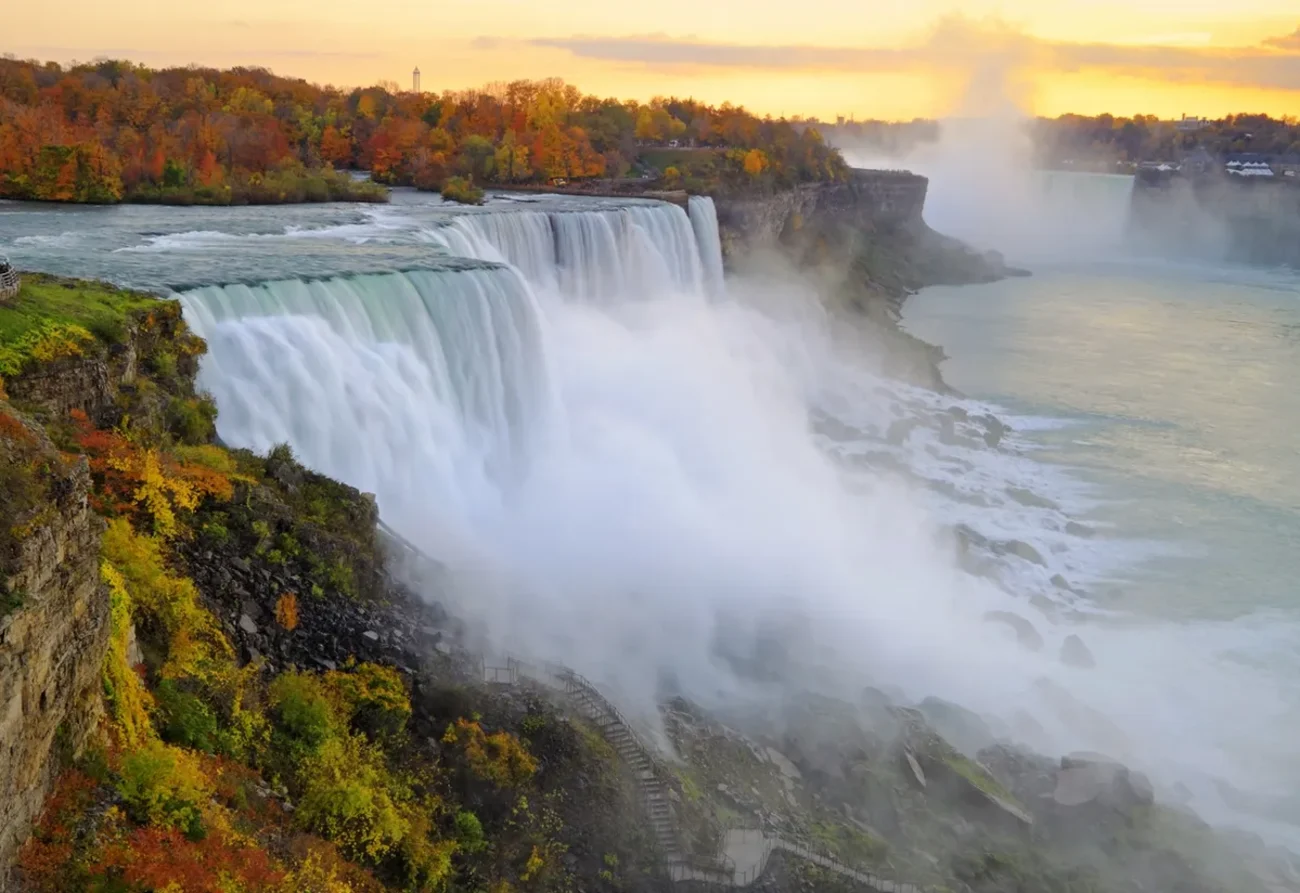
Niagara Falls NY: More Than a View from the US Side
Most visitors arrive expecting a single, thunderous waterfall. What greets them on the New York side is something considerably more intricate — a system of three distinct falls, divided between two nations, each with its own character and its own claim on the river.
Three waterfalls, two countries: What is actually in New York?
Horseshoe Falls, American Falls, and Bridal Veil Falls together form the Niagara Falls system, though the geography distributes them far from equally. Horseshoe Falls, commonly referred to as "Canadian Falls," straddles the international boundary, with most of its crest on the Canadian side, and carries about 90 percent of the river’s total flow, sending approximately 681,750 gallons of water per second across a crestline that measures 2,200 feet in length.
American Falls stands entirely within New York, occupying the stretch of river between Prospect Point and Luna Island. Its height varies considerably — anywhere from 70 to 110 feet — depending on the angle of measurement, a variation caused by the talus, a thick accumulation of rock debris that has collected at its base over centuries. The crestline reaches roughly 1,000 feet across. Bridal Veil Falls, the most modest of the three, stands separated from American Falls by Luna Island alone. At 181 feet tall and just 56 feet wide at the crest, it is the narrowest waterfall in the entire system.
The water feeding all three originates from four of the five Great Lakes, channeled through the Niagara River before emptying into Lake Ontario. So a visit to Niagara Falls NY places you beside two of these three falls — American Falls and Bridal Veil Falls — while the third, Horseshoe Falls, is shared with Canada and can be seen up close from Terrapin Point.
America's oldest state park is free to enter
Niagara Falls State Park charges no admission. The gates remain open every single day of the year, and this has always been the case.
That policy traces directly to 1885, when the passage of the Niagara Appropriations Bill established the Niagara Reservation — the oldest state park in the United States. New York State Assemblyman Thomas Vincent Welch drove that legislation forward and subsequently became the park's first superintendent. The grounds were shaped by Frederick Law Olmsted, the landscape architect responsible for Central Park, whose commitment to preserving native vegetation remains the guiding principle behind how the park is maintained to this day. Across its 400-plus acres, the park offers far more terrain to explore than the main viewing areas suggest. Parking carries a fee, but the falls themselves belong to everyone who walks through.
Close-up views in New York vs. wide views in Canada
The two sides of Niagara present fundamentally different relationships with the water. The American side places you within the falls rather than opposite them. Goat Island, Terrapin Point, and Luna Island all sit between the falls, offering proximity that no viewpoint across the river can replicate. Cave of the Winds carries this further still, guiding visitors along wooden walkways to the very base of Bridal Veil Falls. The New York side carries a quieter, more park-like character — a marked contrast to the dense commercial development lining the Canadian shore.
Canada, meanwhile, faces all three falls directly. That head-on perspective produces the wide, unobstructed view of American Falls and Horseshoe Falls side by side that has defined popular imagery of Niagara for well over a century. Each side captures something the other cannot — New York offers immersion, Canada offers the panorama. Understanding this distinction before you arrive shapes an entirely different kind of visit.
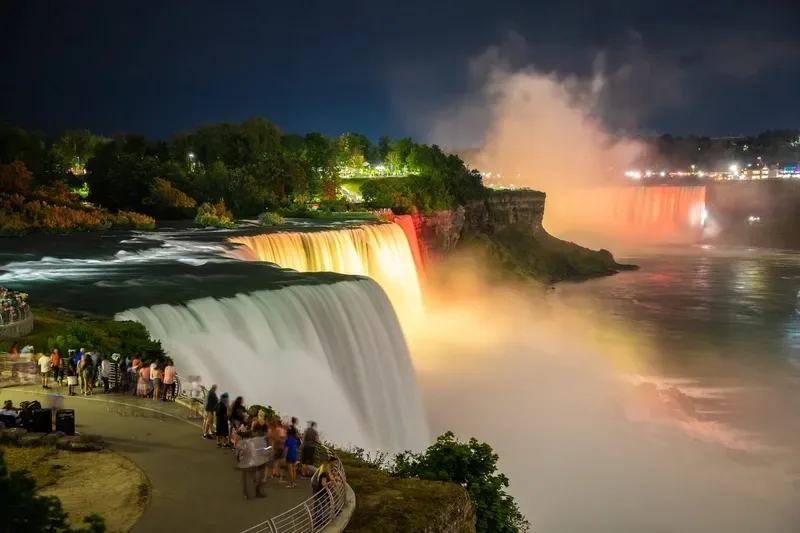
The Falls Are Still Changing — and People Control Their Flow
What stands before visitors today is not what stood here a millennium ago, and it bears little resemblance to what will exist a millennium from now. Niagara Falls NY occupies land still actively being carved by water, geological collapse, and a degree of human intervention most onlookers never suspect.
How glaciers and erosion shaped Niagara Falls
The falls owe their existence to a glacial retreat. Roughly 12,500 years ago, the Wisconsin glaciation pulled back across this region, releasing vast quantities of meltwater that cut a path over the Niagara Escarpment near present-day Lewiston. The escarpment's composition made this inevitable — hard dolomite sits atop far softer shale, and as the shale erodes faster than the rock above it, the dolomite breaks away in slabs and crashes into the river below. That process has driven the falls approximately 11 kilometers, or 6.8 miles, upstream from where they first formed.
The erosion has never stopped, only slowed. Over the past 560 years, the falls retreated at a pace of 1 to 1.5 meters annually — until modern flow management brought that figure down to roughly 0.3 meters, or one foot, per year. At this rate, geologists calculate the falls will eventually reach Lake Erie in approximately 50,000 years, at which point the river will no longer drop over any escarpment at all, and Niagara Falls NY will simply cease to exist.
Why more water is diverted at night
The falls operate under terms negotiated in 1950, when a formal treaty between the United States and Canada established minimum flow requirements that balance spectacle against energy production. During daytime tourist hours, at least 100,000 cubic feet of water per second must pass over the crest. After dark and throughout the off-season, that figure drops to 50,000 cubic feet per second.
The water redirected away from the falls is not lost — it travels through intake tunnels to power plants positioned on both sides of the river, facilities with a combined generating capacity of about 4.4 million kilowatts. During summer months, roughly 50% of the Niagara River's total flow is diverted for this purpose; in winter, when tourist numbers fall sharply, that proportion reaches 75%. The arrangement is deliberately calibrated: an unbroken curtain of water performs for daytime visitors, while the river quietly works through the night.
Why winter ice rarely stops the falls
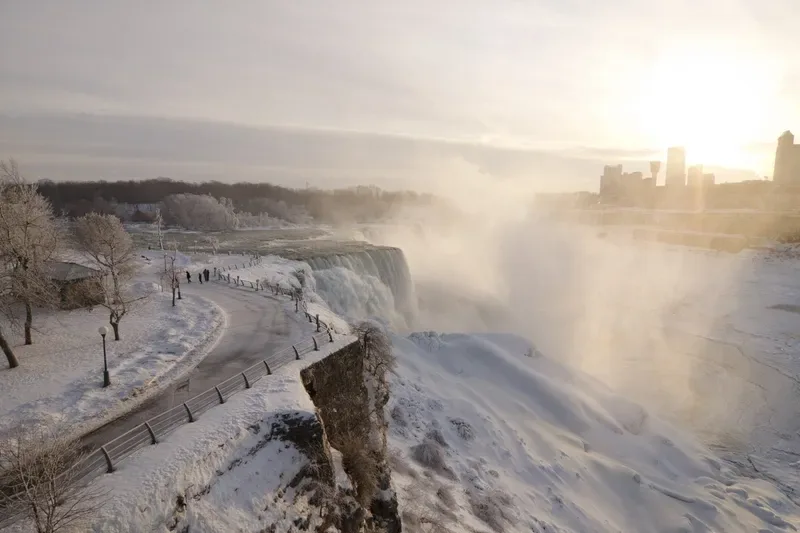
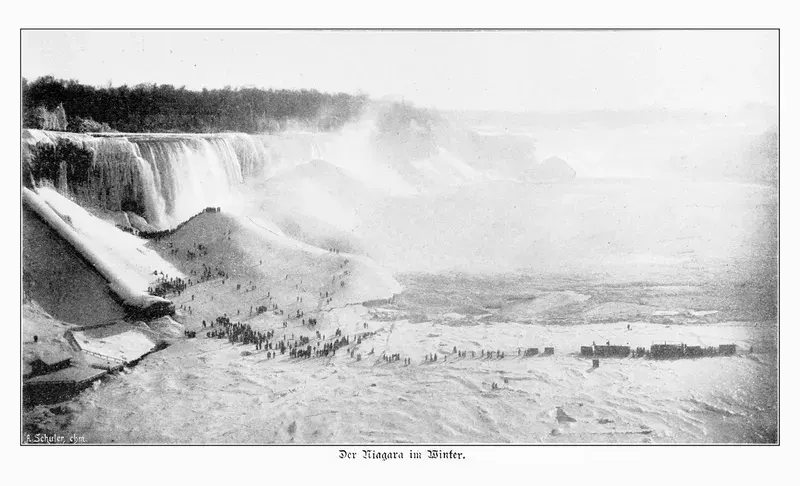
Winter at Niagara Falls produces some of its most visually striking conditions, though the appearance of the falls in photographs can deceive. Spray and mist freeze against the rocks and surrounding landscape, creating the impression that the entire system has locked solid — yet water continues moving beneath that frozen surface. Ice carried down from Lake Erie sometimes accumulates below the falls into what is known as an ice bridge, a compressed formation that once held enough weight for people to cross on foot. That practice ended in February 1912, when the bridge broke apart, and three people died.
Only one documented instance exists of the falls stopping naturally. In March 1848, an unusual accumulation of wind-driven ice blocked the upper river near its source, halting flow for approximately 30 hours — long enough for residents to walk out onto the exposed riverbed and collect artifacts from the silted bottom. To limit the ice flowing into the river, a 2.7-kilometer, or 1.7-mile, ice boom has been installed each winter since 1964 across the outlet of Lake Erie between Buffalo and Fort Erie, helping a natural ice arch form and hold ice back before it reaches the river. American Falls, for its part, reads as almost entirely frozen in winter photography — a consequence of the fact that it carries only about 7% of the river's total flow, leaving too little moving water to push back effectively against the cold.
The History Behind the Falls May Surprise You
The geological story of Niagara Falls is remarkable enough on its own. The human story layered on top of it runs deeper still. Long before the Niagara Reservation existed, long before Frederick Law Olmsted drew a single line on paper, the Haudenosaunee — the people of the Iroquois Confederacy — had already claimed this river as sacred ground. Their presence along the Niagara predates every settler account by centuries, and the river itself shaped the architecture of their lives: trade routes, settlement patterns, spiritual practice, and the movement of nations across this landscape.
Indigenous Ties to the Niagara River
The name "Niagara" carries that history within it, derived from Indigenous language and reflecting how inseparable this river was from the people who first gave it meaning. Villages rose along its banks. The falls served as a landmark that oriented movement and connected different nations across a vast region. When European settlers eventually arrived, that relationship with the land didn't disappear. It became one stratum in a much longer, more layered story — one that the falls still carry today, even if most visitors never think to ask about it.
Niagara's Role in the Underground Railroad
Several centuries later, the same river that once guided Indigenous trade became one of the most consequential border crossings in American history. Niagara Falls sat squarely along one of the final passages of the Underground Railroad. For freedom seekers crossing from the United States into Canada, the Niagara River was the last obstacle between enslavement and liberty. Crossing points near the falls served as escape routes, and residents on both sides of the river took active roles in getting people safely across. The geography you see today — the falls, the gorge, the river running toward the international boundary — is the same geography that once made freedom possible for countless people.
How Public Pressure Helped Protect the Falls
By the late 1800s, a different kind of struggle was unfolding at the water's edge. Industrial mills had crowded in around the falls, and private landowners charged admission fees simply to view them. Public access to one of North America's great natural wonders was being sold off piece by piece. The backlash came in the form of a civic movement called "Free Niagara," which, alongside the legislative efforts of Thomas Vincent Welch, forced the creation of the Niagara Reservation in 1885. The falls became public land — permanently — because enough people refused to accept anything less.
How Niagara Helped Bring Electric Power to Buffalo
Almost simultaneously, engineers were looking at the same river and seeing something else entirely: stored energy on an extraordinary scale. Harnessing the Niagara's flow, they generated electricity that traveled miles to light homes and businesses in Buffalo — one of the earliest demonstrations of large-scale hydroelectric power anywhere in the country. That achievement set a precedent still visible in the power plants operating along the river today. What began as a current of water became a current of a different kind, one that altered how an entire civilization understood the relationship between nature and energy. So the falls that stand before you now are not simply a geological spectacle. They are a site where freedom was sought, where public land was fought for, and where the modern electrical age quietly began.
Yes, especially if you enjoy close-up waterfall views and nature walks. Niagara Falls State Park is free to enter, though parking and attractions such as Maid of the Mist cost extra.
New York offers close-up views from places like Goat Island, Luna Island, and Terrapin Point. Canada offers wider, head-on views of all three waterfalls.
Ride the Maid of the Mist, explore the walkways at the Cave of the Winds, or walk around Goat Island and the Three Sisters Islands. Niagara Gorge also offers hiking and birdwatching.
A day trip works well for seeing the falls and choosing a few attractions. Staying overnight allows a slower pace and time to enjoy the illuminated falls, but adds accommodation costs.
Niagara Falls consists of three waterfalls, and water is diverted for hydroelectric power, with more diverted at night. Despite their icy winter appearance, the falls usually keep flowing beneath the ice.
Customize Your Dream Vacation!
Get in touch with our local experts for an unforgettable journey.
Plan Your TripThings to Do in Niagara Falls NY Beyond Taking Photos
The rail and the overlook tell only part of the story. Niagara Falls NY holds experiences that put you at the base of the falls, inside the gorge, and along river corridors that most visitors never reach. Each of the following draws you closer to the water — or deeper into the history surrounding it.
Maid of the Mist: See the falls from the river
The Maid of the Mist began its life on May 27, 1846, hauling people, cargo, and mail across the Niagara River for a modest fare. Sightseeing was never the original intent. Once bridges made the crossing practical for everyday travel, the operators found a new purpose for the vessel, and what followed became North America's oldest tourist attraction. Theodore Roosevelt, Marilyn Monroe, Mikhail Gorbachev, and Princess Diana have all stood on its deck.
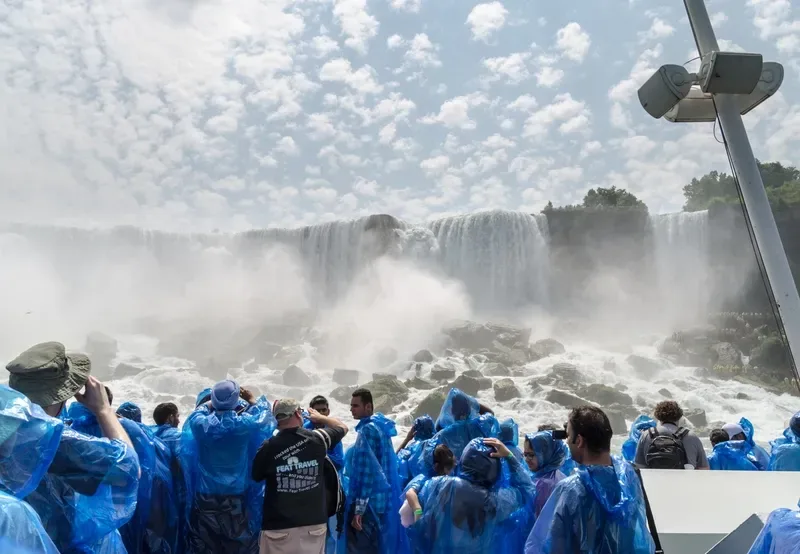
Today, the all-electric boat departs every 15 minutes during peak season for a roughly 20-minute journey past American Falls and into the basin of Horseshoe Falls. Ponchos are distributed before boarding, which is less a courtesy and more a necessity. Adult tickets run USD 30.25, children aged 6 to 12 pay USD 19.75, and those 5 and under ride free alongside a paying adult.
Cave of the Winds: Get close to Bridal Veil Falls
Wooden walkways on Goat Island carry you to the base of Bridal Veil Falls at Cave of the Winds — close enough that the distinction between mist and rain becomes academic. This attraction charges a separate admission fee, but the proximity it offers to falling water is unlike anything available from the standard overlooks.
Goat Island: Walk to Terrapin Point and Three Sisters Islands
Goat Island occupies the strip of land between American Falls and Horseshoe Falls, which means standing on it places you between two countries and between two of the three falls simultaneously. Entry beyond parking costs nothing, and Lot #2 offers free parking every Tuesday, Wednesday, and Thursday. Most visitors take between 60 and 120 minutes to move through the island, while the full 1.5-mile perimeter walk runs roughly 30 minutes at a steady pace. Restrooms, picnic areas near Three Sisters Islands, and the Top of the Falls Restaurant near Terrapin Point give you reason to stay longer.
Three historic walking bridges connect Goat Island to the Three Sisters Islands, where the upper rapids build their momentum before pitching over the crest. The islands were restored in the early 2010s as part of New York State’s multi-year, USD 25 million revitalization of Niagara Falls State Park, adding new walkways, overlooks, and railings.
Niagara Gorge: Explore trails beyond the main falls
The gorge running below the falls rewards those willing to descend into it. At the Power Plant Ruins Site, a free elevator carries you to river level, where views of the Rainbow Bridge and the collapsed remains of a hydroelectric plant — which gave way on June 7, 1956 — wait below. A green corridor from that point extends along the riverbank, open to walkers, hikers, and cyclists heading toward Whirlpool Park.
Whirlpool State Park takes the gorge experience further, with trails dropping to river level for direct views of the whirlpool and rapids. The descent takes roughly 20 minutes; the climb back up takes closer to 40. That asymmetry is worth accounting for before you head down.
Birdwatching: Look for gulls, bald eagles, and other wildlife
The gorge and river corridor attract more than hikers. Gulls congregate near the rapids with reliable consistency, and bald eagles appear along the Niagara River's edge with enough frequency to reward patience. This stretch of water, shaped by geological forces over 12,500 years, turns out to be as productive for birdwatching as it is for everything else.
What to Know Before You Visit Niagara Falls NY
A well-spent visit to Niagara Falls NY depends far less on luck than on a few decisions made before you arrive. Season, budget, and time all shape what you actually experience once you're there.
Choose your season around weather, crowds, and attraction schedules
Each season presents a genuinely different version of the falls. Summer draws the largest crowds but rewards visitors with longer daylight hours and the falls illuminated after dark. Fall brings cooler temperatures and breathing room, making it one of the more comfortable windows for a full day of walking. Winter thins the crowds considerably and wraps the gorge in ice formations that give the landscape an entirely different character. Spring sits somewhere in the middle — mild weather, moderate foot traffic, and the full roster of attractions reopening after the off-season.
Budget for parking, paid attractions, and meals
The park entrance carries no admission fee, but the costs accumulate elsewhere. Parking, meals, and paid attractions like Maid of the Mist and Cave of the Winds add up quickly. Two people visiting together can reasonably expect to spend between USD 150 and USD 500 per person depending on how many paid experiences they choose.
Decide whether to stay overnight or visit for the day
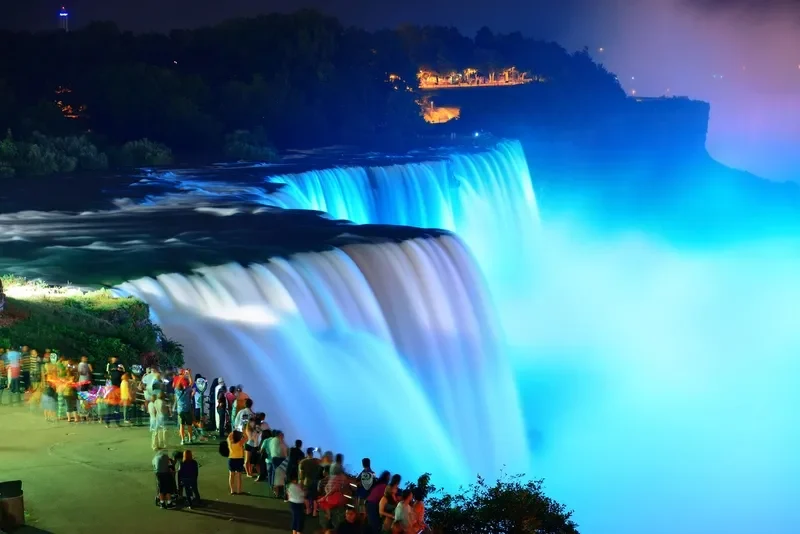
A single day covers the main viewing areas, a boat ride, and Goat Island without much difficulty. Staying overnight allows a slower pace and time to watch the falls after dark, when illumination changes the scene entirely — though accommodation adds meaningfully to the overall cost.
Plan your route with walking distances and access needs in mind
Goat Island, Three Sisters Islands, and the Niagara Gorge trails each involve sustained walking on uneven terrain. Anyone visiting with mobility considerations should check trail conditions and accessibility details in advance, since the elevation changes in the gorge in particular can be demanding.
Pack for mist and stay on marked paths
Spray reaches well beyond the immediate waterfront. A rain jacket earns its place in any bag headed to the falls, regardless of forecast. Barriers and marked paths along the gorge edge exist for good reason — the rock surfaces stay slick throughout the year.
Check entry documents if you plan to cross into Canada
Crossing into Ontario requires valid identification, and the border wait times near the falls stretch considerably around Canadian public holidays. Anyone planning to take in both sides of the falls in a single day should account for that delay.
Conclusion
Niagara Falls NY holds its most compelling details just past the first glance. Free entry into the oldest state park in the country, close-up vantage points no Canadian overlook can replicate, and a river carrying the weight of glacial history, Indigenous legacy, and two centuries of engineering decisions — none of that announces itself from the rail.
Every mist-soaked walkway here has earned its place in the historical record, from the freedom seekers who crossed this river under cover of night to the engineers who first coaxed its force into electric current. The erosion still continues, quietly reshaping the crestline year by year, indifferent to the 20 million people watching from above.
A thoughtful visit — one that accounts for seasons, walking distances, and the occasional border crossing — returns something far richer than a photograph. Pack for the spray, respect the marked paths, and allow the falls the time they deserve. Niagara Falls NY has been drawing curious minds for centuries. It rarely disappoints those who arrive prepared to look closely.
Discover New York City like an insider. This guide covers the best time to visit, where to stay, how to budget, and how to get around by subway, plus must-see landmarks and restaurants worth your time.
From 1.8-billion-year-old rocks and wildlife found nowhere else to heat risks, permits, and the North Rim’s post-fire changes, these are the Grand Canyon facts every visitor should know before arriving.

Philadelphia has much more to offer than Independence Hall and the Liberty Bell. This guide takes you to the neighborhoods locals love, the best cheesesteak spots, budget-friendly BYOB restaurants, and smart tips to save money and skip the crowds.
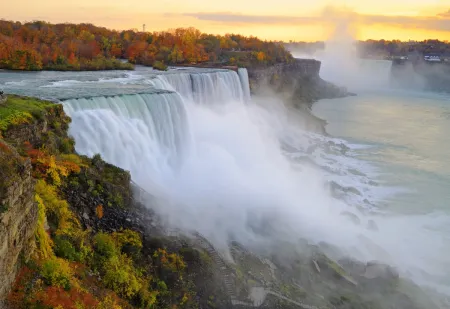
Niagara Falls NY offers far more than a quick photo stop. Explore America’s oldest state park for free and get close to the American and Bridal Veil Falls. Ride the Maid of the Mist, walk Goat Island, and discover the history, science, and practical tips that make your visit unforgettable.

The White House has a past far stranger than its famous facade suggests. It was built partly by enslaved workers, burned by British troops in 1814, and rebuilt more than once. Below its best-known rooms are a sealed swimming pool and a wartime bunker.
