
 Home
HomeHokuriku & Hiroshima Explorer Private Tour
.webp "Hokuriku & Hiroshima Explorer Private Tour")
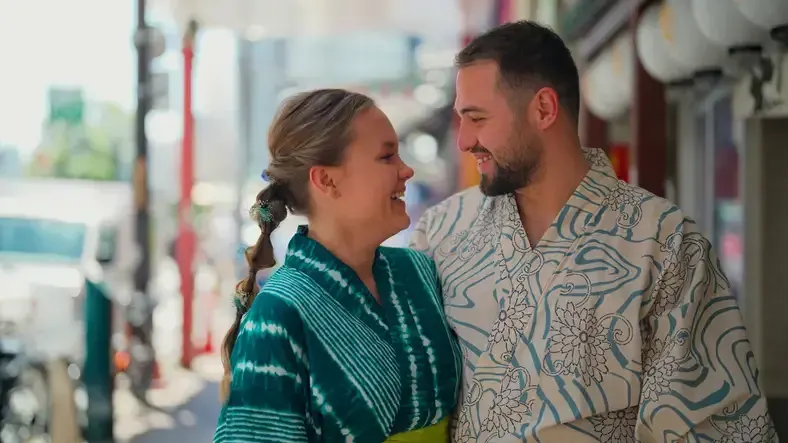
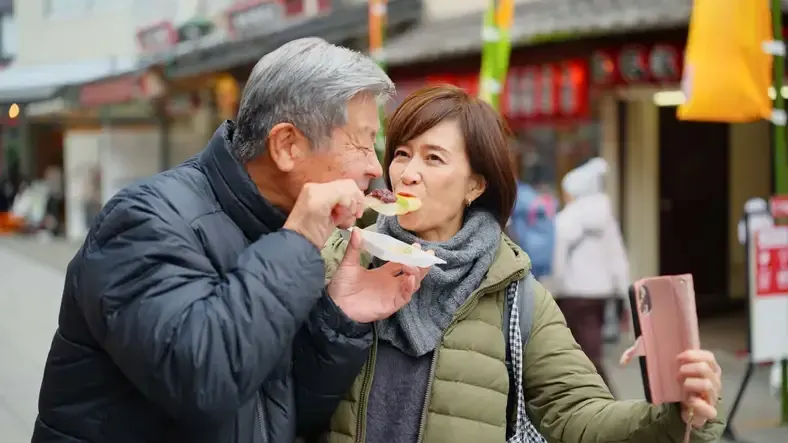


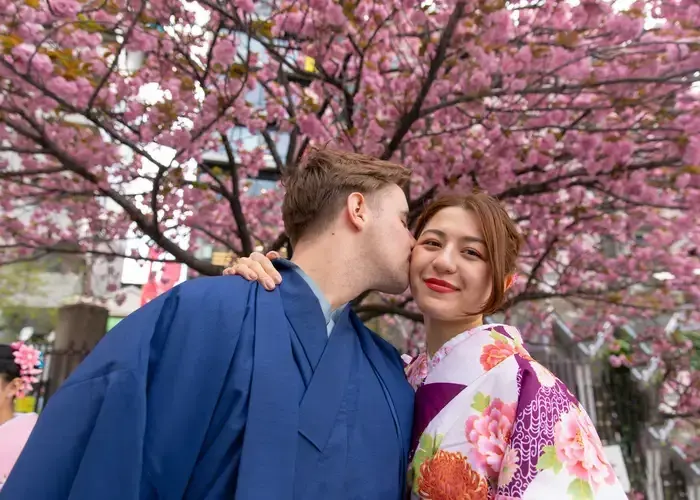
Japan's deepest cultural journey in 14 private days — Mount Fuji, Hakone's Lake Ashi, the snow-country villages of Takayama and Shirakawa-go, Kenrokuen Garden, a sacred Kumano pilgrimage, a Buddhist temple overnight in Koyasan, Miyajima's floating torii gate, Himeji Castle, and Hiroshima's Peace Memorial.
- Meet-and-greet service upon arrival at the airport.
- Assistance with guest relations throughout your stay.
- Airport arrival and departure transfers.
- All transfers and transportation by air-conditioned vehicle as mentioned in the itinerary.
- Accommodation for 13 nights in the hotels mentioned in the itinerary, including daily breakfast.
- Reserved-seat Shinkansen (Bullet Train) tickets as specified in the itinerary.
- Local English- or Spanish-speaking tour guide during guided sightseeing tours.
- Sightseeing tours as mentioned in the itinerary.
- Entrance fees to all sites and attractions mentioned in the itinerary.
- Lake Ashi Cruise and Komagatake Ropeway experience.
- Round-trip ferry tickets to Miyajima Island.
- One Welcome Suica Card loaded with JPY 3,000 per person.
- All meals as specified in the itinerary.
- Peak season, holiday, and New Year surcharges.
- Bottled water during sightseeing tours.
- Portage when required.
- All service charges and taxes.
- International airfare.
- Domestic flights within Japan.
- Entry visa to Japan (if applicable).
- Single room supplement.
- Additional luggage transfer fees.
- Wi-Fi router rental.
- Meals and beverages not mentioned in the itinerary.
- Traditional Kaiseki meals unless specifically mentioned in the itinerary.
- Personal onsen fees where applicable.
- Optional tours and activities.
- Personal expenses such as laundry, telephone calls, drinks, shopping,
- souvenirs, and other items of a personal nature.
- Tipping for guides and drivers.
- Any item not specifically mentioned under Included.
Your Hokuriku & Hiroshima Explorer begins at Narita or Haneda International Airport, where your private transfer is ready to carry you directly to your Tokyo hotel.
Fourteen days stretch ahead of you — mountain villages, sacred pilgrimage routes, hot spring valleys, feudal castles, Zen temples, and one of history's most significant and moving sites. Today, there is nothing to do but arrive. Settle in, take your first walk, find your first bowl of ramen, and let Japan begin.
Overnight: Tokyo
After breakfast, your guide introduces you to Tokyo using the city's extraordinary public transport network, the most efficient and revealing way to move through a metropolis this vast and this layered.
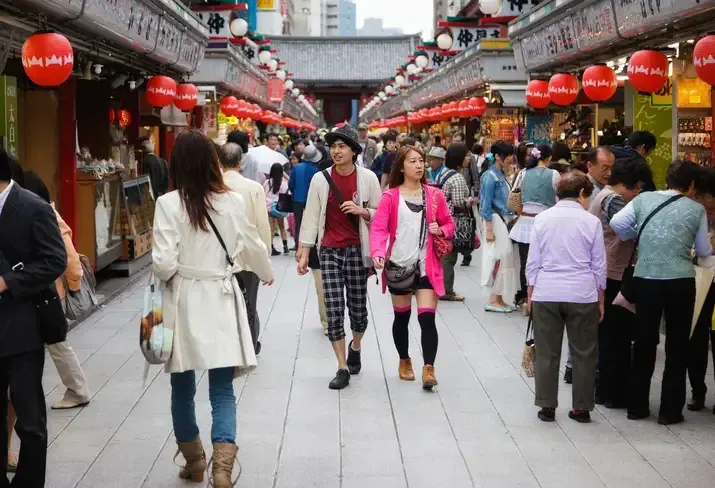
The morning opens at Senso-ji Temple in Asakusa, Tokyo's oldest Buddhist sanctuary, founded in 628 AD, where the Kaminarimon Thunder Gate and the long promenade of Nakamise Shopping Street beyond it have been drawing pilgrims, traders, and travelers without interruption for nearly fourteen centuries. The street itself is one of Japan's best places to find genuine handmade crafts, traditional confectionery, and the particular sensory warmth of a market that has never tried to be anything other than exactly what it is.
From Asakusa, travel to Tokyo Tower, the latticed red-and-white landmark that defined Tokyo's postwar ambition and still offers some of the most sweeping panoramic views of the city from its Main Observation Deck. On a clear day, with the city spreading in every direction as far as the eye can follow, you begin to understand the scale of what you have arrived in.
Overnight: Tokyo
Meals: Breakfast
A free day in Tokyo is not a gap in the itinerary, it is one of the most valuable things a 14-day Japan itinerary can offer.
Spend it however Tokyo speaks to you: the impossibly photogenic teamLab Planets digital art museum, the quiet canal paths of Yanaka, Tokyo's most authentically preserved old neighborhood, the vast green silence of the Imperial Palace East Gardens, or the electric density of Akihabara's electronics and anime culture.
For those who want to venture further, an optional day trip to Nikko, a UNESCO World Heritage city in the mountains north of Tokyo, home to the elaborate Tosho-gu Shrine complex, is one of Japan's most rewarding single-day excursions outside the capital.
Overnight: Tokyo
Meals: Breakfast
After breakfast, leave Tokyo and travel southwest toward the Hakone region, the single most celebrated natural landscape in all of Japan and the place where most travelers experience their first unobstructed view of Mount Fuji.
A relaxing cruise across Lake Ashi carries you across still water with Fuji reflected on the surface on clear mornings, a view that has been painted, photographed, and written about for centuries and still manages to be more beautiful than expected.
The Komagatake Ropeway ascends the caldera rim of Mount Hakone, crossing above volcanic craters and thermal vents with views across the entire Fuji-Hakone-Izu national park on clear days.
As the afternoon deepens, continue into the Mount Fuji area itself, the forested lake district at the volcano's northern base, and check in to your hotel as the mountain fades into the evening.
Overnight: Mount Fuji Area
Meals: Breakfast
Board the Shinkansen bullet train from the Fuji area toward Nagoya before continuing by coach into the Hida region of the Japanese Alps, a landscape of cedar forests, mountain rivers, and snow-dusted peaks that becomes more extraordinary with every kilometer.
Takayama arrives like a reward for the journey. Known as "Little Kyoto of the Mountains," this beautifully preserved Edo-period castle town has remained almost entirely unchanged since the 17th century, its dark-timbered merchant houses, sake breweries, and morning markets operating with a continuity that most Japanese cities lost long ago. The Sanmachi Suji historic district at its heart is one of the most atmospheric streetscapes in the country, particularly in the blue hour of a mountain evening. Spend the rest of the day exploring at your own pace.
Overnight: Takayama
Meals: Breakfast
Two of Japan's most distinctive and compelling places in a single day.
Shirakawago is a UNESCO World Heritage village of extraordinary visual power, a cluster of traditional Gassho-zukuri farmhouses whose steeply pitched thatched roofs, designed to bear the weight of the region's heavy snowfall, give the village a fairy-tale quality that is entirely authentic. These are not preserved buildings behind glass; families still live in them, farms still operate, and the smoke from the hearth fires still rises through the thatch exactly as it has for three centuries.
Kanazawa follows: a city that feels like Kyoto without the crowds, and in some ways, more genuinely preserved. Kenrokuen Garden, consistently ranked among Japan's Three Great Gardens, is a masterwork of Edo-period landscape design, streams, stone lanterns, pine trees trained into extraordinary shapes, and a seasonal beauty that changes completely from month to month. As the afternoon light softens, a walk through the Higashi Chaya District, the city's beautifully preserved geisha quarter, its two-story machiya teahouses lining the cobblestone lanes exactly as they did in the 19th century, completes one of the most visually rich days in the entire journey.
Overnight: Kanazawa
Meals: Breakfast
Board the Shinkansen and Limited Express train toward Osaka, Japan's third-largest city and its most uninhibited, most food-obsessed, and most genuinely warm urban personality.
The journey itself is part of the experience: the western coast of Honshu passing in glimpses of sea, farmland, and mountain as the train moves south through terrain most visitors never see. Arrive in Osaka and settle into your hotel. The city will introduce itself properly tomorrow.
Overnight: Osaka
Meals: Breakfast
After breakfast, Osaka reveals itself.
The Umeda Sky Building offers one of Japan's most dramatic urban viewpoints, a floating garden observatory connected between two towers at the 40th floor, with a circular open-air deck that frames the city in every direction. The view at dusk, as Osaka's lights ignite across the plain, is genuinely spectacular.
Dotonbori needs no introduction to anyone who has seen a photograph of Japan's neon-lit canals, but the photographs do not capture the smell of takoyaki from fifty vendors at once, the energy of the crowds, the sheer alive-ness of a district that has been entertaining and feeding Osaka's citizens since the 17th century. Eat well. Eat often. This is what Osaka demands.
Overnight: Osaka
Meals: Breakfast
Leave the city behind and travel south into the forested mountains of Wakayama Prefecture, a region of ancient pilgrimage routes, sacred rivers, and hot spring villages that feels entirely removed from the urban Japan of the past two days.
Kawayu Onsen is one of Japan's most distinctive hot spring destinations, a riverside village where the river itself is geothermally heated and in winter becomes an open-air communal bath known as Sennin-buro (the Thousand-Person Bath). Soak in natural mineral-rich waters with the forest around you and the night sky overhead. This is the onsen experience at its most elemental.
Overnight: Kawayu Onsen
Meals: Breakfast
Today follows one of Japan's oldest and most spiritually significant routes, the Kumano Kodo, a network of ancient pilgrimage paths through the mountains of the Kii Peninsula that has been walked by emperors, monks, and ordinary people since the 9th century, and is today one of only two pilgrimage routes in the world to hold UNESCO World Heritage status (the other being the Camino de Santiago in Spain).
Oyunohara, the vast riverside gravel bed that was the original sacred site of Kumano Hongu Taisha before the great flood of 1889, is marked by the largest torii gate in Japan, standing alone in the open air with the surrounding cedar forest as its only frame. The atmosphere is unlike anywhere else on this journey.
Kumano Hongu Taisha Shrine itself is the most important of the three Grand Kumano Shrines, a compact complex of lacquered vermillion halls hidden deep in the cedar forest that has been receiving pilgrims for twelve centuries. The walk up through the stone-flagged approach under the ancient trees earns its destination.
The evening belongs to Koyasan (Mount Koya), a mountaintop monastic complex founded by the Buddhist monk Kobo Daishi in 816 AD and home to over 100 temples, the extraordinary Okunoin Cemetery where over 200,000 stone grave markers disappear into a forest of 900-year-old cedar trees, and the most profound overnight experience available to visitors in Japan. You sleep, eat a traditional shojin-ryori (Buddhist vegetarian meal), and wake in a working Buddhist temple, participating in morning prayers if you choose, and leaving with a sense of place that no hotel can replicate.
Overnight: Temple Stay in Koyasan
Meals: Breakfast
Descend from Koyasan and travel through Osaka to board the Shinkansen westward to Hiroshima, Japan's most historically significant city and one of the most important destinations in the world for anyone seeking to understand the 20th century.
Arrive in the late afternoon and settle into your hotel. Tomorrow, Hiroshima will speak for itself.
Overnight: Hiroshima
Meals: Breakfast
A day of extraordinary emotional range, from one of Japan's most beautiful natural and cultural sites to one of its most historically profound.
The morning begins with the JR Ferry to Miyajima Island, home to Itsukushima Shrine, whose great vermillion torii gate rises from the tidal waters of the Seto Inland Sea in a composition of such natural and architectural perfection that it has been listed as one of Japan's Three Views for over four centuries. Sacred deer roam the island freely. The shrine itself, built on wooden piles directly over the water, is one of the finest examples of Heian-period architecture remaining in Japan. At high tide, the entire complex appears to float.
The afternoon returns to Hiroshima for what may be the most moving few hours of the entire journey. Peace Memorial Park occupies the hypocenter of the August 6, 1945 atomic bombing, a carefully designed landscape of memory, reflection, and hope that receives visitors from every country on earth. The Peace Memorial Museum presents the events of that morning with unflinching clarity and deep humanity. The preserved Atomic Bomb Dome — the only structure to survive near the epicenter, its skeletal iron frame still standing exactly as the blast left it, is a UNESCO World Heritage Site and one of the most powerful physical witnesses to history anywhere in the world.
Overnight: Hiroshima
Meals: Breakfast
A day that moves through three entirely different expressions of Japan's historical layering.
Kurashiki's Bikan Historical Quarter is the first, a canal district of white-plastered Edo-period storehouses whose weeping willows trail in the water between stone bridges and traditional craft shops, creating one of the most picturesque streetscapes in western Japan. It is calm, intimate, and completely unlike anything else seen on the journey so far.
Himeji Castle follows, Japan's finest surviving feudal castle and the most complete expression of 17th-century military architecture in the country. A UNESCO World Heritage Site, it is known as Hakuro-jo (White Heron Castle) for the sweeping elegance of its white plastered walls, and it has never once been destroyed by war, earthquake, or fire, making it a rare physical continuity with the Japan of the samurai era. The view of it from the approach road, framed by cherry trees, is among the most reproduced images in Japanese photography.
Arrive in Kyoto as the evening settles over the old imperial capital. Your final night in Japan.
Overnight: Kyoto
Meals: Breakfast
After breakfast, check out of your hotel and transfer to Kansai International Airport for your departure flight.
Fourteen days. Nine prefectures. Ancient pilgrimage paths, mountain villages, steaming hot springs, a night inside a Buddhist temple, a floating shrine, a feudal castle that has never fallen, and a city whose story is the most important one Japan has to tell. This is what a Japan journey looks like when it goes beyond the surface.
Meals: Breakfast
 $
10675
$
6755
$
5520
$
4780
$
11575
$
7290
$
5838
$
5065
$
10675
$
6755
$
5520
$
4780
$
11575
$
7290
$
5838
$
5065
 $
11580
$
7290
$
5838
$
5070
$
12365
$
8040
$
6595
$
5875
$
11580
$
7290
$
5838
$
5070
$
12365
$
8040
$
6595
$
5875
Our Travelers Testimonials
See how we’ve made every journey exceptional — straight from those who’ve traveled with us.

10 Reviews