
 Home
HomeSnow & Onsen Japan Private Tour
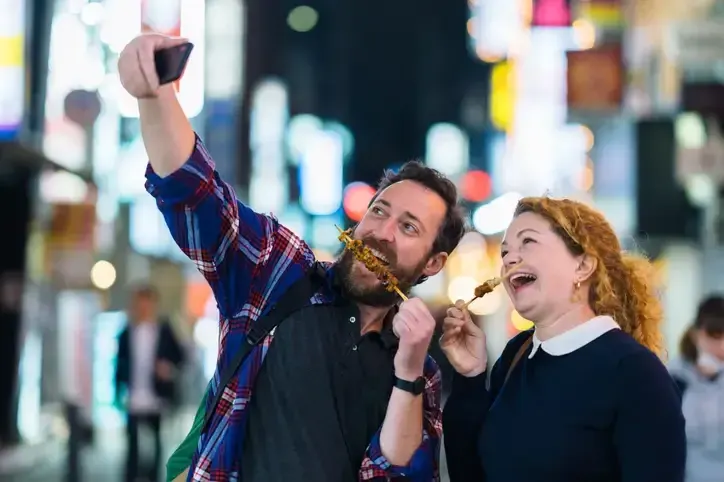
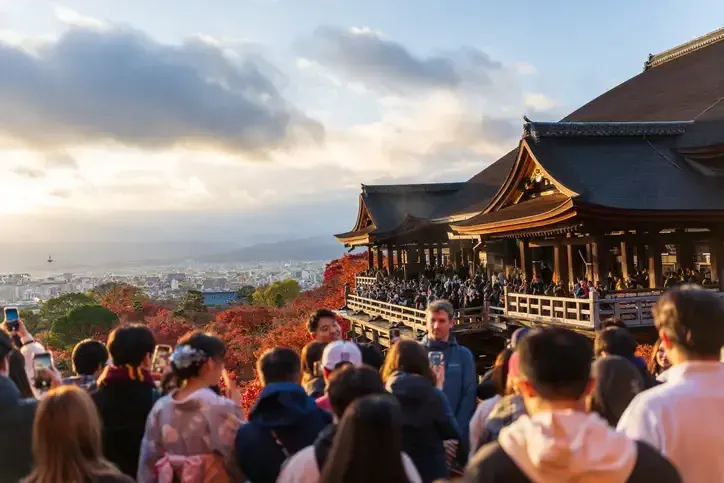
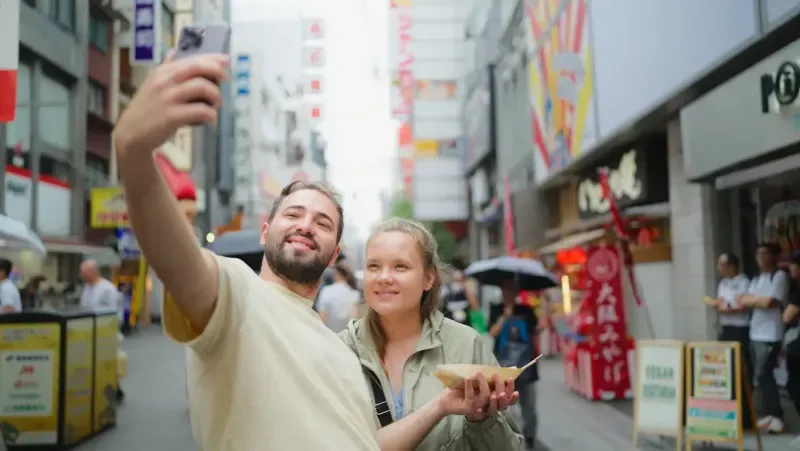
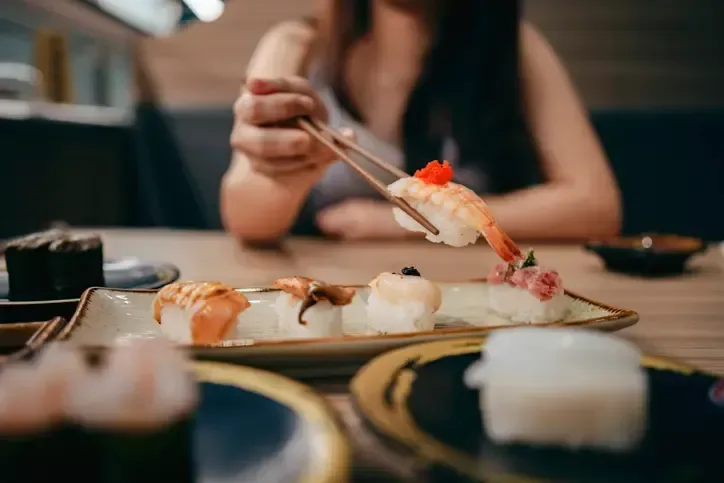
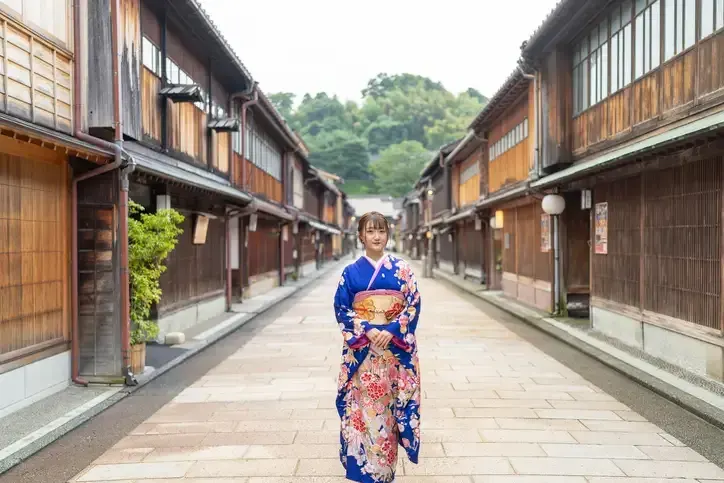


Japan in winter is a world apart — snow-covered Alps in Hakuba, natural hot spring onsens, Kyoto's golden temples, Arashiyama Bamboo Grove, Fushimi Inari's vermillion gates, and Osaka's Dotonbori. A private 10-day journey through Japan's most beautiful cold-season landscapes and cultural heart.
- Meet-and-greet service upon arrival at the airport.
- Assistance with guest relations throughout your stay.
- Airport arrival and departure transfers.
- All transfers and transportation by air-conditioned vehicle as mentioned in the itinerary.
- Accommodation for 9 nights in the hotels mentioned in the itinerary, including daily breakfast.
- Reserved-seat Shinkansen (Bullet Train) tickets as specified in the itinerary.
- Local English-speaking tour guide during guided sightseeing tours.
- Sightseeing tours as mentioned in the itinerary.
- Entrance fees to all sites and attractions mentioned in the itinerary.
- One Welcome Suica Card loaded with JPY 4,000 per person.
- One luggage transfer service from Hakuba to Kyoto (one suitcase per person).
- All meals as specified in the itinerary.
- Holiday, peak season, and New Year surcharges.
- Bottled water during sightseeing tours.
- Portage when required.
- All service charges and taxes.
- International airfare.
- Domestic flights within Japan.
- Entry visa to Japan (if applicable).
- Single room supplement.
- Ski lift passes.
- Ski or snowboard equipment rental.
- Ski lessons.
- Additional luggage transfer fees.
- Wi-Fi router rental.
- Meals and beverages not mentioned in the itinerary.
- Restaurant meals not specified in the itinerary.
- Traditional Kaiseki meals unless specifically mentioned.
- Optional tours and activities.
- Personal expenses such as laundry, telephone calls, drinks, shopping, souvenirs, and other personal items.
- Tipping.
- Any item not specifically mentioned under Included.
Your Snow & Onsen Japan journey begins at Narita or Haneda International Airport, where your private transfer is waiting to take you directly to your Tokyo hotel.
The rest of the day is entirely yours — recover from the flight, take your first walk through a Tokyo neighborhood, or simply sit with a bowl of ramen and let Japan settle around you. There is no agenda today. Tomorrow, the adventure begins.
Overnight: Tokyo
After breakfast, your private English-speaking guide leads you into Tokyo using the city's extraordinary public transport network — the fastest, most reliable, and most revealing way to understand how this city actually works.
The morning opens at Senso-ji Temple in Asakusa — Tokyo's oldest Buddhist sanctuary, where the Kaminarimon Thunder Gate and the long sweep of Nakamise Shopping Street beyond it have been welcoming pilgrims and travelers for over a thousand years. The street itself is lined with vendors selling everything from handmade ningyo dolls to fresh ningyo-yaki cakes, making it one of the best places in Tokyo to find an authentic souvenir.
The mood shifts at Meiji Jingu Shrine — a forested Shinto sanctuary dedicated to Emperor Meiji, hidden inside 170 acres of dense woodland in the middle of a metropolis of fourteen million people. The silence inside is startling and deliberate. From there, the energy of Harajuku and the curated elegance of Omotesando offer a masterclass in the tension between tradition and modernity that defines contemporary Tokyo — two streets, side by side, representing entirely different versions of the same city.
The day ends at Shibuya Crossing — the most pedestrian-dense intersection on earth, most spectacular at dusk when the lights ignite and the crowds reach their peak. Stand in the middle of it and you understand something about Tokyo that no guidebook can fully explain.
Overnight: Tokyo
Meals: Breakfast
After breakfast, leave Tokyo behind and travel by private vehicle toward Hakuba — a mountain village nestled deep in the Nagano Prefecture section of the Japanese Alps, and one of the finest winter sport destinations in all of Asia.
The drive itself is part of the experience: the urban density of greater Tokyo gives way gradually to open countryside, terraced fields, and eventually the snow-draped peaks of the Alps rising around you as you descend into the valley.
Check in to your hotel and take the rest of the day slowly — a walk through the alpine village, an early evening in the onsen, or simply standing outside in the cold watching the mountains turn from white to gold as the sun goes down.
Overnight: Hakuba
Meals: Breakfast
A full day on the mountain. Transport is provided to one of Hakuba's three world-class ski resorts — each offering different terrain, atmosphere, and mountain character:
- Hakuba Happo One Snow Resort — Hakuba's largest and most internationally renowned resort, host of the 1998 Winter Olympics alpine events
- Hakuba Goryu Snow Resort — gentler gradients and excellent family terrain across an interconnected network of runs
- Tsugaike Kogen Ski Resort — a quieter, more local resort known for its powder snow quality and uncrowded slopes
Whether you ski, snowboard, or simply want to walk through a snow-covered landscape and watch the mountains from the base of a run, today belongs entirely to the Alps.
Please note: Ski passes, equipment rental, ski lessons, and lift tickets are not included in the tour price and can be arranged locally.
Overnight: Hakuba
Meals: Breakfast
After breakfast, today has no itinerary — and that is entirely the point.
A Japanese onsen (natural hot spring bath) is one of the country's oldest and most restorative traditions, and a morning soaking in mineral-rich water with snow falling outside and mountain views through the steam is an experience that belongs to no other country on earth. Most Hakuba hotels have onsen facilities on-site; your guide can recommend public bathhouses in the village for a more authentic local experience.
The village itself rewards slow exploration — small restaurants serving Nagano mountain cuisine, sake shops, craft stores, and the kind of unhurried alpine atmosphere that makes Hakuba feel genuinely different from the ski resorts of Europe or North America.
Before you leave today, place your main luggage at the hotel lobby — it will be transported directly to your Kyoto hotel. Pack light for the journey ahead. One suitcase per person. Guide assistance is available for luggage transfer arrangements.
Overnight: Hakuba
Meals: Breakfast
After breakfast, depart Hakuba by private vehicle toward Kanazawa — a city that feels like a quieter, less-visited Kyoto, known for its perfectly preserved samurai and geisha districts, its gold leaf craftsmanship, and the extraordinary Kenrokuen Garden, consistently ranked among Japan's three most beautiful.
From Kanazawa, board the Shinkansen bullet train toward Kyoto via Tsuruga — a route that carries you through some of central Japan's most dramatic winter scenery, including coastlines, mountain passes, and the kind of countryside that disappears from view before you've had time to fully register it.
Arrive in Kyoto as evening approaches. Transfer to your hotel and let the city settle over you.
Overnight: Kyoto
Meals: Breakfast
After breakfast, your guide leads you into the layers of Kyoto's cultural heritage — a city that served as Japan's imperial capital for over a thousand years and has never entirely stopped feeling like one.
Kiyomizu-dera Temple is the first destination — a UNESCO World Heritage Site clinging to the forested hillside east of the city, its ancient wooden stage cantilevered over the treetops without a single nail, offering panoramic views across Kyoto's rooftops and the mountains beyond. The walk up to it through the terraced lanes of Sannenzaka and Ninenzaka — two of Japan's most beautifully preserved historic streetscapes, lined with wooden machiya townhouses, tea shops, and craft stores — is as memorable as the temple itself.
The afternoon moves into Gion — Kyoto's famous geisha district, where the stone-paved lanes, red paper lanterns, and ochaya teahouses have remained almost entirely unchanged for centuries. In the late afternoon, the possibility of glimpsing a maiko or geiko making her way to an evening appointment is entirely real.
The day ends at Kinkaku-ji (The Golden Pavilion) — perhaps Japan's single most iconic image, a Zen temple whose top two floors are covered entirely in gold leaf, reflected in the still surface of the Mirror Pond as the late afternoon light turns everything amber.
Overnight: Kyoto
Meals: Breakfast
After breakfast, Day 8 takes you to the experiences that reveal why Kyoto is not just a destination but a state of mind.
The Arashiyama Bamboo Grove opens the morning — a path through towering green bamboo shoots that filters the light into something otherworldly and creates a silence that feels deliberately constructed. Adjacent to it, Tenryu-ji Temple is one of Kyoto's most important Zen temples and another UNESCO World Heritage Site, its stroll garden offering some of the city's finest views of the Arashiyama mountains reflected in a central pond.
The afternoon belongs to Fushimi Inari Taisha — the head shrine of Inari, the Shinto deity of rice, sake, and prosperity, and the site of the ten thousand vermillion torii gates that climb the mountain behind the shrine in an unbroken tunnel stretching for several kilometers. The lower gates are the most photographed; the upper trail, walkable in two to three hours, offers increasingly dramatic views and increasingly fewer crowds.
Overnight: Kyoto
Meals: Breakfast
After breakfast, travel to Osaka — Japan's third-largest city, its culinary capital, and the place where the country's most uninhibited, joyful, and genuinely warm urban personality reveals itself.
Osaka Castle stands at the center of the city surrounded by its moat and cherry trees — one of Japan's most recognizable historical landmarks and a museum of the Sengoku period that shaped modern Japan. The grounds around it are as beautiful as the castle itself, especially under winter skies.
The rest of the day is given over to Shinsaibashi and Dotonbori — Osaka's legendary shopping and entertainment district, where neon signs reflect in the canal below, takoyaki vendors line every street corner, and the atmosphere of a city that has been feeding and entertaining itself for centuries is impossible to resist. Eat everything. This is what Osaka is for. Return to your Kyoto hotel in the evening.
Overnight: Kyoto
Meals: Breakfast
After breakfast, check out of your hotel and transfer to Kansai International Airport for your departure flight.
10 days ago, Japan was a destination. It is now a place you know — its cold mountain air, its steaming onsens, its ancient temples and modern crossings, its bamboo groves and golden pavilions, its food and its silence and its extraordinary capacity to be, simultaneously, the most ancient and the most forward-looking country on earth.
Meals: Breakfast
 $
9625
$
5780
$
4555
$
3940
$
9900
$
6080
$
4840
$
4230
$
9625
$
5780
$
4555
$
3940
$
9900
$
6080
$
4840
$
4230
 $
9900
$
6070
$
4845
$
4230
$
9999
$
6390
$
5165
$
4550
$
9900
$
6070
$
4845
$
4230
$
9999
$
6390
$
5165
$
4550
Our Travelers Testimonials
See how we’ve made every journey exceptional — straight from those who’ve traveled with us.

10 Reviews