
Where Should You Go on Your First African Safari? A Full Guide
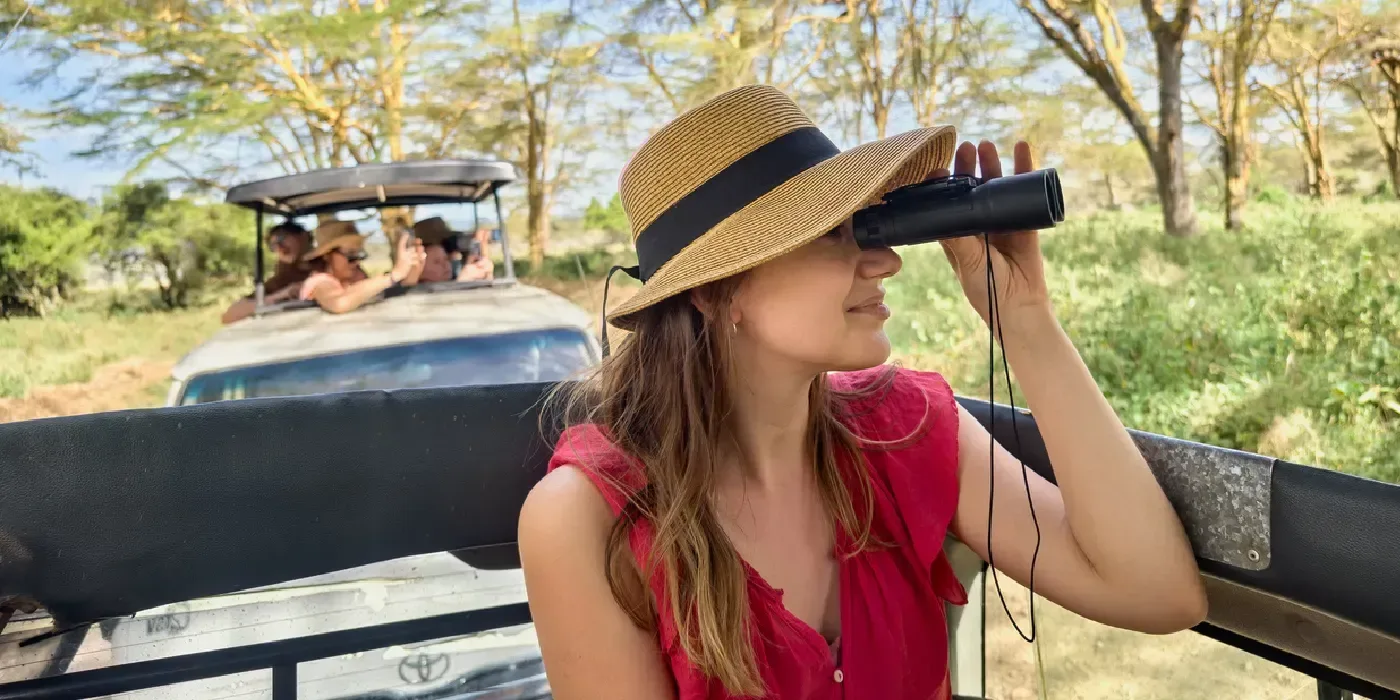
Africa offers incredible safari destinations, from spotting the Big Five and witnessing the Great Migration to trekking with mountain gorillas and exploring remote wilderness areas. Kenya and Tanzania are the best choices for most first African safaris, offering the Big Five and the Great Migration with easy, well-supported logistics. Uganda and Rwanda are built around gorilla trekking, while Namibia and Botswana reward first-timers who want striking scenery and smaller crowds.
Table of Content:
#What makes a first African safari different?
#Why is Kenya the easiest first safari?
#Should you choose Tanzania for your first safari?
#Why pick Uganda for your first safari?
#Is Rwanda worth it for a first-time safari-goer?
#What makes Namibia different for first-timers?
#Is Botswana too advanced for a first safari?
#How do the six safari destinations compare?
#What are the top tips for a first African safari?
#How much does your first African Safari cost?
#What makes a first African safari different?
A first African safari works best when you pick one standout experience rather than trying to see everything, because the parks are enormous and spread across very different countries. The right destination depends on the wildlife you most want to see, how much travel you can handle, and your budget.
Four things usually decide where a first-timer should go:
- Wildlife: Big Five and the Great Migration point to East Africa; mountain gorillas point to Uganda or Rwanda; desert-adapted wildlife and big skies point to Southern Africa.
- Ease of travel: Kenya and Tanzania have the most established safari infrastructure, short internal flights, and guides used by first-timers.
- Crowds: The famous parks are busiest in peak season; Namibia and Botswana trade some convenience for space and privacy.
- Budget: Park and permit fees alone range from under $20 a day to $1,500 for a single gorilla trek, before lodges and transport.
Tip: Memphis Tours builds each of these six destinations as guided itineraries, so the logistics below are handled for you, the fees and seasons matter mainly for choosing where and when to go.
Customize Your Dream Vacation!
Get in touch with our local experts for an unforgettable journey.
Plan Your Trip
#Why is Kenya the easiest first safari?
Kenya is one of the two best first-safari choices, thanks to the Maasai Mara, reliable Big Five sightings, and a tourism industry built around visitors who have never been on safari before. It also offers short flights, widely spoken English, and easy add-ons like the Indian Ocean coast.
Where you'll go
The Maasai Mara National Reserve is known for its open grasslands, where wildlife is easy to spot, including resident lions, elephants, and cheetahs. Beyond the Mara, Amboseli offers views of elephants against Mount Kilimanjaro, while Lake Nakuru is home to flamingos and rhinos.
Best time to visit
July to October for the Great Migration and peak game viewing; January to March is quieter, greener, and better value.
Ready to see the Mara for yourself? Browse our Kenya safari tours and start planning your first trip.
#Should you choose Tanzania for your first safari?
Tanzania is the other top first-safari choice, and the best pick if you want the Serengeti and the Ngorongoro Crater in one trip. It offers the same Great Migration as Kenya, along with one of Africa's densest concentrations of wildlife in the crater. You can also extend your trip to Zanzibar for a relaxing beach escape, with white-sand beaches, turquoise waters, and beautiful coastal resorts.
Where you'll go
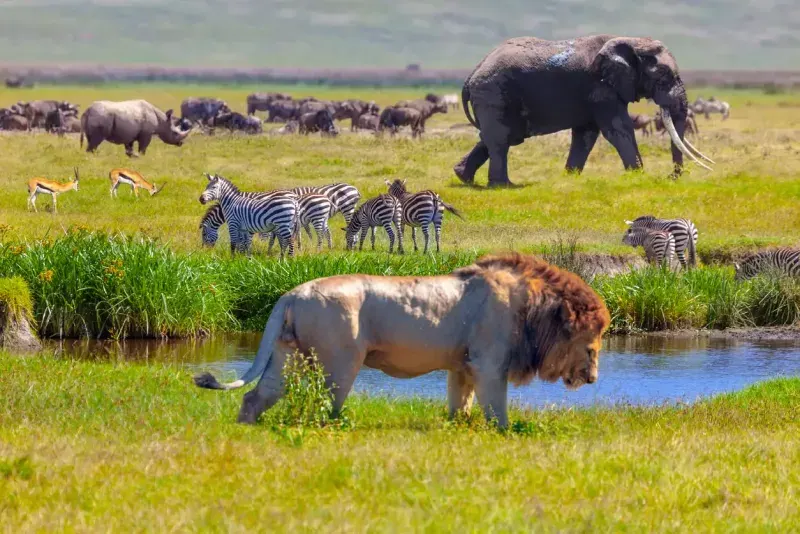
The northern circuit links the Serengeti's endless plains, the Ngorongoro Crater's natural amphitheatre of lions, rhinos, and flamingos, and Tarangire's elephant herds and baobabs. The migration moves through the Serengeti year-round, with calving on the southern plains around January to March and the dramatic Mara River crossings in the north around August to September.
Best time to visit
June to October for dry-season wildlife and the northern Serengeti crossings; January to March for calving on the southern plains.
Explore the Serengeti and Ngorongoro Crater with our Tanzania tours!
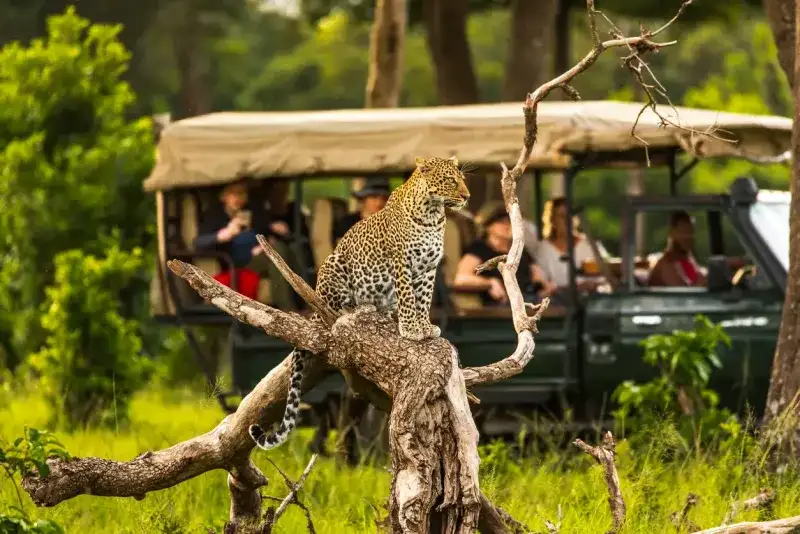
They share one ecosystem, the Mara is smaller and cheaper to reach, the Serengeti far larger.
#Why pick Uganda for your first safari?
Uganda suits a first-timer who wants mountain gorillas plus variety, and it is the better-value of the two gorilla destinations. Alongside gorilla trekking in Bwindi, it offers chimpanzees, tree-climbing lions, and classic savannah game drives.
Where you'll go
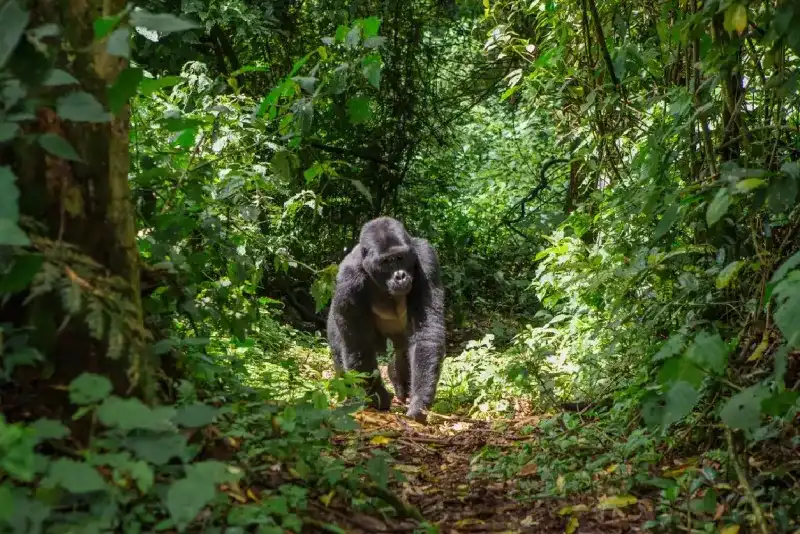
Gorilla trekking in Bwindi Impenetrable Forest is the signature: a guided hike through dense rainforest to spend one hour with a habituated gorilla family. Queen Elizabeth and Kibale National Parks add big game and chimpanzee tracking, which makes Uganda feel like several trips in one.
Best time to visit
June to September and December to February, when drier weather firms up the forest trails for gorilla trekking.
Memphis Tours Expert Tip: Gorilla permits are limited and sell out months ahead for peak dates, so lock in your permit before booking flights, not after.
Four of them: lions, elephants, buffalo, and leopards; rhinos are only at Ziwa Sanctuary.
#Is Rwanda worth it for a first-time safari-goer?
Rwanda is worth it if gorillas are the whole point of the trip and you value convenience and comfort over cost. Volcanoes National Park is the most accessible place on earth to see mountain gorillas, reachable on a short drive from the capital, which makes it ideal for a shorter, premium trip.
Where you'll go
Gorilla trekking in the forested Virunga volcanoes is the draw, and Rwanda has positioned itself as a high-end, low-volume destination. The trailhead sits roughly two to three hours by road from Kigali, so you can fly in and be trekking the next morning, a strong fit for travelers short on time. Nyungwe Forest adds chimpanzees and a canopy walk for those who want more.
Best time to visit
June to September is the main dry season, though Rwanda's easy access makes gorilla trekking workable year-round.
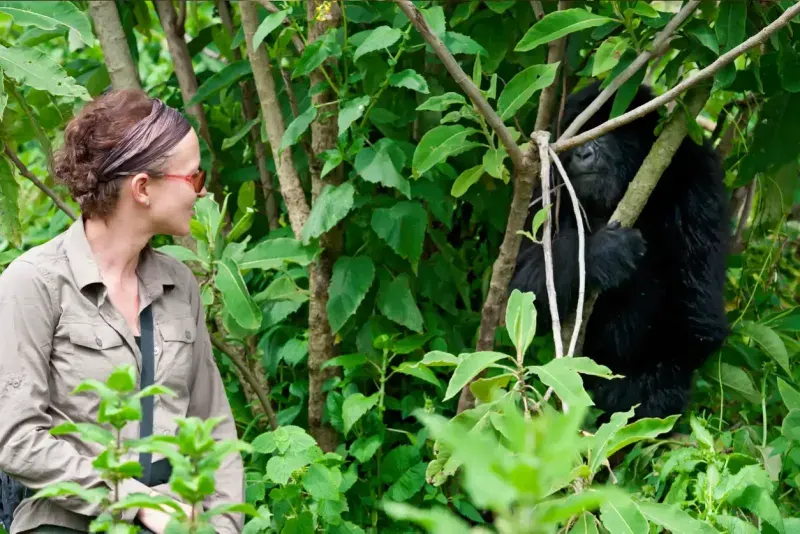
Rwanda for convenience and comfort, Uganda for lower cost and more variety.
#What makes Namibia different for first-timers?
Namibia offers a very different first safari: dramatic desert scenery, uncrowded parks, and the option to self-drive on good roads. It suits first-timers drawn to landscape photography and independence as much as wildlife, and it is one of the safest, easiest countries in Africa to travel on your own.
Where you'll go
Etosha National Park is the wildlife core, where animals gather at floodlit waterholes around a vast salt pan, some of the easiest game viewing in Africa because you wait and watch rather than search. Beyond Etosha, the red dunes of Sossusvlei, the Skeleton Coast, and desert-adapted elephants and rhinos give Namibia scenery no East African park can match.
Best time to visit
May to October, when wildlife concentrates at Etosha's waterholes and desert travel is easiest.
Memphis Tours Expert Tip: Allow two to three nights at Etosha to avoid rushing between Namibia's distant highlights. A guided safari is ideal for first-timers who prefer not to drive long desert roads.
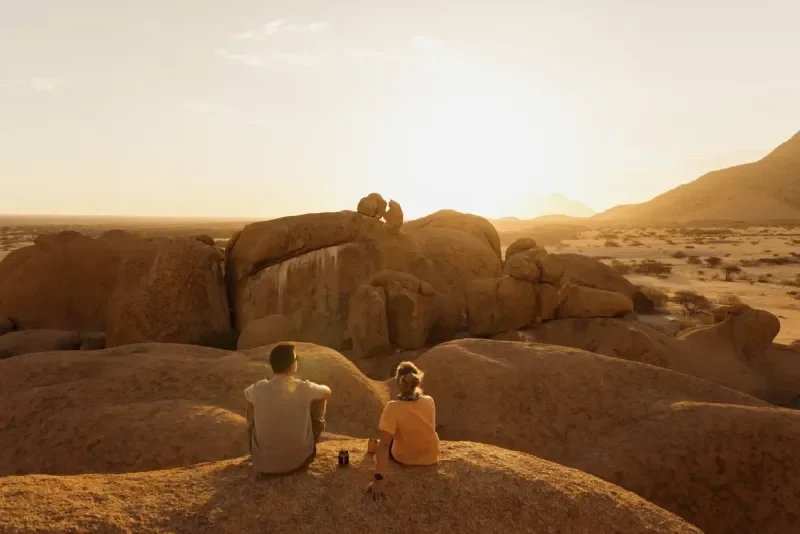
Yes, good roads and safe conditions make it one of Africa’s easiest self-drive destinations. However, if it's your first safari, consider a guided tour to enjoy the experience without worrying about navigation and long-distance driving.
#Is Botswana too advanced for a first safari?
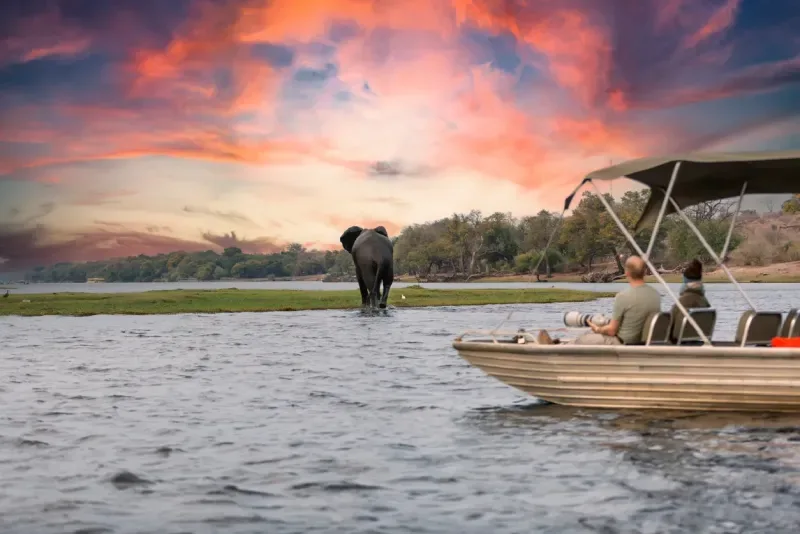
Botswana is not too advanced for a first safari, but it is a premium one, best suited to first-timers with a higher budget who want exclusivity over big crowds. Its low-volume, high-cost model means fewer vehicles and a water-based safari you cannot get in East Africa.
Where you'll go
The Okavango Delta is the signature: a lush inland delta explored by traditional mokoro canoe and small boat as well as by vehicle. Chobe National Park holds one of Africa's largest elephant populations, famous for riverfront game drives and boat safaris, while Moremi Game Reserve combines wetland and woodland wildlife. You can also extend your journey to Victoria Falls, one of the world's most spectacular waterfalls, located nearby in Zimbabwe or Zambia. Together, these destinations make the region a standout for travelers seeking more than the classic jeep safari. Plan your next African adventure with our Botswana tours and safaris.
Best time to visit
May to October, the dry season, when game gathers along the Okavango's channels and the Chobe River.
#How do the six safari destinations compare?
|
Destination |
Signature experience |
Best time |
Tour styles |
|---|---|---|---|
|
Kenya |
Maasai Mara + Great Migration |
Jul–Oct migration |
Private & small-group tours |
|
Tanzania |
Serengeti + Ngorongoro Crater |
Jun–Oct dry season |
Private & small-group safaris |
|
Uganda |
Gorilla trekking + variety |
Jun–Sep, Dec–Feb |
Private gorilla safaris |
|
Rwanda |
Gorilla trekking, premium + quick |
Jun–Sep dry season |
Private gorilla safaris |
|
Namibia |
Etosha + desert scenery |
May–Oct dry season |
Self-drive, group & fly-in |
|
Botswana |
Okavango Delta + Chobe |
May–Oct dry season |
Guided & fly-in |
#What are the top tips for a first African safari?
A smooth first safari comes down to a few early decisions, not last-minute ones. The tips that make the biggest difference:
- Book six to twelve months ahead for peak season (June to October), and earlier still for gorilla permits, which sell out.
- Match the country to the wildlife you want most, and check the best time to visit noted in each destination above.
- Pack neutral colors and layers for cold mornings; avoid bright colors and all-black or all-white.
- Allow at least five to seven days so travel time doesn't eat into game viewing.
- Choose a guided or private tour for a first trip, so park fees, transfers, and permits are handled for you.
- Carry proof of yellow fever vaccination where required, and start malaria precautions before you travel.
#How much does your first African Safari cost?
The cost of your first African safari depends on your destination, accommodation, and travel style. Budget and mid-range safaris generally range from US$250–500 per person per day, while luxury experiences can exceed US$1,000 daily. Gorilla trekking trips tend to cost more due to the required permits. Accommodation, safari guides, and domestic flights also make up a significant part of the overall budget.
Here is an estimated daily cost breakdown per person sharing, excluding international flights:
- Budget to Mid-Range (Kenya, Tanzania, Namibia): Approximately US$250–500 per day, including accommodation in lodges or tented camps, guided game drives, meals, and park fees.
- Gorilla Trekking (Uganda, Rwanda): Gorilla permits cost US$800 in Uganda and US$1,500 in Rwanda. Including accommodation and transfers, a short trip can cost around US$2,000–4,000 per person.
- Luxury and Fly-In Safaris (Botswana and premium camps): Typically US$800–1,500+ per day, covering exclusive safari camps and light aircraft transfers.
To reduce costs, consider travelling during the green or shoulder season, choosing comfortable accommodation outside the luxury category, and booking a guided safari package. Bundled packages can include park fees, transportation, and transfers, making it easier to manage your overall travel budget. Explore our African Safari Tours for tailor-made experiences across Africa's top safari destinations.
Kenya and Tanzania are the best all-round choices, offering the Big Five and the Great Migration with easy logistics. Choose Uganda or Rwanda for gorilla trekking, and Namibia or Botswana for scenery and fewer crowds.
Plan at least five to seven days to reach the parks, settle in, and have several full game-viewing days. A dedicated gorilla trek can be done in three to four days from Kigali.
Safari travel across these countries is generally very safe when you go with a reputable operator and follow your guide's instructions in the parks. Standard travel precautions in towns and cities still apply.
Requirements vary by country, but yellow fever proof and malaria precautions are common across the region. Consult a travel health clinic six to eight weeks before departure for current, personalized advice.
Yes. Many first trips pair an East African savannah safari in Kenya or Tanzania with gorilla trekking in Uganda or Rwanda, since the regions connect by short flights.
Neutral-colored layers, a warm jacket for cold mornings, sun protection, binoculars, and closed walking shoes. For gorilla trekking, add sturdy boots, gloves, and rain gear.
Related Articles
Keep the inspiration going with these handpicked travel reads.
