
Solar Eclipse 2027 in Saudi Arabia: Best Places to Watch & Travel Guide
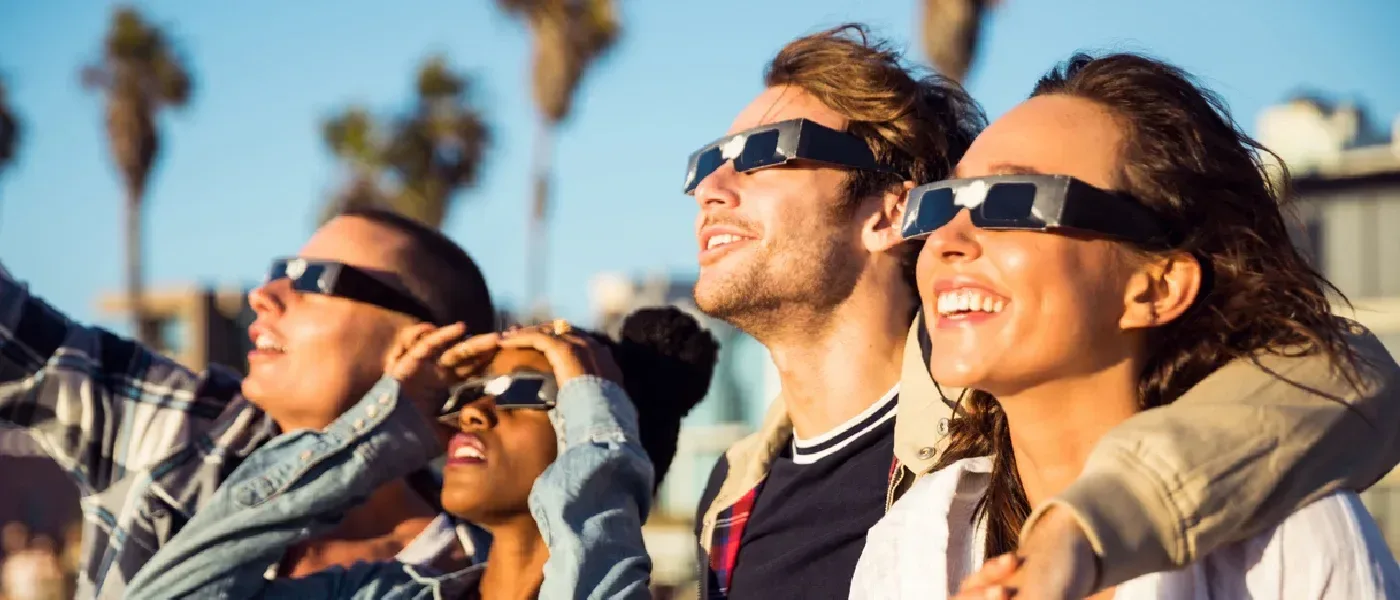
Table of Content:
# The 2027 Total Solar Eclipse in Saudi Arabia
#Where Will the Solar Eclipse Be Visible in Saudi Arabia?
#Best Places to Watch the 2027 Solar Eclipse in Saudi Arabia
#Jeddah Solar Eclipse 2027: What to Expect
#What Will the Solar Eclipse Look Like?
#Best Things to Do in Saudi Arabia Around the Eclipse
#Weather in Saudi Arabia in August
#Travel Tips for you Saudi Arabia Eclipse Experience
On August 2, 2027, the sky over western Saudi Arabia will go dark in the middle of the afternoon. For up to nearly six minutes, the Moon will completely block the Sun over Jeddah, Makkah, Taif, and a wide corridor of the Kingdom, the longest total solar eclipse to sweep across easily accessible land in the 21st century. It's the first total eclipse to cross Saudi Arabia in over 75 years.
If you're planning to see it, here's everything you need to know: where to go, what to expect, how to prepare, and how to turn eclipse day into a full Saudi Arabia tour.
# The 2027 Total Solar Eclipse in Saudi Arabia
Key facts:
- Date: Monday, August 2, 2027
- Type: Total solar eclipse
- Significance: First total eclipse over Saudi Arabia since 1952, and one of the longest of the century
- Maximum totality: Up to 6 minutes 23 seconds along the center line (for comparison, the 2024 Great North American Eclipse lasted 4 minutes 28 seconds)
What makes this eclipse special
- It's an exceptionally long totality window, most total eclipses last barely 2 minutes
- The path runs directly over Jeddah and Makkah, two of Saudi Arabia's most visited cities
- It pairs a rare astronomical event with the Red Sea coastline, historic old towns, and a country that's rapidly opening up to tourism
- Won't be matched in duration again until 2114
Why Saudi Arabia is an exciting place to experience it
Saudi Arabia offers something few eclipse paths do: major international airports, modern hotel infrastructure, and easy access to totality without needing to camp in a remote field. You can watch one of the century's great celestial events and still have a beach, a historic souq, or a desert camp on your itinerary the same week.
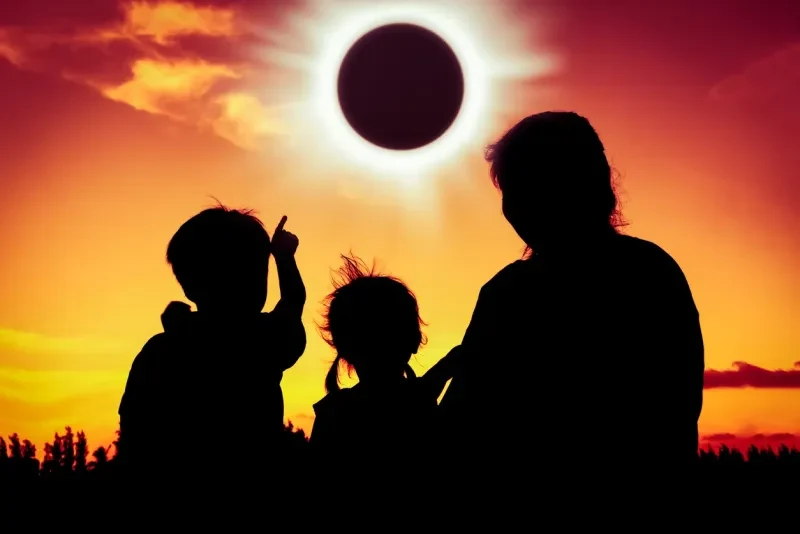
You can see the total solar eclipse in Saudi Arabia on August 2, 2027. The exact timing and duration will vary depending on your viewing location.
Customize Your Dream Vacation!
Get in touch with our local experts for an unforgettable journey.
Plan Your Trip
#Where Will the Solar Eclipse Be Visible in Saudi Arabia?
Path of totality
The path of totality enters Saudi Arabia along the Red Sea coast and cuts through the western and southwestern regions before continuing toward the Gulf. Cities and towns inside the path include:
- Jeddah
- Makkah
- Taif
- Al Baha
- Al Qunfudhah
- Khamis Mushait
- Jazan
- Najran
- Abha (expected to see close to the maximum duration, around 6 minutes)
Smaller towns along the corridor, including Tuwal, Dahban, Asfan, Khulais, Bahrah, Al Hada, and Al Leith, will also experience full totality.
Areas experiencing totality vs. partial eclipse
- Inside the path (totality): Sky goes fully dark, corona becomes visible, safe to view with the naked eye during totality only
- Outside the path (partial eclipse): The Sun is never fully covered, Riyadh, Dammam, and northern regions will see a strong partial eclipse (roughly 80% coverage) but not full darkness
- Medina is notably outside the path of totality
Overview of the main cities/regions
| Region | Status |
| Jeddah | Full totality |
| Makkah | Full totality |
| Taif | Full totality |
| Abha / Khamis Mushait | Full totality |
| Riyadh | Partial only |
| Medina | Partial only |
You can see totality from locations within the eclipse’s path of totality. Jeddah and Makkah are among the Saudi locations where totality will be visible, while other cities may experience only a partial eclipse.
#Best Places to Watch the 2027 Solar Eclipse in Saudi Arabia
Jeddah
The strongest all-round choice. Jeddah sits firmly inside the path, offers close to six minutes of totality, has a major international airport, and combines the eclipse with Red Sea access and historic Al-Balad.
Makkah
Inside the path of totality, with Masjid al-Haram itself falling into darkness during the event, a moment of major cultural and spiritual significance.
Other locations along the path of totality
- Taif: cooler elevation, good alternative to coastal heat
- Abha / Khamis Mushait: near-maximum totality duration, scenic mountain terrain
- Al Baha, Najran, Jazan: less crowded, more remote viewing options
City viewing vs. desert viewing
- City viewing (Jeddah, Taif): Convenient, close to hotels and services, but expect crowds and possible haze from buildings/dust
- Desert or open viewing: Clearer horizons, better photography conditions, and a more dramatic experience of the shadow sweeping in, worth the short drive out of the city if you have transportation sorted in advance
#Jeddah Solar Eclipse 2027: What to Expect
Eclipse timing (Jeddah)
- Partial phase begins: around 12:00 PM
- Totality begins: around 1:25 PM
- Eclipse ends: around 2:43 PM
- Total event window: just over 2.5 hours
Duration of totality
Jeddah will experience approximately 5 minutes 50 seconds to 6 minutes 1 second of totality, an unusually generous window by global eclipse standards.
Why Jeddah is convenient for international travelers
- Served by King Abdulaziz International Airport (JED), with direct connections across the Middle East, Europe, Asia, and Africa
- Established hotel infrastructure, from budget to luxury
- A genuine tourist destination in its own right, not just a viewing point
Book the Short Jeddah Solar Eclipse Package for a focused trip built entirely around eclipse day!
Red Sea + eclipse combination
Few eclipse destinations let you watch totality from a beachfront, then spend the rest of your trip diving Red Sea reefs or relaxing at a coastal resort. Jeddah makes that combination realistic in a single trip.
#Makkah and the Solar Eclipse
Visibility and timing
Makkah sits inside the path of totality, with totality lasting around 5 minutes 5 seconds, beginning roughly at 1:26 PM. Masjid al-Haram will fall into darkness during the event.
Important access considerations for travelers
- Entry to Makkah is restricted to Muslims
- Travelers planning to view the eclipse in Makkah should check current entry and permit requirements well ahead of the date
- Non-Muslim travelers should plan to view totality from Jeddah, Taif, or another point along the path instead
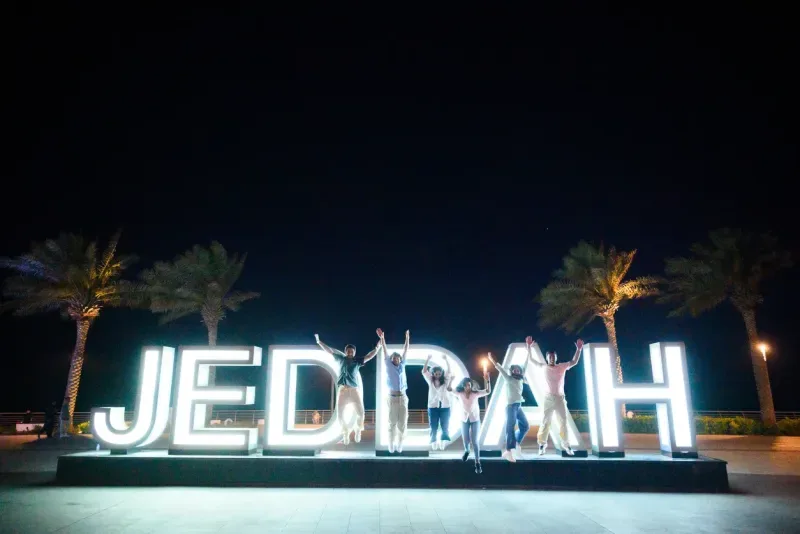
Yes. Jeddah is one of the most convenient places for travelers who want to experience totality while also enjoying the city's historic attractions and Red Sea coastline.
The entire eclipse will last much longer than totality. The duration of totality depends on your exact location.
#What Will the Solar Eclipse Look Like?
Partial phases
For roughly an hour before and after totality, the Moon gradually covers more of the Sun. Daylight dims subtly; shadows sharpen; the temperature starts to drop.
Totality
In the final moments before totality, light takes on a silvery, otherworldly quality. Then, over a matter of seconds, darkness falls.
Darkness during the day
- The sky darkens to a deep twilight blue
- Temperature drops noticeably
- Bright stars and planets may become visible
- Birds and animals often react as if night has fallen
Solar corona
With the Sun fully blocked, the solar corona, its faint, wispy outer atmosphere, becomes visible as a glowing halo around the darkened disc of the Moon. This is only visible during totality and is one of the most sought-after sights in astronomy.
What travelers can expect during those few minutes
A near six-minute totality is exceptionally long, giving viewers time to actually absorb the experience, not just glance up and miss it. Expect a 360-degree sunset glow on the horizon, a sudden hush, and a sky that looks nothing like midday.
#Best Things to Do in Saudi Arabia Around the Eclipse
Turn eclipse day into a full trip:
- Explore Jeddah Al-Balad: the UNESCO-listed historic district, with coral-stone buildings, old souqs, and traditional architecture
- Visit the Jeddah Corniche: waterfront promenade, sculptures, and sunset views over the Red Sea
- Enjoy Red Sea activities: diving, snorkeling, and boat trips over some of the world's best-preserved coral reefs
- Visit Riyadh: modern skyline, museums, and Saudi Arabia's fast-growing dining and entertainment scene
- Diriyah: the UNESCO World Heritage birthplace of the Saudi state, just outside Riyadh
- Saudi desert experiences: stargazing camps, dune drives, and traditional Bedouin-style stays
- Local food and culture: from Hijazi cuisine in Jeddah to traditional coffee ceremonies and local markets
Ready to build your trip around the eclipse? Explore our 8-Day Saudi Arabia Eclipse Package, covering Jeddah, Riyadh, and the desert!

#Weather in Saudi Arabia in August
- Heat: Expect daytime temperatures well above 40°C (104°F) in Jeddah, Makkah, and along the coast
- Humidity in Jeddah: Coastal humidity adds to the heat index, it can feel more intense than the raw temperature suggests
- What to wear: Lightweight, breathable, loose-fitting clothing; a wide-brimmed hat; modest dress in line with local norms
- Staying hydrated: Carry more water than you think you'll need, several liters per person for a day outdoors
- Choosing suitable viewing locations: Favor spots with some shade or shelter for the waiting periods before and after totality, and avoid direct exposure during the hottest midday stretch
#Travel Tips for you Saudi Arabia Eclipse Experience
- Choose a viewing location inside the totality path, being just outside it means missing totality entirely, no matter how close
- Arrive early to your chosen spot, traffic and crowds will build through the morning
- Check weather conditions the day before and morning of, and have a backup location in mind
- Avoid last-minute transportation, pre-book any car, driver, or transfer
- Bring water and sun protection, you'll likely be outdoors for several hours in August heat
- Have offline maps and backup plans, mobile networks can get congested with large crowds gathered in one place
How to Watch It Safely
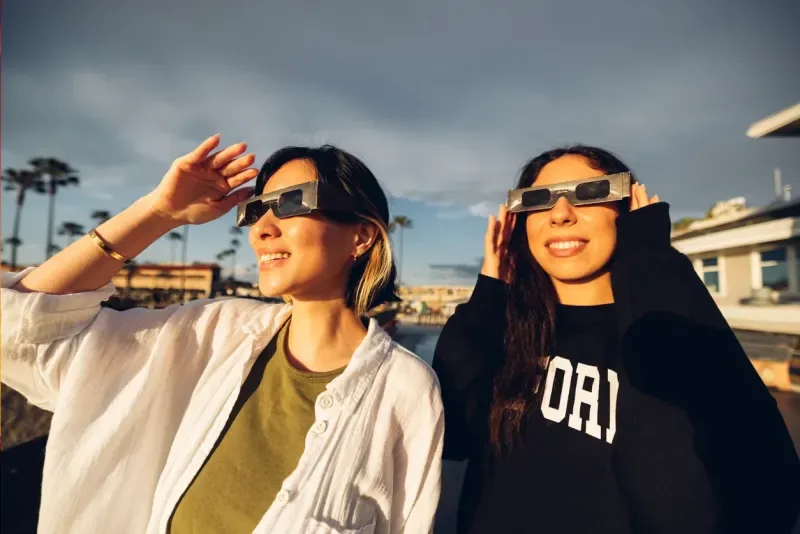
- Certified eclipse glasses meeting the ISO 12312-2 standard are essential for any phase where part of the Sun is still visible
- When glasses are required: During all partial phases, both before and after totality
- During totality only, when the Sun is 100% covered, it is safe to remove glasses and view with the naked eye
- Camera and telescope safety: Any camera, binoculars, or telescope used to view the partial phases needs a proper solar filter on the front of the lens, not just a filter on the eyepiece
- What NOT to use for viewing: Regular sunglasses (even multiple pairs), smoked glass, exposed film, or any homemade filter
What to Pack for Your Eclipse Tour
- Certified ISO 12312-2 eclipse glasses (bring extras)
- Water (more than you think you need)
- Wide-brimmed hat
- High-SPF sunscreen
- Camera with solar filter
- Power bank
- Comfortable, closed walking shoes
- Extra camera batteries and memory cards
Where to Stay for the Solar Eclipse
- Jeddah hotels: The most practical base, ranging from international chains to boutique stays near Al-Balad and the Corniche
- Beach resorts: Red Sea resorts offer a relaxed base with direct coastal access, some may fall inside or near the path of totality
- Accommodation near viewing locations: If you plan to view from Taif or Abha instead of a major city, book early, rooms in smaller towns along the path are limited
- Why booking early matters: With global eclipse tourism converging on a handful of cities, hotel rates and availability will tighten sharply the closer it gets to August 2027
How to Get to Saudi Arabia for the Eclipse
- International flights: Direct and connecting routes serve Jeddah from major hubs across Europe, the Middle East, Asia, and Africa
- Jeddah airport: King Abdulaziz International Airport (JED) is the main gateway for eclipse travelers heading to the path of totality
- Domestic transportation: Domestic flights and highways connect Jeddah with Riyadh, Taif, and southern cities like Abha
- Private transfers/rental cars: Recommended for flexibility on eclipse day itself, pre-book to avoid last-minute shortages
- Guided tours: Joining a guided eclipse tour can make the experience easier, especially for first-time visitors
How to Plan a Solar Eclipse Trip to Saudi Arabia:
- When to book: As early as possible, eclipse tourism drives major demand for flights and hotels in the path of totality
- How many days to stay: 4–5 days minimum if focused on Jeddah and the eclipse; 7–10 days to combine with Riyadh, the desert, and Red Sea activities
- Where to base yourself: Jeddah is the most practical base, inside the path, well-connected, and tourist-ready
- Planning transportation: Book airport transfers and any intercity travel well ahead; local transport demand will spike around eclipse day
- Arriving before eclipse day: Land at least 1–2 days early to account for flight delays and to scout your viewing spot in advance
Ready to experience the 2027 solar eclipse in Saudi Arabia? Turn this rare celestial event into an unforgettable journey with our carefully planned Saudi Arabia tours!
August can be very hot, so I should plan carefully around the heat. Staying hydrated, choosing suitable accommodation and arranging transportation in advance are especially important.
Yes. you should use certified solar eclipse glasses or an appropriate solar filter during the partial phases. Regular sunglasses are not safe for viewing the Sun.
Yes, you can photograph the eclipse, but you need the appropriate solar filter for my camera equipment. You should also consider bringing a tripod, extra batteries and memory cards.
You should pack certified eclipse glasses, sunscreen, a hat, lightweight clothing, plenty of water, comfortable shoes and camera equipment if I plan to photograph the event.
Related Articles
Keep the inspiration going with these handpicked travel reads.