Table of Contents:
#Understanding Tunisia's Climate and Weather Patterns
#Best Time to Visit Tunisia by Season
#Month-by-Month Weather Guide for Tunisia
#Tunisia's Festival Calendar and Cultural Events
#How to Avoid Crowds and Get the Best Travel Deals
#Conclusion
Tunisia presents travelers with a fascinating climate puzzle that spans Mediterranean shores, ancient archaeological treasures, and vast Saharan expanses. Your journey's success hinges on understanding how this North African nation's diverse geography shapes its weather patterns throughout the year. The country records an annual rainfall average of 158 mm, yet this figure masks remarkable regional contrasts between the verdant northern coastlines and the parched southern desert territories.
Seasonal weather variations create distinct windows of opportunity for different types of exploration. Spring months beckon with their moderate temperatures and diminished tourist presence, while autumn offers similar advantages for discerning travelers. Each season unveils unique characteristics that either enhance or challenge specific travel experiences, from archaeological expeditions under temperate skies to desert adventures beneath milder winter suns.
This detailed examination reveals Tunisia's intricate climate patterns, highlights the most rewarding seasonal experiences, maps out the cultural festival calendar, and shares essential strategies for securing optimal travel conditions. Armed with these insights, you can align your visit with the country's natural rhythms while securing the best value for your North African expedition.
Tunisia's diverse topography establishes two principal climate zones that fundamentally influence travel planning decisions. The Köppen-Geiger climate classification system recognizes a distinct northern Mediterranean zone and a southern desert zone, separated by a transitional semi-arid steppe region. These geographical divisions create markedly different seasonal experiences across the country's relatively compact territory.
Mediterranean climate in the north
Northern coastal territories enjoy classic Mediterranean weather characteristics, featuring hot, arid summers coupled with mild, wet winters. Tunis, positioned along the Mediterranean shore, records January temperatures spanning 8°C to 16°C, while August brings readings between 22°C and 34°C. Maritime influences from sea breezes provide natural temperature regulation, maintaining lower humidity levels and more comfortable conditions during the intense summer period.
The northwestern mountain ranges harbor North Africa's most abundant precipitation zones. The Kroumirie Mountains capture approximately 1,500 mm of annual rainfall, with northeastern extremities achieving comparable totals. Mediterranean atmospheric patterns penetrate inland territories but gradually diminish southward, where conditions shift toward semi-arid characteristics.
The sirocco wind phenomenon, known locally as chili, periodically affects the entire nation, particularly during the spring months. This scorching, dust-laden wind carries Saharan heat northward, occasionally driving temperatures beyond 45°C. While these thermal spikes prove short-lived, they present genuine health risks requiring careful precautionary measures.
Desert climate in the south
Southern territories transform into authentic Saharan conditions marked by dramatic diurnal temperature fluctuations and negligible precipitation. Desert landscapes experience blistering daytime heat followed by substantially cooler nocturnal temperatures, with daily variations often surpassing 20°C.
Kebili, situated in central Tunisia, holds Africa's recorded temperature peak at approximately 55°C. Desert zones consistently register summer readings above 40°C, making visit timing absolutely crucial for Saharan expedition planning.
Average temperatures throughout the year
Tunisia maintains an annual mean temperature of 20.51°C. Northern coastal areas average 28°C to 35°C during summer months, though periodic heatwaves elevate these readings significantly. Central and southern territories endure more extreme seasonal contrasts, with winter minimums around 11°C and summer peaks reaching 32°C.
Interior cities experience pronounced temperature variations compared to coastal settlements. Kairouan exemplifies this pattern with January lows of 4°C and August highs of 37°C, illustrating the Mediterranean's moderating influence on coastal climates. Northern shoreline communities fluctuate between winter minimums of 10°C and summer maximums of 27°C.
Rainfall patterns and dry seasons
Tunisia's precipitation follows established Mediterranean rhythms, concentrating during late autumn and winter while virtually disappearing through late spring and summer. Regional disparities prove remarkable: northern territories accumulate over 400 mm annually, with northwestern areas like Jendouba surpassing 900 mm. Central regions collect 150 mm to 300 mm yearly. Southern desert zones receive under 100 mm, diminishing to merely 50 mm in the far south.
December generally delivers peak moisture conditions, especially across northern regions. January marks the wettest period for northern and mountainous areas, while southern zones exhibit irregular precipitation patterns with sporadic autumn peaks, typically during September or October. Summer months remain virtually rainless, with July representing the driest period nationwide.
Ready to explore Tunisia during its most spectacular months? Our specialized Tunisia tours are designed around optimal weather windows for unforgettable North African adventures.

A father and his son are happy and enjoying a tour of Port El Kantaoui in Sousse, Tunisia
Each season paints Tunisia's landscape with distinctive colors and moods, creating unique opportunities for travelers with varying interests and preferences. Your choice of when to visit determines not only the weather conditions you'll encounter but also the cultural experiences available and the character of the destinations themselves.
Spring (March to May): Mild weather and blooming landscapes
Spring emerges as Tunisia's most enchanting season, particularly during the golden months of April and May. March and April still witness occasional coastal showers and precipitation across the elevated northern terrain, yet temperatures climb steadily as crimson poppies carpet the hillsides and delicate apricot blossoms transform spring meadows into natural galleries. Daytime temperatures settle comfortably between 16°C and 20°C, establishing ideal conditions for extensive outdoor exploration.
Cultural enthusiasts discover that April, May, and June represent the pinnacle months for archaeological adventures, when azure skies frame ancient monuments in perfect clarity. Northern forests burst with verdant foliage during this period, while delicate wildflowers emerge between weathered stones at Roman archaeological sites, creating photogenic contrasts between nature and antiquity. Evening temperatures require additional clothing layers as sunset brings noticeable cooling. Spring's transformation from summer's golden palette to fresh emerald hues occurs gradually through gentle rainfall that nourishes the awakening landscape.
Summer (June to August): Beach season and coastal fun
July and August unleash Tunisia's most intense heat across the entire territory. Temperatures surge beyond 30°C and climb dramatically higher during periodic heatwaves. The coastal regions become Tunisia's primary attraction during these months, whether you prefer the luxury of resort umbrellas or the authentic charm of local beaches near towns like Bizerte and Mahdia.
Desert exploration becomes particularly challenging during this period, as temperatures in locations such as Jebel National Park frequently exceed 35°C. Popular desert gateways like Tozeur and Douz present formidable conditions for travelers during the summer months. Coastal areas benefit significantly from Mediterranean breezes that moderate the intense heat and maintain bearable humidity levels. September continues summer's sunshine pattern while beaches empty of their peak-season crowds.
Autumn (September to November): Comfortable temperatures and harvest time
September extends summer's warmth without its overwhelming crowds, leaving Mediterranean beaches refreshingly peaceful. Daytime temperatures sustain comfortable levels above 25°C throughout September and October, creating favorable conditions for exploring Tunisia's complete geographical spectrum, including previously challenging Saharan regions.
October and November activate the agricultural heartlands of central and southern Tunisia, as date plantations around ancient oases burst with harvesting activity alongside the olive groves that surround Sfax and Djerba. Rural landscapes become theaters of traditional agricultural practices during the carefully timed autumn harvest season. Sea temperatures remain suitable for swimming well into early October, while accommodation prices decrease substantially following summer's tourist exodus. November delivers abundant, clear weather punctuated by occasional gentle showers, though daylight hours contract noticeably compared to October's longer days.
Winter (December to February): Desert exploration and quiet cities
January and February present variable conditions characterized by mild, moisture-laden Mediterranean weather transitioning to crisp winter evenings. Minimum temperatures descend to approximately 8°C during January and February. Southern travel toward the Sahara reveals progressively warmer conditions, establishing excellent opportunities for oasis exploration around Douz and Tozeur without summer's punishing heat.
Winter's temperate daytime conditions create optimal circumstances for investigating typically scorching desert territories, including Jebel National Park and the expansive salt flats of Chott el Jerid. Nighttime temperatures drop substantially, necessitating warm clothing and supplementary bedding for desert camping experiences. Adequate preparation for intermittent rainfall allows visitors to appreciate Roman archaeological sites at their most serene and photographically appealing during winter's quieter months.
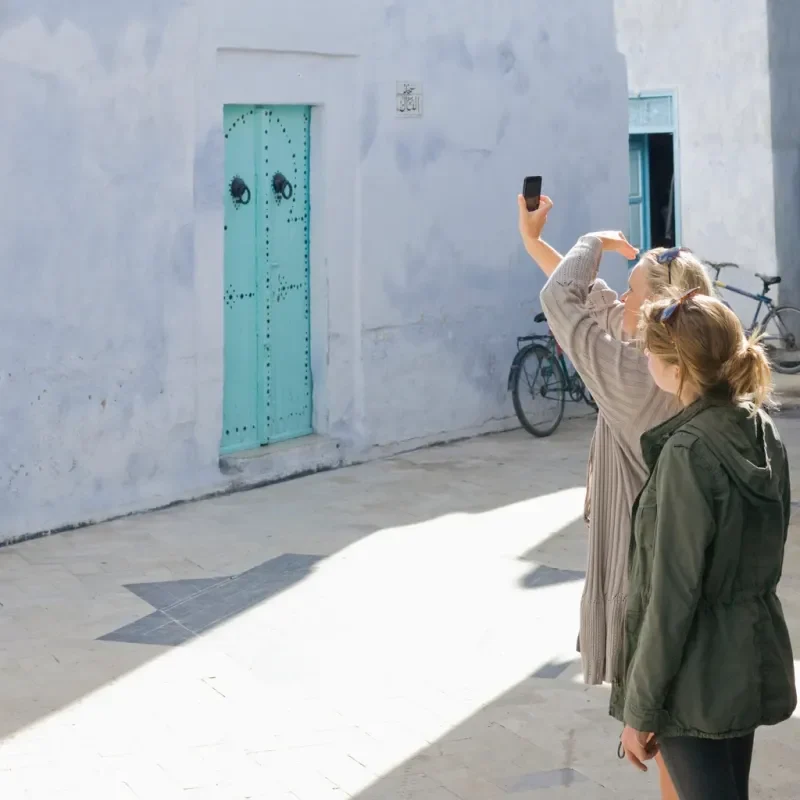
Mother and daughter take photo of old town doorway
Customize Your Dream Vacation!
Get in touch with our local experts for an unforgettable journey.
Plan Your Trip
Detailed monthly weather analysis provides the precision needed for travelers seeking to align their visit with specific climatic conditions and avoid unexpected meteorological challenges.
January and February: Cool and wet
January establishes itself as Tunisia's coldest and wettest month. Daytime temperatures hover around 14°C before dropping to 7°C during nighttime hours. Rain typically appears on a single day throughout January, though regional variations create significantly different experiences. February signals the gradual awakening of spring with temperatures climbing approximately one degree higher. The monthly temperature spectrum spans from 11°C to 18°C, while precipitation accumulates to roughly 40mm. Northern coastal regions receive about 27mm of rainfall distributed across seven days of wet weather. Daily sunshine extends for nine to ten hours, with sunset occurring after 6 pm. Mediterranean waters maintain a chilly 15°C during January, deterring most swimming activities. February humidity levels reach around 70%, producing crisp evenings that settle between 7°C to 11°C.
March and April: Warming up with spring showers
March demonstrates a pronounced transition toward milder conditions, with temperatures climbing to 19.8°C from February's cooler measurements. Rainfall occurs across eight days during March, totaling up to 47mm of precipitation. The UV index escalates to 5, indicating substantial sunlight intensity. April witnesses considerable temperature increases, establishing this period as North Africa's peak tourism month. Hillsides burst with poppy blooms while apricot blossoms transform spring meadows into colorful displays. Coastal areas and elevated northern terrain continue experiencing occasional showers, yet the warming pattern progresses consistently.
May and June: Perfect for sightseeing
May establishes optimal conditions for outdoor exploration with consistently warm and agreeable weather. Temperature ranges settle between 19°C and 25°C, accompanied by minimal rainfall averaging merely 10mm. Daily sunshine extends to approximately 10 hours, while humidity maintains comfortable levels at 60% with gentle breezes at 15km/h. June elevates temperatures to around 30°C, with rainfall dropping to just 5mm on average. Sunrise occurs exceptionally early at approximately 5 am, with sunset delayed until after 7:30 pm. Sea temperatures achieve a pleasant 22°C during June, while humidity remains refreshing at 52%. UV levels reach near-maximum intensity, necessitating protective measures.
July and August: Peak summer heat
Northern resort destinations, including Hammamet, Sousse, and Port El Kantaoui, register average high temperatures of 33°C throughout July. Monthly rainfall expectations diminish to just 1mm, while daily sunlight can extend up to 12 hours. Coastal regions benefit from sea breezes reaching 11mph that provide cooling relief. Peak daytime temperatures can soar up to 35°C, with evening temperatures settling in the mid-20s°C. August maintains its position as the year's hottest month, particularly in inland areas where conditions can become hazardous. Humidity levels remain moderate at around 50%.
September and October: Pleasant autumn weather
September temperatures establish a comfortable range from 22°C to 29°C, with average highs reaching 31°C. Monthly precipitation measures just 28mm distributed across three rain-affected days. Mediterranean waters maintain temperatures around 26°C, supporting continued water sport activities. Daily sunshine ranges from nine to ten hours within 12-hour daylight periods. October delivers comfortable temperatures without summer's overwhelming intensity, occasionally featuring light showers and overcast skies.
November and December: Cooler days and fewer tourists
November sustains average high temperatures of 23°C, with readings exceeding 17°C even during milder periods. Monthly rainfall accumulates to just 20mm across seven rain-affected days. Daily sunshine continues for seven hours within ten-hour daylight periods. December ranks among the year's coolest months, with temperatures averaging around 13°C. Precipitation levels rise to 70mm throughout December, affecting approximately 15 days of the month. Sea temperatures cool to 18°C.
Tunisia's rich cultural tapestry unfolds through festivals that celebrate ancient traditions, regional harvests, and artistic expressions across the calendar year. These celebrations provide compelling reasons to time your visit with specific seasons, each offering authentic glimpses into local life while taking advantage of optimal weather conditions.
International Festival of the Sahara (December)
The desert town of Douz transforms each December during this four-day celebration that traces its origins to 1910 as a modest camel festival. More than 50,000 visitors journey to witness this remarkable showcase of nomadic Bedouin heritage, featuring camel marathons, Arabian horse competitions, ceremonial wedding demonstrations, and hunting exhibitions with the elegant sloughi desert dogs. The festival's cultural heart beats strongest during the poetry contest, a tribute to desert poet Abdellatif Belgacem. December's temperate desert climate creates perfect conditions for these outdoor spectacles, when daytime warmth contrasts beautifully with crisp evening air.
Festival of Carthage (July-August)
Ancient history meets contemporary artistry at Carthage's magnificent Roman amphitheater, where 7,500 spectators gather for this prestigious cultural event. Since its establishment in 1964, this festival has welcomed international legends such as James Brown, Louis Armstrong, and Ray Charles, alongside celebrated Arab performers and emerging contemporary artists. The program encompasses jazz, traditional North African music, theatrical productions, and dance performances. Coastal Carthage enjoys more moderate summer temperatures than inland destinations, making evening performances particularly enjoyable under the Mediterranean stars.
Orange Blossom Festival (April)
Nabeul's Cap Bon region celebrates the essence of spring during this ten-day festival from April 18-28. Visitors experience the delicate process of orange blossom water distillation, wander through fragrant citrus orchards, and enjoy traditional music concerts paired with artisan craft displays. This celebration highlights one of Tunisia's most treasured agricultural products, essential to both local cuisine and the cosmetics industry, while showcasing rural tourism during April's ideal weather conditions.
Ramadan and Eid Celebrations
The lunar calendar determines Ramadan's timing each year, culminating in Eid al-Fitr celebrations that reveal Tunisia's regional culinary diversity. Families gather to share distinctive specialties: ful medames in Tozeur, chermoula in Sfax, and delicate hlalem pastries in Beja. City streets come alive with shoppers selecting new clothing, purchasing traditional sweets including baklava, and preparing for dawn prayers followed by elaborate family feasts.
Local Harvest Festivals
Agricultural rhythms shape celebrations beyond the formal festival calendar. Central and southern date plantations burst with activity during autumn harvesting, while olive groves surrounding Sfax and Djerba become centers of community gathering throughout October and November.
Strategic timing transforms your Tunisia experience from crowded and expensive to spacious and affordable. Understanding the country's tourist patterns reveals significant opportunities for savvy travellers who prioritise both comfort and value.
Understanding tourist seasons in Tunisia
August marks Tunisia's peak season, followed by July as high season. The remaining ten months see considerably fewer visitors. Very low season spans January, February, June, November, and December, while March, April, May, September, and October constitute low season.
Best months for lower prices
November through March delivers the best value, with accommodation prices dropping noticeably outside public holiday peaks. Spring and autumn shoulder seasons bring lower hotel rates compared to summer, easier restaurant reservations, and better flight availability from Europe. Coastal destinations like Djerba and Hammamet see prices peak, but all-inclusive packages reduce costs. After August, travel demand softens, leading to better availability and flexibility across accommodations and guided services.
Avoiding peak holiday periods
Islamic holidays, particularly Eid al-Fitr and Eid al-Adha, close many restaurants, tour guides, and businesses. School holidays crowd resorts and hotels, making boutique hotels and guesthouses better options during these periods.
Booking tips for shoulder season travel
Book flights two to three months ahead for optimal fares. Midweek departures, particularly Tuesdays and Wednesdays, cost less than weekend flights. Mid-April to late May and late September to late October hit the sweet spot for backpackers and budget travellers.
Tunisia's diverse geography and seasonal rhythms reward those who align their travel plans with the country's natural patterns. The months between April and May, along with the September through October period, emerge as the sweet spots where favorable weather conditions meet reduced tourist volumes and attractive pricing structures.
Each season serves distinct travel philosophies. Cultural enthusiasts find their archaeological pursuits best served during the temperate months when ancient sites reveal their secrets under clear Mediterranean skies. Coastal devotees discover their paradise during the peak summer months, when the full Mediterranean experience unfolds along Tunisia's northern shores. Those drawn to Saharan exploration benefit from winter's gentler temperatures that make desert ventures both comfortable and memorable.
The festival calendar adds another layer of planning consideration, with events like the International Festival of the Sahara and Festival of Carthage offering unique cultural immersion opportunities that correspond with optimal weather windows. These celebrations provide authentic glimpses into Tunisian heritage while taking advantage of the country's most pleasant climatic conditions.
Your personal travel priorities should guide the final decision. The wealth of climatic data, seasonal characteristics, and cultural timing presented here serves as your foundation for crafting an itinerary that maximizes both experiential richness and economic efficiency. Tunisia's year-round accessibility means that with proper planning, any season can deliver extraordinary experiences tailored to your specific interests and expectations.
What month is best to go to Tunisia?
April and October are best for visiting Tunisia. You'll get perfect 20-25°C temperatures, fewer crowds, and comfortable weather for Tunis medina, Carthage, Sidi Bou Said, and the Sahara desert. Spring brings wildflowers and pleasant beaches, and autumn offers harvest season. If choosing one month, pick April—Tunisia at peak beauty with ideal weather for cities and the coast.
Is Tunisia cheap or expensive?
Tunisia is cheap compared to Europe and North America. Budget travelers spend $30-50/day, mid-range $60-100/day. Street food costs $1-3, restaurant meals $5-12, nice riads $30-60/night. A week in Tunisia runs $400-700 for mid-range comfort. It's one of North Africa's best-value destinations with affordable taxis, souvenirs, and tours.
What is the rainy season in Tunisia?
Tunisia's rainy season runs from October through April, with November-February seeing the most rainfall. Northern Tunisia (Tunis, Bizerte) gets more rain than the southern regions. Tunis averages 6-8 rainy days monthly during winter, while the Sahara stays mostly dry year-round. Expect occasional showers, not all-day downpours. Summer (June-September) is virtually rainless.
Is Tunisia warm all year round?
No, Tunisia has seasonal variation. Coastal areas (Tunis, Hammamet, Sousse) are mild in winter (12-18°C/54-64°F) but can feel cool. Summer (June-September) is hot everywhere (28-35°C/82-95°F). Southern desert regions stay warmer in winter but have cold nights. Spring and autumn offer consistently pleasant temperatures. Tunisia isn't tropical—expect genuinely cool winters requiring jackets.
What is the coldest month in Tunisia?
January is Tunisia's coldest month. Northern Tunisia (Tunis, Bizerte) averages 10-15°C (50-59°F) daytime with 6-8°C (43-46°F) nights. Southern desert regions (Douz, Tozeur) have milder days (15-18°C) but freezing nights occasionally. Mountain areas can see snow. Tunisia isn't freezing, but requires jackets, layers, and heating during winter.
What part of Tunisia is the best?
Best overall: Sidi Bou Said for picturesque blue-and-white beauty. Best history: Carthage and Tunis medina for ancient ruins and UNESCO sites. Best beaches: Djerba Island for a relaxed coast, Hammamet for resorts. Best desert: Douz for authentic Sahara camel treks. Best spirituality: Kairouan for Islamic heritage. Combine Tunis/Sidi Bou Said/Carthage for culture with Djerba or Douz for variety.