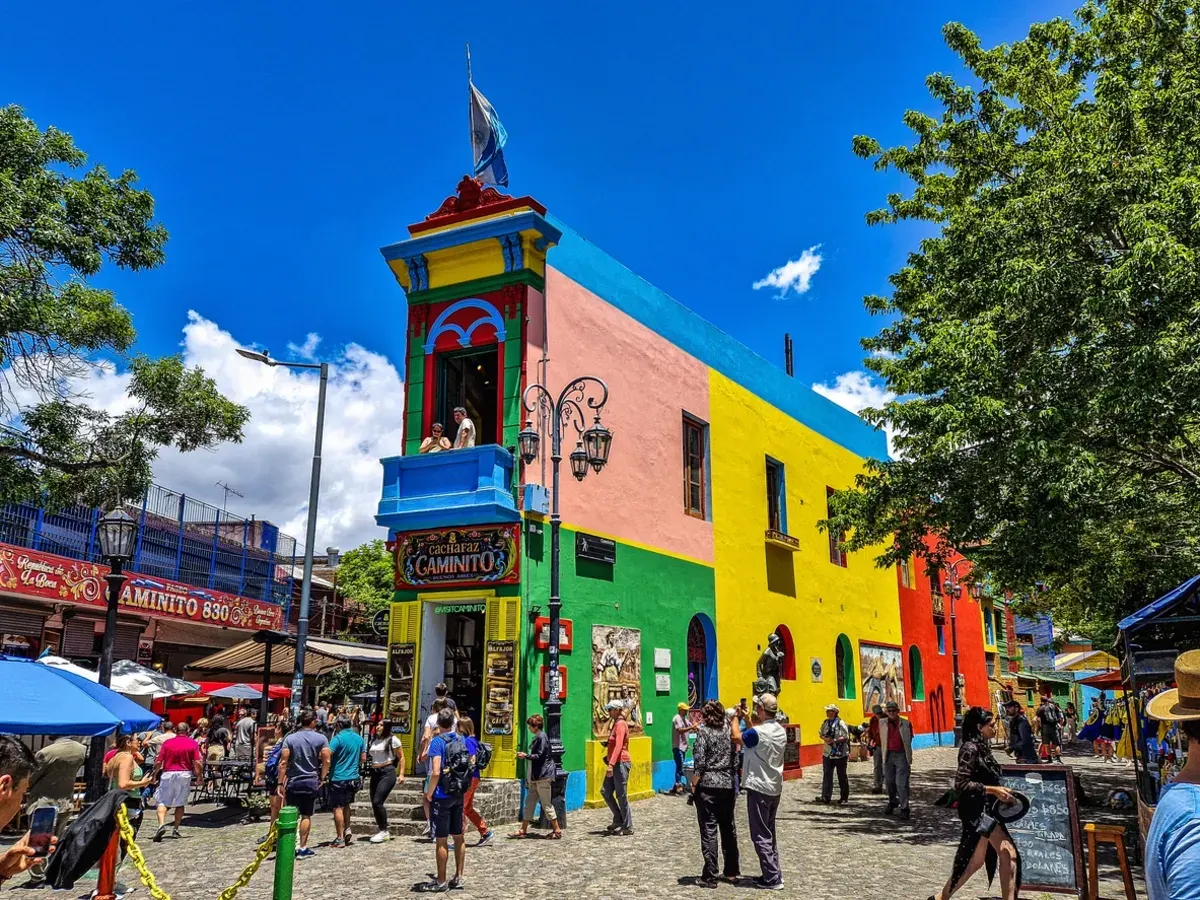
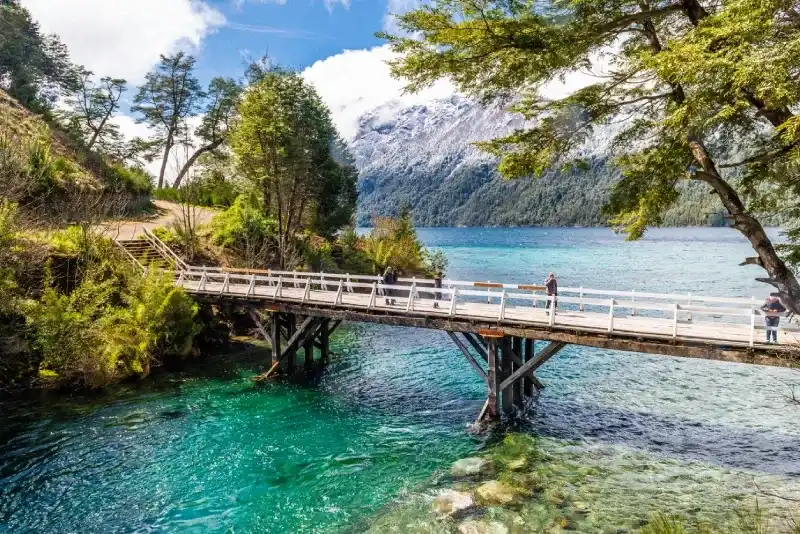
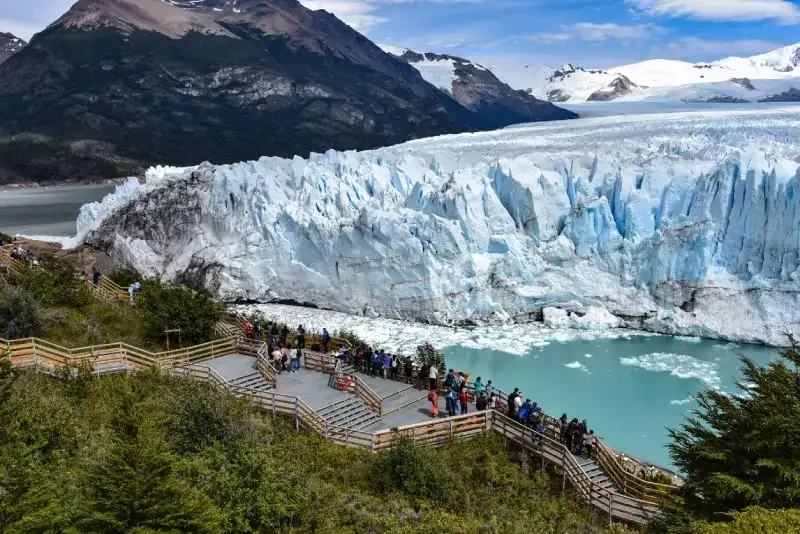
The best time to visit Argentina is spring (September–November) or autumn (March–May), unless you’re heading to Patagonia: go December–March.
Argentina stretches about 3,700 km from the subtropical north to subpolar Tierra del Fuego, so the right month depends on where you go. Patagonia is best from December to March, when Ushuaia gets up to 17 hours of daylight for hiking. In Mendoza, the grape harvest starts in late February and leads into the Vendimia wine festival in early March. To avoid the November–March high season, come in September or October: Patagonia’s trails start opening, and wildflowers bloom across the Lake District.
Types of content
Argentina's summer — running from late December through March — is a season of full-tilt energy. Heat rolls across the pampas, festivals light up city streets, and crowds ebb and flow depending on where you plant yourself. These three months set the tone for everything that follows, so if you're weighing hiking windows, harvest celebrations, or wildlife encounters, start here.
January: Long Days for Patagonia Hikes, Busy Resorts, and Heat in the North
January is Argentina's summer at its most electric. Patagonia earns every bit of its reputation this month, with trails through El Chaltén and Los Glaciares National Park staying walkable well into the evening — all those hours of daylight turn a good hike into something almost otherworldly.
Bariloche and El Calafate fill up fast, with travelers arriving from around the world to chase that long golden light. If either town is on your list, sort your accommodation early — this is not a month to leave things to chance.
A delightful aside: Isla Pingüino (Penguin Island), off the coast of Puerto Deseado in Santa Cruz province, is the only rockhopper penguin colony you can easily visit from mainland Argentina. Around 30,000 Magellanic penguins nest there too, and boat trips run from October to April.
Further north, the mood shifts considerably. Buenos Aires turns hot and sticky, nudging its own residents toward cooler coastal escapes like Mar del Plata and Pinamar. The northwest receives its share of wet weather, the northeastern wetlands grow uncomfortably sultry, and heavy summer storms keep Iguazú Falls running high — thunderous and spectacular, with mist that at least offers a fleeting reprieve from the heat.
February: Patagonia Adventures, Carnival, and the Start of the Wine Harvest
Once the January holiday rush settles, February brings a quieter, sweeter version of Patagonia — still warm, still stunning, but with room to breathe. Buenos Aires empties a little too, as heat drives locals toward the coast, leaving behind more affordable hotel rates and a city that feels almost like a local secret.
The month's undisputed showstopper is Carnival in Gualeguaychú — a riot of color and rhythm that stretches from January through late February, filled with sequin-dazzled costumes and floats that seem too enormous to be real.
Then, just as the last floats roll away, the vineyards of Mendoza stir into action. White and early-ripening varieties are harvested first, flowing in from lower-altitude estates like those around Maipú, and Fiestas de Vendimia celebrations begin rippling through the wine country.
March: Mendoza's Harvest Festival, Cooler City Walks, and Early Autumn in Patagonia
March belongs to Mendoza. The Fiesta Nacional de la Vendimia — a harvest celebration with roots stretching back to 1936 — reaches its triumphant close with the Saturday-night Acto Central, a grand spectacle that packs in some 20,000 spectators and more than 1,000 performers.
Rooms for that final weekend vanish fast, so this is one festival that truly rewards booking well in advance.
Elsewhere, March opens up beautifully across the country:
-
Purmamarca and Salta City glow with layered, candy-colored mountains and streets lined with colonial architecture
-
Iberá Wetlands, among the largest freshwater wetlands anywhere on earth, rewards patient visitors with extraordinary birdwatching and quiet boat tours
-
El Bolsón offers gentle hiking terrain close to Lago Puelo National Park, with temperatures that have finally started to ease
-
Ischigualasto Provincial Park (Valle de la Luna), a UNESCO-recognized landscape, conjures images of another world entirely with its pale, wind-carved rock formations
Patagonia, meanwhile, begins its gentle retreat from the summer peak — the crowds thin, autumn golds start creeping into the forests, and wildlife becomes considerably easier to spot.
Ushuaia cools to highs of around 50°F (10–11°C) with lows near 37°F (3°C), and Buenos Aires settles into something pleasantly mild, with upper-70s°F afternoons and a few more rainy days worked in.
|
Destination
|
January
|
February
|
March
|
|
Bariloche
|
70°F, 1" rain
|
72°F, 1" rain
|
66°F, 2" rain
|
|
Buenos Aires
|
84°F, 4" rain
|
82°F, 4" rain
|
79°F, 5" rain
|
|
El Calafate
|
64°F, 1" rain
|
63°F, 1" rain
|
59°F, 1" rain
|
|
Iguazú Falls
|
90°F, 6" rain
|
90°F, 6" rain
|
86°F, 6" rain
|
|
Mendoza
|
90°F, 1" rain
|
88°F, 1" rain
|
82°F, 1" rain
|
|
Península Valdés
|
82°F, <1" rain
|
81°F, <1" rain
|
77°F, 1" rain
|
|
Purmamarca
|
77°F, 3" rain
|
73°F, 2" rain
|
73°F, 1" rain
|
Average highs and monthly rainfall by destination.
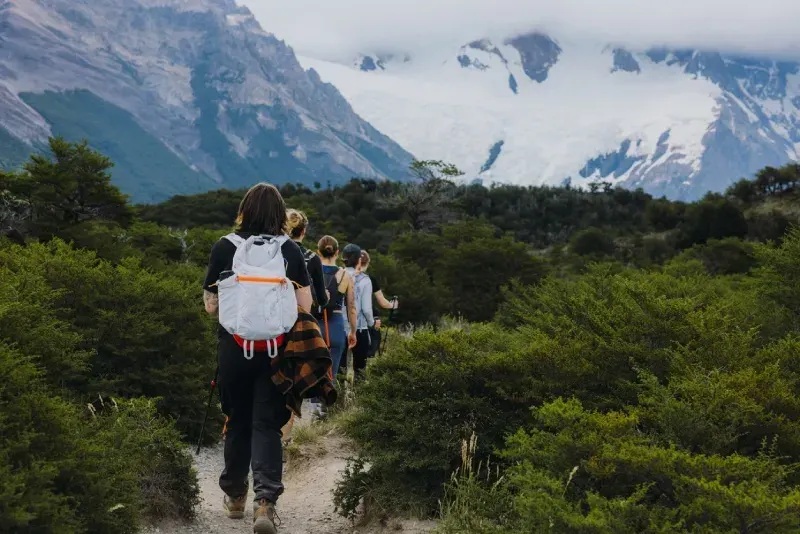
Girls Hiking in Majestic Patagonia With Glacier view
From April to June, head to Mendoza, the Lake District, Iguazú Falls, and Salta for autumn colors and fewer crowds. Autumn arrives quietly in Argentina, painting its way south from the wine valleys of Mendoza down to the windswept edges of Patagonia.
Between April and June, the country shifts gears entirely. Services in the far south start winding down, but the north and center step into their own, offering cooler temperatures, fewer crowds, and some of the most vivid seasonal scenery you’ll find anywhere in South America.
April: Autumn Colors in Mendoza and the Lake District, With Changing Trail Conditions Farther South
There are few sights in Argentina as quietly spectacular as Bariloche and the Lake District in April, when the forests ringing Lago Nahuel Huapi catch fire in shades of deep red and burnished gold. It is peak autumn color, and the crowds that pack Patagonia in summer are mostly gone.
Mendoza, too, still hums with harvest energy — vineyards across the valley stay busy through the month with tastings, cellar visits, and the easy rhythm of a wine region at its most abundant.
Farther south, April is the last reliable window before things close up. Ruta 40 road trips, Cape Horn cruises, and those unforgettable 'Big Ice' treks on the Perito Moreno Glacier all stay on the table this month, but only just — services begin winding down as the season closes.
At Península Valdés, orcas do something genuinely extraordinary: they hunt right at the beach, surging onto the shore to snatch sea lions, a behaviour so rare and dramatic it is worth building an entire detour around.
Easter often falls in April (in 2027 it is on March 28), nudging prices up for that week, though the rest of the month stays reasonably easy on the wallet. Buenos Aires sits comfortably in the low 70s°F with occasional showers, and Iguazú holds onto its warmth at around 79.7°F (26.5°C).
May: Cooler Visits to Iguazú Falls, Iberá, and the Northwest
May is a month that rewards those who pay attention to it. The far south is largely closed, yes, but central and northwest Argentina settle into something quite lovely — clear skies, cool air, and a quality of light that makes the salt flats near Salta and the high Puna look almost otherworldly, sharp and vivid against the blue.
Iguazú Falls, cooler now at around 74.7°F (23.7°C), draws a fraction of the visitors it sees in summer, and that quieter atmosphere makes the cascades feel more personal, more immense.
The Iberá Wetlands hit one of their finest windows this month — daytime temperatures ease into the low 70s°F, rain is scarce, and the wildlife doesn't feel the need to hide from the heat.
Along the Atlantic coast, the first southern right whales are beginning to appear near Península Valdés, while sea lions and elephant seals still haul out on the beaches at Punta Delgada and Caleta Valdés. This is the month to pivot your gaze northward; the isolated lodges and camps deeper into Patagonia have already shuttered for winter.
June: Winter Arrives, Ski Areas Prepare, and Whale Season Begins Near Península Valdés
June brings a proper chill. Buenos Aires cools to average highs of 59°F (15°C), and even Iguazú — never a cold place — settles into its quietest, coolest month at 71.8°F (22.1°C). Up in the mountains, Bariloche and Las Leñas are readying their slopes for the season ahead.
But the real drama in June unfolds along the Patagonian coast, where the official southern right whale season opens in Chubut (traditionally on June 15; in 2026 it opened on June 9). These giants travel from their southern feeding grounds to calve in the sheltered waters of Golfo Nuevo and Golfo San José, where many stay until December. The population is still recovering, although its growth has slowed to about 3% a year, down from nearly 7% in earlier decades.
|
Destination
|
April
|
May
|
June
|
|
Buenos Aires
|
72°F / 22°C
|
66°F / 19°C
|
59°F / 15°C
|
|
Iguazú Falls
|
79.7°F
|
74.7°F
|
71.8°F
|
|
Península Valdés
|
orcas at the beach
|
Whales begin arriving
|
Official whale season launch
|
Trail conditions across Patagonia shift fast during these months. Check current access before committing to any southern itinerary — and if you are planning anything beyond April, double-check what is still running.
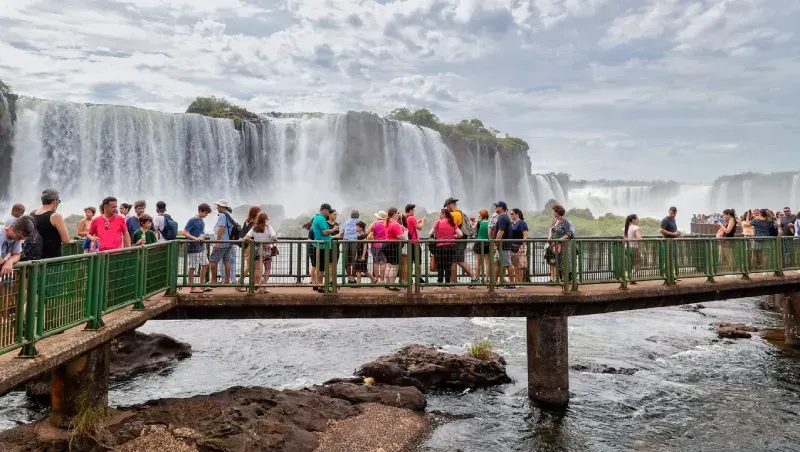
Argentina Iguazu Waterfalls with Visitors
Customize Your Dream Vacation!
Get in touch with our local experts for an unforgettable journey.
Plan Your Trip
July to September in Argentina means ski slopes, whale watching, and tango: three months packed with memorable experiences. Winter settles firmly over the country, and Argentina doesn’t slow down. It simply shifts its energy. Patagonia’s slopes become the loudest, liveliest destination in the land, while along the Atlantic coast, some of the world’s most spectacular whale watching unfolds in near-perfect conditions.
For skiers, tango fans, and wildlife lovers chasing southern right whales before they drift back toward Antarctic waters, this trio of months holds some of Argentina’s most memorable experiences.
July: Peak Ski Travel and School Holiday Crowds
Heavy snowfall blankets Cerro Catedral near Bariloche and Las Leñas in Mendoza, and July sits right at the glorious heart of ski season. School holidays push visitor numbers to their yearly peak on these slopes, so lift passes and lodge rooms deserve a booking well ahead of your arrival.
Step away from the ski towns, though, and a different Argentina emerges entirely. Buenos Aires stays dry and cool — not cold enough for snow — which makes it a lovely month to wander museums, settle into a corner restaurant, and linger over a Malbec and a perfectly seared steak. Low season pricing holds across much of the country beyond the ski resorts, and that quieter atmosphere makes genuine encounters with locals far easier to come by.
Wildlife enthusiasts will find Parque Nacional Iberá particularly rewarding this month — with visitor numbers at their thinnest, animals move freely, and sightings come easily. Whale watching is already well underway at Península Valdés, setting the stage for the even richer months ahead.
August: Snow Sports, Buenos Aires Tango, and Cool-Weather City Visits
August keeps Argentina's ski season alive and humming, though resorts such as Las Leñas in Mendoza begin softening their prices as the season eases toward its close. Central Argentina enjoys a mild, dry stretch, while the north stays dry and sunny, with warm days. Iguazú Falls often runs with less water this month, though the reward is far fewer people sharing the walkways with you.
The big cultural moment belongs to Buenos Aires, where the annual Tango Festival and Championships take over the city in late August — drawing the country's finest dancers and musicians into a celebration of Argentina's most iconic art form.
Ski lovers have options beyond Bariloche too: La Hoya offers gentler runs well-suited to families, and Cerro Castor near Ushuaia lays claim to being the world's southernmost ski area. Back along the Atlantic coast, southern right whales remain wonderfully present at Península Valdés, with August through October marking the richest window for sightings.
September: Spring Sightseeing in the North and Whale Watching Along the Coast
Something shifts beautifully in September. The days are longer, the air softens, and spring quietly announces itself across the north. Salta becomes ideal for hiking — a refreshing contrast to the intensity of its summer months. Buenos Aires coaxes its residents back outdoors, and with tourism still relatively calm, attraction queues stay wonderfully short.
On the coast, whale watching at Península Valdés reaches its most spectacular peak, with sightings practically guaranteed for anyone who makes the journey. Orcas join the spectacle too, beginning their dramatic beach-hunting behavior at Caleta Valdés and Punta Delgada — a pattern that continues well into October and November. The first penguins start arriving at colonies like Punta Tombo this month, with males claiming their nesting sites ahead of the rest of the colony.
|
Destination
|
July
|
August
|
September
|
|
Ski areas
|
Peak snowfall, busiest crowds
|
Skiing continues, prices ease
|
Season winding down
|
|
Buenos Aires
|
Dry, cool, low season
|
Mild, Tango Festival
|
Spring, short queues
|
|
Península Valdés whales
|
Watching underway
|
Best months begin
|
Sightings nearly guaranteed
|
Visit Argentina from October to December for Patagonia’s reopening trails, Buenos Aires’ purple jacarandas, and long early-summer days. These months carry Argentina from the last cool whispers of spring straight into the full blaze of summer. Trails across Patagonia gradually shake off the winter, Buenos Aires bursts into purple, and the whole country stirs back to life with a wonderful, building energy.
For anyone with Patagonia on their mind, this three-month stretch holds some of the most rewarding travel windows of the year.
October: Lake District Flowers and the Gradual Return of Southern Travel Services
October belongs to the wildflower chasers — those who want Bariloche and the Lake District draped in color without the summer crowds pressing in from every direction. Forests near Nahuel Huapi bloom beautifully this month, and lodges that went quiet through winter start reopening their doors for the first trekkers of the season. Southern Patagonia is still stretching and yawning, with pockets of snow lingering in places, so the far south rewards patience more than rushing.
Elsewhere, the Iberá Wetlands welcome waves of migratory birds, and the festival calendar gets a charming detour with the Fiesta Nacional de la Cerveza, Argentina's Oktoberfest, in Villa General Belgrano (Córdoba) — a warm nod to the German immigrants who have woven their traditions deep into the cultural fabric here. Toward the end of October, head to Ushuaia and Tierra del Fuego National Park, where wildlife odds improve noticeably and the first penguins of the season begin making their appearance.
November: Buenos Aires Jacarandas and Improving Access to Patagonia Trails
There is something almost theatrical about Buenos Aires in November. The jacaranda trees lining its grand boulevards drop clouds of purple blossoms onto the pavements below, turning ordinary afternoon walks into something you will want to photograph at every corner. It is one of the city's most beloved seasonal moments, and it arrives just as the rest of the country is warming up beautifully.
Patagonia's facilities fully reopen this month, which is genuinely good news for anyone hoping to experience the region before the December crowds roll in. The trails are accessible, the lodges are ready, and the atmosphere still carries that quiet, unhurried quality that disappears once high season arrives. Antarctica's cruise season picks back up too, as sea ice retreats around the Antarctic Peninsula and expedition ships start sailing south from Ushuaia.
|
Destination
|
Average daytime high
|
|
Buenos Aires
|
77°F (25°C)
|
|
Mendoza
|
81°F (27°C)
|
|
El Calafate
|
52–55°F (11–13°C)
|
|
El Chaltén
|
around 50°F (10°C)
|
|
Ushuaia
|
51°F (11°C)
|
Slot Salta into your November plans sooner rather than later — temperatures climb sharply as the month closes out, and the comfortable hiking conditions that make the northwest so appealing don't stick around for long.
December: Long Summer Days, Outdoor Adventures, and the Start of Holiday Crowds
December throws the doors wide open. Patagonia enters full peak season, and the daylight hours alone make the journey feel worthwhile — El Calafate enjoys 16.4 hours of light on December 15, while Ushuaia stretches all the way to 17.3 hours. That kind of daylight changes everything about how you experience a place. Hikes that might feel rushed elsewhere unfold at a leisurely pace, and evenings at the trailhead still glow with soft golden light.
Temperatures rise right across the country: Mendoza hits 32°C, Iguazú Falls climbs to 31°C, and Buenos Aires settles into warm 29°C days, while Bariloche stays pleasantly cooler at 21°C.
Down at Iguazú, heavy December rains send the cascades into dramatic, thundering overdrive — a spectacle that rewards those willing to get thoroughly soaked on the boat tours. Meanwhile, Antarctica cruises are in full swing, with 20 or more hours of daylight a day and the first penguin chicks hatching from mid- to late December.
Book lodges and tours well ahead of this month. The popular spots fill fast, and December is not the time to be flexible about where you sleep.
How Do Spring and Summer Conditions Affect a Route from Buenos Aires to Patagonia?
Spring keeps the logistics friendlier — flights are easier to secure, lodges have availability, and the overall pace of travel feels more forgiving. Summer delivers longer sightseeing hours and that extraordinary daylight, but it asks for earlier planning in return.
A practical detail worth knowing: most southern flights depart from Aeroparque, about 35–45 km from the international terminal at Ezeiza, so allow at least an hour for the transfer, and more in heavy traffic.
Build in a buffer night between your international arrival and your first southern departure — it takes the pressure off and gives you an easy first evening in Buenos Aires.
Short connections like El Calafate to Ushuaia, clocking in at around 1 hour 15 minutes, keep multi-stop Patagonia routes entirely manageable even when your schedule is tight.
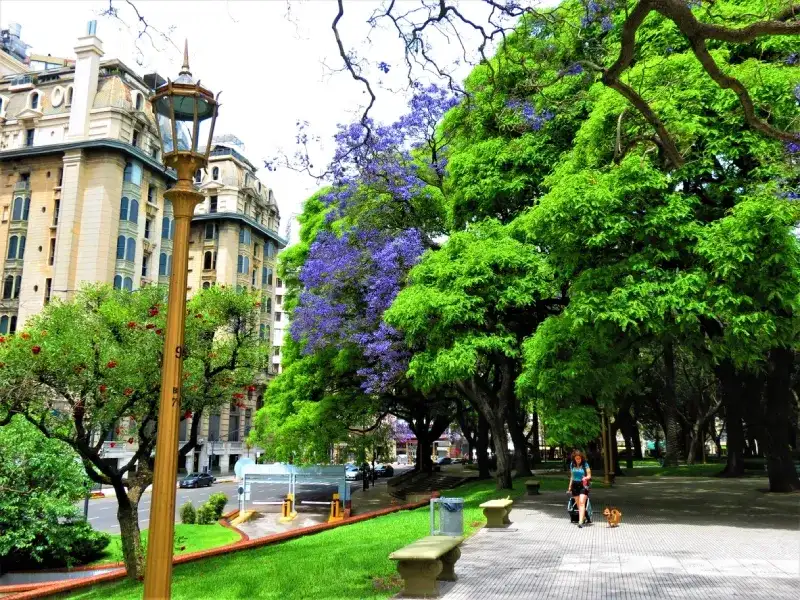
jacaranda Plaza San Martin Buenos Aires
A little groundwork before you commit to dates can spare you some genuinely avoidable headaches — and a few of these details tend to catch even experienced travelers off guard.
Booking: Patagonia's summer season, ski weeks, and major Argentine holidays move fast. Small lodges and the best-loved tours can fill up months ahead, and some of the more sought-after properties need an even longer runway. The smarter approach is to lock in your hardest-to-replace stays first, then build your transport around those anchors rather than the other way around.
Packing: Argentina will ask different things of your bag depending on where you go. Pack layers, not a single look for the whole journey. A waterproof jacket, sturdy walking shoes, solid sun protection, and warm clothing for the south are the non-negotiables. Even a hot Buenos Aires summer can feel entirely different once Patagonia enters the picture, so a jacket tucked in is never wasted space.
Iguazú Falls: The falls are stunning in almost any condition, but heavy rain can shut walkways or boat trips without much notice. In October 2026, the river's flow topped 12,000 cubic meters per second — more than six times its average rate — and the park temporarily closed its walkways. The record, set in June 2014, was more than 45,000 cubic meters per second. Check official updates close to your visit and build a little breathing room into your itinerary around this one.
Flights: Domestic route frequency shifts with the seasons, so a connection that runs comfortably in summer may not exist a few months later. Aerolíneas Argentinas still carries most domestic passengers (58% in 2025, as low-cost rivals such as JetSMART grew), and most regional routes still funnel back through Buenos Aires — worth keeping in mind when piecing together a southern itinerary.
Altitude: Once you climb above 2,500 meters, the air holds roughly 26% less oxygen, and that figure nudges past 30% at 3,500 meters. Around Salta and Jujuy, take your ascent slowly, drink plenty of water, and speak with a doctor beforehand if you have any relevant health conditions.
No single month owns Argentina. That is really the beauty of it. Patagonia saves its finest hours for December through March, Mendoza's vineyards hum with harvest energy from February through April, and the southern right whales of Península Valdés make their grand appearance from June through December — with August to October offering the most spectacular sightings. Each season holds something worth traveling for.
The secret to getting it right is simple: anchor your trip around the experiences that matter most to you, then fill in the rest. Lock in the hardest-to-book stays first — a remote Patagonian lodge, a harvest-season table in Mendoza, a whale-watching berth along the Atlantic coast — and let the rest of the itinerary take shape around them.
Trail access, flight routes, and lodging rates all shift quickly between seasons, so a little planning goes a long way.
Whether it is the endless golden daylight over El Calafate, the fiery autumn canopy around Bariloche, or the intoxicating cloud of purple jacaranda blossoms drifting through Buenos Aires in spring, Argentina has a way of rewarding those who arrive at the right moment. Match your dates to your destination, and the country will do the rest.
What is the best time of year for a first trip to Argentina?
It depends on your route. December through March suits Patagonia, February through April is ideal for Mendoza’s wine harvest, and spring or autumn offers comfortable sightseeing in Buenos Aires.
Is September or November better for visiting Buenos Aires?
Both are good choices. September brings mild spring weather and shorter queues, while November offers warmer days and purple jacaranda blossoms, usually at their best around mid-November.
When should I visit southern Argentina for hiking?
December through March offers the best hiking window in Patagonia, with long daylight hours. November is a quieter alternative as trails become more accessible, but check local conditions.
Which months are good for exploring northern Argentina?
May suits Salta, the high Puna, Iguazú Falls, and the Iberá Wetlands, thanks to cooler conditions. September is also comfortable for sightseeing and hiking around Salta.
When can I visit Patagonia before the summer crowds arrive?
November offers improved trail access and reopened facilities before crowds build from December onward. Book popular lodges and tours early, even when traveling outside peak summer.