
 Home
Puerto Iguazú Argentina: Expert Tips and Hidden Secrets for Your Perfect Trip
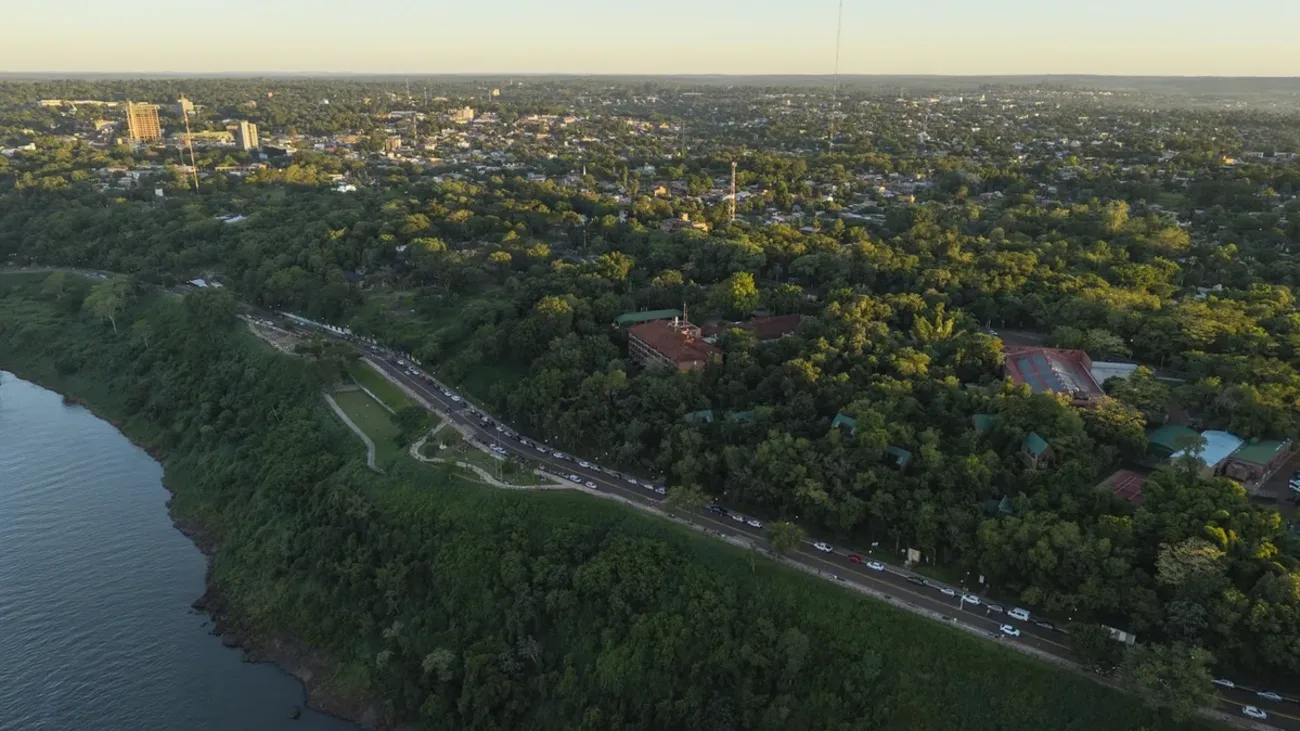
Few border towns carry the weight of a natural wonder quite like Puerto Iguazú. Just 18 kilometers from one of the Seven Natural Wonders of the World, this Argentine settlement of roughly 54,675 residents sits at the precise point where Argentina, Brazil, and Paraguay converge—the Triple Frontier. At its doorstep, the Iguazú River unfolds in a staggering sight: about 275 cascades, each carving its own path over basalt cliffs draped in subtropical forest.
Yet the town itself holds more than most visitors expect. Forest trails, community visits, wildlife sanctuaries, and the peculiar spectacle of three nations meeting at a single riverbank — these are not footnotes to the waterfall experience. They are, for many travelers, what makes Puerto Iguazú linger in the memory long after the roar of the falls fades. What follows covers the full picture: the history, the seasons, the trails, and the quieter discoveries that reward those who look past the obvious.
Get to Know Puerto Iguazú, Argentina
The waterfall brought the tourists. But the story of Puerto Iguazú begins long before any visitor ever arrived — with a river confluence, an ancient people, and one woman whose patronage quietly built the infrastructure that made tourism possible at all.
Where Puerto Iguazú Sits in the Triple Frontier
Puerto Iguazú occupies the far northeast corner of Argentina's Misiones province, wedged into the precise point where the Iguazú and Paraná rivers meet. That confluence is no cartographic accident — it forms the Triple Frontier, the tri-border zone shared by Argentina, Brazil, and Paraguay. Across the water, the Brazilian city of Foz do Iguaçu and Paraguay's Ciudad del Este complete the triangle.
The population figures alone tell you something about the character of each city. Ciudad del Este recorded 299,255 residents in 2018, Foz do Iguaçu around 258,248 in 2020, and Puerto Iguazú — the smallest of the three — roughly 54,675. What it lacks in size, it more than compensates for in position. The Tancredo Neves Bridge, which has linked Puerto Iguazú to Foz do Iguaçu since 1985, carries a steady stream of travelers and traders across the border daily. A separate ferry service connects the town to Presidente Franco in Paraguay via the Paraná River.
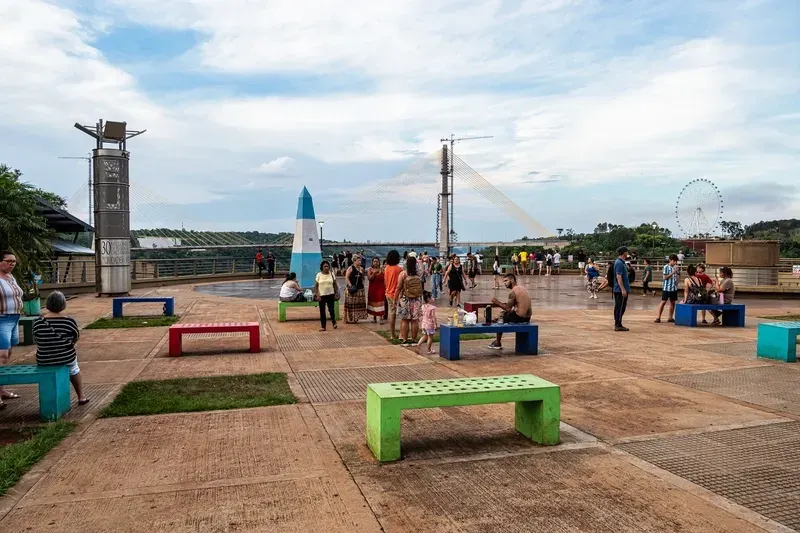
The most evocative expression of this three-way meeting sits at the Hito Tres Fronteras — the Three Borders Landmark. Three obelisks, each painted in the colors of its nation's flag, stand facing one another across the water, placed there in 1903. Three flags, two rivers, one view. It is, in its simplicity, one of the more quietly remarkable sights in South America.
Guaraní Roots and the Meaning of Iguazú
The name itself is a clue. "Iguazú" derives directly from the Guaraní language: "Y" for water, "guasu" for big. Big water. The people who gave the river its name understood what they were describing — a system of nearly 275 cascades fed by a river of considerable power.
The Guaraní inhabited this stretch of subtropical forest long before any Spanish expedition reached it. When European contact came in the 16th century, an estimated 400,000 Guaraní already called the region home, and they remained its sole inhabitants well into the late 19th century, until 1880. The Spanish arrived; the Guaraní stayed.
Their relationship with the falls went far deeper than geography. Guaraní mythology treats the falls as sacred ground. One legend centers on I-Yara, a spirit said to have concealed a maiden named Angá within the cascades, with swallows still searching the mist for her to this day. That spiritual bond has not dissolved with time. The community of Fortín Mbororé, home to around 300 families, still lives just kilometers from town, part of a broader network of 74 Guaraní communities distributed across Misiones province.
How Victoria Aguirre Helped Shape the Tourist Town
The name Victoria Aguirre Anchorena does not appear on many tourist maps, yet her influence on Puerto Iguazú is difficult to overstate. A philanthropist, she was among the first visitors on an organized excursion to the falls in 1901. Whatever she witnessed there compelled her to act: she funded the construction of the first road linking the settlement to the falls, along with several other civic undertakings.
The settlement was founded that same year under the name Puerto Aguirre, formally established on September 10, 1901, in recognition of her contributions. The pace of development that followed speaks to the momentum she set in motion. A hotel opened in 1906. By 1907, the town had a school, a police station, a border control post, and functioning telephone lines. The road she paid for was not merely a path through the forest — it was the first thread of what would eventually become one of Argentina's most visited tourist destinations.
When to Visit and How to Get There
Timing and logistics are not afterthoughts here — they determine whether you spend your days walking misty boardwalks in relative peace or queuing in 32°C humidity alongside tour groups three rows deep.
Choose Your Season: Heat, Rain, and Crowds
The seasons at Iguazú each offer a distinct trade-off. Summer, running December through February, delivers the highest water volumes — the falls at full thunder — but pairs that spectacle with temperatures between 30 and 32°C and humidity that makes the forest feel like a steam room. Spring, from September to November, and fall, from March to May, strike a more practical balance: water flow remains strong, temperatures ease, and trails thin out considerably. Winter, June through August, drops conditions to a pleasant 18 to 24°C, with sharper visibility and noticeably quieter paths.
Rainfall averages around 8 days per month, and humidity peaks at roughly 84% in May and June — figures worth noting but rarely trip-ending. The real crowd triggers are Easter week, July school holidays, and the Christmas-to-New Year window, when prices climb in step with visitor numbers. April to May and September to October remain the clearest windows for those who want the falls well-fed and the walkways walkable.
Allow Enough Days for the Falls and the Town
Three days and two nights is widely regarded as the minimum that does the place justice — enough time to cover both the Argentine and Brazilian sides without sacrificing pace. A 3- to 5-day stay opens room for the town's quieter attractions alongside the falls. Attempting both countries in a single day is technically achievable, though border wait times and park schedules tend to compress the experience considerably.
Compare IGR and IGU Airports Before Booking
Two airports serve the region, and which one makes sense depends entirely on where you're flying from. Argentina's Cataratas del Iguazú International Airport (IGR) lies 20 to 25 kilometers from Puerto Iguazú, with flights from Buenos Aires running 1 hour 50 minutes to 2 hours. Brazil's Foz do Iguaçu Airport (IGU) draws connections from São Paulo, Rio de Janeiro, and Curitiba, placing arrivals 15 to 25 minutes from central Foz.
|
Airport |
Country |
Best For |
Transfer to Town |
|
IGR |
Argentina |
Buenos Aires arrivals |
20–30 min |
|
IGU |
Brazil |
São Paulo/Rio arrivals |
15–25 min |
Aerolíneas Argentinas operates the primary domestic routes into IGR, with budget carriers JetSMART and FlyBondi offering lower-cost alternatives. On the Brazilian side, LATAM, Gol, and Azul cover the main connections into IGU.
Arrive by Bus or Car via Route 12
The road journey from Buenos Aires stretches approximately 1,336 kilometers — Route 9 north, then Route 14, finishing along Route 12 — accounting for 15 to 17 hours of driving. From Posadas, the distance shrinks considerably: a 4-hour run along Route 12 passes mate plantations and the ruins of San Ignacio before delivering you to the frontier. Long-distance coaches from Buenos Aires's Retiro terminal offer reclining cama seats and onboard meals, covering the same route in 16 to 18 hours. Drivers should carry green card documentation and insurance papers for the border, and early arrival at the park pays dividends — the car park fills faster than most expect.
Plan Border Crossings and Check Entry Rules
A day trip across the bridge counts as a full international crossing, which means passport checks, immigration stamps, and, depending on nationality, the possibility of a visa requirement for Brazil. The Tancredo Neves Bridge crossing typically runs around an hour; before 8 a.m., it can clear in 40 minutes, while holiday periods and the November-to-March high season push waits to 1.5 to 2 hours. One detail that catches first-timers off guard: local buses do not stop automatically at Brazilian immigration. Passengers need to alert the driver before the crossing.
Watch the sunset at Hito Tres Fronteras, explore forest walks around Iryapú, or visit the Güirá Oga wildlife rescue center. La Aripuca and community-led Guaraní visits offer a closer look at local culture.
It’s possible, but border delays and park schedules can make it rushed. Allow a full day for Argentina’s trails and at least half a day for Brazil’s panoramic views.
Arrive when Argentina’s park opens at 8 a.m. and explore the Upper Circuit early. Plan your Devil’s Throat train ride well before the last departure, and avoid major holidays where possible.
Check passport and visa requirements before traveling. Allow roughly an hour for the crossing, with longer waits during holidays. If using a local bus, tell the driver you need to stop at Brazilian immigration.
Pack a reusable poncho, grippy closed shoes, sunscreen, insect repellent, snacks, and water. Bring a waterproof phone pouch and, for the boat ride, a full change of clothes in a dry bag.
Experiencing Iguazú Falls the Right Way
The falls reward patience. Visitors who treat them as a half-day tick-box exercise miss what makes this place genuinely extraordinary — the scale only reveals itself when you slow down, follow the walkways at your own pace, and let the landscape announce itself rather than chasing it.
Argentina or Brazil? What Each Side Offers
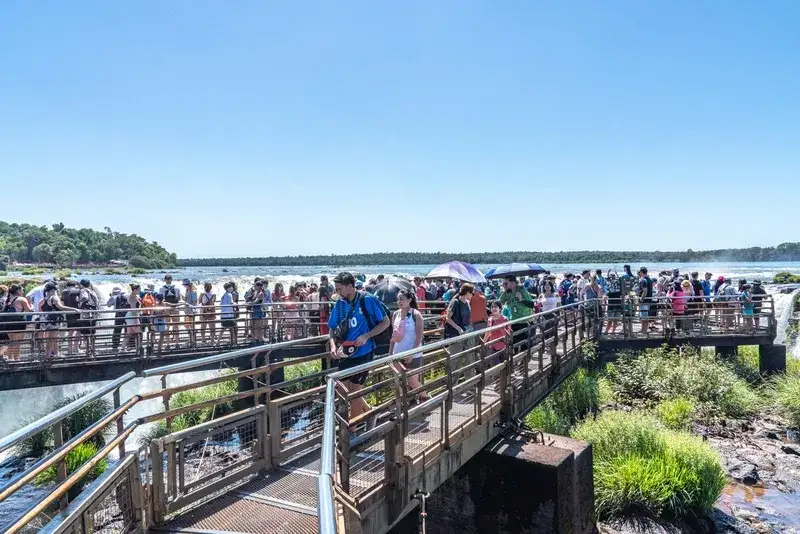
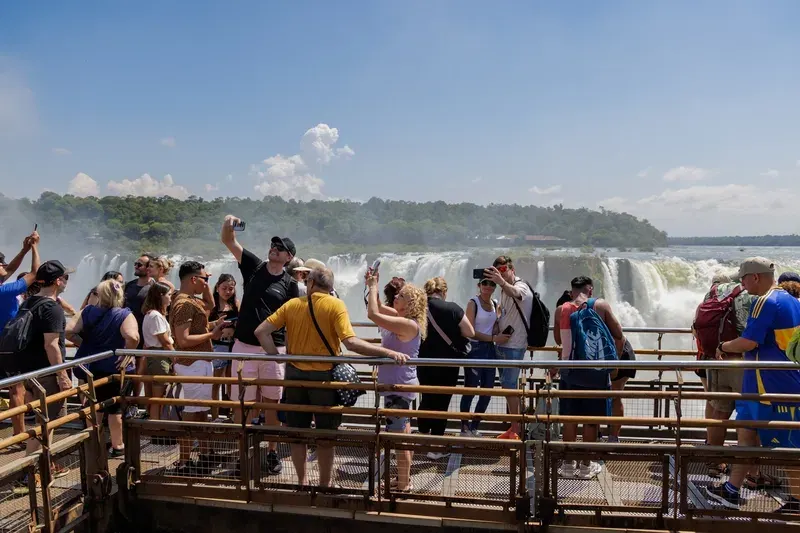
The two countries offer fundamentally different encounters with the same waterfall system. Argentina's park places you within it — its network of walkways carries you above the cascade lips, down into the spray zone, and alongside individual falls close enough to feel the force of the water. Brazil offers something different in kind: a shorter, panoramic route that steps back and frames the entire system in a single, sweeping view. Most travelers dedicate a full day to the Argentine side and at least half a day to Brazil. Attempting both in one stretch is possible, though border traffic, immigration queues, and park operating hours all carry weight in that calculation.
The Upper and Lower Circuits
Argentina's Upper Circuit runs flat and stair-free for 1.75 to 1.85 kilometers — roughly 1.5 to 2 hours of walking — with views looking out over the rim of the falls from above. The Lower Circuit, a similar 1.7 to 1.75 kilometers, adds stairs and slopes and brings you close enough to Bossetti Falls to feel its spray settle on your skin. Travelers who have walked both tend to recommend the Upper Circuit first, taken early in the morning when foot traffic is lightest.
Reaching Devil's Throat by Train
The Rainforest Ecological Train runs through the park interior to Garganta Station, where a flat walkway crosses the river and delivers you to the platform directly above Devil's Throat. Allow 1.5 to 2 hours for the full 2.2-kilometer round trip, accounting for train wait times. The last departure leaves at 4:00 p.m. — treat that as a hard deadline rather than a rough guide.
Brazil's Panoramic Walkway
Internal buses on the Brazilian side cover approximately 12 kilometers between the Visitor Center and the waterfall area. The Waterfall Trail runs about 1 kilometer, finishing at a walkway stretching toward Floriano Falls, with elevators carrying visitors up to the final viewpoints. The scale of the panorama from this side — the full arc of the horseshoe visible at once — is the detail that tends to stay with travelers long after the specific circuits have blurred together.
Tickets, Hours, and Trail Conditions
Argentina's park entry costs ARS 60,000 for foreign visitors, with gates open from 8 a.m. to 6 p.m. and last admission accepted at 4:30 p.m. Brazil's entry fee for foreign visitors is around 131 reais. High rainfall or swollen river levels can force individual trail closures without shutting the park entirely, so checking official updates the morning of your visit is worth the two minutes it takes.
The Boat Ride Under the Falls
Gran Aventura puts you directly beneath the falls — a roughly two-hour excursion that combines a jungle truck ride with a boat ride under the cascades. There is no version of this experience where you stay dry, so a waterproof bag and a full change of clothes stored separately are practical necessities rather than optional extras.
Customize Your Dream Vacation!
Get in touch with our local experts for an unforgettable journey.
Plan Your TripThings to Do in Puerto Iguazú Beyond the Falls
The falls absorb most of the attention, and rightly so. But Puerto Iguazú holds its own set of worthwhile stops — ones that ask for nothing more than a slower pace and a willingness to look past the obvious. None of them require a border crossing.
Watch Sunset at Hito Tres Fronteras
The Three Borders Landmark sits about a 20-minute walk from downtown, or a 5- to 10-minute taxi ride. Arrive an hour before sunset. That buffer gives you time to browse the craft stalls lining the riverside walk before the light shifts over the water. While you're there, note the color of the Paraná and Iguazú rivers — locals read it as a rough indicator of how full the falls will run on your visit. It is, by any measure, one of the more peculiar vantage points in South America: three nations, two rivers, and a row of flag-painted obelisks all visible from a single spot.
Find Quieter Forest Walks Around Iryapú
When the main park circuits grow loud and crowded, the Reserva Iryapú offers a different register entirely. Its forest paths sit away from the main tourist flow, offering a calmer look at the subtropical jungle. Just nearby, a guided visit to Comunidad Jasy Porã costs around USD 6 per adult and runs approximately 45 minutes, with a local guide walking you through traditional houses and the ingenious animal traps the Guaraní once relied on.
Visit Güirá Oga to Learn About Wildlife Rescue
Güirá Oga is a wildlife rehabilitation center — not a zoo, and the distinction matters. The visit unfolds over roughly 1.5 hours: an eco-trailer carries you 1 kilometer into the forest, followed by an 800-meter guided walk past rescued pumas, toucans, and tapirs. The center opens daily at 9 a.m., closes at 6 p.m., and runs its last tour at 4:30 p.m., with English-language options at 9:30 a.m. and 2 p.m. Ranked 6th out of 72 attractions in town with a 4.3-star average across nearly 2,000 reviews, it represents the kind of experience that stays with you longer than most park itineraries will.
Explore La Aripuca and Its Forest Displays
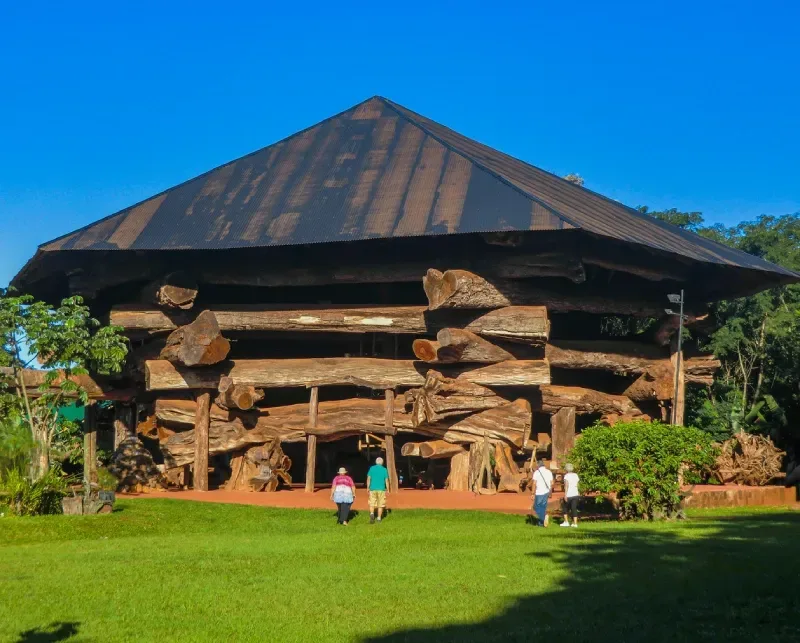
La Aripuca is built around a single arresting object: a giant replica of a traditional Guaraní animal trap, standing over 17 meters tall and constructed from the salvaged trunks of more than 30 native tree species. Entry costs around USD 8 and covers repeat visits for a full week, with the park open daily from 9 a.m. to 6 p.m. As an introduction to the ingenuity of Guaraní forest knowledge, it is more instructive than it might first appear.
Book a Community-Led Guaraní Visit
Guided visits to Mbya-Guaraní communities near Iryapú — home to roughly 300 families — span a considerable range in price and scope. Fully organized tours with hotel transfers cost noticeably more, while visits arranged directly with community artisans typically fall somewhere between USD 6 and 50 per person. The more modest option, handled without an intermediary, tends to offer a more honest encounter.
Staying, Eating, and Spending Wisely in Puerto Iguazú
Logistics matter here more than in most destinations. The falls demand full days on your feet, and the choices you make around accommodation, food, and transport have a direct bearing on how much energy you have left to enjoy them.
Choose Between Downtown Hotels and Forest Lodges
The decision between downtown and forest lodges is largely a question of priorities. Staying in the town center places restaurants, shops, and the bus terminal within easy reach — a practical advantage if you intend to move regularly between the Argentine and Brazilian sides. Lodges positioned closer to the park entrance offer something different: the forest at dawn, before the day-trippers arrive, and the particular quiet that comes from sleeping near a jungle rather than a bus route.
Try Regional Fish, Chipa, and Mate
The regional table here is worth paying attention to. River fish is the local standard — the kind of dish that earns its place on a menu through freshness rather than novelty — and it remains the meal most travelers remember. Chipa, a chewy bread made from cassava flour and cheese, appears everywhere from bakeries to roadside stalls and costs very little. Mate, the bitter herbal drink shared from a gourd and passed between friends, is less something you order and more something you're offered, a small but telling introduction to how life moves in this part of Argentina.
Compare Local Buses, Taxis, and Private Transfers
Local buses run regularly between the town center and the park entrance, and they do the job. Taxis and remises offer more flexibility, particularly for early starts when the first bus hasn't yet departed. Organized tours with hotel pickup and drop-off are cited repeatedly in visitor accounts as the least complicated option, a reasonable choice for those who'd rather not spend mental energy decoding timetables after a long travel day.
Budget for Meals, Park Visits, and Optional Tours
Park entry fees sit well above what you'd pay for a meal in town, so factor both sides into your planning — Argentina charges ARS 60,000 for foreign visitors, while Brazil sets its fee at around 131 reais. Food and drink purchased inside the parks carry a significant premium over town prices, so arriving with snacks and a full water bottle already in your bag is a straightforward way to avoid the markup. For those working within tighter limits, operators will often adjust itineraries on request — one traveler managed to reduce a three-night trip to two by dropping the Brazilian side and a higher-end hotel.
Pack for Rain, Insects, and Long Walks
Leave the umbrella at home. The wind generated by the falls renders them useless within seconds; a reusable poncho, tucked into a daypack, does the job without the frustration. Wet boardwalks and uneven surfaces make grip essential, so closed shoes with a proper sole are worth choosing over sandals or flip-flops. Round out your pack with sunscreen, insect repellent, a refillable water bottle, and a waterproof pouch for your phone. The Great Adventure boat ride delivers exactly what it promises — a complete soaking — so a full change of clothes sealed inside a dry bag belongs in your bag before you board.
Support Local Guides and Shops While Reducing Waste
The Bottle House, constructed entirely from recycled bottles, cartons, and cans, operates a small shop stocking goods made by local entrepreneurs — the kind of stop that tends to produce a more interesting souvenir than anything sold at the main park entrance. Park fees channel directly into conservation, and in areas where waste collection is limited, the old expectation applies: whatever you carry in, carry out.
Conclusion
The falls will do what they have always done — stun, overwhelm, and render most prior expectations inadequate. That part requires no effort on your part. What does require effort is resisting the pull to move on too quickly, to treat 275 cascades as a box ticked and the town as a mere base camp.
Puerto Iguazú has more texture than that. A settlement shaped by Guaraní myth, funded into existence by a single determined woman, and positioned at the confluence of two rivers and three nations carries stories worth sitting with. Sunset at Hito Tres Fronteras, a walk through Reserva Iryapú, an afternoon at Güirá Oga — none of these demand much time, but each one adds a layer that the falls alone cannot provide.
The travelers who leave most satisfied are rarely those who covered the most ground. They are the ones who chose their season with care, crossed both borders without rushing, and left a day unscheduled. That unhurried approach is, ultimately, what this corner of Argentina asks of you — and what it generously rewards.
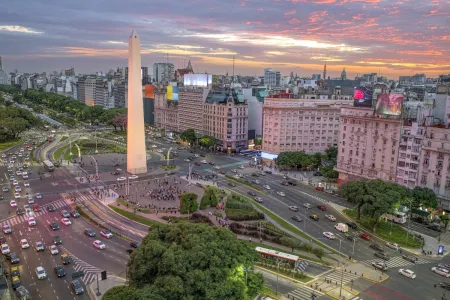
What makes Buenos Aires the “Paris of South America”? Discover why as you walk the world’s widest avenue, explore the colorful Caminito, catch a midnight milonga, and uncover the city’s best-kept secrets.
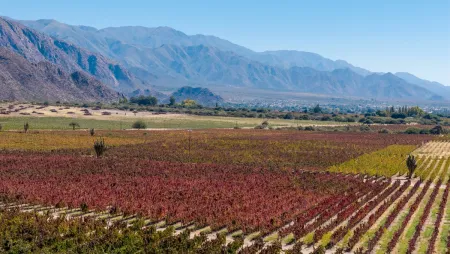
Cafayate is famous for its wine, but the real magic lies beyond the vineyards. Watch sunrise paint the sand dunes pink and gold, hike through red canyons to hidden waterfalls, and wander colonial villages where time stands still. This guide shows you the side of Cafayate most visitors never see.
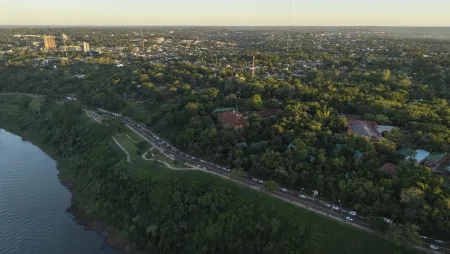
A complete guide to Puerto Iguazú, the Argentine town where three countries meet, just 18 km from Iguazú Falls. It covers the town’s history, the best seasons, how to get there, and how both sides of the falls compare. It also shows quieter spots like Hito Tres Fronteras and Güirá Oga, plus practical tips on where to stay, what to eat, and what to pack.
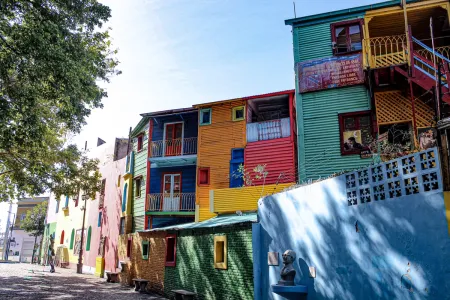
La Boca is Buenos Aires’ most colorful neighborhood, shaped by Italian immigrants, port life, and tango. This guide covers Caminito, La Bombonera, local museums, where to eat, and practical tips for a safe visit.
Perito Moreno is one of the few glaciers in Patagonia that held steady for decades, and it’s now retreating. This guide covers its key facts, the science behind its blue ice and dramatic ruptures, and the best ways to see it from El Calafate.
Los Glaciares National Park facts every traveler should know: where the park sits in Argentine Patagonia, how its glacier-filled south differs from El Chaltén’s trekking north, the best season to visit, 2026 entry fees, and practical tips for seeing Perito Moreno, cruising to Upsala and Spegazzini, and hiking to Laguna de los Tres.
Discover the best things to do in El Calafate, from walking the Perito Moreno Glacier walkways and trekking on the ice to cruising Lago Argentino and spotting flamingos at Laguna Nimez. This guide covers when to go, how to get there, where to stay and eat, and how many days to plan.
