
 Home
What the History of the US Supreme Court Reveals About Power in America
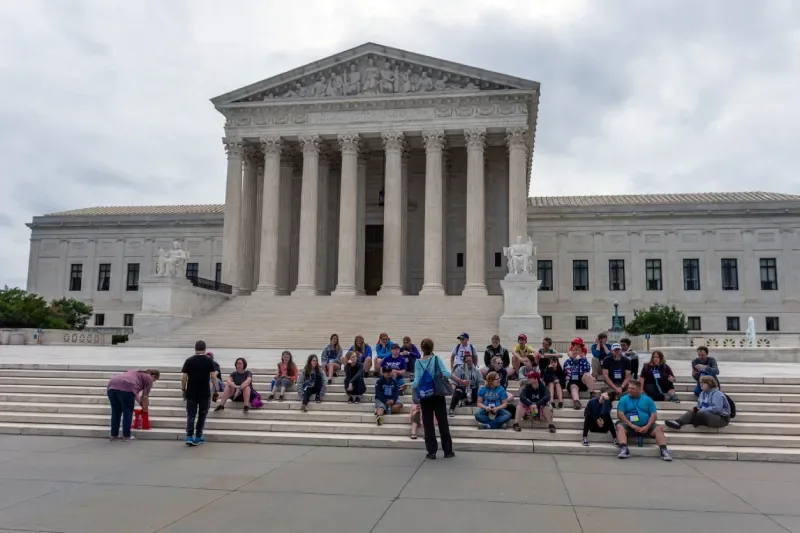
Few institutions in American history have accumulated such quiet, decisive authority as the Supreme Court of the United States. What began as a modest judicial body — an afterthought, almost, in the grand architecture of the new republic — has evolved into an arbiter of national life whose rulings shape policy across generations. Consider the scale of that authority: roughly 7,000 to 8,000 petitions arrive at the Court each year, yet only about 80 ever earn a full hearing with oral argument. Those few chosen cases carry enormous weight, settling questions that ripple outward through legislatures, courtrooms, and ordinary lives for decades.
The Court started with six justices, held no clear power to strike down laws, and commanded little of the national attention it commands today. That changed through landmark rulings, political battles, and appointments that shifted the bench's entire philosophical character. Tracing that arc reveals something far larger than a legal history — it exposes the nature of power itself in America, who has held it, who has been denied it, and how the Court has repeatedly decided which answer prevails.
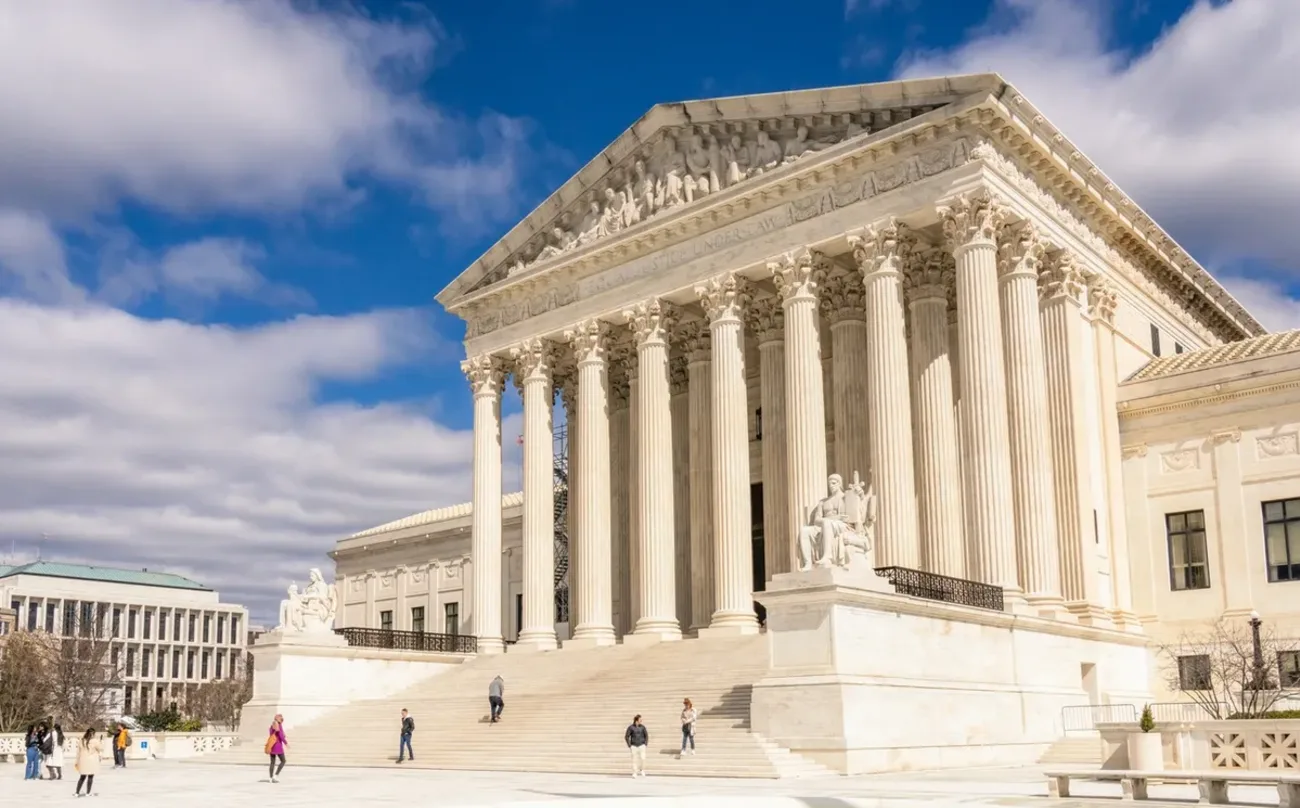
Table of content
1-1789–1835: How the Supreme Court Gained Its Power
2-1836–1930: Who Benefited From the Court's Power?
3-1930–1969: How the Court Changed Its View of Government and Rights
4-1969–Today: How Appointments Changed the Court's Direction
5-What This History Reveals About Power in America
1-1789–1835: How the Supreme Court Gained Its Power
The Court's authority was not handed down from the founding document. It was constructed, methodically, through congressional legislation and rulings that no one could later unmake.
Why the Constitution Created the Supreme Court of the United States
Article III offered little more than a skeleton. Judicial power, it declared, would reside in "one supreme Court" and in whatever inferior courts Congress chose to establish — no prescribed number of justices, no prescribed procedures, no prescribed jurisdiction beyond the most essential outlines. The framers appeared content to leave the details to future hands.
What they were not willing to leave unprotected was judicial independence. Judges hold their seats "during good Behaviour" — effectively for life — and Congress cannot reduce their salaries while they serve. The design was deliberate: a bench insulated from the threat of political retaliation, at least as a matter of principle.
Article III did specify the Court's reach. Cases arising from the Constitution, federal statutes, and treaties fell within its domain, as did controversies between states and matters involving foreign diplomats. The vast majority would arrive through appeal; only suits touching states or ambassadors could originate there directly.
How Congress Shaped the First Court in 1789
The Judiciary Act of 1789 gave the skeleton its flesh. Congress assembled a three-tiered federal court structure: district courts at the base, handling admiralty matters and minor civil claims; circuit courts in the middle, staffed by two Supreme Court justices riding alongside a local district judge, serving as the primary trial venues with limited appellate authority.
The Supreme Court sat above both. Six members — one Chief Justice and five Associate Justices — formed the full bench, with any four constituting a quorum. The Court convened twice a year, in February and August, while the nation itself was divided into three geographic circuits: eastern, middle, and southern.
The Act granted the Court genuine power. Exclusive civil jurisdiction over cases involving a state, original jurisdiction over suits concerning ambassadors, and authority to issue writs of habeas corpus and mandamus all fell within its reach. The appellate ladder ran on dollar values: cases worth more than $50 could ascend from district to circuit court; those exceeding $2,000 could climb further to the Supreme Court itself.
Marbury v. Madison: The Power to Strike Down Laws
Then came 1803. The backstory was thoroughly political. John Adams, in the final hours of his presidency, signed a slate of judicial appointments — among them a commission naming William Marbury as a justice of the peace in Washington, D.C. The commission was never delivered before Adams vacated office, and the incoming Jefferson administration declined to transmit it.
Marbury brought the matter before the Court, invoking Section 13 of the Judiciary Act, which authorized the justices to issue writs of mandamus compelling official action. Chief Justice John Marshall read the situation with surgical clarity. Marbury had a legal right to his commission. But Section 13 had granted the Court a form of original jurisdiction the Constitution did not sanction.
Marshall's solution was audacious: he ruled in Marbury's favor on principle while simultaneously striking down the very provision that gave him authority to act. That moment — the first time the Supreme Court declared an act of Congress unconstitutional — established judicial review as a durable feature of American law. Curiously, the Court would not invalidate another federal statute for more than fifty years, despite having weighed constitutional challenges to federal laws in eight earlier cases and to state laws in at least three others between 1789 and 1801. Marbury did not create something new so much as render the principle undeniable.
McCulloch v. Maryland: Strengthening Federal Power
Sixteen years on, Marshall's Court turned to a different but equally consequential question. Congress had chartered the Second Bank of the United States in 1816; by the following year, a Baltimore branch was operational. Maryland, which resented the federal bank's presence, passed a tax in 1818 targeting any bank within its borders that lacked a state charter — a provision aimed squarely at the federal institution.
James McCulloch, the bank's cashier, refused to pay. Maryland took him to court and won. The Supreme Court reversed that outcome unanimously. Marshall's reasoning rested on the Necessary and Proper Clause: Congress held implied powers beyond those explicitly enumerated, provided the end was legitimate, and the means chosen were "appropriate" and "plainly adapted" to that end. Further, since the federal government derived its authority from the people rather than the states, those states could not tax its instruments. Federal supremacy, within its proper sphere, admitted no exception.
McCulloch extended the reach of federal authority in ways that would outlast every justice who ruled on it. Paired with Marbury, it handed the Court something it had not possessed at its founding — the practical means to shape the structure of American power, and the constitutional vocabulary to defend doing so.
2-1836–1930: Who Benefited From the Court's Power?
Marshall's Court had spent decades fortifying federal authority and arming the judiciary with the power of constitutional review. What followed was a pointed demonstration of whose interests that authority would serve. Between 1836 and 1930, the Supreme Court of the United States sided repeatedly with property owners, segregationists, and business interests — leaving those who sought the Constitution's protection to find little of it.
Dred Scott: Protecting Slavery and Denying Black Citizenship
The year 1857 produced what many historians regard as the most catastrophic ruling in the Court's entire history. Dred Scott, an enslaved man who had spent years living in free territory, brought his claim for freedom before Chief Justice Roger Taney's Court. The answer came back 7-2: Black people, free or enslaved, held no standing as citizens of the United States and could not bring suit in federal court.
Taney did not stop there. He struck down the Missouri Compromise outright, declaring that Congress possessed no authority to prohibit slavery in federal territories. Rather than quieting the national argument over slavery, the ruling sharpened it — accelerating the drift toward civil war. The 13th and 14th Amendments would eventually undo the decision, but the damage was recorded. The Court's power, so carefully constructed through Marbury and McCulloch, had been deployed to protect an institution whose entire foundation rested on the denial of human dignity.
Plessy v. Ferguson: Allowing Racial Segregation
Reconstruction produced three constitutional amendments and a brief, fragile promise of equality. That promise met the Court in 1883, when the justices struck down the Civil Rights Act of 1875, ruling that the 14th Amendment offered no authority to prohibit discrimination carried out by private individuals. States recognized the opening immediately.
Louisiana enacted its Separate Car Act in 1890, mandating racially segregated railway carriages over the protests of 16 Black legislators in the state assembly. Homer Plessy tested the law deliberately in 1892, taking a seat in a whites-only car. He was arrested, fined $25, and faced the threat of imprisonment.
The Court ruled against him 7-1 in 1896, finding that "separate but equal" accommodations raised no constitutional objection under the 14th Amendment. Justice Harlan's solitary dissent carried a warning: this ruling would one day be remembered as darkly as Dred Scott. He was right. Jim Crow laws fanned outward across the country and held as settled practice until the mid-1960s, when the Civil Rights Act of 1964 and the Voting Rights Act of 1965 dismantled them.
Lochner v. New York: Limiting Laws on Working Hours
The Court's deference to entrenched interests extended well beyond questions of race. When New York capped bakery workers' hours at 10 a day and 60 a week in its Bakeshop Act of 1895, the justices struck the law down 5-4 in 1905, reasoning that it intruded upon the contractual liberty shared between employer and employee.
That logic became the defining feature of what legal historians call the Lochner era — a prolonged period during which the Court methodically dismantled state and federal attempts to regulate wages, set working hours, and establish basic labor protections. Workers who brought grievances to the bench found the Constitution interpreted squarely against them. Employers found a Court that treated their interests as constitutional rights. The reckoning with that posture would not arrive until the economy itself collapsed under the weight of the Great Depression.
Yes. The Court can overturn its earlier decisions, as it did when Dobbs overturned Roe v. Wade. Constitutional amendments can also overturn rulings, as the 13th and 14th Amendments did with Dred Scott.
Five major examples are Marbury v. Madison on judicial review, McCulloch v. Maryland on federal power, Dred Scott on slavery and citizenship, Brown v. Board of Education on school segregation, and Dobbs on abortion law.
Presidents nominate justices, the Senate confirms them, and Congress sets the Court’s size. The Court also depends on other officials to carry out its rulings, while constitutional amendments can override its interpretations.
In Marbury v. Madison in 1803, the Court declared part of a federal law unconstitutional. This established judicial review: the power to reject laws that conflict with the Constitution.
Justices generally serve for life, so an appointment can influence rulings for decades. Changes in the Court’s membership can shift its approach to rights, federal authority, and earlier decisions.
3-1930–1969: How the Court Changed Its View of Government and Rights
The Lochner era had handed business interests decade after decade of favorable rulings, but the Great Depression arrived with a force that no bench could indefinitely resist. President Franklin Roosevelt's New Deal programs brought that confrontation to a head, pitting an economically devastated nation against a Court still wedded to older constitutional instincts.
The New Deal conflict over federal economic power
The early verdicts were unambiguous defeats for Roosevelt. Schechter Corp. v. United States came first, with the Court voiding the National Industrial Recovery Act on the grounds that its minimum wage, maximum hours, and price control provisions reached beyond Congress's commerce power. Then, in January 1936, the Agricultural Adjustment Act fell too — the justices declaring that regulating farm production sat "beyond the powers delegated to the federal government". Federal authority over economic life had clear limits, and the Court intended to enforce them.
Roosevelt's failed plan to add more justices
Roosevelt's response was audacious. The nine justices averaged over 71 years of age, and on February 5, 1937, he asked Congress to grant him one new appointment for every sitting justice over 70 who declined to retire — a scheme that would have placed six additional seats in his hands. The proposal was rejected within six months, yet the Court moved without it.
Justice Owen Roberts switched sides in March 1937, tipping the balance from 5-4 against New Deal legislation to 5-4 in favor — a pivot that history would remember as "the switch in time that saved nine". That May, Social Security's old-age insurance provisions survived by a 7-2 margin, and its unemployment compensation framework by 5-4. The Court had not been packed; it had simply recalibrated.
Brown v. Board of Education: Rejecting school segregation
Civil rights mounted its own sustained challenge through the courts, driven largely by the NAACP's methodical legal strategy. Charles Hamilton Houston laid the groundwork; Thurgood Marshall carried it forward. Their accumulated work arrived at its defining moment in 1954, when a unanimous Court declared that "separate educational facilities are inherently unequal," dismantling Plessy v. Ferguson's half-century hold over public education. The ruling that Justice Harlan had warned would rival Dred Scott in infamy finally met its direct repudiation.
Gideon and Miranda: Expanding rights in criminal cases
The Warren Court pressed further into territory that earlier benches had left untouched. Gideon v. Wainwright in 1963 established unanimously that indigent defendants hold the right to appointed counsel, overturning the Court's own 1942 ruling in Betts v. Brady. Three years on, Miranda v. Arizona passed by the narrower margin of 5-4, requiring that police inform suspects of their right to silence and to an attorney before any interrogation begins. Each ruling added weight to a growing body of constitutional protections for individuals — protections that Marshall's Court had never contemplated and the Lochner bench had actively resisted.
Customize Your Dream Vacation!
Get in touch with our local experts for an unforgettable journey.
Plan Your Trip4-1969–Today: How Appointments Changed the Court's Direction
The Warren Court's rulings of the 1950s and 1960s settled the matter: a seat on the Supreme Court of the United States was no longer a ceremonial honor. It was a prize worth fighting over. Judicial philosophy had entered the confirmation process, and neither presidents nor senators would treat the process the same way again.
The contrast with earlier decades is striking. After the Senate rejected John J. Parker in 1930, it approved all 24 Supreme Court nominees who followed over the next 38 years, holding recorded roll-call votes on only seven of them. That era of relative decorum collapsed almost immediately. Between 1968 and 1971, four of eight nominations were either rejected or withdrawn — Abe Fortas (for Chief Justice) and Homer Thornberry in 1968, then Nixon's choices Clement Haynsworth and G. Harrold Carswell, both challenged by labor and civil rights groups on grounds of bias. What followed only hardened the pattern. Robert Bork was rejected outright in 1987; Clarence Thomas, accused of sexual harassment, survived by the narrowest of margins in 1991. The pace of scrutiny slowed the process considerably: between 1967 and 2010, 15 of 23 nominations waited more than nine weeks before reaching a final Senate vote.
Procedural rules shifted alongside the politics. Democrats triggered the "nuclear option" in 2013 to clear lower court nominees without the threat of filibuster; Republicans extended that same mechanism to Supreme Court nominees in 2017, easing the path for Neil Gorsuch and Brett Kavanaugh through slim confirmation margins.
Those battles over seats produced tangible shifts in the law itself. The most dramatic arrived in 2022, when the Court in Dobbs v. Jackson Women's Health Organization upheld Mississippi's abortion law 6-3 and, by a 5-4 majority, overturned both Roe v. Wade (1973) and Planned Parenthood v. Casey (1992), returning abortion regulation entirely to the states — a reversal of nearly five decades of settled constitutional interpretation.
The Roberts Court extended its reach further still. Shelby County v. Holder dismantled the Voting Rights Act's preclearance formula. West Virginia v. EPA curtailed federal agency authority through the major questions doctrine. Loper Bright swept away the Chevron deference standard that had shaped administrative law for decades, concentrating judicial oversight over federal agencies in ways that earlier Courts had never attempted. The appointment battles, once dismissed as Washington theater, had quietly rewritten American governance.
5-What This History Reveals About Power in America
Two centuries of rulings, appointments, and reversals leave behind a portrait of power that is neither fixed nor neutral. Certain patterns, though, emerge with striking consistency.
Case selection gives the Court control over which disputes it decides
The Court's authority begins before a single argument is heard. Of the roughly 7,000 to 8,000 petitions filed each year, only about 80 are granted full review with oral argument — a selection governed by the Rule of Four, a standard requiring at least four justices to agree before a case is accepted, a practice the Court has followed since the 1920s. That gatekeeping function is itself an exercise of enormous power. Disputes the Court declines to hear remain unresolved at the national level, left to lower courts or legislatures, while those it accepts become occasions for pronouncements that can stand for generations.
Precedent provides stability but does not prevent major reversals
Once accepted, cases move toward decisions typically delivered before the term closes, with unanimous rulings often arriving earlier than those that divide the bench. Justices may write separately — concurring with the outcome but not the reasoning, or dissenting from both — and a vote has been known to shift after the first draft circulates among chambers. Precedent lends the law a measure of continuity, yet the Court's own history shows how provisional that continuity can be. Plessy stood for nearly six decades before Brown dismantled it. Roe survived for nearly fifty years before Dobbs erased it. A differently composed bench carries different convictions, and those convictions eventually surface in law.
Life tenure protects independence while extending an appointment's impact
The framers designed life tenure to insulate judges from political pressure, and it does — but it also means that a single president's appointments can reorient the Court's direction for thirty years or more. Nixon placed four justices on the bench within five years; Carter, serving a full term, placed none. The weight of that asymmetry compounds over time. Retirement ages have climbed steadily, from an average of about 68 before 1970 to roughly 80 today, extending the reach of each appointment still further.
The Court relies on other officials to carry out its rulings
For all its authority, the Court commands no enforcement apparatus of its own — no army, no budget for implementation, no mechanism to compel compliance beyond the moral and legal weight of its decisions. Presidents, federal agencies, and lower courts must choose to act on what the justices declare. When they resist or delay, as Southern states did following Brown v. Board of Education, the ruling's practical force depends entirely on the willingness of other branches to see it through.
Debates over ethics, term limits, and Court size reflect concerns about power
The Court's size has never been constitutionally fixed. It began at six justices, rose to seven in 1807, nine in 1837, and ten in 1863, then was cut back by an 1866 law (the bench fell to eight through attrition) before settling at nine in 1869 — each adjustment driven by political circumstance rather than principle. Contemporary proposals for 18-year term limits now draw supermajority public support, while a 294-page presidential commission report has kept the question of ethics reform firmly in view. The persistence of these debates signals something important: the more consequential the Court becomes, the more urgently people ask who should hold that power, and on what terms.
Conclusion
Two centuries of rulings distill into a single, clarifying truth: the Supreme Court's authority is never a given — it is always a choice. Which cases to accept, which precedents to honor, which constitutional principles to place above others — each decision is an act of power dressed in the language of law. Marbury v. Madison quietly claimed the right to judge Congress itself. Dobbs dismantled what fifty years of precedent had treated as settled ground. Between those poles lies an unbroken record of a Court that has shaped American life far beyond what its original six-justice outline ever suggested.
What this history makes plain is that the bench neither stands apart from politics nor floats above the pressures of its era. Appointments redirect it, crises test it, and constitutional amendments have corrected it outright several times, among them the 11th, 14th, 16th, and 26th. The Court endures not because its authority is absolute, but because it has proven, over and again, capable of consequence. That argument over who holds power in America — and who the Court will ultimately serve — remains very much alive.

Planning your first visit to Times Square? Learn when to go, where to get Broadway tickets, where to eat, and how to find restrooms nearby.

Central Park New York is an 843-acre green landmark in the heart of Manhattan, drawing over 42 million visitors a year with its lakes, playgrounds, and historic sights, and this guide covers the top attractions, activities, and practical tips for visiting.
Discover New York City like an insider. This guide covers the best time to visit, where to stay, how to budget, and how to get around by subway, plus must-see landmarks and restaurants worth your time.

From 1.8-billion-year-old rocks and wildlife found nowhere else to heat risks, permits, and the North Rim’s post-fire changes, these are the Grand Canyon facts every visitor should know before arriving.
Philadelphia has much more to offer than Independence Hall and the Liberty Bell. This guide takes you to the neighborhoods locals love, the best cheesesteak spots, budget-friendly BYOB restaurants, and smart tips to save money and skip the crowds.

Niagara Falls NY offers far more than a quick photo stop. Explore America’s oldest state park for free and get close to the American and Bridal Veil Falls. Ride the Maid of the Mist, walk Goat Island, and discover the history, science, and practical tips that make your visit unforgettable.
The White House has a past far stranger than its famous facade suggests. It was built partly by enslaved workers, burned by British troops in 1814, and rebuilt more than once. Below its best-known rooms are a sealed swimming pool and a wartime bunker.
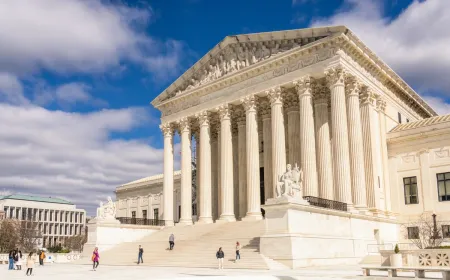
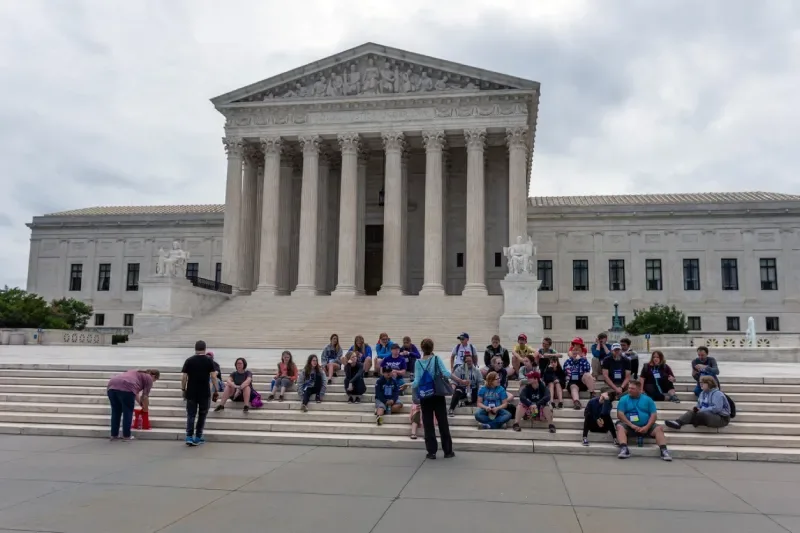
From a modest six-justice bench to the final word on American law, the US Supreme Court built its power through landmark rulings and fierce political battles. This history traces whom that power has served and how it continues to shape the nation today.
