
 Home
Central Park New York: What Should You Know Before Your Visit?
Picture 843 acres of lush, sprawling green tucked right into the pulsing heart of Manhattan — that’s Central Park New York for you, drawing over 42 million visitors every year. Stretching 2.5 miles between the Upper West Side and Upper East Side, NYC Central Park is far more than a pretty patch of grass wedged between city blocks: lakes shimmer here, playgrounds buzz with laughter, and legendary landmarks rise at nearly every turn, each one carrying a story worth knowing. Whether you have a couple of hours to spare or a full day to wander Central Park Manhattan New York City at your own pace, this guide covers the must-see sights, the best activities, and the practical tips that make all the difference.
Table of Contents:
1-Where is Central Park, and How Did It Become Part of New York City?
2-Which Central Park Sights Should You Visit First?
3-What Can You Do in Central Park Beyond Sightseeing?
4-How Can You Plan a Smooth Central Park Visit?
5-Can you bring dogs or fly drones in Central Park?
1-Where is Central Park, and How Did It Become Part of New York City?
Central Park didn't appear overnight. Its location, its design, and the people who shaped it — and the people who were swept aside for it — tell a story stretching back nearly two centuries. Walk through it without knowing that history, and you're only getting half the experience.
Central Park in Manhattan: Location, Size, and Layout
The park runs from 59th Street all the way up to 110th Street, nestled between the Upper West Side and Upper East Side in the heart of Manhattan. Those 843 acres stretch 2.5 miles from north to south and half a mile from east to west — a scale that surprises most first-time visitors who assume they can cover it in an hour.
The grounds break naturally into three sections: the North End above the reservoir, Mid-Park between the reservoir and the Lake, and the South End below the Lake. Woven throughout are some 55 fountains, monuments, and sculptures, plus 45 arches and bridges that give the park much of its architectural character. Practical fact: the park’s four borders — Central Park North, Central Park South, Central Park West, and Fifth Avenue — double as your best orientation anchors when the trees start to look familiar.
Seneca Village and the Communities Displaced to Build the Park
Long before Central Park New York became what it is today, the land near the West 85th Street entrance was home to Seneca Village — a thriving settlement of mostly free African American property owners. Founded in 1825, the village had grown by 1855 into a genuine middle-class community, home to around 225 residents, roughly two-thirds African American and one-third Irish immigrant.
Then came eminent domain. By late 1857, about 1,600 residents across the broader park site had been displaced, Seneca Village among them. Compensation was offered, but many landowners felt the payments fell well short of what their property was truly worth. It’s a chapter of the park’s story that deserves to be told alongside the fountains and the folly.
Olmsted, Vaux, and the Greensward Plan
The park you wander through today was born from a competition. In 1858, thirty-three entries were submitted, and Frederick Law Olmsted and Calvert Vaux walked away with the $2,000 prize for their “Greensward Plan”. What set their vision apart was a deliberate rejection of rigid symmetry — they were after something pastoral, picturesque, almost effortlessly natural-feeling.
Olmsted had drawn much of his inspiration from Birkenhead Park in England, and the work was anything but quick. Building began in the late 1850s and ended only in the 1870s — 15-plus years of labor reshaping what had been rocky, swampy, uneven terrain into one of the world’s most celebrated urban landscapes.
Periods of Decline and the Central Park Conservancy's Restoration Work
Central Park of New York has not always worn its beauty so comfortably. The 1890s brought a first wave of neglect, and by the 1970s, erosion, vandalism, and years of underfunding had left the park visibly frayed. The grand design Olmsted and Vaux had imagined felt, at times, like a distant memory.
The Central Park Conservancy stepped in when it was founded in 1980, following the Dairy’s revival with early campaigns that brought Sheep Meadow, Bethesda Terrace, and Belvedere Castle back to life. Since 1998, the nonprofit has managed the park through a public-private partnership with the city — and the results, as any visitor today can see, speak for themselves.
2-Which Central Park Sights Should You Visit First?
The history is rich, the grounds are vast, and suddenly, standing at the park's edge, the real question hits you — where do you even begin? Five spots, more than any others, capture the soul of Central Park New York in a single visit: Bethesda Terrace, Belvedere Castle, Strawberry Fields, Sheep Meadow, and the Ramble. Get these under your belt first, then let curiosity pull you wherever it will.
Bethesda Terrace, the Mall, and Bow Bridge
Few places in Central Park carry the grandeur of Bethesda Terrace, that sweeping two-level plaza at Mid-Park and 72nd Street, complete with its ornate Arcade and the famous Fountain at its heart. Crowds gather here, friends reunite here, and first-time visitors inevitably stop and simply stare. Practical fact: treat the terrace as your anchor — find your footing here, then follow the path toward the Lake and let the rest of the park unfold naturally.
Belvedere Castle and Turtle Pond
Perched dramatically atop Vista Rock, the park's second-highest natural point, Belvedere Castle carries all the quiet mystery of a fairy tale dropped into the middle of Manhattan. The castle opens daily from 10 am to 5 pm, with terrace access wrapping up at 4:55 pm. Directly below, Turtle Pond stretches across two peaceful acres, sheltering five turtle species — red-eared sliders among them — going about their unhurried lives. Practical fact: climb up to the castle terraces and you'll get one of the finest views in the park, with Turtle Pond glittering below and the Great Lawn rolling out beyond.
Strawberry Fields and the Imagine Mosaic
Tucked near the West 72nd Street entrance, Strawberry Fields spreads across five quietly beautiful acres that feel noticeably softer, more contemplative, than the rest of the park. At its western tip, the black-and-white Imagine mosaic — dedicated on October 9, 1985 — draws a steady stream of visitors who come to pay their respects to John Lennon. Yoko Ono contributed $500,000 toward the memorial’s design, and over 100 nations supplied the surrounding garden, turning this corner of Central Park into something genuinely international. Practical fact: arrive early in the morning and you’ll often find this sacred little spot nearly to yourself.
Sheep Meadow and the Great Lawn
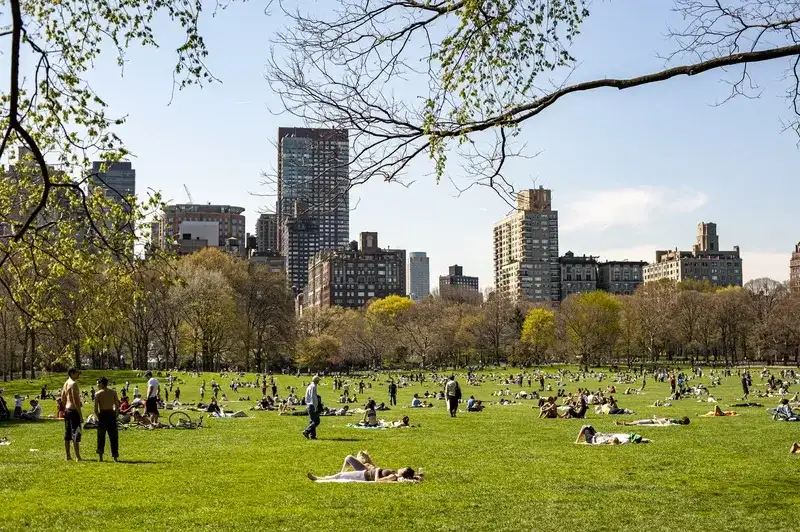
Sheep Meadow is exactly what its name suggests — a wide, unhurried stretch of green covering 15 acres, open from 11 am outside winter when the weather agrees. Then there’s the Great Lawn, a 55-acre area around a 12-acre oval at the park’s geographic heart, closing each winter to let the grass recover. Both are the kind of places you don’t rush through. Practical fact: tuck a blanket into your bag — these lawns were made for long afternoons of picnicking, sunbathing, and watching the city’s energy soften around you.
The Ramble, North Woods, and Conservatory Garden
For those who like their parks a little wilder, the Ramble delivers. This beloved stretch pulls birders and wanderers alike into its winding trails, while the 40-acre North Woods — the largest of the park's three woodland landscapes — offers a sense of genuine seclusion that feels almost impossible this close to Midtown. Over on the East Side, the Conservatory Garden brings a completely different mood, its formal plantings arranged with an elegant, old-world care that makes it feel like a secret garden most visitors walk straight past.
3-What Can You Do in Central Park Beyond Sightseeing?
The landmarks are wonderful, yes — but Central Park New York has a whole other side to it, one that keeps you moving, laughing, and completely caught up in the moment. Twenty-one playgrounds, boat rides on glassy water, birdwatching trails through quiet woodland, free outdoor theater under the summer sky — the park practically dares you to put the camera down and just live in it for a while.
Central Park Zoo, Playgrounds, and the Carousel for Families
Each of the 21 playgrounds scattered across the park carries its own personality, with themed designs and play structures that feel nothing like your average city setup. The Central Park Zoo brings an extra layer of delight, especially through the Tisch Children’s Zoo petting area, where goats, sheep, pigs, and Manhattan’s only cow wait for little hands to reach out. And then there’s the Carousel — a gloriously old-fashioned merry-go-round that spins along to the cheerful sound of organ music, a kind of joy that never really gets old.
Rowboat Rentals, Running Routes, and Seasonal Skating
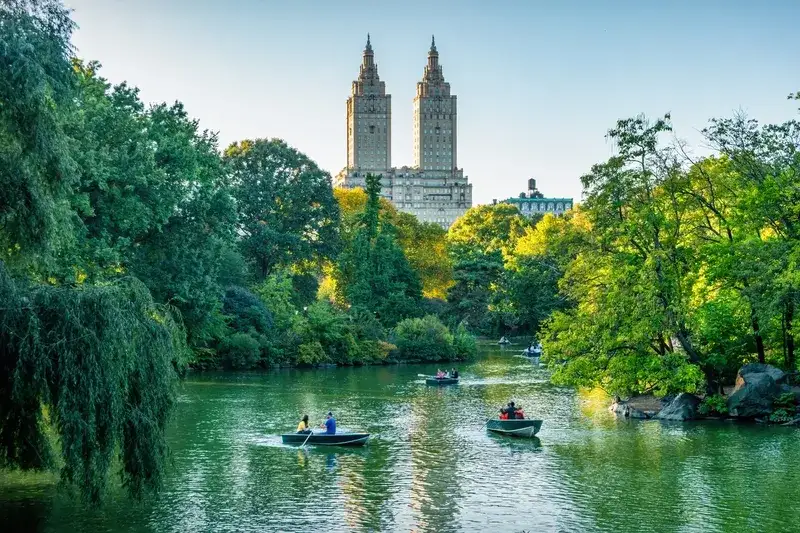
Renting a rowboat on the Lake is one of those experiences that feels almost storybook. In season, boats go out daily from 10 am to dusk, at USD 25 per hour Monday through Thursday and USD 30 Friday through Sunday, with life jackets provided. Note: children under 3 feet tall aren’t permitted on the boats. For those who’d rather keep their feet on the ground, the Reservoir track offers a satisfying 1.58-mile loop, while a full circuit of the park clocks in at around 6.1 miles — a proper run through Manhattan’s most beautiful scenery. Come winter, Wollman and Gottesman rinks open up for ice skating, and the park takes on an entirely different kind of magic.
Birdwatching and Ways to Protect Park Wildlife
Over 210 bird species pass through Central Park of New York every year along the Atlantic Flyway, which makes this one of the most remarkable urban birdwatching spots anywhere in the world. The Ramble, in particular, draws birders who come armed with binoculars and a lot of patience. While you're out there, give nests a wide berth, skip the callbacks, and stay on marked trails — small habits that go a long way toward protecting the birds that call this place home.
Concerts and Shakespeare in the Park: Check Dates and Ticket Rules
Few evenings in New York match the experience of watching Shakespeare performed outdoors at the Delacorte Theater, which seats over 1,800 people. The tickets are free, handed out at noon on performance days — so arrive with time to spare, embrace the anticipation, and let the summer evening do the rest.
Activities by Cost, Season, Time Needed, and Booking Requirements
| Activity | Cost | Season | Time Needed | Booking |
| Rowboats | $25-30/hr | Spring-Fall | 1 hr | First-come |
| Carousel | $4.50 | Daily, weather permitting | 15 min | Walk-up or online |
| Birdwatching | Free | Year-round | 1-2 hrs | None |
| Shakespeare | Free | Summer | Full evening | Noon line or digital lottery |
Customize Your Dream Vacation!
Get in touch with our local experts for an unforgettable journey.
Plan Your Trip
4-How Can You Plan a Smooth Central Park Visit?
A good visit to Central Park New York doesn't start at the gate — it starts well before that, with a little thought about timing, budget, and how you actually want to spend your hours here.
Best Seasons and Times of Day for Your Interests
Late-October weekday mornings are something close to perfect. The foliage nears its amber and gold peak, the crowds thin out considerably, and there’s a certain stillness to the air that the summer months simply don’t offer. Summer still has its charms, but arrive before 10 am on a weekday to stay ahead of the busiest hours. Sunrise visits are their own reward too — the light falls softly over the Lake and the meadows, and the park feels almost entirely yours.
Opening Hours, Free Entry, and Paid Attraction Budgets
Central Park opens daily from 6 am to 1 am, and entry costs nothing. That said, a few experiences come with a price tag — the zoo costs $22.95 for adults, and adult skating at Wollman Rink falls between $16 and $40, plus $12 rentals. Worth building that into your budget if you’re planning a full day.
Subway Stops and Entrances Closest to Your Chosen Sights
Getting here is straightforward, with several subway lines dropping you right at the park's edge:
West side: B, C trains stop at 72nd, 81st, 86th, 96th, and 110th
Broadway: 1, 2, 3 trains reach 72nd and 96th; the 1 reaches 110th
South/East: N, R, W stop at 5th Avenue and 59th Street
Pick your entrance based on where you want to begin — it saves time and keeps the day feeling easy rather than rushed.
A Two-Hour Highlights Walk and a Half-Day Route
Short on time? Two hours gets you through Sheep Meadow, the Mall, and Bethesda Terrace — a solid sampler of the park's best-loved corners. Half a day opens things up further, letting you push north toward Belvedere Castle and lose yourself in the winding paths of the Ramble.
Step-Free Paths, Restrooms, Food, and Visitor Centers
Twenty restrooms, nearly all free, dot the grounds, and accessible paths are mapped out through the Conservancy’s access guide — handy to pull up before you set off.
Weather, Safety, Bike Rules, and Current Closure Alerts
Cyclists ride counterclockwise and yield to pedestrians, but the speed limit, 20 or 15 mph, remains disputed in court. After heavy storms, red flags go up on lawns that are temporarily closed — a quick glance before you head out saves the disappointment of a detour.
5-Can you bring dogs or fly drones in Central Park?
Dogs are welcome in most areas but must be leashed from 9 am to 9 pm, and some spots require leashes at all times. Drones are not allowed. Most People believe that Central Park has a way of staying with you long after you've left it. The echo of Bethesda Fountain, the quiet rustling of the Ramble, a Shakespeare performance wrapping up under the open sky — these aren't things you forget easily. Whether your visit stretches across a lazy afternoon or fills an entire day, there's always a corner of this park that feels like it was waiting just for you.
Comfortable shoes, a rough plan, and a little curiosity are really all you need. Check the seasonal hours before you head out, keep an eye on lawn closures after rainy stretches, and let yourself wander a little beyond the itinerary. Some of the best Central Park moments happen exactly that way — unplanned, unhurried, and entirely yours.
No. The park’s drives are car-free, and motor vehicles can only cross it on the four transverse roads at 66th, 79th, 86th, and 96th Streets.
No. Park rules prohibit both alcohol and smoking, and the smoking ban also covers e-cigarettes.
Only on Memorial Day, the Fourth of July, and Labor Day. Barbecuing is banned in certain areas, and propane grills are prohibited at all times.
Yes, there are five: Belvedere Castle, the Dairy, Chess & Checkers House, the Charles A. Dana Discovery Center, and Columbus Circle. Some open seasonally.
Planning your first visit to Times Square? Learn when to go, where to get Broadway tickets, where to eat, and how to find restrooms nearby.
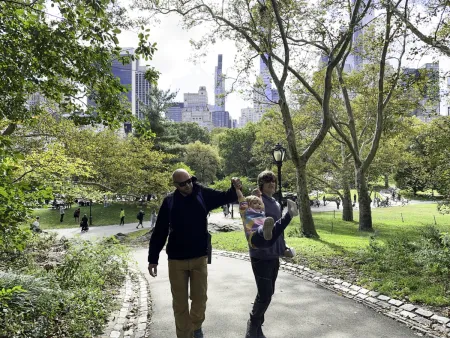
Central Park New York is an 843-acre green landmark in the heart of Manhattan, drawing over 42 million visitors a year with its lakes, playgrounds, and historic sights, and this guide covers the top attractions, activities, and practical tips for visiting.
Discover New York City like an insider. This guide covers the best time to visit, where to stay, how to budget, and how to get around by subway, plus must-see landmarks and restaurants worth your time.
From 1.8-billion-year-old rocks and wildlife found nowhere else to heat risks, permits, and the North Rim’s post-fire changes, these are the Grand Canyon facts every visitor should know before arriving.
Philadelphia has much more to offer than Independence Hall and the Liberty Bell. This guide takes you to the neighborhoods locals love, the best cheesesteak spots, budget-friendly BYOB restaurants, and smart tips to save money and skip the crowds.
Niagara Falls NY offers far more than a quick photo stop. Explore America’s oldest state park for free and get close to the American and Bridal Veil Falls. Ride the Maid of the Mist, walk Goat Island, and discover the history, science, and practical tips that make your visit unforgettable.

The White House has a past far stranger than its famous facade suggests. It was built partly by enslaved workers, burned by British troops in 1814, and rebuilt more than once. Below its best-known rooms are a sealed swimming pool and a wartime bunker.
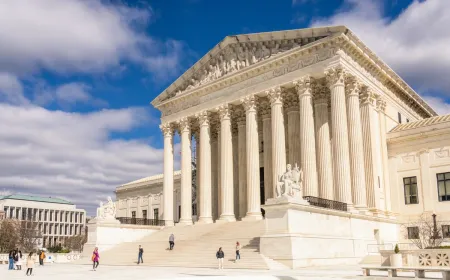
From a modest six-justice bench to the final word on American law, the US Supreme Court built its power through landmark rulings and fierce political battles. This history traces whom that power has served and how it continues to shape the nation today.
