
 Home
HomeThe Best of Madrid in Spain
Madrid is the capital of Spain, a city of world-class art, royal grandeur, and late-night energy. This Madrid travel guide covers the best things to do in Madrid, from the Prado and the Golden Art Triangle to the Royal Palace, Retiro Park, and tapas in La Latina, plus the best time to visit and easy day trips to Toledo.
.jpg "The Best of Madrid in Spain")
The first thing Madrid taught me is that the day runs late. Lunch at three, dinner at ten, and the streets somehow busiest at midnight. Once I stopped fighting that rhythm and started living by it, Spain's capital became one of my favourite cities in Europe, and I think it'll surprise you too. Madrid doesn't shout for your attention the way Barcelona does.
There's no beach, no Gaudí, no single postcard icon. What Madrid in Spain has instead is depth: three of the world's great art museums within a ten-minute walk of each other, Europe's largest working royal palace, a huge green park right in the middle, and a food-and-tapas culture that runs from morning coffee to 2 am. This is my honest Madrid travel guide on what to see, when to go, and how to enjoy it like someone who lives there.
Table of Contents:
#Where is Madrid, and why visit?
#Best Things to Do in Madrid
#Best time to visit Madrid
#How to get around Madrid?
#What to eat in Madrid?
#Is Madrid worth visiting?
#Frequently Asked Questions:
#Where is Madrid, and why visit?
Madrid is the capital of Spain, sitting almost exactly in the geographic centre of the country on a high plateau about 650 metres above sea level. That altitude matters; it's why summers are so hot and dry and winter nights get genuinely cold.
Because it's so central, Madrid is also the perfect base. High-speed AVE trains reach Seville, Córdoba, Valencia, and Barcelona in a few hours, and Toledo is just 30 minutes away. But don't treat Madrid as a stopover. Give it two or three full days, and it earns its place as a destination in its own right.
#Best Things to Do in Madrid
Here's where I'd send you, roughly in the order I'd do it. These are the best things to do in Madrid if it's your first visit.
1. The Prado Museum
If you do one thing in Madrid, make it the Prado. It's one of the greatest art museums on Earth, home to Velázquez's Las Meninas, a whole room of Goya's haunting "Black Paintings," and masterpieces by El Greco and Bosch. It opens at 10 am; get there early, give it about three hours, and don't try to see everything. Pick a few highlights and let the rest wash over you.
2. The Golden Art Triangle
The Prado is one corner of Madrid's famous Art Triangle. The other two are the Reina Sofía, home to Picasso's enormous, devastating Guernica, plus Dalí and Miró; and the Thyssen-Bornemisza, which fills the gaps with everything from Rembrandt to Hopper. All three sit within a short walk. If you love art, this single square kilometre justifies the whole trip.
3. The Royal Palace & Almudena Cathedral
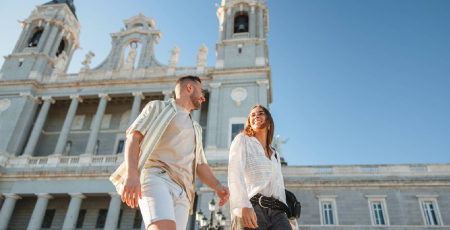
The Royal Palace of Madrid is the largest functioning royal palace in Europe — over 3,000 rooms, opulent halls, Tiepolo ceilings, and a Royal Armoury full of gleaming armour. It's still used for state ceremonies, so it's the real thing. Right across the plaza stands the Almudena Cathedral, and if your timing lines up, the Changing of the Guard is worth catching.
4. Retiro Park
Once the private garden of Spanish royalty, Retiro Park opened to the public in 1868 and has been the city's green heart ever since. It covers 125 hectares just minutes from the Prado. Rent a rowing boat on the central lake, find the glittering Crystal Palace (Palacio de Cristal), and if you're there in May, the rose garden is in full bloom. On weekend mornings, all of Madrid seems to be here.
5. Plaza Mayor & the old centre
The grand arcaded Plaza Mayor is the historic heart of Madrid, and just around the corner is the Mercado de San Miguel, a beautiful iron-and-glass market where I always stop for a few tapas and a glass of wine. Wander out into the surrounding Habsburg streets — Plaza de la Villa, the narrow lanes — and you're in the oldest part of the city.
6. Tapas in La Latina
Madrid's tapas culture is a way of life, and the La Latina neighbourhood is its beating heart. On Sundays, after the El Rastro flea market winds down, Calle Cava Baja fills with people bar-hopping from one tapas spot to the next. Order a small plate, a drink, move on, repeat. It's the most Madrid thing you can do.
7. A flamenco show
Flamenco is Andalusian by origin, but Madrid has some of the best tablaos in Spain. An evening show — all foot-stamping, guitar, and raw emotion — is an unforgettable way to spend a night in the capital.
Madrid at a glance
Capital of Spain · ~650m altitude · Art Triangle: Prado, Reina Sofía, Thyssen · Royal Palace: largest working palace in Europe · Retiro Park: 125 hectares · Toledo: 30 min by train · Best months: April–June & September–October
8. Gran Vía & the neighbourhoods
For shopping and buzz, walk Gran Vía, Madrid's grand early-20th-century boulevard. For local life, wander Malasaña (indie, bohemian), Chueca (stylish, lively), and Lavapiés (multicultural, full of great cheap food). This is where you feel the real, everyday Madrid.
9. Santiago Bernabéu Stadium
Even if you're not a football fan, the home of Real Madrid is a spectacle. The recently redeveloped Bernabéu offers stadium tours, and on match nights the whole area electrifies.
Yes. Madrid is home to world-class art museums, a grand royal palace, and one of the best food and nightlife scenes in Europe. It rewards travellers who embrace its late rhythm: art in the morning, long lunches, and tapas late into the night, and works both as a destination and as a base for exploring central Spain.
The Golden Art Triangle is the name for three world-class museums that sit within a short walk of each other: the Prado (Velázquez, Goya, El Greco), the Reina Sofía (Picasso's Guernica, Dalí, Miró), and the Thyssen-Bornemisza (Rembrandt to Hopper). Together they make Madrid one of the greatest art cities on Earth.
Customize Your Dream Vacation!
Get in touch with our local experts for an unforgettable journey.
Plan Your Trip#Best time to visit Madrid
Spring (April to June) and autumn (September to October) are the sweet spots — warm, sunny days and comfortable evenings. I'd avoid July and August if you can: Madrid bakes, temperatures push past 35°C, and many locals leave the city. Winter is cold but bright, and December brings gorgeous Christmas lights along Gran Vía.
#How to get around Madrid?
The Madrid Metro is clean, cheap, and easy — it'll get you almost anywhere. The historic centre, though, is best on foot: the Prado, Royal Palace, Plaza Mayor, and Retiro are all walkable from each other. From the airport (Adolfo Suárez Madrid–Barajas), the Metro or a Cercanías train gets you into the centre quickly.
#What to eat in Madrid?
Start with chocolate con churros — thick hot chocolate with fried dough sticks, ideally at a historic chocolatería. Try cocido madrileño (a hearty chickpea stew), the humble but beloved bocadillo de calamares (a fried-squid sandwich), and as much jamón ibérico as you can manage. And do a proper tapas crawl at least once — it's the soul of the city's food scene.
The Royal Palace of Madrid is the largest functioning royal palace in Europe, with over 3,000 rooms. It's still used for official state ceremonies, and visitors can tour its opulent halls, Tiepolo-painted ceilings, and the Royal Armoury. The Almudena Cathedral stands directly across the plaza.
Retiro Park covers 125 hectares in central Madrid, minutes from the Prado. You can row a boat on the central lake, visit the glass-and-iron Crystal Palace (Palacio de Cristal), see the rose garden in May, and enjoy the lively weekend atmosphere. Once a royal retreat, it opened to the public in 1868.
#Is Madrid worth visiting?
Completely. Madrid rewards travellers who lean into its rhythm — late meals, long evenings, art in the morning, tapas at night. It doesn't have one giant icon, and that's exactly its charm: it's a real, living capital rather than a theme park. Come for the art, stay for the food, and let the city's after-dark energy do the rest. Of all the Spanish cities I've spent time in, Madrid is the one I keep going back to.
#Frequently Asked Questions:
Where is Madrid in Spain?
Madrid is the capital of Spain, located almost exactly in the centre of the country on a high plateau roughly 650 metres above sea level. Its central position makes it an ideal base, with high-speed trains reaching Seville, Córdoba, Barcelona, and Valencia in a few hours and Toledo just 30 minutes away.
What is Madrid known for?
Madrid is known for its world-class art museums, the Prado, Reina Sofía, and Thyssen-Bornemisza, together called the Golden Art Triangle, plus Europe's largest working royal palace, the vast Retiro Park, its lively tapas and nightlife scene, and being the home of Real Madrid football club.
What are the best things to do in Madrid?
The essentials are: the Prado Museum, the Reina Sofía (home to Picasso's Guernica), the Thyssen-Bornemisza, the Royal Palace and Almudena Cathedral, Retiro Park, Plaza Mayor and the San Miguel Market, a tapas crawl in La Latina, and a flamenco show. Two to three days cover the highlights comfortably.
How many days do you need in Madrid?
Two to three full days cover Madrid's main sights: the Prado, Royal Palace, Reina Sofía, Retiro Park, and the historic neighbourhoods without rushing. Add a fourth day for a trip to nearby Toledo or Segovia, and a week if you want smaller museums, the Bernabéu, flamenco, and time to explore Malasaña and La Latina slowly.
What is the best time to visit Madrid?
Spring (April to June) and autumn (September to October) are ideal, with warm days and comfortable evenings. July and August are very hot, often above 35°C, and many locals leave the city. Winter is cold but bright, with beautiful Christmas lights in December.
Discover the best of Madrid in Spain from the Prado and the Royal Palace to Retiro Park and tapas in La Latina. The top things to do in Madrid, plus the best time to visit.
Discover the best of Barcelona in Spain in this first-person travel guide. From the Sagrada Familia and Park Güell to the Gothic Quarter, La Rambla, and the beach, here are the top things to do in Barcelona, plus the best time to visit.