 Home
HomeThe Best of Barcelona in Spain
Barcelona is the capital of Catalonia, on Spain's Mediterranean coast, a city of Gaudí architecture, medieval streets, and beaches. This Barcelona travel guide covers the best things to do in Barcelona, from the Sagrada Familia and Park Güell to the Gothic Quarter, Casa Batlló, La Rambla, and La Boqueria market. It also covers where to eat, the best time to visit, how to get around, and easy day trips to Montserrat everything you need to experience the best of Barcelona in Spain.
.webp "The Best of Barcelona in Spain")
The first time I turned a corner in the Eixample and saw the Sagrada Familia rising over the rooftops, I actually stopped walking. Photos don't prepare you for it. That's Barcelona in a nutshell — a city that keeps surprising you, where Gothic alleys, wild Gaudí architecture, and a Mediterranean beach all sit within walking distance of each other.
Barcelona in Spain is one of the most-visited cities in the world, and once you're there it's obvious why. It's the capital of Catalonia, on the northeast coast, and it packs an incredible amount into a compact, walkable space. This is my honest Barcelona travel guide: the best things to do, when to go, and how to enjoy the city like someone who actually knows it, not just the postcard version.
Table of Contents:
#Where is Barcelona, and why visit?
#Best Things to Do in Barcelona
#Best time to visit Barcelona
#How to get around Barcelona?
#What to eat in Barcelona?
#Is Barcelona worth visiting?
#Frequently Asked Questions:
#Where is Barcelona, and why visit?
Barcelona is the capital of Catalonia, on Spain's northeastern Mediterranean coast, close to the French border. It's Spain's second-largest city after Madrid, but it feels completely different — where Madrid is grand and landlocked, Barcelona is coastal, artistic, and a little bohemian.
What makes Barcelona special is the mix. In a single day you can wander a thousand-year-old Gothic quarter, stand inside Gaudí's still-unfinished masterpiece, eat incredible seafood, and swim in the sea. Not many cities give you all of that at once.
#Best Things to Do in Barcelona
Here's where I'd send you, roughly in order. These are the best things to do in Barcelona for a first visit.
1. The Sagrada Familia
If you do one thing in Barcelona, make it the Sagrada Familia. Antoni Gaudí's giant basilica has been under construction since 1882 and is a UNESCO World Heritage Site. The exterior is astonishing, but it's the interior that stops people in their tracks: the columns branch like trees and the stained glass floods the whole space with colour. Book a timed ticket well in advance; it's the most visited attraction in Spain, drawing up to 32,000 people a day in summer.
2. Park Güell
Another Gaudí masterpiece, Park Güell is a whimsical hilltop park of mosaic-tiled sculptures, wave-shaped benches, and gingerbread-like buildings, with panoramic views over the city to the sea. The famous mosaic areas need a timed ticket, so book ahead. Go early or late to dodge both the crowds and the midday heat.
3. The Gothic Quarter
The Gothic Quarter (Barri Gòtic) is the medieval heart of Barcelona, a maze of narrow, cobbled streets, hidden squares, and the grand Barcelona Cathedral. This is where the city began, back in Roman times. Just get lost in it. Pop into tiny tapas bars, browse the boutiques, and let the alleys lead you. The neighbouring El Born district is just as atmospheric and home to the beautiful Santa Maria del Mar church.
4. Casa Batlló & La Pedrera
Along the elegant Passeig de Gràcia stand two more Gaudí gems. Casa Batlló looks like it was shaped from bone and dragon scales; La Pedrera (Casa Milà) has an undulating stone facade and a rooftop of surreal chimneys. Even from the outside they're worth the walk — this street is one of the finest in the city.
5. La Rambla & La Boqueria Market
La Rambla is Barcelona's famous tree-lined boulevard, running from Plaça Catalunya down to the old port. It's touristy, and I'd skip the restaurants right on it, but it's a lively stroll and halfway down is La Boqueria, a spectacular covered food market piled with fruit, jamón, and seafood. Grab a fresh juice and a snack and soak up the buzz.
6. Montjuïc
The hill of Montjuïc overlooks the city and harbour and holds a lot: the 1992 Olympic stadium, the Joan Miró Foundation, gardens, a castle, and the Magic Fountain, which puts on light-and-music shows on select evenings. Take the cable car up for the views.
7. The beach at Barceloneta
Yes, Barcelona has several beaches, in fact. Barceloneta is the closest, an old fishermen's neighbourhood turned lively seafront where you can swim, walk the promenade, and eat paella by the water. Having a proper city and a proper beach in the same place is a rare luxury.
Barcelona at a glance
Capital of Catalonia · Spain's 2nd-largest city · 9 Gaudí works on the UNESCO list · Sagrada Familia: most-visited site in Spain · Best months: May & September (18–23°C)· 3–4 days for a first visit · Mediterranean beach in the city
8. Day trip to Montserrat
An hour from the city, Montserrat is a dramatic serrated mountain topped by a Benedictine monastery, reached by cable car or rack railway. The scenery is spectacular, and the basilica is home to the famous "Black Madonna." It's the classic Barcelona day trip, and an easy one.
Yes. Barcelona offers a rare combination of world-class architecture, a medieval old town, excellent food, and a Mediterranean beach, all within a compact, walkable city. It's one of Europe's most rewarding city breaks and works well as a standalone trip or paired with the rest of Spain.
Yes, strongly. The Sagrada Familia is the most-visited attraction in Spain, drawing up to 32,000 visitors a day in summer, and timed-entry tickets regularly sell out. Book online several days to weeks ahead, and consider a guided or skip-the-line ticket to avoid long queues.
Not entirely. Construction began in 1882 and continues today, with the main towers and structure largely complete and decorative work and the main staircase ongoing. It's fully open to visitors throughout, and it remains a UNESCO World Heritage Site and Gaudí's masterpiece.
Customize Your Dream Vacation!
Get in touch with our local experts for an unforgettable journey.
Plan Your Trip#Best time to visit Barcelona
May and September are the sweet spots — temperatures of 18–23°C, fewer crowds, and hotel rates noticeably lower than midsummer. Late April and October are almost as good. I'd avoid July and August if you can: it's hot, humid, and the Sagrada Familia and beaches are packed. Winter (December–February) is mild and quiet, with a lovely Christmas market at the cathedral.
#How to get around Barcelona?
Barcelona is very walkable, and the historic centre is best explored on foot. For longer hops, the Metro is fast, cheap, and easy — it reaches all the major sights and the beach. From Barcelona–El Prat Airport, the Aerobús, train, or Metro all get you into the centre quickly. A word of caution: Barcelona is famous for pickpockets, so keep your bag zipped and your phone secure, especially on La Rambla and the Metro.
#What to eat in Barcelona?
Catalan food is a highlight. Try pa amb tomàquet (bread rubbed with tomato), fresh seafood paella by the beach, escalivada (smoky roasted vegetables), and crema catalana for dessert. Do a proper tapas crawl, and order a glass of cava, the local sparkling wine. Skip the tourist traps on La Rambla and eat where the side streets take you.
Yes, the main "Monumental Zone," with the famous mosaics and terrace, requires a timed ticket that should be booked in advance, especially in peak season. Parts of the wider park are free to enter. Visiting early morning or late afternoon helps you avoid the biggest crowds.
Barcelona is generally safe, with low levels of violent crime, but it's well known for pickpocketing in tourist areas. Take care on La Rambla, the Metro, around the Sagrada Familia, and on the beach; keep bags zipped and closed, don't leave phones on café tables, and stay aware in crowds.
#Is Barcelona worth visiting?
Absolutely, it's one of my favourite cities anywhere. Barcelona gives you world-changing architecture, a medieval old town, brilliant food, and a Mediterranean beach, all in one walkable place. Give it three or four days, book your Gaudí tickets ahead, lean into the late Spanish rhythm, and let the city surprise you the way it surprised me. There's nowhere quite like it.
#Frequently Asked Questions:
Where is Barcelona in Spain?
Barcelona is the capital of Catalonia, on Spain's northeastern Mediterranean coast, not far from the French border. It's Spain's second-largest city after Madrid, and the two are connected by high-speed AVE train in about 2.5 hours.
What is Barcelona known for?
Barcelona is known for Antoni Gaudí's extraordinary architecture, above all the Sagrada Familia and Park Güell, as well as its medieval Gothic Quarter, La Rambla boulevard, Mediterranean beaches, Catalan cuisine, and FC Barcelona football club. Nine Gaudí works in the city are UNESCO World Heritage Sites.
What are the best things to do in Barcelona?
The essentials are: the Sagrada Familia, Park Güell, the Gothic Quarter and El Born, Casa Batlló and La Pedrera on Passeig de Gràcia, La Rambla and La Boqueria market, Montjuïc hill, and the beach at Barceloneta. A day trip to Montserrat is the classic add-on. Three to four days covers it comfortably.
How many days do you need in Barcelona?
Three to four days is ideal for a first visit, enough for the main Gaudí sites, the Gothic Quarter, a beach afternoon, and the markets without rushing. Add a fifth day if you want a day trip to Montserrat or Girona, or more time to explore neighbourhoods like Gràcia.
What is the best time to visit Barcelona?
May and September are the best months, with pleasant temperatures of 18–23°C, thinner crowds, and lower hotel prices than midsummer. Late April and October are almost as good. July and August are hot, humid, and very busy, while winter is mild and quiet.
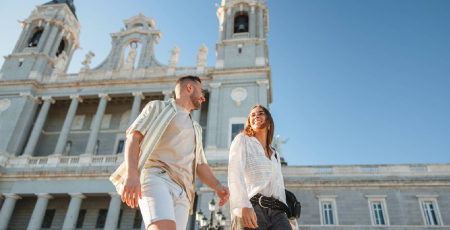
Discover the best of Madrid in Spain from the Prado and the Royal Palace to Retiro Park and tapas in La Latina. The top things to do in Madrid, plus the best time to visit.
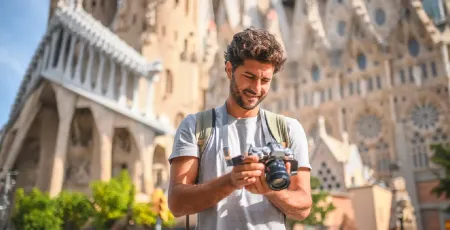
Discover the best of Barcelona in Spain in this first-person travel guide. From the Sagrada Familia and Park Güell to the Gothic Quarter, La Rambla, and the beach, here are the top things to do in Barcelona, plus the best time to visit.