![Couple fishing from a canoe on a calm forest lake surrounded by autumn trees in Scandinavia]()
Table of Contents:
1. Where is Sweden, and what is its landscape like?
2. How does Sweden compare with Norway and Denmark?
3. Which places in Sweden should you visit?
4. What is everyday life in Sweden like?
5. What's the bottom line on Sweden?
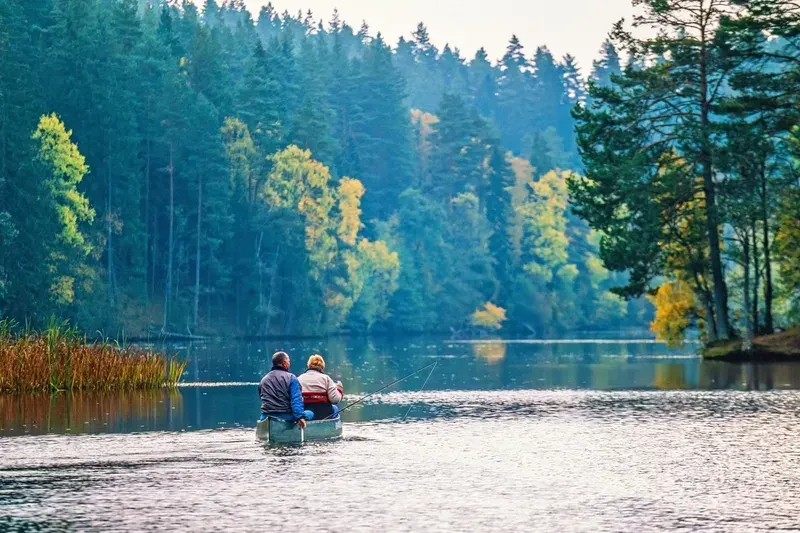
Sweden covers the eastern side of the Scandinavian Peninsula and faces the Baltic Sea. You'll find thick forests, about 100,000 lakes, mountains in the north and long coastlines dotted with islands.
Norway lies to the west and Finland to the northeast. Denmark is to the southwest, across a narrow strait. The Öresund Bridge links southern Sweden to Copenhagen, so you can cross between the two countries by train or car.
Sweden is long and narrow. It stretches about 1,600 km from north to south. If you drove from the southern tip to the far north, you would cover nearly 2,000 km of road.
Forests cover about two-thirds of the country. In the south, you'll see flat farmland and sandy beaches. In the north, the land rises into mountains along the Norwegian border. The highest point is Kebnekaise's ice-free north peak, at 2,097 m.
The weather depends on where you are. The south has mild winters and warm summers, often 20–25°C in July. The north is much colder, and winter temperatures there can drop below −30°C.
Daylight changes a lot, too. North of the Arctic Circle, the sun doesn't set for weeks in summer, and in midwinter it barely rises. Even in Stockholm, you get about 18 hours of daylight in June and only about 6 in December.
Can't decide where to begin? Explore Scandinavia and find the trip that suits you, with hotels, guides and transport all taken care of.
![Two skiers on a snowy mountain ridge looking out over a frozen valley at sunset in Scandinavia]()
Of the three Scandinavian countries, Sweden is the largest and has the most people. Norway is famous for its fjords and is outside the EU, while Denmark is small, flat and closest to mainland Europe.
All three countries share a long history, and their languages are closely related. With a little effort, Swedes, Norwegians and Danes can often understand each other. Each country still has its own currency, culture and feel.
|
|
Sweden
|
Norway
|
Denmark
|
|
Capital
|
Stockholm
|
Oslo
|
Copenhagen
|
|
Population
|
about 10.6 million
|
about 5.6 million
|
about 6 million
|
|
Area
|
about 450,000 km²
|
about 385,000 km²
|
about 43,000 km²
|
|
Currency
|
Swedish krona (SEK)
|
Norwegian krone (NOK)
|
Danish krone (DKK)
|
|
EU member
|
Yes, since 1995
|
No
|
Yes, since 1973
|
|
NATO member
|
Yes, since 2024
|
Yes, since 1949
|
Yes, since 1949
|
|
Highest point
|
Kebnekaise, 2,097 m
|
Galdhøpiggen, 2,469 m
|
Møllehøj, 171 m
|
|
Best known for
|
Lakes, forests, design, archipelagos
|
Fjords, mountains, coastline
|
Cycling, castles, hygge
|
Norway's area includes Svalbard. Denmark's excludes Greenland and the Faroe Islands.
If you want big cities, lakes and a bit of everything, start with Sweden. For dramatic fjords, choose Norway. For a short, easy trip, Denmark works well. Trains and ferries link all three, so you can easily combine them.
One more thing: strictly speaking, Scandinavia means Sweden, Norway and Denmark. The wider term "Nordic countries" also includes Finland and Iceland.
![Group sitting by a campfire on a frozen lake under the Northern Lights, with a snowmobile parked nearby]()
Start with Stockholm, then add Gothenburg, Malmö, Swedish Lapland, Gotland or Uppsala, depending on what you enjoy. Each place shows you a different side of Sweden.
Stockholm. Sweden's capital is spread across 14 islands where Lake Mälaren meets the Baltic Sea. Walk the cobbled lanes of Gamla Stan, the old town. Then visit the Vasa Museum, home to a 17th-century warship that sank on its first voyage in 1628. In summer, take a boat out to the archipelago, which has tens of thousands of islands.
Practical fact: The Arlanda Express train gets you from Stockholm Arlanda Airport to Stockholm Central Station in 18 minutes.
Gothenburg. Sweden's second city sits on the west coast. It's relaxed, friendly and known for its seafood. Visit the Liseberg amusement park, stroll along the canals, or take a tram and ferry out to the car-free southern archipelago.
Practical fact: High-speed trains connect Gothenburg and Stockholm in about 3 to 3.5 hours.
Malmö. Sweden's third-largest city is in the far south, in the region of Skåne. It's young, diverse and easy to explore by bike. Look out for the Turning Torso, a twisting skyscraper, and Ribersborg beach with its traditional open-air bathhouse.
Practical fact: Trains cross the Öresund Bridge to Copenhagen in 35 to 40 minutes. Carry your passport or ID in case of border checks.
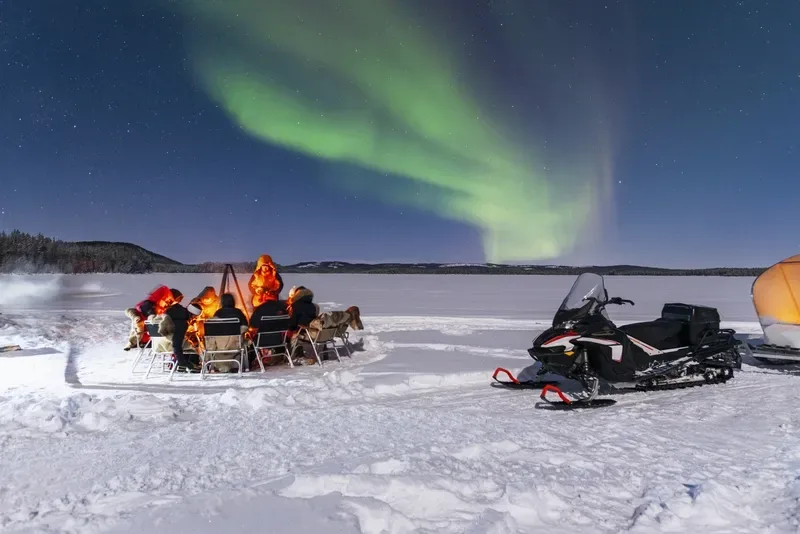
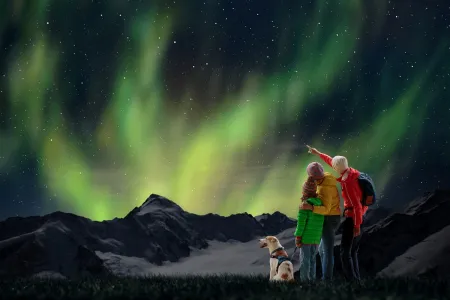
Kiruna and Swedish Lapland. Head far north for snow, wilderness and Sámi culture. From autumn to spring, you can chase the northern lights, go dog sledding, or sleep at the Icehotel in nearby Jukkasjärvi. Kiruna itself is moving: its town centre is being relocated because the iron mine beneath it is making the ground unstable.
Practical fact: You can usually see the northern lights from September to March, and the midnight sun from late May to mid-July.
Gotland and Visby. Gotland is Sweden's largest island, out in the Baltic Sea. Its main town, Visby, is a UNESCO World Heritage Site with a medieval wall more than 3 km long. In summer, you'll find beaches, cycling routes and tall limestone sea stacks called raukar.
Practical fact: Ferries from Nynäshamn, south of Stockholm, reach Visby in about 3 hours 15 minutes.
Uppsala. Sweden's fourth-largest city is home to Scandinavia's oldest university, founded in 1477. Visit its huge cathedral, then see the Viking-age royal burial mounds at Gamla Uppsala, just north of the centre.
Practical fact: Uppsala is about 40 minutes from Stockholm by train and around 20 minutes from Arlanda Airport.
Customize Your Dream Vacation!
Get in touch with our local experts for an unforgettable journey.
Plan Your Trip
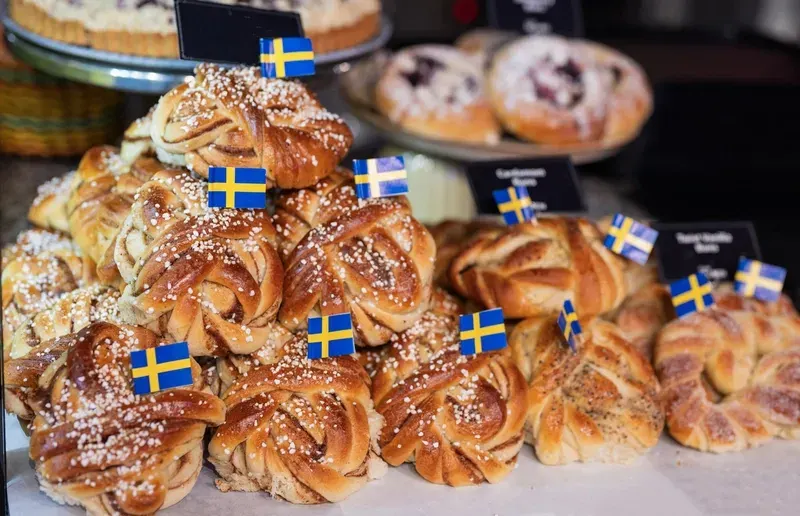
![Swedish cinnamon and cardamom buns topped with pearl sugar and small Swedish flags in a bakery display]()
Everyday life in Sweden is calm, organised and balanced. You'll notice that people value fairness, free time, nature and a good cup of coffee.
One of the first words you'll learn is fika. It means taking a break with coffee and something sweet, such as a cinnamon bun. Swedes have fika at work, at home and with friends. It's a big part of social life.
Another key idea is lagom, which means "not too much, not too little". You'll see it in Swedish homes, design and attitudes. People generally avoid showing off and prefer things that are simple and practical.
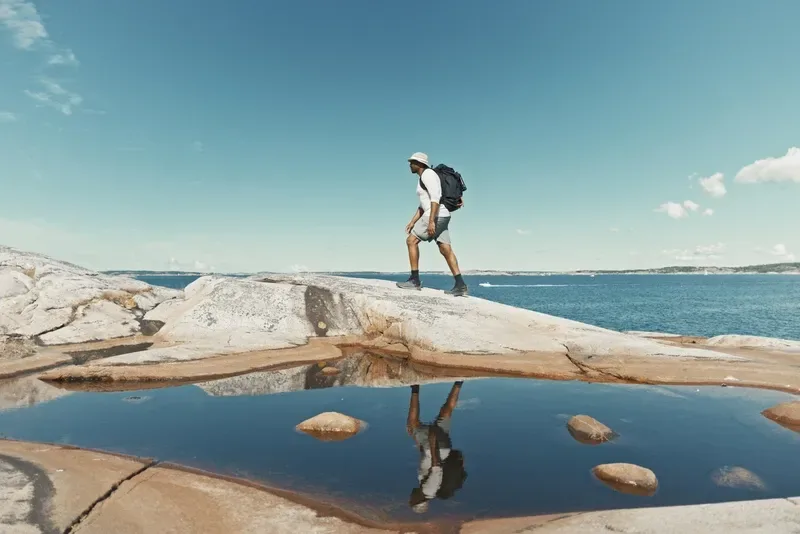
Nature is part of daily life, thanks to a rule called allemansrätten, or the right of public access. You can walk, cycle, camp for a night and pick berries on most land, even private land. In return, you must respect nature, keep away from people's homes and leave no trace.
Sweden is one of the most cashless countries in the world. You'll pay by card or phone almost everywhere, and some shops, cafés and buses don't accept cash at all. Swedes often use an app called Swish to send money to each other.
If you want to buy wine or spirits, you'll need to visit Systembolaget, the state-run alcohol shop. Its stores close early on Saturdays and stay shut on Sundays, so plan ahead.
Swedish is the main language, but most Swedes speak excellent English, so you'll rarely struggle to be understood. Sweden also recognises five minority languages, including Finnish and Sámi.
Midsummer, in late June, is the biggest celebration of the year. People dance around a maypole, eat pickled herring and new potatoes, and stay up through the bright night. On 13 December, Lucia processions fill churches and schools with candlelight and song.
Swedes also take time off seriously. Workers get at least five weeks of paid holiday a year, and much of the country slows down in July. Parents share 480 days of paid parental leave for each child.
![Hiker with a backpack walking across smooth granite rocks on the Swedish coast, reflected in a rock pool]()
Sweden is a large, peaceful Scandinavian country where nature and modern city life sit side by side. It's easy to travel, welcoming to visitors and full of variety.
In this guide, you've seen where Sweden is and how its landscape changes from south to north. You've compared it with Norway and Denmark, and you've met six places that each show a different side of the country. You've also had a taste of everyday Swedish life, from fika and lagom to midsummer.
Put together, that makes Sweden a great choice whether you love big cities, quiet lakes or Arctic adventures.
Now it's your turn. Pick the season that suits you, choose two or three places from this guide, and start planning your trip to Sweden.
Do you need a visa to visit Sweden?
Sweden is part of the Schengen Area. Whether you need a visa depends on your passport. Check the Swedish Migration Agency (Migrationsverket) website before you book.
Is Sweden expensive?
Yes, fairly. Hotels, eating out and alcohol cost more than in much of Europe. To save money, eat your main meal at lunchtime. Many restaurants offer a cheaper dagens lunch (dish of the day) on weekdays.
Is Sweden safe for travellers?
Yes, Sweden is generally safe. Take normal care with your belongings in busy city areas. In an emergency, call 112.
Can you drink the tap water?
Yes. Swedish tap water is clean and tastes good, so you don't need to buy bottled water.
Do you need to tip in Sweden?
No. Service is included in prices. Rounding up or leaving about 10% for great service is welcome but not expected.
What plugs does Sweden use?
Sweden uses Type C and Type F plugs with 230 volts. If your devices use a different plug, bring an adapter.
What time zone is Sweden in?
Sweden uses Central European Time (UTC+1) in winter and UTC+2 in summer.
Which side of the road do Swedes drive on?
The right. Sweden switched from left to right on 3 September 1967, a day known as Dagen H.
When is Sweden's national day?
Sweden's national day is 6 June. It marks the day Gustav Vasa was elected king in 1523.