
 Home
What Are the Best Attractions in Bergen, Norway?
The best attractions in Bergen are the Bryggen wharf, Bergenhus Fortress, the views from Mount Fløyen and Mount Ulriken, the KODE art museums, the Fish Market, and fjord trips such as Mostraumen and Norway in a Nutshell. You can see the city's highlights in one day and fill three easily.
Bergen sits on Norway's west coast, surrounded by seven mountains. Its old harbor has traded, burned, and been rebuilt for more than 900 years. Today you get colorful wooden houses, fjords at the edge of town, and a local culture built around coffee, fish soup, and cold sea swims.
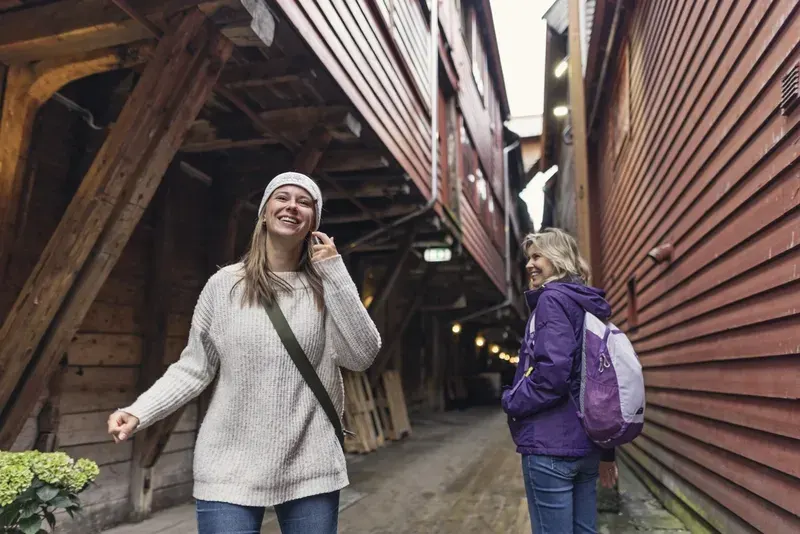
Table of Contents:
1-Where should you start exploring Bergen's history?
2-Where can you find the best mountain views in Bergen?
3-How can you experience Bergen's local life?
4-Which fjord trips from Bergen are worth taking?
5-How do Bergen's top attractions compare?
6-How should you plan your Bergen itinerary?
1-Where should you start exploring Bergen's history?
Start at Bryggen, the old Hanseatic wharf. From there, you can walk to Schøtstuene, Bergenhus Fortress, and the Nordnes peninsula in one morning. Each stop is less than 20 minutes on foot from the next.
Wear comfortable shoes. Many streets are cobbled and some are steep.
Bryggen: Bergen's UNESCO wharf
Bryggen is the row of colorful wooden buildings along the east side of the harbor. It has been on the UNESCO World Heritage List since 1979.
German merchants of the Hanseatic League set up a trading office here around 1350. They controlled the trade in dried fish (stockfish) from northern Norway. At their peak, up to 2,000 Germans lived and worked on the wharf. The office stayed open until 1754, about 400 years in total.
Fire has hit Bryggen many times. Most of what you see today was rebuilt after a big fire in 1702. Another fire in 1955 destroyed part of the wharf. Each time, builders kept the old medieval layout of long rows and narrow alleys. About 62 buildings remain today.
Walk behind the front facades and you will find small workshops. Potters, jewelers, and textile artists now work where merchants once traded.
Practical fact: Walking through Bryggen's alleys is free.
Shops and galleries set their own hours.
Schøtstuene: where the merchants met
If Bryggen shows you where the merchants worked, Schøtstuene shows you where they gathered. These are the last Hanseatic assembly rooms left in the world.
The merchants met here to eat, hold meetings, and keep warm in winter. The three connected halls date from the 1500s. Long tables, wooden benches, and simple decoration give you a real feel for daily life on the wharf. Schøtstuene sits beside St Mary's Church, the merchants' main church.
The main Hanseatic Museum building, Finnegården, is closed for a long restoration. Schøtstuene is now the place to visit instead.
Practical fact: Schøtstuene is at Øvregaten 50, a few minutes' walk from Bryggen. Adult entry is NOK 160 (NOK 130 with the Bergen Card), and from November to December it opens daily from 10:00 to 16:00.
Bergenhus Fortress and the Rosenkrantz Tower
Bergen was Norway's royal capital before Oslo. Bergenhus Fortress, at the harbor's edge, is one of the oldest and best-preserved stone fortresses in the country.
King Haakon Haakonsson built Haakon's Hall between 1247 and 1261. It was the biggest royal residence of its time. Next to it stands the Rosenkrantz Tower. King Magnus the Lawmender built its oldest part around 1270. Governor Erik Rosenkrantz added three floors in the 1560s, giving the tower the shape you see today.
King Eirik Magnusson lived in the tower until he died in 1299. He was the last king to live in Bergen. In April 1944, a ship loaded with explosives blew up in the harbor next to the fortress. The blast collapsed the tower's upper floors and burned Haakon's Hall. Both were restored after the war. Haakon's Hall reopened in 1961.
Climb the narrow stairs to the tower's roof for a great view of the harbor.
Practical fact: The fortress grounds are free and open daily from 06:00 to 23:00. The Rosenkrantz Tower costs NOK 170 and Haakon's Hall NOK 120 (Haakon's Hall is free with the Bergen Card).
Nordnes: quiet streets by the water
Where Bryggen is busy, Nordnes is calm. This peninsula is about 1 kilometer (0.6 miles) long and sits on the other side of the harbor.
While German merchants ran Bryggen, Norwegian merchants built their businesses on Nordnes. For centuries it was also the city's courthouse and execution site. In the 1800s it became a rough sailors' quarter full of narrow alleys.
Today Nordnes is a popular, quiet neighborhood with schools and parks. At the tip, Nordnesparken holds a totem pole that Seattle gave Bergen in 1970 for the city's 900th anniversary.
Practical fact: Nordnes Sjøbad, a seawater pool, sits in Nordnesparken at the tip of the peninsula. Its hours change by season, so check before you go.
Ready to explore Bergen’s historic wharf and mountain views? Discover colorful old streets, breathtaking fjords, and rich local culture with our expertly designed Scandinavia Tours and start planning your journey today.
2-Where can you find the best mountain views in Bergen?
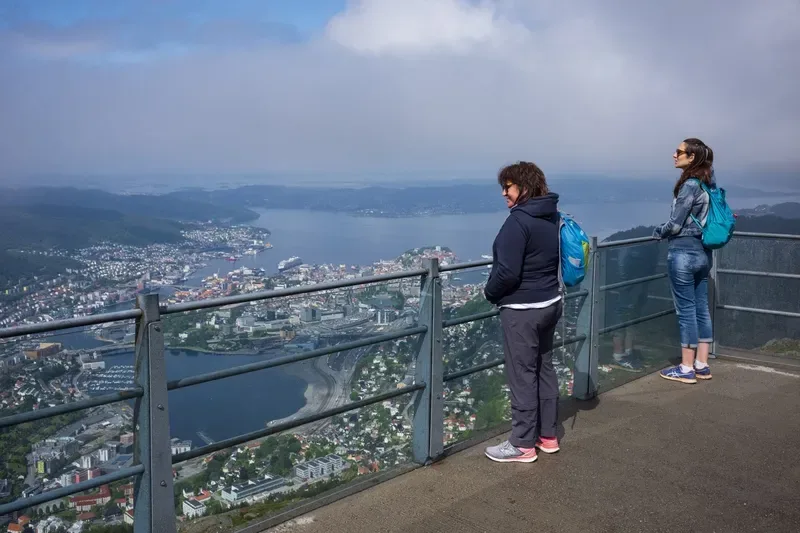
You get the best views from Mount Fløyen and Mount Ulriken. Fløyen is the easy choice, with a funicular from the city center. Ulriken is higher, with a cable car and a famous stone staircase. For a flat walk instead, try Løvstien.
Mount Fløyen: funicular or walk
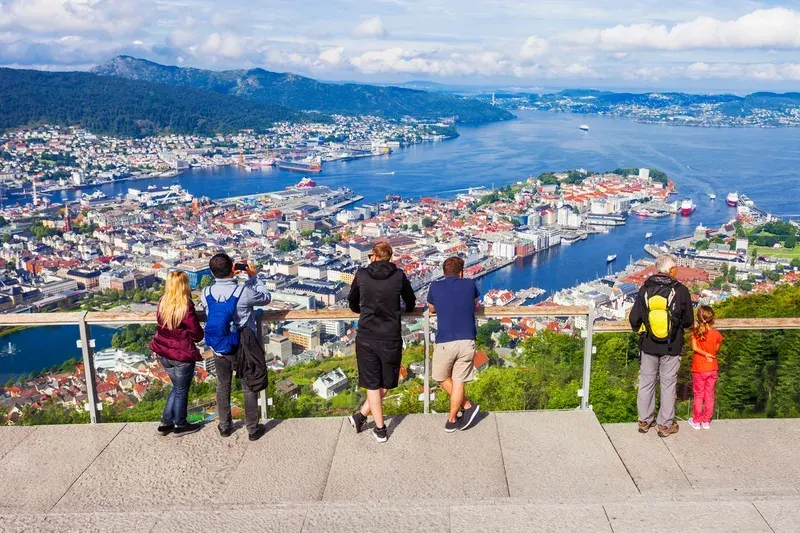
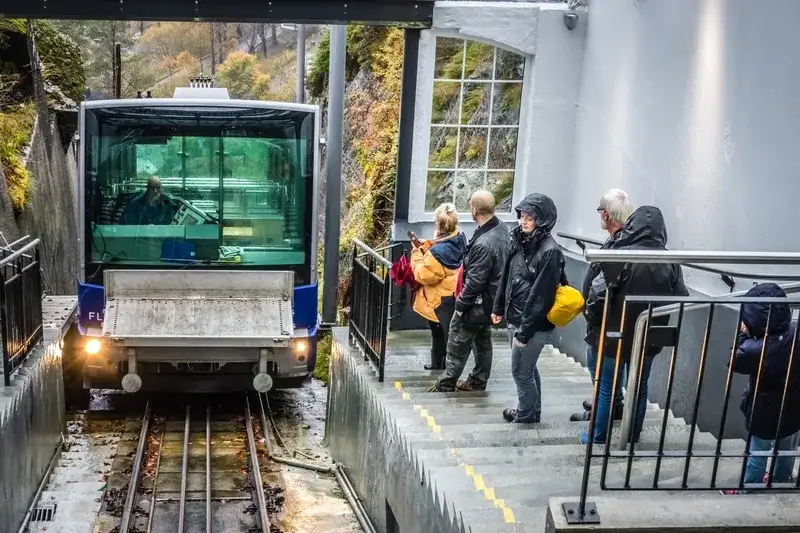
Fløyen gives you the classic view of Bergen's rooftops, harbor, and fjord from 320 meters up. The Fløibanen funicular has run since 1918, and the ride takes 4 to 8 minutes.
The funicular runs every day of the year. It starts at 07:30 on weekdays and 08:00 on weekends, and runs until midnight. Departures are every 10 to 15 minutes, with extra trips when it is busy.
You can also walk up. Most routes take 45 to 60 minutes and start along Fjellveien. At the top you will find a big playground, forest trails, the Skomakerdiket lake, and a café. The long Vidden hike across the mountain plateau to Ulriken also starts or ends here. It takes about 5 to 7 hours.
Practical fact: The lower station is about a 5-minute walk from the Fish Market. A return ticket costs NOK 145 from October to December and NOK 200 online in summer (April to September). The Bergen Card gives you a discount on return tickets only.
Mount Ulriken: cable car or stone steps
Ulriken is the highest of Bergen's seven mountains at 643 meters. On a clear day you can see far out to the islands and the North Sea.
The Ulriken cable car runs about every 10 to 15 minutes in the low season. An adult round trip costs NOK 435 and a one-way ticket costs NOK 255. Children under 16 pay NOK 180 return.
If you want to climb, the most popular route is Oppstemten, a stone staircase built by Sherpas from Nepal. It has around 1,300 steps. Take bus 12 to Montana, follow the signs past Montana Hostel, and the steps start a few minutes later. Most people reach the top in about 1.5 hours. You can also start at the cable car's lower station and walk via Montana.
A good plan is to walk up and take the cable car down, or ride up and walk down. A one-way ticket saves you money.
Practical fact: The cable car's lower station is at Haukelandsbakken 40. Take Bybanen line 2 to Haukeland Sykehus, or buses 5 or 6 from Festplassen. A restaurant and café sit at the top.
Løvstien: a gentle scenic walk
Not every good walk in Bergen needs a summit. Løvstien is a flat trail along the lower slopes of Mount Løvstakken (477 meters).
The full trail runs 6.4 kilometers from end to end, from Melkeplassen to Fjøsanger. Allow about 2 hours. A 383-meter pedestrian bridge joins the two halves of the trail. The path is flat enough for strollers, and you can turn back at any point.
Practical fact: Løvstien starts at Øvre Riplegården 44 (Melkeplassen side) and Langeskogen (Fjøsanger side). For just the bridge, take bus 10 to Kristian Bings vei. All Skyss buses are free with the Bergen Card.
|
Mountain |
Height |
How to get up |
Time |
|---|---|---|---|
|
Fløyen |
320 m |
Funicular or walk |
4–8 min / 45–60 min |
|
Ulriken |
643 m |
Cable car or Sherpa steps |
A few min / about 1.5 hrs |
|
Løvstakken (Løvstien trail) |
477 m summit |
Bus, then a flat walk |
About 2 hrs |
How do you stay safe on Bergen's mountains?
Check the weather before you go. Bergen's mountain weather changes fast, and fog can hide the trail.
• Check the forecast on yr.no and avalanche warnings on varsom.no in winter.
• Trails stay wet and slippery long after rain, even in summer.
• Winter days are short, so start early and plan your way down before dark.
• Summer and early autumn are the best seasons for high trails. In winter, forest and lower paths are safer.

3-How can you experience Bergen's local life?
You experience local Bergen through its art museums, its food, and its sea-swimming culture. Spend a rainy afternoon at KODE, eat fish soup, visit the Fish Market early, and try a waterfront sauna with a cold dip in the fjord.
KODE: the perfect rainy-day plan
Bergen gets a lot of rain, and locals have made peace with it. KODE is where you can do the same.
KODE is a group of art museums in four buildings along the Lille Lungegårdsvann lake. It holds a large collection of Norwegian art and the world's third-largest collection of works by Edvard Munch. One ticket covers all the KODE buildings.
Opening hours change by season. From mid-September to mid-May, the museums open Wednesday to Friday 11:00–18:00 and weekends 11:00–16:00. In summer, they open Tuesday to Friday 10:00–18:00 and weekends 10:00–16:00. Some buildings close at times for new exhibitions, so check which ones are open.
Practical fact: Adult entry is NOK 200, under-18s go free, and groups of 15 or more pay NOK 180 each. The Bergen Card gives free or discounted entry depending on the season.
Troldhaugen: Edvard Grieg's home
Troldhaugen is the lakeside home where composer Edvard Grieg spent his last 22 summers. He wrote many of his best-known works in a small hut in the garden.
Grieg's villa is closed for restoration and is set to reopen in summer 2027. The park, the composer's hut area, and Grieg's grave stay open all year. In summer (May to mid-September), the museum and café open Tuesday to Sunday 10:00–16:00, with daily Grieg concerts. Outside summer, the museum and café open only on concert and event days.
Practical fact: Adult entry is NOK 175 and under-18s go free. Summer concert tickets cost NOK 450 with entry and a guided garden tour. Take Bybanen line 1 to Hop, then walk about 20 minutes.
The Fish Market: the morning catch
Bergen has held a fish market on the harbor since the 1200s. It sits at Torget, at the inner end of the harbor next to Bryggen.
The outdoor stalls are busiest in summer. The indoor hall, Mathallen, keeps the market going all year. You can buy shrimp, salmon, fish cakes, and king crab, often cooked and ready to eat. Prices are high, so check the price per kilo or per portion before you order.
Practical fact: Go early in the day, before the cruise-ship crowds arrive, for calmer stalls and more time to choose.
Local cafés: slow mornings
Bergen's cafés are where the city feels most relaxed on a weekday morning. Look for skillingsboller, the local cinnamon bun, and waffles with brown cheese.
Specialty roasters such as Blom and Det Lille Kaffekompaniet draw a loyal local crowd. People come for the coffee, the cakes, and the cozy feel.
Practical fact: Many central cafés open early, so they make a good first stop before museums or the market.
Bergen fish soup: a local classic
Bergensk fiskesuppe is the city's best-known dish. The traditional version is creamy, with a light sweet-and-sour taste from a little vinegar and sugar. It is made with fish stock, root vegetables, cream, and pieces of white fish.
You can try the classic version at Bryggeloftet & Stuene or Søstrene Hagelin. Cornelius Seafood and Lysverket offer more modern takes.
Practical fact: A bowl of fish soup is one of the cheaper ways to eat a proper meal in Bergen.
The waterfront sauna: heat, then the fjord
A sauna session followed by a dip in the sea has become a Bergen favorite. Heit Bergen Sauna runs floating, wood-fired saunas at Marineholmen, Laksevåg, and Måseskjæret.
Shared sessions start at about NOK 159–169 for 50 minutes, or NOK 279 for 1 hour 50 minutes. Private sessions for two start at around NOK 590. The sea is very cold in winter and only mild in summer, so take short dips and use the ladder rather than jumping in.
Practical fact: Bergen Card holders get a discount on private sessions. Evening slots fill up fast, so book ahead.
Customize Your Dream Vacation!
Get in touch with our local experts for an unforgettable journey.
Plan Your Trip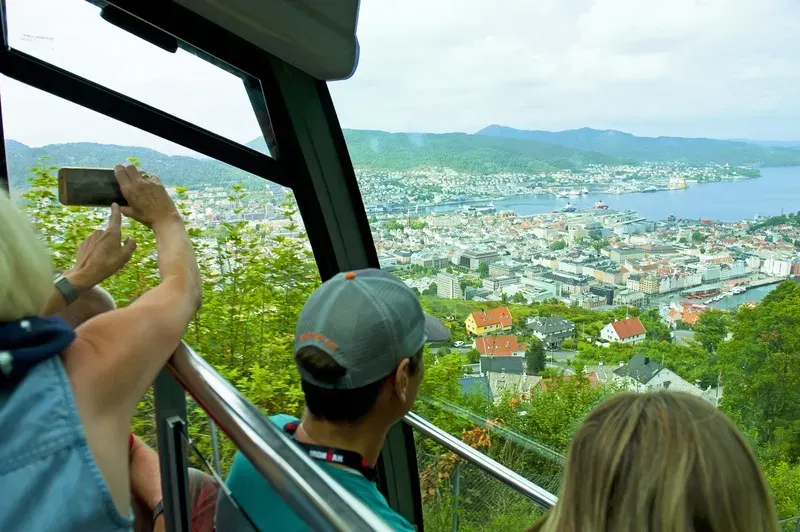
4-Which fjord trips from Bergen are worth taking?
The Mostraumen cruise is best if you have half a day. Rosendal suits you if you want a slow day in a fjord village. Norway in a Nutshell, with the Flåm Railway and a Nærøyfjord cruise, is the one to choose for a full, unforgettable day.
Mostraumen: a short cruise from the city center
Few half-day trips show you as much fjord scenery as this one. Rødne's boats leave from Zachariasbryggen at the Fish Market.
The cruise heads up the Osterfjord to Mostraumen, a narrow strait where boats only just fit through. Steep cliffs and waterfalls come close enough to see clearly from the deck. The whole trip takes 3 to 3.5 hours and returns to the same quay.
Practical fact: Adult tickets cost NOK 890, and the Bergen Card gives you 20% off. The cruise runs all year.
Rosendal and the Hardangerfjord: time ashore
Rosendal gives you what the other trips don't: real time on land in a pretty fjord village. The Hardangerfjord Express takes about 2 hours each way, stopping at Flesland and Os.
On a day trip you get about 3.5 hours ashore. You can visit the rose garden at the Barony Rosendal, hike to the Sjethaug viewpoint, walk to the Hatteberg waterfall, or visit the Folgefonn Centre. If you want to hike Trolltunga, you can go one way and catch a bus from Rosendal to Odda.
There is no guide on board. You simply sit back and enjoy the scenery like a local.
Practical fact: A round-trip adult ticket costs NOK 872. Boats leave from Strandkaiterminalen, behind the Tourist Information. The whole day takes about 7 to 8 hours.
Flåm and the Nærøyfjord: a full-day rail and fjord trip
This is the trip most people remember longest. Norway in a Nutshell links trains, a bus, and a fjord cruise into one round trip from Bergen.
You take the Bergen Railway to Voss, a bus to Gudvangen, and an electric boat through the narrow, UNESCO-listed Nærøyfjord to Flåm. Then the Flåm Railway climbs to Myrdal, with a stop at the Kjosfossen waterfall, before you ride the Bergen Railway home. Gudvangen is also home to Njardarheimr, a reconstructed Viking village you can visit on some guided tours.
Practical fact: Norway in a Nutshell runs all year except 24, 25 December and 1 January. Prices start at about NOK 2,698 per adult, the day lasts about 12 hours, and the Bergen Card gives a 10% discount.
|
Trip |
Duration |
Starting price (adult) |
Best for |
|---|---|---|---|
|
Mostraumen |
3–3.5 hrs |
NOK 890 |
A short fjord taster |
|
Rosendal |
7–8 hrs |
NOK 872 return |
A slow village day |
|
Norway in a Nutshell (Flåm and Nærøyfjord) |
About 12 hrs |
NOK 2,698 |
A full rail-and-fjord day |
5-How do Bergen's top attractions compare?
Bryggen and Bergenhus Fortress are free and work in any weather. Fløyen and Ulriken need clear skies, KODE is best on rainy days, and the fjord trips cost the most but run in most weather. Use the table below to match each stop to your time, budget, and the forecast.
|
Attraction |
Time needed |
Adult cost |
Best weather |
Best for |
|---|---|---|---|---|
|
Bryggen |
1 hr |
Free |
Any |
History and photos |
|
Fløyen |
1–2 hrs |
NOK 145–200 return |
Clear |
Easy city views |
|
Ulriken |
2–3 hrs |
NOK 435 return |
Clear |
Highest summit and hiking |
|
KODE |
2–3 hrs |
NOK 200 |
Rainy |
Art and Munch |
|
Mostraumen cruise |
3–3.5 hrs |
NOK 890 |
Any |
A short fjord trip |
Prices are 2026 adult prices. Children and Bergen Card holders often pay less.
6-How should you plan your Bergen itinerary?
Base yourself near the harbor, walk the center, and use buses or the light rail for the mountains and airport. Plan one day for the harbor and Fløyen, a second for Ulriken or museums, and a third for a fjord trip. Book summer stays and tours early.
One, two, or three days
A good Bergen trip follows the weather and your energy, not a checklist.
• One day: Walk Bryggen and Bergenhus Fortress in the morning, take the funicular up Fløyen around midday, and finish at the Fish Market.
• Two days: Add Ulriken on a clear day or KODE on a rainy one. End the evening with a sauna session.
• Three days: Add the Mostraumen cruise, a day in Rosendal, or Troldhaugen. For Norway in a Nutshell, plan a full extra day.
Practical fact: Keep your outdoor plans flexible and swap days around if the forecast changes.
Getting around
Bergen's center is small. Bryggen is about 5 minutes on foot from the Fish Market, and you can reach most first-day sights without a bus.
For the airport, you have three main choices:
• Bybanen light rail (line 1): about 45 minutes, from NOK 51. It is free with the Bergen Card.
• Flybussen airport bus: about 20 to 30 minutes, NOK 189 one way.
• Taxi: about 20 minutes, usually around NOK 500 to 700.
Practical fact: Buy Skyss bus and light rail tickets in the Skyss app before you board.
The Bergen Card
The Bergen Card is worth checking before you book anything. It gives you free Skyss buses and light rail in Bergen and the region, free entry to many museums, and discounts on many attractions and tours.
2026 adult prices are NOK 400 for 24 hours, NOK 500 for 48 hours, NOK 600 for 72 hours, and NOK 700 for 96 hours. Children aged 3 to 15 pay from NOK 100. If you plan a mountain, a museum, and a fjord trip, the card can pay for itself quickly.
Practical fact: The card does not cover Vy trains, express coaches, or most local and regional boats. It also covers Fløibanen return tickets only, not one-way trips.
Where to stay
Staying close to the harbor puts most sights within walking distance. Radisson Blu Royal sits right beside Bryggen, while City Hostel Bergen is a central budget option.
Practical fact: Prices rise sharply in summer, and the city fills up with cruise and fjord travelers. Book your room as early as you can.
May to September is best for most visitors. You get long days, open hiking trails, and full fjord-trip schedules. June and July are the busiest and most expensive months. For fewer crowds and lower prices, try May or early September.
Yes. Bergen is one of Europe’s rainiest cities, with rain on more than 200 days a year. Pack a waterproof jacket and good shoes whatever the season. Showers often pass quickly, so keep your plans flexible.
Rarely. Bergen is too far south for regular sightings, and cloudy skies often block the view. On nights with very strong activity, you may catch a faint glow away from city lights. For a real chance, travel north to Tromsø or Lofoten.
The Bergen Railway is the most scenic option. The trip takes about 7 hours and crosses the Hardangervidda mountain plateau. Flights take under an hour. You can also travel via Norway in a Nutshell and add the Flåm Railway and a Nærøyfjord cruise along the way.
Usually not. Norway is almost cashless, and cards and mobile payments work nearly everywhere, from cafés to Fish Market stalls. The local currency is the Norwegian krone (NOK). Carry a small amount of cash only as a backup.
It depends on the season. In June you get around 19 hours of daylight. In December you get only about 6. Winter visitors should plan hikes and outdoor sights for the middle of the day.
Discover why Norway is so hard to forget, from Geirangerfjord’s cloud-capped cliffs to Bergen’s wooden streets and Tromsø’s Arctic skies, and learn where to go, when to visit, and how to plan a trip that feels like your own.
The best hidden things to do in Oslo include strolling the wooden streets of Damstredet, visiting Old Aker Church and following the Akerselva river. You can also try brown-cheese waffles in Grünerløkka and hike quiet forests just a metro ride away. This guide shows you the side of Oslo that most visitors miss.
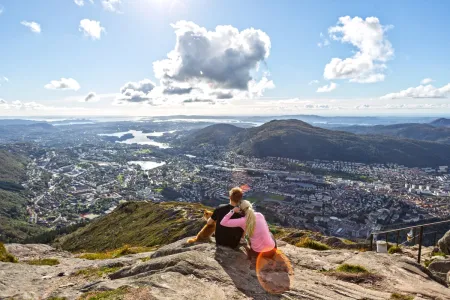
Bergen’s best attractions include Bryggen, Bergenhus Fortress, Mount Fløyen and Mount Ulriken, the KODE museums, the Fish Market, and nearby fjord trips, all in a historic harbor city ringed by seven mountains.
