
 Home
Home.jpg "Baku City, Azerbaijan: Things to Do & Travel Guide")
- #1. What Is Baku and Where Is It?
- #2. What Is the History of Baku?
- #3. What Should You See in the Old City?
- #4. What Are Baku's Modern Landmarks?
- #5. What Are the Best Day Trips from Baku?
- #6. What Should You Eat and Drink in Baku?
Baku is the capital of Azerbaijan and the largest city on the Caspian Sea, home to around 2.3 million people in a bay on the Absheron Peninsula. It is also the lowest-lying capital city in the world, sitting roughly 28 metres below sea level.
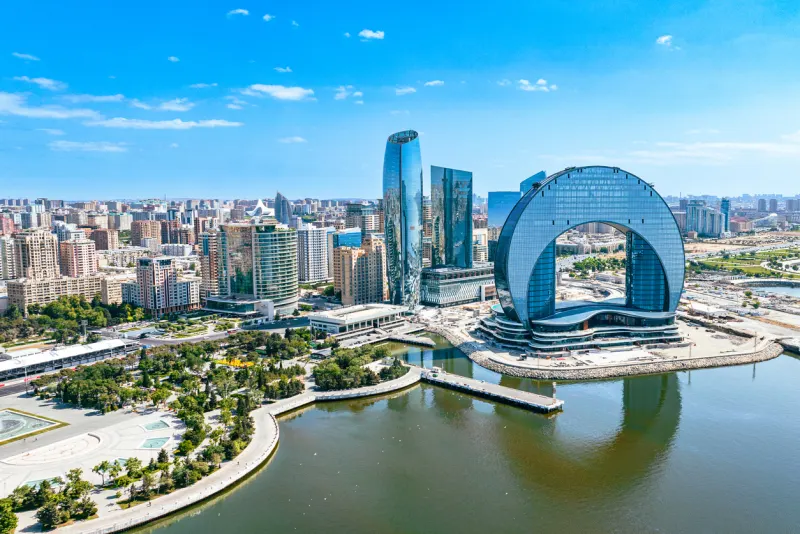
Few cities compress so much contrast into so small an area. A walled medieval Old City — UNESCO-listed Icherisheher — sits directly beneath the Flame Towers, three glass skyscrapers that glow with LED fire after dark. A Zaha Hadid cultural centre stands a few kilometres from a 17th-century Zoroastrian fire temple.
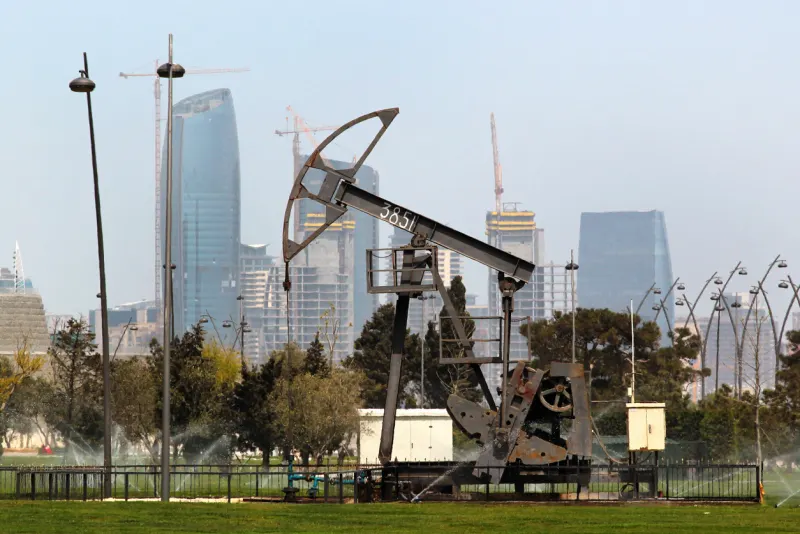
Fire runs through everything here. Natural gas seeping from the ground has burned in this landscape for millennia, giving Azerbaijan its name as the "Land of Fire" and drawing Zoroastrian pilgrims long before oil made Baku rich.
#1. What Is Baku and Where Is It?
Baku lies on the southern shore of the Absheron Peninsula, jutting into the Caspian Sea at the crossroads of Europe and Asia.
1.1 What defines the city's character?
Old meets new — Medieval walls framed by futuristic towers, often in the same photograph.
Oil wealth — Two boom eras, a century apart, built the grand facades and the modern skyline.
Caspian setting — A long seafront promenade shapes daily life.
Wind — The name is often linked to Persian for "city of winds," and the gales are constant.
Compact and safe — Most highlights are walkable, with low crime rates.
1.1.1 Why is Azerbaijan called the Land of Fire?
Natural gas seeps have burned continuously on the Absheron Peninsula for thousands of years.
These eternal flames drew Zoroastrian worship, preserved today at Ateshgah.
Yanar Dag — a hillside that has burned for decades — is the most dramatic surviving example.
The Flame Towers are a deliberate modern reference to the same tradition.
#2. What Is the History of Baku?
2.1 What are its ancient origins?
Settlement on the Absheron Peninsula dates back to the 4th millennium BCE, and the nearby Gobustan petroglyphs record 40,000 years of habitation.
Baku developed as a Caspian port and later a Silk Road trading point.
2.2 Who ruled Baku through the medieval era?
The Shirvanshahs made Baku their capital in the 12th century, building the walls and palace that survive today.
The Mongols sacked the region in the 13th century, and Safavid Persia and the Ottomans later contested control.
2.2.1 What did the Russian era bring?
The Russian Empire annexed Baku in the early 19th century.
The world's first industrially drilled oil well was sunk nearby in 1846, and by 1900 the region produced roughly half the world's oil, funding the European-style mansions that still line the centre.
2.3 What happened in the 20th century?
The Azerbaijan Democratic Republic (1918–20) was the first secular democratic republic in the Muslim world.
Soviet rule followed until independence in 1991. Martyrs' Lane commemorates those killed in Black January 1990 and in the Karabakh conflicts.
2.3.1 How did the modern city take shape?
A second oil boom from the late 1990s funded a dramatic transformation, producing the Flame Towers and Heydar Aliyev Center (both 2012).
Baku hosted the 2015 European Games, Formula 1 since 2016 and COP29 in 2024.
Customize Your Dream Vacation!
Get in touch with our local experts for an unforgettable journey.
Plan Your Trip#3. What Should You See in the Old City?
Icherisheher — the walled Old City — was inscribed by UNESCO in 2000 and is the heart of any visit.
3.1 What are the essential sights?
3.1.1 Maiden Tower (Qız Qalası)
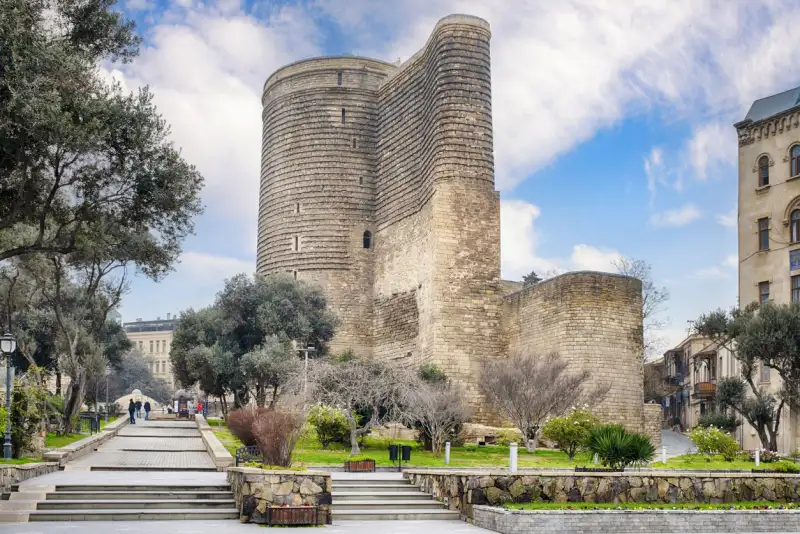
A cylindrical stone tower of uncertain date and purpose, and Baku's defining symbol.
Climb to the roof for views across the Old City rooftops to the Caspian.
Theories about its function range from fortress to Zoroastrian observatory.
3.1.2 Palace of the Shirvanshahs
A 15th-century royal complex of courtyards, a mosque, mausoleum and bathhouse.
Considered one of the finest examples of Azerbaijani architecture.
Allow about an hour; the layout rewards a slow walk.
3.1.3 Juma Mosque and the lanes
The Juma Mosque arch, carved with Arabic script, frames the city's most photographed view — medieval stone with the Flame Towers rising behind.
Beyond it, cobbled lanes hide caravanserais, tea houses, carpet shops and hidden courtyards.
3.2 What should you know about visiting?
Entry on foot is free and the gates are open around the clock.
A small surcharge applies if you enter by taxi.
Early morning and evening are best — softer light and far fewer people.
Individual monuments such as the Maiden Tower and Shirvanshahs' Palace charge separate admission.
#4. What Are Baku's Modern Landmarks?
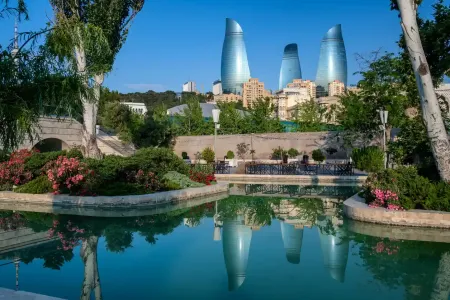
Flame Towers — Three curved skyscrapers, lit each night with LED flames, flags and figures. The interiors are not open to tourists, so admire them from outside.
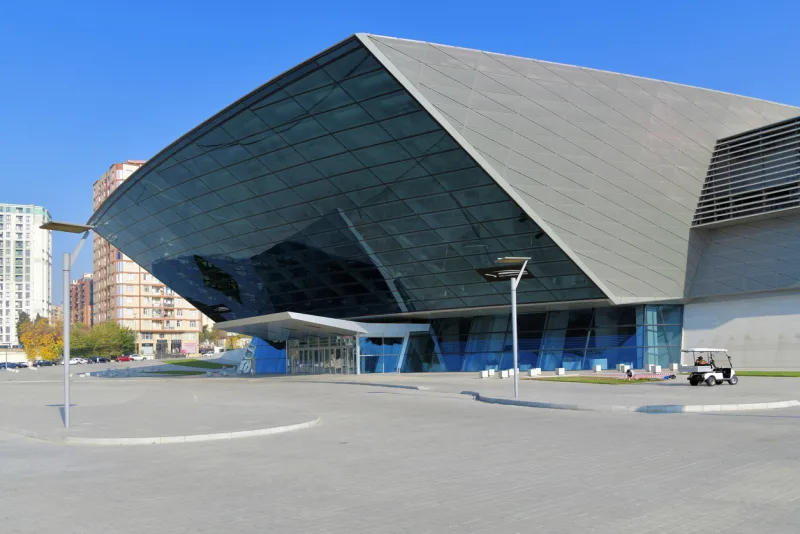
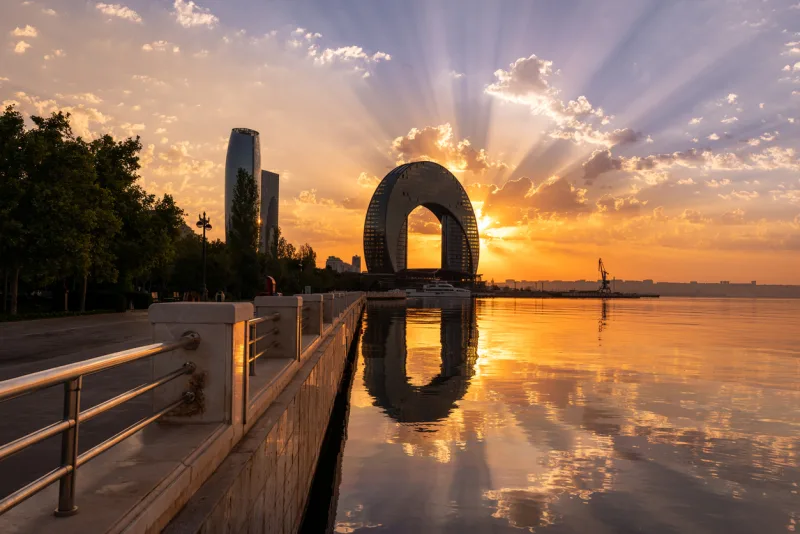
Heydar Aliyev Center — Zaha Hadid's white wave of a building, widely considered one of the finest works of 21st-century architecture. Worth entering for the exhibitions.
Baku Boulevard (Bulvar) — A long Caspian promenade with parks, cafés, a pier and the twee Mini-Venice gondola canals.
Azerbaijan Carpet Museum — In a building shaped like a rolled carpet, with an outstanding collection.
Baku Funicular & Highland Park — The easiest way up to the Flame Towers and the best panorama.
Martyrs' Lane — A sober memorial beside the funicular, with sweeping bay views.
Nizami Street & Fountains Square — The main pedestrian shopping and café axis.
#5. What Are the Best Day Trips from Baku?
5.1 Gobustan National Park
UNESCO-listed petroglyphs carved over roughly 40,000 years, depicting hunting scenes, boats, dancers and animals now extinct in the region.
About an hour south of the city, usually combined with the mud volcanoes.
5.1.1 The mud volcanoes
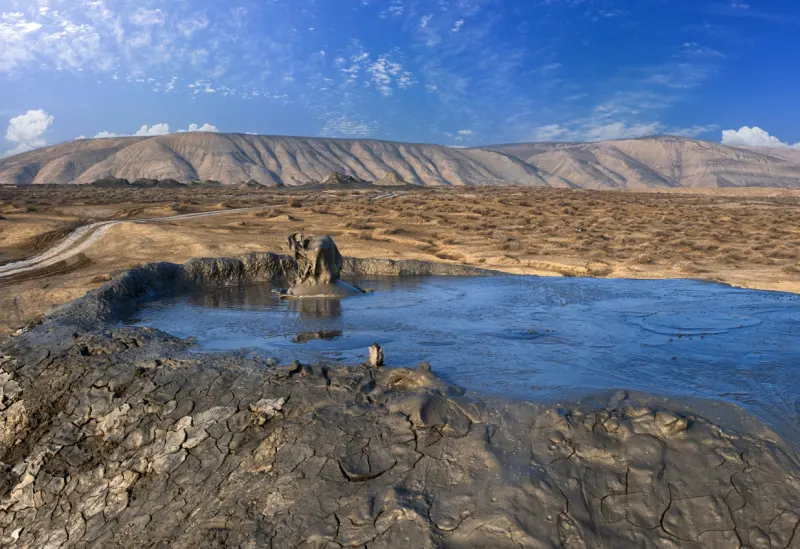
Azerbaijan holds a large share of the world's mud volcanoes, and the best cluster sits near Gobustan.
Cold grey mud bubbles up through cones you can walk right up to.
Access requires a 4×4 transfer over rough track from the main road.
5.2 Ateshgah Fire Temple and Yanar Dag
Ateshgah is a 17th–18th century pentagonal temple built around a natural gas vent, used by Zoroastrian and Hindu pilgrims.
Yanar Dag is a hillside that has burned continuously for decades — best after dark.
Both sit on the Absheron Peninsula, easily combined in a half-day.
5.3 Further afield
Quba and Khinalug — Greater Caucasus mountain villages, three to four hours north.
Sheki — A Silk Road town with a spectacular khan's palace, best as an overnight.
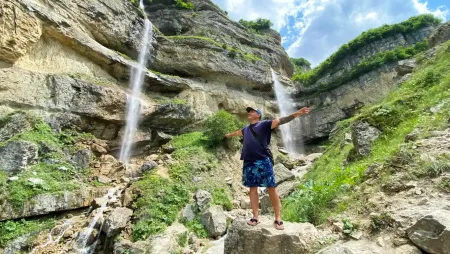
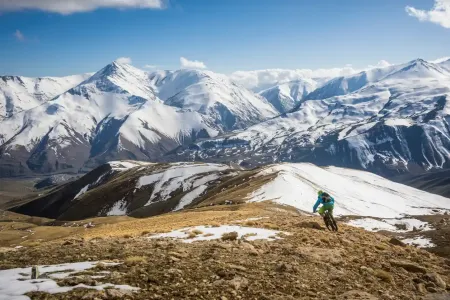
Gabala — A mountain resort with winter skiing and summer hiking.
#6. What Should You Eat and Drink in Baku?
6.1 What are the essential dishes?
Plov — Saffron rice with meat, chestnuts and dried fruit; the national celebration dish.
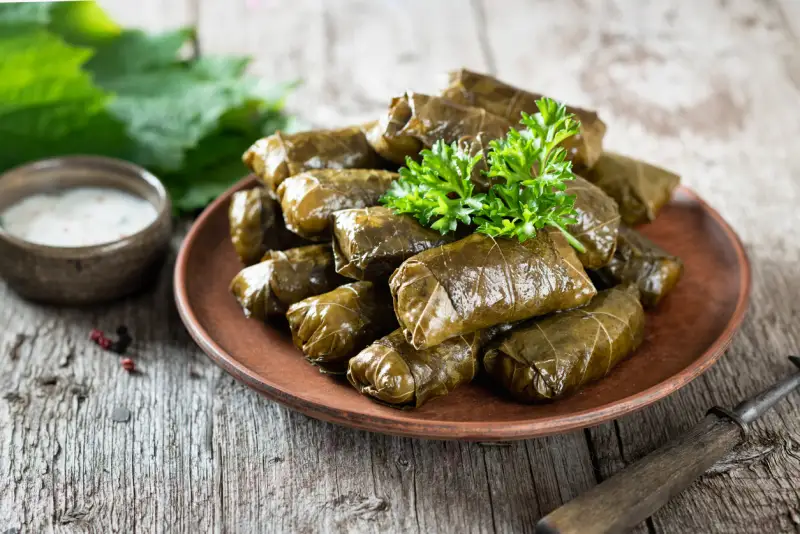
Dolma — Vine or cabbage leaves stuffed with spiced minced lamb.
Kebabs and lula kebab — Charcoal-grilled, served with sumac onions.
Qutab — Thin folded flatbreads filled with herbs, pumpkin or meat.
Dushbara — Tiny lamb dumplings in broth, and Caspian fish such as kutum, grilled simply.
6.2 What should you drink?
Tea (çay) — Served in armudu pear-shaped glasses with jam, and central to hospitality.
Sherbet — Traditional fruit and herb cordials.
Book your Baku city experience and explore our full range of Azerbaijan tours — Old City walks, Gobustan transfers and expert guides arranged.
Its UNESCO-listed walled Old City, the Flame Towers, Zaha Hadid's Heydar Aliyev Center, Caspian seafront and its history as a global oil capital.
Yes. Few cities pack medieval walls, Silk Road heritage, world-class contemporary architecture and ancient fire temples into such a compact, safe and affordable area.
April to June and September to October, when temperatures are mild and comfortable for walking. Summer is hot and humid; winter is cheap but windy.
Most travellers apply for the ASAN e-visa online, usually approved within about three working days. Check current requirements before booking.

Sheki is a historic Silk Road city in Azerbaijan, famous for the Khan's Palace, stained-glass shebeke windows, and its UNESCO-listed Old City.
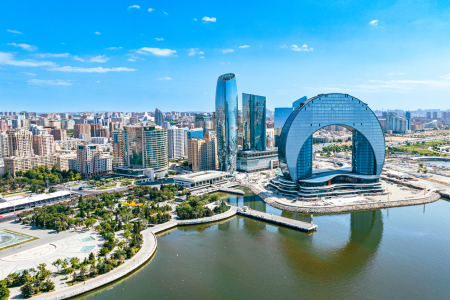
Baku is Azerbaijan's Caspian capital — a walled medieval Old City beneath the Flame Towers, where Silk Road heritage meets bold modern architecture.