
 Home
HomeCafayate Argentina Travel Guide: Hidden Gems Beyond the Wine Route
Cafayate, Argentina, sits 1,683 meters above sea level in the Valles Calchaquíes. Although Argentina’s first vines were planted far from here, in Santiago del Estero around 1556, Cafayate has grown wine since the 1800s and is now one of the country’s most distinctive wine regions.
This small town of approximately 14,000 inhabitants has gained recognition for its Torrontés wines. Yet its most compelling experiences extend way beyond the tasting rooms.
The region receives less than 250 mm of annual precipitation. This creates a unique high-desert environment. This piece reveals the hidden natural wonders and adventure opportunities that make Cafayate a destination worth visiting beyond its wine route.

Natural Wonders Off the Tourist Trail
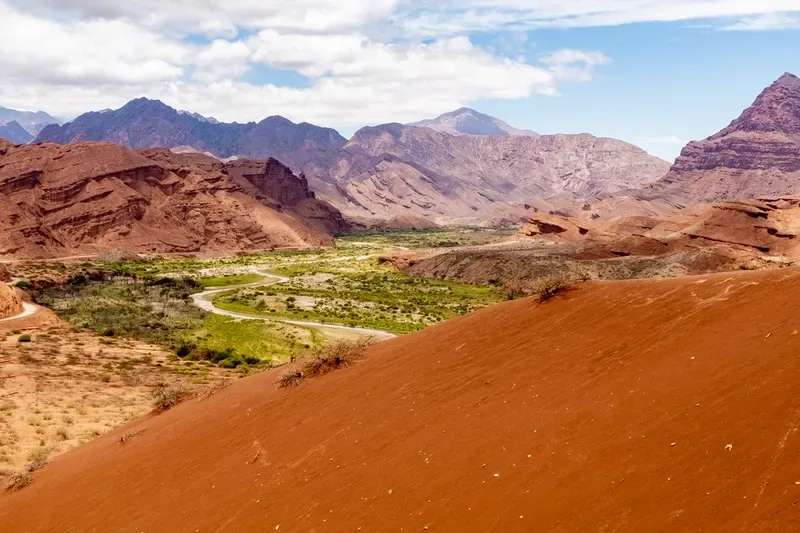
Most visitors to Cafayate Argentina stick to the main viewpoints of Quebrada de las Conchas. They snap photos at Devil's Throat before rushing to their next winery. Something entirely different awaits if you venture just a bit further.
Los Médanos Sand Dunes at Sunrise
White sand dunes stretch 20 square kilometers just outside town. Tour buses rarely stop here. The trailhead sits 8 kilometers from Cafayate on Highway 68. A small green welcome sign for Quebrada de Las Conchas marks it but doesn't mention the dunes at all.
Park on the shoulder and walk the sandy path about 20 minutes through scrub brush. The landscape feels monotonous until you round a bend. Walls of pale sand rise to 30 meters high. An earthquake 30,000 years ago created a natural dam and trapped sediment that winds eventually sculpted into the formations you see today.
Sunrise transforms the white sand into shades of pink and gold. The light-colored surface reflects intense sunlight, so the sand can get extremely hot on summer afternoons. You'll need water and sunscreen, and you should arrive early.
Cascadas del Río Colorado Waterfalls
The Colorado River carves through red canyon walls about 6 kilometers from downtown. It creates seven waterfalls that most wine tourists never find. The trailhead at the Río Colorado bridge on Route 40 requires a guide for safety reasons. Local Diaguita community members wait at the entrance and offer guided hikes to different waterfall tiers.
The full circuit covers 3.4 miles and takes three to four hours. You'll cross the riverbed multiple times and scramble over wet rocks. Narrow passages between towering stone walls require navigation. The first waterfall drops five meters into a pool 1.8 meters deep. The second requires climbing a four-meter wall to reach an eight-meter cascade.
Shoes with solid grip are essential. The trail gets slippery, and several sections skirt rocky cliffs where a misstep would be dangerous. The waterfalls themselves are modest, but the red canyon scenery makes this one of the best things to do in Cafayate Argentina, for active travelers. Towering cardon cacti line the route.
Los Estratos Hidden Rock Formations
A small gravel parking lot marks the La Yesera trailhead at kilometer 28 on Route 68. The path is flat and takes 30 minutes each way. It winds 1.25 kilometers into the quebrada toward Los Estratos.
The destination reveals layered rock faces that display ten distinct colors. Yellow bands indicate sulfur deposits. Green layers come from iron or ancient seaweed. Copper creates aqua streaks, while various shades of red and purple result from iron oxidation under different climate conditions. The mica-flecked surfaces sparkle when sunlight hits them directly.
Tour buses rumble past this turnoff without stopping. Arrive before 9 AM to explore the formations alone.
Rio Las Conchas Secret Swimming Spots
The river that runs through Quebrada de las Conchas offers natural pools where locals cool off during summer heat. Shell fossils embedded in the rocks give this area its name. Calm sections where the water widens and deepens slightly are what you want to find.
Green thorn trees line the banks and bleed amber sap when cut. Tamarisk trees provide occasional shade. The water stays refreshingly cold even when air temperatures soar. Mountain runoff that carved these red canyons over millions of years feeds it.
Authentic Cultural Experiences in Cafayate
Wine bottles fill most suitcases leaving Cafayate Argentina, yet the region's cultural heritage runs deeper than fermented grapes. Authentic encounters with local traditions reveal layers of Diaguita-Calchaquí culture that shaped this valley long before European vines took root.
Cabras de Cafayate Goat Farm
A 1.5-mile walk from town center brings you to an unexpected pairing. Cabras de Cafayate operates within Domingo Hermanos winery, where 500 goats roam the property and 350 produce milk daily. The farm started in the 1990s when the winery bought goats to fertilize the vineyard, then moved to meat sales before the owner's son launched artisanal cheese production.
The goats eat grape residue from wine pressing and get a diet rich in flavonoids and tannins. Music plays during the once-daily milking process, each goat producing an average of 2 liters. You won't smell the typical barnyard odor because females stay separated from male urine after milking.
Tours walk you through the breeding barns where baby goats feed separately from milk producers. The one-hour experience concludes with tastings of four semi-firm cheeses: Natural, Aji, Provenzal, and Pategras de Cabra. The cheese has mild, earthy notes and keeps for three to five months without preservatives.
Local Artisan Markets and Workshops
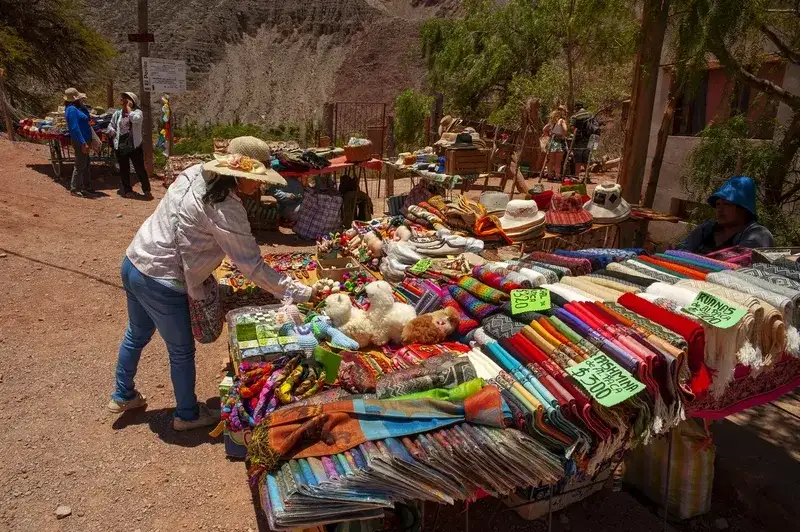
More than 140 Cafayateño artisans have displayed their work at Mercado Artesanal since 1979. The permanent market showcases textiles, basketry, ceramics, regional sweets, and goldsmith work. Creators express ancestral Diaguita knowledge and show techniques that differ from industrial production.
Workshops at Suri Cave combine archeology with living traditions. The afternoon experience starts with a hike to ancient cave paintings at El Divisadero. Master artisans teach ceramics or weaving techniques passed through generations afterward. The session ends with regional snacks at La Rinconada.
Archeological Museum Rodolfo Bravo
Professor Rodolfo Bravo spent 60 years excavating, classifying, and restoring artifacts from the Cafayate region. His collection of approximately 2,000 pieces fills the museum, founded in Animaná in 1935 before moving to Calle Colón 191 in Cafayate in 1943. His widow, Helga H. Mazzoni, and son Maximiliano have managed the museum since 1991.
The collection focuses on Diaguita-Calchaquí culture and offers a direct connection to the indigenous peoples who inhabited these valleys. Pieces sit on open shelves in what remains a private collection rather than a state-run institution.
Traditional Festivals Beyond Torrontés
The town calendar extends beyond wine harvest celebrations. Local festivals connect to agricultural cycles and religious observances that predate the region's wine fame and offer glimpses into traditions that valley communities have managed to keep across generations.
Adventure Activities Beyond Wine Tasting
The high-altitude desert surrounding Cafayate rewards physical exploration. Trails snake through red rock canyons, starlight lights up night skies without urban interference, and dirt roads connect villages that remain unchanged for decades.
Horseback Riding Through Valles Calchaquíes
Multiple operators guide horseback tours through the Calchaquí Valley, where landscapes move from mountain desert to patches of vegetation along riverbeds. The Los Colorados experience takes riders over the Calchaquí River and through vast grasslands during a four-hour journey. Meek horses carry visitors to geological formations that include the Devil's Ear, with stops at natural viewpoints offering panoramic views of the valley and pre-cordilleran hills.
The tour includes a hike to elevated observation points, water, and a cheeseboard. Difficulty remains low, which makes this available for riders without extensive experience.
Besides the Los Colorados route, operators maintain roughly five different circuits of varying durations that are all manageable within a single day. Some paths follow the Colorado River southeast through arid fields before entering mountain canyons where red soil and rock formations create narrow passages. An alternative circuit heads toward green fields in the opposite direction and allows riders to gallop over wide pastures.
Cycling Route 40 to Remote Villages
Route 40 cuts through the Valles Calchaquíes and connects Cafayate to isolated settlements via unpaved sections that challenge cyclists with stony, dusty terrain. The road weaves past dry riverbeds and scrubland, with distant snow-covered mountains visible on clear days.
Camping opportunities appear frequently over the massive dry open plains. Desert landscapes provide limitless spots to pitch tents under clear, star-filled skies. The thermal amplitude swings substantially, so cyclists face cold nights after scorching days.
Summer riding becomes difficult at midday due to high temperatures. Cyclists share the road with herds of goats moving between pastures.
Exploring Quebrada de las Flechas
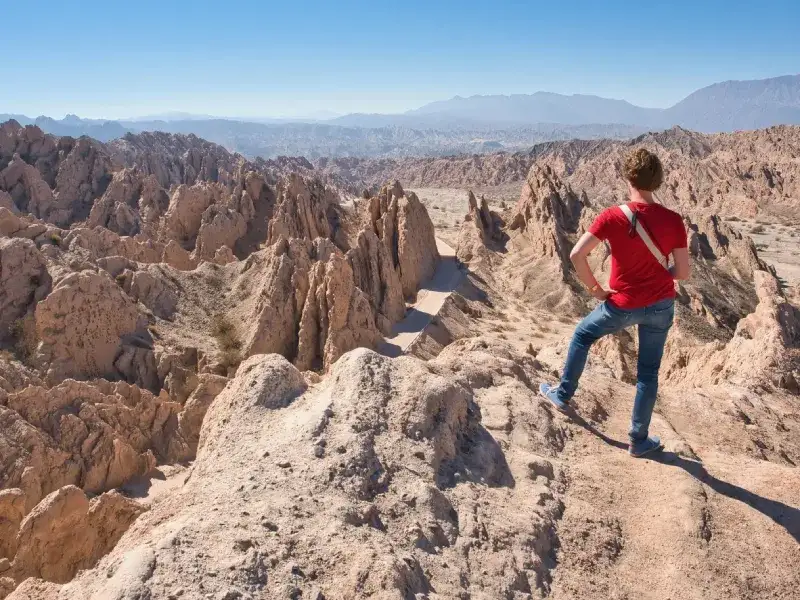
The Quebrada de las Flechas extends for 20 kilometers along Route 40 between Cafayate and Cachi. Inclined pointed rock formations create narrow gorges with walls that reach 20 meters high. These arrow-like structures earned designation as a natural monument of Angastaco in 1995.
Colors change throughout the day depending on the sun's position. Formations appear bright during morning hours and then transition to ochre tones by afternoon. The narrow road opens gradually when traveling toward Angastaco.
Visitors explore the formations on foot from viewpoints along the road, and some walk along the Calchaquí River ravine for a closer look.
Stargazing in the High Desert
Cafayate's high desert location provides exceptional stargazing conditions due to minimal light pollution. The dry air and elevated altitude create crisp visibility of celestial objects that are washed out near cities.
Clear skies dominate most of the year and offer consistent viewing opportunities. The Milky Way stretches visibly overhead during appropriate seasons, while planets stand out brightly against the dark backdrop.
Yes, Cafayate offers much more than wine tasting. The region features stunning natural attractions like Los Médanos sand dunes, Cascadas del Rio Colorado waterfalls, and unique rock formations at Los Estratos. You'll also find authentic cultural experiences at local artisan markets, traditional goat farms, and archeological museums, plus adventure activities like horseback riding, cycling, and stargazing in the high desert.
Several hidden gems surround Cafayate, including the white sand dunes just 8 kilometers from town, secret swimming spots along Rio Las Conchas, and the colorful layered rock formations at La Yesera. Nearby villages like San Carlos, Molinos, and Animaná offer colonial architecture, weaving cooperatives, and riverside trails that most tourists overlook.
Cafayate offers diverse outdoor activities, including horseback riding through the Calchaquí Valley, cycling along Route 40 to remote villages, exploring the rock formations of Quebrada de las Flechas, and hiking to waterfalls at Río Colorado. The region's high-altitude desert location also provides exceptional stargazing opportunities with minimal light pollution.
Look beyond the main tourist areas to discover family-run parrillas in residential neighborhoods, traditional empanada houses like La Casa de las Empanadas with over 10 varieties, and street food vendors on side streets. Don't miss Calchaquitos for homemade alfajores and comedor La Juanita for local specialties like quesillo con dulce y nuez.
The colonial villages along Route 40 preserve centuries-old traditions and architecture. San Carlos earned its nickname after four failed Spanish foundations dating back to 1551; Molinos houses a church dated 1692 with mummified remains of the last colonial governor, and Animaná operates weaving cooperatives that revive ancestral techniques using alpaca and llama wool from local artisan families.
Customize Your Dream Vacation!
Get in touch with our local experts for an unforgettable journey.
Plan Your TripHidden Food Trails and Local Flavors
Hunger strikes at unexpected moments when you travel through Cafayate Argentina. The best meals often hide where tour groups never venture. Food stalls operate on side streets, and family-owned restaurants fill residential blocks. The town's culinary traditions extend beyond what appears on winery menus.
Street Food Vendors on Side Streets
Argentine street food culture is different from cities like Los Angeles or New York. You won't find spontaneous pop-ups on random corners. Vendors gather in designated areas or neighborhoods where locals come together. They share meals in social settings rather than eating on the go.
Street vendors prepare choripán and bondiola sandwiches in Cafayate. You can watch the cooking process unfold and grab other quick bites. The best approach involves sitting in one of the plastic chairs vendors provide. Soak in the atmosphere instead of rushing through your meal.
Family-Run Parrillas in Residential Areas
Residential streets shelter comedor La Juanita, a family-run spot where locals gather for lunch. The menu has traditional Argentine grill items. Visitors recommend the quesillo con dulce y nuez (goat cheese with marmalade and walnuts) as the standout dessert.
These neighborhood parrillas operate quietly and rely on word-of-mouth rather than tourist marketing.
Traditional Empanada Houses
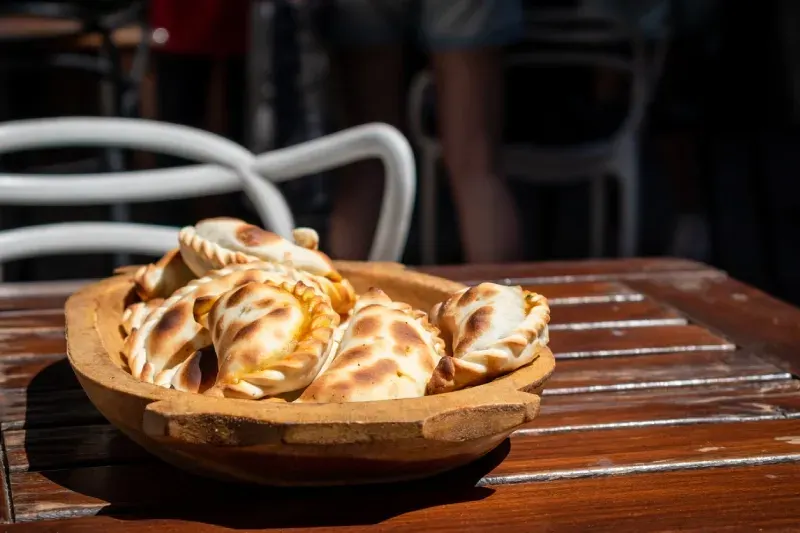
La Casa de las Empanadas sits near the central plaza and serves over 10 varieties of empanadas made to order. The menu has beef, ham, corn, onion, sun-dried tomato, olives, goat cheese, blue cheese, carnival, and roquefort fillings. Vegetarian travelers find multiple options beyond cheese.
Prices range between ARS 1,000 and 1,800 per empanada depending on variety. Promotions offer a dozen plus a jug of local patero wine. The thin crust and generous filling distinguish these empanadas from standard versions.
Las Chuecas Empanadas y Restaurante operates near the main square. People praise it for juicy empanadas with delicate homemade dough. Flavors include meat, matambre, tripe, and humita. Takeout service makes them convenient for travelers who want to explore the region.
Salteña empanadas follow regional tradition with homemade dough and juicy filling. The filling comes from chopped beef, potatoes, green onions, and paprika from Valles Calchaquíes. Locals say you must eat them "with your legs apart" to avoid getting juice on yourself.
Homemade Alfajores at Calchaquitos
Calchaquitos produces artisanal alfajores using a unique family recipe that combines tradition with regional identity.
Fillings range from classic dulce de leche norteño to regional flavors inspired by the valley. These flavors include torrontés grape, cayote, and membrillo. The soft texture of the cookie layers balances perfectly with intense fillings. Each alfajor represents the town's hospitality and serves as a symbol of local identity.
Raw materials meet high standards, so the products remain excellent and visitors recommend them repeatedly.
Secret Spots in Surrounding Villages
Route 40 connects a string of colonial villages where time moves slower than in Cafayate Argentina. These settlements preserve traditions that disappeared elsewhere and offer authentic encounters away from wine tourism crowds.
San Carlos Colonial Town
San Carlos sits 27 km from Cafayate and earned its nickname “5 names village” because the Spanish founded it four times under different names, starting in 1551, and failed each time. Diaguita resistance prevented settlement until Jesuits established the San Carlos de Borromeo mission in 1641. The National Executive Power declared parts of the village a National Historic Place in 1975.
Local families now guide visitors through historic streets lined with colonial houses. February brings valley carnival with copleros and people covered with flour and basil. Celia's cascade sits 3 km north, an artificial waterfall surrounded by poplars.
Tolombón Adobe Churches
Adobe churches stand in Tolombón, their earthen walls weathered by centuries of high-altitude sun and wind. These structures represent colonial religious architecture specific to the Calchaquí Valleys.
Animaná Village and Its Weaving Cooperatives
Animaná is a quiet village on Route 40, a short drive north of Cafayate on the way to San Carlos. Adobe houses and small vineyards line its streets. Local families still practice traditional weaving with Andean alpaca and llama wool, using techniques passed down through generations.
The village also lends its name to Animaná, a sustainable textile brand founded by Adriana Marina in Buenos Aires around 2009. The brand works with artisan communities across Argentina, Peru, and Bolivia to revive ancestral weaving and knitting techniques. It has trained more than 7,000 producers, which helps rural families earn a steady income.
Molinos Historical Quarter
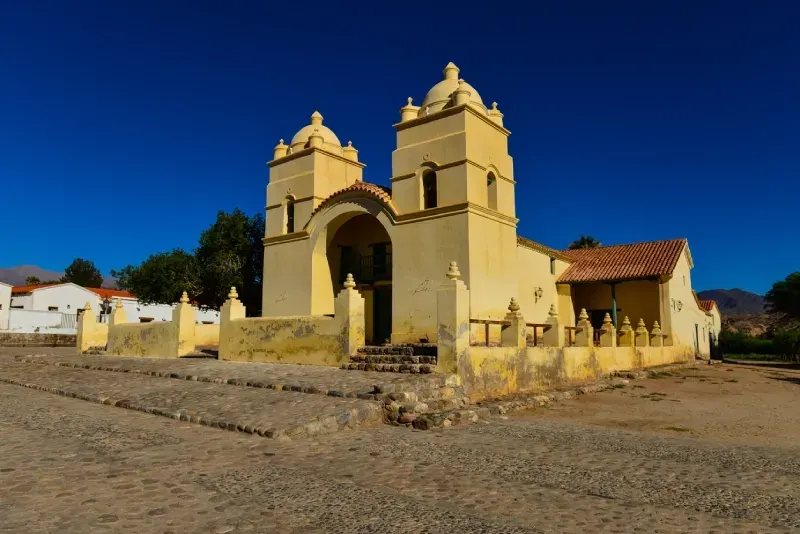
Cobblestone streets wind past adobe houses in Molinos. The San Pedro Nolasco de los Molinos church bears the date 1692 carved above its main door and was declared a National Historic Monument in 1942. It keeps the mummified remains of the last colonial governor. Molinos developed around the Calchaquí Hacienda rather than a central church, different from typical colonial layouts. Local cooperatives produce handicrafts with vicuña wool while wineries offer high-altitude wine tastings.
Angastaco Riverside Trails
The Angastaco River creates an oasis where a semi-desert environment merges with riverside vegetation. The civic center features an archeological museum. The nearby Capilla del Carmen represents colonial art of the Valles Calchaquíes. Hiking and horseback riding trails extend along the riverbanks.
Conclusion
Cafayate deserves more than a quick winery stop. The sand dunes and red rock formations rival any tasting room experience. Local artisans, family-run restaurants, and colonial villages reveal authentic traditions that tour buses miss.
Of course, the Torrontés wines deserve their reputation, yet the region's best moments happen when you venture beyond Route 68's main viewpoints. Pack sturdy shoes, bring extra water, and explore the trails where locals spend their time.
You'll find a destination that extends way beyond its wine label reputation. The hidden Cafayate rewards curious travelers willing to look past the obvious attractions.
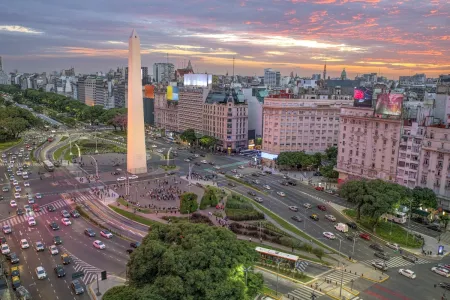
What makes Buenos Aires the “Paris of South America”? Discover why as you walk the world’s widest avenue, explore the colorful Caminito, catch a midnight milonga, and uncover the city’s best-kept secrets.
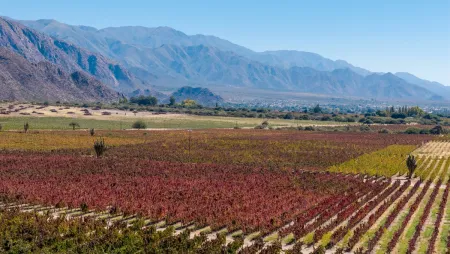
Cafayate is famous for its wine, but the real magic lies beyond the vineyards. Watch sunrise paint the sand dunes pink and gold, hike through red canyons to hidden waterfalls, and wander colonial villages where time stands still. This guide shows you the side of Cafayate most visitors never see.