
 Home
HomeSalvador da Bahia Brazil: What I Wish I Knew Before My First Visit
Few cities in the Western Hemisphere carry the historical and cultural weight that Salvador Bahia Brazil does. Home to more than 2.4 million inhabitants as of 2022, this coastal capital holds a singular claim: the largest population of African descent anywhere outside Africa itself. Founded in 1549 as Brazil's first colonial capital, Salvador grew into something far more layered than a port city — its African-influenced cuisine, music, and architecture are so deeply embedded into its identity that UNESCO declared the Historic Center a World Heritage Site in 1985.
That designation only scratches the surface of what awaits first-time visitors. Salvador is raw, sonically overwhelming, and culturally unlike anything else Brazil offers — and understanding that distinction before arrival changes everything about how you experience it. The sections ahead cover the city's geographical layout that disorients most visitors, the African cultural foundations that give Salvador its character, and the practical things to do in Salvador Bahia Brazil that go considerably beyond what standard guidebooks ever bother to mention.
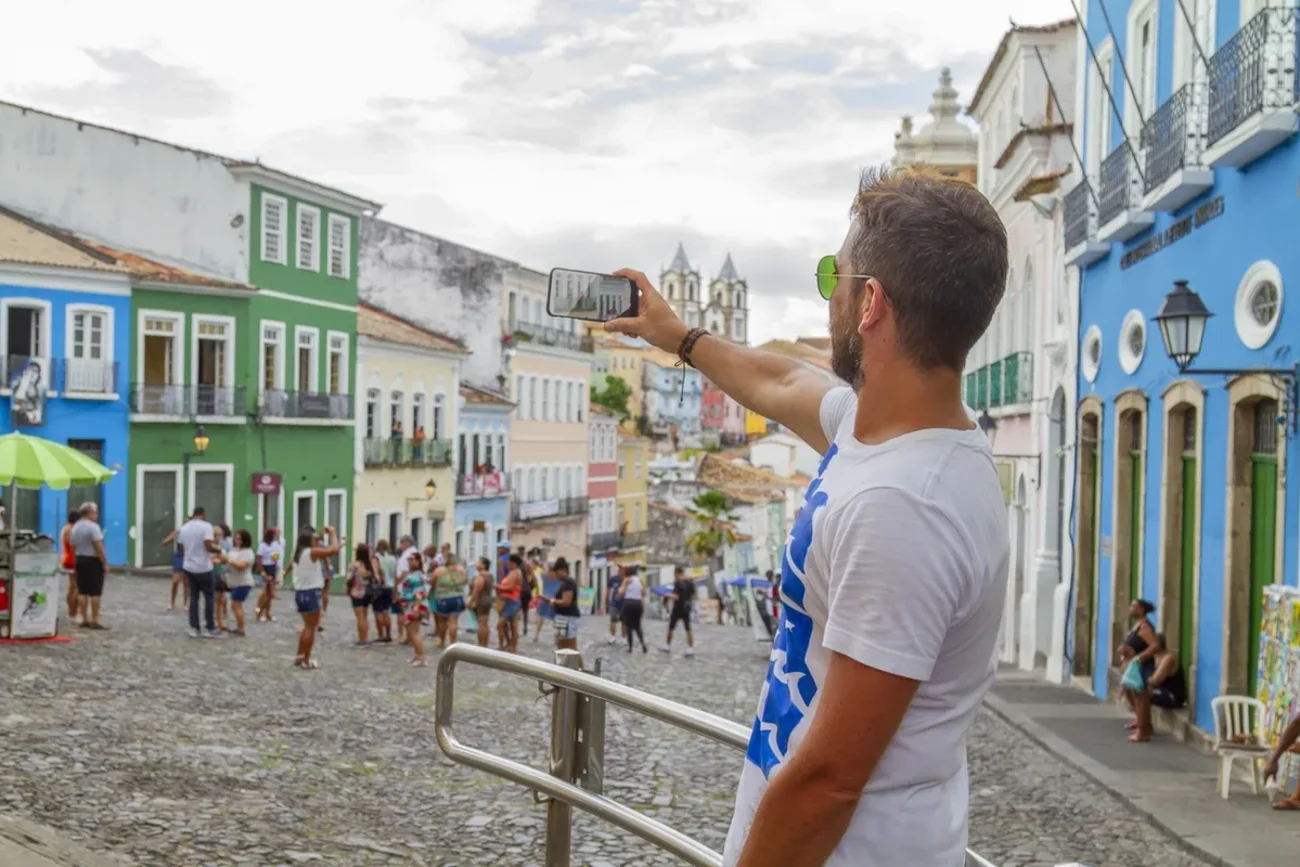
What Nobody Tells You About Salvador Before You Book
Most guides slot Salvador into the same category as Florianópolis or Fortaleza — another coastal Brazilian escape with good beaches and pleasant weather. That framing misses the point.
It's Raw, Loud, and Nothing Like Rio
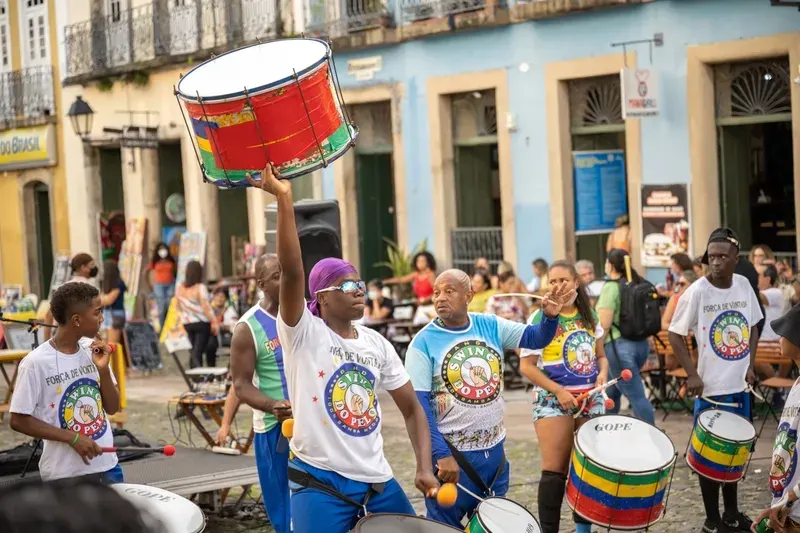
Salvador registers sonically before anything else. Drumming surfaces from somewhere in the distance, always, and trails you through the streets before you've oriented yourself on a map. The smell of dendê oil and grilled fish hangs in the air with a permanence that Rio's beachside food stalls don't replicate. Roughly 80% of Salvador's population is Black or mixed race — the highest proportion of any major Brazilian city — and that demographic reality reaches into every dimension of daily life: the music, the food, the religion, the texture of ordinary social exchange.
Rio expanded outward like a beach metropolis that forgot its origins. Salvador retained the character of Brazil's first colonial capital, incompletely modernized and, by local reckoning, all the better for it. Cultural immersion scores formalize what visitors already sense: Salvador rates 9/10, while Rio rates 5/10. The distinction matters. Here, you encounter living cultural practice rather than something staged for outside consumption.
The Weather Is Sticky Hot Year-Round
There are no layers to pack. Temperatures hold between 75 and 80°F on average year-round, climbing to daytime highs of 79 to 86°F. Overnight lows settle around 70 to 75°F, which means the heat offers no real reprieve after dark.
Humidity sits at a consistent 80% — the kind that makes itself known within minutes of stepping outside. April through June marks the wettest stretch, with monthly rainfall averaging 9 to 12.4 inches. September through January is considerably drier, averaging roughly 3 to 5 inches per month, and most of those showers arrive at night rather than disrupting daytime plans.
Carnaval Season Doubles Prices and Crowds
Salvador's Carnaval pulls nearly 2 million people into the city annually, and the pricing structure adjusts accordingly. Hotel rates during February and March jump 2 to 3 times their standard levels, with centrally located properties reaching USD 300 to USD 600 per night for last-minute bookings. Flights secured close to the event frequently exceed USD 1,000.
The costs extend well beyond accommodation. Abadás — the party shirts required for access to street blocos — range from USD 50 for basic entry to over USD 600 for premium events. Camarotes, the VIP viewing structures lining the parade routes, sell at USD 56 to USD 564 per day depending on tier. Most hostels compound the expense further by enforcing 7-day minimum stays throughout Carnaval week.
Securing hotels, flights, and event tickets 6 to 9 months ahead is not overcaution — it's simply what the logistics demand. Everything sells out well before the festival dates arrive.
You Need at Least 4 Days Minimum
Salvador is survivable in 3 days: one for Pelourinho with a guide, one for Porto da Barra and Rio Vermelho, one for a day trip. That schedule, however, leaves no room for the city to actually reveal itself. Four to five days opens up the Historic Center, the beaches, the local neighborhoods, and day trips without the pressure of a schedule running on fumes.
Five days represents the genuine sweet spot for first-time visitors. The landmarks get covered, the food scene earns proper attention, and enough time remains to absorb the cultural layers that separate the things to do in Salvador de Bahia, Brazil, from anything else on a Brazilian itinerary.
You should plan for at least 4 days minimum in Salvador. While it's technically possible to see the main highlights in 3 days (one day for Pelourinho, one for beaches, and one for a day trip), spending 4 to 5 days allows you to explore the Historic Center, beaches, local neighborhoods, and day trips without constantly rushing. Five days is considered the sweet spot for first-time visitors to fully appreciate the cultural layers and food scene.
Salvador maintains consistently warm temperatures year-round, ranging between 75-86°F with 80% humidity. The driest period runs from September through January, with minimal rainfall averaging roughly 3 to 5 inches per month and most showers falling at night. The wettest months are April through June, when rainfall averages 9-12.4 inches monthly. Keep in mind that it never really cools down, even at night, so pack light clothing regardless of when you visit.
That depends on your budget and tolerance for crowds. Salvador's Carnaval attracts nearly 2 million people annually, causing hotel rates to jump 2-3 times normal pricing (reaching USD 300-600 per night), flights to exceed USD 1,000, and most hostels to enforce 7-day minimum stays. Event tickets and VIP passes range from USD 50 to over USD 600. If you want to experience Carnaval, book 6-9 months in advance, but if you prefer a calmer, more affordable visit, choose a different time of year.
Phone snatching is a real concern, especially after dark and between 4 pm and 9 pm. Keep your phone hidden rather than in easily accessible pockets— locals often tuck phones in their bras or down the front of their shorts. Never text while walking on the street; step into a shop or café to check directions. Don't pull out your phone at curbs, bus stops, or while walking. When at the beach, never leave your phone on the sand while swimming. Always ask your accommodation host about safe walking routes before exploring.
Salvador has the highest percentage of Black or mixed-race residents (roughly 80%) of any major Brazilian city and was Brazil's first colonial capital and largest slave port. This history created a living African heritage that permeates the music, food, religion (Candomblé), and daily life in ways that other Brazilian cities don't match. The city feels less like a modernized beach metropolis and more like a colonial capital that preserved its African roots, earning it a cultural immersion rating of 9/10 compared to Rio's 5/10.
Understanding the Geography Saves You Hours of Confusion
Salvador occupies a triangular peninsula that separates the Bay of All Saints from the Atlantic Ocean. What makes the city genuinely disorienting for first-time visitors isn't its sprawl — it's its verticality. The city grew along an 85-meter-high escarpment, producing two entirely distinct urban levels that look and function nothing like each other.
Cidade Alta vs. Cidade Baixa Explained
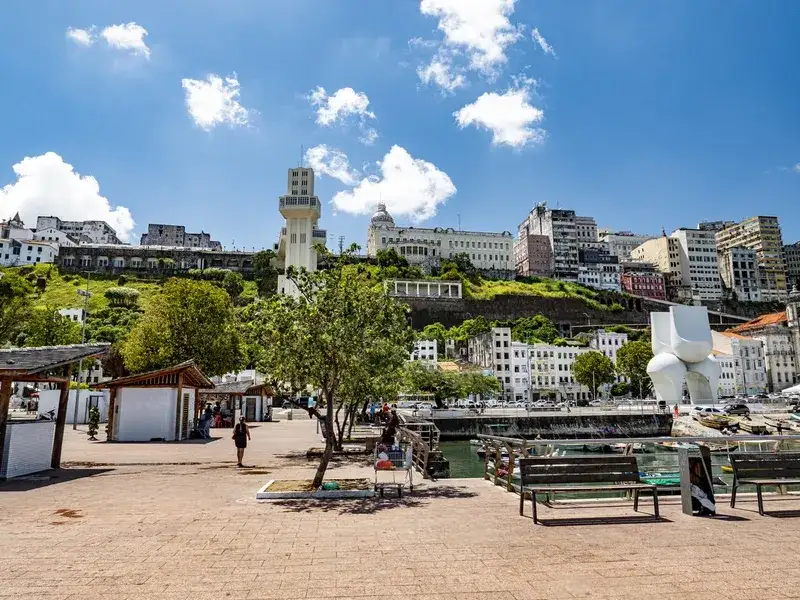
The Upper City, Cidade Alta, holds the defensive, administrative, and residential fabric of colonial Salvador — churches, baroque mansions, and the cobblestoned alleys of Pelourinho all sit atop this bluff. The Lower City, Cidade Baixa, operates at sea level, where the commercial district, working ports, and Mercado Modelo have always done their business.
None of this arrangement was accidental. Colonial administrators claimed the heights — both literally and symbolically — while enslaved Africans bore the labor of hauling goods up the escarpment long before any mechanical lift existed. Commerce stayed near the water because ships did. The class geography of 16th-century Salvador is still readable in its architecture today.
Attempting to walk between both levels on foot takes you through steep streets carrying reputations that hold even in daylight. Locals decline the climb without hesitation.
How the Elevator and Funiculars Actually Work
The Lacerda Elevator solves this problem in 30 seconds flat. Four lifts, each carrying 27 passengers, run continuously through the day. The fare sits at 0.15 reais — roughly USD 0.04 — making it one of the most useful and remarkably cheap rides anywhere in South America. Around 28,000 people use it on a typical day, with a record of more than 33,000 in a single day.
The elevator departs from Praça Tomé de Souza in Cidade Alta and deposits you at Praça Cayru, right across from Mercado Modelo below. Expect the cars to be packed — when the alternative is those steep streets, almost nobody walks. The Plano Inclinado Gonçalves offers a secondary funicular connection between the two levels at other points, though the Lacerda remains the route most visitors rely on throughout their stay.
Why Pelourinho Isn't a Single Neighborhood
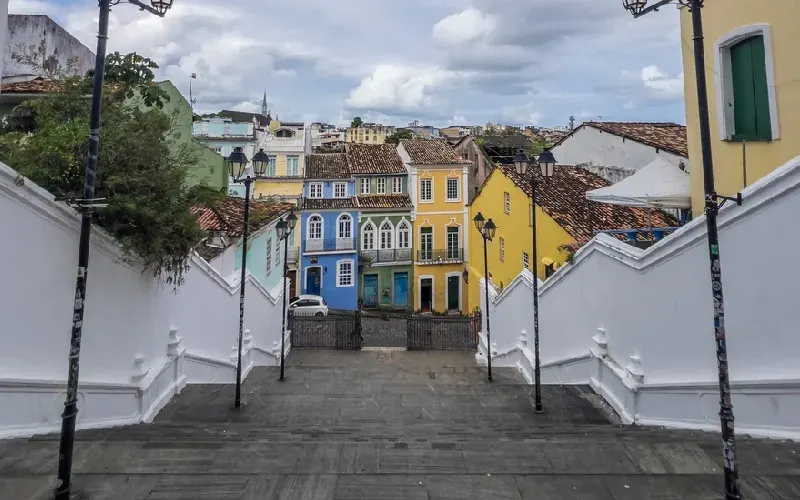
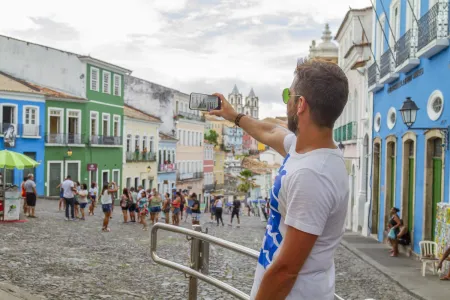
The name itself carries a grim etymology. Pelourinho referred to the whipping post where enslaved people were publicly beaten — that single instrument of punishment gave its name to the plaza, and the plaza gave its name to the surrounding neighborhood. Today, most guides use "Pelourinho" as shorthand for the entire Historic Center, which actually comprises seven distinct neighborhoods: Sé, Pelourinho, Misericórdia, São Bento, Taboão, Carmo, and Santo Antônio.
Pelourinho proper occupies just one section of Cidade Alta, defined by steep cobblestoned alleys and densely packed colonial buildings. The UNESCO World Heritage designation covers the broader Historic Center — not Pelourinho alone. Worth keeping that distinction in mind when a tour claims to show you "all of Pelourinho" in an afternoon.
The Coastline Stretches Further Than You Think
Salvador's coastline runs 80 kilometers from Inema to Praia do Flamengo — a distance that surprises most visitors who arrive expecting a compact beach city. The beaches divide cleanly between two bodies of water: Lower City beaches sit along the Bay of All Saints, while Upper City beaches from Farol da Barra through to Flamengo face the open Atlantic.
Porto da Barra stands as the notable exception. The only Upper City beach positioned on the bay rather than the ocean, it offers calmer, more sheltered waters than its Atlantic-facing counterparts — a distinction that matters considerably when choosing where to spend an afternoon along Salvador, Bahia, Brazil's coast.
The Cultural Context You Need Before Stepping Inside
Salvador's African heritage isn't a cultural attraction layered onto the city — it IS the city. Every cobblestone, baroque façade, and drumbeat carries the imprint of a history that most visitors absorb only superficially without proper context.
Salvador Is Africa in the Americas
The scale of the transatlantic slave trade through Brazil defies easy comprehension. Between 4 and 5 million enslaved Africans arrived on Brazilian shores, making it the largest importer in the Americas. Bahia alone received over 1,300,000 men, women, and children — more than 90% originating from the Bight of Benin or Central Africa. Brazil then held the grim distinction of being the last country in the Americas to abolish slavery, doing so only in 1888.
That history didn't recede. Over 75% of Bahia's 14 million residents trace their ancestry directly to Africa, and the cultural exports the world associates with Brazil — Carnaval, capoeira, the foundational rhythms of samba — all took shape here, forged by Africans and their descendants. The sugarcane economy that enriched Portugal beyond measure ran entirely on enslaved labor, with Salvador functioning as the primary entry point for that trade. Wealth accumulated in the city even before its official 1549 founding, as enslaved labor began arriving in the 1530s. The gilded baroque churches crowning the Historic Center were not built despite this history. They were built because of it.
Why Churches and Candomblé Coexist Everywhere
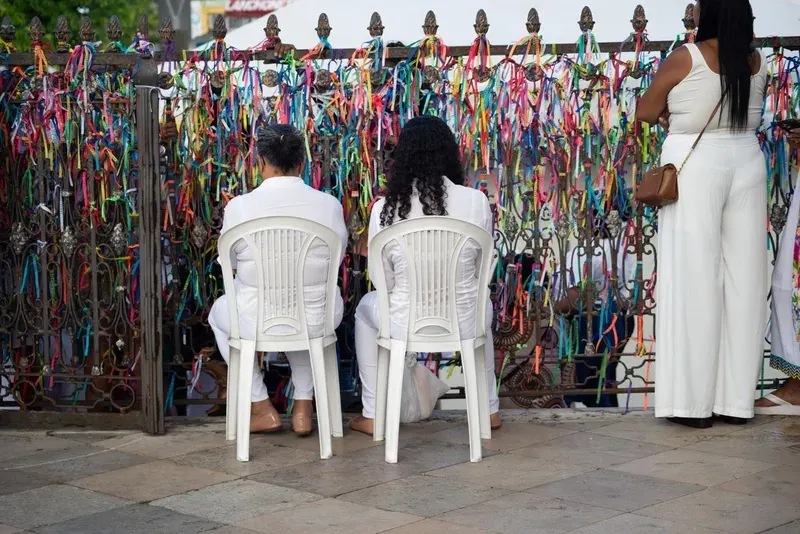
Candomblé represents one of history's most remarkable acts of cultural survival. Enslaved West and Central Africans — practitioners of Yoruba, Fon, and Bantu traditions — found themselves forced into Catholic worship yet refused to surrender their spiritual foundations. Their solution was elegant and subversive: they matched their orixás (deities) with Catholic saints, worshiping one faith openly while preserving the other in secret.
Catholic churches served as the public stage. Hidden terreiros — ceremonial houses tucked deep into forests or concealed in backrooms — kept the true practices alive. This parallel religious architecture allowed West African spiritual traditions to survive centuries of colonial suppression in plain sight. Constitutional protection arrived in 1891, yet government persecution of Candomblé followers continued as recently as the 1970s. Today, Salvador hosts over 1,000 terreiros operating openly, and the sight of a ceremonial house standing beside a baroque church throughout the city isn't a coincidence — it's the physical record of a survival strategy that outlasted the forces meant to destroy it.
The Slavery History You Can't Ignore
Salvador ranked among the first and largest slave ports in the Americas. The immense wealth this generated funded the very baroque churches that now dominate the city center— structures of extraordinary beauty financed by extraordinary brutality. The Afro-Brazilian museums scattered across the city document this history with unflinching directness, and visiting them ranks among the most essential things to do in Salvador, Bahia, Brazil precisely because they give meaning to everything else you'll encounter.
Music Isn't Background Noise — It's the Heartbeat
The drumming that follows you through Salvador's streets carries centuries of meaning. Music here functions as the living expression of African heritage, not ambient sound. Olodum, the iconic percussion group founded in 1979, played a central role in Pelourinho's cultural revival, alongside its 1985 UNESCO designation and the major restoration of the 1990s — a testament to how cultural vitality and historical preservation move together in this city.
The rhythms themselves trace back to candomblé ceremonies, later channeled into samba-reggae and axé music. Capoeira followed the same path: enslaved people developed this martial art in sugarcane fields, masking combat training inside dance movements and accompanying it with the berimbau's distinctive sound. What appears spontaneous on Salvador's streets reflects genuine cultural practice rather than performance staged for visitors. Bahia's contributions didn't merely enrich Brazilian music — they shaped the national identity entirely.
Customize Your Dream Vacation!
Get in touch with our local experts for an unforgettable journey.
Plan Your TripPractical Money, Safety, and Logistics I Learned the Hard Way
Knowledge of Salvador's history and geography only carries you so far. The moment you land, a different kind of preparation takes over — one that most guidebooks gloss over entirely.
Cash Is King at Historic Sites and Street Stalls
Institutions like MAFRO accept physical cash only for entry. Street performers, beach vendors, and acarajé baianas operate identically. Bradesco and Banco do Brasil branches across the city, including within Pelourinho, allow foreign cards to withdraw reais. Banco 24Horas machines function reliably but extract roughly R$24 in fees per transaction.
Small bills matter enormously here. A 100-real note will not break for a 5-real bus fare. Withdraw amounts ending in 90 — 190, 290, 390 — and ATMs are forced to dispense smaller denominations rather than large notes.
Phone Snatching Is Real—Keep It Hidden
Phone theft ranks consistently among the most reported incidents involving tourists, with risk climbing sharply after dark as crowds thin. A phone left on sand while you swim is an open invitation. Locals tuck phones into bras or the front of their waistbands precisely because front pockets offer experienced pickpockets almost no resistance.
Check directions inside a shop or café, not on the pavement. Curbs, bus stops, and moving foot traffic are the worst places to produce your phone. The 4 pm to 9 pm window concentrates the highest theft activity across the city.
eSIM Beats Physical SIM Cards Every Time
Obtaining a physical SIM card in Brazil without a CPF — the country's tax identification number — presents a genuine obstacle for foreign visitors. An eSIM sidesteps this entirely: it activates the moment you land, connects instantly to rideshare platforms like 99 and Uber, and costs less than standard roaming. Brazil operates on WhatsApp at every level of daily life, and mobile data becomes necessary well before you reach your accommodation.
Wednesday Museum Days Save You Serious Money
MAFRO, Casa do Carnaval, Cidade da Música, and Jorge Amado's Casa do Rio Vermelho all waive admission every Wednesday. Standard entry at these institutions runs approximately R$20, or around USD $4. Scheduling museum visits mid-week frees that budget for the things to do in Salvador de Bahia, Brazil that demand it elsewhere.
Ask Your Host About Safe Walking Routes First
Before setting out on foot, ask your host to mark the areas they personally avoid. Empty streets are a reliable warning sign regardless of which neighborhood surrounds them. The established tourist corridors through Barra, Rio Vermelho, and Pelourinho carry different considerations than the streets three blocks beyond their edges. No map substitutes for that conversation.

Things to Do in Salvador Bahia Brazil Beyond the Tourist Circuit
Standard guidebooks recycle the same handful of landmarks — Pelourinho, Barra lighthouse, Mercado Modelo — without ever explaining why those places matter or what lies immediately beyond them. The experiences below cut through that predictability and engage with Salvador de Bahia, Brazil through its resistance, artistry, and living traditions.
Start With GuruWalk's Paths of Resistance Tour
GuruWalk's tip-based walking tours depart from Praça Castro Alves and cover approximately two hours across Pelourinho's cobblestones. More than 1,500 verified reviews average near 5/5 stars, with visitors consistently praising guides who fold historical facts into vivid, layered storytelling while offering practical safety tips and honest restaurant recommendations. Book a spot on your first day. Orienting yourself through a guided walk before exploring independently changes how much you absorb afterward.
The Afro-Brazilian Museums Are Non-Negotiable
MAFRO occupies the former Faculty of Medicine building at Largo do Terreiro de Jesus and holds over 1,800 objects documenting Afro-Brazilian religious traditions and ritual arts. The Federal University of Bahia established the museum in 1974 to preserve both the tangible and intangible dimensions of this heritage. Carybé's wooden carvings of Candomblé orixás anchor the permanent collection and demand unhurried attention. Wednesday admission is free — a detail covered earlier, worth repeating here.
Santo Antônio's Art Streets Beat Pelourinho's Crowds
Santo Antônio além do Carmo begins immediately north of Pelourinho, running from Largo do Pelourinho toward Cruz do Pascoal. The distinction from its famous neighbor is immediate: pastel-hued cobblestones, local art ateliers, hidden courtyards, and colonial architecture without the vendor noise or tourist density. Each evening, Largo do Santo Antônio fills with children playing and residents in unhurried conversation — the kind of scene that signals a neighborhood still belonging to the people who live in it.
Jorge Amado's Homes Tell the City's Story
The Fundação Casa de Jorge Amado occupies the blue colonial mansion at numbers 47, 49, and 51 in Largo do Pelourinho. Jorge Amado spent his career chronicling Bahia's people, contradictions, and pleasures — his books were translated into 49 languages. The foundation preserves approximately 250,000 documents and 21,000 photographic negatives from his life and work. After nine months of renovation, it reopened in December 2024 with expanded exhibition spaces, making this a particularly rewarding visit for those who have read him and essential for those who haven't.
Eat Acarajé From a Baiana, Not a Restaurant
Certified baianas, identifiable by their official Prefeitura badges and traditional white dress, set up around Largo do Pelourinho and Terreiro de Jesus from late afternoon onward. A standard serving costs R$15–25 depending on size and filling. Order it "completo" — vatapá, caruru, and dried shrimp — and nothing else. The dish carries more than 300 years of Afro-Brazilian culinary history and has been recognized since 2005 by IPHAN, Brazil's National Historic and Artistic Heritage Institute, as part of the country's intangible cultural heritage. No restaurant replication of this comes close to what a baiana makes standing beside her tray.
Balé Folclórico Shows Sell Out — Book Early
Balé Folclórico da Bahia performs Monday, Wednesday, Thursday, and Friday at 8:00 PM at the Miguel Santana Theater inside Pelourinho. Each show weaves Candomblé ritual movement, capoeira acrobatics, and percussion into sustained, high-energy choreography that traces the exact cultural threads this article has followed from the beginning. The auditorium is intimate and operates on free seating. Arrive well before curtain — the house fills fast, and the experience justifies the planning.
Conclusion
Salvador does not reveal itself easily. The geography disorients, the history unsettles, and the cultural density requires time to absorb — none of which any amount of pre-reading fully prepares you for. What it does offer, to those who arrive with patience and curiosity, is something genuinely rare: a city where African heritage did not merely survive colonial erasure but persisted loudly enough to shape an entire nation's identity.
Polished resort itineraries belong elsewhere. Salvador suits those willing to sit with discomfort, follow drumming down an unfamiliar cobblestone alley, and accept that not every experience here was designed with tourists in mind — and that is precisely the point.
Five days gives you enough time to move through the city with some degree of comprehension rather than just observation. Book early, carry cash, and treat local knowledge as the most reliable resource you have. Salvador operates entirely on its own terms. The adjustment, without exception, is yours to make.
Salvador isn't just a Brazilian beach city. It's the heart of Afro-Brazilian culture, loud with drums and layered with history. Here's everything you want to know before your first visit.