
 Home
Home
Perched dramatically atop 600-meter-high rock pillars, Meteora in Greece offers one of the world's most breathtaking sights, where ancient monasteries seem to float between heaven and earth. The name itself translates to "suspended in air," certainly an apt description for these remarkable structures that have endured for centuries against an extraordinary backdrop.
Originally, 24 Meteora monasteries dotted these towering formations, though today only six remain active. These monasteries weren't merely architectural achievements but also served as vital refuges when monks sought protection from the expanding Ottoman Empire in the 14th century. Furthermore, the rock formations themselves tell an even older story, having formed approximately 60 million years ago during the Paleogene period.
As you plan your journey to this UNESCO World Heritage Site (designated in 1988), you'll discover not just historical significance but also opportunities for adventure. Whether you're captivated by the Great Meteoron (the oldest and largest monastery founded around 1356), intrigued by the Holy Trinity Monastery featured in the James Bond film "For Your Eyes Only," or drawn to outdoor activities like hiking and rock climbing, this guide will prepare you for an unforgettable experience among these hidden wonders.
Explore the Best Greece Tours!
The geological marvels of Meteora
The massive stone pillars that dominate the landscape of Meteora stand as silent witnesses to extraordinary geological processes spanning millions of years. Unlike anything else you'll find across the continent, these formations create a surreal backdrop for the famous monasteries perched atop them.
How the rock pillars were formed
The story of Meteora's distinctive pillars begins approximately 60 million years ago during the Paleogene period. Initially, this area was submerged beneath a shallow sea where layers of sediment, including sand, silt, and clay, gradually accumulated. Over time, these sediments solidified into the sedimentary rocks that now characterize the region.
What makes these formations particularly fascinating is their composition. Unlike typical rock pinnacles found elsewhere, Meteora's pillars aren't volcanic plugs of hard igneous rock. Instead, they consist primarily of sandstone and conglomerate—a mixture of rounded gravel and pebbles cemented together by finer materials.
The German geologist Alexander Phillipson developed what remains the most widely accepted theory explaining these formations. His research suggests that a deltoid cone of river boulders and rocks composed of this sandstone-conglomerate mixture carried waters toward the Aegean Sea for millions of years. Subsequently, as tectonic activity pushed the seabed upward about 30 million years ago, vertical fault lines formed in the thick sandstone layers.
Following this upheaval, the elements took over as master sculptors. Wind, rain, and extreme temperature fluctuations worked relentlessly on these vertical faults, gradually weathering away softer rock layers while leaving more resistant sections standing. This process, known as differential erosion, created the towering pillars we see today.
Why is this landscape unique in Europe
The dark sandstone pillars of Meteora rise dramatically to heights reaching 400 meters above ground level, with some pinnacles soaring up to 313 meters. In fact, certain formations stretch almost 1,800 feet high, creating what many describe as an otherworldly landscape.
Notably, what makes Meteora truly exceptional is the localized nature of this geological phenomenon. Despite similar weathering processes occurring throughout the world, several factors combine to make this area unique:
First, the uniformity of the sedimentary rock constituents deposited over millions of years left few signs of vertical layering. Second, the abrupt vertical weathering happened in a relatively contained area within the surrounding mountain formation.
Moreover, the resulting landscape exhibits an astonishing variety of shapes. Some pillars appear smooth and uniform like steamship funnels, while others resemble giant shark fins or enormous saddle horns. This diversity of forms contributes to Meteora's reputation as one of Europe's most distinctive geological wonders.
The rocks continue their slow transformation even today. Vegetation grows surprisingly thick out of the vertical walls, finding nourishment in water trapped within cracks and crevices. Additionally, occasional rock falls and seismic activity—including a magnitude 7 earthquake in 1954—remind visitors that these geological processes remain ongoing.
This extraordinary setting—aptly named Meteora or "suspended in air"—creates the perfect foundation for the remarkable monasteries that have become inseparable from these geological marvels.
The rise of the Meteora monasteries
Long before the famous monasteries appeared, solitary monks found spiritual refuge among the towering rocks of Meteora in Greece. Their humble beginnings gradually transformed into one of Christianity's most remarkable monastic communities, creating a legacy that continues to inspire visitors today.
Early hermits and the first settlements
The spiritual history of Meteora began with anonymous hermits seeking isolation in the region's caves and rock fissures. Although local legends suggest monks may have arrived as early as the 9th century, more reliable historical evidence places their arrival in the 11th century. These early ascetics practiced hesychasm—a form of Eastern Orthodox mystical prayer involving controlled breathing and contemplation.
By the late 11th century, these scattered hermits recognized the need for occasional community worship. Consequently, they established a small church called Panaghia Doupiani (also known as "Skete") at the foot of one of the massive rock formations. This church quickly became the central worship point for the area's hermits, who would gather there on Sundays and special occasions. Over time, this arrangement evolved into what was known as the "Skete of Stagoi," marking the first organized monastic presence in the region.
The role of Athanasios the Meteorite
The transformation from scattered hermit dwellings to established monasteries largely stemmed from the vision of one remarkable monk. Athanasios Koinovitis, later known as Athanasios the Meteorite, was born in 1302 in the medieval town of Hypátē (New Patras). After spending time on Mount Athos, he was forced to leave due to Turkish pirate raids threatening the monastic communities there.
Around 1340, Athanasios arrived at Meteora with two fellow monks, seeking a secure place for ascetic life. He settled on the highest rock, which he named "Meteoro" (meaning "suspended in air")—a term that eventually gave the entire area its name. Between 1356 and 1372, Athanasios established the first proper monastery in the region: the Great Meteoron Monastery, dedicated to the Transfiguration of Christ.
Athanasios implemented a strict cenobitic rule (communal living with shared property) modeled after the monasteries of Mount Athos. His community attracted numerous followers and established the pattern for future monastic development in the region. The monastery received critical protection and sponsorship from the local lord Simeon Uroš, who had proclaimed himself Emperor of Serbs and Greeks.
Expansion during the 14th–16th centuries
The 14th century marked a period of political instability in Thessaly, prompting more monks to seek refuge on Meteora's inaccessible peaks. This tumultuous time, especially during Ottoman expansion, actually accelerated monastery development. What began as a spiritual retreat became equally valuable as a physical sanctuary.
The true golden age of Meteora monasteries occurred during the 16th century when the monastic community reached its zenith. At this peak, 24 monasteries dotted the rocky landscape, creating an extraordinary skyline of religious devotion. The period brought not only physical expansion but artistic flowering as well, with renowned painters like Theophanes the Cretan and Frangos Katelanos adorning monastery walls with masterful frescoes.
These 16th-century artworks represented a crucial stage in post-Byzantine painting development, blending traditional Orthodox imagery with subtle influences from Italian art. Despite occasional tensions with Ottoman authorities, the monasteries continued to flourish until their gradual decline began in the 17th century.
Access to these lofty sanctuaries remained deliberately challenging, requiring either long ladders lashed together or large nets hauled up by ropes—methods that persisted until the 1600s. According to tradition, these ropes were replaced only "when the Lord let them break," requiring considerable faith from visitors and new arrivals alike!
Exploring the six active Meteora monasteries
Today's visitors to Meteora can explore six active monasteries, each offering unique glimpses into centuries of monastic tradition. Perched atop dramatic rock formations, these sanctuaries represent the living heritage of what was once a community of 24 monasteries.
Great Meteoron Monastery
As the oldest and largest monastery in Meteora, Great Meteoron (also known as the Monastery of the Transfiguration) marks the birthplace of organized monastic life in the region. Founded by Saint Athanasios the Meteorite shortly before the mid-14th century, it occupies the most imposing rock in the complex. Inside, you'll find three distinct museums, including a library containing a copy of the Suda, a 10th-century Byzantine encyclopedia. The monastery features impressive frescoes created by Georgie, a student of Theophanous the Cretan.
Varlaam Monastery
Situated on an imposing rock directly opposite Great Meteoron, Varlaam stands as the second largest monastery in Meteora. Originally established by the hermit-anchorite Varlaam in the 14th century, it was substantially renovated in the early 16th century by the Ioannina brothers Theophanes and Nektarios Apsaras. The monastery houses a large 16th-century oak barrel once used for water storage and preserves the historic tower with the old pulley system that monks used to transport people and supplies.
Rousanou Monastery
Dedicated to Saint Barbara (Agia Varvara in Greek), Rousanou occupies an entire cliff surface, creating the impression it was carved from the rock itself. Dating back to the 14th century, it underwent significant expansion in the 16th century. After suffering damage during World War II, it transformed into a convent in 1988 and is now home to more than 15 nuns. The monastery features stunning wall paintings created in 1560.
St. Nicholas Anapafsas Monastery
St. Nicholas Anapafsas is the first monastery visitors encounter when approaching from Kastraki Village. What makes this monastery remarkable is its vertical construction, built across multiple levels due to limited space on its rock surface. The church contains extraordinary frescoes painted by the famous Cretan artist Theophanes Strelitzas in 1527, considered among the most important works of post-Byzantine painting.
Holy Trinity Monastery
Perhaps most recognizable as the monastery featured in the 1981 James Bond film "For Your Eyes Only," Holy Trinity (Agia Triada) requires climbing 145 carved steps to reach its entrance. Built between 1475-1476, it sits atop a stunning pillar-like rock approximately 300 meters above Kalabaka. From its highest point, visitors enjoy panoramic views of surrounding cliffs and other monasteries.
St. Stephen Monastery
St. Stephen's offers the easiest access among all Meteora monasteries, requiring minimal stair climbing thanks to a small stone bridge connecting it to the modern road. Originally inhabited by monks in the late 12th century, it now functions as a nunnery. The monastery contains two churches: the old church dating to the 15th century and a newer church built in 1798, dedicated to Saint Charalambos.
Each monastery charges a standard entrance fee of €3 per person, with children under 12 generally admitted free of charge.
Planning your visit to Meteora in 2025
To maximize your experience at this extraordinary destination, careful planning makes all the difference. Throughout the year, Meteora attracts nearly 2 million visitors, with the majority arriving between April and October.
Customize Your Dream Vacation!
Get in touch with our local experts for an unforgettable journey.
Plan Your Trip
Best time of year to go
Ideally, plan your visit during spring (March-May) or autumn (September-October) when temperatures remain mild and crowds are significantly smaller. These shoulder seasons offer pleasant hiking conditions with crisp mornings and beautiful natural colors. If summer travel is unavoidable, arrive at the monasteries by 8:00 am—at least an hour before opening time—to enjoy the mesmerizing morning light before tour buses arrive.
Dress code and entrance fees
Regarding monastery visits, a strict dress code applies. Men must wear long pants and shirts with sleeves (no shorts or sleeveless shirts). Women need long skirts and covered shoulders. Monasteries provide skirts and scarves for women at entrances, but men must bring appropriate clothing. Children under 12 years are exempt from both the dress code and the entrance fees.
Each monastery charges a standard entrance fee of €3 per person. Bring cash, as credit cards aren't typically accepted. All monasteries maintain different weekly closing days:
- Great Meteoron: Closed Tuesdays
- Varlaam: Closed Fridays
- Roussanou: Closed Wednesdays
- St. Nicholas Anapafsas: Closed Fridays
- Holy Trinity: Closed Thursdays
- St. Stephen: Closed Mondays
How to get there from Athens or Thessaloniki
From Athens, train service to Meteora remains suspended until mid-2026 following storm damage. As an alternative, take a bus from Athens to Trikala, then connect to Kalambaka, or rent a car for the approximately 4-hour drive via highway E65.
From Thessaloniki, direct trains run to Kalambaka (the town below Meteora). The journey takes 3-3.5 hours. Bus service requires traveling first to Trikala before connecting to Kalambaka. Driving takes about 2-3 hours via the E90 highway, with several toll stops along the way.
Guided tours vs. self-guided visits
Given the site's popularity, consider joining a guided tour if visiting during peak season. Tours provide historical context, handle transportation logistics, and often include stops at prime viewing locations inaccessible to larger vehicles.
Nevertheless, self-guided exploration offers flexibility to visit monasteries at your own pace. If choosing this option, arrive early in the morning, prioritize popular monasteries first, and plan to finish by noon before larger tour groups arrive. With personal transportation, you can also reach sunset viewing points for spectacular photography opportunities.
Cultural and spiritual significance of Meteora
Beyond their architectural wonder and natural beauty, Meteora's monasteries embody profound cultural and spiritual dimensions that continue to resonate with visitors worldwide. These sanctuaries represent a unique fusion of natural landscape and human achievement that few places on earth can match.
UNESCO World Heritage status
Meteora earned its place on the UNESCO World Heritage List in 1988, recognized for its exceptional combination of cultural and natural significance. The site received this prestigious designation under three specific criteria: as a unique artistic achievement transforming a natural site into a place of retreat; as an outstanding example of monastic construction illustrating a significant historical period; and as a fragile traditional way of life threatened with extinction. UNESCO specifically acknowledges Meteora's monasteries as "one of the most forceful examples of the architectural transformation of a site into a place of retreat, meditation and prayer".
Orthodox Christian traditions
The monastic tradition at Meteora embodies core Orthodox Christian values through daily practices. Monks and nuns strictly adhere to three fundamental rules: purity, lack of personal property, and complete obedience. Their spiritual practices include rising at 3:30 AM for individual prayer, followed by communal services from 5:00 to 7:30 AM. Central to their spiritual life is the constant recitation of the Jesus Prayer: "Lord Jesus Christ, Son of God, have mercy upon us".
Throughout centuries, these monasteries served as bastions of Orthodox faith, safeguarding religious traditions and manuscripts during periods of political upheaval. The Meteora monasteries preserve countless relics, treasures, and artistic works that remain vital to Orthodox spirituality.
Monastic life today
Presently, roughly 50 monks and nuns inhabit the six active monasteries. Each monastery operates as a coenobium—from Greek words meaning "common life"—where everything is shared collectively. The monks and nuns maintain a careful balance between traditional spiritual practices and contemporary responsibilities.
While prayer remains their primary purpose, monastery inhabitants now welcome nearly 2 million annual visitors. This tourism provides crucial financial support through entrance fees and donations. Furthermore, monastery residents see their role as offering "a living witness of Christ in an age which is spiritually barren".
Despite modern pressures, Meteora's monastic communities maintain their spiritual essence while simultaneously adapting to present challenges. Their continued presence ensures these extraordinary places remain not merely tourist attractions but living centers of Orthodox spirituality.
Meteora stands as a remarkable testament to both nature's patient artistry and human spiritual devotion. Throughout this guide, you've discovered how 60-million-year-old geological processes shaped these towering sandstone pillars that later became havens for Orthodox monks seeking solitude and protection.
The six remaining monasteries certainly offer glimpses into centuries of religious tradition while providing unparalleled views of this extraordinary landscape. Each monastery tells its own story – from Great Meteoron's founding role to Holy Trinity's cinematic fame in James Bond's adventures.
Before planning your journey, remember that timing significantly impacts your experience. Spring and autumn months provide the perfect balance of pleasant weather and manageable crowds. Additionally, respecting the dress code requirements shows consideration for the active spiritual communities still calling these monasteries home.
Whether you choose guided exploration or independent discovery, Meteora rewards visitors with experiences that transcend typical tourist destinations. After all, few places on earth combine such dramatic natural features with profound human history so seamlessly.
UNESCO recognized this exceptional cultural landscape decades ago, though official designation merely confirms what travelers have known for centuries – Meteora represents something truly unique in our world. The monasteries floating between heaven and earth continue their centuries-old traditions while welcoming visitors seeking connection to both history and spirituality.
As you leave Meteora behind, the image of these seemingly impossible structures will undoubtedly remain with you. Perhaps this extraordinary place reminds us all that human determination, when paired with faith, can indeed create wonders that endure for centuries, suspended between earth and sky.
FAQs
Q1. What is the best time to visit Meteora?
The ideal times to visit Meteora are during spring (March-May) or autumn (September-October). These seasons offer mild temperatures, smaller crowds, and pleasant conditions for hiking and sightseeing.
Q2. How many monasteries can visitors explore in Meteora?
There are six active monasteries open to visitors in Meteora. These include Great Meteoron, Varlaam, Rousanou, St. Nicholas Anapafsas, Holy Trinity, and St. Stephen Monastery.
Q3. Is there a dress code for visiting the Meteora monasteries?
Yes, there is a strict dress code. Men must wear long pants and shirts with sleeves. Women need to wear long skirts and have their shoulders covered. Some monasteries provide skirts and scarves at the entrance for women who need them.
Q4. How were the unique rock formations of Meteora created?
The rock pillars of Meteora formed over millions of years through geological processes. They consist of sandstone and conglomerate, shaped by tectonic activity and erosion. Wind, rain, and temperature changes gradually sculpted the towering pillars we see today.
Q5. What is the spiritual significance of Meteora?
Meteora holds great spiritual importance in Orthodox Christianity. The monasteries serve as centers of prayer and meditation, preserving centuries-old traditions. Monks and nuns maintain a life of devotion, following strict spiritual practices while also welcoming visitors to experience this unique religious heritage.
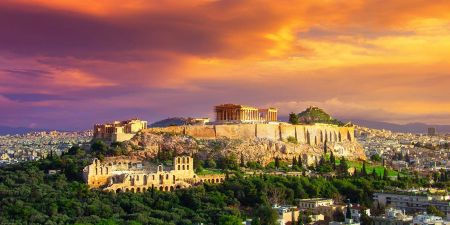
Athens, the capital city of Greece, is a vibrant metropolis known for its rich history, ancient landmarks, and cultural significance.

Discover Athens' hidden gems beyond the Acropolis, from ancient ruins to vibrant neighborhoods, in this essential Greek travel guide!
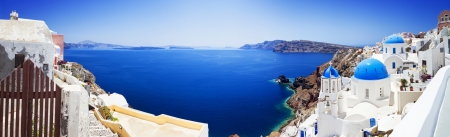
Your ultimate first-timer's guide to Santorini Greece! Explore top sights, stunning sunsets, charming villages, and essential travel tips for the perfect Greek escape!
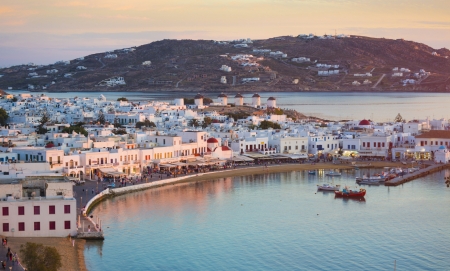
Must-know tips for first-timers in Mykonos! Best beaches, nightlife, transport, and hidden gems for an amazing Greek getaway!
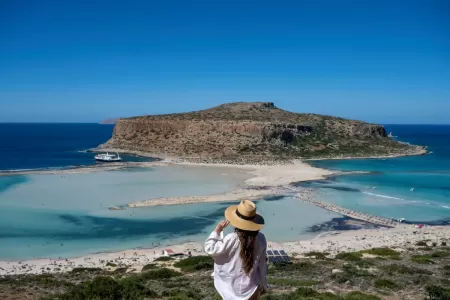
Explore Crete with our complete travel guide! Discover the best beaches like Elafonissi, ancient Knossos Palace, charming Chania, and local cuisine tips for Greece's largest island!
At Delphi, the voice of Apollo still echoes through time in Greece's most sacred valley. Explore more!
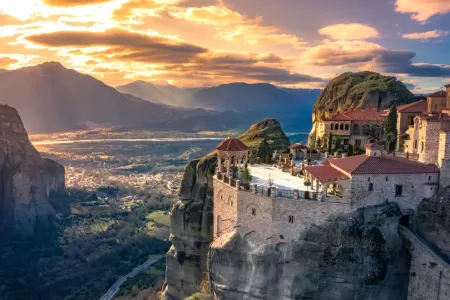
Explore Kalambaka! Where medieval monasteries perch dreamily atop Kalambaka's towering rock pillars. Read More!
Olympia in Greece: Birthplace of the Olympics! Discover ancient ruins, the best visiting times, and local tips for your trip. Explore more!
Paros: A quintessential Greek island with golden beaches, whitewashed villages, and vibrant seaside charm in the Cyclades!
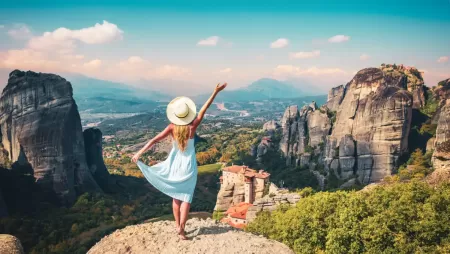
Discover Meteora's hidden gems: secret caves, secluded monasteries, and breathtaking off-the-beaten-path viewpoints in Greece!
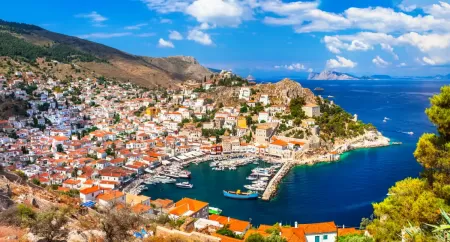
An island frozen in time: Hydra's stone lions guard a harbor where artists and sea gods still whisper in the tavernas.
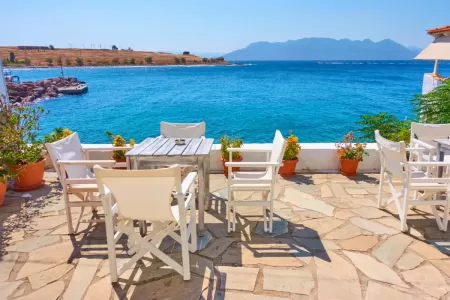
Pistachio paradise! Aegina serves Greece’s best nuts + seaside tavernas.
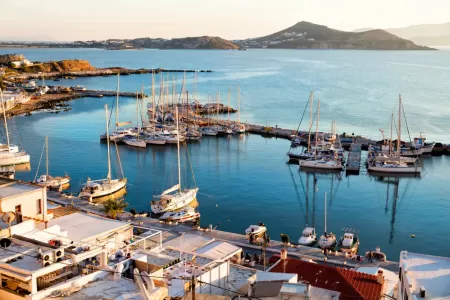
Sandy shores, sunset-lit Portara, and hidden coves—Naxos is Greece’s dreamy island escape. Read more!