
 Home
Home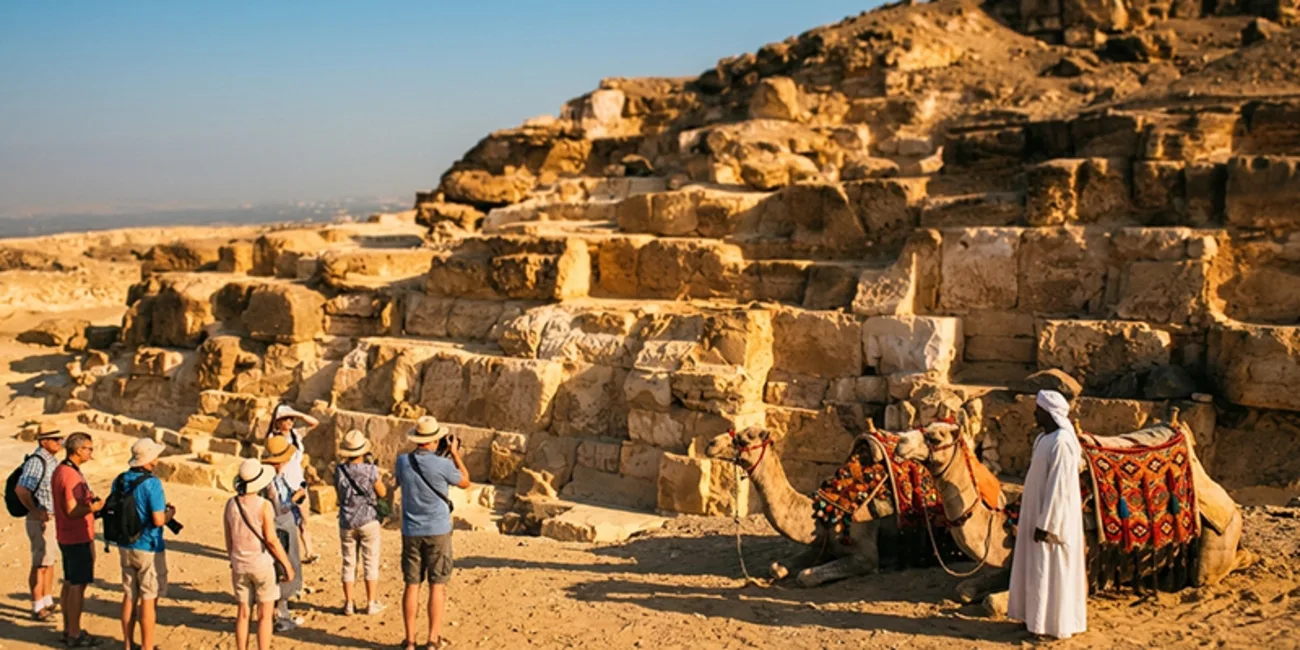
The Pyramid of Djedefre, often called the lost pyramid, stands as Egypt’s northernmost pyramid at Abu Rawash, roughly 8 kilometers northwest of the Giza plateau. Though largely in ruins today, it was once an impressive monument. Its base measured around 106 meters per side, with an estimated height of 57–67 meters. Construction began around 2500 BC, at the start of Egypt's Fourth Dynasty, making it the first pyramid built after Khufu’s reign. Abu Rawash, sometimes referred to as the Fourth Pyramid, offers archeological remains that reveal insights into ancient Egyptian splendor. Now only about 12 meters high, it suffered systematic dismantling from the New Kingdom period and accelerated destruction during Roman and early Christian times, with historical records describing camels carrying away three hundred loads of stone daily. Experts still consider this site unique for understanding Egyptian architectural innovation.
The Pyramid of Djedefre, also called the lost pyramid, is located in Abu Rawash, Egypt, about 8 km northwest of the Giza Plateau.
Djedefre and the Fourth Dynasty
Djedefre, also known as Radjedef or Rāḍedef, succeeded his father Khufu and ruled as the third pharaoh of the Fourth Dynasty around 2566–2558 BCE. His reign coincided with cultural, architectural, and religious growth in Old Kingdom Egypt. Djedefre introduced the royal title “Sa-Rê” (Son of Ra), linking the pharaoh directly to the sun god Ra and marking a theological shift in Old Kingdom kingship. The Turin King List records his reign as roughly eight years, though some inscriptions hint at a longer rule, including mentions of his 11th cattle count.
Djedefre strengthened royal ties through marriage, taking Hetepheres II, his sister and widow of his brother Kawab, as queen. Other queens, including Khentetenka, are attested through statues from Abu Rawash.
Connection to Khufu and Khafre
Djedefre’s succession altered Egyptian royal expectations. Khufu’s intended heir, Kawab, died before ascending the throne, allowing Djedefre to rule. After his death, Djedefre’s younger half-brother Khafre became pharaoh instead of any of Djedefre’s sons—Setka, Baka, Hornit, and Nykau-Radjedef. This unusual succession has sparked debate among scholars regarding possible dynastic tensions.
Why He Chose Abu Rawash
Djedefre’s choice of Abu Rawash, rather than Giza, has multiple theories. Family tensions may have influenced this move, but the stronger argument points to religion. Abu Rawash lies near Heliopolis, the ancient center of Ra worship. Combined with his “Son of Ra” title, this suggests Djedefre prioritized solar theology. Interestingly, his nephew Menkaure later undertook restoration work on this pyramid, indicating that family conflicts may not have been permanent.
Djedefre was the third pharaoh of Egypt’s Fourth Dynasty, successor to Khufu, and the first to take the title “Son of Ra.”
Though smaller and less preserved than Khufu’s or Khafre’s pyramids, it demonstrates innovative construction and religious significance of the Fourth Dynasty.
Abu Rawash was close to Heliopolis, the center of Ra worship, suggesting religious motives influenced the pyramid’s location.
Design and Construction of the Pyramid
The Pyramid of Djedefre shows innovative Fourth Dynasty architecture. Builders demonstrated creativity and efficiency in several ways:
Use of Natural Mound and Pit-Ramp Method
The pyramid incorporated a natural limestone hill as about 45% of its core, symbolizing the primeval mound from Egyptian creation myths. Instead of tunneling through finished masonry, workers dug a pit 21 × 9 meters and 20 meters deep into this mound. A 22°35' ramp allowed construction of internal chambers directly in the excavation, which were later filled before building the superstructure. This method simplified construction by eliminating complex internal tunnels.
Materials Used: Limestone and Granite
The core used roughly cut local limestone blocks, while the outer casing featured finely cut Tura limestone from near modern Cairo. Pink granite from Aswan, about 1000 km away, adorned parts of the exterior, particularly the lower courses.
Unique North-South Orientation
Djedefre’s pyramid was surrounded by a rectangular enclosure wall aligned north-south, echoing Third Dynasty designs by Djoser and Sekhemkhet. This may have been a deliberate homage to earlier rulers.
Comparison with Other Pyramids
The pyramid was designed with a 106-meter base and 67-meter height, similar to Menkaure’s pyramid. Its slope angle of 51°–52° matched Khufu’s Great Pyramid. Builders angled casing blocks inward, creating the structure’s distinctive shape.
Local limestone formed the core, Tura limestone for casing, and pink granite from Aswan decorated parts of the exterior.
Customize Your Dream Vacation!
Get in touch with our local experts for an unforgettable journey.
Plan Your TripThe Pyramid's Decline and Destruction
Unlike other pyramids, Djedefre’s monument suffered systematic dismantling over centuries.
Roman and Christian Era Quarrying
Quarrying began in the New Kingdom and intensified during Roman and early Christian times. Stones, particularly the valuable pink granite, were removed for reuse in construction elsewhere. Historical accounts report camels hauling away 300 loads daily.
Military Use and Modern Damage
Abu Rawash’s strategic position atop a hill made it suitable for military purposes. Modern development further threatens what remains. Today, visitors see only the pyramid’s foundations.
Was It Ever Completed?
Debate continues on whether Djedefre finished his pyramid. His short reign suggests construction may have halted, but fragments of casing stones and mortuary temple remains indicate significant progress. Extensive quarrying complicates understanding the pyramid’s original state.
It’s called the lost pyramid because it was largely dismantled during Roman and early Christian periods, leaving only ruins today.
Archeological Discoveries and Artifacts
Excavations at Abu Rawash provide insights into the lost grandeur of Djedefre’s pyramid.
Red Quartzite Statues and Sphinx Fragments
Fragments of around 120 red quartzite statues, many painted, were found, including three well-preserved heads. One displayed in the Louvre may be part of the earliest known royal sphinx. Most statues depict Djedefre seated on his throne.
Boat Pit and Burial Chamber
A 35-meter-deep boat-shaped pit on the pyramid’s eastern side contained many statue fragments rather than a ceremonial boat. The burial chamber held pieces of a limestone sarcophagus, likely belonging to Queen Hetepheres II, along with alabaster jars, pottery, and potential canopic jar lids.
Inscriptions and Hieroglyphs
Artifacts revealed inscriptions, such as an alabaster plate with Khufu’s Horus name and Djedefre’s cartouche, confirming his ownership of the pyramid. A courtyard column fragment also bore his cartouche.
Finds include red quartzite statues, sphinx fragments, boat-shaped pits, limestone sarcophagi, and inscriptions of Djedefre’s cartouche.
What Remains Today at Abu Rawash
The pyramid now rises only about 9–12 meters, but new finds continue to shed light on its history. These discoveries allow scholars to understand Fourth Dynasty architecture, Djedefre’s reign, and the religious significance of solar worship in early Old Kingdom Egypt.
Legacy of Djedefre and Abu Rawash
Despite its ruined state, the Pyramid of Djedefre reflects ancient Egyptian architectural brilliance, religious evolution, and complex dynastic politics. Djedefre, who succeeded Khufu, pioneered the “Son of Ra” title, linking kingship with solar worship. His choice of Abu Rawash highlights religious motives over family considerations.
The innovative construction methods—including the use of a natural limestone mound, pit-ramp building, and combination of local and Aswan materials—demonstrate the Egyptians’ adaptability. Roman and early Christian quarrying gradually destroyed the pyramid, raising questions about its completion.
Archeological finds, from statues and sphinx fragments to boat pits and inscriptions, offer glimpses of Djedefre’s lost grandeur. Although only 12 meters remain today, Abu Rawash remains an essential site for understanding the Fourth Pyramid, ancient Egyptian innovation, and the evolving role of religion in pharaonic architecture.
Visitors seeking a quieter, historical experience beyond Giza will find Abu Rawash and the lost pyramid of Djedefre a remarkable connection to Egypt’s ancient past.
Yes, tourists can visit Abu Rawash to see the remains of Djedefre’s lost pyramid and explore the site’s archeological finds.



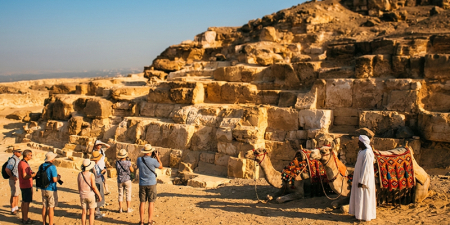
Explore the lost Pyramid of Djedefre at Abu Rawash, Egypt, near Giza. Discover Fourth Dynasty architecture, royal history, and ancient artifacts at this historic site.
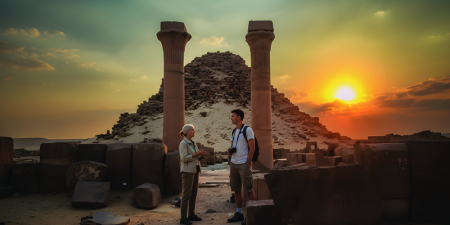
Abu Sir Pyramids in Egypt are Fifth Dynasty royal tombs located between Giza and Saqqara near Cairo.

The Pyramid of Pepi I in South Saqqara houses Egypt's largest collection of Pyramid Texts—2,263 lines of sacred hieroglyphs from the Old Kingdom era.
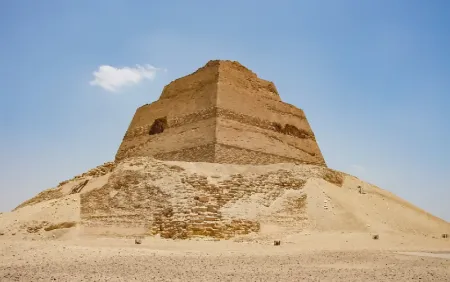
The Meidum Pyramid, built by Sneferu around 2630 BC, was Egypt's first attempt at a true pyramid. Now partially collapsed, it taught vital lessons for later pyramids.
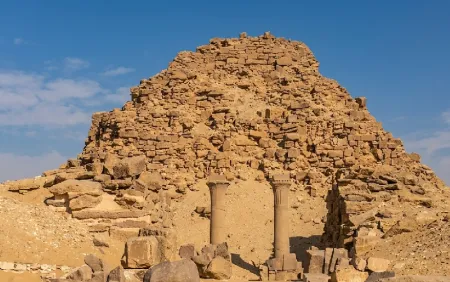
The Pyramid of Sahure, built around 2458 BC at Abusir, recently revealed 8 hidden storage chambers. This Fifth Dynasty monument features advanced architecture.
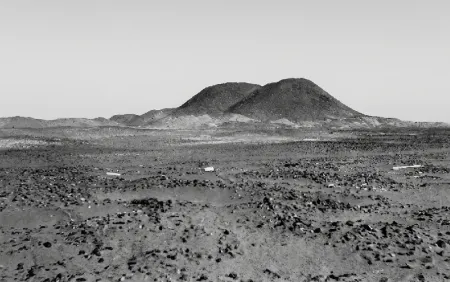
The Pyramid of Senusret III at Dahshur stands 78m tall with unusual western entrance. Its empty sarcophagus suggests the king may have been buried elsewhere.
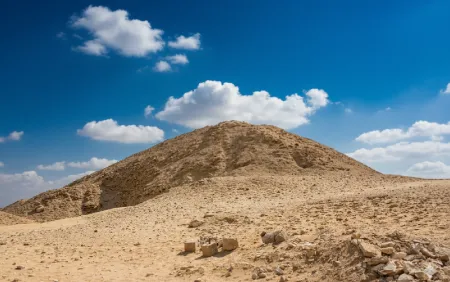
Teti's pyramid at Saqqara contains Egypt's oldest religious texts & gold star ceiling. Built 2345 BCE, its well-preserved chambers offer intimate exploration.