 Home
HomeAl Hazm Fort
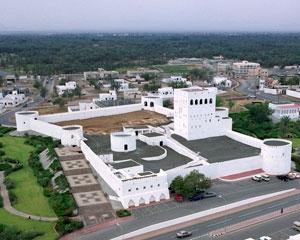
Discover Al Hazm Fort, an extraordinary 18th-century Omani architectural marvel in Rustaq. Explore its unique design, diverse chambers, and rich history. A UNESCO tentative site, it offers a fascinating glimpse into Oman's past.
.jpg "Al Hazm Fort")
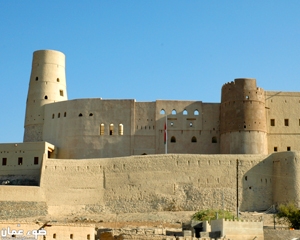
Soaring forty meters above the Rustaq landscape, Al Hazm Fort emerges as an architectural marvel that challenges conventional expectations of Islamic fortress design. This extraordinary structure, commissioned by Imam Sultan bin Saif II in 1708, presents visitors with walls no less than three meters thick and an innovative ceiling system that abandons traditional wooden rafters entirely in favor of elegant column supports.
The fortress reveals its multifaceted nature through spaces that once pulsed with daily life—royal chambers alongside defensive battlements, a functioning mosque adjacent to educational halls, and prison cells that speak to the fort's role in maintaining order. Perhaps most remarkable is the ingenious falaj system flowing beneath the structure, delivering fresh water throughout the complex and demonstrating the sophisticated hydraulic engineering of the early 18th century.
Modern visitors encounter these historical layers through electronic guides that unlock stories embedded within each chamber and corridor. The fort holds particular poignancy as the final resting place of its creator, Sultan bin Saif II passed away in 1718, just ten years after construction began, and lies buried within the walls of his architectural achievement. Today, following extensive restoration work that has reached ninety-five percent completion, this cultural treasure maintains its position on UNESCO's World Heritage tentative list, a status it has held since 1988.
Origins and Historical Significance
The fortress stands at a crossroads of Omani political evolution, its stone walls bearing witness to dynastic transitions that shaped the sultanate's destiny.
Built by Sultan bin Saif II in 1708
Al Hazm Fort's foundation stones were laid during 1708, coinciding with the twilight years of Al Yarubi tribal dominance over Oman. Imam Sultan bin Saif II, holding the distinction of being the fifth Ya'rruba dynasty ruler, envisioned this castle as his private stronghold. Remarkable financial dedication marked this project—historical accounts reveal the Imam exhausted his complete inheritance to fund construction, ultimately borrowing against mosque treasuries to see his vision realized. Such an extraordinary monetary sacrifice illustrates the ruler's unwavering commitment to establishing an enduring architectural monument.
Role in shifting the capital to Al Hazm
Rustaq had long functioned as the Al Yarubi tribe's seat of power before this fortress changed the political landscape entirely. Imam Sultan bin Saif II executed a bold governmental relocation, transferring his administrative center from Rustaq to the newly established Al Hazm. This strategic move, spanning roughly seventeen kilometers, effectively crowned Al Hazm town as Oman's fresh capital. The power transfer marked a substantial regional political evolution and underscored the supreme importance the Imam attributed to his architectural creation.
Burial site of the Imam
Death claimed Imam Sultan bin Saif II in 1718, merely one decade following his ambitious construction launch, and his mortal remains found eternal rest within his commissioned walls. The tomb creates an enduring bond linking the visionary builder to his stone legacy. Historical sources suggest his successor son, Saif bin Sultan II, may also rest within these castle grounds, though documentation regarding this burial remains inconsistent across various records.
Connection to the Yarubi dynasty
This fortress embodies a crucial segment of the Yarubi dynasty chronicle, rulers who governed Oman through transformative centuries. The Yarubi tribe earned lasting recognition for driving Portuguese colonial forces from Omani territories, securing national independence. Their architectural ambitions extended far beyond Al Hazm, with impressive fortifications like Nizwa Fort and Jabreen Castle dotting the landscape. Within this context, Al Hazm Fort emerges as one of the dynasty's concluding architectural triumphs, erected during their final governing period. The castle functions simultaneously as a military bastion and an enduring testament to this pivotal era in Omani chronicles.
Architectural Design and Features
The architectural brilliance of Al Hazm Fort extends far beyond mere defensive necessity, revealing sophisticated engineering solutions that distinguish it among Oman's fortress heritage.
Square layout with round towers
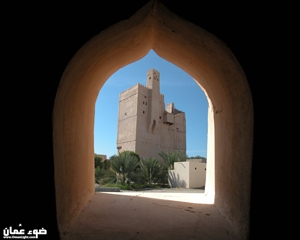
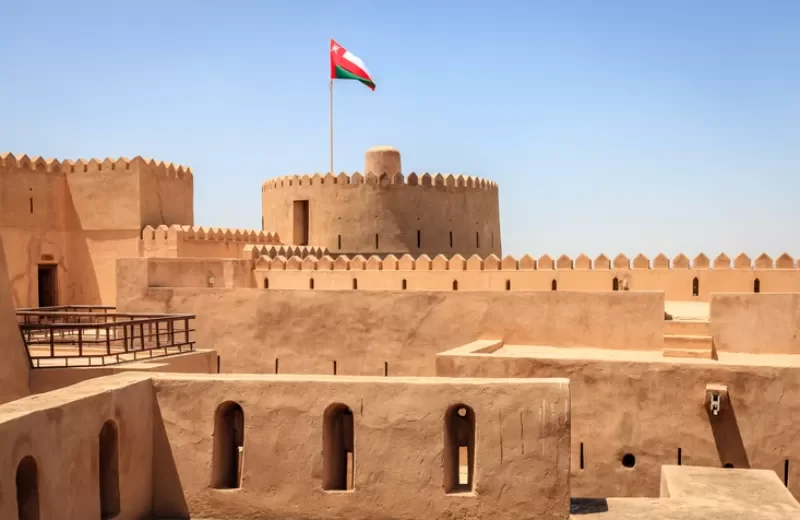
Geometric precision defines the fortress through its square foundation, anchored by round towers positioned at diagonally opposite corners. These formidable cylindrical structures occupy the Southern and Eastern corners, creating comprehensive defensive surveillance across nearly every approach angle. The visual impact proves equally impressive—towering walls combined with these strategic tower placements generate an imposing facade that amplifies the fort's apparent scale. This design marked a departure from earlier Omani fortifications, which typically employed linear defensive strategies, introducing instead an advanced vaulted arch system that represented a notable evolution in regional military architecture.
Intricate Indian wooden door
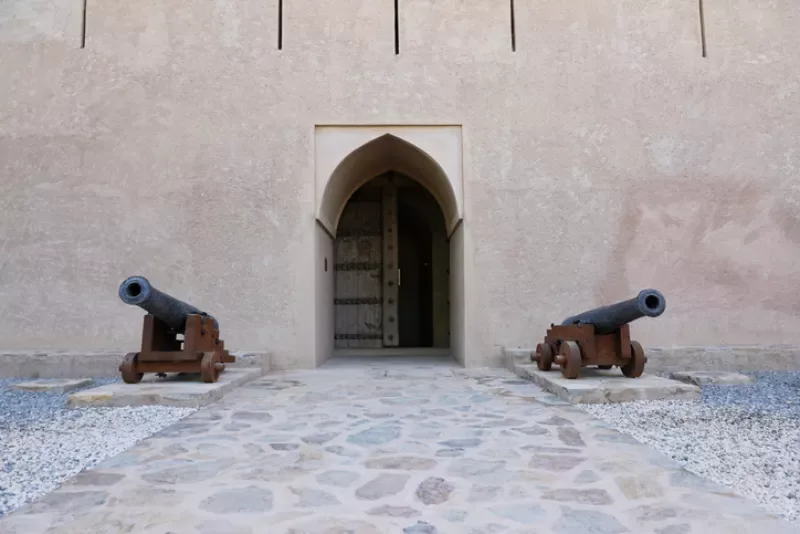
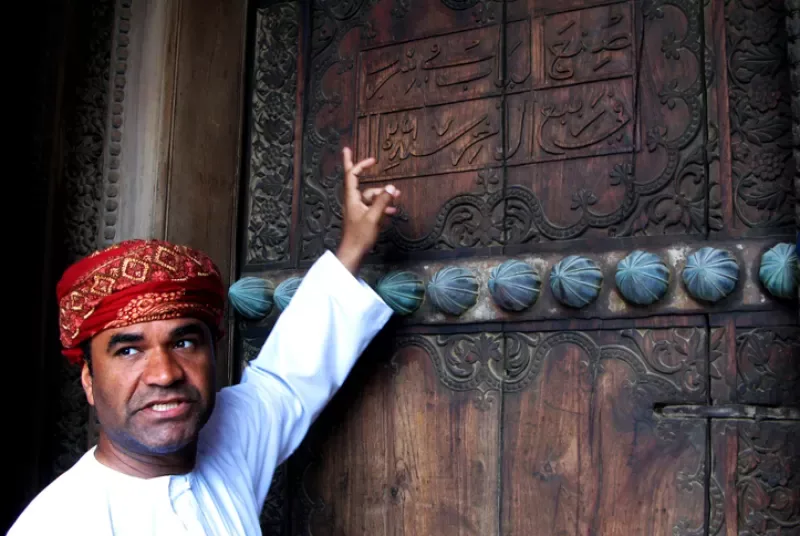
Excellence in craftsmanship reaches its pinnacle at the fort's main entrance, where an extraordinary wooden door commands attention. Sourced from premium Indian timber imported directly from Surat, this masterwork displays elaborate carvings that showcase exceptional artisanal skill. Among Oman's entire collection of historic fortresses, Al Hazm's decorated wooden portals stand without equal. The placement of these doorways reflects careful strategic planning—no entrance directly faces another, creating a deliberate security enhancement that forces potential intruders through indirect pathways.
No ceiling rafters: column-supported roofs
Revolutionary structural engineering distinguishes Al Hazm Fort's interior spaces through an unprecedented ceiling system. Traditional wooden rafter construction finds no place within these walls. Instead, elegantly proportioned columns bear the entire roof load, creating an architectural solution that maximizes interior space while ensuring structural stability.
Gun ports and cannon placements
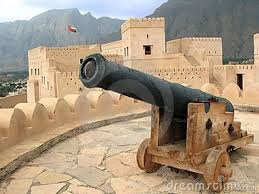
Defensive engineering reaches formidable proportions through walls that maintain a minimum thickness of three meters throughout the entire structure, dimensions calculated to resist direct cannon bombardment. The upper levels bristle with carefully positioned cannon apertures and strategically placed gun ports. The fort's armament includes a remarkable collection of Portuguese and Spanish cannons, some capable of projecting firepower across distances reaching seventy kilometers. Additional protective measures include offset doorways, concealed defensive pits, and overhead murder-holes designed for deploying heated substances against attackers.
Functional Spaces Inside Al Hazm Fort
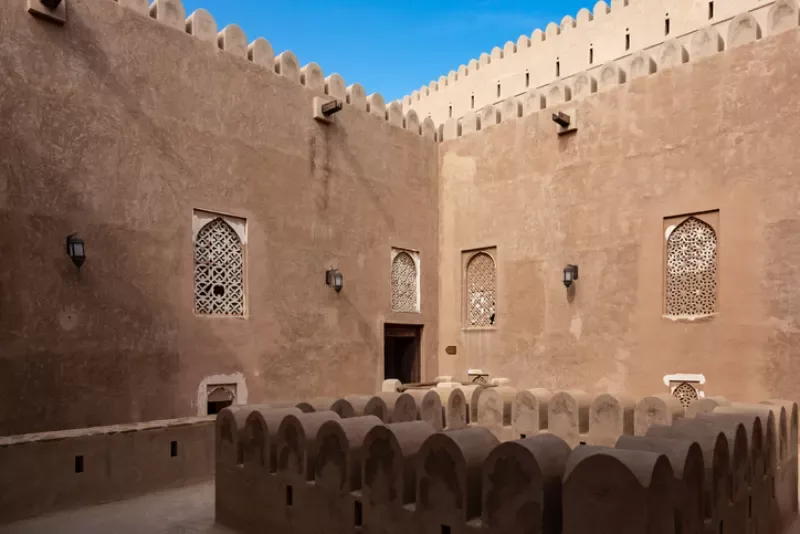
The fortress interior reveals a masterfully planned world where governance, defense, worship, and daily life intersect within carefully designed chambers. Each space tells its own story of medieval Omani society, from the austere prison cells to the elegantly appointed royal quarters.
Prison and security rooms
Multiple prison cells occupy strategic locations throughout the castle, their thick walls and restricted access points serving those who challenged the Imam's authority. Security considerations permeated every level of the fort's design, with dedicated chambers featuring reinforced construction and minimal entry points. Portuguese and Omani cannons stood ready behind numerous gun ports positioned throughout the structure, while the upper stories housed precisely engineered weapon openings that commanded sweeping views of the surrounding terrain.
Mosque and religious classrooms
Spiritual life found its center within the fort's mosque, where the rhythm of daily prayers marked time for the entire community. Adjacent chambers functioned as madrasas—Islamic schools where Quranic education flourished under the guidance of learned scholars. These religious classrooms ensured the preservation and transmission of Islamic knowledge, embodying the Imam's dual authority as both temporal ruler and spiritual guide.
Storage for dates and rice
Food security demanded ingenious storage solutions within the fort's walls. Specialized chambers safeguarded essential provisions, including dates and rice. The date storage system on the ground floor demonstrates particular engineering sophistication—raised channels allowed for systematic stacking of date sacks. Natural compression released precious juices that flowed through these channels into collection vessels. This concentrated date syrup served multiple functions: nourishment, medicine, a sweetening agent, and, when heated, a formidable defensive weapon poured through murder holes onto attackers.
Living quarters for the Imam and family
Royal accommodations reflected the fort's dual nature as fortress and palace. The Imam and his wives occupied specially designed living quarters that balanced comfort with security. Ornate stucco work adorned these private chambers, creating an atmosphere of refined elegance. The Imam's personal quarters featured an exquisitely crafted wooden ceiling that showcased the finest decorative artistry of the period. Climate control innovations included pottery jars strategically hung before windows, designed to capture and channel cooling breezes through the residential areas.
Escape tunnels and defensive design
Secret passages represent perhaps the most fascinating aspect of the fort's defensive strategy. Two confirmed escape tunnels provided emergency egress from the fortress. Local tradition maintains that one tunnel extended an extraordinary 32 kilometers to Rustaq Fort, while the second passage led toward the coastal regions. The fort's defensive architecture incorporated multiple offset doorways that prevented direct lines of attack, concealed pits beyond entrances covered with removable wooden planks, and murder holes positioned above key passages for deploying defensive measures against intruders.
Customize Your Dream Vacation!
Get in touch with our local experts for an unforgettable journey.
Plan Your TripCultural and Heritage Value
The passage of time has witnessed Al Hazm Fort's evolution from a seat of political power into a cornerstone of Oman's cultural patrimony, embodying centuries of national heritage within its weathered stones.
UNESCO tentative list inclusion
International recognition of the fort's cultural importance materialized in 1988 through its inclusion on UNESCO's World Heritage tentative list. This designation positioned Al Hazm alongside Rustaq Fort, creating a paired representation of northern Oman's architectural mastery. Within Oman's portfolio of five recognized World Heritage Sites and seven tentative properties, this nomination affirms the fort's exceptional standing among the nation's most valued cultural assets.
Restoration efforts and preservation
Recent preservation initiatives have addressed the fort's structural needs through meticulous restoration work completed at ninety-five percent as of 2022. These efforts tackled fundamental challenges: repairing facade fractures, reconstructing deteriorated ceilings, maintaining flooring systems and perimeter defenses, modernizing electrical infrastructure, and revitalizing the mosque. Such dedicated preservation aligns with Oman's national commitment to revitalizing its historical monuments.
The Ministry of Heritage and Tourism now promotes innovative management approaches, inviting small and medium enterprises to oversee these cultural sites. This strategy creates employment opportunities while ensuring heritage preservation through private sector engagement, allowing investment in properties like Al Hazm while safeguarding their historical authenticity.
Falaj system and agricultural support
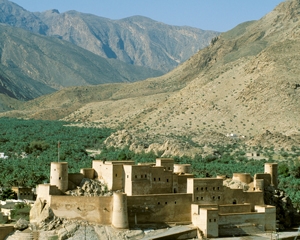
Beneath the fort flows an ancient falaj—a testament to ingenious water management that continues supporting the surrounding landscape. This subterranean channel nourishes date palms and agricultural plots throughout the vicinity, representing millennia-old techniques for surviving in arid environments and creating sustainable cultivation where nature alone might fail.
Symbol of Omani heritage and identity
Al Hazm Fort functions as a living repository of Omani cultural memory and national pride. Recent enhancements include digital interpretation systems and comprehensive exhibit documentation, elevating the visitor experience while supporting broader tourism development aligned with Oman Vision 2040 objectives. Among the sultanate's most distinguished fortifications, Al Hazm continues to bridge historical legacy with contemporary cultural identity, ensuring future generations inherit both knowledge and appreciation of their architectural heritage.
Conclusion
Al Hazm Fort endures as a remarkable fusion of military strategy, architectural innovation, and cultural preservation that speaks to the ingenuity of its era. The fortress embodies the ambitious vision of Imam Sultan bin Saif II, whose willingness to exhaust his personal fortune created a structure that continues to captivate visitors three centuries later. Each element—from the revolutionary column-supported ceilings to the intricate defensive systems—reveals engineering solutions that surpassed contemporary standards.
The castle's multifaceted design reflects the complex demands of 18th-century governance, where religious authority, administrative functions, and military defense converged within a single structure. The integration of the falaj system exemplifies how practical necessities enhanced rather than compromised architectural excellence, creating a self-sustaining complex that supported both daily life and siege conditions.
Contemporary restoration initiatives demonstrate Oman's dedication to safeguarding these cultural monuments for future generations while ensuring their accessibility to modern explorers. Though the Imam's mortal remains lie within these ancient stones, his architectural achievement continues to serve as both a historical educator and a cultural ambassador.
The fortress presents visitors with layers of discovery—ornate Indian woodwork alongside strategic escape routes, sacred spaces neighboring defensive installations. Such contrasts illuminate the sophisticated society that once thrived within these walls. Al Hazm Fort rightfully claims its position among UNESCO's tentative World Heritage selections, representing an essential destination for anyone seeking to understand Oman's rich historical tapestry.
FAQs
Q1. When was Al Hazm Fort built, and who constructed it?
Al Hazm Fort was built in 1708 by Imam Sultan bin Saif II, the fifth ruler of the Ya'rruba dynasty in Oman. The construction of this impressive fortress consumed the Imam's entire inheritance, showcasing his dedication to creating a lasting architectural legacy.
Q2. What are some unique architectural features of Al Hazm Fort?
Al Hazm Fort boasts several unique features, including a square layout with round towers, walls at least three meters thick, and a revolutionary ceiling construction supported by columns instead of wooden rafters. The fort also features an intricate Indian wooden door and numerous gun ports and cannon placements for defense.
Q3. What purposes did Al Hazm Fort serve beyond being a military stronghold?
Besides its defensive role, Al Hazm Fort served multiple purposes. It housed living quarters for the Imam and his family, contained a mosque and religious classrooms, functioned as a prison, and included storage areas for essential provisions like dates and rice. The fort also incorporated an ingenious falaj system for water supply and agricultural support.
Q4. How has Al Hazm Fort been preserved, and what is its current status?
Al Hazm Fort has undergone extensive restoration efforts, with the Ministry of Heritage and Tourism reporting a 95% completion rate as of 2022. The fort is currently on UNESCO's World Heritage tentative list and has been equipped with digital guides to enhance visitor experiences. It continues to serve as a symbol of Omani heritage and identity.
Q5. What makes Al Hazm Fort significant in Omani history?
Al Hazm Fort holds great significance in Omani history as it marks the shift of the capital from Rustaq to Al Hazm during the Yarubi dynasty. It represents one of the final architectural achievements of this influential period in Oman's history and showcases advanced engineering and defensive techniques of its time. The fort also serves as the burial site of Imam Sultan bin Saif II, further cementing its historical importance.
Explore Al Hazm Fort, an 18th-century Omani marvel of engineering and history. Ready to uncover Oman's impressive heritage? Browse our Oman travel packages and include it in your adventure today!
Explore Al Hazm Fort, an 18th-century Omani architectural marvel in Rustaq. Discover its unique design, historical significance, and role as a UNESCO World Heritage site.
Explore Jabreen Castle Oman, near Bahla, a stunning 17th-century castle. Discover its history, unique architecture, and intricate details in the Jabreen Castle Bahla region.